History
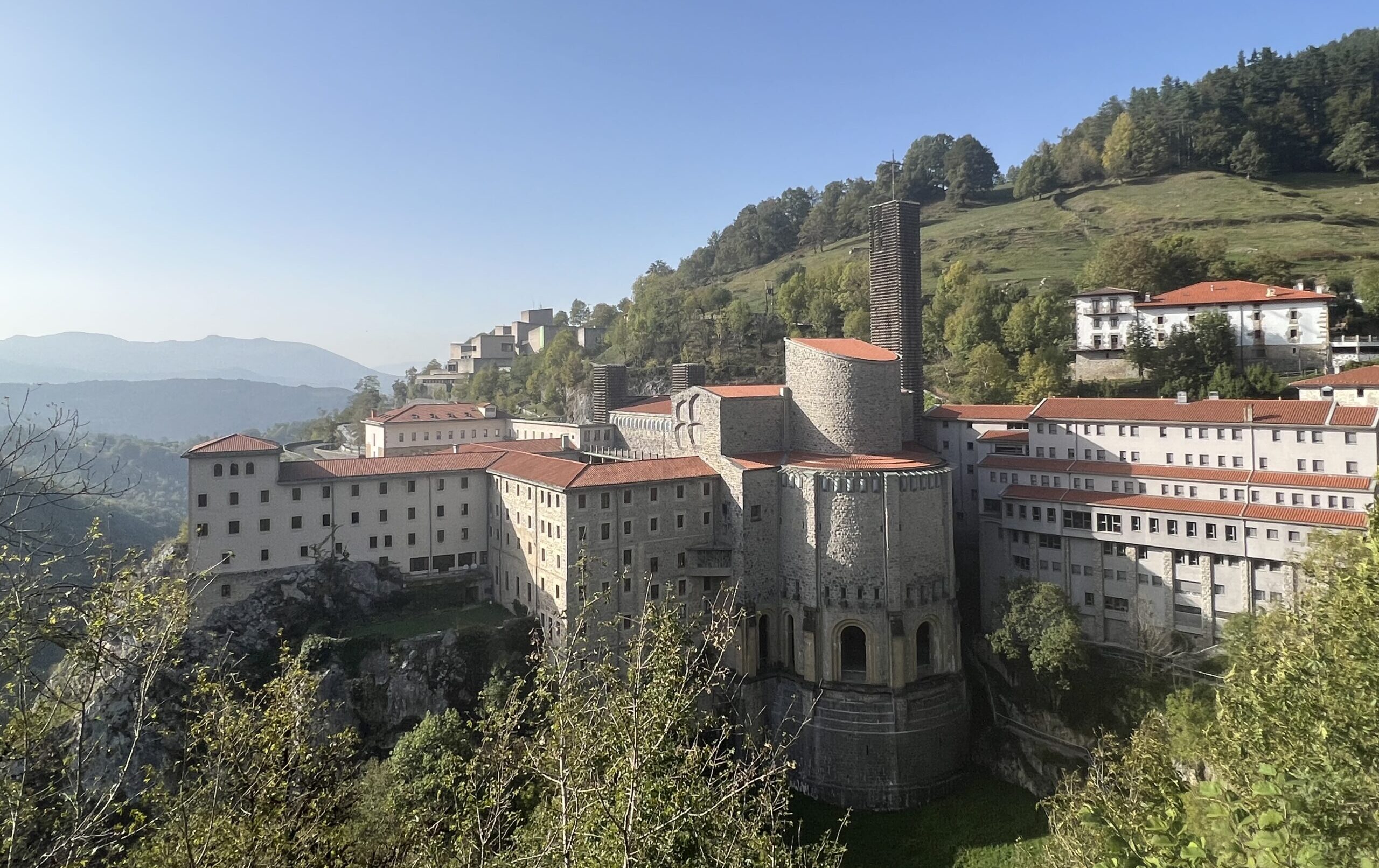
In the north of Spain lies the Sanctuary of Arantzazu (Arantzazuko Santutegia).
A legend tells...
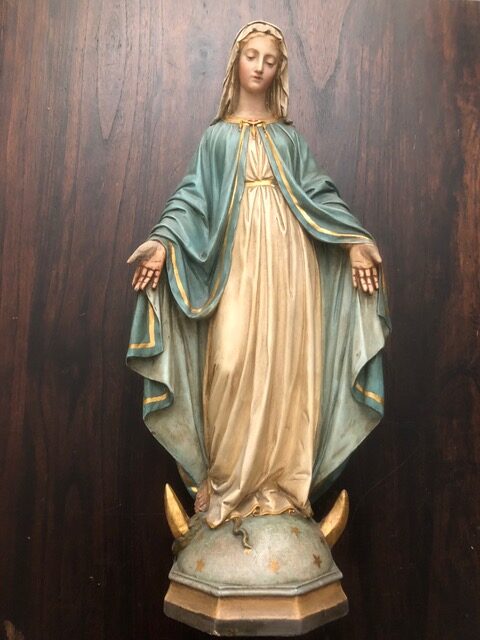
In 1469, the shepherd Rodrigo de Balanzategui (Rodrigo de Baltzategi) experiences a vision of Mary. He sees an image of Our Lady in a hawthorn bush. He exclaims “Arantzan zu?“ which translates to ”You, among the thorns?" This utterance gives the place its name, Arantzazu. In 1648, the legend is written down by the Franciscan Gaspar de Gamarra in a treatise on the history of Arantzazu. Some believe that the origin of the name comes from salt.
In 1552, Ignatius of Loyola (1491-1556), who was born in Azpeitia, Spain, and is the founder of the Society of Jesus, visited the sanctuary while en route to Montserrat.
From the names Arantzazu and Arantza (full of thorns) are derived Arancha (Spanish) and Arantxa (Basque), which have been given to many girls.
Fires that caused damage to the sanctuary occurred in 1553 and 1662. Nothing of the original sanctuary remains, as the entire structure was destroyed by a huge fire in 1834, but new buildings were erected later.
On 6 June 1886, Leo XIII, Pope from 1878 to 1903, granted permission for the coronation of the statue of the Virgin Mary in Arantzazu.
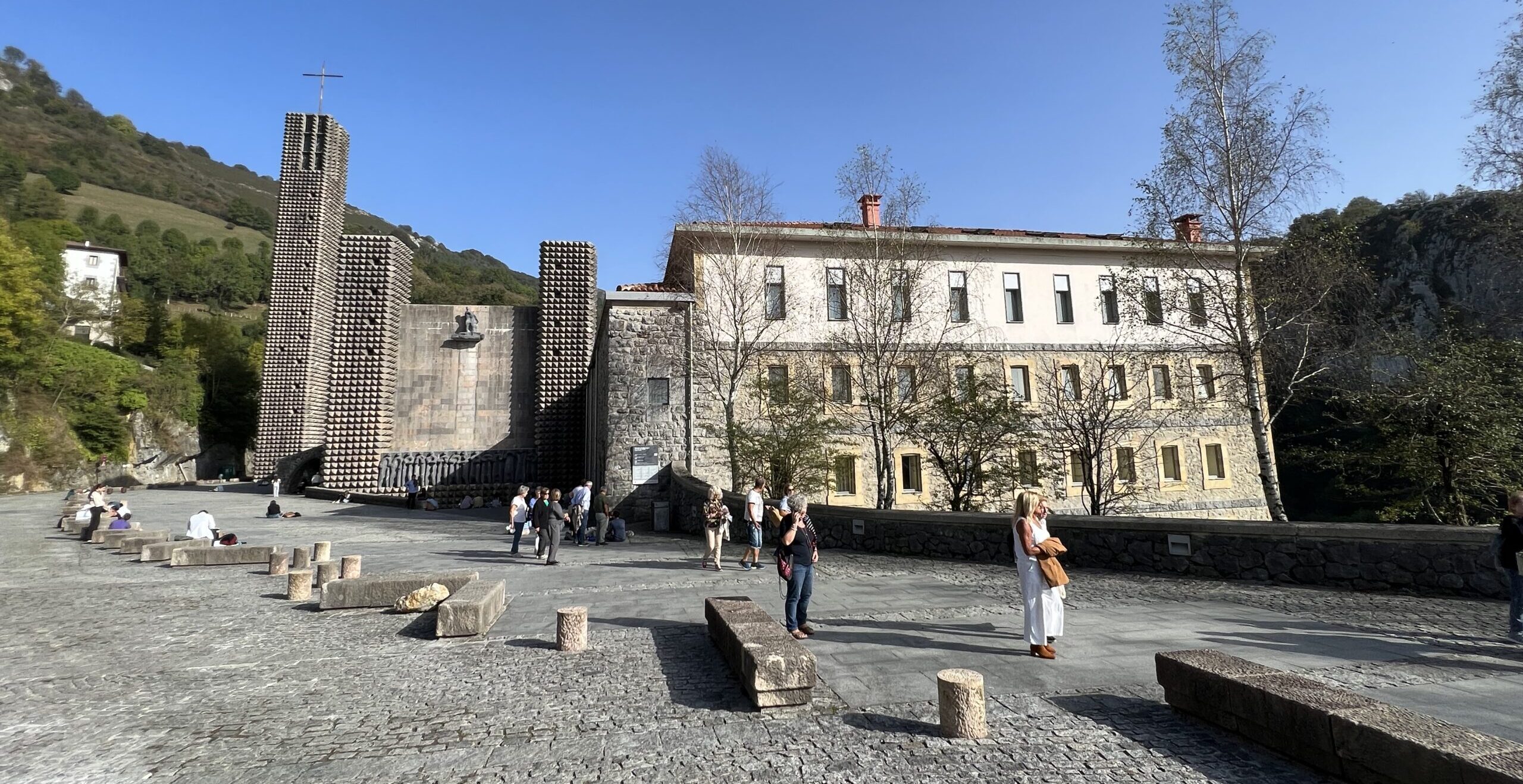
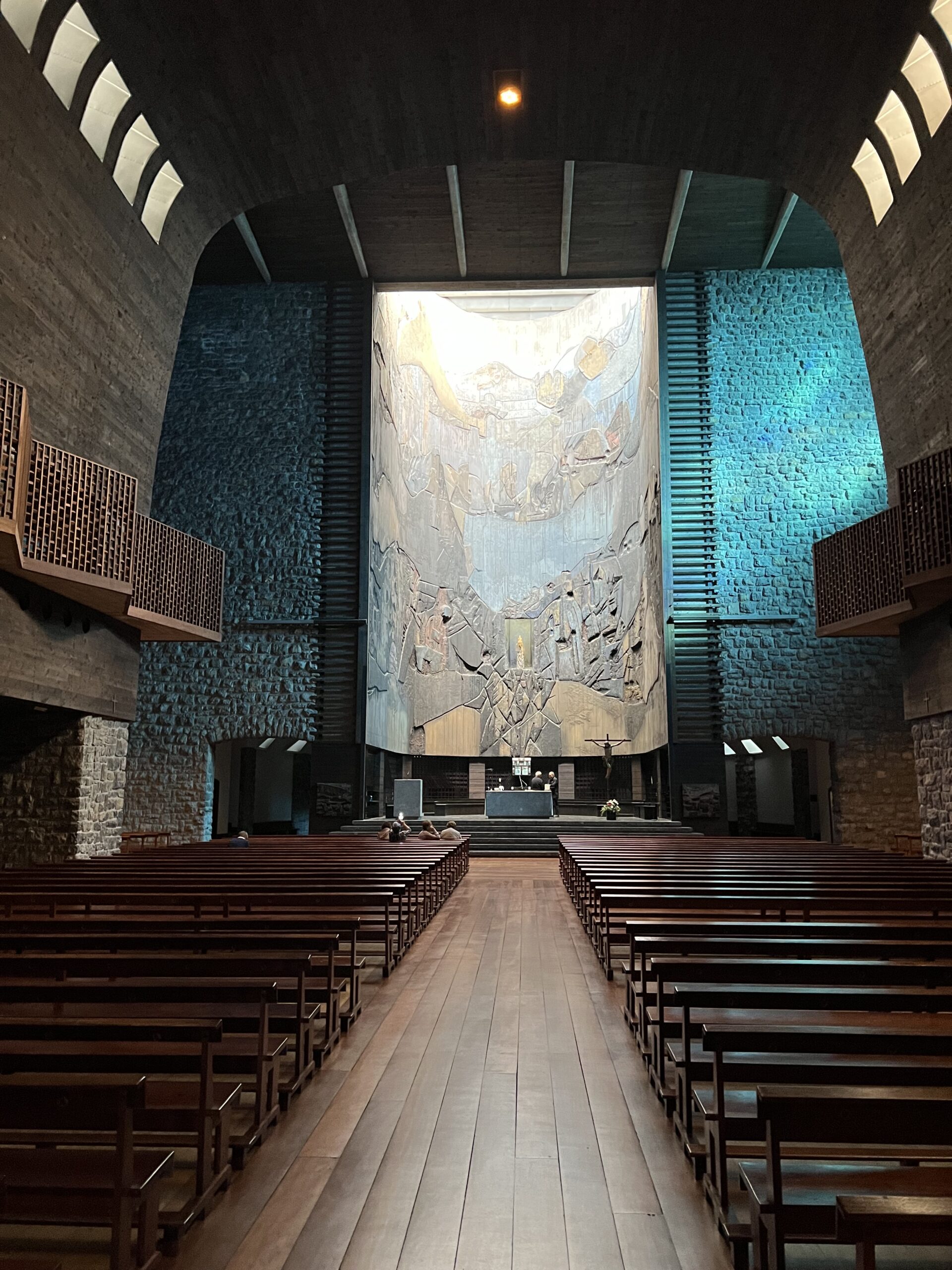
Construction of the current church began in 1950, replacing a 16th-century chapel. The basilica was consecrated in 1955. The architects include Sáenz de Oiza (1918-2000) and Luis Laorga (1919-1990). The altar was made by Lucio Muñoz (1929-1998). The paintings in the crypt are by Nestor Basterretxea (1924-2014) and sculptures are by sculptor Jorge Oteiza (1908-2003). The entrance gates are by sculptor Eduardo Chillida Juantegui (1924-2002).
Pilgrimage site
The landscape is surrounded by hawthornes. It is therefore a place of hawthornes. Thus the name of the sanctuary originated. The Sanctuary of Arantzazu is a Franciscan place of pilgrimage, where the Virgin of Arantzazu is venerated. Mary of Arantzazu and Ignatius of Loyola are the patron saints of the province of Gipuzkoa.
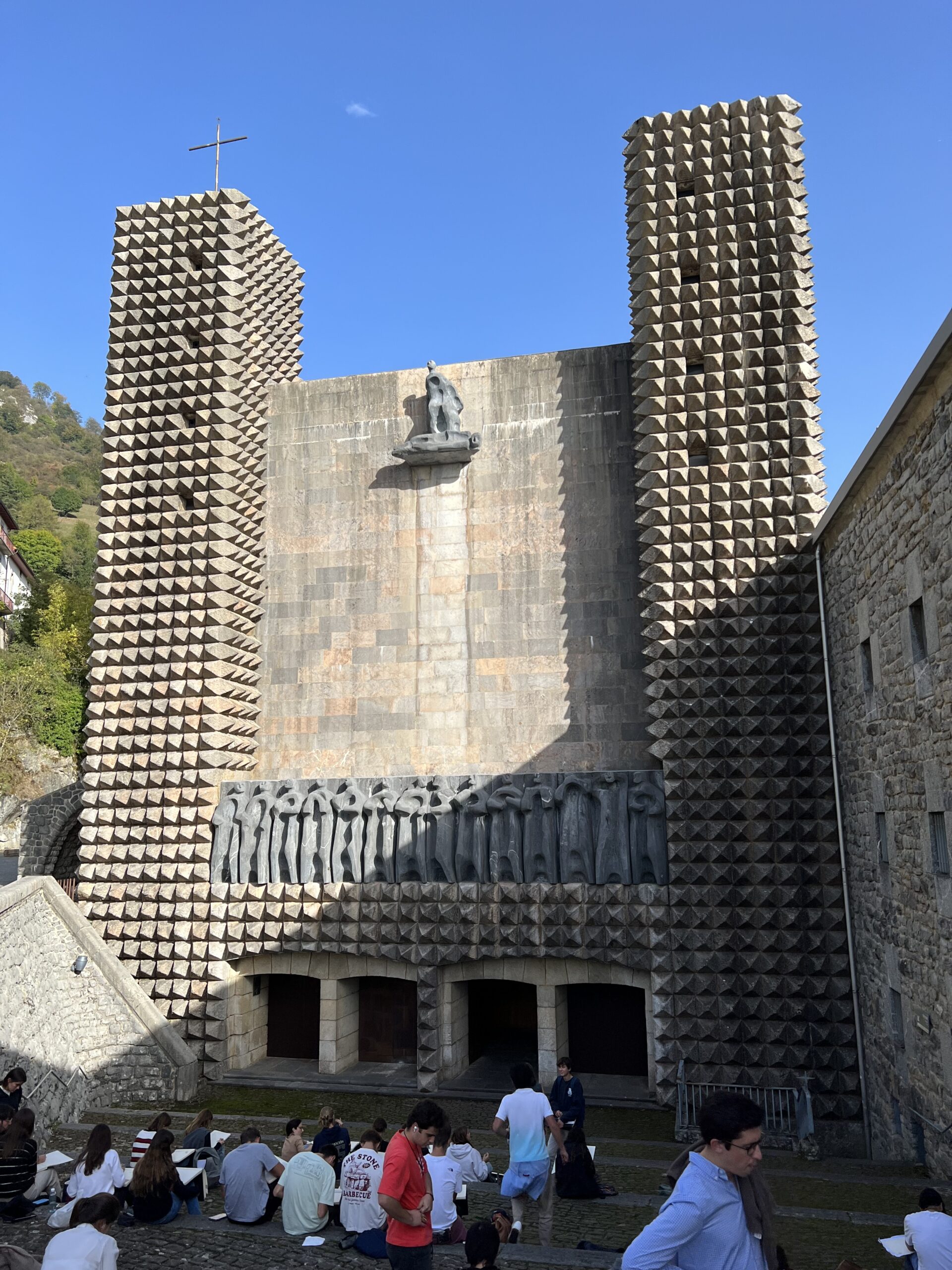
The basilica features a remarkable construction with countless protrusions, reminiscent of the hawthorn bushes from the legend surrounding the shrine's origin.
The annual feast day is September 9th and the basilica is open daily.
ACCESSIBILITY
The Sanctuary of Arantzazu is located in the province of Gipuzkoa, in northern Spain and close to the town of Oñati. The city of Bilbao is 82 km away and San Sebastián is 85 km from the sanctuary.
The address of the shrine is:
Arantazu 6, Neighbourhood,
20567 Arantzazu.
Current information can be found on www.arantzazu.org.
Experience
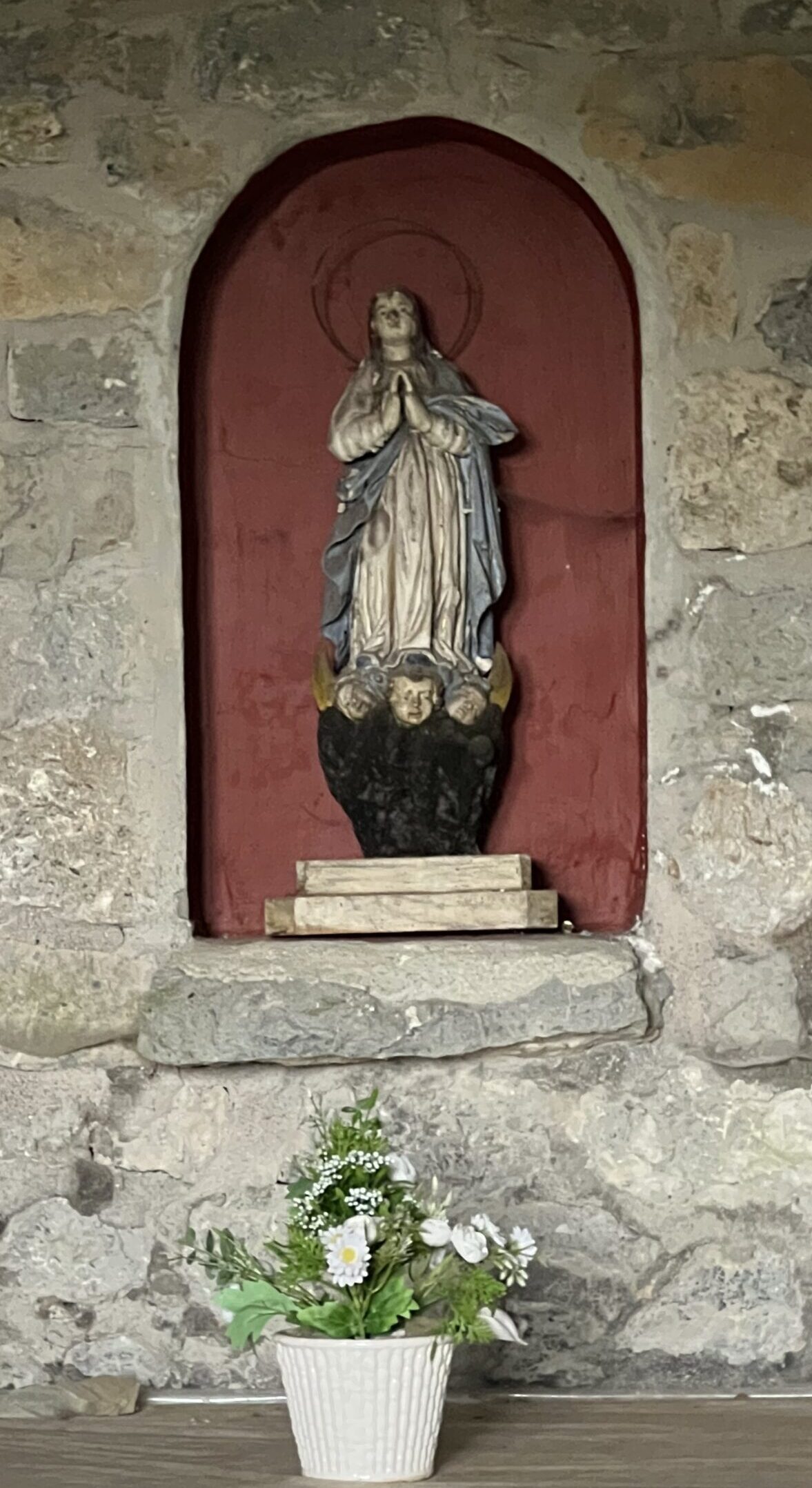
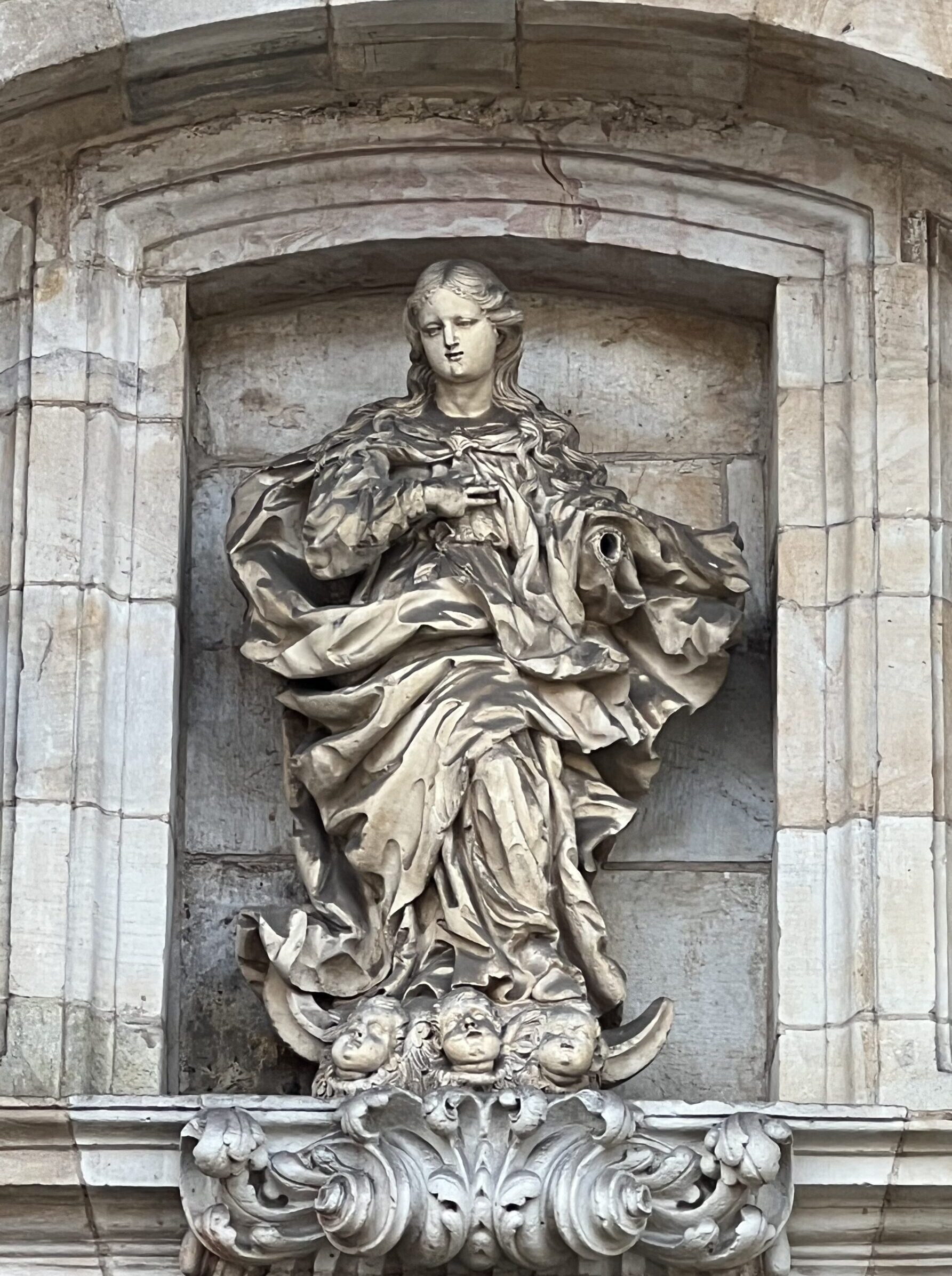
When I cross the French/Spanish border and arrive in San Sebastián, I will go to Arantzazu a bit later. To get to the Sanctuary of Arantzazu, it is a 9 km mountain road to follow. Near the sanctuary, there is a chapel by the road and a beautiful statue of Mary is placed there.
I find the sanctuary in the middle of the Spanish Basque Country, and it is entirely surrounded by mountains and boulders. The towers of the basilica are very striking, decorated with pointed stones. This makes the whole scene resemble the hawthorn trees from the legend of the sanctuary's origin.
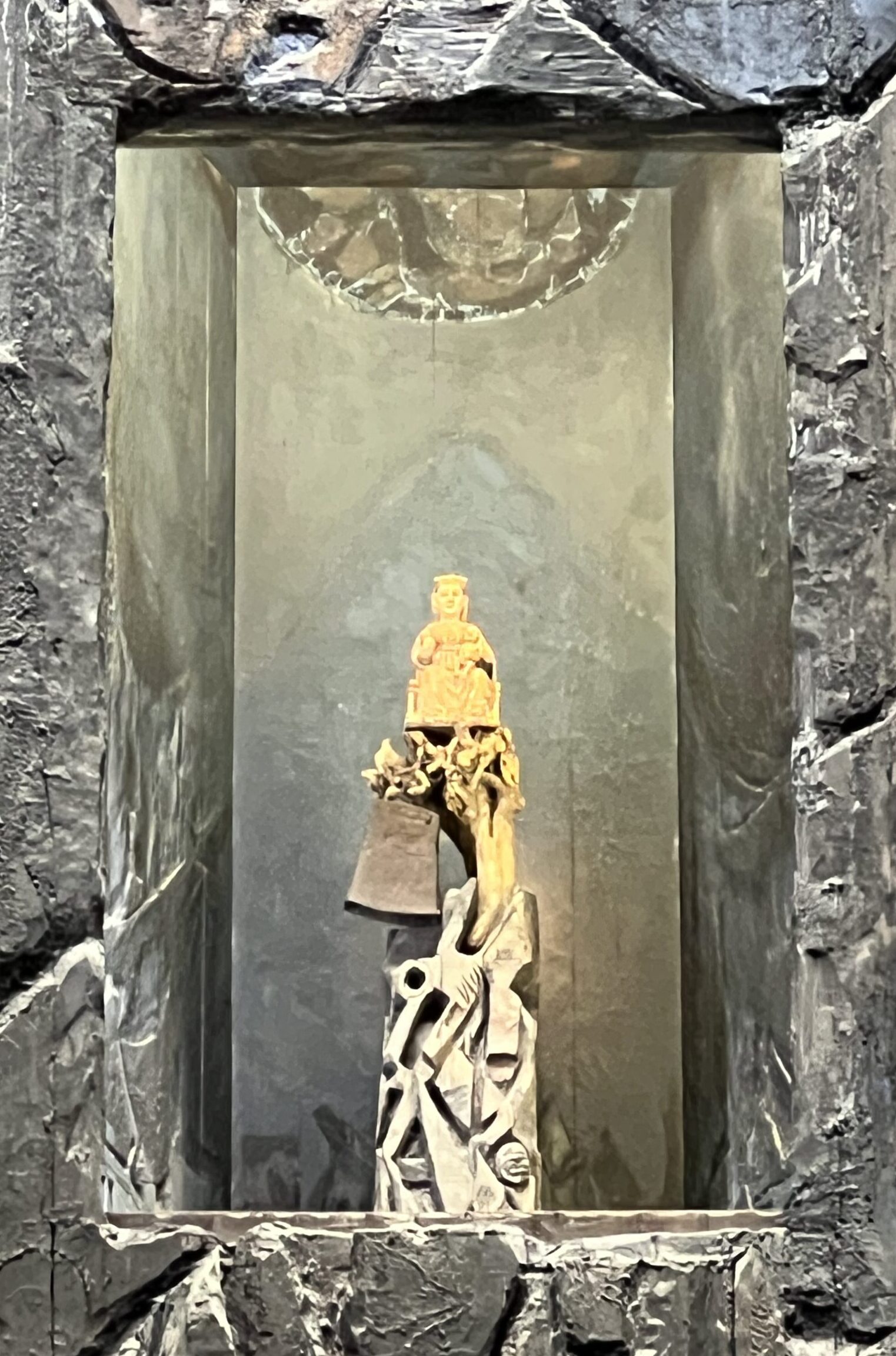
The iron doors of the basilica are not all closed and so I manage to enter the imposing building. What a space! The surface area is certainly 600 square metres. There are no statues of saints, except for the statue of the Madonna in the centre of the altar. For me, however, it is a rather bare interior.
Having seen both the exterior and interior of the basilica, the shrine is a striking example of modern religious art.
Near the shrine, I find the Hotel Sindika to stay the night.
Environment
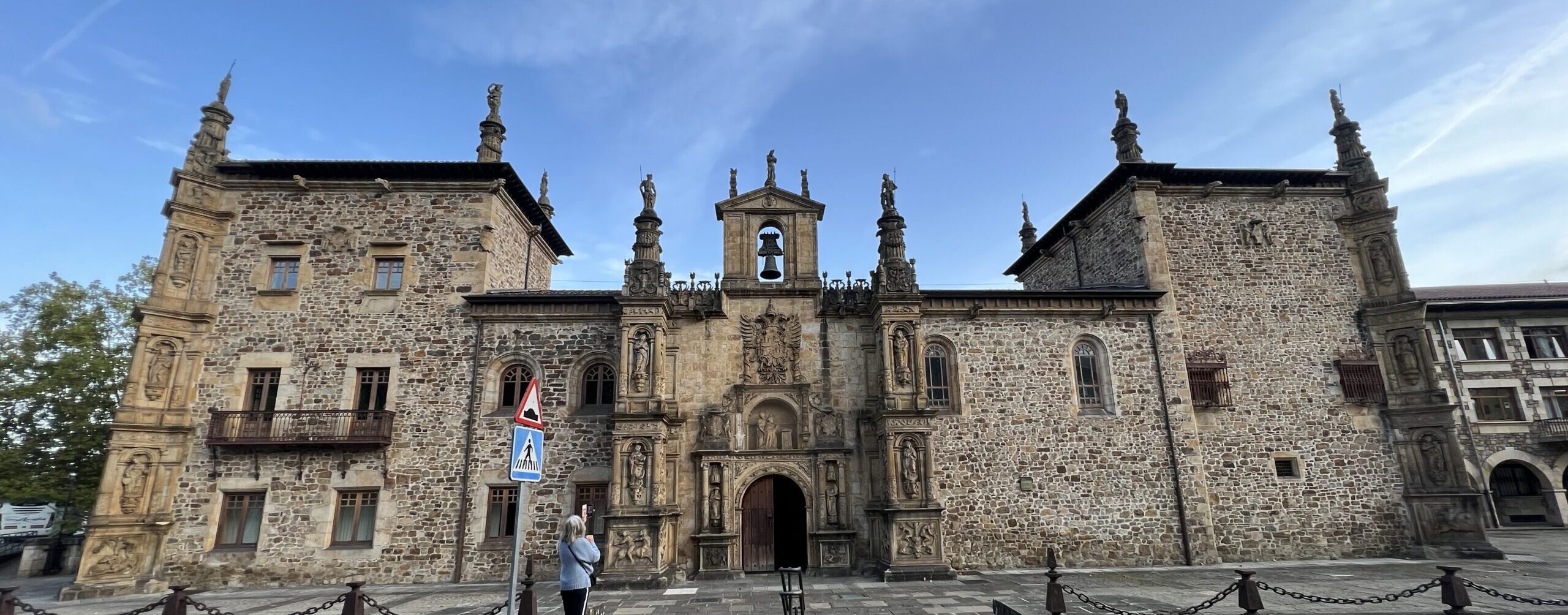
The Sanctuary of Arantzazu is located near the town of Oñati and the Aizkorri-Aratz Natural Park. In the region surrounding the sanctuary, several hiking routes have been marked out, including the Way of St. Ignatius (GR-120).
The high Aitzgorri mountain is 1,528 m high and is located quite close to the sanctuary.
Posted: 7 March 2023
~~~

 Nederlands
  English (UK)
  Deutsch
  Français