History
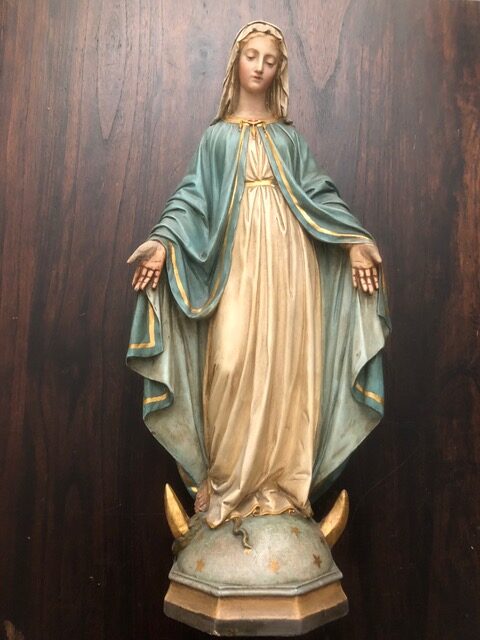
In 1449, there were apparitions of Our Lady to the 12-year-old girl Inés Martínez Sánchez, who comes from a poor background and helps her parents by herding pigs. In total, there were seven apparitions. The first apparition took place on 3 March 1449, at 12:00 p.m., as Inés was herding the pigs. Inés saw the apparition as a very beautiful, slender lady, with a radiant face and richly dressed. This woman wore a headscarf, skirt, and shoes, all of gold. The lady spoke of a coming plague and said it would claim many lives if people did not confess. The apparition told Inés to convey this message to the villagers.
On 4 March 1449, around midday, there is another apparition and Inés is asked why she said nothing about their first meeting. Inés replies that people will not believe her. The apparition says to give a sign that her words will be heeded.
The third apparition is on 7 March 1449 and again around 12:00. Once more, the apparition urges more dissemination of her words.
On 9 March 1449, there is a fourth apparition, also around midday. This takes place at the spot where a convent and church will later be built. This will be the building with convent and church that have been rebuilt here, named “Our Lady of the Cross”. This spot is the source of the current place of pilgrimage. The apparition makes herself known and says that She is the Blessed Virgin Mary. She then takes Inés's right hand, squeezes it, and forms a cross with her fingers and thumb.
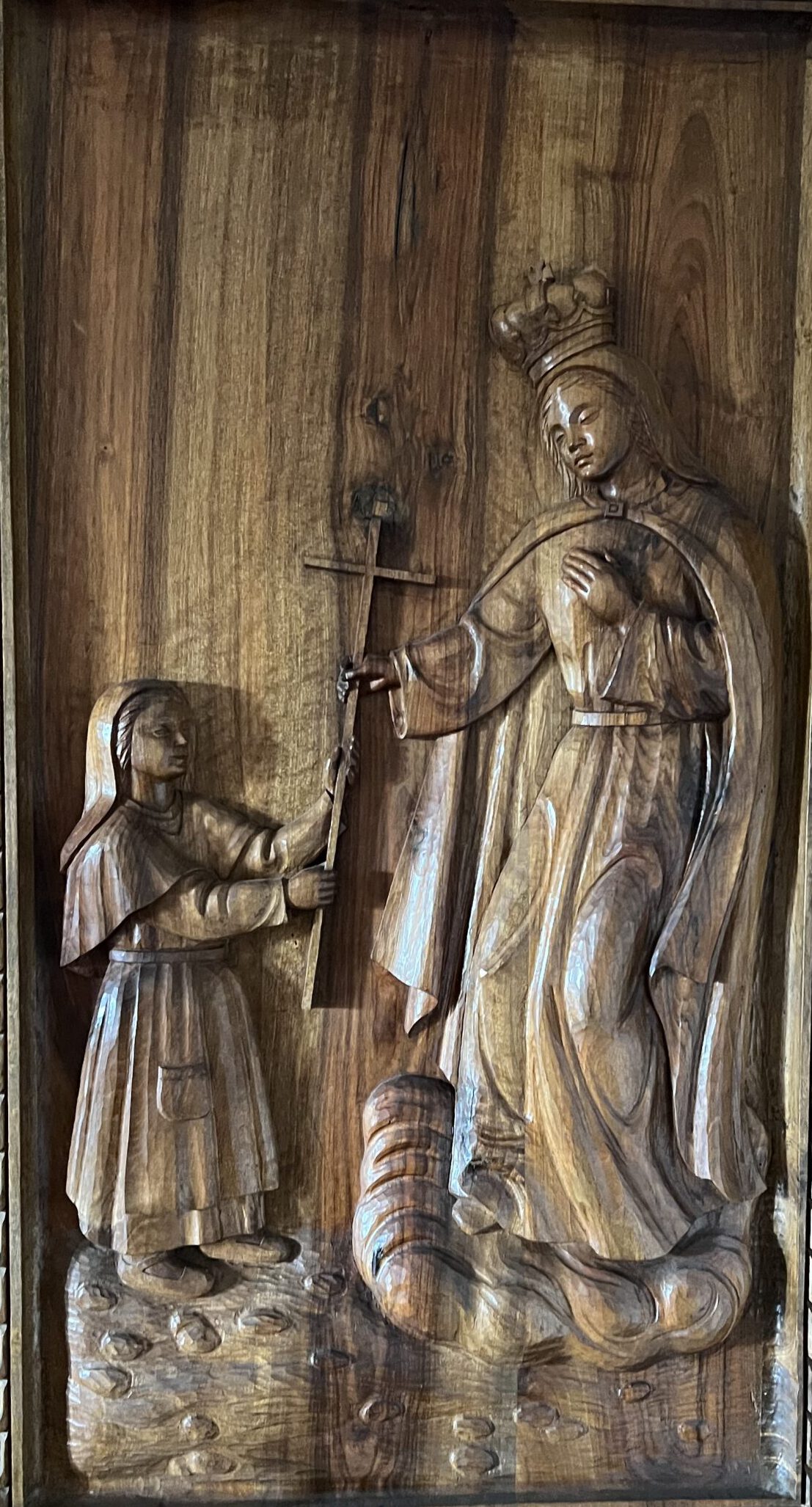
The fifth apparition also takes place on 9 March 1449. Maria nails the cross that Inés is wearing into the ground, and the girl holds the cross. A procession arrives that day, and Inés is still holding the cross. Her hand becomes cramped as a result. Maria says that a church must be built there for Her, to be called Saint Mary. She then says that Inés must go to the church of Santa María in Guadalupe and take 2 kg of laundry with her. Her hand will be healed there if prayers are said for two days. In Guadalupe, doctors examine her hand, forming a cross with their fingers. Their finding is that she was born with this hand, which Inés denies. She prays for two days, and the next morning the hand is fully healed.
On 19 March 1449, the sixth and final apparition takes place as Inés prays before the cross. Inés asks why she had to go to Guadalupe to have her hand healed. Mary replies that this was necessary to give her Her sign.
Only Inés Martínez Sánchez sees the apparition and once hears another girl, Our Lady. The apparitions are recorded in stages and stated in a notarial deed. Four notaries and more than 20 witnesses were involved. On 10 March 1449, a report was sent to Alfonso Carrillo de Acuña (1410-1482), Archbishop of Toledo (1446-1482). The apparitions of Mary in 1449 are the most extensively documented of all apparitions in the Middle Ages. On 9 March 1450, the church requested by Mary was built, which was later destroyed.
After the apparitions, many miracles are recorded, including:
-a girl regains her lost speech after praying to Our Lady
A man with an inflamed ear prays to Mary and is healed.,
a little boy wakes up with paralysed legs, prays to Mary and is healed,
A man cannot walk, prays to the Virgin Mary and his foot is healed.,
a girl is near death, her parents promise to go to the cross of Inés and the child is immediately better.
Inés Martínez Sánchez moves into the beguinage and becomes the leader of the béguines of Cubas de la Sagra. In 1464, when Inés is 27 years old, she leaves the community, realising that the work is not her calling.
The Beguinage remains in existence due to the arrival of new residents, including Juana Vázquez Gutiérrez (1481-1534), who would later be known as “La Santa Juana de la Cruz”. When she is 7 years old, her behaviour manifests in extreme self-punishment. Juana has great devotion to the Virgin Mary. Juana, disguised as a boy, ran away from home as she does not wish to marry a man but wants to be the bride of God. She later receives visions and stigmata. On 3 May 1496, Juana becomes a novice. On 3 May 1497, Juana takes her vows by professing under the name Sor Juana de la Cruz. Sor Juana makes her promise to an image of “Nuestra Señora de la Caridad” (Our Lady of Charity) in the convent of Cubas de la Sagra. In 1506, her mystical life begins to reveal itself. In 1507, she is mystically married. In 1508, she receives stigmata on her hands and feet while contemplating the suffering of Christ. In that year, she is unable to speak for 7 months. On 3 May 1509, when she is 28 years old, she is chosen as the first abbess of the Beguinage. At the end of 1509, she leaves the Beguinage to join the Third Order of Saint Francis. It is remarkable that she speaks Basque and Arabic without ever having learned these languages. These are miracles of Xenoglossia; this Greek word means the use of completely unknown languages. Sor Juana possesses this rare, paranormal gift.
Later, Juana is stripped of her abbess position, partly because she misappropriated monastery funds for the purchase of a bull. In 1515, she begins the construction of a new convent and church. Francisco Jiménez de Cisneros (1436-1517), Archbishop of Toledo from 1495 to 1517, oversees the building works. He appoints Sor Juana de la Cruz as the parish priest of Cubas de la Sagra. At the site of the church, Mary is said to have nailed a wooden cross during an apparition to Inés. Cardinal Cisneros visits the convent several times, at one point accompanied by Emperor Charles V (1500-1558), who is also Charles I of Spain from 1516 to 1556. The Emperor stays at the convent and wishes to speak with the mystic Juana. Towards the end of her life, Sor Juana suffers from numerous illnesses and great pain. She also becomes paralysed, and her suffering is seen as mirroring Christ's passion. Sor Juana also faces criticism for her interpretations of her illnesses and pains in relation to spiritual events. She dies on 3 May 1534, indicating that this date is significant in her life.
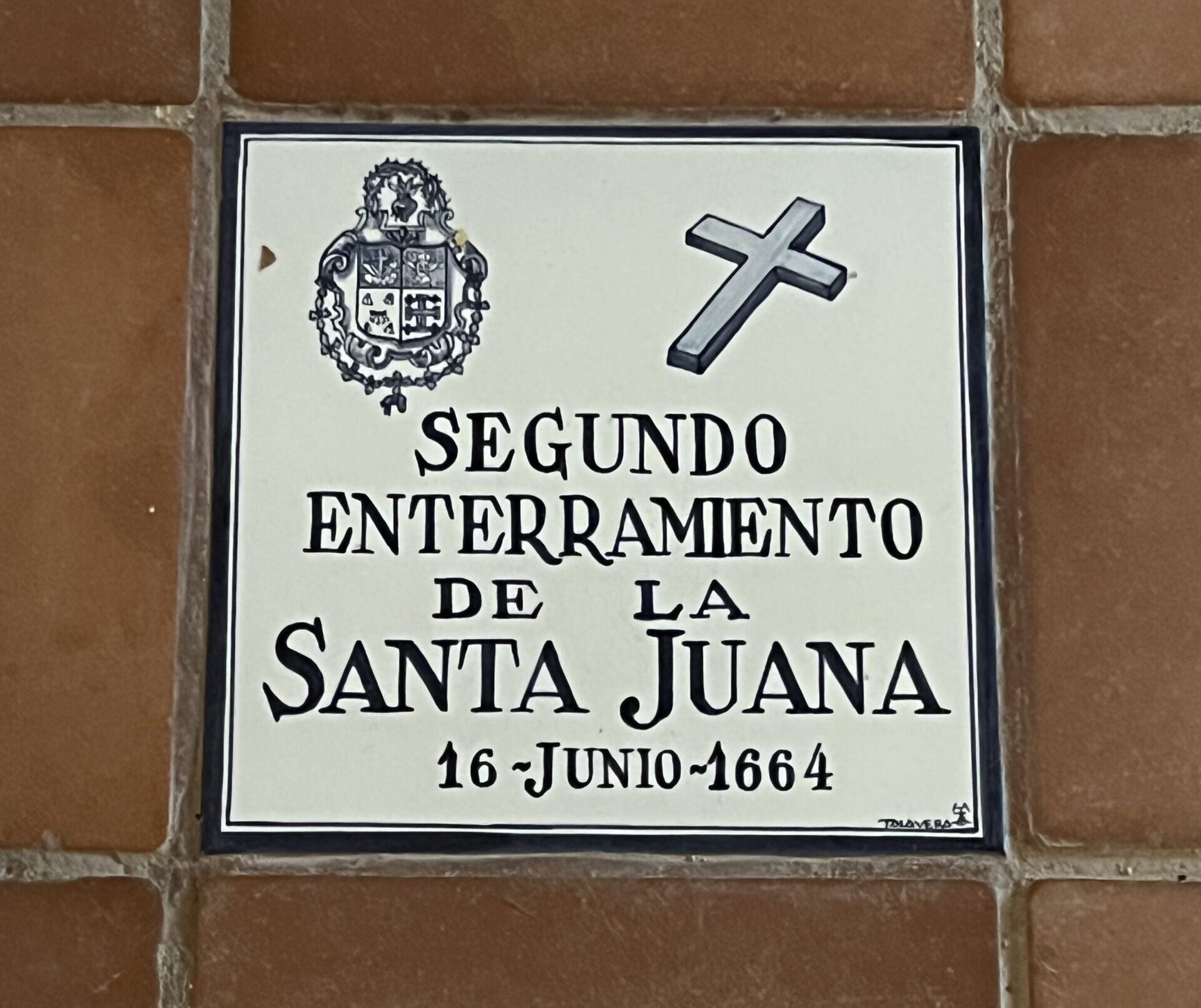
Philip III (1578-1621), King of Spain, Naples and Sicily, among other titles, and the Archbishop of Toledo are present when Sor Juana is exhumed. Then a sweet scent rises from her uncorrupted body. In 1664, Juana was reburied.
The monastery faces complete destruction and looting, as during the Napoleonic Wars (1792-1815), the Spanish War of Independence (1808-1814), and the Spanish Civil War (1936-1939), during which nuns die as martyrs in 1936. Following the destruction of the church and monastery, construction takes place. These are made possible partly through much help from the Friends of the Monastery. The buildings are completed in phases and the consecration is on 5th March 1994.
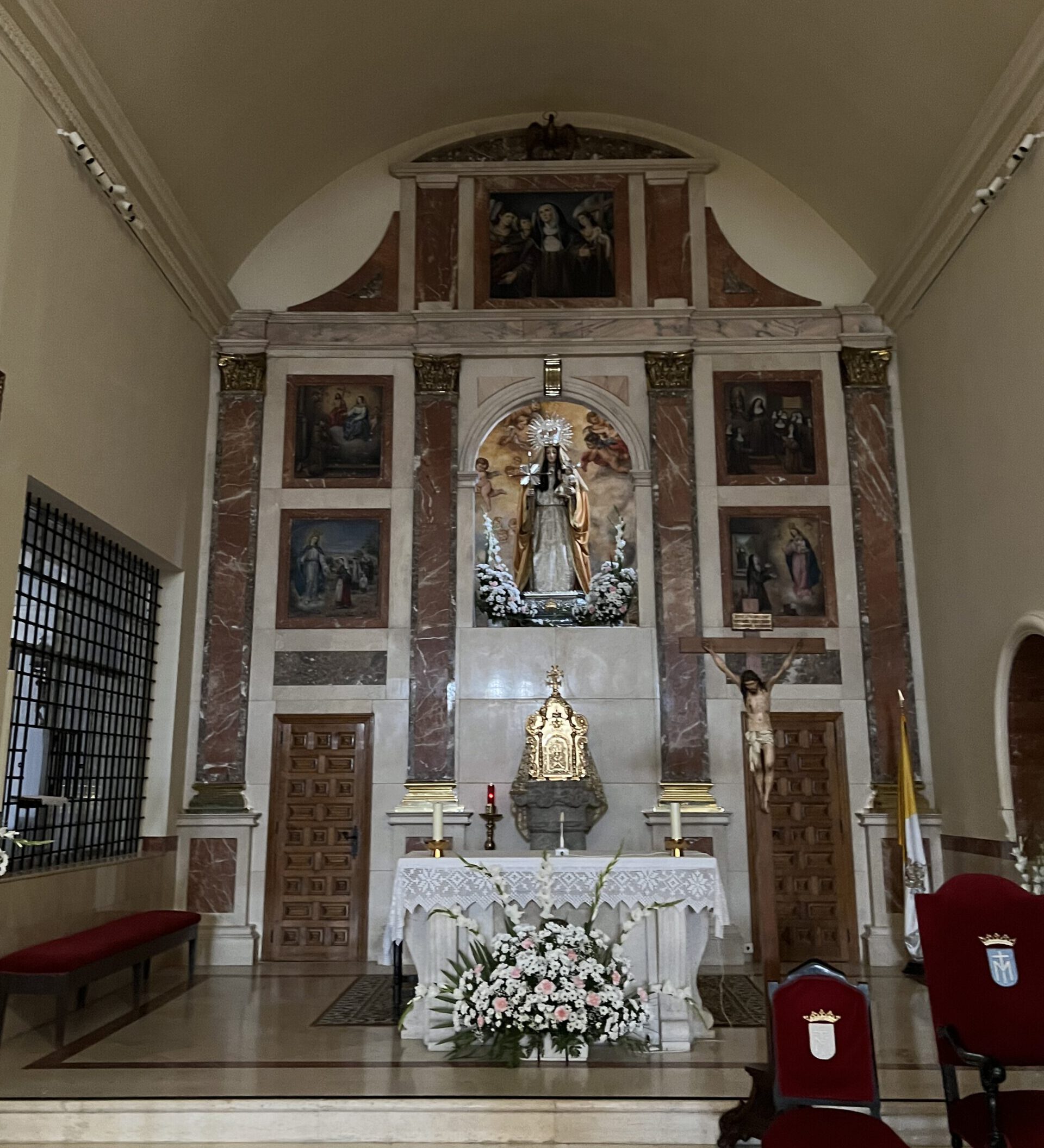
Over the many years, the convent has had various groups of residents. Since 1974, the Poor Clares have been the sisters of the convent.
In 2015, Pope Francis recognised Juana Vázquez Gutiérrez (Sor Juana de la Cruz) as Venerable Servant of God.
Pilgrimage site

Cubas de la Sagra means “vats of the holy”.
The intact body of Juana Vázquez Gutiérrez (Sor Juana de la Cruz) is located in the convent in a shrine.
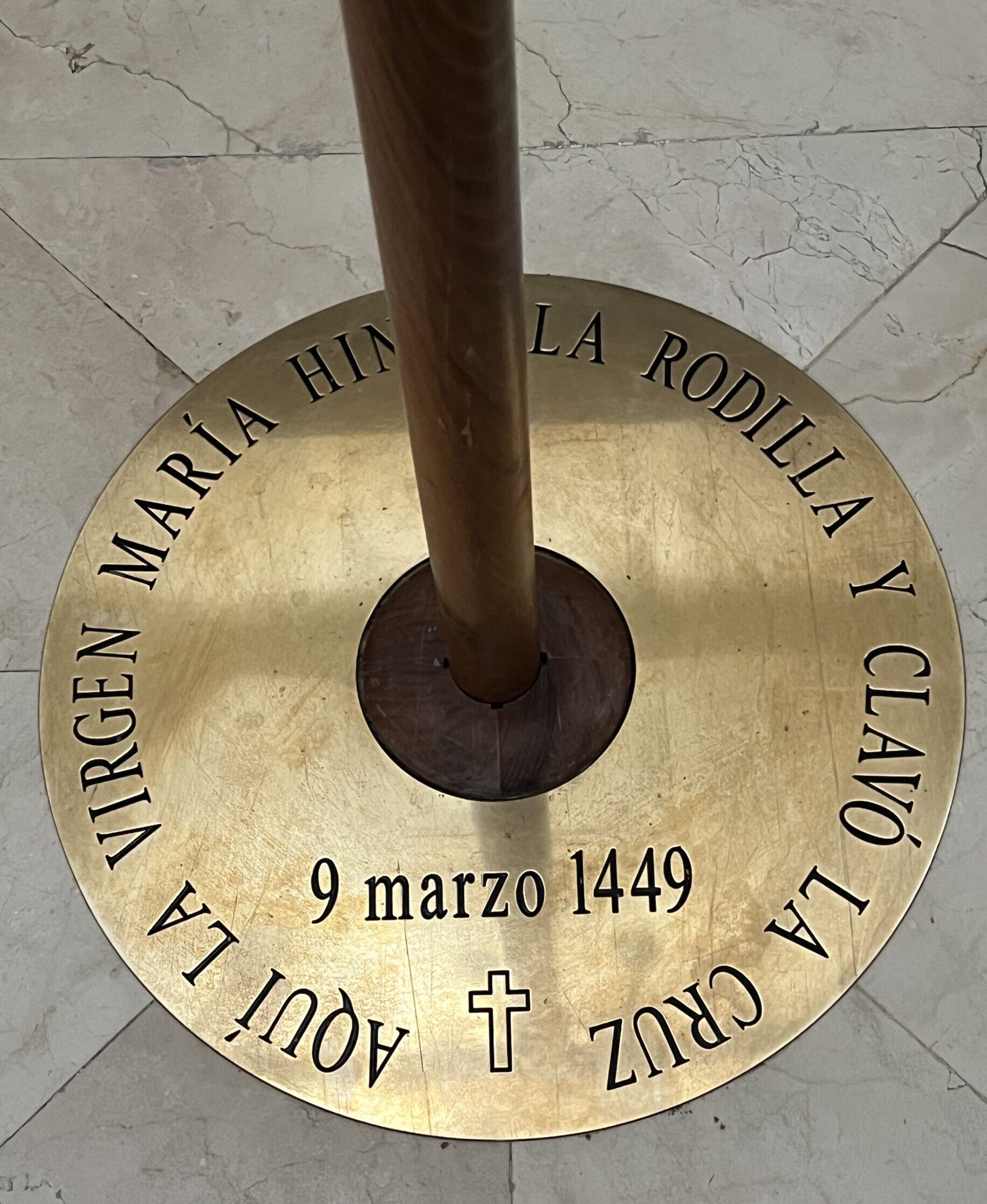
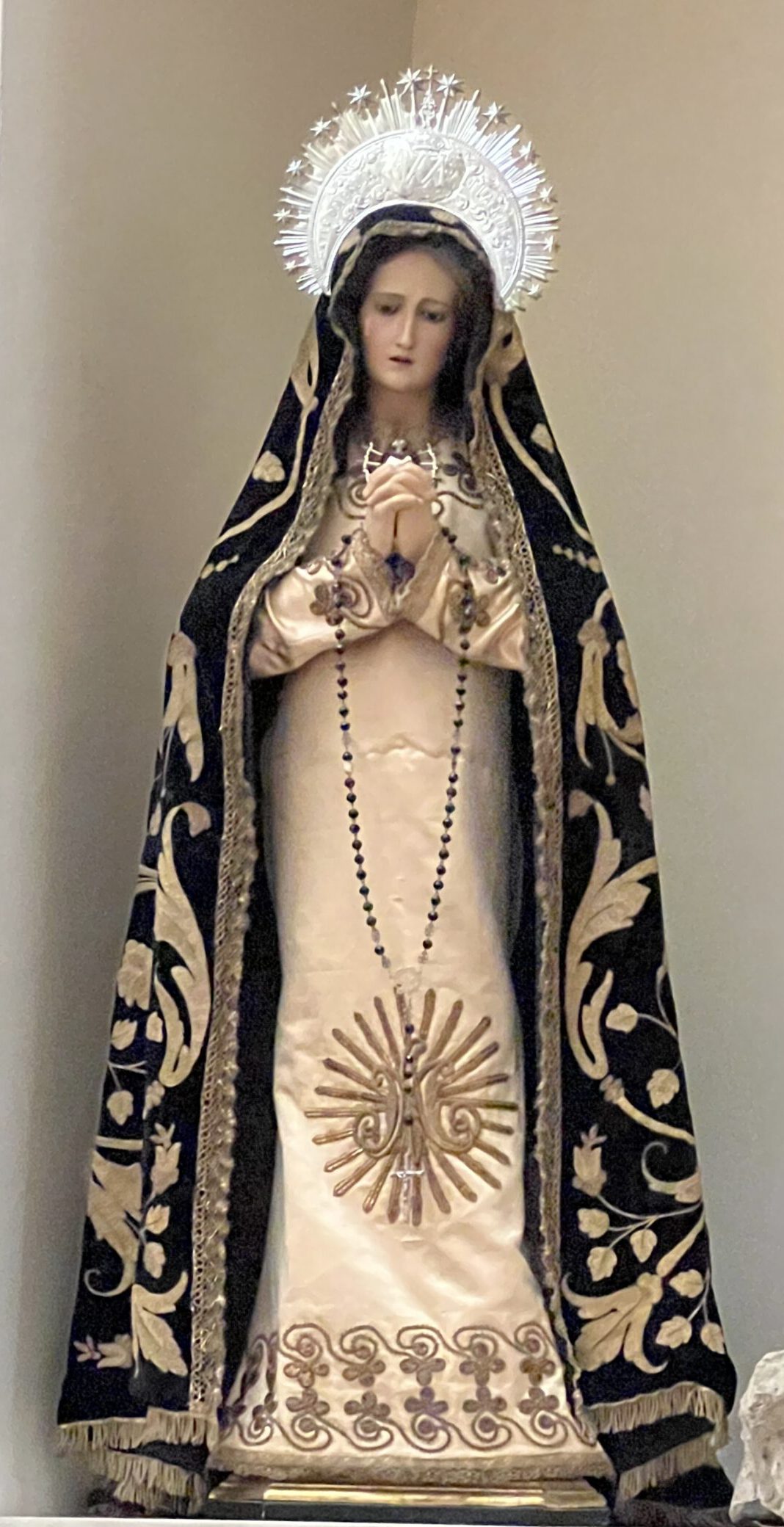
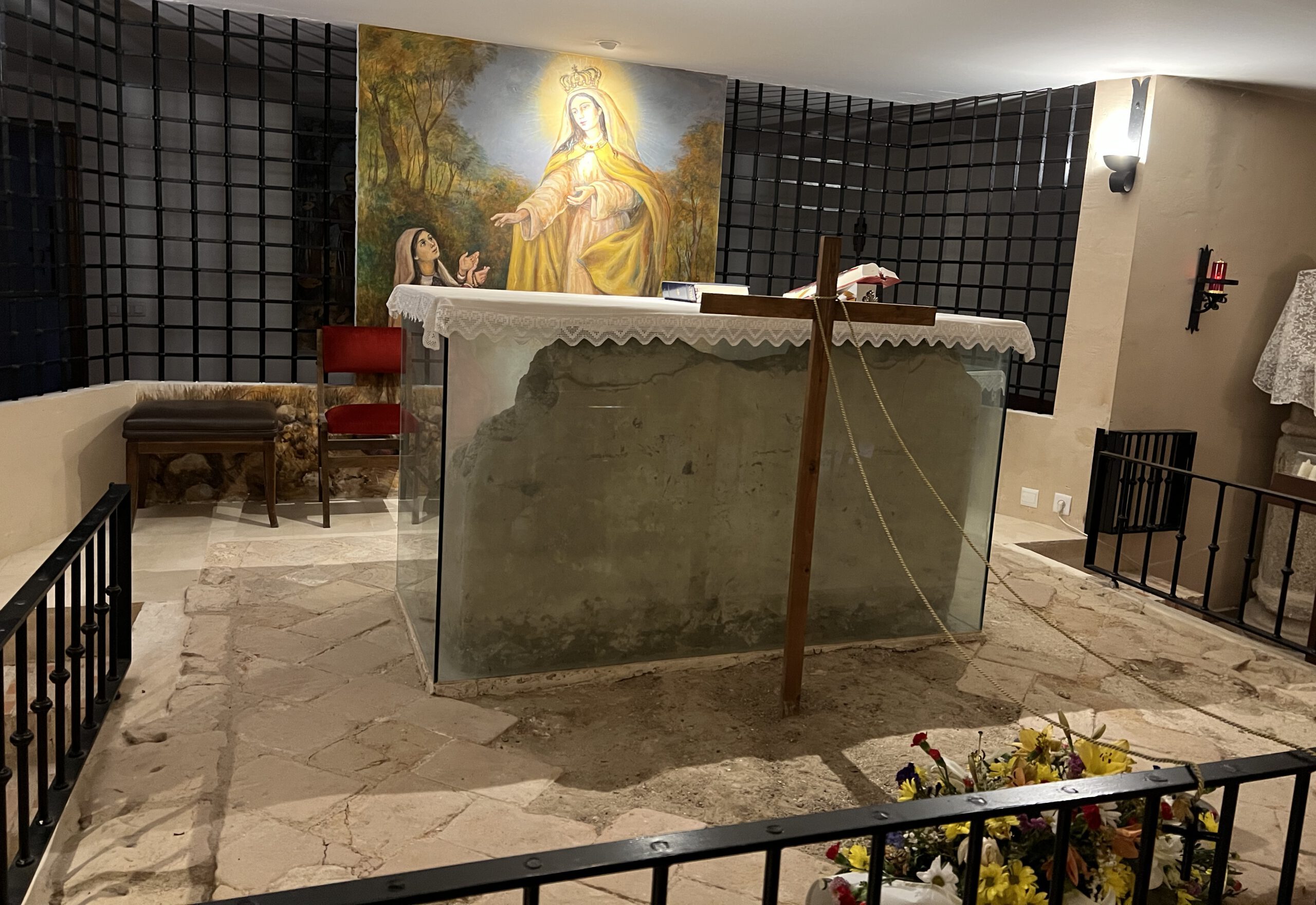
The church has much to see, including the main altar with a large statue of Our Lady and the cross, which marks the spot where Mary handed the cross to Inés. This happened on 9 March 1449. At the bottom by the cross is the inscription: Here the Virgin Mary knelt and nailed the cross. The crypt is worth visiting and there is an altar with a plaque referring to the generous donor, Teresa de Cardenas, who is buried here.
There are walking and cycling opportunities in the area.
ACCESSIBILITY
The pilgrimage site in Cubas de la Sagra is located in the centre of Spain, between Madrid and Toledo. The place is a municipality in the province and region of Madrid.
Address of the monastery
Monastery of the Cross and Saint Juana,
Convent of Saint Joan of the Cross,
Calle del Prado,
28978 Cubas de la Sagra
More up-to-date information can be found on www.telemadrid.es.
Experience
On the edge of the town of Cubas de la Sagra, between olive groves on the one side and cornfields on the other, I see the monastery of the sanctuary. As I approach, I see the monastery with its church, rebuilt a few decades ago. The outer walls are white, but what would it be like inside...
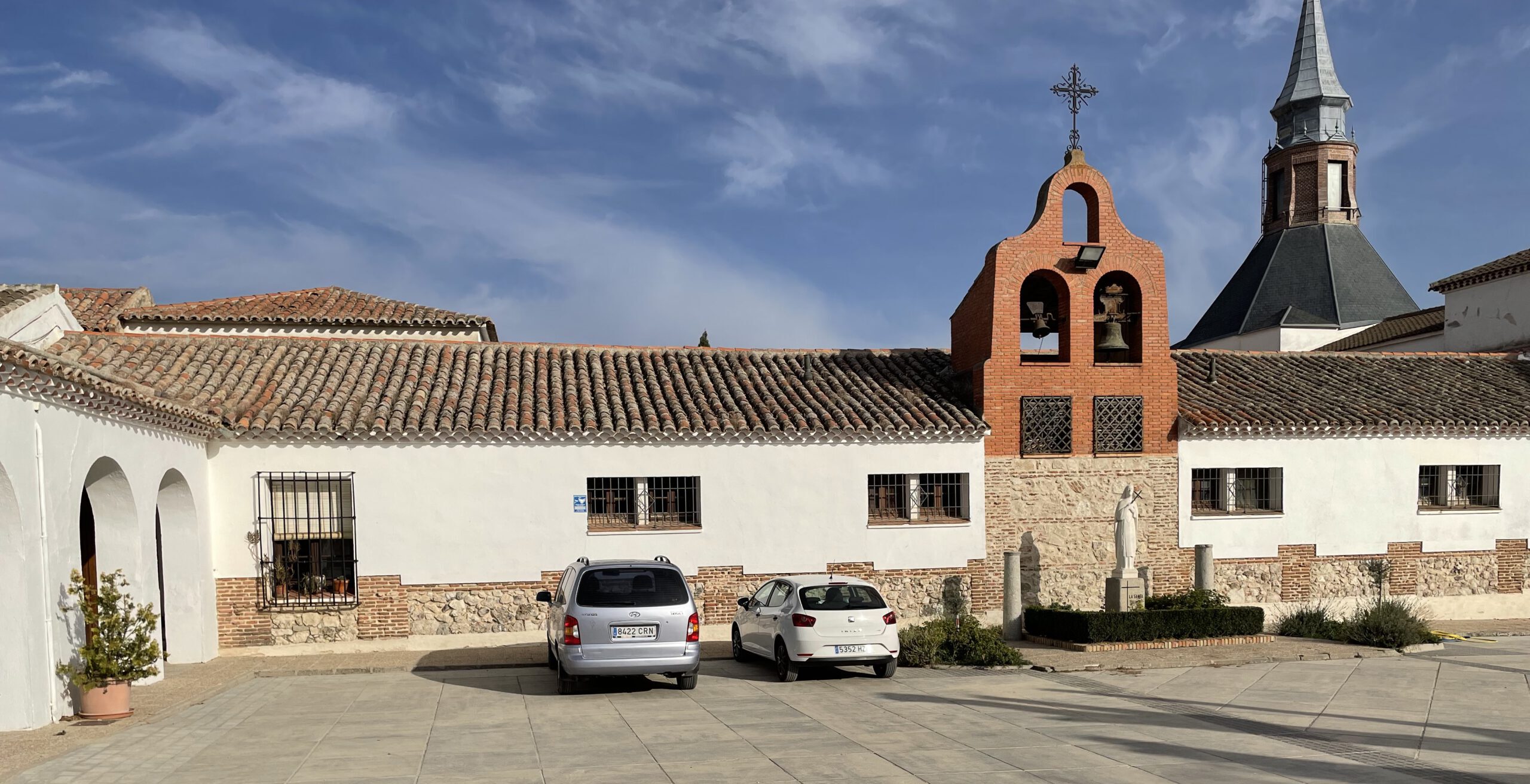
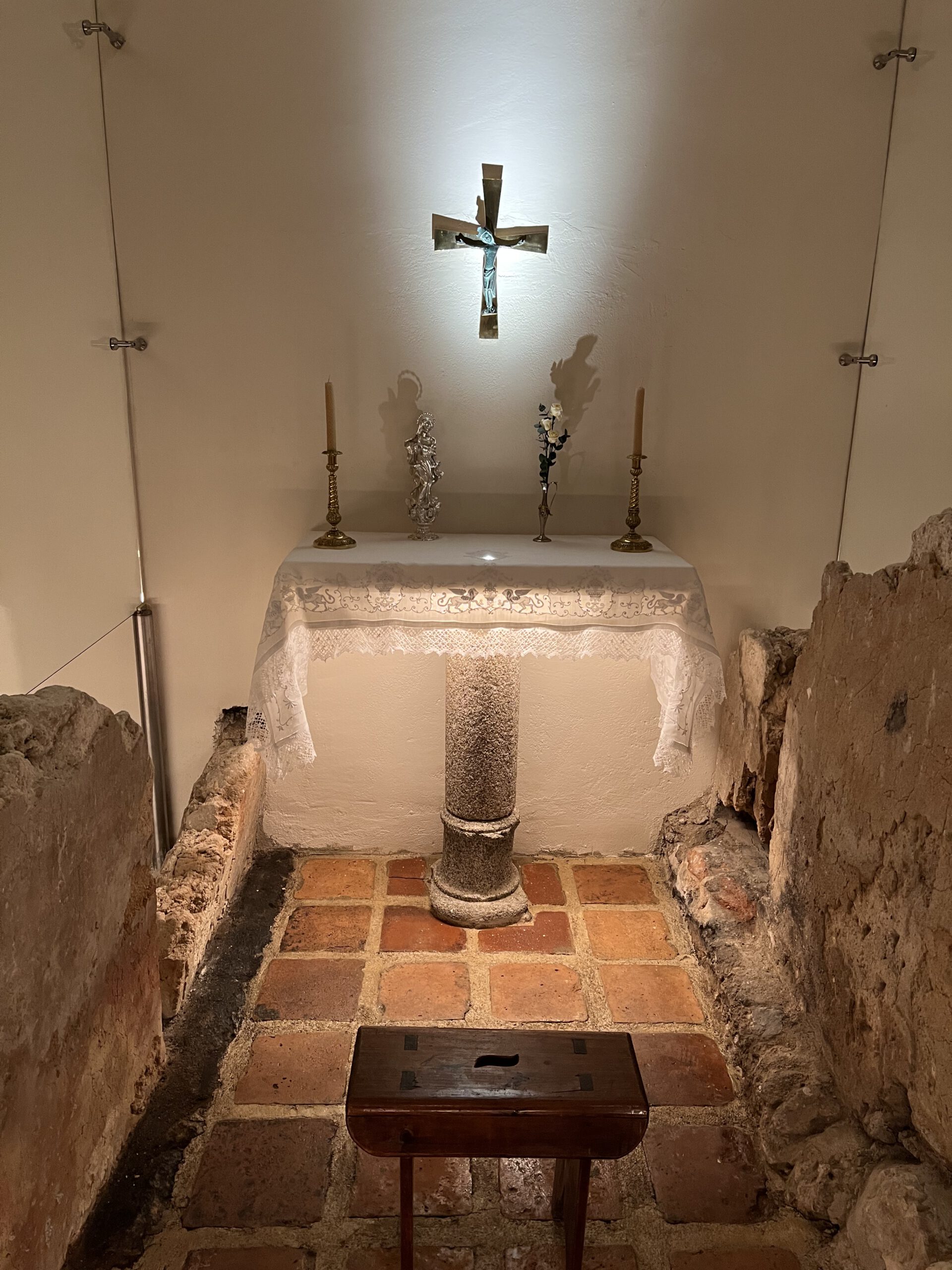
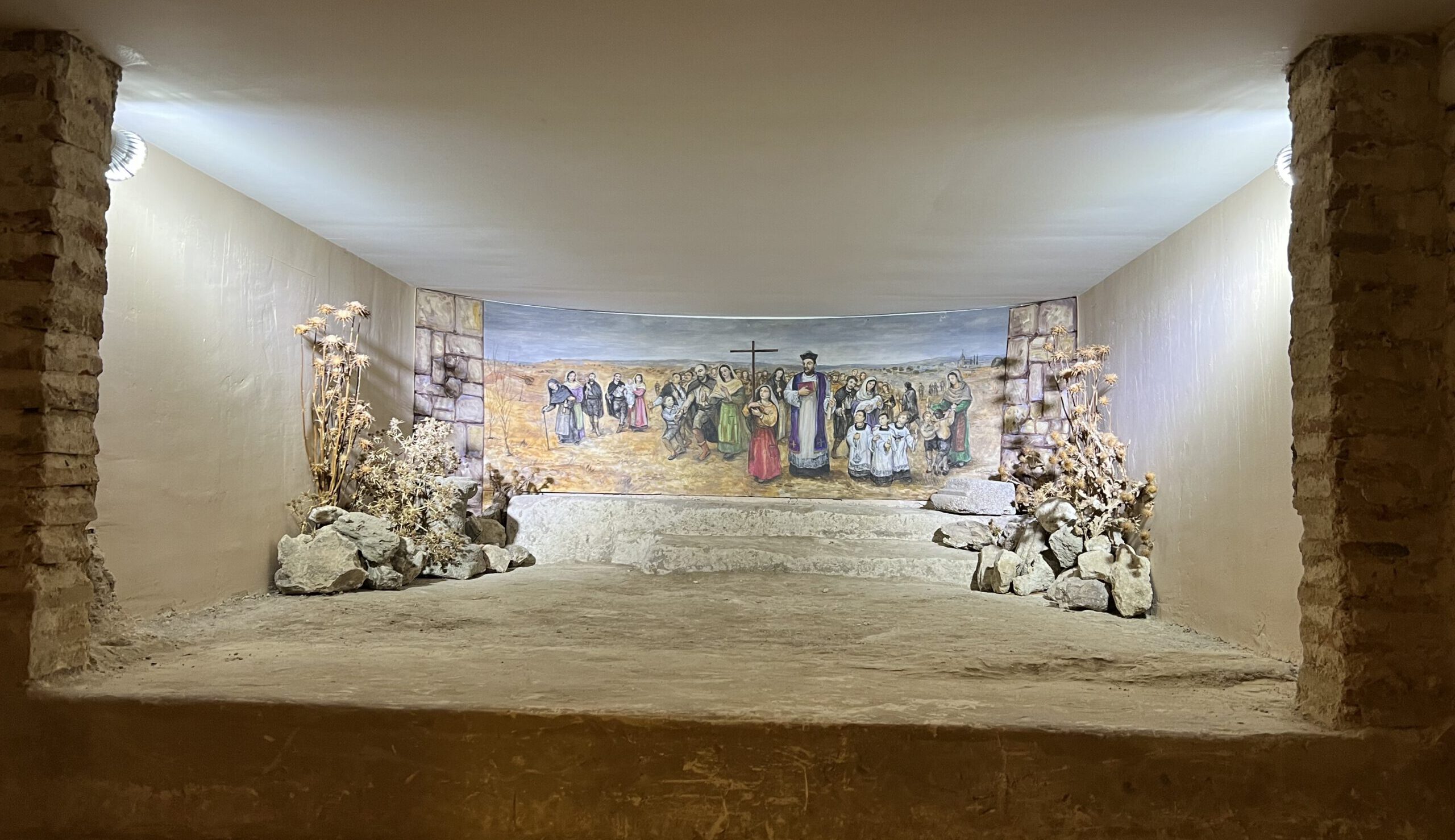
It's quite a coincidence, because when the gate opened, I met an enthusiastic man who told me he had only been active in the sanctuary for a few months. I told him about my writing and we talked about pilgrimage sites in Spain. The man then led me to the entrance of the church, where we met another gentleman who truly knew everything about the monastery and its church. This was quite special, as it meant I would get to see and hear more compared to an ordinary visitor. I received a detailed tour of the monastery and church from the sanctuary's expert. This man had been involved in the reconstruction of the Marian shrine and had helped uncover the underground chapel. The expert also mentioned that the entire sanctuary had been destroyed multiple times by anti-Catholics. I heard about the life of Sor Juana de la Cruz, how she experienced visions and stigmata, and received distinguished visitors like Cardinal Cisneros and Emperor Charles V. The expert and the new employee then took me to the crypt. I was allowed to pray there, and was shown where Mary had stood. The two Spaniards showed me even more, including remnants of the foundations of the former, destroyed church. I am very grateful to them for the tour, which I experienced as a gift from heaven.
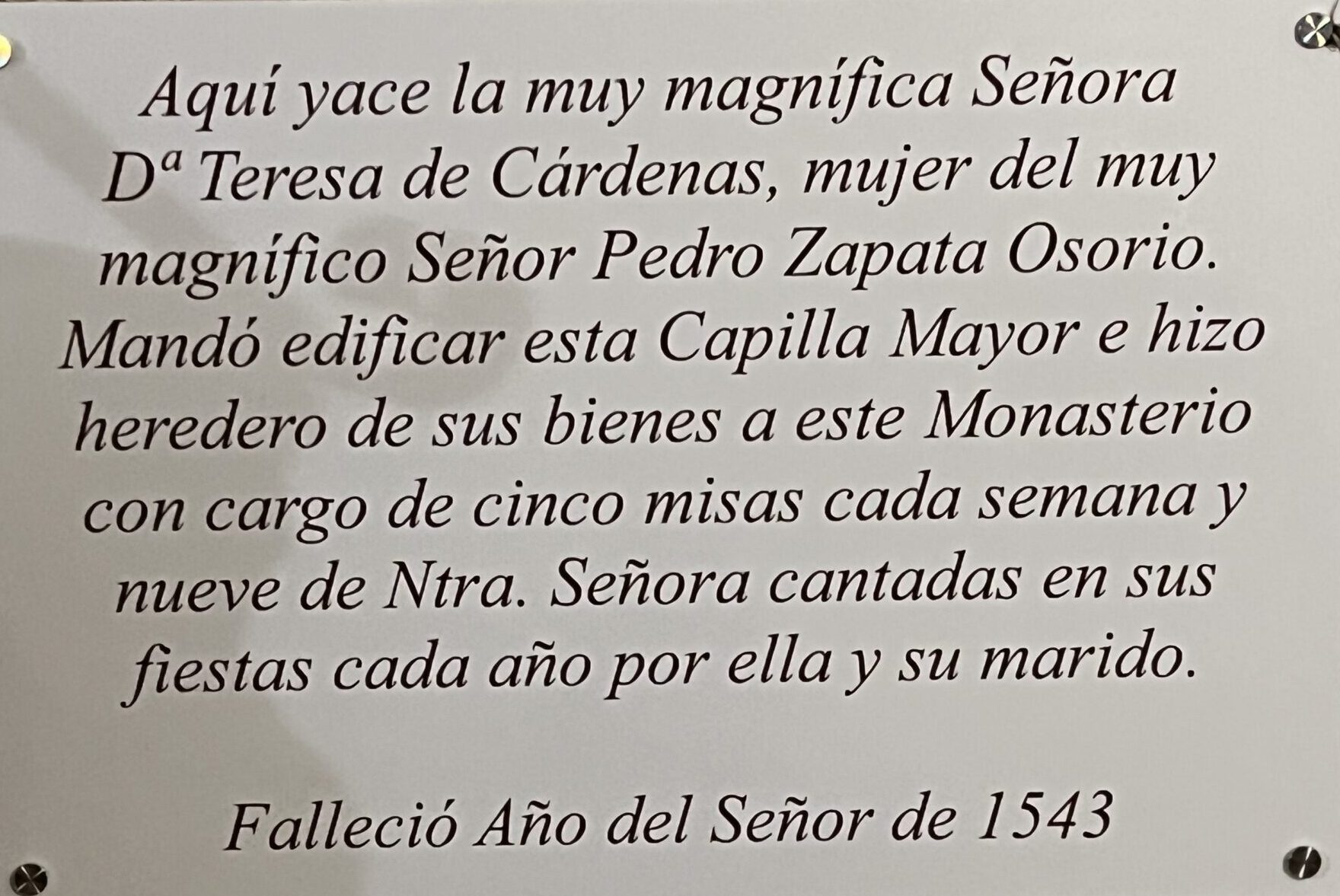
In the crypt, I see a memorial stone referring to the final resting place of Señora Teresa de Cardenas. She commissioned the construction of the main chapel and made this convent the heir to her property, with the instruction, among other things, for five masses per week. She died in 1543.
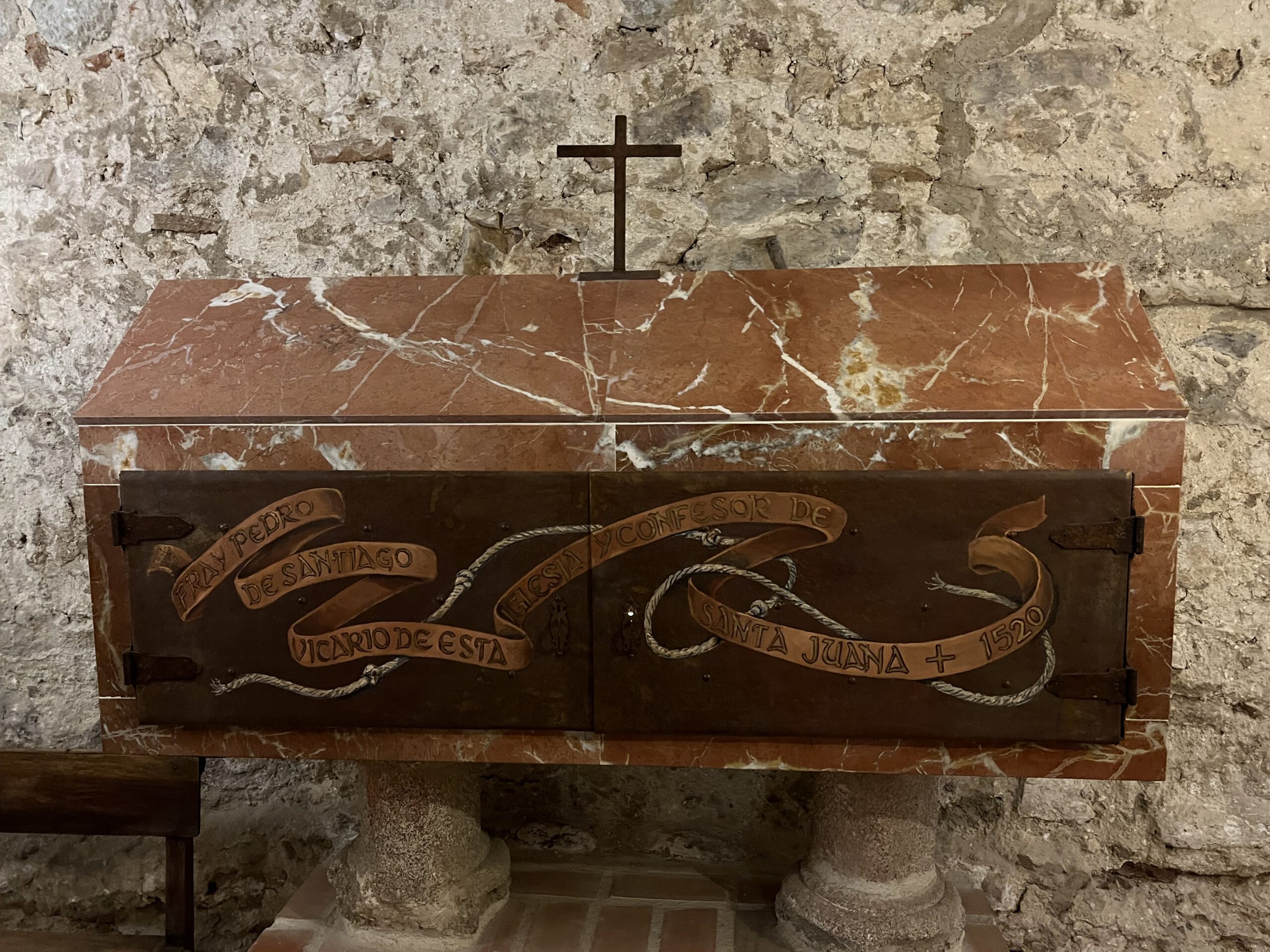
In the crypt, I come across the coffin of the monk Pedro de Santiago. He was the vicar of this church and the confessor of Saint Juana. There is a small hole halfway up the coffin and a little light is burning. I look and see a skull.
In the church, I see a cross in the middle aisle, fixed in the ground. This cross refers to the history that Mary appeared to Inés Martínez Sánchez multiple times in March 1449.
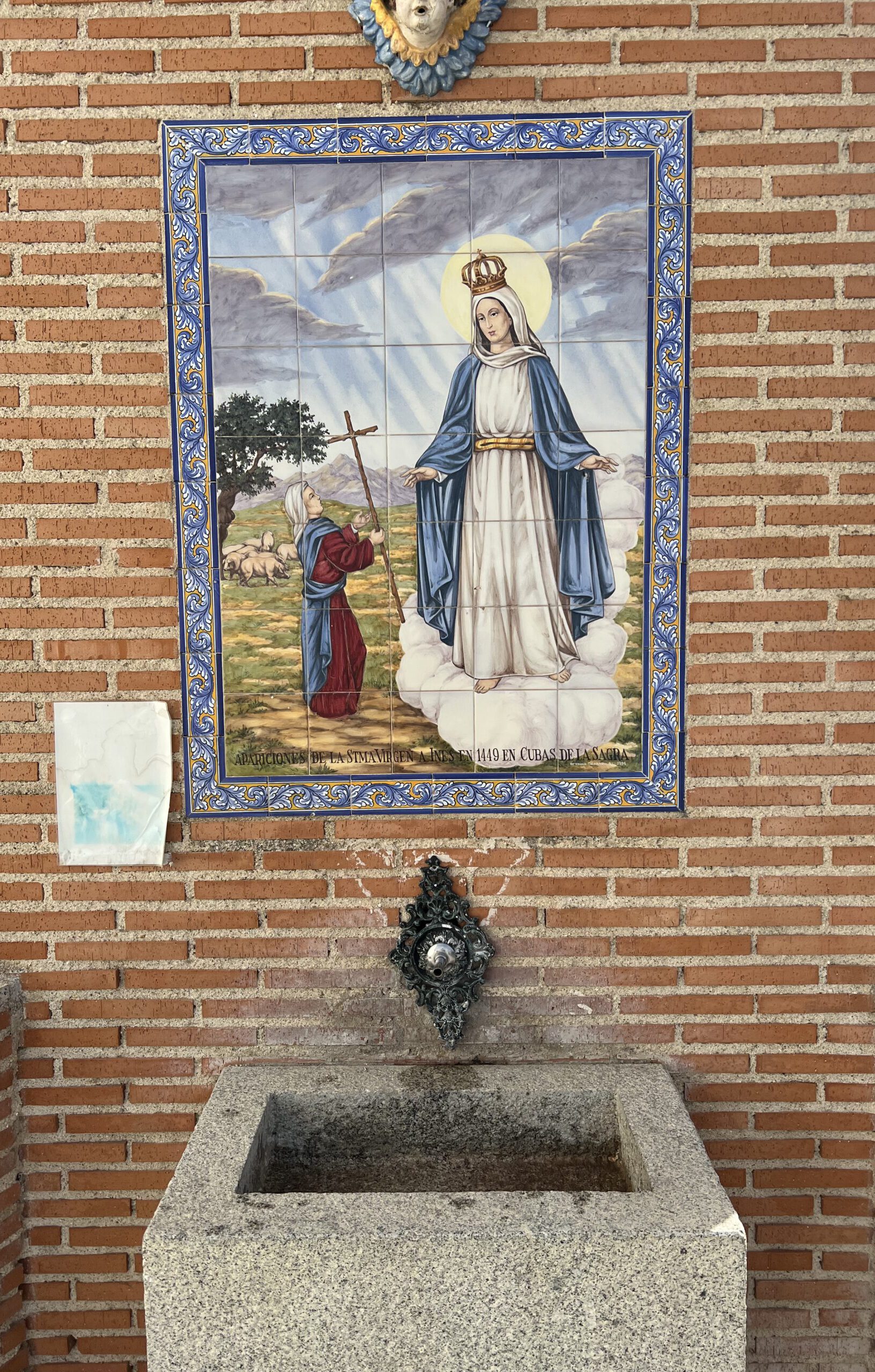
I leave the church and emerge into the square that lies in front of the monastery and church. Here stands a fountain, above which is a tiled mural depicting Maria and Inés from 1994. The ceramic artwork was created by the factory Artesanía Talaverana S.L. from Talavera de la Reina.
Posted: 30 October 2022
~~~

 Nederlands
  English (UK)
  Deutsch
  Français