History
San Sebastián de Garabandal lies to the southwest of the port city of Santander in northern Spain, at an altitude of approximately 600 metres above sea level. The residents of San Sebastián de Garabandal simply call their little village Garabandal. Our Lady appeared around 2,000 times in the period from 18 June 1961 up to and including 13 November 1965. The visionaries are four girls, named Conchita González (12 years old), Jacinta González (12 years old), Marie-Cruz González (11 years old), and Maria-Dolores Mazón (12 years old). Three of the four visionaries share the same surname but are not related to each other. Maria-Dolores is also referred to as Marie-Loli and Loli. During an apparition, the children fall backward onto the ground. Their heads remain a few centimetres above the ground. In ecstasy, the girls walk, with their heads tilted back, forwards or backwards through the village to the place of the apparition. They keep their eyes fixed on the Apparition. During an ecstasy, the children pray the rosary very slowly and attentively. They often go along a mountain path to a group of trees and later return to the village.
At the time of the apparitions, Garabandal is the poorest and most isolated village in the region. Saint Sebastian is the patron saint of the church, and this explains the town's name. The village is the only place in the entire area where residents attend church daily. The rosary is prayed daily in families' homes.
The apparitions of Our Lady occur in the period when the Second Vatican Council is being prepared. This is under the leadership of Pope John XXIII. This council is held in the period 1962-1965. According to Mary and many believers, the consequence of the general church assembly is a new decline of faith and church.
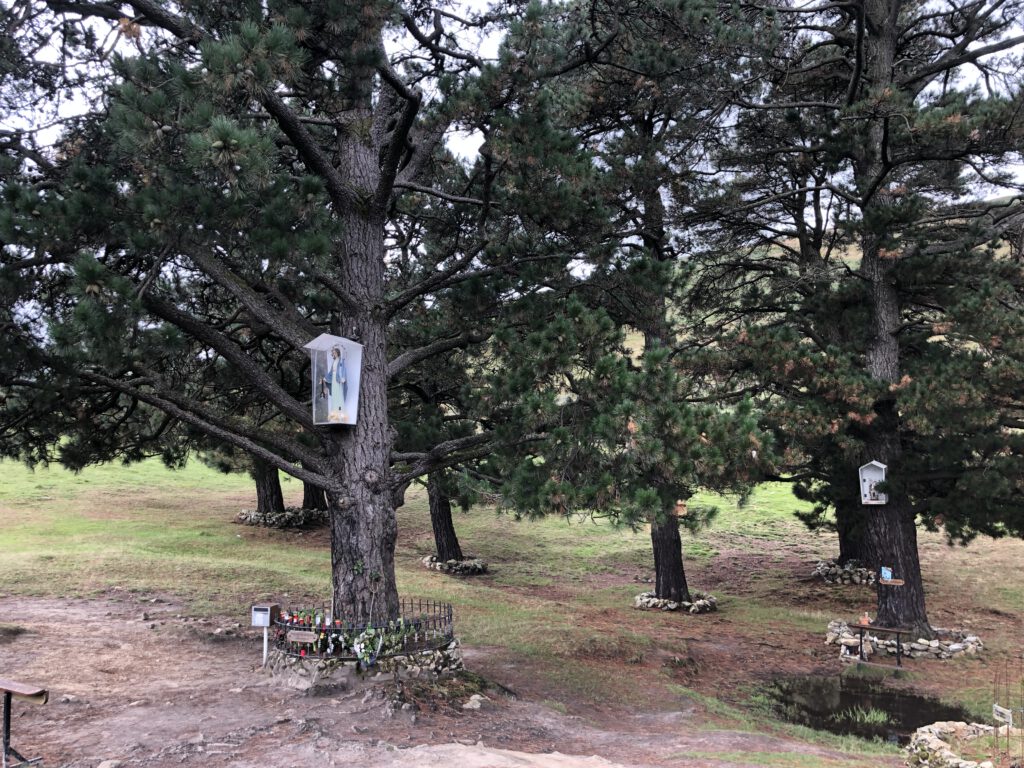
The apparitions of Our Lady take place, among other places, on the road (la calleja), which leads to a hill with pine trees, near this group of trees (los pinos), in front of and inside the church, in the village's narrow streets and in the houses of the visionaries. From the small church, it is a fifteen-minute uphill walk to the pine trees. The events announced by an angel and Mary have worldwide repercussions.
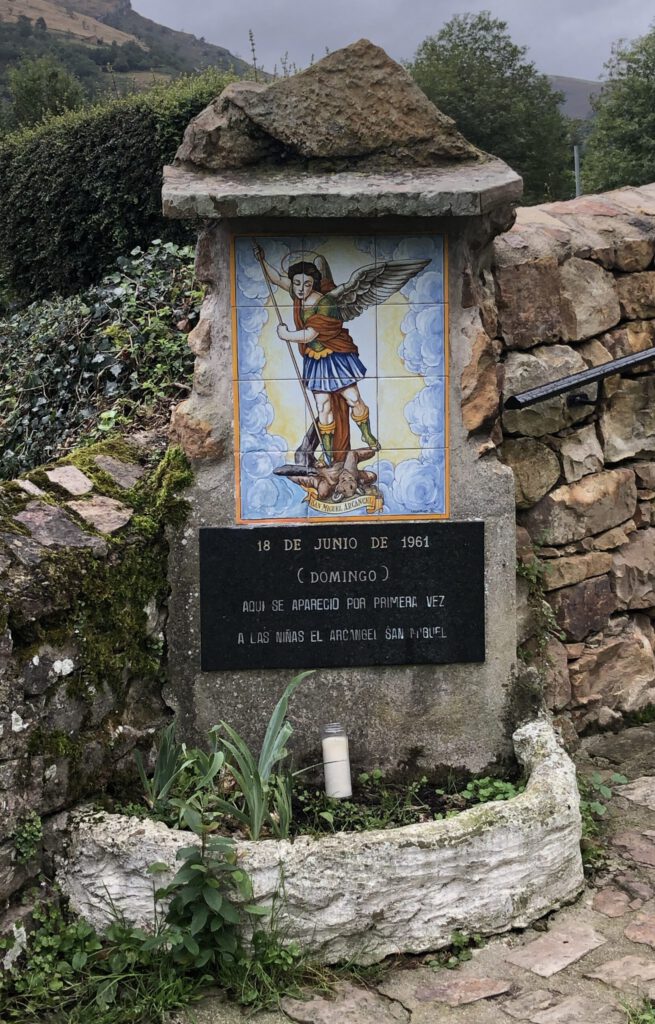
The first apparition is on 18 June 1961. In the evening, it suddenly thunders. Someone of great beauty stands before the four girls, and this form is surrounded by radiant light, which does not blind the children. They see an angel, and it disappears without speaking a word. This angel also appears on 20 June and the following days. The angel says that he is the Archangel Michael. On 1 July 1961, the angel says that Our Lady of Mount Carmel is coming. The angel has prepared the girls for the coming of Mary. This also happened in 1917 in Fátima, Portugal. In Fátima, it is the Angel of Peace, and in Garabandal, it is the Archangel Michael.
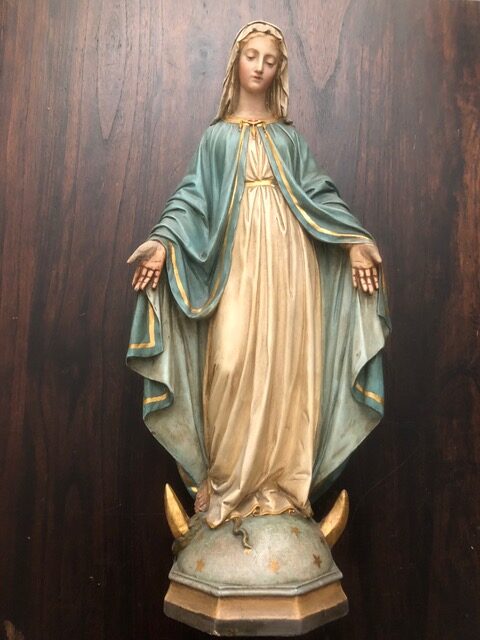
On the 2nd of July 1961, there was the first appearance of Our Lady of Mount Carmel. However, before Mary comes, the archangel Michael visits the children. Mary appears… She is dressed in white, wearing a blue cloak and a golden crown. Mary wears a brown scapular (two pieces of cloth) on her right arm. She has long, dark brown, wavy hair with a parting in the middle. The Apparition has a narrow face, a delicate nose and a sweet mouth. Her feet are invisible. The children estimate her age to be around 18 years. The Apparition has a particularly beautiful voice. At the children's request, the Apparition introduces herself as “Nuestra Señora del Carmen”, or “Our Lady of Mount Carmel”. The children tell others what has happened to them. However, the parish priest of nearby Cosío and, among others, Garabandal, Don Valentin Marichalar, has little patience with what the children say regarding the apparitions.
On 18 October 1961, the first, already announced message from Mary is made public. This takes place at the church. The text is intended for Father Don Valentin Marichalar to read aloud amongst the pine trees. Thousands of people are present in Garabandal on this day, despite the bad weather with heavy rain. The message is about making many sacrifices, doing a lot of penance, frequenting the Holy Sacrament, and behaving well, otherwise punishment will follow. Mary also says that the cup is filling, and if people do not change, a severe punishment will strike them.
On 18 July 1962, a great mystery occurred, as an invisible giver suddenly placed a communion wafer on Conchita González's tongue. This wafer was white, glistening, and shimmering. The girl was in ecstasy and motionless. She opened her mouth, stuck out her tongue, and received the visible communion wafer. Photographs and a film recording were made of this.
In 1961 and 1962, Mary appears frequently, often multiple times a day. In 1963, there are hardly any apparitions, but the children do hear inner voices. Our Lady of Mount Carmel teaches the four children how to pray. This involves slowly reciting the words, allowing them to sink in, leading to an understanding of the prayer's content. The children receive objects from people. During apparitions, the children hand rosaries and other items from pilgrims to Mary to be kissed by Her. While doing this, the girls keep their gaze fixed on the Apparition. Doctors and psychologists rule out the possibility of manipulation. Experts also examine the children. However, this yields no remarkable findings. The children are considered normal.
On 18 June 1965, many pilgrims were present in Garabandal. Maria had announced that an apparition would take place on this day. Late in the evening, Conchita went up the rocky mountain path to the pine trees. Suddenly, a new, large and beautiful star was seen. This pointed celestial body made a large circle. After this, another bright star appeared. First, it stood above Conchita's house and then by the pine trees before disappearing. The angel appeared, and a little later, Maria. Our Lady of Mount Carmel said she was concerned about the Eucharist, as the real presence of Jesus in the Holy Eucharist was being disputed by clergy, theologians, and others. This was Maria's criticism of the Church. The words of the Apparition included:
My message of 18 October 1961 has not been fulfilled and has not been sufficiently publicised worldwide. As a result, this message is one of the last.
The chalice has filled and is overflowing.
- Many clergy are going down the wrong path and are leading believers astray with them. People are attaching less and less value to the Eucharist.
Efforts are needed to avert God's anger. After asking for forgiveness, forgiveness follows.
I am your Mother and I ask you to mend your ways.
This is one of the final warnings.
I love you and don't want you to be lost.
-Plead sincerely, make sacrifices, and We will answer you.
The last apparition was on 13 November 1965. Mary says she has come for all her children to bring them closer to the hearts of God and Hers. Mary kisses what little objects Conchita has brought with her. She says that through the kiss her Son will perform miracles.
According to Conchita González, Our Lady of Mount Carmel has given further warnings, such as a chastisement is coming, from which no one can escape. Everyone will receive a warning to recognise their own sinfulness. The goal is to draw good people closer to God, and for others, it is an exhortation to repent. Following this will be the GreatWunder, the date of which only Conchita González knows. This miracle will only be visible in Garabandal. It will occur on a Thursday at 8:30 PM and will last for fifteen minutes. The sick present will be healed, and everyone will believe. Both the Pope and Padre Pio will see it. A beam of light will remain above a pine tree. Only after the Great Wunder will the apparitions be recognised by the Church. This miracle will be announced eight days in advance. This Great Wunder is seen as a prophecy by Conchita González, and there is doubt regarding its prophetic value.
The great disseminators of the messages of Garabandal are Joey Lomangino and Luis Marie Andreu. Joey Lomangino is a blind American who has dedicated his life to spreading the messages of Mary in Garabandal. He will see on the day of the Great Miracle. The Jesuit priest Luis Marie Andreu is quite committed to publicising the messages. On 8 August 1961, he participated in an ecstasy of the four girls. He saw the face of Our Lady of Mount Carmel and also the Great Miracle that is coming. He told the priest of Garabandal that what the girls had seen was true. That same evening, he died at the age of 38.
The bishop of Fatima is also a great helper in spreading what Mary said at Garabandal. The then bishop of Fatima, João Pereira Venancio, was convinced of the authenticity of the apparitions. He became good friends with the seer Conchita González and her family. This bishop visited Conchita several times in her new homeland, America. This happened after he had met her in Fatima. In April 1982, he stated at the Sanctuary of Fatima that the apparitions at Garabandal were a continuation of what Mary said at Fatima in 1917. This is reinforced by Mary's words on 13 October 1917, the day of the last apparition in Fatima. Mary then said that She is Our Lady of Mount Carmel. She also said this at Garabandal.
Since 1965, many clergy have left their posts and liturgical experiments have been carried out, but according to Our Lady of Mount Carmel, these are contrary to Catholic doctrine and tradition. The messages of Our Lady in Garabandal expose sore points, but church leaders ignore them.
The apparitions in Garabandal have not been recognised by the Catholic Church. Following an investigation by the Diocese of Santander, the conclusion is that the supernatural is not established. The diocese also states that one of the visionaries has retracted her words. According to Bishop Vicente Puchol Montis, Bishop of Santander from 1965 to 1967, there was a voluntary retraction. Significantly, he died in a car accident a few days after this statement, on 8 May 1967. On 15 August 1967, visionary Conchita González stated that certainty regarding the apparitions had abandoned her. However, exceptional events did occur in Garabandal between 1961 and 1965. Communion was administered by an invisible angel, the visionaries experienced ecstasies with their necks invariably bent backwards, and the visionaries fell without sustaining injuries.
In 1978, the magazine “The Magazine of Garabandal” was published in the United States of America.
The predicted miracles have not materialised, and as a result, there is a lack of clarity regarding the special events in Garabandal.
Pilgrimage site
The drive from Cosio to Garabandal, the nearest village, now follows a tarmac road. At the time of the apparitions, it involved following a cart track for just over 5 kilometres. Upon arriving in Garabandal, the road ends.
In the centre of the village of Garabandal stands the parish church, which is dedicated to Saint Sebastian. The church is an oasis of peace for praying, reflecting on the time of the apparitions and enjoying the beauty of the interior. This church plays a relevant role in the apparitions. Under the church porch, the four children, after praying the rosary, fell into ecstasy on several occasions. It was also here that two of the visionaries, Conchita and Loli, received an invisible host from an angel.
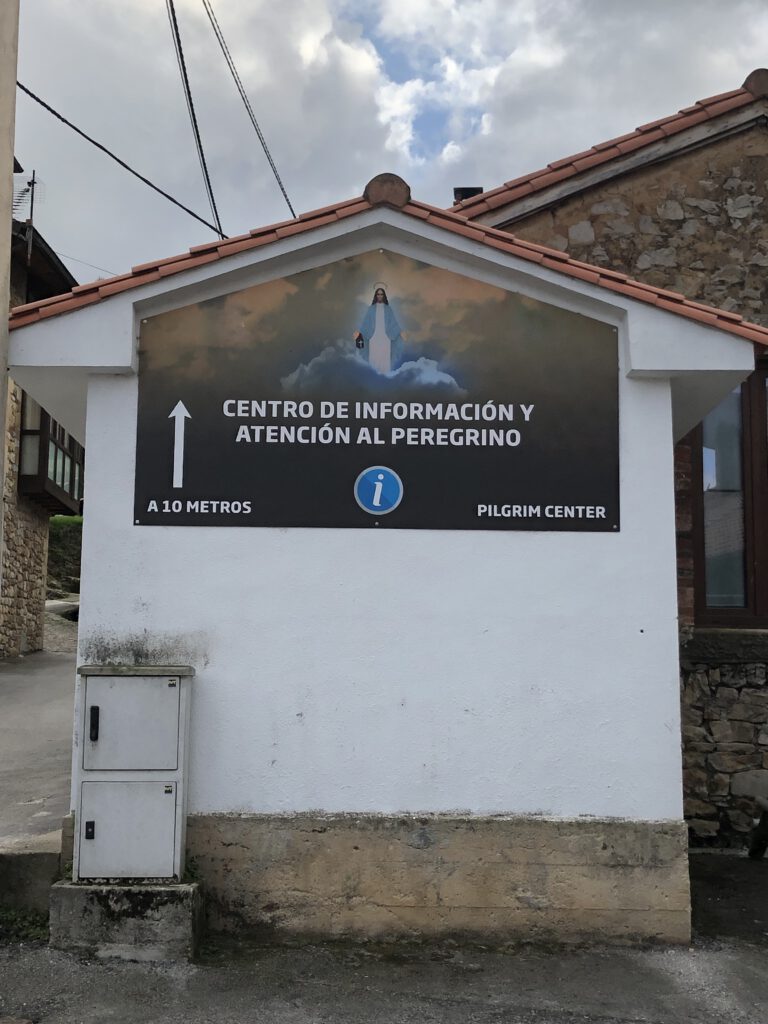
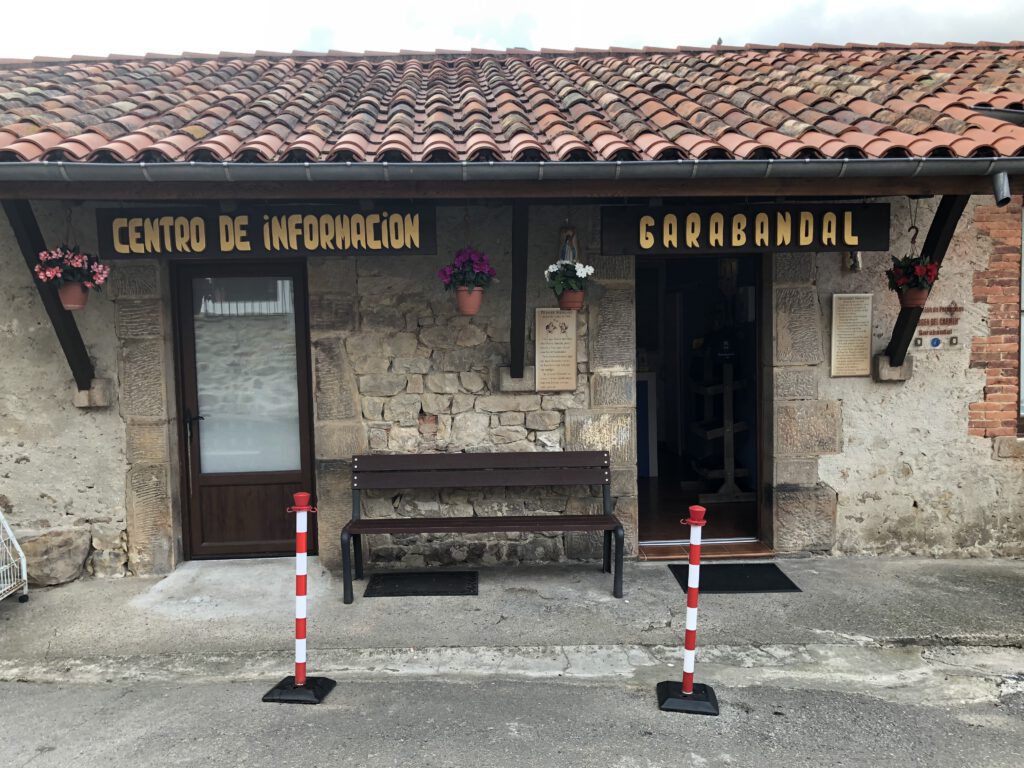
Near the little church, there is an information centre. Devotional items, books and DVDs are also for sale here. Films about the apparitions in Garabandal are shown in the centre.
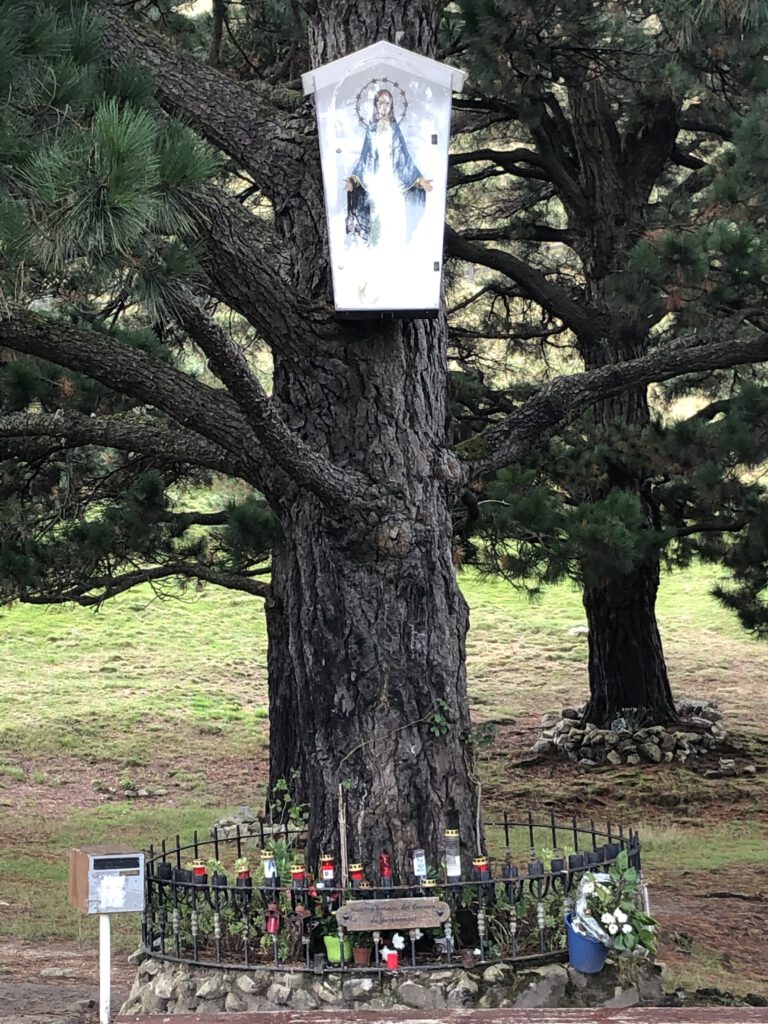
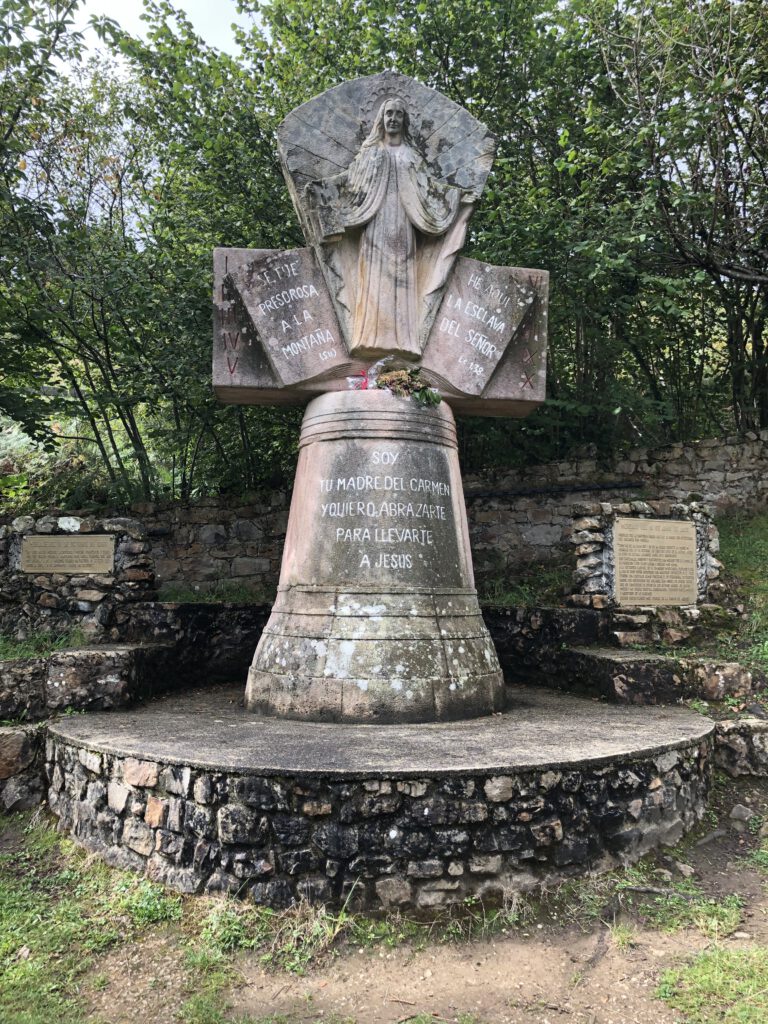
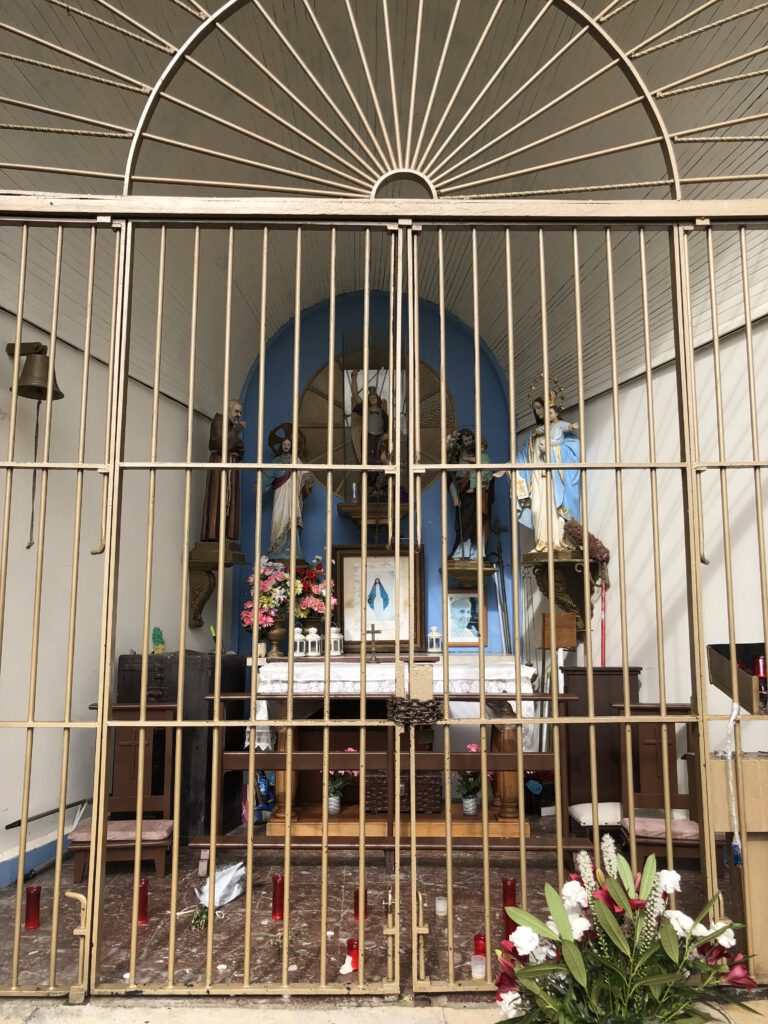
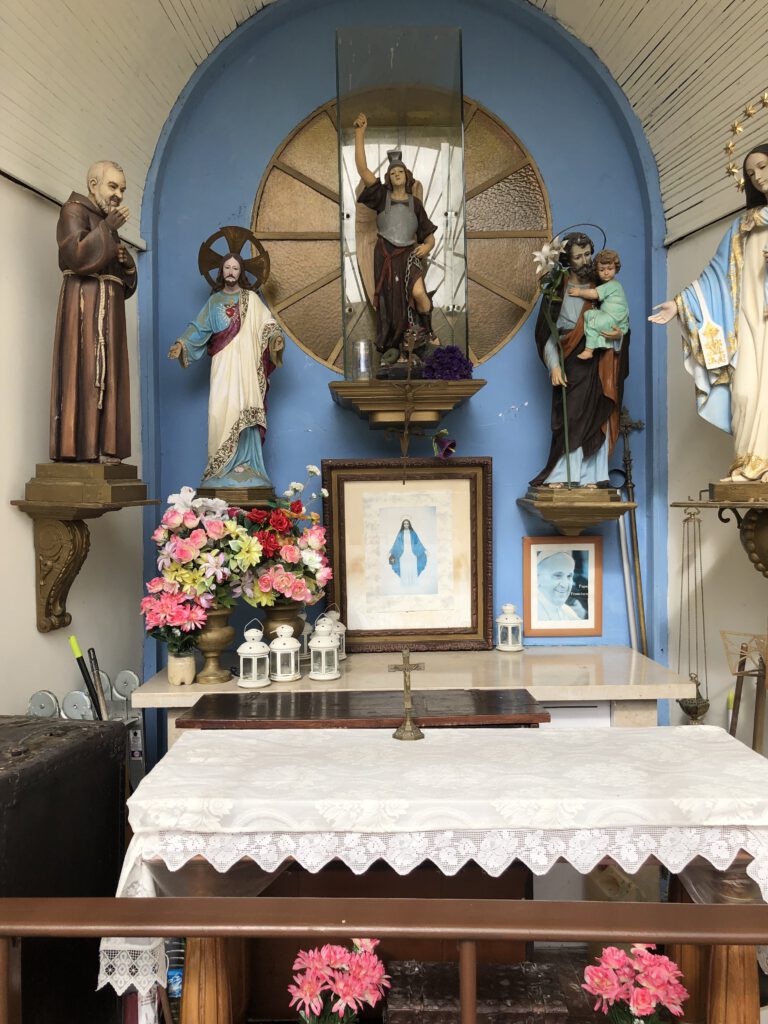
A visit to the “los Pinos” pine trees is possible by following a small mountain path and walking carefully for about fifteen minutes. It is a steep path with worn stones. Many have been here… On the way to the pine trees, Archangel Michael can be seen. He appeared here on 18 June 1961. An image of Mary with angels marks the spot of Her first apparition on 2 July 1961. A little further on stands a large, white statue of Jesus. The Stations of the Cross begin here, and all the stations are in colour and behind glass. Between stations 3 and 4, memorial stones and a large statue of Mary have been placed. This is the place of the apparition of 18 October 1961. A chapel of Archangel Michael has been made here. There are also statues of Padre Pio, Jesus, Joseph, and Mary with child. At station 8 are the pine trees. To the right is the Rosary Way. By the group of trees, there are benches, and on this slightly elevated plateau, many apparitions have taken place. It is a quiet, mysterious place of prayer. Here Mary said: “This place is holy! God loves this place very much.” The Stations of the Cross continue further…
The diocesan commission investigated the events in Garabandal. However, the members of this commission only visited Garabandal on a single occasion. The investigation appears to be a farce. Objectivity is absent, as is the depth of the work. In 1967, the conclusion of their work was reached, stating that there is a natural explanation for the ecstasies of the four girls. This is remarkable, as doctors, psychiatrists, and theologians concluded that no natural explanations can be found for the apparitions and ecstasies. The outcome of the investigation, commissioned by the diocese, is a non-recognition of the apparitions. Perhaps “Our Lady of Mount Carmel” expressed herself too critically of the church in her utterances... In 1993, the Bishop of Santander issued a letter stating that it is not established that the events in San Sebastián de Garabandal are supernatural.
ACCESSIBILITY
On the motorway from Santander to Oviedo, take the exit at Cabezón de la Sal. Then head in the direction of Puentenansa and follow the road to Cosío. From Cosío, follow a climbing and winding road which arrives in San Sebastián de Garabandal.
Websites to visit:
www.garabandalparroquia.com
www.garabandal.org
Experience
After a car journey of over five hours from Lourdes to Garabandal, I arrive in the mountain village. First on my wish list is a visit to the little church. I want to thank Mary for the safe journey. When I stand in front of the mountain church, I am in the very place where the four children experienced many ecstasies. This often happened after praying the rosary, under the canopy of this little church. It is also in this place that an angel gave hosts to the children.
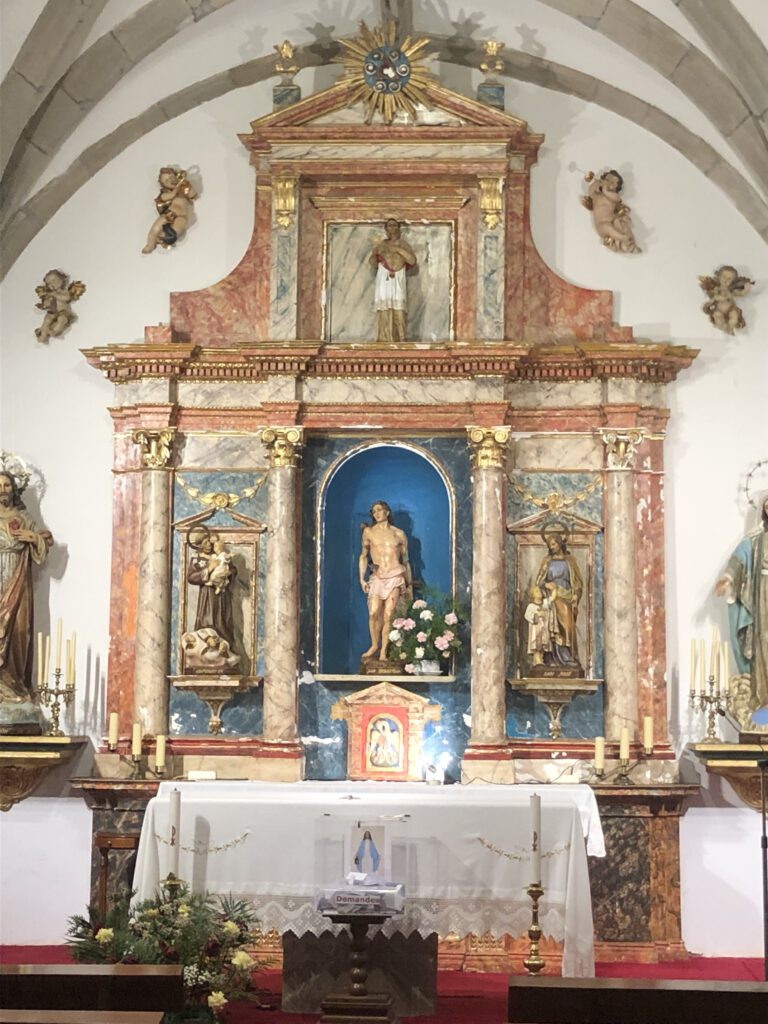
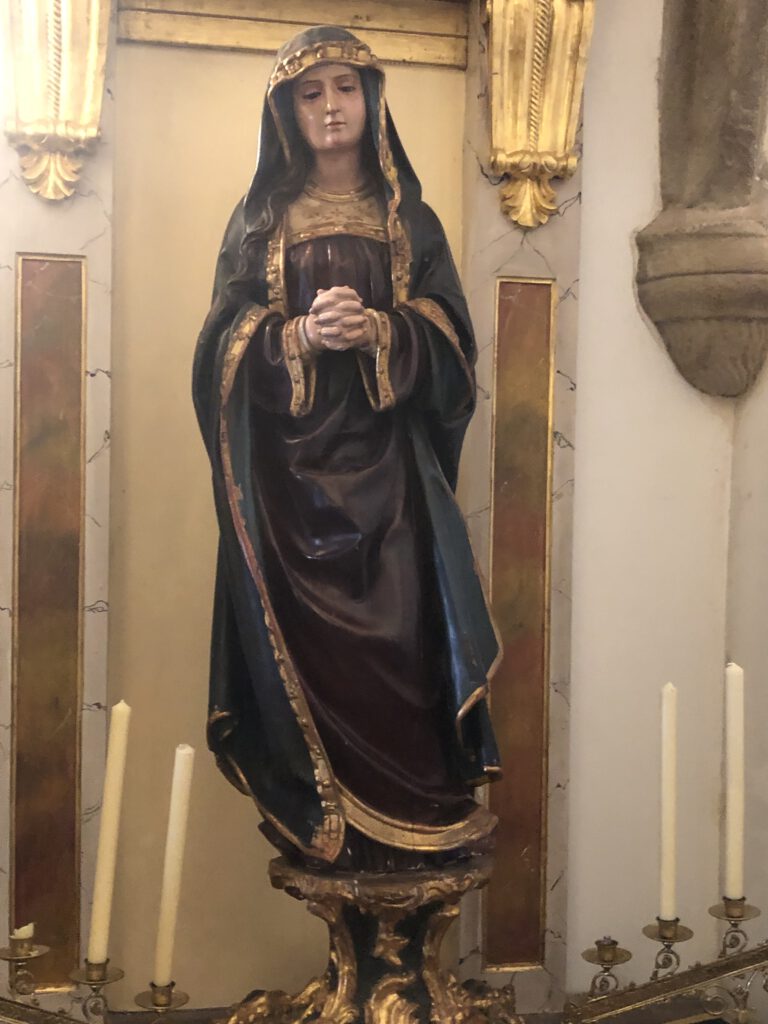
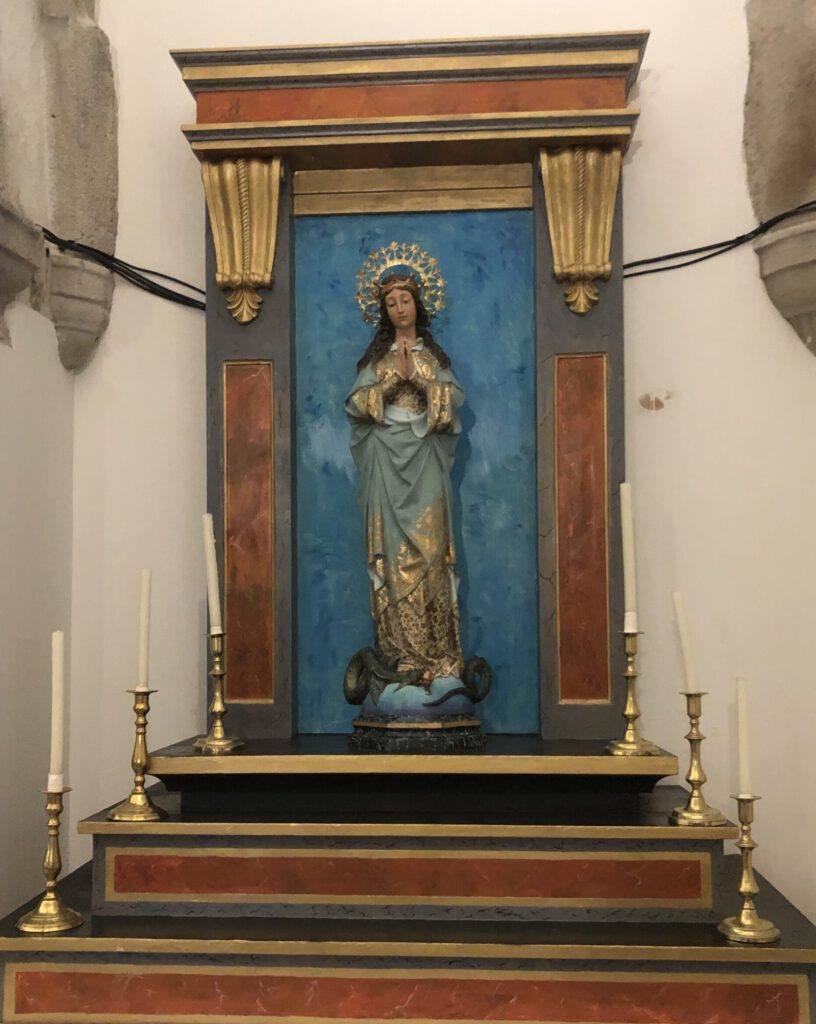
Next, I'll go inside. The cute little building has several statues of Mary, some with and some without a child. A statue of Our Lady of Fatima is at the back of this little church. I also see an image of Saint Therese and one of the Archangel Michael. This angel is in combat with the dragon. The temperature is pleasant in this house of God and considerably less than the 30 degrees outside. What thick walls can block out... I’ll take a seat right at the back of the church; a spot on the last pew. Above me, there is a space for a choir. Thick, old, brown, wooden beams hold the structure more than two metres off the ground. I feel quite safe here.
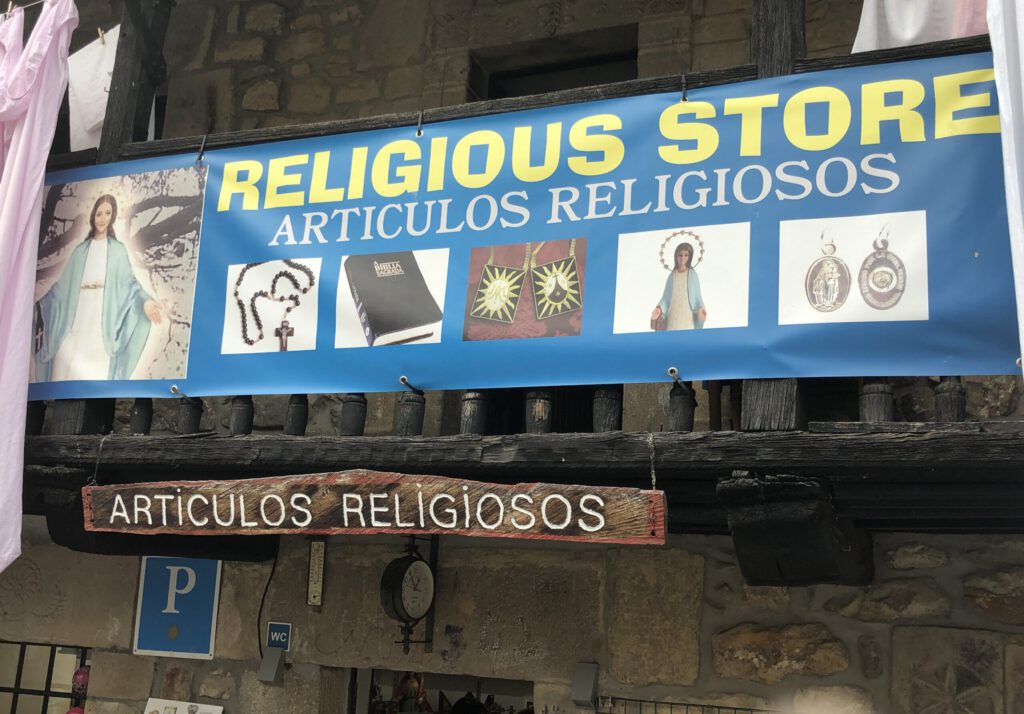
Next, I visit the souvenir shop, to the right of the little church. I buy about five lockets with a piece of cloth and a rosary. When I get back, I'll have something to give to some friends. Then it's time to arrange a place to stay with breakfast. At a small hotel, I strike up a conversation with Marianne Windmeijer from the Garabandal Centre Netherlands Foundation and Michael Tubberty. He introduces himself as a photographer and filmmaker. The filmmaker says he has made footage for the book about the story of Garabandal. We arrange to meet the next morning, after mass, to take a tour of Garabandal.
At eight o'clock in the evening I will be back at the little church. The rosary is prayed by around 40 attendees. This takes place in Spanish. I will participate in Dutch.
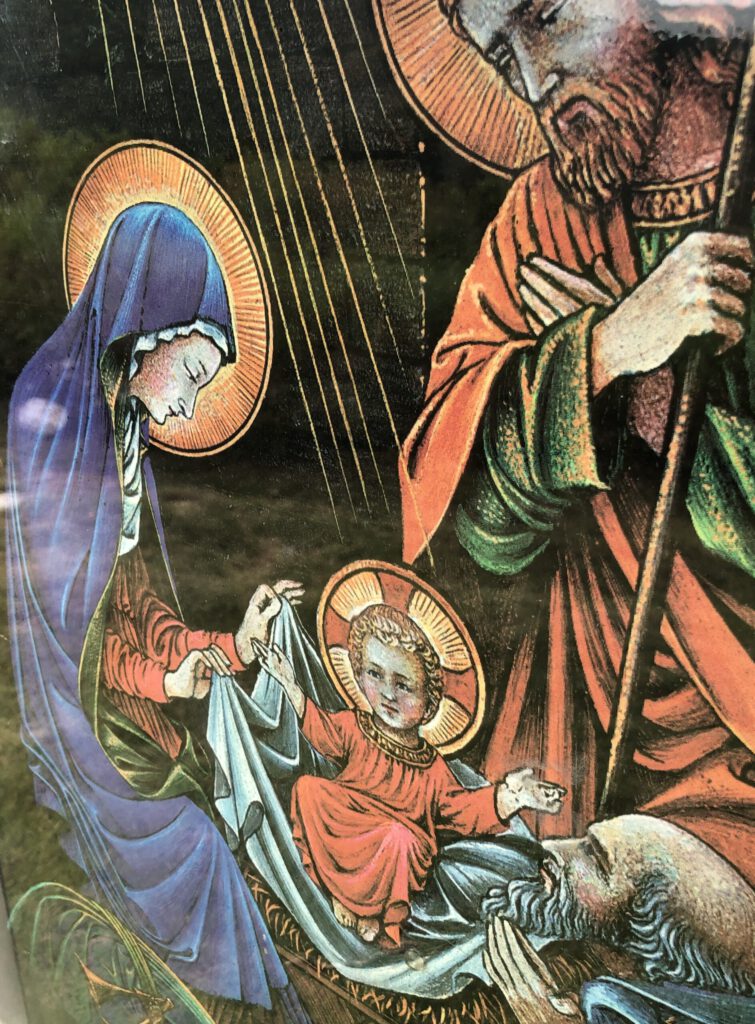
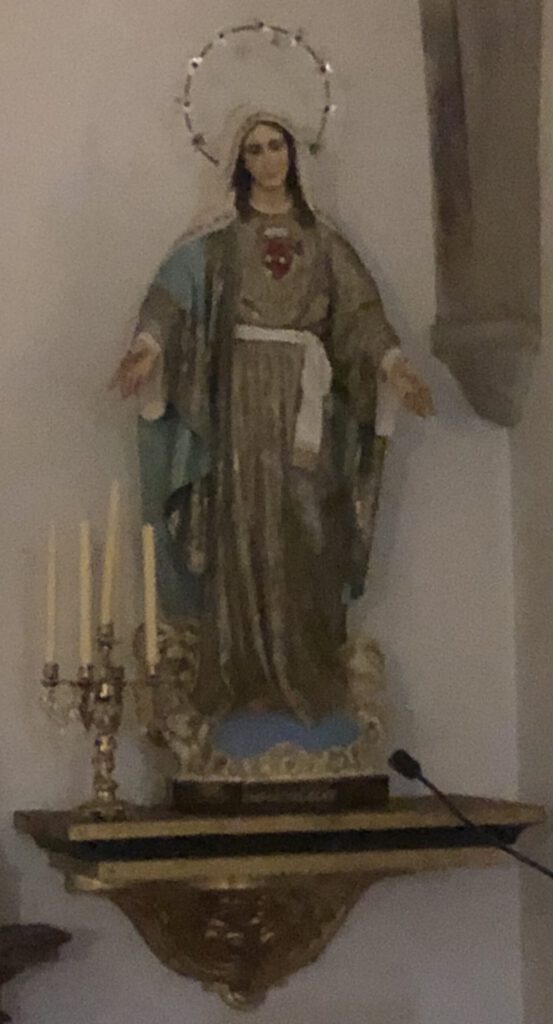
The next day, I arrive at the little church early in the morning and take a seat to pray. A little later, I go outside and have a look around. I spot a bench and sit down on it to read for a while. Half an hour before Holy Mass begins, the church bell rings. Fifteen minutes later, the bell rings again. Just before ten o’clock, the bell rings once more. Third time lucky. It is ten o’clock and the celebration of the Eucharist begins. The altar is now lit. I see the statues glistening in the light. In the centre of the altar stands the wounded Saint Sebastian. To his left is Saint Joseph with the infant Jesus, and to the right of the altarpiece is Saint Anthony of Padua. Angels hover above the altar. At the side of the altar stand two large statues, one of Mary and the other of Jesus. A large crucifix with Jesus hangs more than two metres above the floor. Beneath it is a large painting of Jesus, holding his right hand up to head height. A little later I go to receive Communion, kneel on a prayer stool and receive the host. As I am sitting at the back of the church, I am the last of the approximately 40 people present to take my turn. I return to my seat in the back row and above me the choir, consisting of a man and a woman, sings a few more hymns. The Eucharistic celebration ends with the hymn Salve Regina, during which the priest addresses the statue of Mary. He stands directly in front of the statue with his back to the congregation. After Mass, Michael from New Zealand and Marianne from the Netherlands give me a tour of the church. These are the two people I met the day before. I find the depiction of the self-wounding pelican, standing guard over the Blessed Sacrament, particularly striking. Legend has it that during times of food scarcity, the mother pelican bites her own flesh to feed her young with her blood. Early Christians saw in this a symbol of Christ’s self-sacrifice in the Eucharist. I hear that the church was built on a hill and over the graves of the deceased. The church is supported at the rear and sides by substantial stone blocks. After years of restoration work, the old church was reopened in 2011. This was 50 years after the first apparition.
After visiting the church, New Zealander Michael Tubberty, Dutch Marianne Windmeijer and I strike up a conversation. Michael explains that he travels the world taking photographs and making films. He has been visiting Garabandal since 1971 and has taken photographs and made documentaries about the events here, which have been published in books and on DVDs. After we have had coffee in a small café, we take a walk around the village. Michael talks about the Marian apparitions, showing the houses where the visionaries were born and lived. I see the houses and become increasingly aware that Garabandal was extremely poor at the time of the apparitions and still shows visible signs of it. Michael points to a mountain and says that people lived there centuries ago. The area on the indicated mountain is called Garabandal. Where the village is now, was called San Sebastián. Now I understand the name of the place: San Sebastián de Garabandal. We also talk about the pine trees, the Way of the Cross, and the mountain. Michael also talks about Fatima and says that Garabandal is seen as a continuation of the apparitions in Fatima. The Portuguese apparition site and this one in Spain have similarities, such as the presence of an angel, warnings, and possible punishments that Mary delivers.
An hour later, the tour is over and Michael hands me a laminated card with the words “The message of Garabandal” and kisses it, as Mary wants. This special souvenir is for a very good friend of mine, who is very devoted to Mary. He deserves to receive it.
Later in the afternoon we'll meet again and the three of us will head to the souvenir shop, which is located near the church. In this shop, Michael shows books containing photos of him from the events in Garabandal. He invites Marianne and me to visit him in the evening, after we've prayed the rosary in the church. He promises it will be a film night.
That evening, Marianne and I are guests of the filmmaker, who has made documentaries all over the world about, among others, Mary. He shows one of his DVDs about the apparitions in Garabandal. Later that evening, he gives each of his two Dutch guests an English-language, detailed version of the events in this small town. Michael says he's leaving next week, as other work awaits. He's going to make a documentary, and perhaps one day there will be a feature film about Garabandal.
Two years later, I visited Garabandal again, and once more I was impressed by its history. What poverty the visionaries, with their families, friends, and acquaintances, must have experienced in the 1960s. I see vacant, dilapidated houses, built with large, heavy stones, many wooden beams, and even more planks. There is no running water or toilet facilities within the homes. Animals, such as cows, were kept nearby in an adjoining space, providing warmth, and a wood-burning stove was also installed in many of the cottages. It is a poor region that still alludes to that time. It is a village with very narrow alleys where the road ends. A hamlet without a school, no baker, and also lacking a butcher. I see a few small establishments, like two souvenir shops, a bookshop, a café, and a small grocer's. That still exists...
What else is there besides a few vacant cottages? Small dwellings, a few larger abodes, and a couple of more spacious country houses make up most of the village. A few people run a guesthouse and are ready to prepare a meal. Then Is there another little church, the pine trees, a small hotel and then mountains, where no more trees can grow at the top, but clouds do visit.
A few years later, I am back in Garabandal. On the way to the pine trees, a dog accompanies me. After fifteen minutes, I reach the plateau where the pine trees stand. I see a statue of Mary hanging high up against a tree. Some benches are invitingly ready for sitters. I take a seat on one of them. I look at the apparition site and begin to pray. A while later, I take the Rosary path. This route also goes upwards. The dog accompanies me again. The animal certainly has more talent than I do for going uphill and downhill over the cobbles. The stations show me highlights from Mary's life. What can be seen here seems familiar to me, as I have been here before. I continue on my way and after a while, I arrive in the village. I am just in time at the small church to pray the Rosary with others. I count 20 attendees and an elderly priest is leading the prayer. I find the church, with its special altar, wonderfully beautiful. It is aptly described as “small is beautiful”. After the Rosary, I walk around the little house of God and pause for a longer time at a large painting depicting Mary in Mexican Guadalupe.
The other day, I attended a Eucharist service in the small church. On the chancel, seven officiants were gathered, all dressed in white and pale yellow. They were introduced; five Spanish priests and a pair from Portugal. I counted 35 worshippers in the wooden pews. The altar was brightly lit by spotlights. What beauty! For me, this was especially due to the statue of Mary with an aura of 9 visible stars. Mary displayed her red heart, surrounded by thorns. After the Eucharist, the Blessed Sacrament was placed on the chancel table. A small table was placed for this, and on it sat a transparent bowl containing the intentions from the past day. An hour later, the artificial lights were turned off, and there was only the light from six candles on the altar table. The priests knelt before the Blessed Sacrament, and prayers were offered in this now dimly lit church. After the service concluded, I wanted to take photos of the interior of this exceptionally beautiful place of worship. However, the verger on duty did not permit me to do so. Perhaps later then...
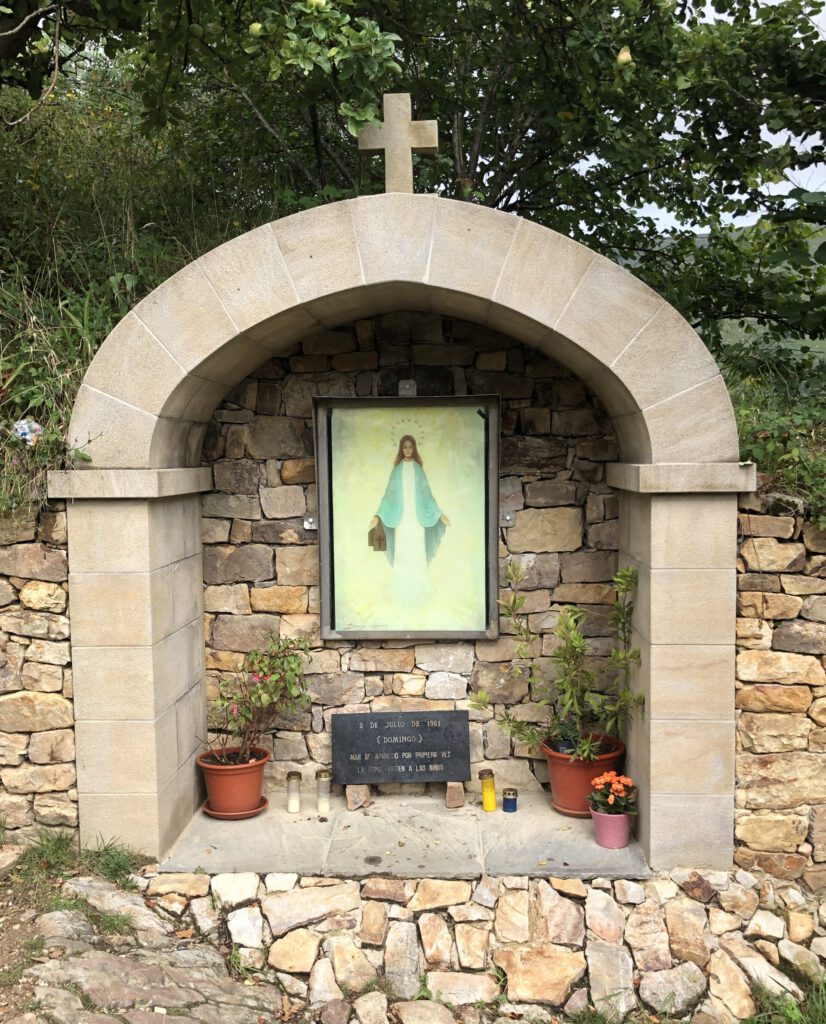
The next day I will go to the pine trees in San Sebastián de Garabandal. I intend to make a long stay there. Arriving at the plateau, I take a seat on a bench. From here, there is a wide view of mountains, valleys, and trees. It is like a heavenly panorama with farmlands, mountain paths, houses, cows, people, sheep, birds, and… silence. Much has happened here, and much more will take place someday. The past passes by with historical images from the first half of the 1960s. This is when Marian apparitions took place here in Garabandal. The future…? According to the messages from heaven, these will happen here, as the seer Conchita Gonzalez has recounted. This will occur between the old, wide, and tall pine trees! Will it be an eternal light that remains among the trees? Will many perceive this? Will few see much? These are questions of the present that may or may not be answered someday. Now that I am here, my thoughts drift back to the scenes from years ago. What a crowd of people there was! However, now I am alone. What a commotion in the first half of the 1960s! Now there is no sign of it. Peaceful silence reigns here.
I've noticed that some of the trees have got black at the bottom of their trunks. It wasn't just from one candle! Have there been visitors who wanted to place Garabandal in a different context? Ah, Satan has followers, and not everyone shares the same feelings, beliefs, and passions. That is certainly not something I can say for myself either, as I am a convinced Catholic and an outspoken liberal. However, showing respect for others and valuing what is not your own, are for me fundamental principles of life. Once again, I look around. Two visitors are approaching. They kneel, make the sign of the cross, and begin to pray. My mind wanders back to the past. So much has happened here... How grateful I am to be able to be here.
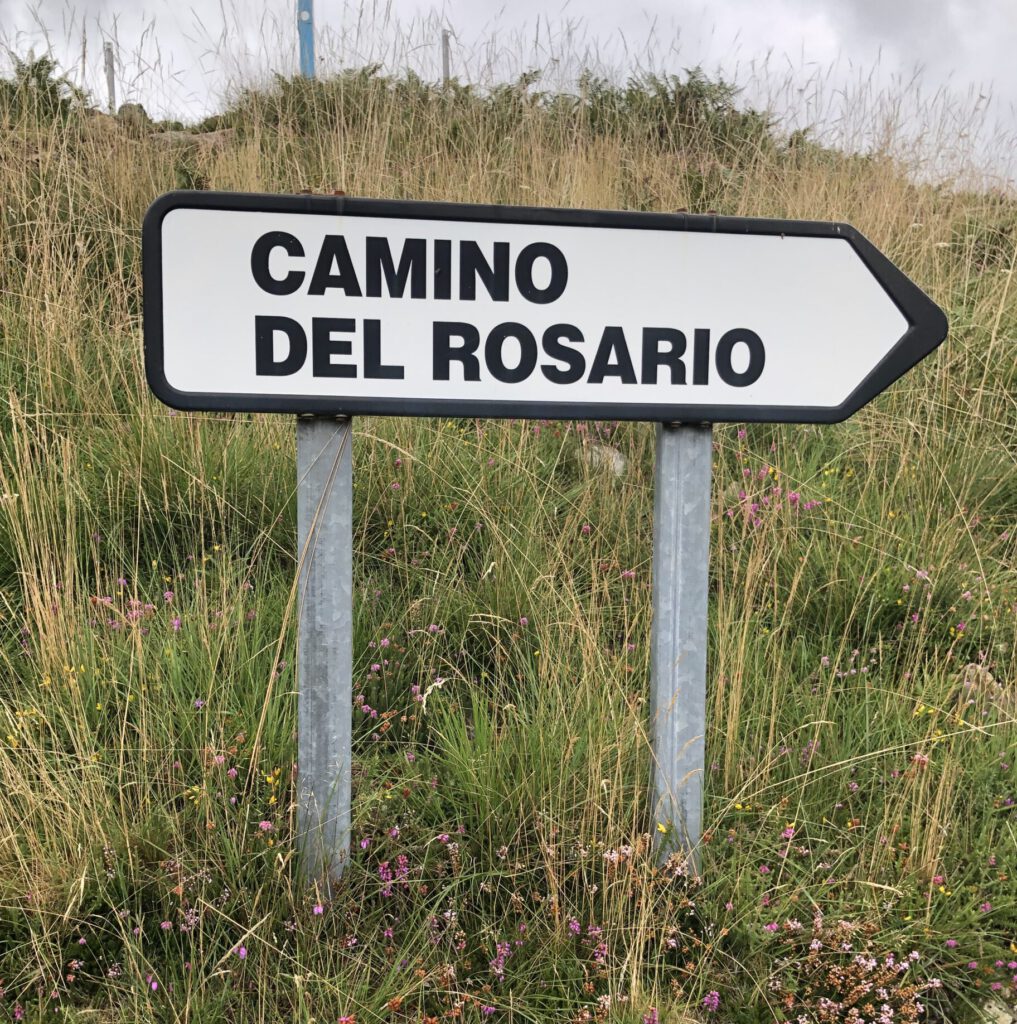
I have been to Garabandal several times, and for me, it is the most intimate pilgrimage site of Mary. Not large numbers of visitors, but rather a multitude of grand, intense feelings.
Posted: 22 May 2020.
Last updated: 26 February 2022
~~~

 Nederlands
  English (UK)
  Deutsch
  Français