History
A legend from around 1300 forms the basis of the pilgrimage site of Guadalupe. The story is about a shepherd, who in 1743 is given the name Gil Cordero de Santa Maria by monk Francisco de San José.
A shepherd named Gil Cordero from Cáceres has been searching for three days for a lost cow. He searches along the bank of the River Guadalupe (Guadalupejo), which originates in the Villuescas mountains and flows into the Guadiana near Peloch, and finally finds the animal. The shepherd is shocked, because the cow is dead. He decides to skin it to sell it and receive some money for it. Gil Cordero takes a knife and draws a cross on the cow's hide. Then Mary appears and tells the shepherd that a treasure is buried in this place. Immediately after these words from Mary, the cow comes back to life. The shepherd is dumbfounded. Our Lady tells him to tell the priests in Cáceres about the event. Gil Cordero does this immediately, but the priests do not believe him. Dejected, he goes home. There his wife is crying, because their son has just died. The shepherd prays to Our Lady and suddenly the son comes back to life. The clergy in Cáceres hear about this and now believe what the shepherd told them. They go to the place of the apparition and dig. They find a statuette of the Black Madonna, made by the apostle Luke and from the Middle East. The statuette dates from the 1st century and ends up next to the deceased Luke. The remains and the statuette go from Achaia to Constantinople and in 582 to Rome and then to Seville. In 711 came the invasion of Arabs and in 714 some clergy flee with the statuette. They bury the effigy near the River Guadalupe to protect it from destruction by the Moors. The statuette was lost for about 500 years. After finding the statuette, a small chapel was built, and then people began to live near the chapel, and thus the town of Guadalupe was founded.
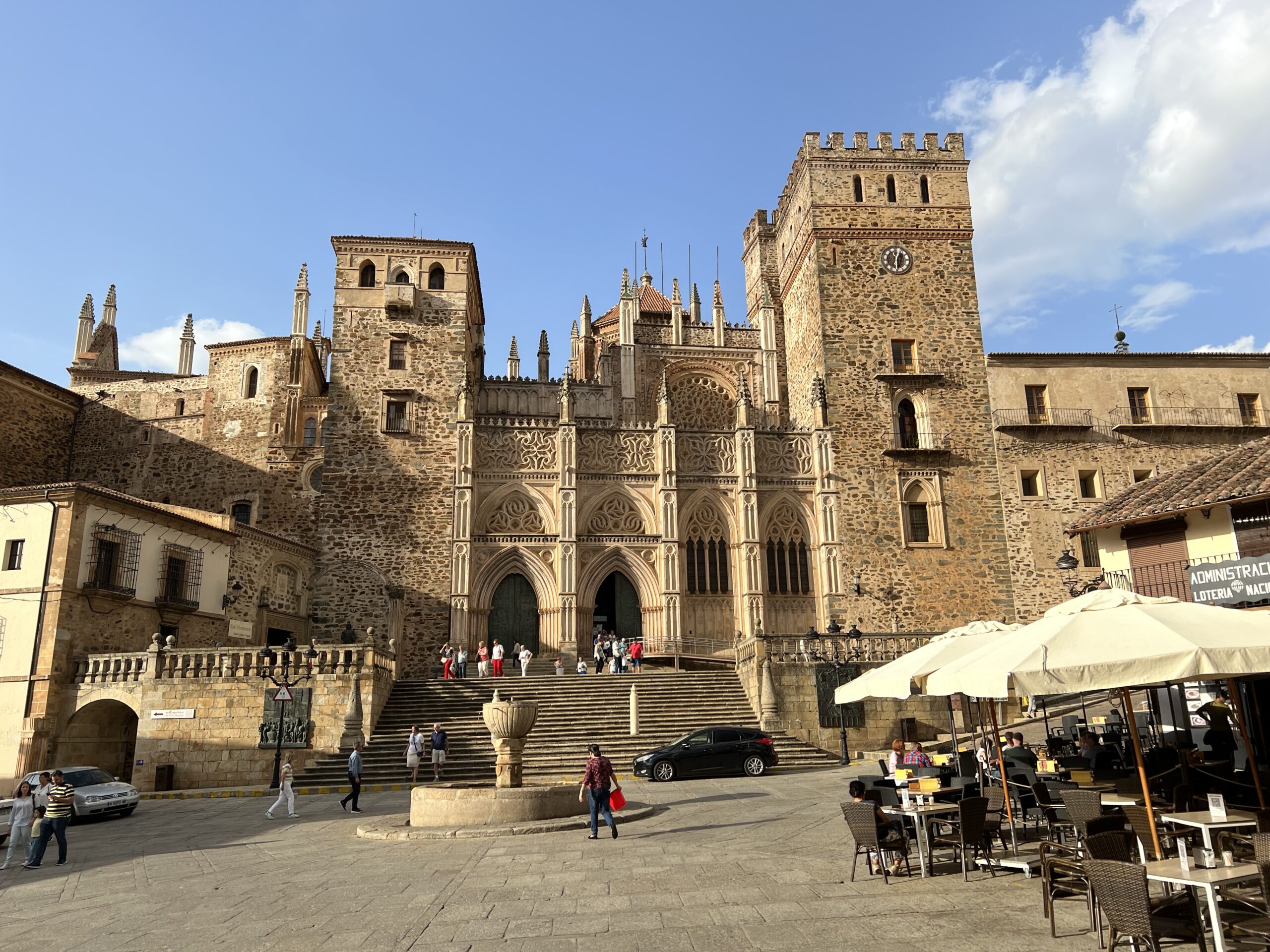
Later, the chapel was replaced by a larger building and a monastery was added. In 1330, Alfonso XI, King of Castile and León (1311-1350), visited the church. He found it too small and in poor condition. The king ordered a new church to be built, which was completed in 1336. In 1340, the king called upon the Virgin of Guadalupe for help and, with the Castilian-Portuguese Christian troops, defeated the Moors (Merinids, Banu Marin) from Northwest Africa at Salado. In gratitude, he had a large monastery built in Guadalupe. Alfonso XI was the first patron of the shrine. In 1389, it became a monastery by royal decree of Juan I, King of Castile and León (1379-1390). He was the new patron and ordered the structure to become a monastery. Monks from the Order of St. Jerome arrived. Defensive belts were built around the large monastery. The large monastery was realised in the 14th and 15th centuries. First, the main church (“Templo Mayor”) and the rectangular chapel of Santa Catalina were built. In 1835, the monks had to leave Guadalupe due to secularisation. In 1879, the shrine became a national monument.
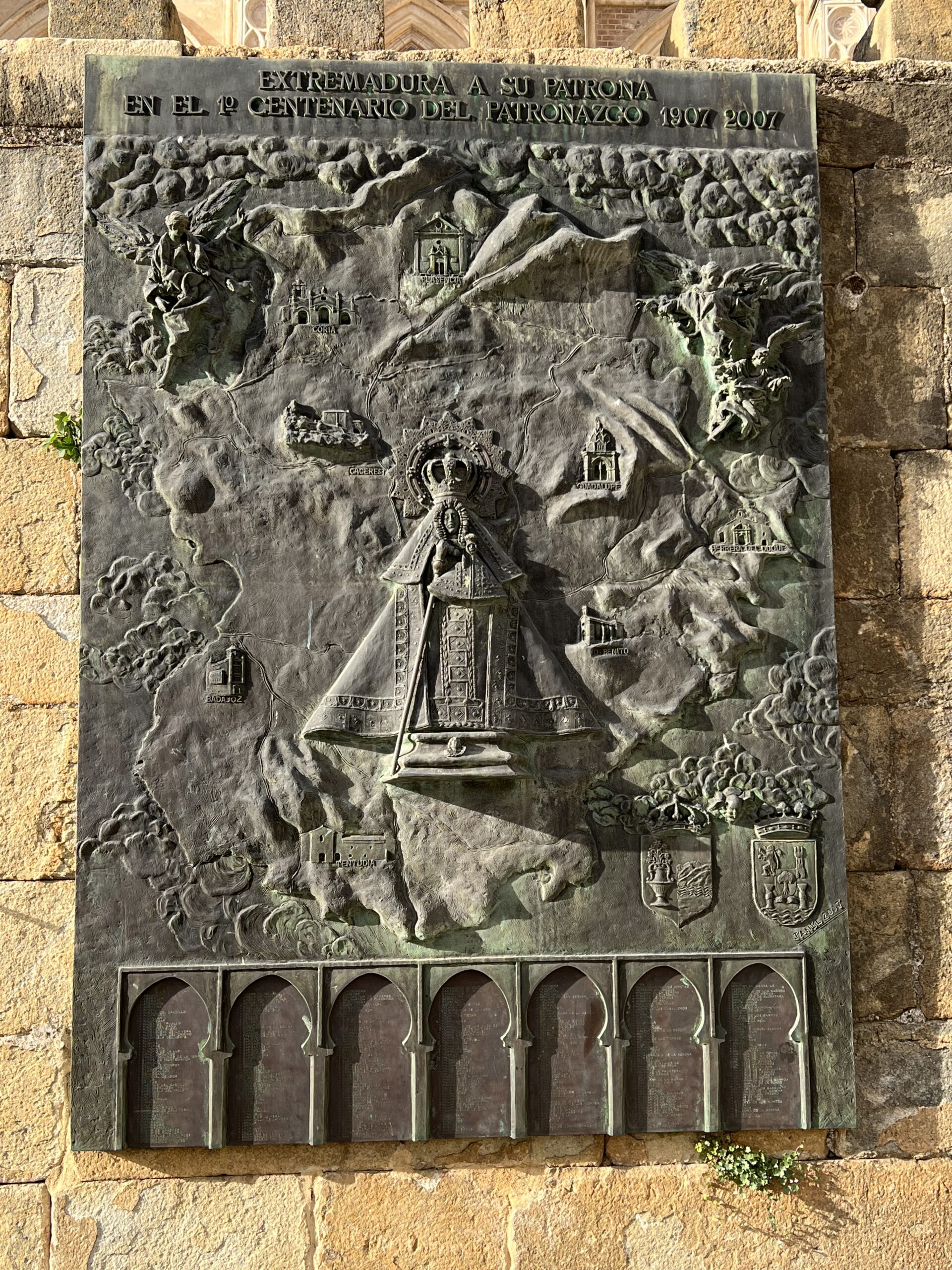
In 1907, the administration and leadership of the convent were entrusted to the Franciscans. The convent was renovated by the new administrators. Our Lady of Guadalupe became the patron saint of Extremadura in 1907. In 1908, the Franciscans were tasked with renewing religious life in Guadalupe and restoring the buildings and artworks.
Since 12 October 1928, Our Lady of Guadalupe has been the patron saint of all Spanish-speaking countries.
In 1955, Pius XII, Pope from 1939-1958, elevated the church of the sanctuary to a basilica.
On 4 November 1982, John Paul II, Pope 1978-2005, visited Guadalupe.
Pilgrimage site
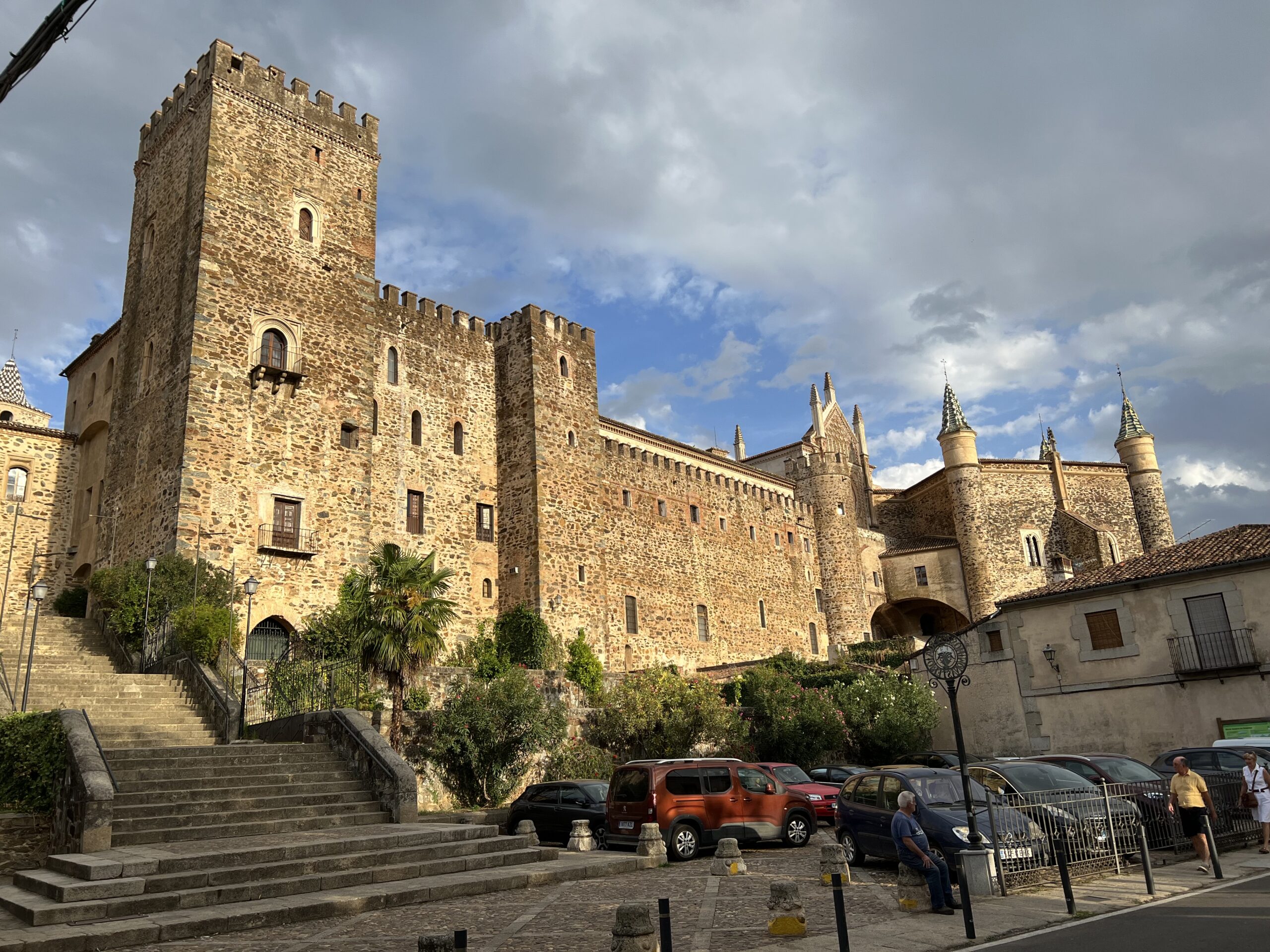
Guadalupe is one of the most visited pilgrimage sites in Spain.
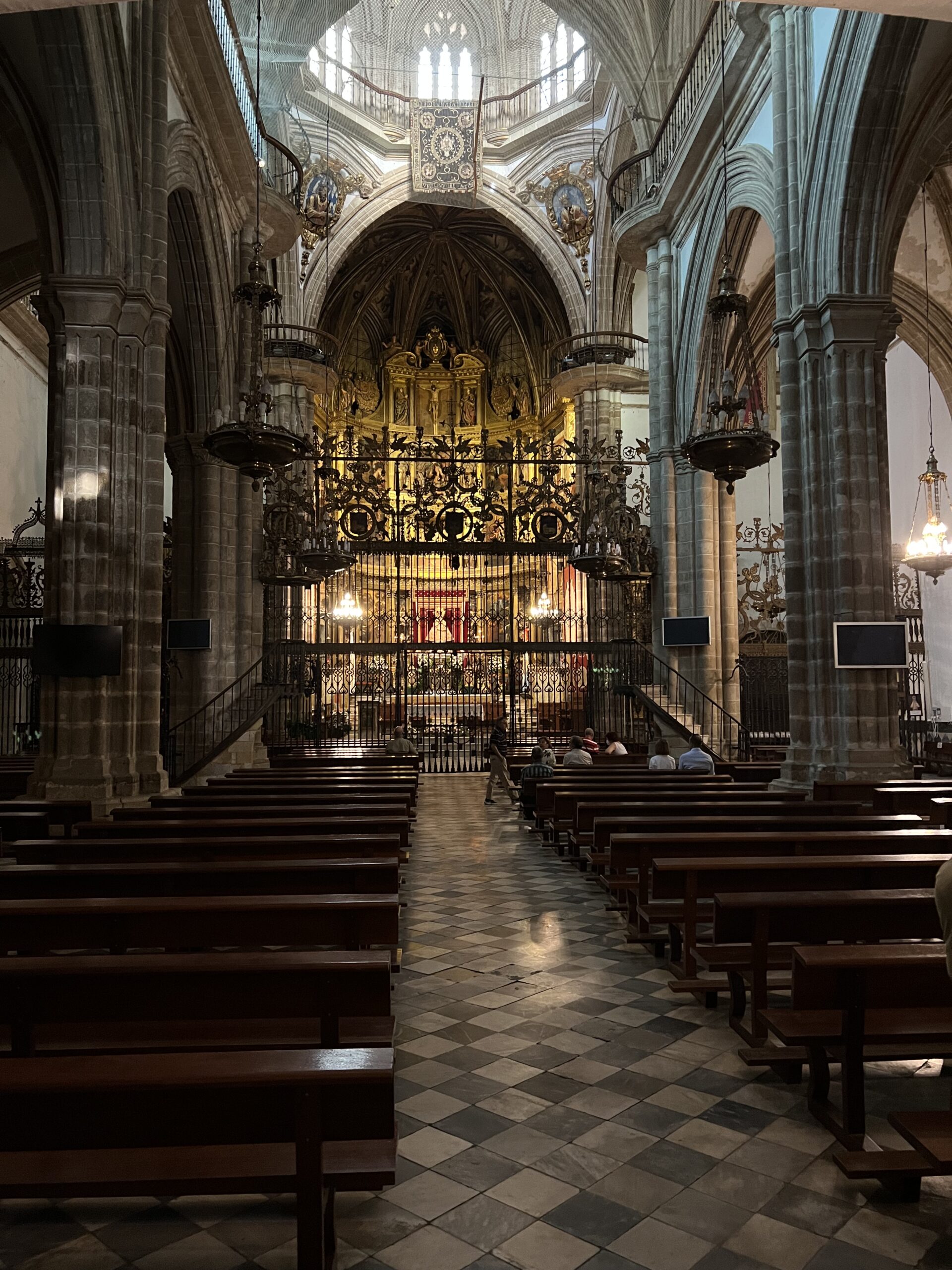
The Royal Monastery of Our Lady of Guadalupe is a Roman Catholic place of pilgrimage. Due to successive extensions of the monastery, various architectural styles can be observed, such as Baroque, Gothic, and Renaissance. The interior of the basilica is impressive for visiting pilgrims.
The monastery also has a library and museums to visit. Works by El Greco, Goya, and Francisco de Zurbarán, among others, can be seen here. The embroidery museum was opened in 1928.
Royal figures are buried in the monastery, including Enrique of Castile (1425-1474) and María of Aragon (1403-1445).
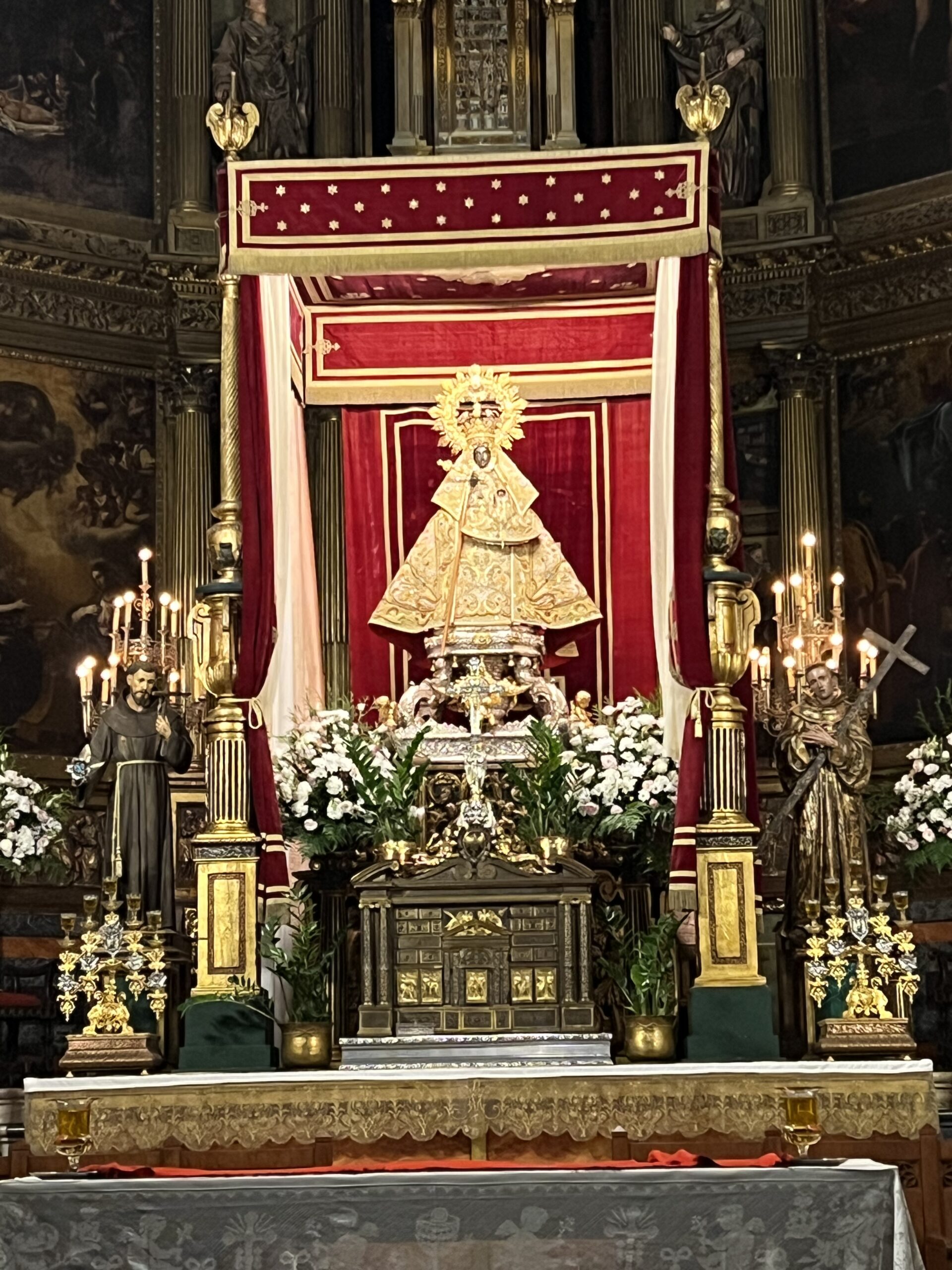
The Virgin of Guadalupe is the patron saint of Extremadura with the official feast day on 8 September. The celebrations run from 6 to 9 September inclusive.
The village has a street named after the shepherd Gil Cordero. The cottage where he lived with his family is also still standing.
The Royal Monastery of Our Lady of Guadalupe (“Real Monasterio de Nuestra Señora de Guadalupe”) has been a UNESCO World Heritage site since 1993. The monastery is open daily.
ACCESSIBILITY
Guadalupe lies in western Spain in the province of Cáceres in the region of Extremadura at an altitude of over 600 metres in the Sierra de Guadalupe.
Address: Plaza Santa Maria de Guadalupe, 10140 Guadalupe, Cáceres.
Current information can be found at www.monasterioguadalupe.com
Experience
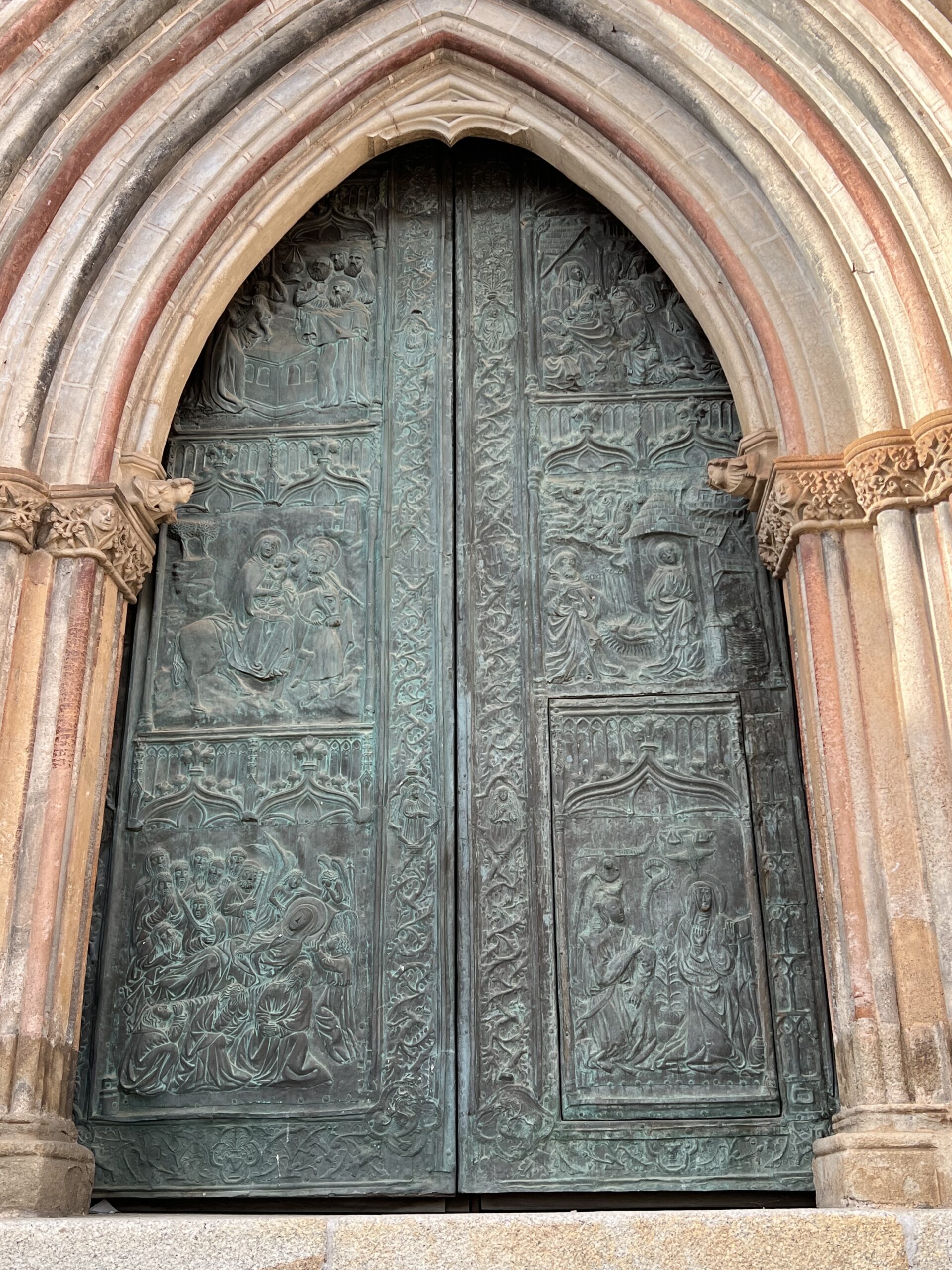
In Guadalupe, I stand before a closed, heavy monastery door and see scenes from Mary's life depicted on it. Fortunately, there is another entrance door to the basilica.
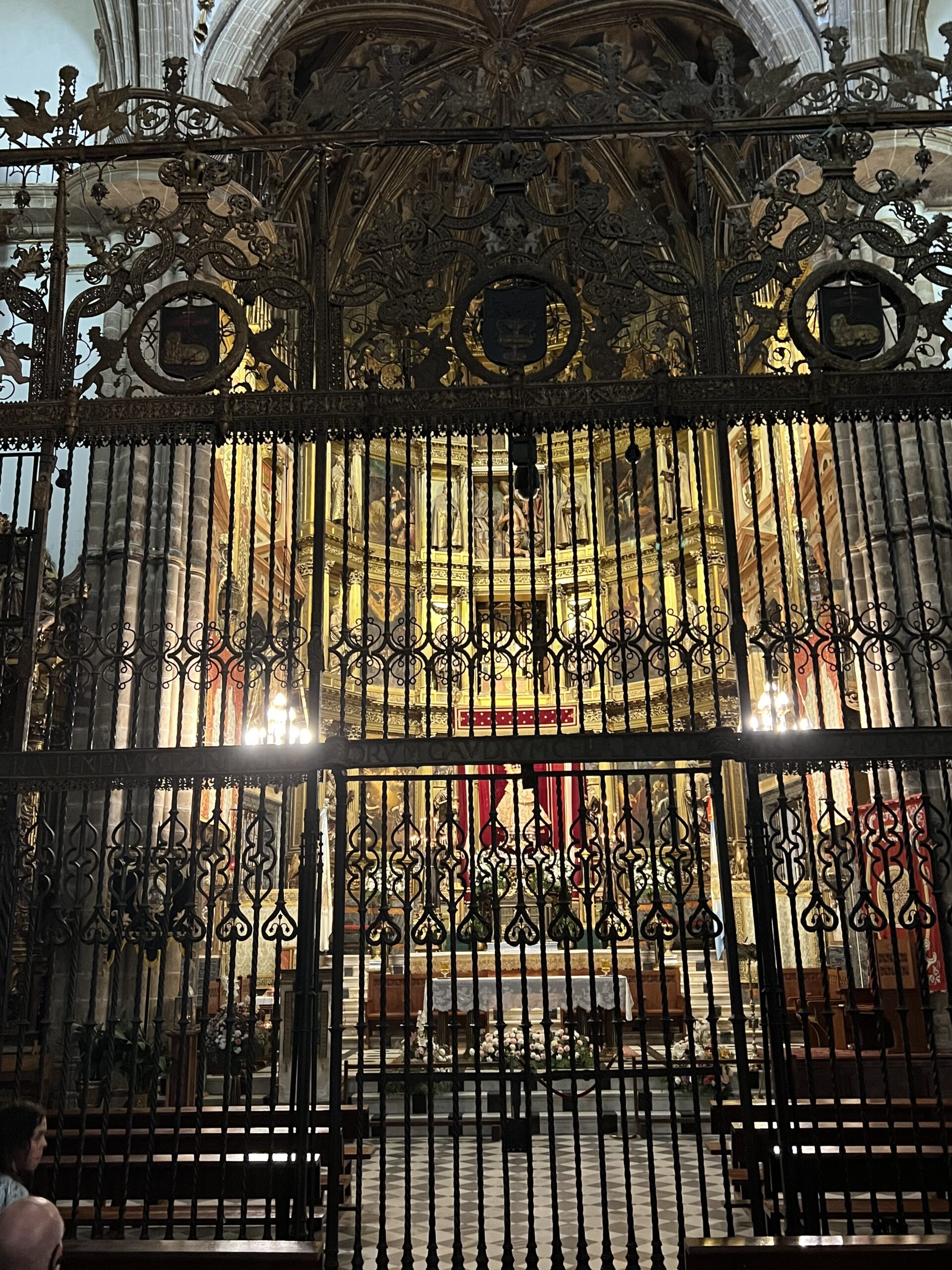
From the Sanctuary of Guadalupe, I find the basilica the most fascinating with its arches, windows, portals and statues. In the chancel, I see a statue of Nicholas of Myra and many chapels. The Stations of the Cross from 1519-1533 also catch my eye. I visit the sacristy and museums. Then I realise that an enormous number of art treasures are present here.
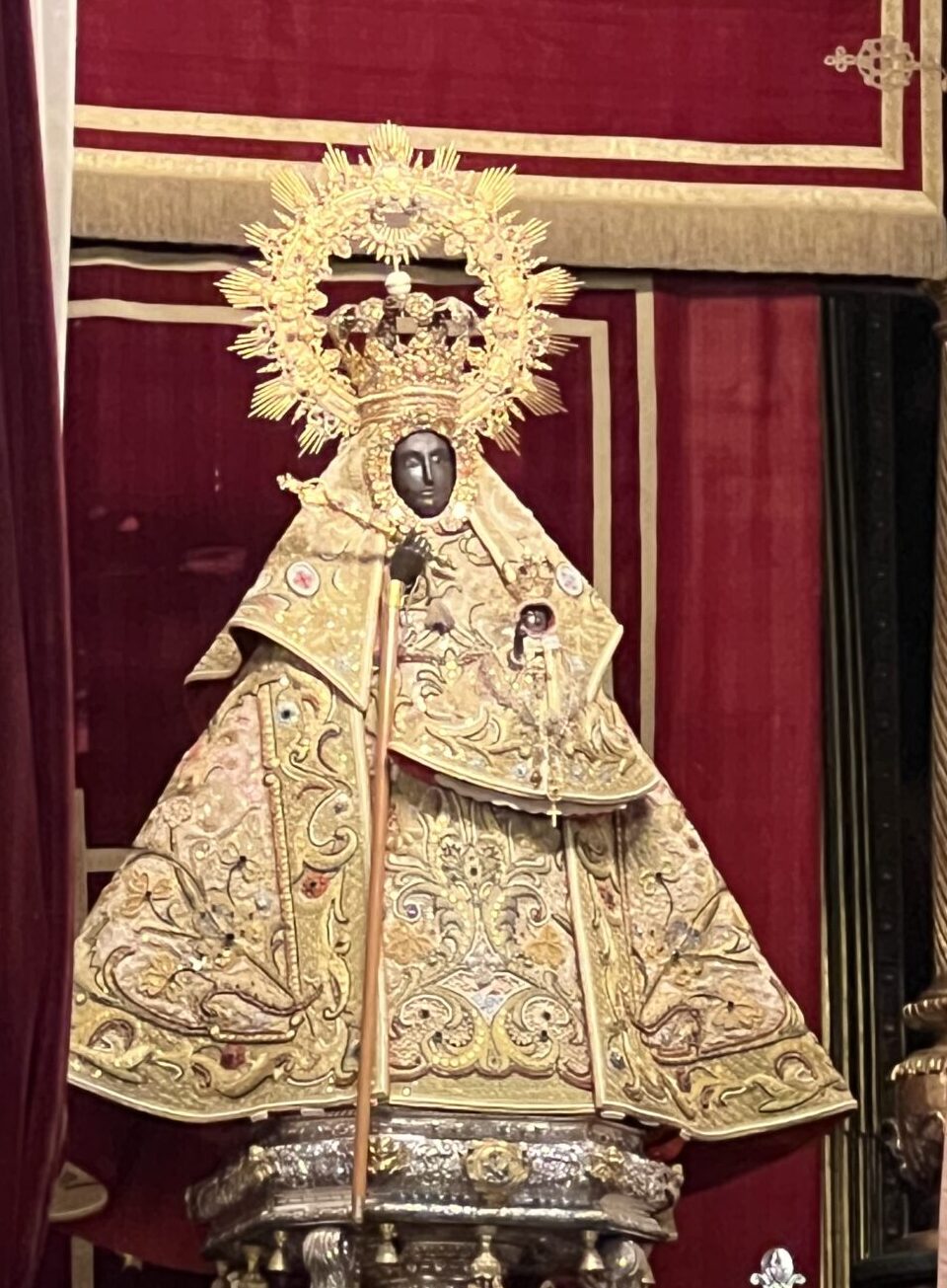
The main altar, with the black effigy of Our Lady of Guadalupe, makes a particularly strong impression on me. In the Lady Chapel, there is also an effigy of Our Lady of Guadalupe. It is a seated, romantic Mother of God carved from cedarwood.
Next, I'll look for a place to sleep and find a hotel opposite the basilica. What a beautiful view I have!
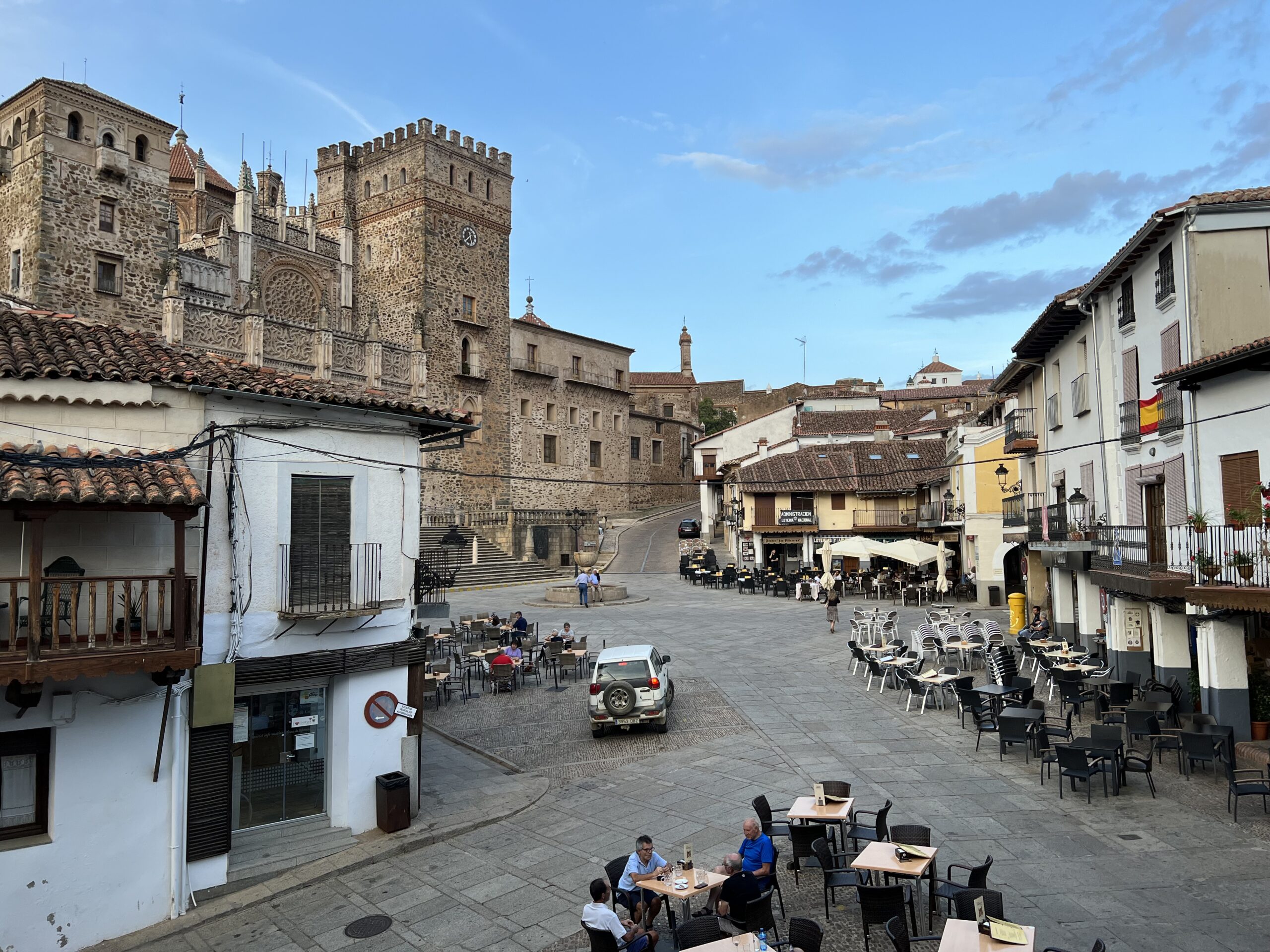
Environment
More than 10 historical walking routes have been created in Guadalupe, leading to the monastery and the village.
From Guadalupe, it is a 200 km drive to Toledo, 125 km to Mérida and 285 km to Seville.
Posted: 31 March 2023
~~~

 Nederlands
  English (UK)
  Deutsch
  Français