History

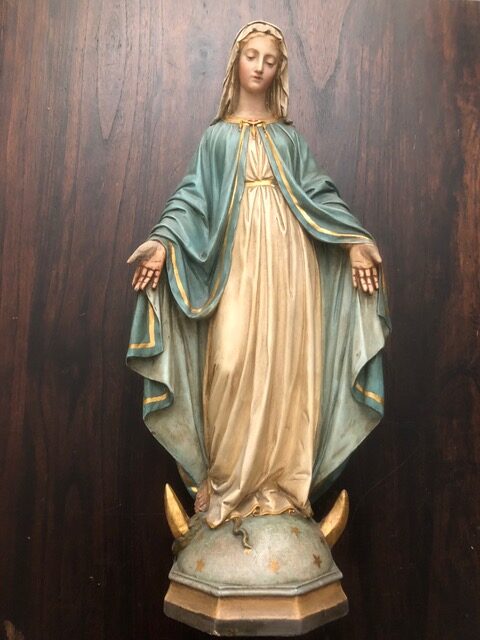
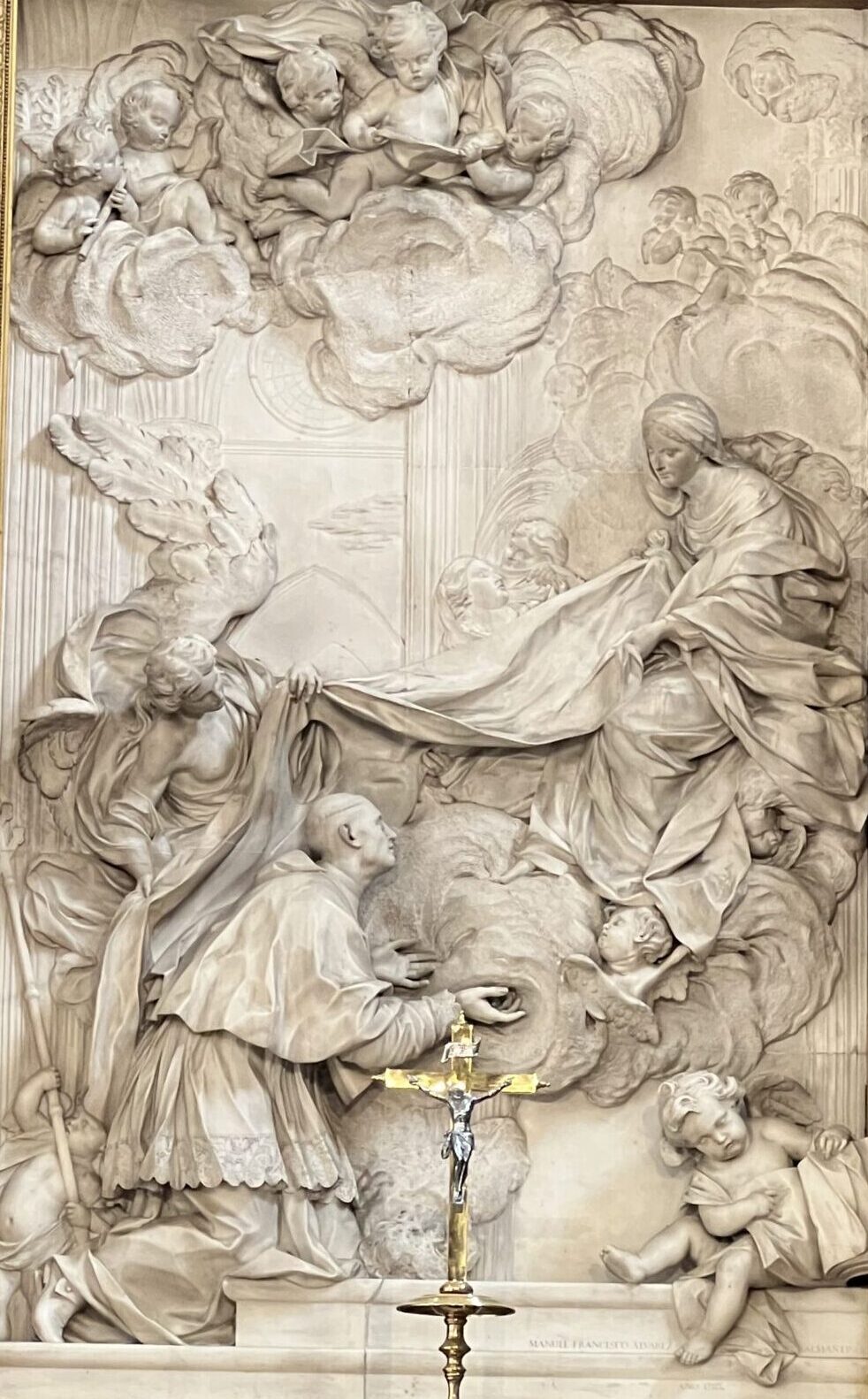
In the 7th century, Mary appeared in Toledo in a church. This happened on the site where the cathedral was later built. Our Lady appears to Archbishop Ildefonso to present him with a chasuble. Ildefonso (c. 607-667) from Toledo was a Visigothic, Germanic scholar and monk. Around 632, he was ordained a deacon. However, he did not wish to rise higher in the ecclesiastical hierarchy and preferred a life as a monk in a monastery. He went to the monastery of Agli, which is near Toledo. Around 650, Ildefonso was elected abbot of the monastery. In 657, he became Archbishop of Toledo and held this position until his death in 667.
The appearance of Mary…
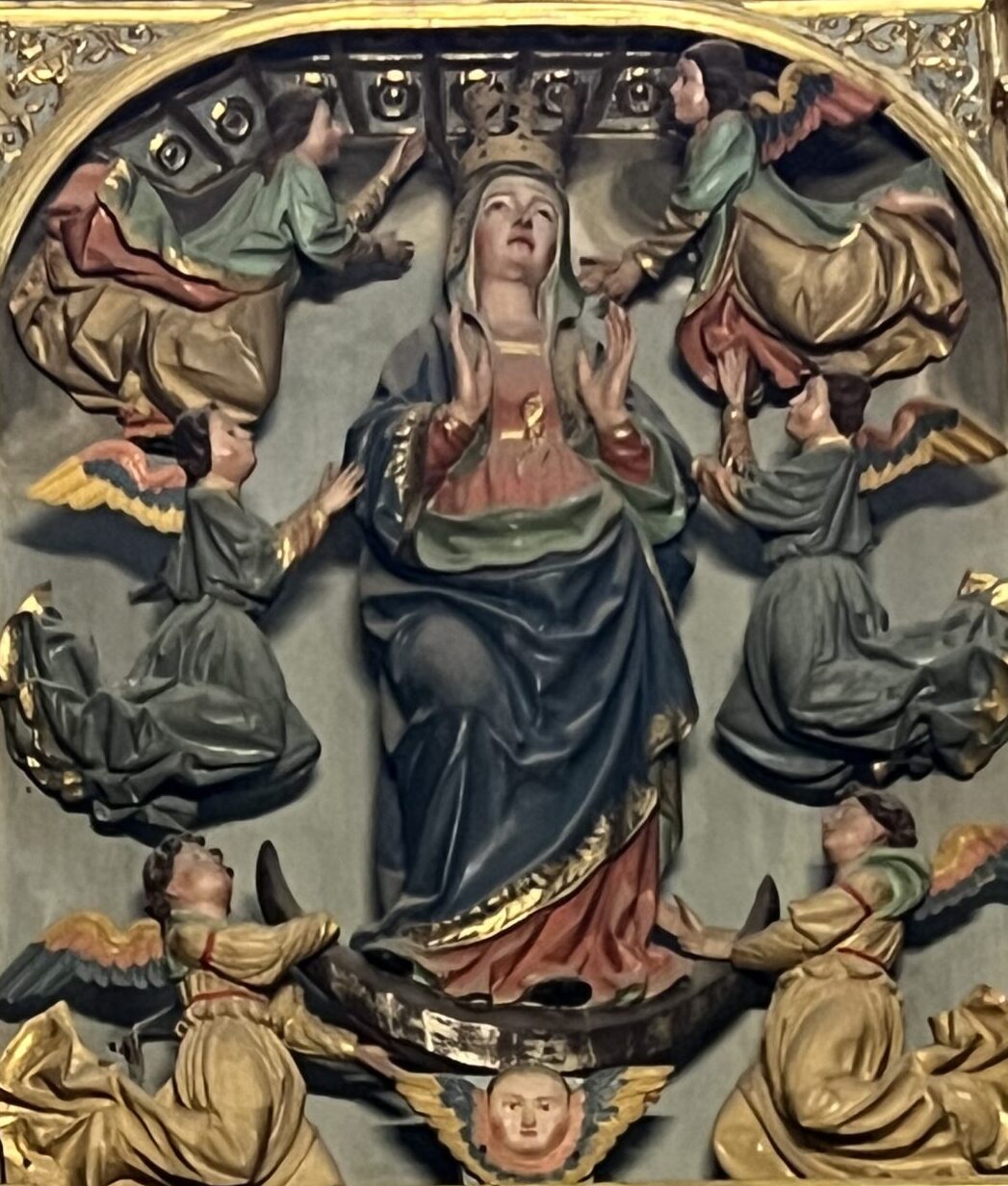
It is 18th December 665 and Our Lady appears to Ildefonso. He sees Mary, surrounded by angels, take a seat on the bishop's throne. She praises him for his devotion to Her and bestows a chasuble, which he is to wear on feast days in Her honour. Ildefonso is later canonised and since then is known as San Ildefonso. He has written several books, including those about Mary, in which he explains Her perpetual virginity.
The “Santa Maria” Cathedral in Toledo is built in the Gothic style. The construction of this enormous building took a very long time, from 1226 until 1493. In 1226, the first stone was laid by Ferdinand III (1199-1252), King of Castile (1217-1252) and of León/Galicia (1230-1252). Between 1489 and 1504, many artists worked to create the impressive main altarpiece. On both sides of this altarpiece are the royal tombs of the monarchs of Castile.
The main chapel, enclosed by a large iron gate, is a Spanish masterpiece of wrought iron. The creator is Francisco Corral de Villalpando (c. 1510-c. 1561), an architect, sculptor, and (golds)smith, who completed the work in 1548.
The sacristy contains high-quality art. The frescoes on the ceiling are by the Italian Luca Giordano (1634-1705). The room holds 18 artworks by El Greco (1541-1614) and paintings by, among others, the Italian Giovanni Bellini (1430-1516), the Italian Raphael (1483-1520), the Fleming Peter Paul Rubens (1577-1640), the Spaniard Diego Rodriquez de Silva y Velázquez (1599-1660) and his compatriot Francisco de Zurbarán (1598-1664). In the marble chapel of the sacristy stands an effigy of Our Lady “de Sagrario” (of the Tabernacle). She is the patron saint of Toledo and is venerated here. The statue is silver-plated and dates from the end of the 12th century.
Pilgrimage site
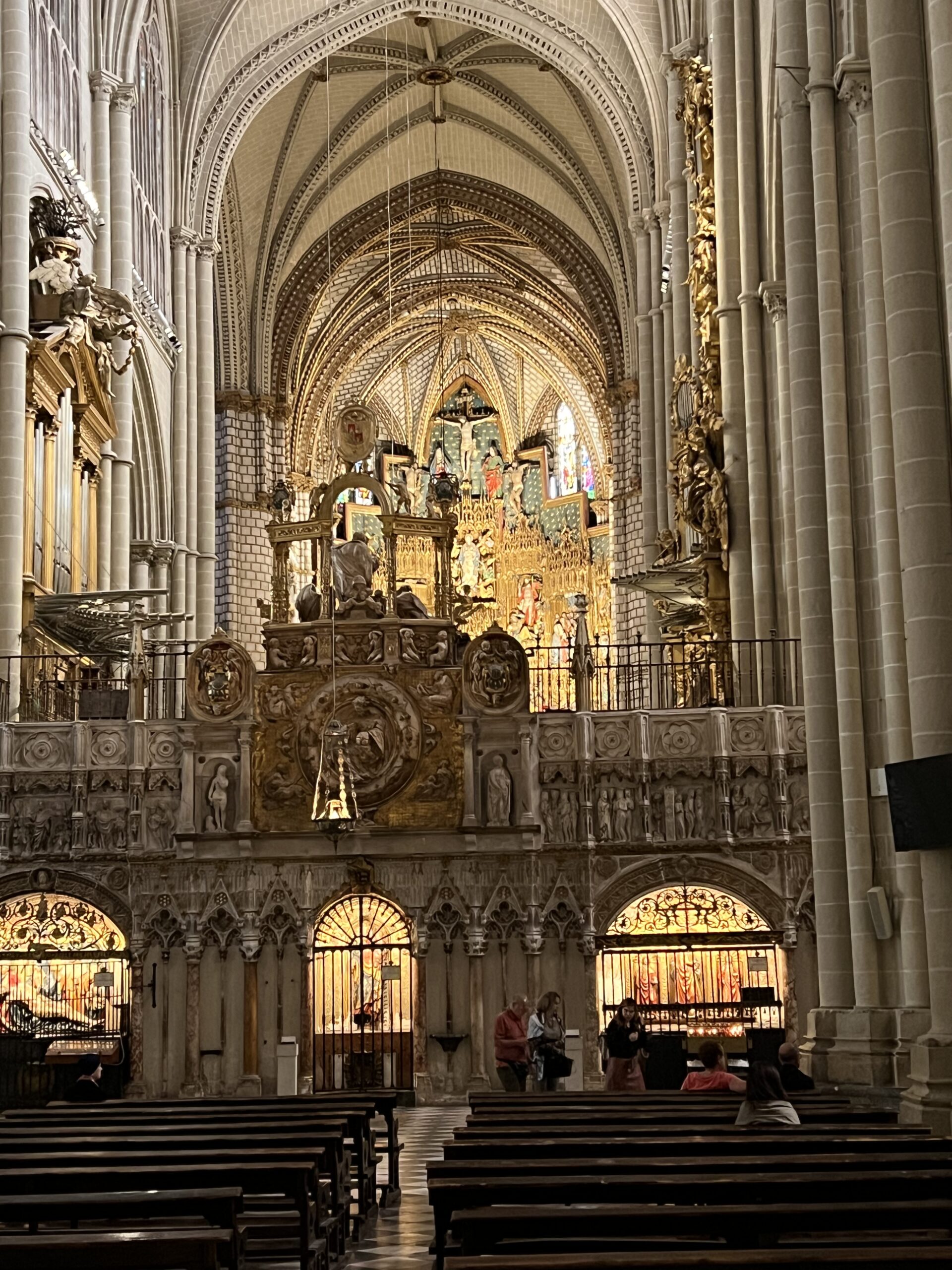
The cathedral has enormous dimensions, namely 120 metres long, 60 metres wide and the nave is 32 metres high. The vault is supported by 88 pillars. The walls of the imposing structure have large stained-glass windows. There are 750 of them in total (!), on which Flemish and Dutch artists worked for 150 years.
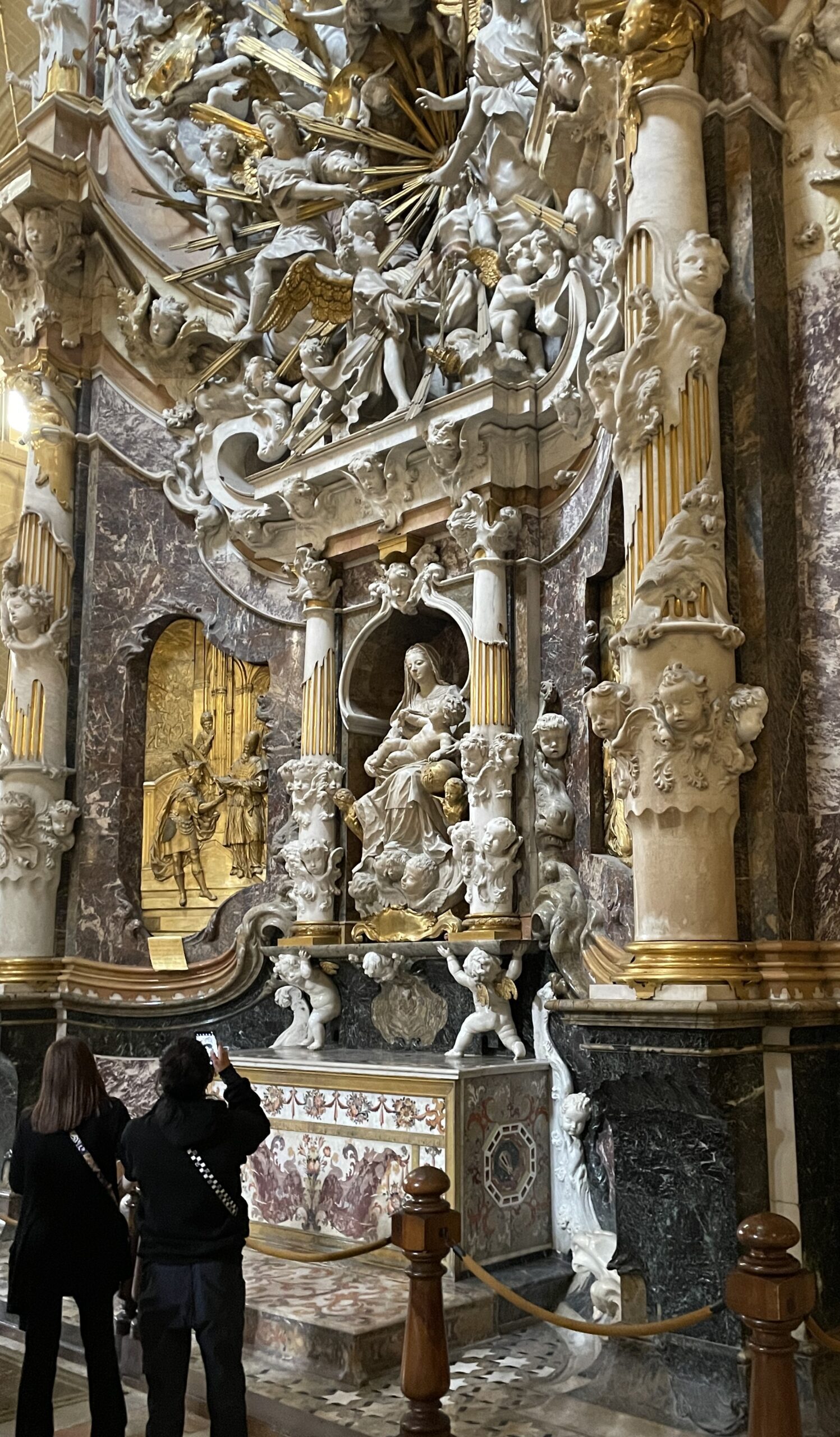
In Toledo Cathedral, the Chapel of Saint Ildefonsus holds an important place. The Neoclassical altar is made of marble by Ventura Rodriguez (1717-1785). The depiction present shows Mary appearing to Ildefonsus and giving him a chasuble.
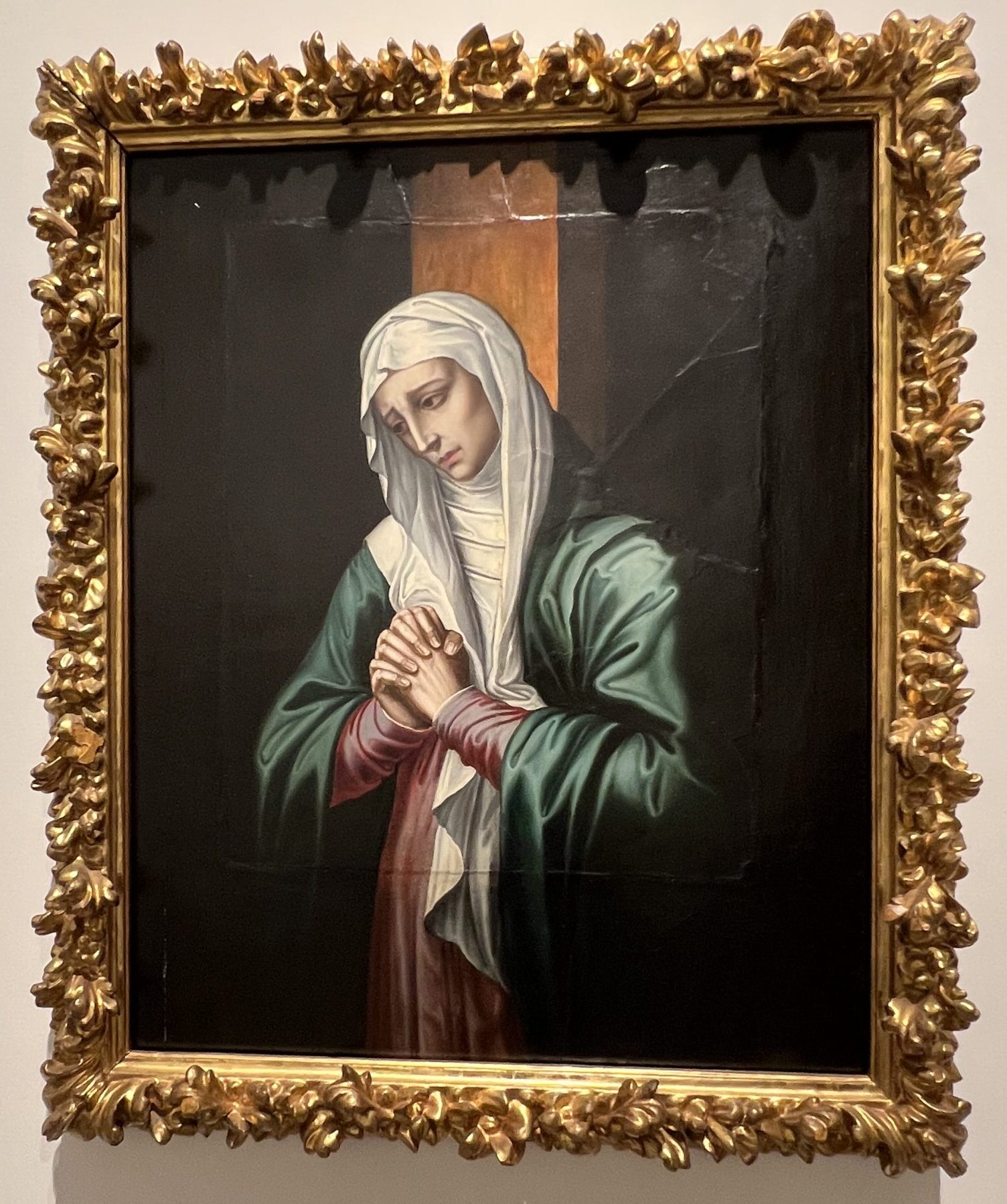
The 16th-century painting of the Mater Dolorosa by Luis de Morales (c. 1500-1586), who lived in Toledo, attracts a lot of attention. Mary has a very sad look in her eyes.
The cathedral also houses a treasury with numerous valuables, including many monstrances.
The cathedral is open daily.
ACCESSIBILITY
Toledo is the capital of the province of the same name and also of the region of Castile-La Mancha. The city is located in central Spain, about 70 kilometres south-west of the capital, Madrid.
Cathedral Address: Calle Cardenal Cisneros 1, 45002 Toledo.
Current information can be found at
www.catedralprimada.es and www.architoledo.org.
Experience
In the square before the cathedral, many are gazing at the imposing facade of the centuries-old place of worship. What an impressive sight! Over the past centuries, the entrance gate has seen millions come and go. This gate is adorned with figures from the 13th-15th century period.
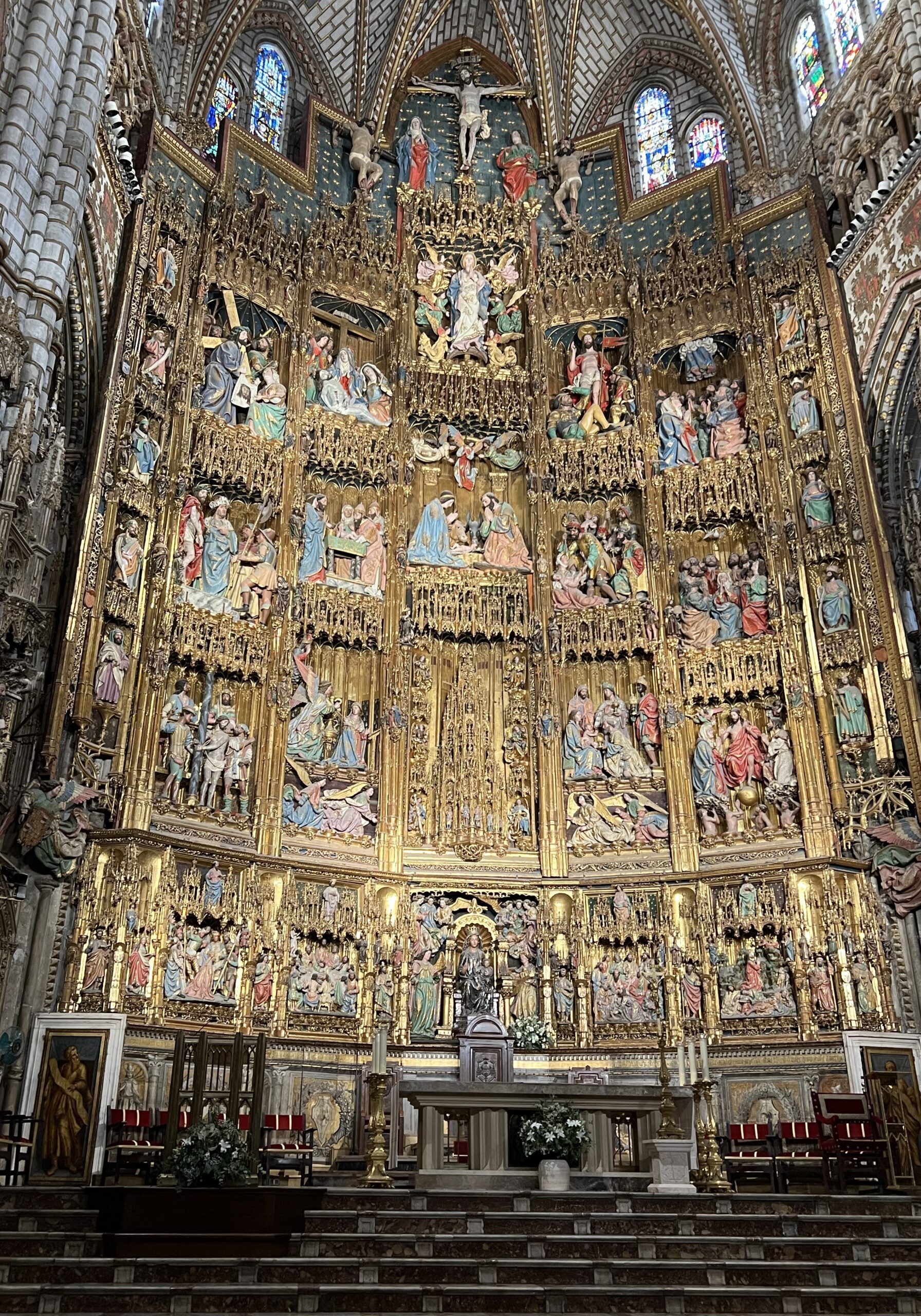
In the enormous cathedral of Toledo, the high altar makes a great impression on me. What a height! What colours! What sculptures! This work of art is certainly among the most precious altars in the world. I understand that 27 artists worked on this altar. I find the depiction of Our Lady with Child, created by Tomé Narciso (1690-1742), magnificent.
In the chapter house, I admire a large collection of portraits of archbishops and cardinals from the 15th century to the present day. What an impressive gallery of colourful paintings this is.
The sacristy is, for me, one of the highlights of a tour of the cathedral. It's an art gallery with frescoes on the ceiling and artworks by great masters such as El Greco, Raphael, and Rubens on the walls.
Behind the main altar, I come to an important chapel. It is the space of the apparition of Mary. In this place, where a former church once stood, the Virgin Mary appeared in the 7th century to Archbishop Ildefonso (c. 607-667), who was later canonised. To the right of the altar lies the stone upon which the Virgin Mary placed her foot. Here it is depicted that Mary offers Ildefonso the chasuble.
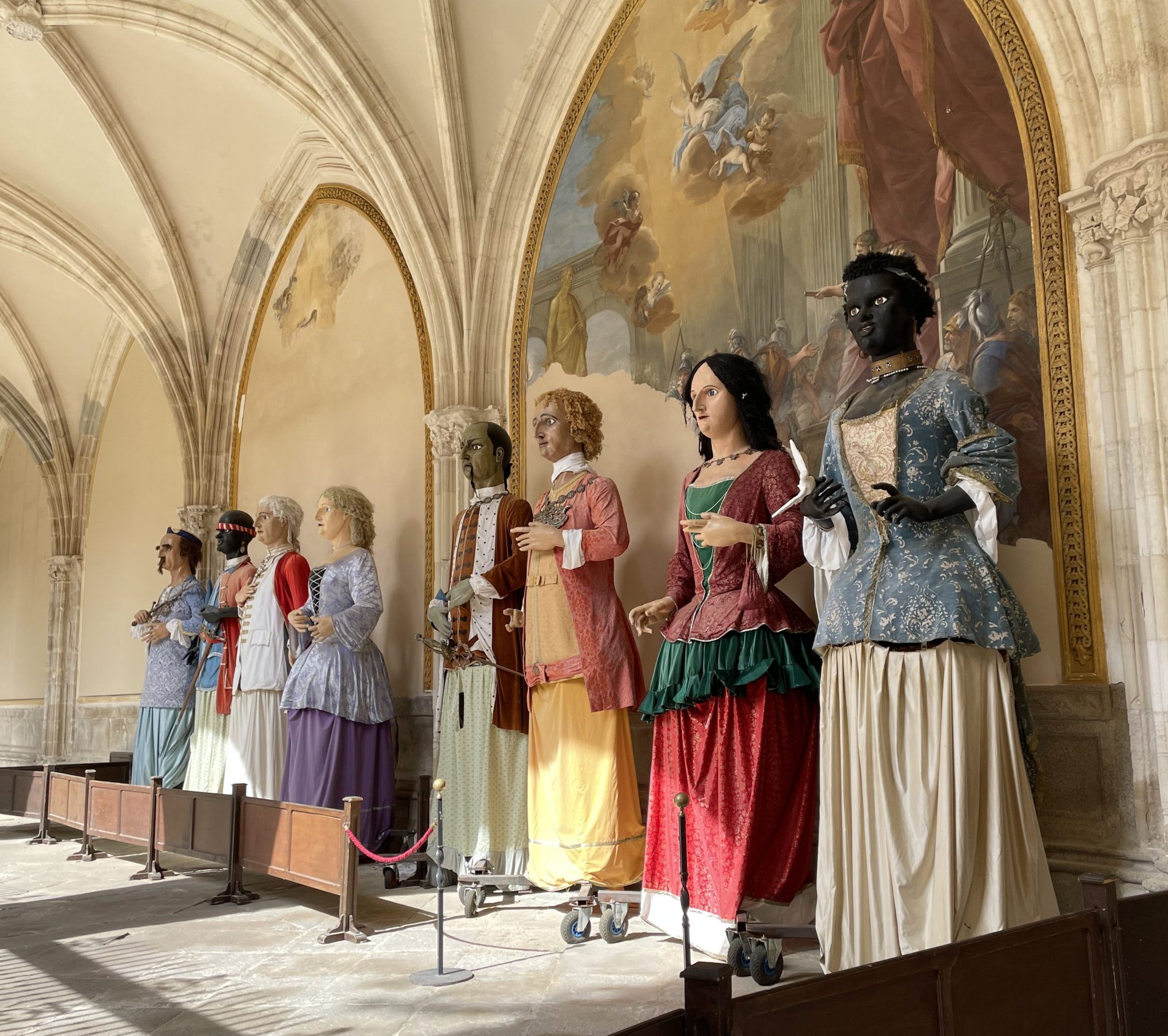
During my walk in and around the cathedral, I come across a gallery of giants from the town. It's not a procession now, but I pass by the puppets.
Posted: 20 December 2022
~~~

 Nederlands
  English (UK)
  Deutsch
  Français