~~~
History
In the year 1074, a monastery was reported at the site of the present-day shrine.
From 1138, the monastery belonged to the Benedictine monastery “Santa María la Real” (Saint Mary the Queen) in Nájera.
The current pilgrimage church dates from the 13th century, as does the still-present baptismal font.
The entire complex is sold in 1431 to Don Fernán Pérez de Ayala (1370-1436). Therefore, in the 15th century, the monastery and church no longer belong to the Benedictines. It becomes a parish church with outbuildings.
By the mid-16th century, the entire complex of buildings was owned by the hospital of Santiago of Vitoria-Gasteiz.
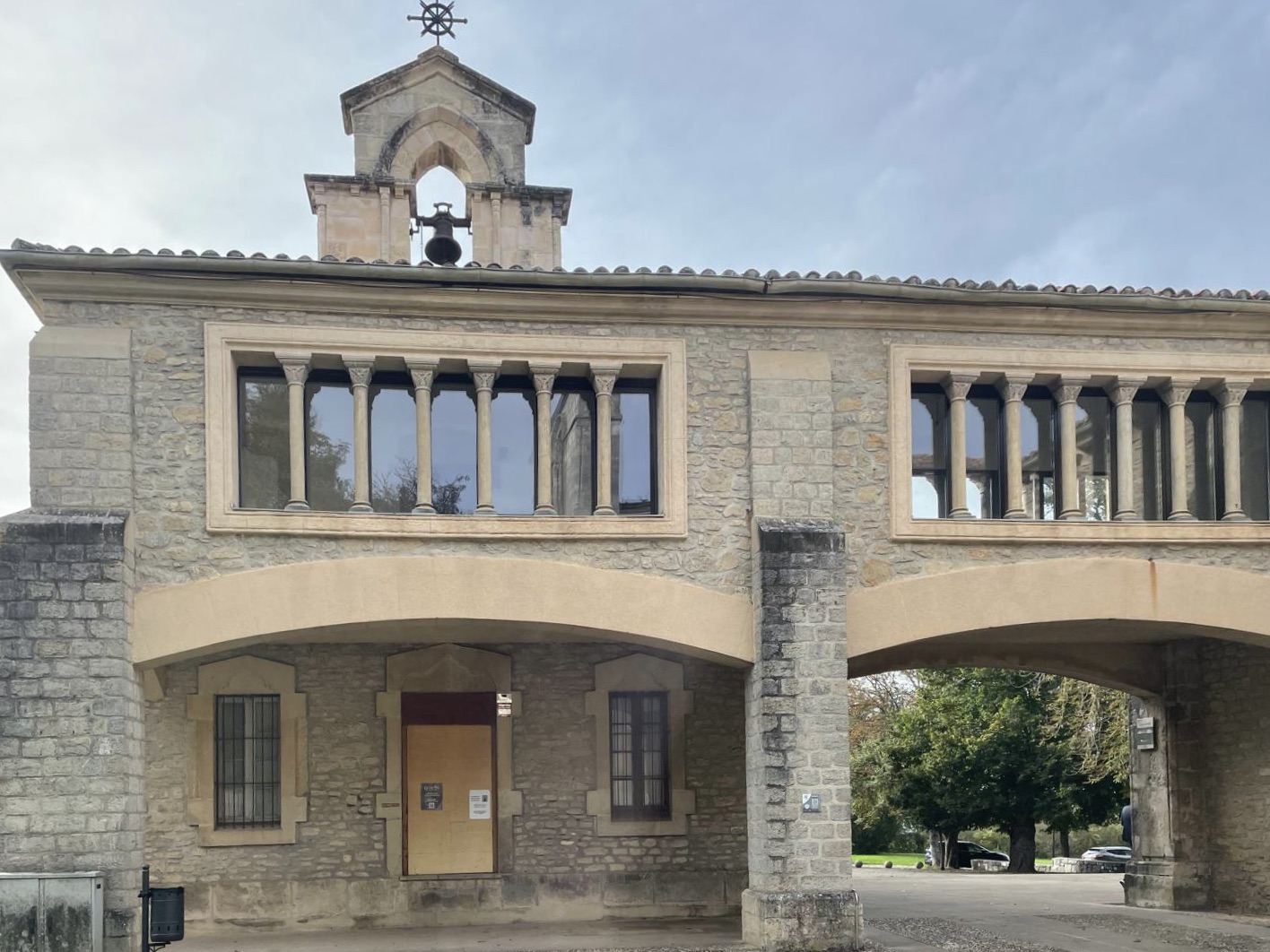
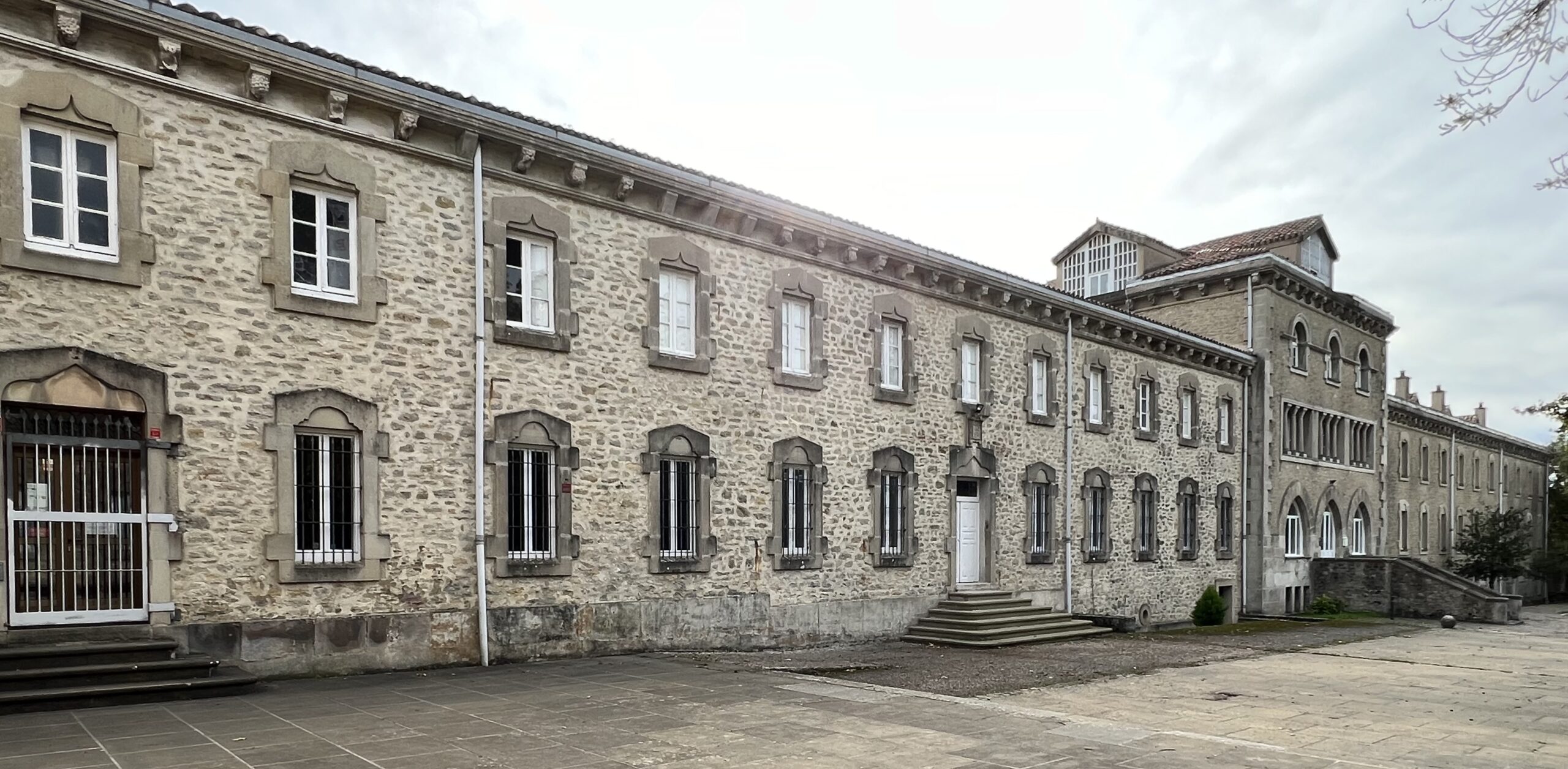
At the beginning of the 20th century, the province of Álava takes over the buildings and the church is restored. The west portal is renewed. A new convent building is constructed.
In 1923, Benedictine monks came here.
Since 1941, Our Lady of Estíbaliz has been the patron saint of the province of Álava.
Pilgrimage site
The pilgrimage site is called “Santuario de Nuestra Señora de Estíbaliz” (Shrine of Our Lady of Estíbaliz).
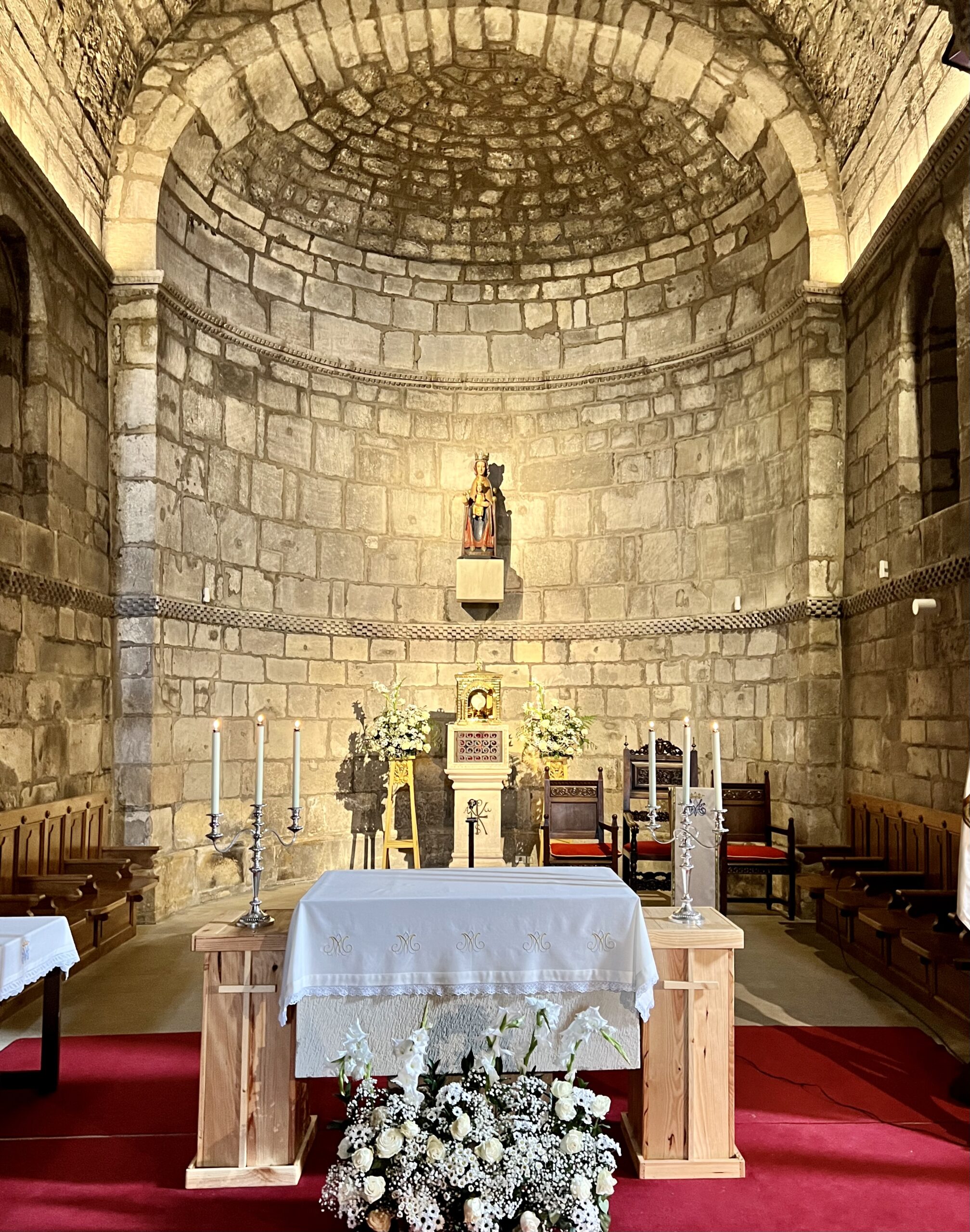
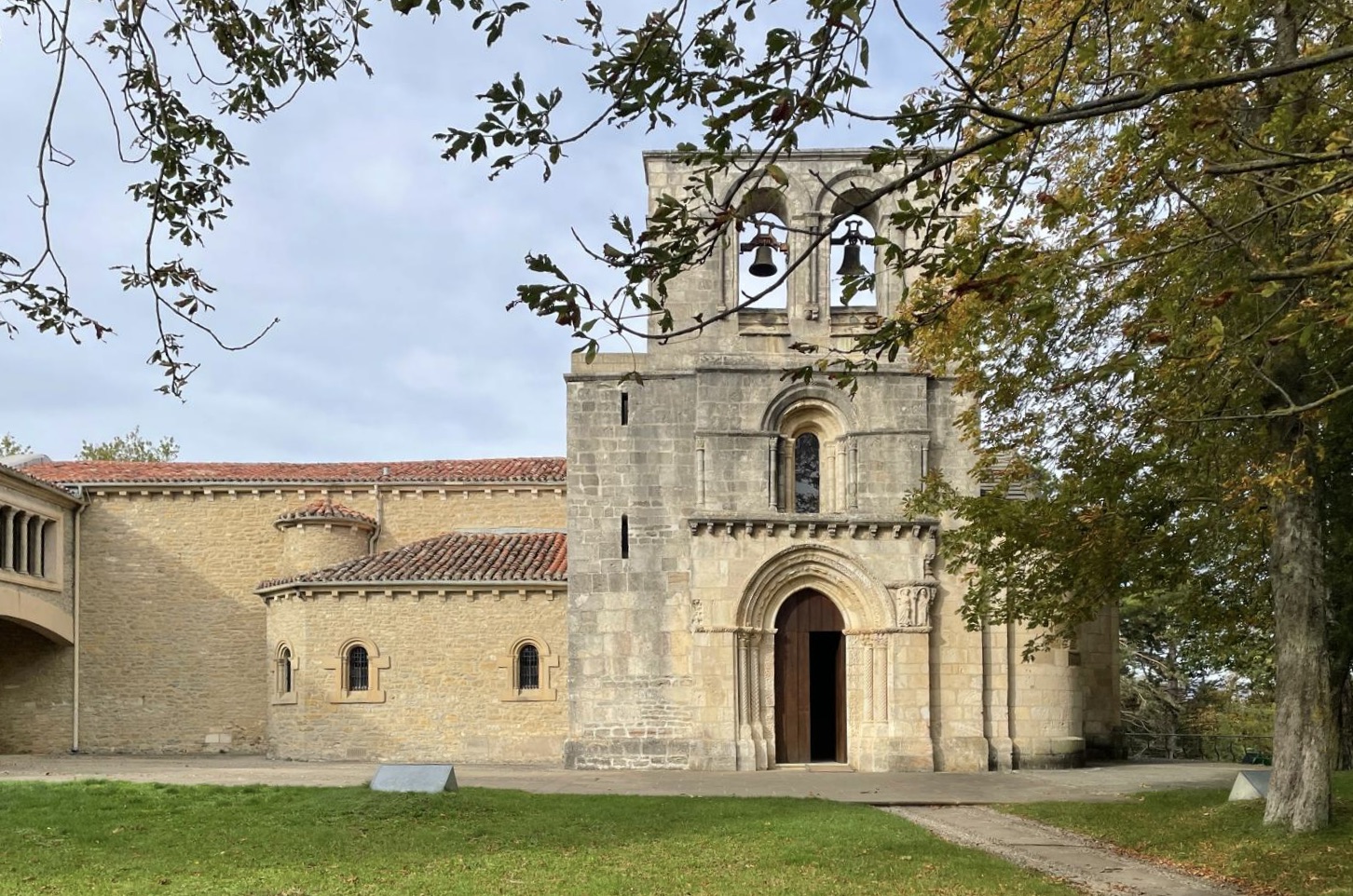
The basilica has two portals, namely a western and a northern one. The roof rests on corbels depicting animals, plants, and figures.
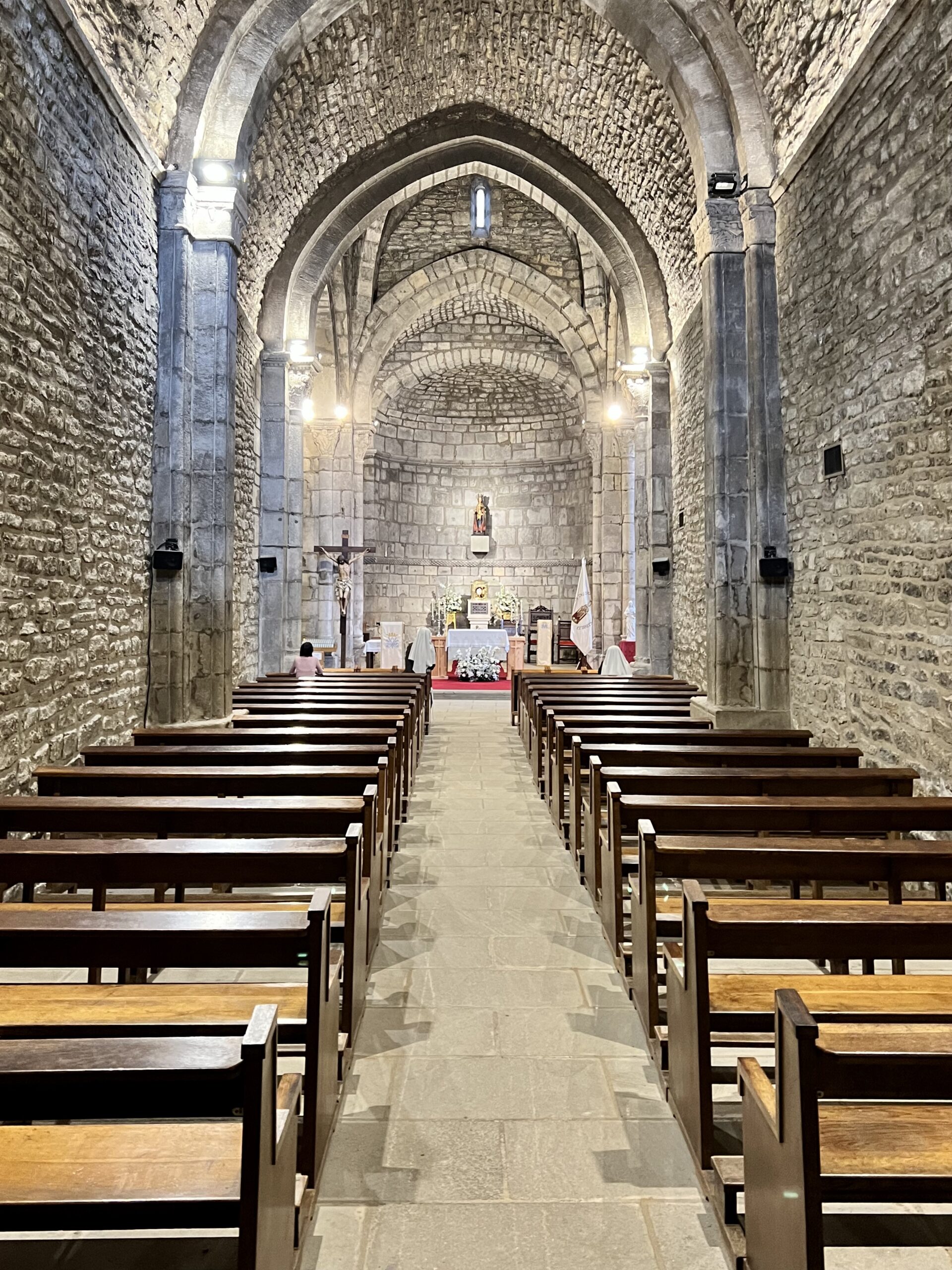
The church building is in the shape of a Latin cross with a vertical arm longer than the horizontal, and is a characteristic symbol of Christianity. The church has one nave, three bays (cross vaults), and three apses (alcove-shaped spaces).
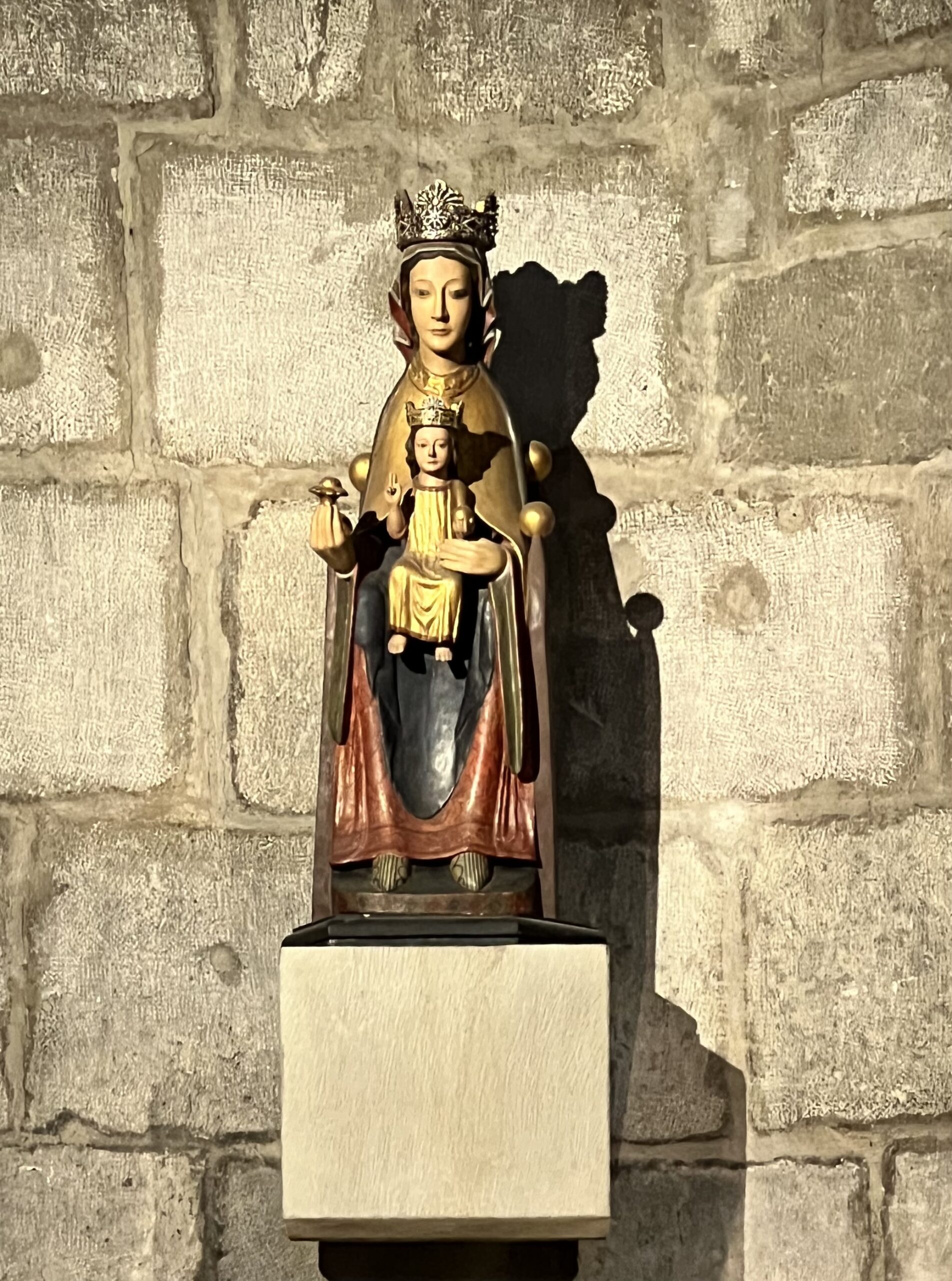
In the Romanesque, monumental pilgrimage church, the 12th-century enthroned Virgin Mary with the Child Jesus can be visited. The image is the patron saint of the province of Álava.
The font dates from the 13th century and is decorated with heads. This refers to heavenly Jerusalem.
The south portal, “Porta Speciosa”, is worth seeing with the image of Mary, where she meets the angel Gabriel, who brings her an important message.
In the basilica, there are high, bare walls. Therefore, there are few effigies here, and the image of grace stands out all the more as a result.
On the first Sunday of May, the crowning of the statue of grace is celebrated.
The feast day of Our Lady of Estíbaliz is 12 September. This feast is held in the basilica on the second Sunday of September.
The basilica is open daily.
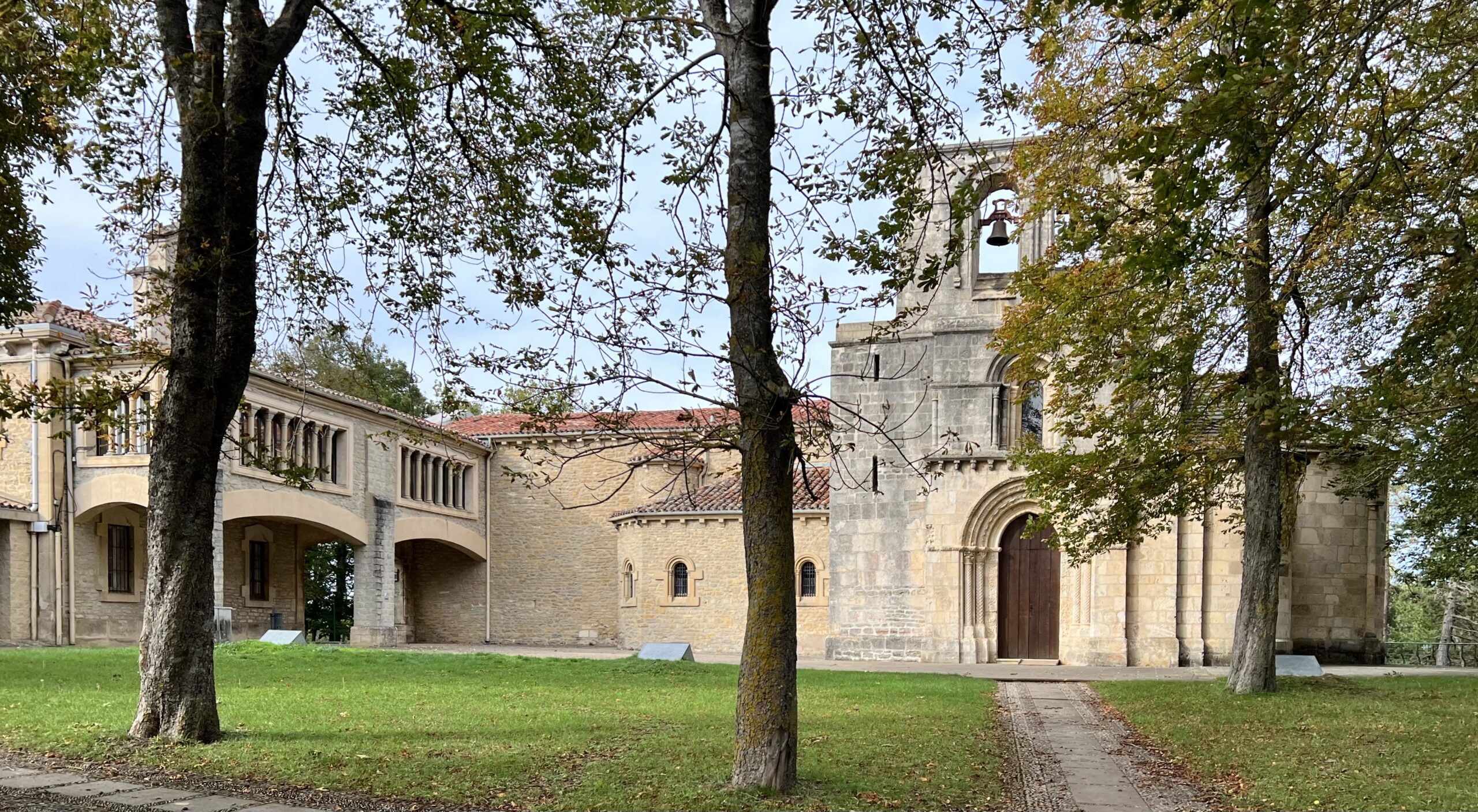
ACCESSIBILITY
Estíbaliz is located a few kilometres from Argandoña and belongs to the municipality of Vitoria-Gasteiz and the province of Álava/Araba. Argandoña is located 10 km from Vitoria-Gasteiz in the Basque Country.
The pilgrimage site of Estíbaliz is located at the end of the A4159.
Leave the A4107 at Argandoña and then take the A4159.
Address: Villa Franca 2, 01193 Estíbaliz.
The sanctuary's website is www.santuariodeestibaliz.com.
Experience
My itinerary for visiting Spanish pilgrimage sites also includes Estíbaliz. The site is easy to find after leaving the city of Vitoria-Gasteiz in the Basque Country. The roads are well-maintained and the direction is clearly signposted.
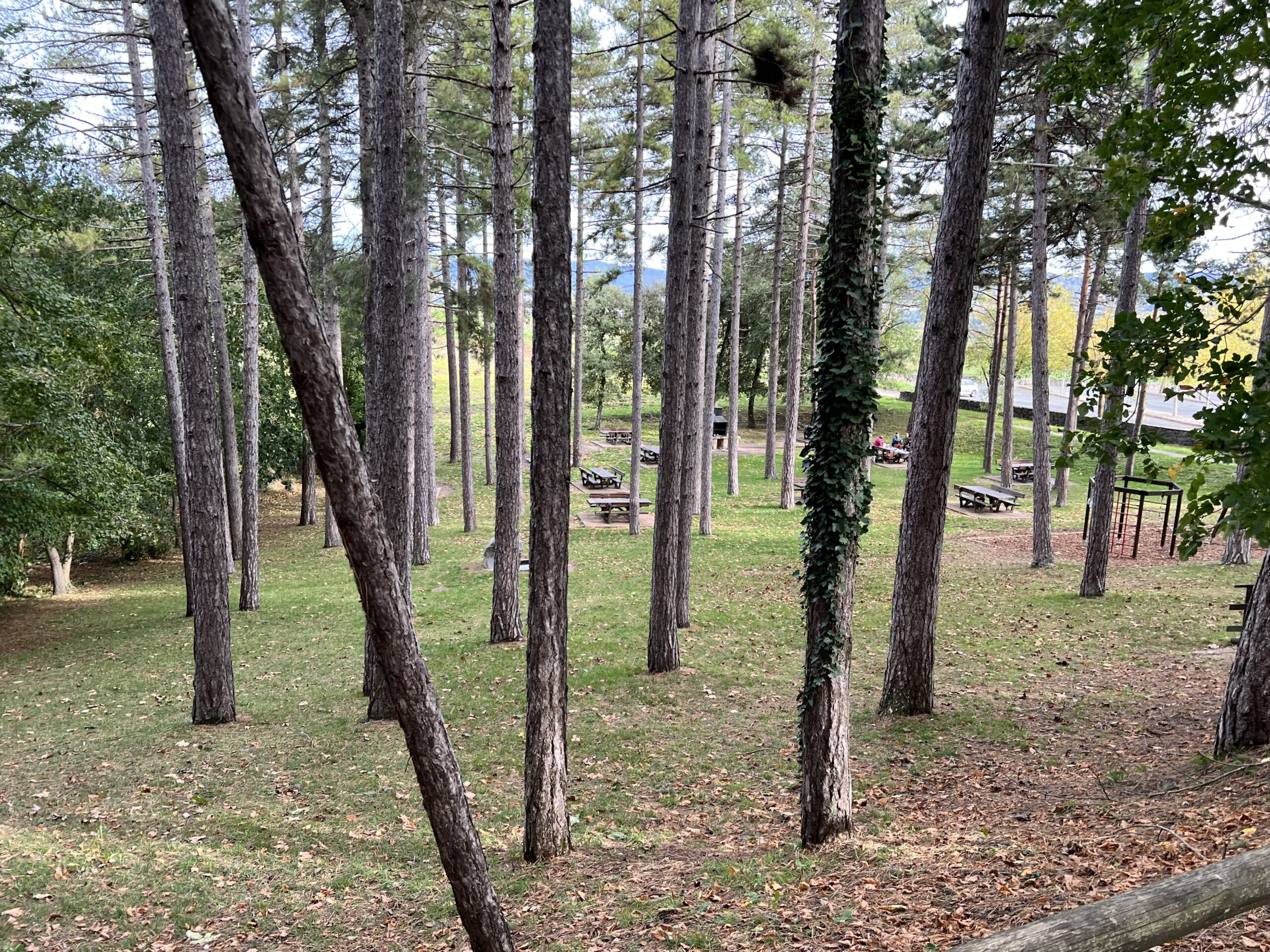
Upon arrival, it turns out the car park has plenty of space today. I get out and look around. I find the location of the pilgrimage site to be magnificent. A sanctuary on high with many trees for protection! So the pilgrimage site is located on a hill in a wooded area. The nature here is all splendour, and then there's also a Marian shrine. In the woods, I see some visitors sitting on a bench.
Then it's up a stone staircase to pay a visit to the church. The Romanesque church looks very robust. It shows the strength of simplicity combined with a spiritual charge.
As I enter the basilica, the high, bare walls strike me. Where are the paintings and large statues? What also catches my attention are the three present, praying, young sisters. They give the church a future. Seeing these young sisters here is in stark contrast to Marian shrines where mostly older sisters are working. These women reside in the convent which is also on the sanctuary grounds.
In the high altar is the statue of grace. The effigy is of a enthroned Madonna and Child, and both are crowned. Furthermore, some other statues are placed in the rather narrow church.
Before leaving the pilgrimage church, I light candles solely to thank Mary for allowing me to come here. I also speak to her about some friends of mine. They could do with a little support.
The pilgrimage site is quiet today. Only the wind can be felt and heard. Unfortunately, I can't buy anything here, as the souvenir shop is closed. Thankfully, the heart of this sanctuary is open.
Environment
Going from Vitoria-Gasteiz to Estíbaliz is going 12 km east.
Departing from the pilgrimage site at Murgia and arriving at Estíbaliz means travelling 30 km to the southeast.
From Bilbao to Estíbaliz means covering a distance of 75 km to the southeast.
After visiting the pilgrimage site with Mary on the Pillar in Zaragoza and wanting to go to Estíbaliz, it means travelling 272 km to the northwest.
~~~

 Nederlands
  English (UK)
  Deutsch
  Français