~~~
History
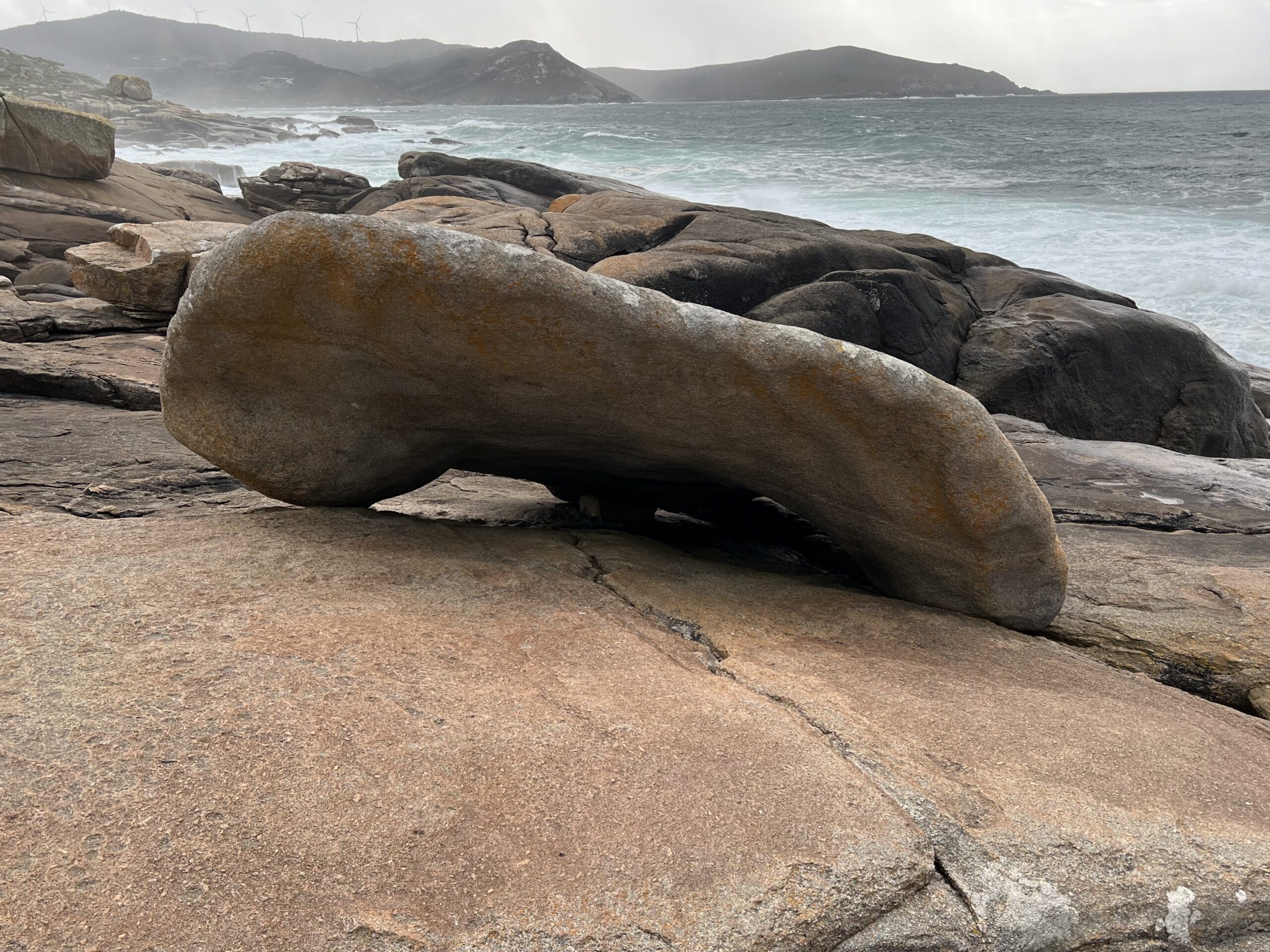
The pilgrimage site owes its origin to a legend from centuries ago. The story... In Finisterre (Fisterra), Saint James comes ashore in a stone boat. Between the years 33 and 44, Mary journeys to Spain in a stone boat. She wants to know and experience the conversion activities of James (of Santiago de Compostela). She comes to encourage him in proclaiming the gospel.
The large stones near the pilgrimage church are considered parts of Mary's ship.
At the pilgrimage chapel lie three large stones with a name:
-bootstone, is the stone of the boat
Sailstone
helmstone, means stone of the rudder.
The large stone of the boat has been broken by a storm. This stone wobbles if someone stands on it who is free of sins. The stone of the sail, which is shaped like a kidney, is said to be something pilgrims pass under 9 times to heal kidney ailments and rheumatic pains.
That it is the end of the world on this coast comes from statements by Romans.
Pilgrimage site
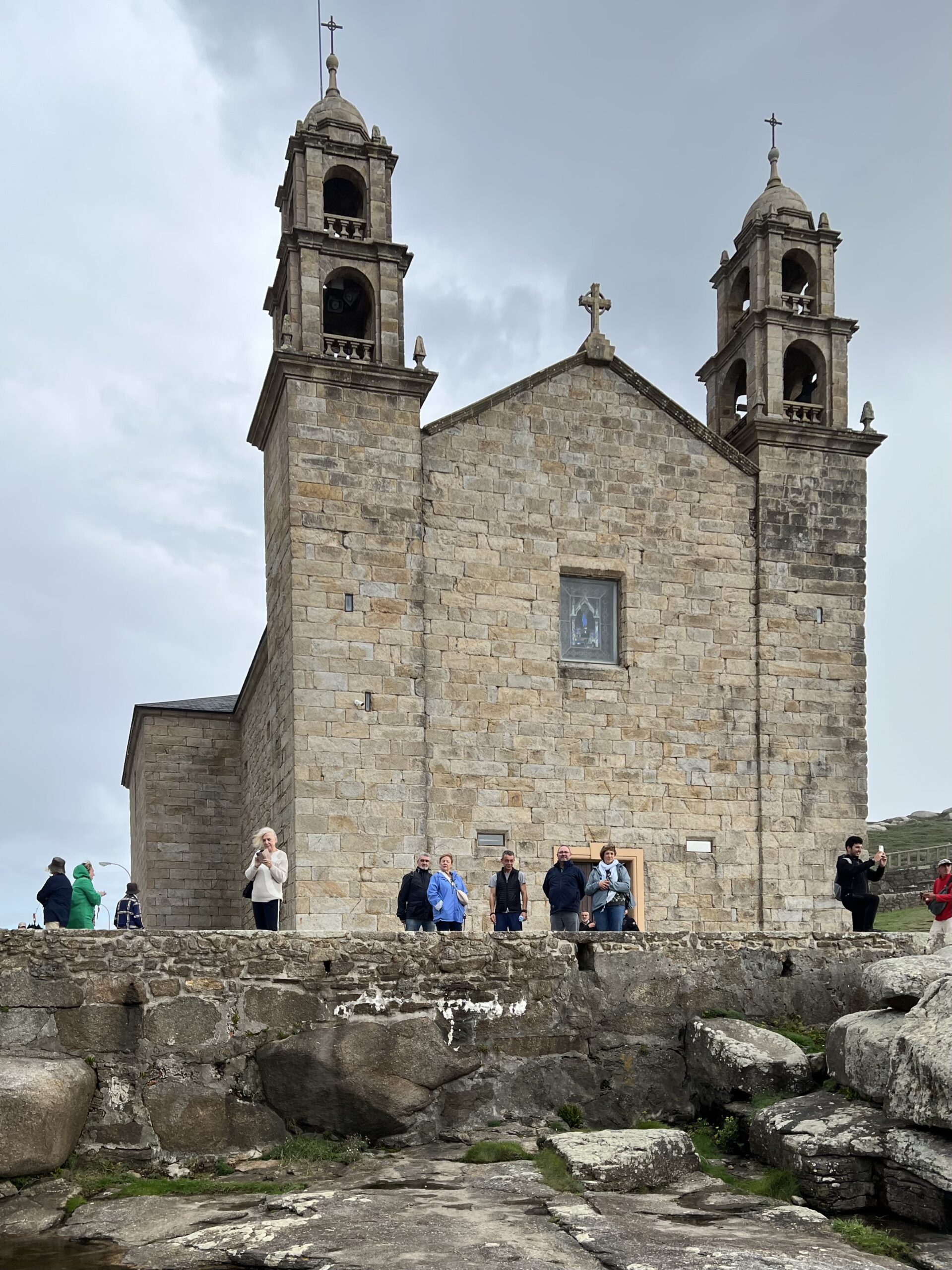
The pilgrimage site is called “Santuario da Virxe da Barca” (Sanctuary of the Virgin of the Boat). The sanctuary is located on the coast. During high waves, the water reaches the small pilgrimage church. When it storms, the context appears to be the end of the world.
The large pebbles in front of the little church on the edge of the ocean have a healing effect, because Mary sailed on them. The remains of Mary's little boat have been here for many centuries.
The pilgrimage chapel is built in Baroque style.
On 25 December 2013, the little church was destroyed by fire following a lightning strike. After that, restoration began to keep the end of the world in view.
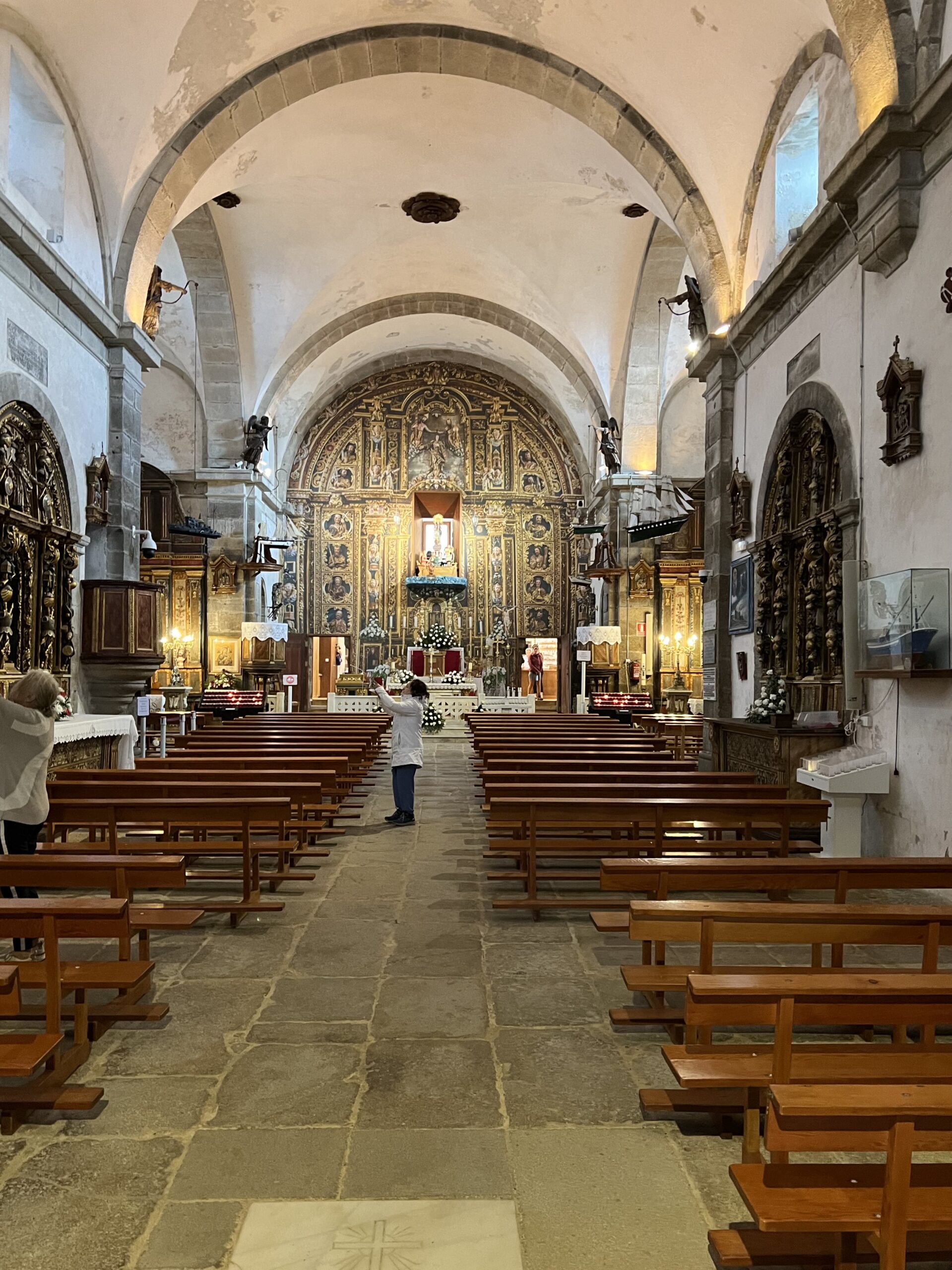
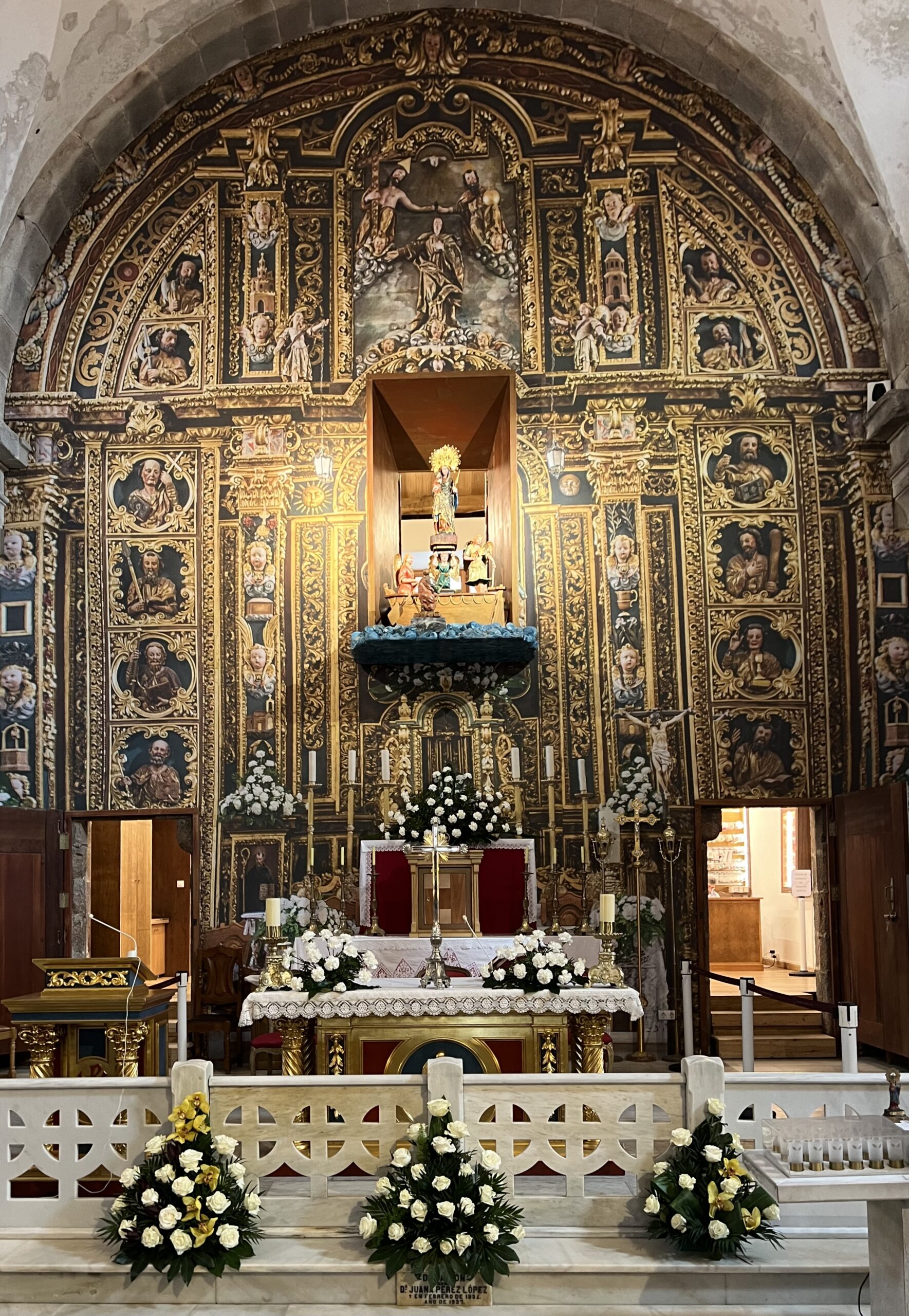
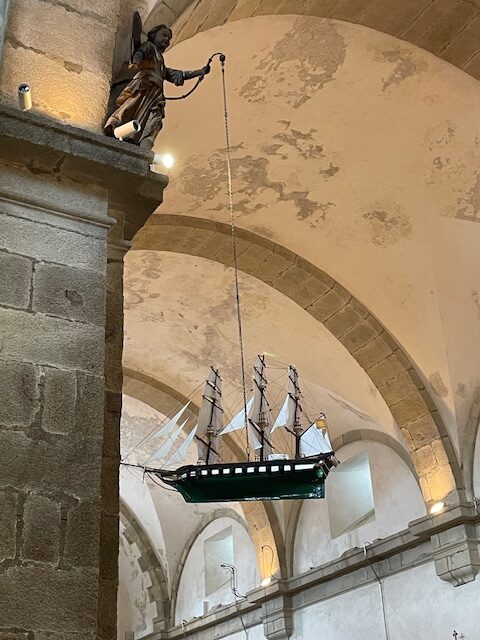
In the pilgrimage church, there is a beautiful high altar with a large altarpiece. It is possible to go behind it. Several boats are present in miniature form, highlighting Mary as the patron saint of sailors.
Next to the pilgrimage church stands another chapel, namely the “Capela dela Virxe” (Chapel of the Virgin).
ACCESSIBILITY
The pilgrimage site is located 72 km beyond Santiago de Compostela, near Finisterre/Fisterra, which means “end of the world”. Muxía is in the province of A Coruña. Via the Camino of Finisterre, one also arrives in Muxía.
Address of the “Santuario da Virxe da Barca” (Sanctuary of Our Lady of the Boat):
Virxe de Barca Street, Muxía.
More information can be found at www.concellomuxia.com.
Experience
Maria has been here... The end of the world...
These statements make me curious. In the far west of Spain, I will experience the end. The story goes that Mary came here to visit and see James (Santiago) at work.
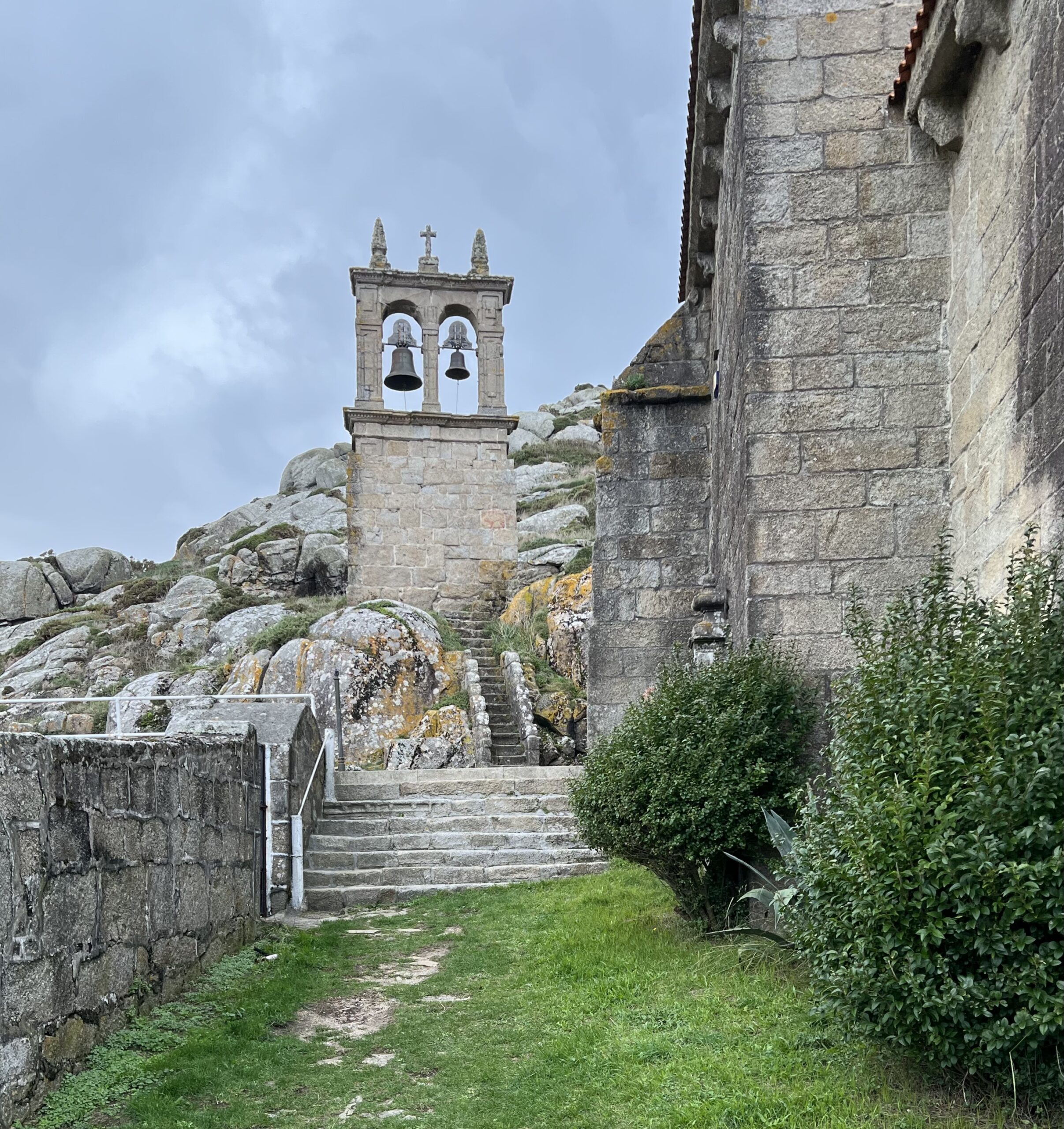
After long motorways, then a narrower route with many bends and countless hills, I arrive in Murcía. I park the car near the harbour with pleasure boats and smaller vessels. Then I go into the centre and after looking around a bit, I reach the edge of the town. Next, it's a walk to the Rúa Virxe da Barca (Street of the Virgin of the Boat). It's this one I follow. Then I come to an old, closed monastery with a small church.
I walk on, seeing many rocks and large boulders, which guide me to the end of the world. I always thought life would end with water. The circle is then complete.
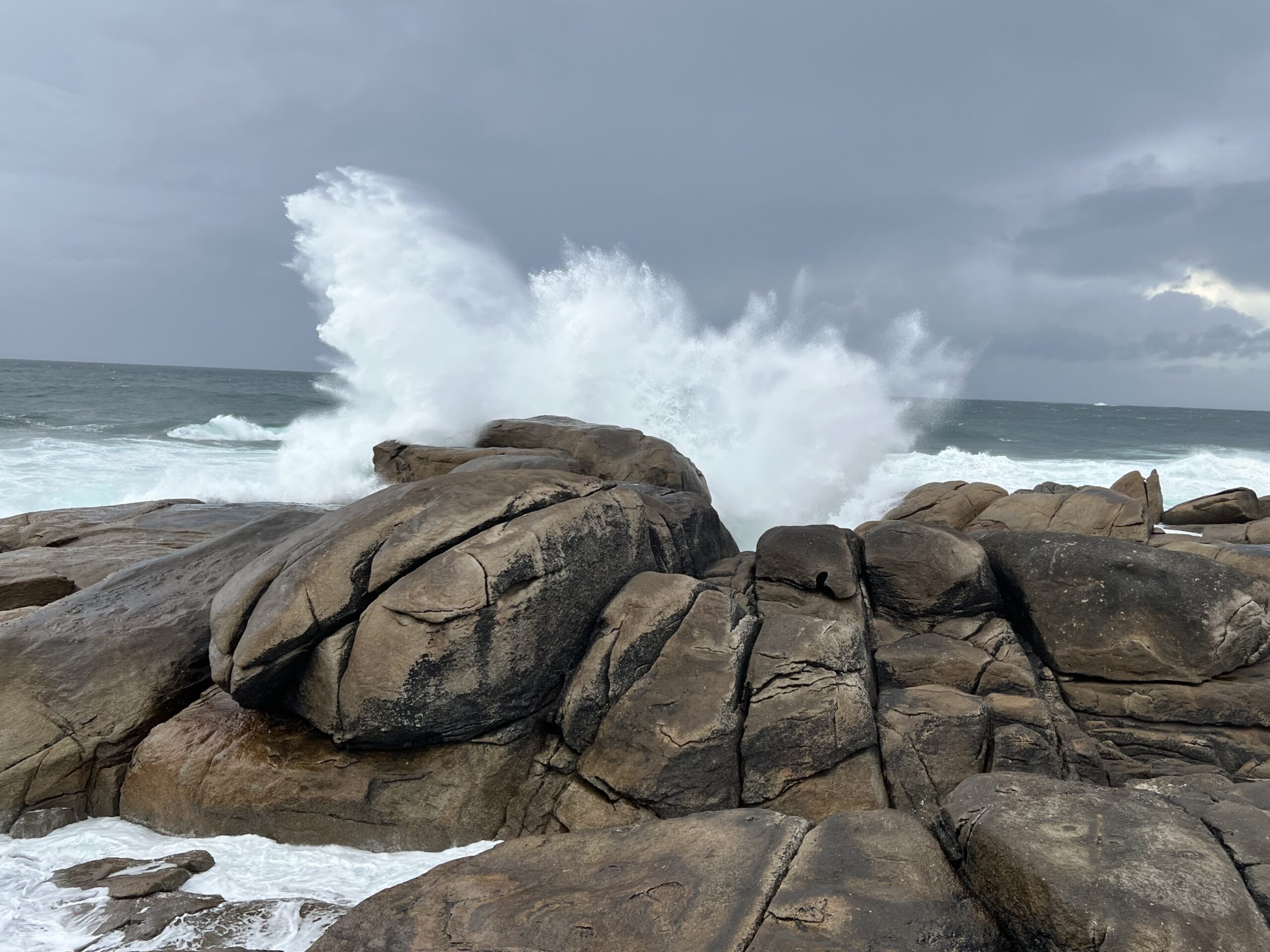
After a few hundred metres, the ocean comes into view. The pilgrimage church stands on the last stretch of land. So life stops at a church. I was told that Mary came ashore here. Very large boulders prove this, as these unliftable masses formed her boat. That is truly miraculous! It dawns on me again that I am experiencing so much that is inexplicable. I touch a large stone and pray to Our Lady.
Looking at the impressive sea, I am awestruck by the power of nature; for years, waves have forcefully smoothed every rock. An age-old process that knows no end, or perhaps it does here.
Standing here by the turbulent water, looking into the distance, feeling the spray of the pounding waves, I realise the end of the world is happening here. Before this happens to me, I'm going into the pilgrimage church to pray to Mary.
In the pilgrimage church, I see many depictions, particularly of Our Lady, and I spend a long time contemplating the high altar with a special image of Mary and a small boat with angels. It is possible to go behind the high altar, and so I do. Then there is a beautiful view looking at the back of Mary and the interior of the church.
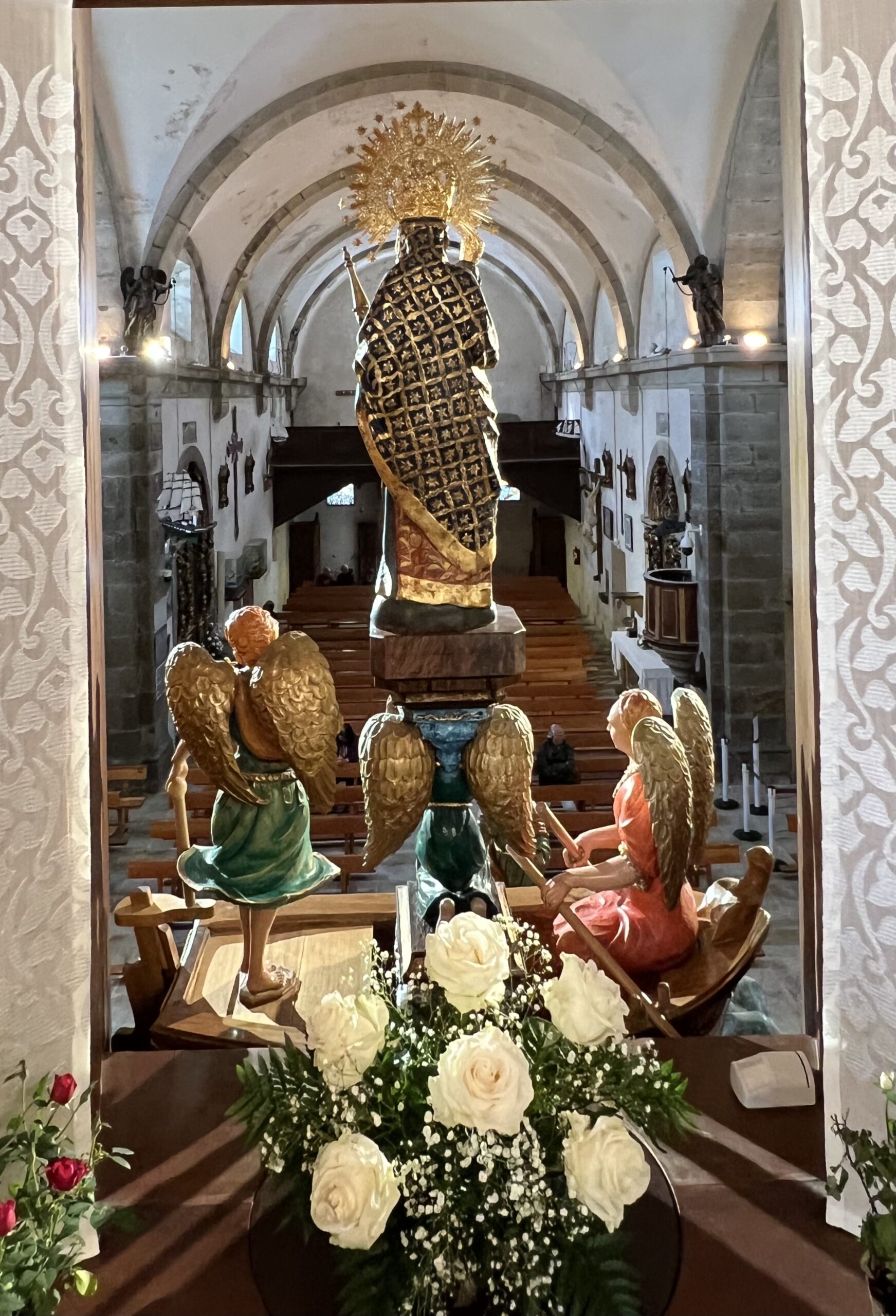
After admiring the church, praying to Mary, and sitting on a bench, I let the impressions I've gained sink in. What a gift it is to witness the end of the world. I never thought I would live to see this. Thank you, Mary!
Environment
Along the coast in Muxía, you can go for walks and bike rides.
Travelling from Santiago de Compostela Cathedral to Muxía means covering 72 km to the northwest.
Leaving the pilgrimage city of Pontevedra to arrive in Muxía is to travel 124 km north.
Travelling from the large city of A Coruña to Muxía means covering 94 km South-West.
Posted: 28 March 2025
~~~

 Nederlands
  English (UK)
  Deutsch
  Français