History
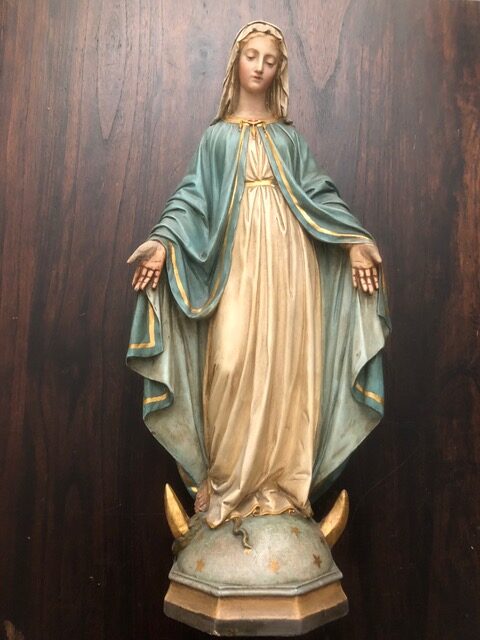
The Abbey of Einsiedeln was founded by the Benedictine monk Meinrad (Meginrat) von Einsiedeln (c. 797–861). He was a German hermit and was later canonised. Meinrad is depicted with two ravens. Meinrad von Einsiedeln possessed a miraculous statuette of Mary, which he received from Hildegard von Zürich (828–c. 859), abbess of the Fraumünster convent in Zurich.
In 835, Meinrad retreats to the Finstern Wald (forest) after working as a teacher. He remains a hermit in the forest for the rest of his life. After this, other hermits come to the forest and a monastic community arises.
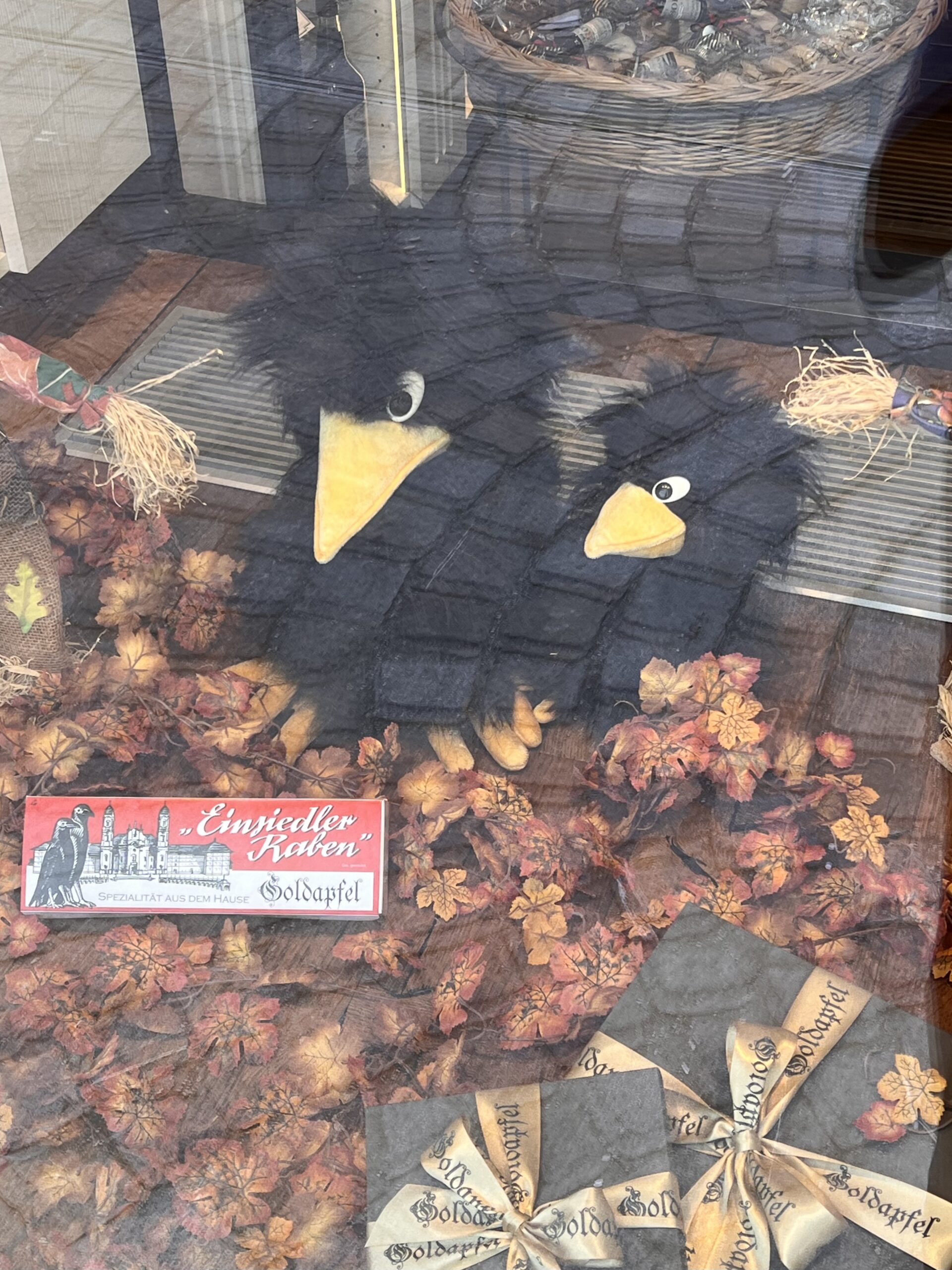
A legend lies at the heart of this Marian shrine. It is 21 January 861. The hermit Meinrad receives two vagrants and kindly offers them shelter and food. The two are bandits and their eyes fall on the chest of gifts left by pilgrims. They strike Meinrad dead. Two ravens protect his remains and bring the murderers to justice. The two bandits are sentenced to be burned at the stake. This is why Meinrad is depicted with two ravens.
In 934, the monastery was founded by Eberhard (c. 890-958), former Provost of Strasbourg Cathedral, who also served as the first abbot.
The monastery church and the chapel of grace were consecrated in 948. A legend tells that this happened on the night of 13th to 14th September 948. Then Mary appears at the altar. Christ with angels and saints also appear in the monastery's chapel. They dedicate the then-chapel to Mary.
Over the centuries, many have been active at Einsiedeln Abbey, including Wolfgang von Regensburg (c.924-994). Between 965-971, he was head of the monastic school and was ordained priest at Einsiedeln in 968 by Ulrich I von Augsburg (890-973), Bishop of Augsburg (923-973). Otto I the Great (912-973) appointed Wolfgang as Bishop of Regensburg (972-994). Wolfgang von Regensburg was canonised in 1052 by Leo IX (Pope 1049-1054), born Bruno von Egisheim-Dagsburg (1002-1054). Wolfgang von Regensburg is the patron saint of woodcarvers, carpenters, and the city of Regensburg.
In 1465, a fire destroyed the statue of grace, and it was replaced in 1466 by the effigy that still stands in the basilica today. The statue was not yet black at this time, but it became so due to the numerous candles that were lit, burning oil lamps, and incense. The chapel of the statue of Mary was enclosed by a basilica.
The Reformation threatens the survival of the basilica, but a revival of pilgrimages takes place under the leadership of Ludwig II Blarer von Wartensee (+1544), abbot of Einsiedeln (1526-1544). Since 1547, the monks have sung the “Salve Regina” for the Black Madonna daily, after Vespers.
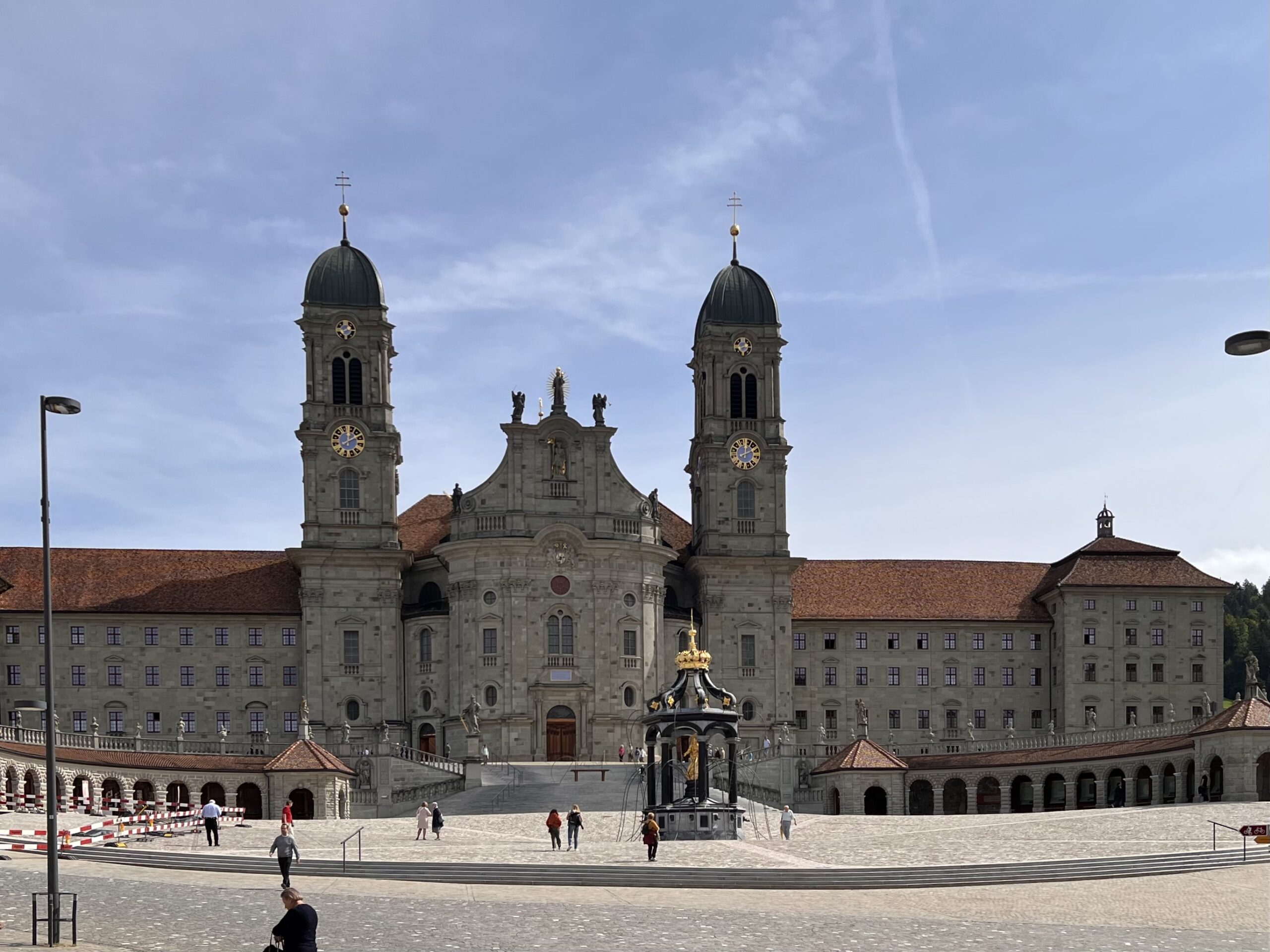
The Baroque construction of the monastery and basilica began in the second half of the 17th century and continued until the second half of the 18th century. In 1724-1726, the ceilings were decorated with frescoes. In 1735, the Baroque monastery church was consecrated. The design is by monk and architect Kaspar Moosbrugger (1656-1723).
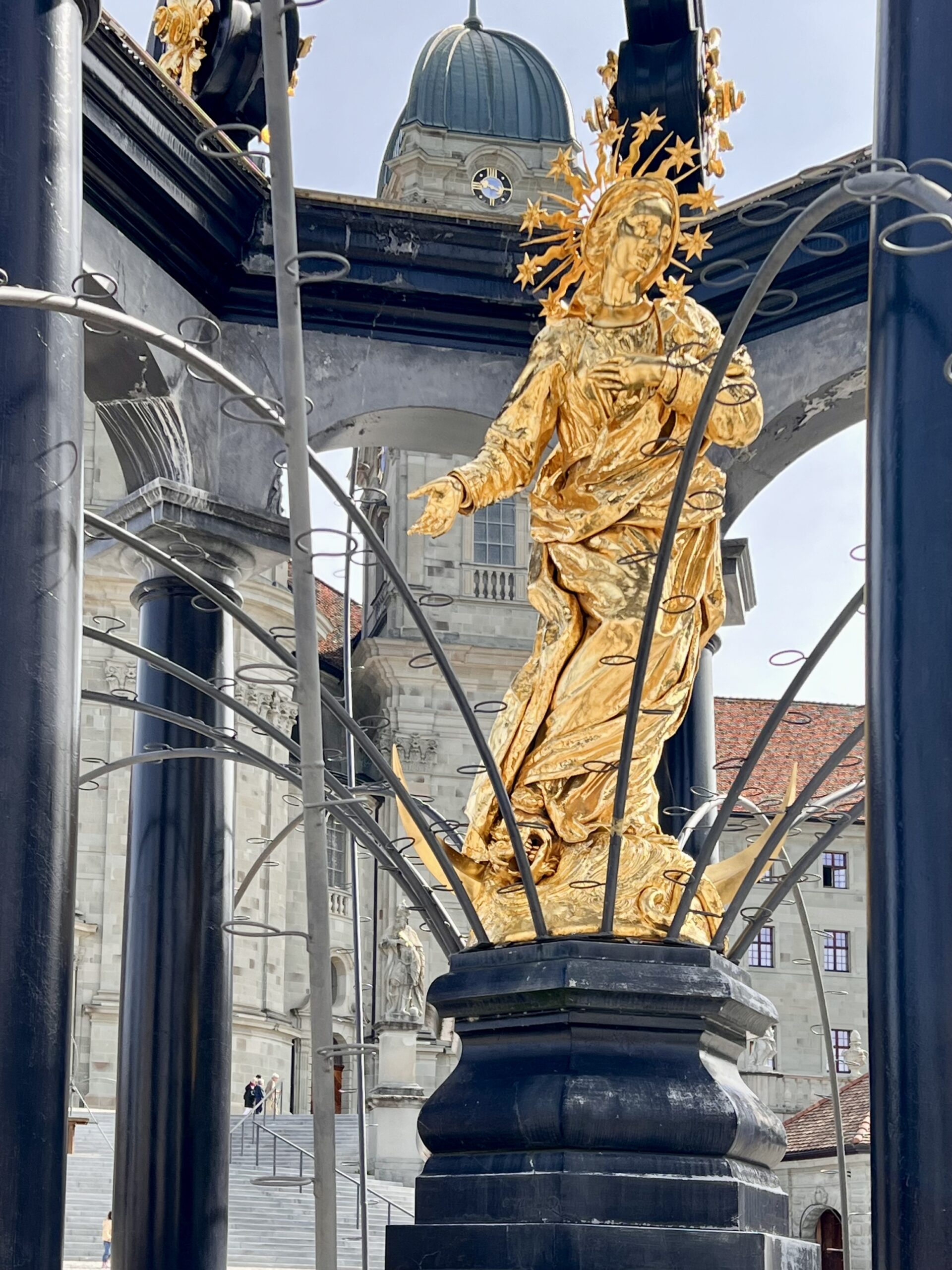
In 1749, the golden effigy of Mary and the fountain were moved to the centre of the vast forecourt.
In 1798, French troops destroyed the Chapel of Grace, but the statue of Mary was safely brought to safety in time. Monastic life then came to an end in Einsiedeln. The statue was cleaned and freed from the black layer on its face. The monks returned to the monastery in 1801. The effigy returned to Einsiedeln in 1803, but people did not want a pale statue. Mary had been considered the Black Madonna for many years. Due to many complaints about her complexion, the statue was repainted black. In 1817, the new Chapel of Grace was consecrated.
In 1907, Einsiedeln receives a distinguished visitor. Pius X, pope from 1903-1914 and born Giuseppe Melchiorre Sarto (1835-1914), pays a visit to the basilica and monastery.
On 15 June 1984, John Paul II, Pope in the period 1978-2005, born Karol Józef Wojtyla (1920-2005), came to the pilgrimage site of Einsiedeln and consecrated the new high altar.
Between 1975 and 2001, major restoration works took place.
The Benedictine abbey has a thousand-year history and attracts around a million visitors annually.
Pilgrimage site
The name Einsiedeln comes from “Einsiedler”, which means hermit. The name is thanks to the hermit Meinrad. The monastery with its church is the most important Marian shrine in Switzerland and the church is the spiritual heart of Einsiedeln.
Einsiedeln lies at almost 900 metres above sea level. The town is the most visited pilgrimage site in Switzerland, where the Black Madonna is venerated. It is one of the largest pilgrimage sites in Europe. A large square lies in front of the basilica, and devotional items are sold from stalls in a hemisphere. In the centre of the square stands a fountain with a gilded statue of Mary. Next to the basilica, there is a shop for religious articles and gifts from the monastery. A Stations of the Cross has also been laid out on the grounds, which leads to the Meinradsberg. Hermit Meinrad is the patron saint of Einsiedeln.
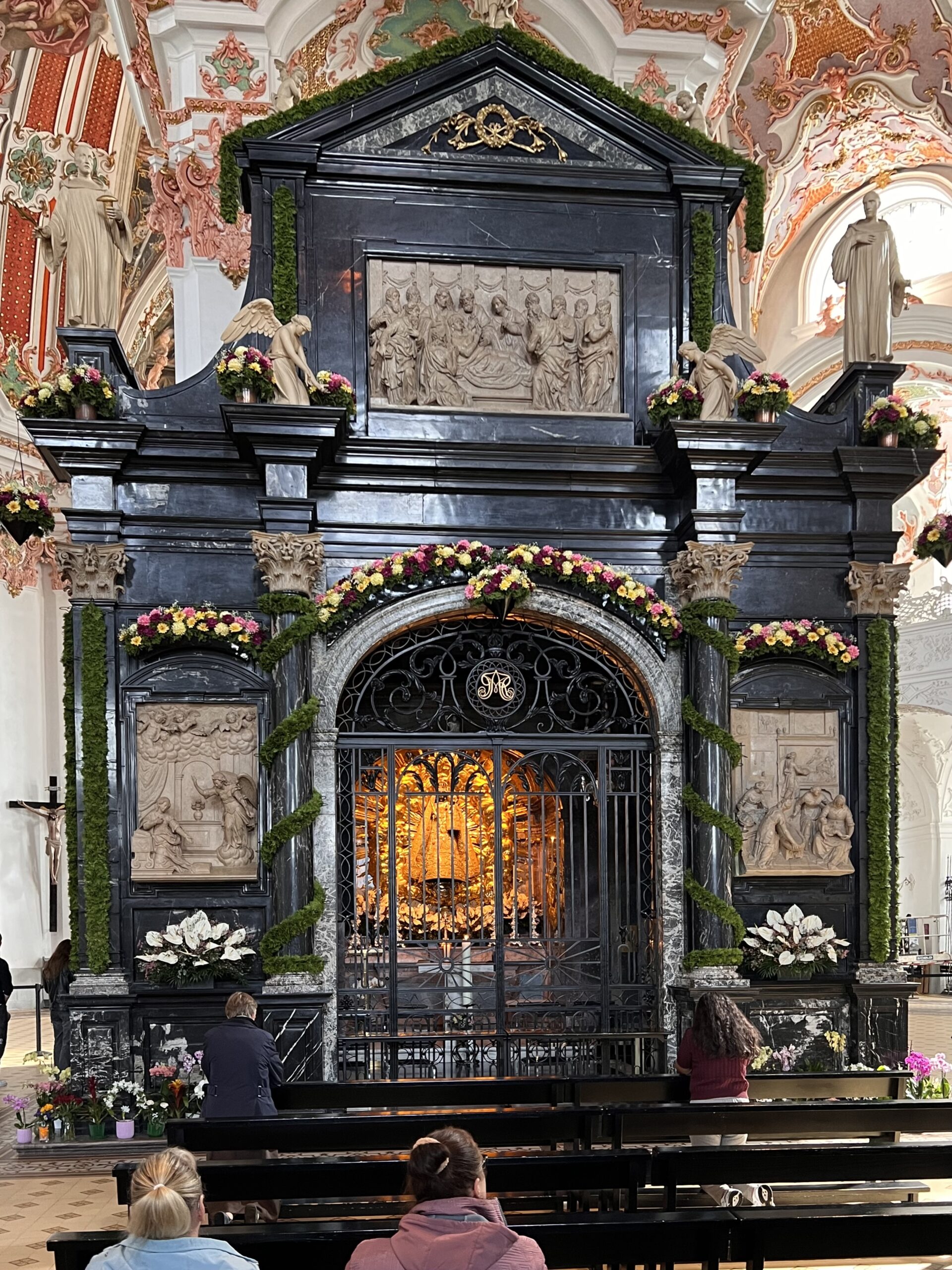
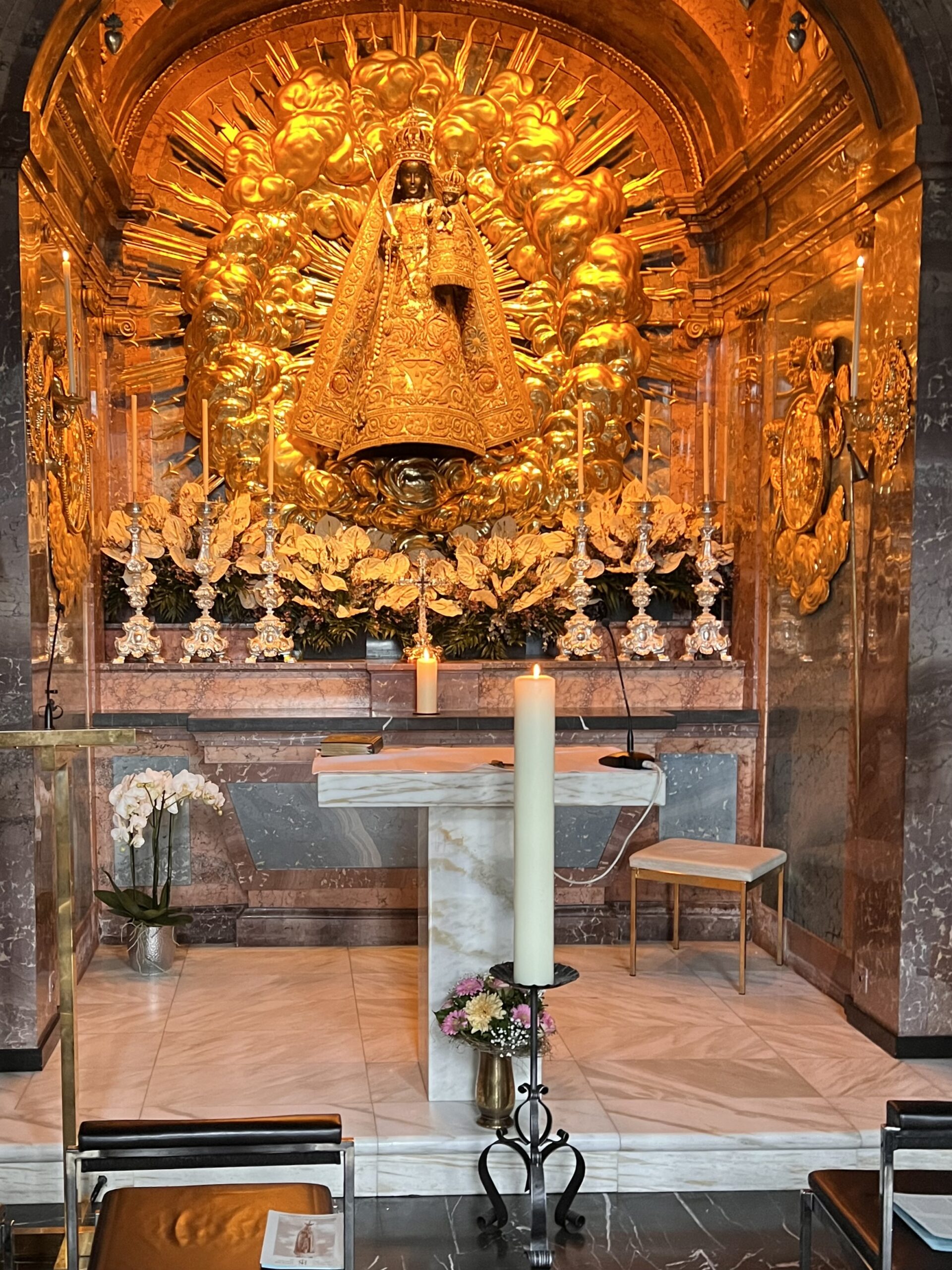
At the centre of the baroque basilica, in a special chapel, stands the Black Madonna's miraculous image. Many prayers are offered here. Our Lady of Einsiedeln is the patron saint of Switzerland; “Patrona Helvetia”. The Black Madonna has an extensive wardrobe of around 40 cloaks.
The extensive monastery library can be visited and it usually makes a great impression on visitors.
Via Einsiedeln, there is a pilgrimage route to Santiago de Compostela in Spain.
In 1988, the friends“ association was founded under the name ”Vereinigung der Freunde des Klosters Einsiedeln". This organisation supports the monastery and the monastic community with advice and action.
Since the 17th century, the festival of Our Lady of Einsiedeln has been celebrated on 16 July and the following Sunday. Every year, the festival of the consecration is held on 13/14 September, following the legend from 948.
Every day, services and prayer meetings are held in the basilica. In the Chapel of Grace, Eucharistic celebrations take place daily, and the sacrament of confession is available. The Baroque church is therefore open every day to welcome pilgrims and tourists. Annually, there are approximately 800,000 visitors.
ACCESSIBILITY
Einsiedeln is located in central Switzerland, near the Sihlsee lake. Einsiedeln is in the canton of Schwyz.
Address front of basilica: Klosterplatz, 8840 Einsiedeln.
Rear of basilica address: Holzhofstrasse, 8840 Einsiedeln.
Current information can be found at www.kloster-einsiedeln.ch.
Experience
Einsiedeln is a town in the centre of Switzerland with around 17,000 inhabitants and boasts the country's largest sanctuary. What’s special about Einsiedeln is the connection between the Marian shrine and the Benedictine monastery. A visit to the town centre and the basilica is on the itinerary. According to the information gathered, I can take my time there.
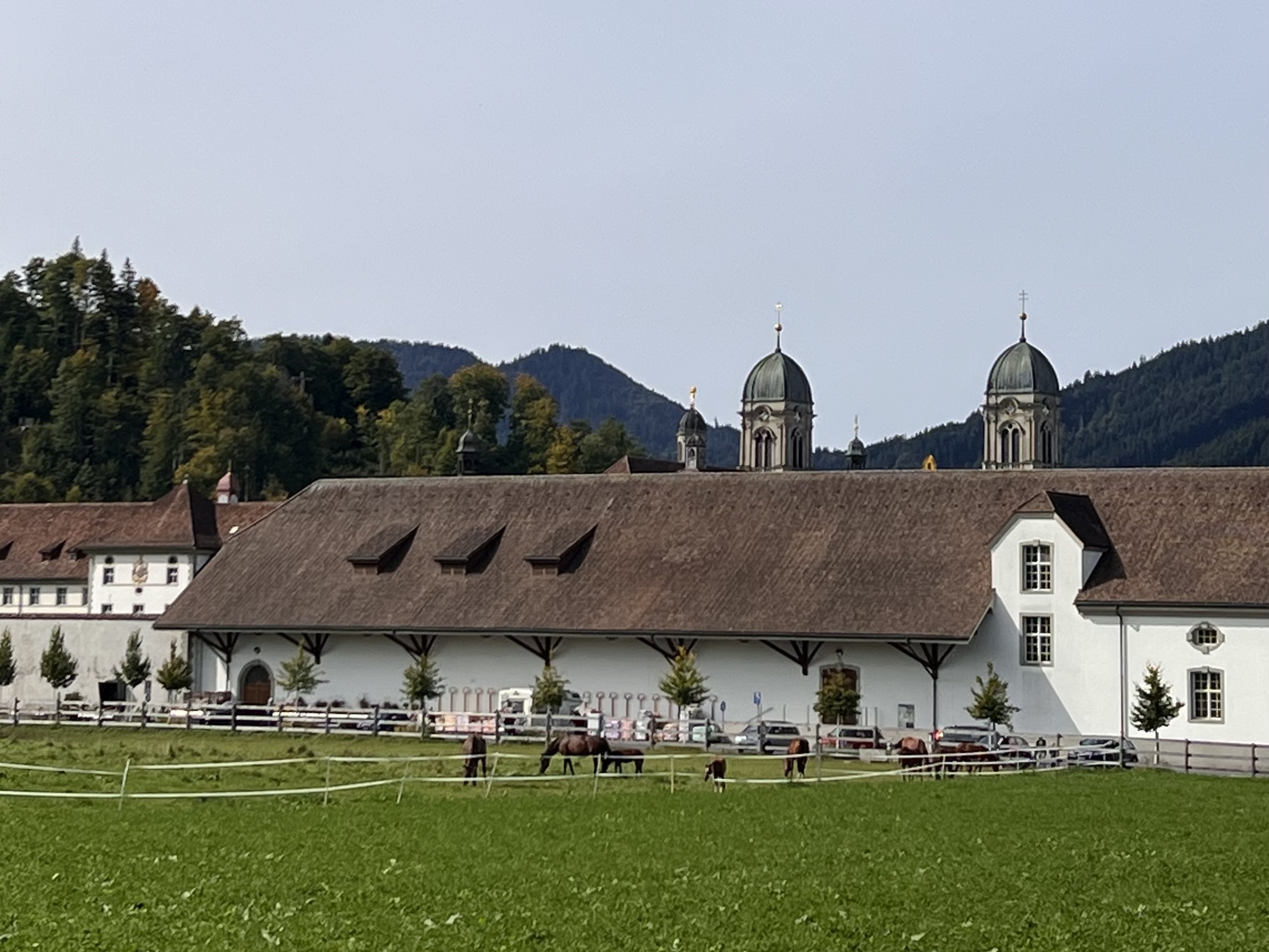
The monastery complex can be seen from afar and makes a great impression on me. I prefer to go to the basilica via the stables and walk along a long wall to get to the horses. Many noble four-legged friends are outside and also quite a lot of horses are in the stables.
The basilica's front façade is very robust. What strength radiates from the front! Then, entering the basilica, visitors are welcome all days of the year. The miraculous statue of the Black Madonna is safely behind a strong grille in a striking, high chapel. Here, the Black Madonna has been placed in a special room, and subsequently, a basilica has been built over it. Mary is central in the chapel, and golden rays ensure the image stands out even more. I stand here praying for a while, and I'm certainly not alone. As I continue to view the large space of the basilica, the paintings and frescoes on the ceilings catch my eye the most. The frescoes cover every metre. What decoration with magnificent artistic expressions!
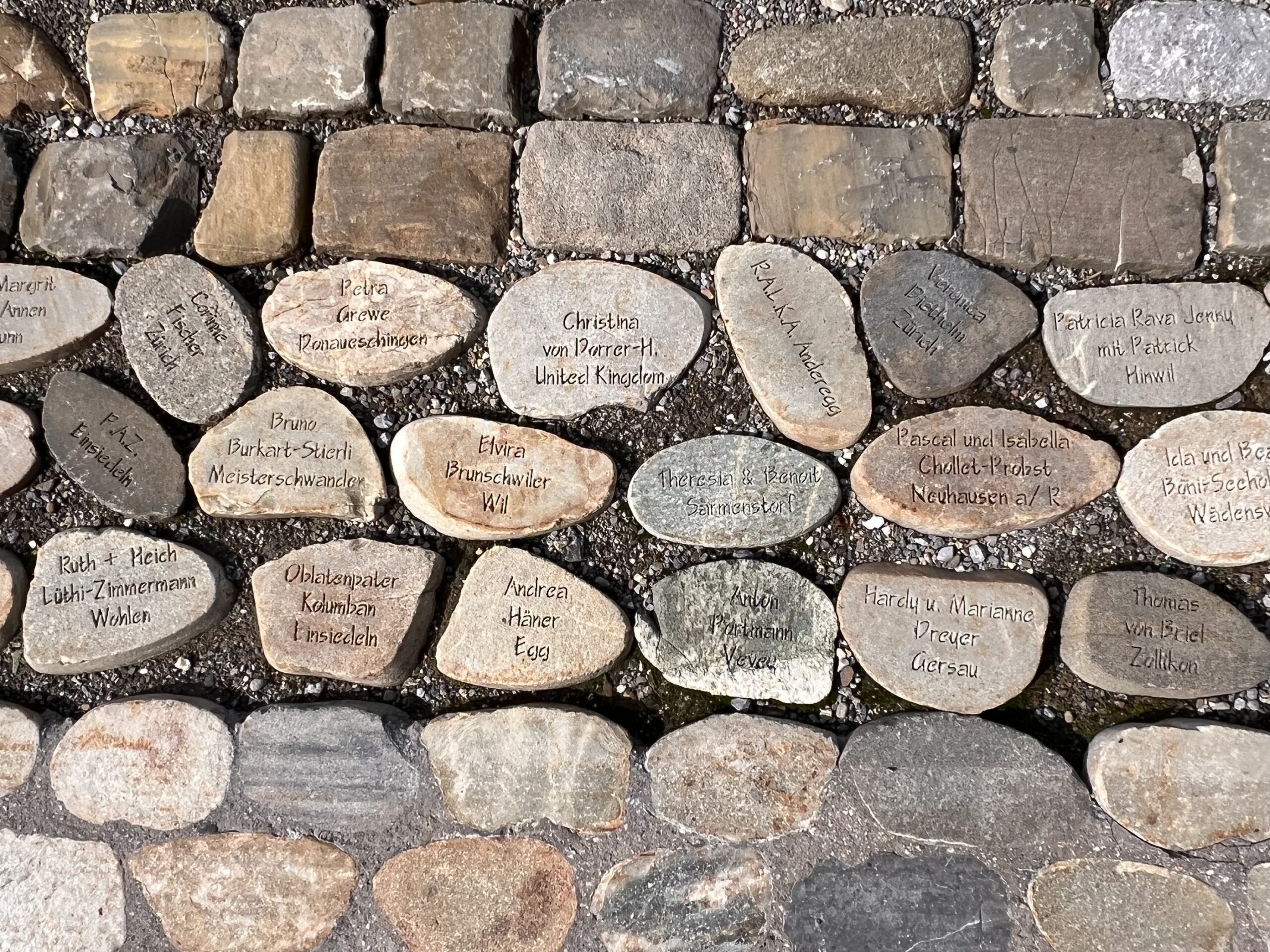
After visiting the basilica and the religious goods shop, I'll head to the city centre bordering the shrine's square. On this square, I notice stones with names and places on them. There are hundreds of them, from those who contributed to the reconstruction of the open space. I turn around and see the impressive basilica with its monastic buildings. In this large space stands a golden statue of Mary, which people are constantly looking at.
Then I'll head into town, and there's a pleasant hustle and bustle here. In the window of a bakery, I see delicacies, and on the packaging of a product, there are two ravens. That's characteristic of this place and the basis for the later pilgrimage site in this city.
Einsiedeln is well worth a visit. What a Benedictine abbey! What devotion! What a Black Madonna!
Environment
In Einsiedeln, you can visit, among other things, a gingerbread museum and a dairy. Local dishes are also available to try. The surrounding area offers skiing opportunities. Furthermore, there are marked hiking trails and plenty of cycling routes.
Departing from Zürich and arriving in Einsiedeln means travelling 40 km to the southeast.
To travel from the capital city of Bern to Einsiedeln requires covering a distance of 165 km to the northeast.
Travelling from Basel to Einsiedeln means covering 125 km to the southeast.
From the pilgrimage site of Gubel near Menzingen to Einsiedeln means travelling 25 km to the southeast.
~~~

 Nederlands
  English (UK)
  Deutsch
  Français