History
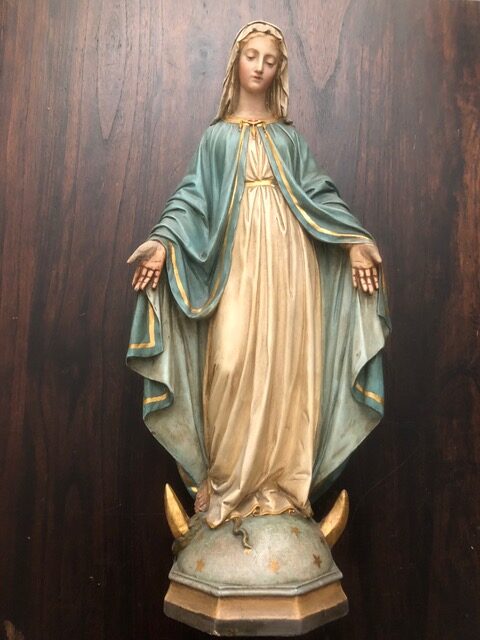
A legend lies at the heart of the Vorbourg pilgrimage site. The story goes: In the 11th century, a devout woman lived as a hermit in the vicinity of Vorbourg. Inspired by her faith and devotion to the Virgin Mary, her days were filled with prayer and meditation. One day, as the woman was praying in the woods, she had a vision of Our Lady, who appeared to her in a heavenly blue light. Mary instructed the woman to have a chapel built in that very spot in her honour. This would be a place where believers could come to pray and find solace.
The castle of Vorbourg is first mentioned in the 10th century and has had several owners over the centuries.
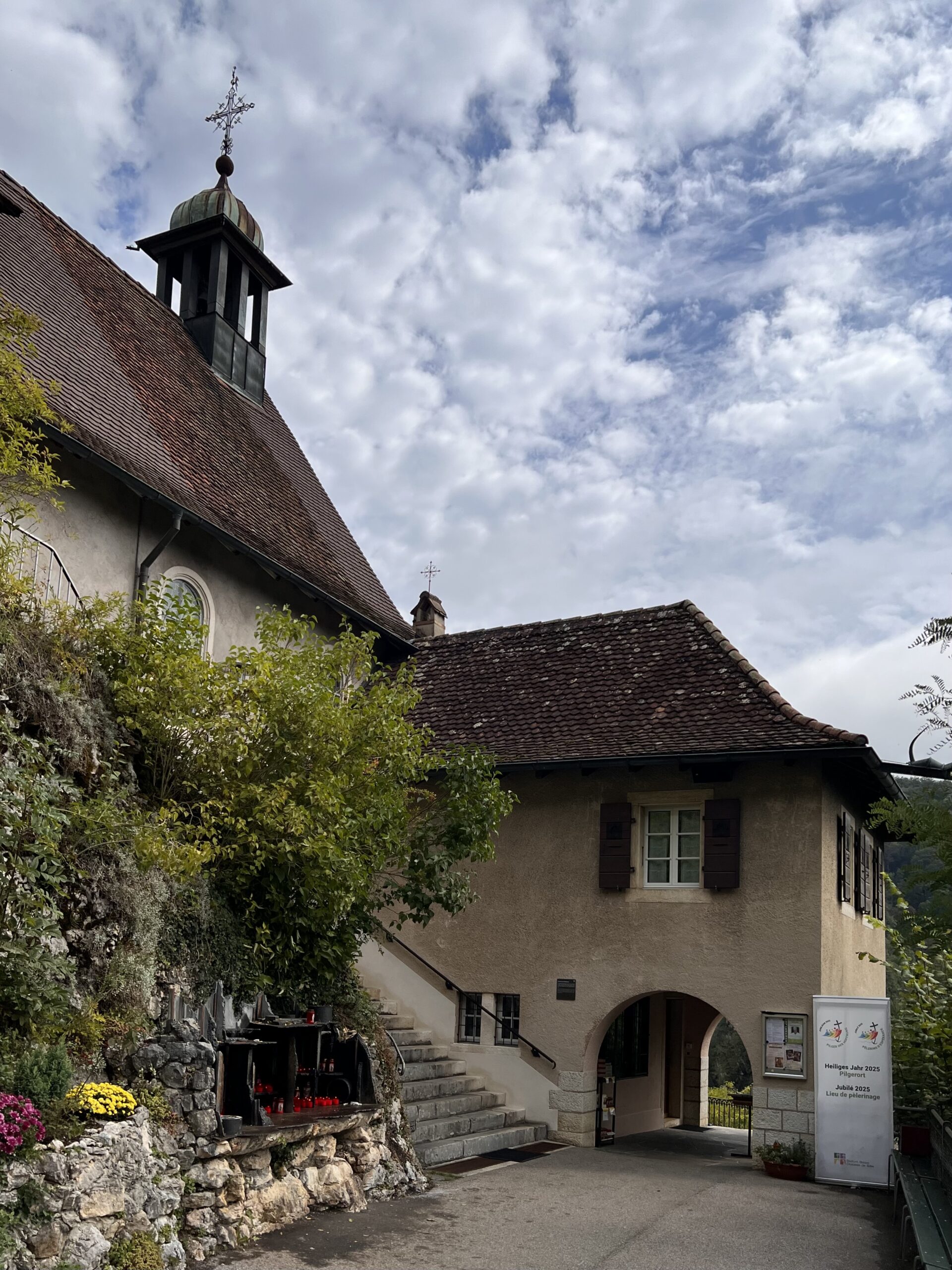
In 1049, Leo IX, Pope from 1048 to 1054, born Bruno von Egisheim-Dagsburg (1002-1054), consecrated the chapel dedicated to Saints Imerius/Himerius and Otmar/Odomar/Odomaar. This German Pope was descended from the Egisheim family, who also owned, among other things, the castle of Vorbourg. The chapel is part of the castle of the Counts of Egisheim.
The chapel was damaged, but not destroyed, by an earthquake in 1356 and was restored in 1365. The castle, however, was destroyed by the violent tremors, with only the St. Anna Tower remaining.
In 1499 the chapel was damaged again, this time by war. A plague epidemic caused many deaths between 1564 and 1636, and many came to pray in the chapel to ask for Mary's help.
During the 16th century, the chapel was abandoned and subsequently looted. On 7 April 1586, the chapel was reconsecrated and became known as a place of pilgrimage to Mary. The consecration was performed by Markus Tettinger (1540-1600), auxiliary bishop of Basel (1568-1599). Due to looting during the Thirty Years' War (1618-1648), with many tensions between Catholics and Protestants, the chapel had to be restored. In 1658, the refurnished chapel was reconsecrated again. Between 1669 and 1692, the chapel was enlarged as the number of pilgrims continued to grow. Since the 17th century, the chapel has therefore been a popular pilgrimage site. The miraculous image is then venerated as Our Lady of the Vorbourg.
In 1704, Hugues-Jean Monnot (1673-1729) created a new high altar, with the miraculous image placed centrally within it.
In 1792, during the French Revolution (1789-1799), French troops occupied the region and the miraculous image was safely brought away in time. In 1796, the chapel was sold to a doctor from Delémont. In 1822 and 1867, the chapel changed hands again and eventually came into the possession of a devout Catholic.
On 12 September 1869, the coronation of the statue of Our Lady of Sorrows takes place. This occurred on the initiative of Eugenius Lachat (1819-1886), Bishop of Basel (1863-1885), with the permission of Pius IX, Pope from 1846 to 1878, born Giovanni Maria Mastai-Ferretti (1792-1878). The coronation took place during the “Kulturkampf”. This cultural struggle (1872-1879) was a political conflict between the German government under Otto Eduard Leopold von Bismarck-Schönhausen (1815-1898), Chancellor of the German Empire (1871-1890), and the Catholic Church.
A major restoration of the pilgrimage site took place in 1969/1970. This happened 100 years after the crowning of the venerated image.
The Benedictines are active in the sanctuary and were responsible for the care of the pilgrimage site from 1949 to 1984 and again from 1995 to 2018. During this period, restoration work took place in the sanctuary.
Later, the ownership of the pilgrimage site will pass to the municipality of Delémont.
Pilgrimage site
The Vorbourg Sanctuary is the most important and oldest Marian pilgrimage site in the canton of Jura. The Chapel of Our Lady of Vorbourg (Chapelle Notre-Dame du Vorbourg) is located below the old Vorbourg/Vorburg mountain ruins.
A row of 15 stations depicting the mysteries of the Rosary leads to the place of pilgrimage. These date from the 17th century and new medallions were added in 1920.
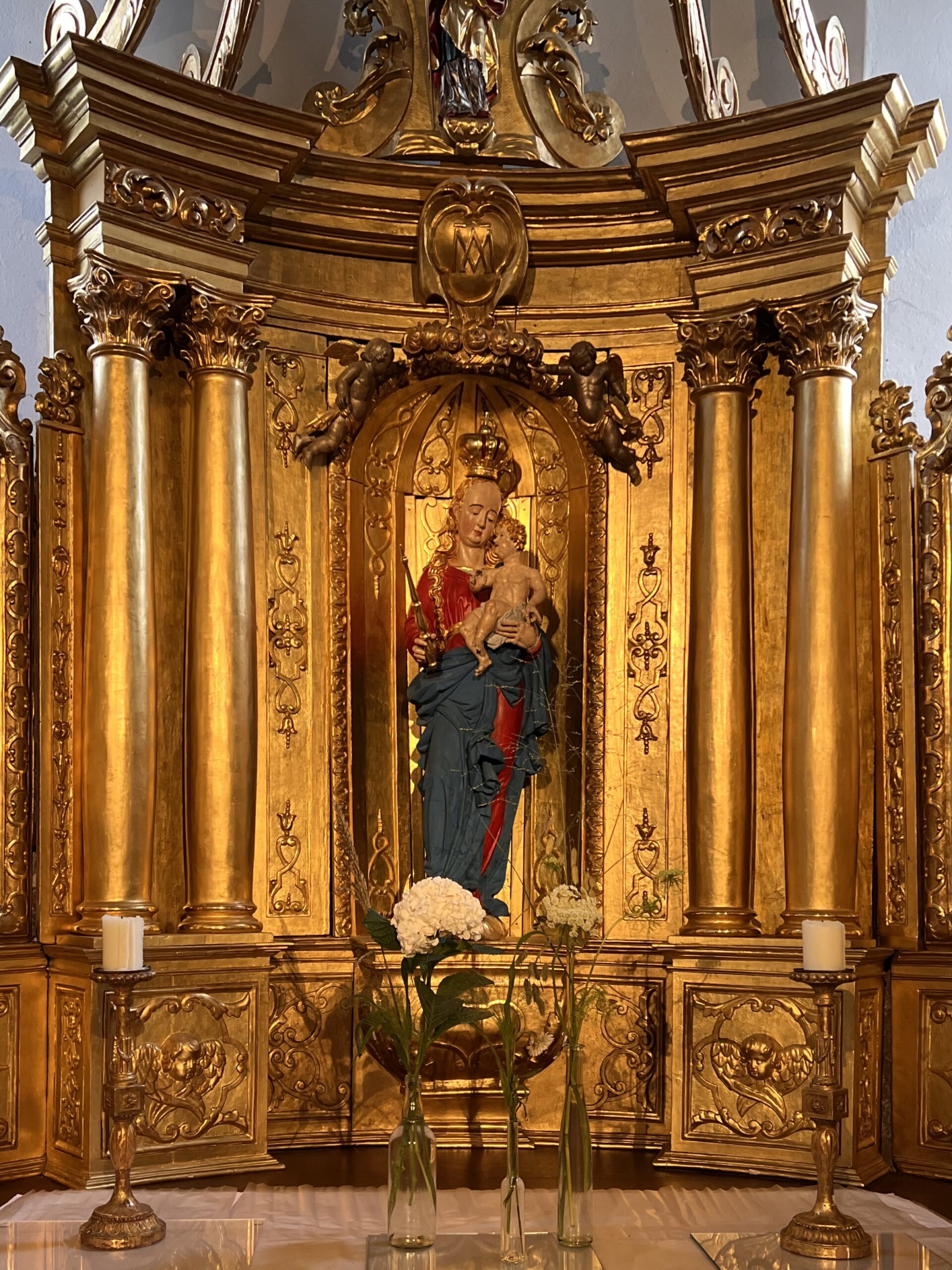
The Baroque devotional image is Our Lady of Sorrows and dates from 1674. The chancel comes from the original chapel of the castle and dates from the 10th/12th century.
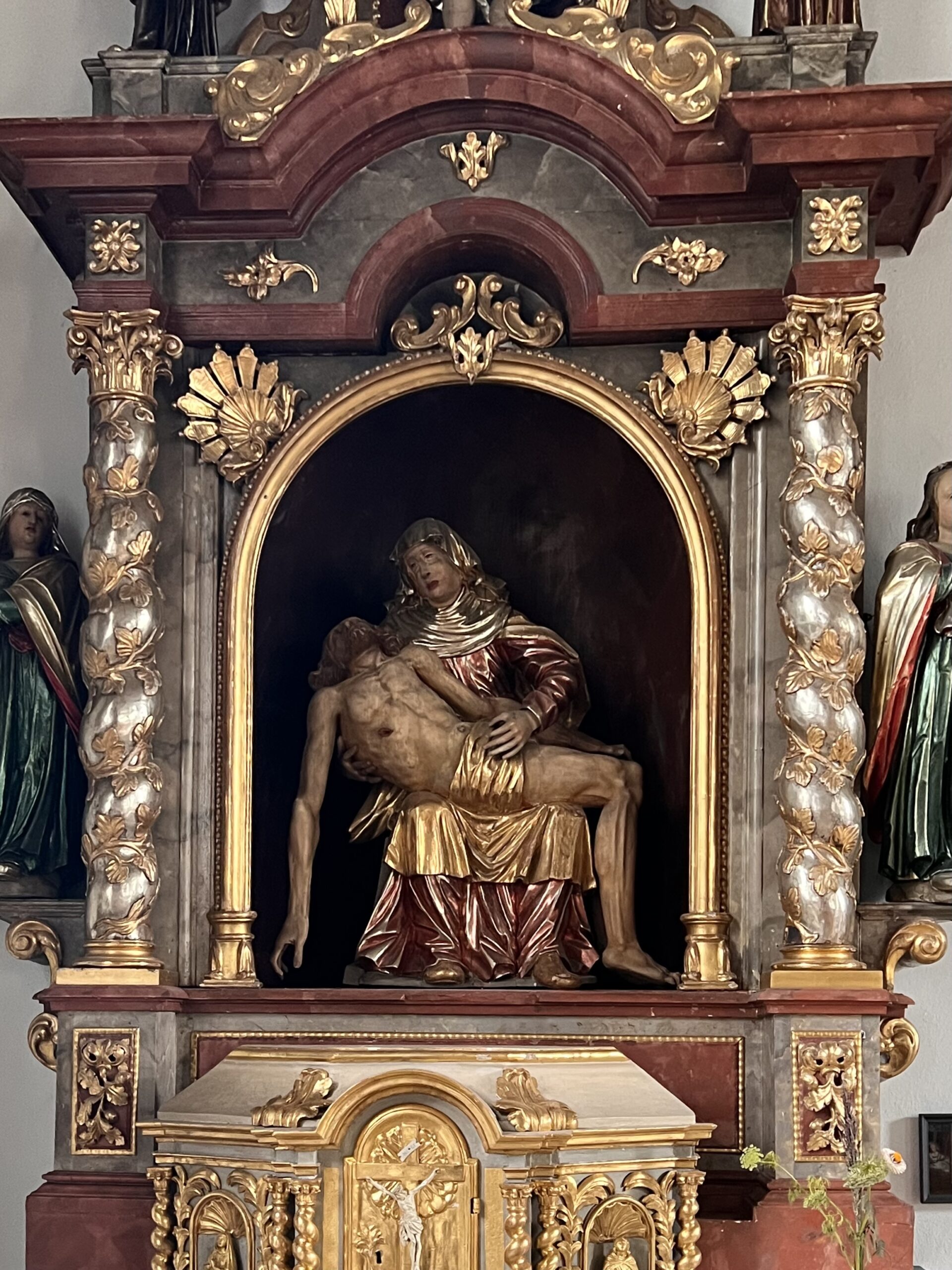
A Pietà stands in the left side altar and dates from the year 1674.
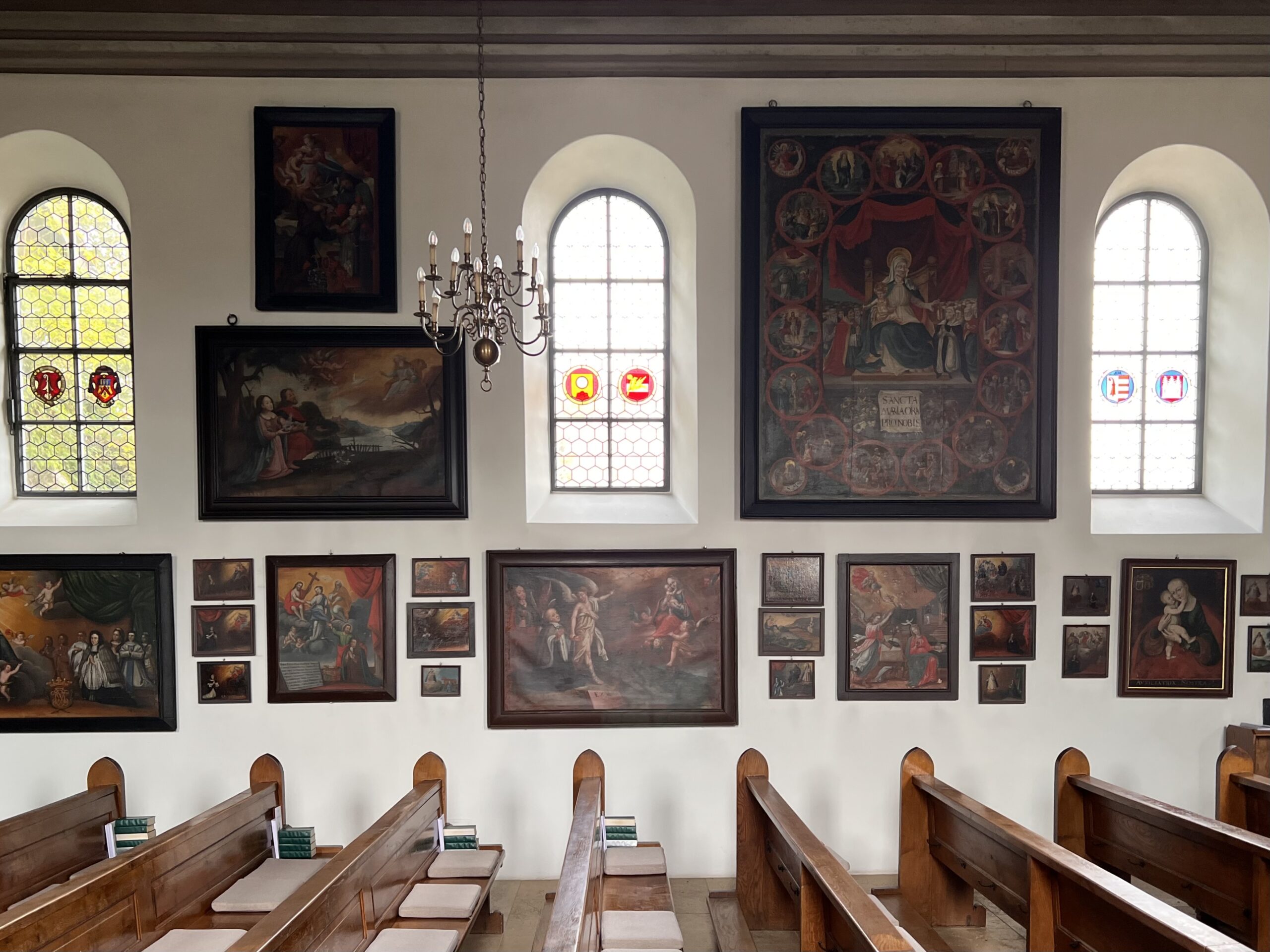
In the church there are over 200 paintings as thanks to Mary, and the oldest ex-voto dates back to 1589.
At the stairs leading to the pilgrimage chapel, there is an opportunity to light candles.
The Marian shrine is open daily.
ACCESSIBILITY
Vorbourg lies near the town of Delémont and in the canton of Jura.
The pilgrimage site’s address is: Route du Vorbourg 188, 2800 Delémont/CH.
More information can be found on www.vorbourg.ch. This is the website of the friends of the sanctuary, namely the “Association des Amis de Notre-Dame du Vorbourg”.
Experience
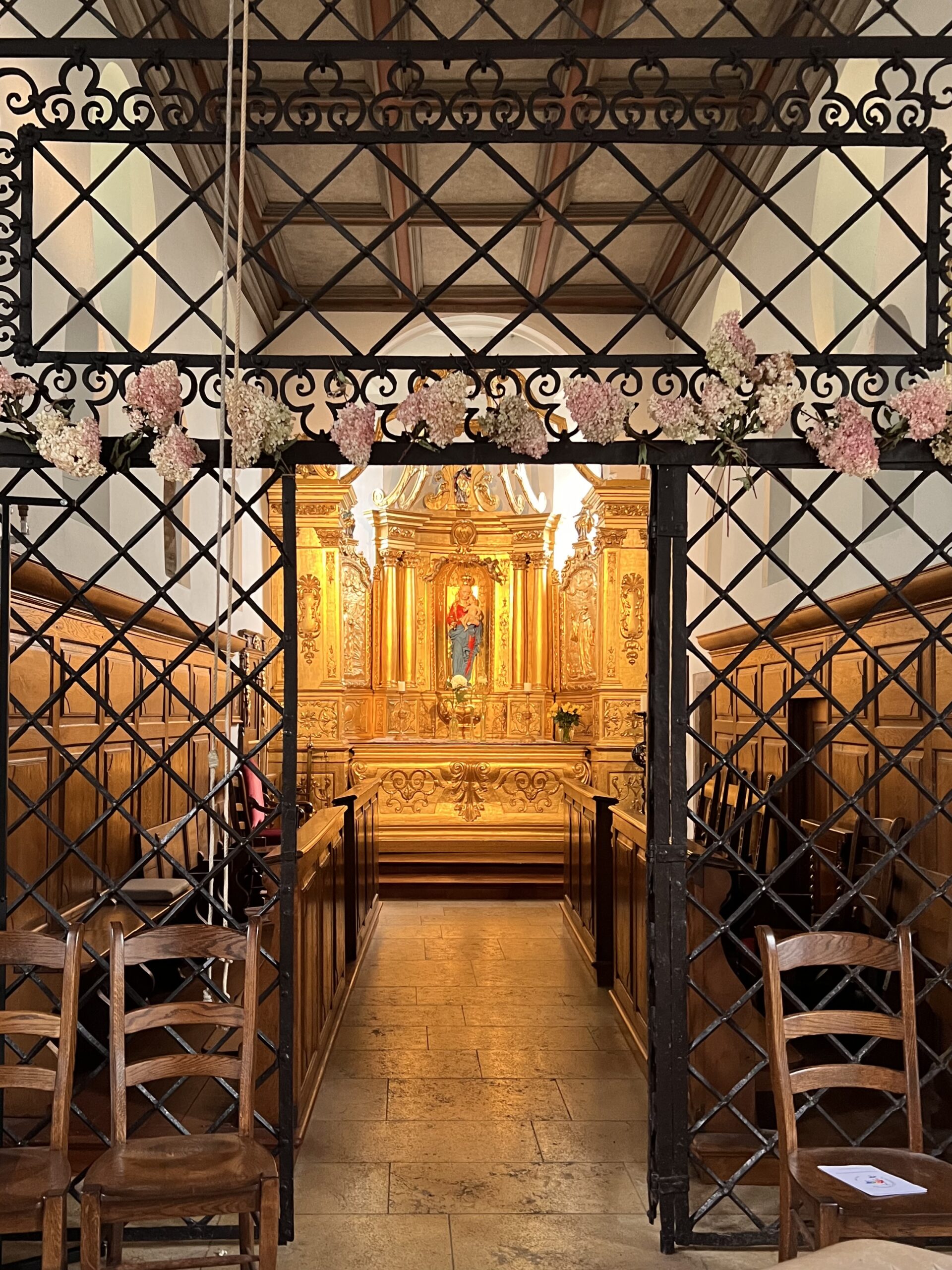
In the church, I see the 17th-century statue of Our Lady, which has a beautiful, central position on the high altar. It is a Baroque depiction of Mary with her Child. Mary holds her Son on her left arm and a sceptre in her right hand. Mary's right foot rests on a crescent moon and her left on a cloud. Mary wears a red dress and a blue mantle. The Virgin Mary has light brown hair. On either side of the effigy are images of two saints who are greatly venerated here, namely Imerius and Otmar.
In the left side altar, a Pietà stands centrally, flanked by Saints Agatha and Veronica. Above this are depicted Saint Francis of Assisi and Saint Francis Xavier.
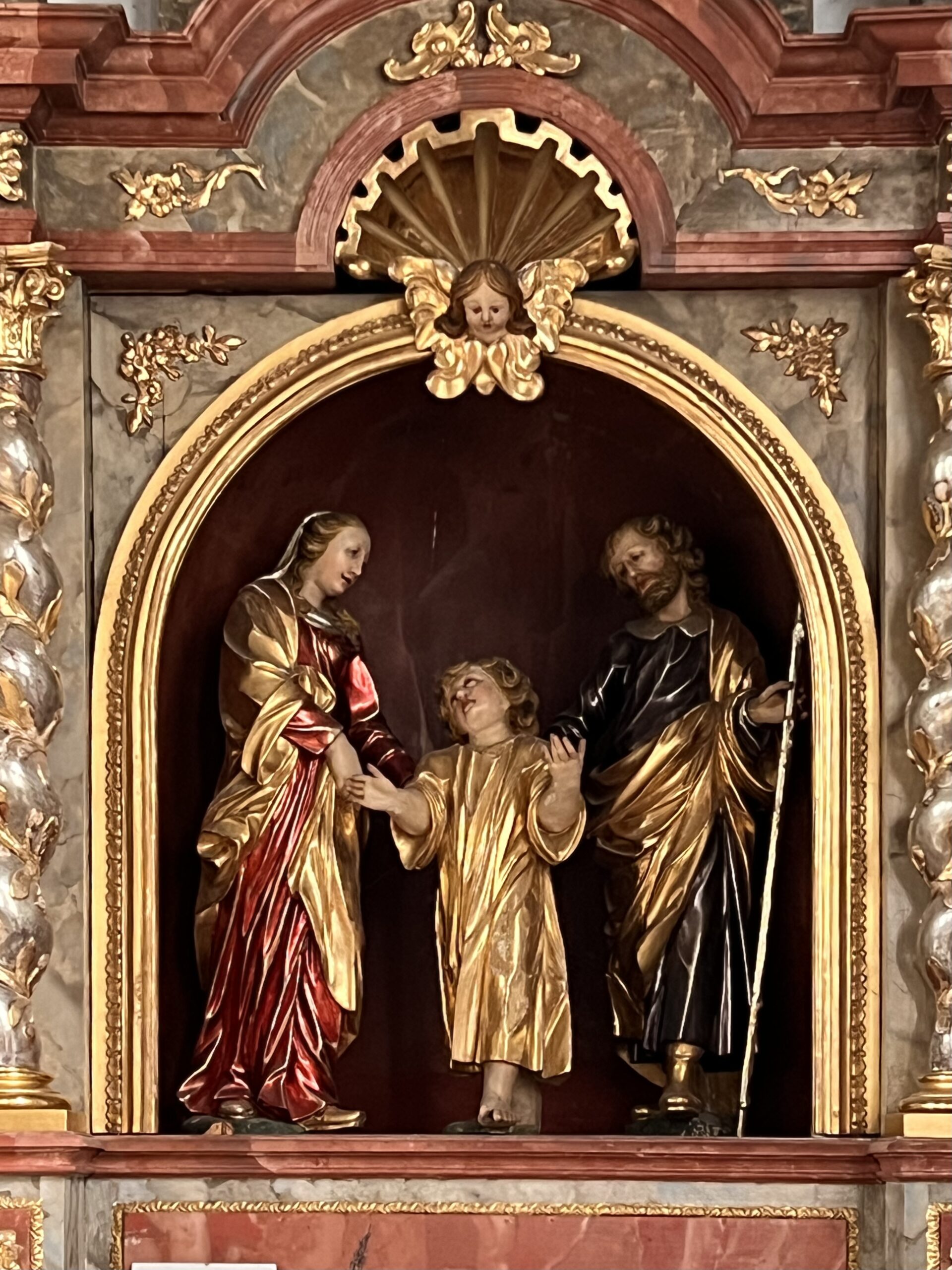
The right-hand altar is from 1682 and depicts the Holy Family. I will pause here for a while to pray and let the scene sink in.
I find a painting of Our Lady of the Rosary from 1589 magnificent. The 15 mysteries are depicted around Mary.
I am very impressed by the countless ex-votos, which are distributed throughout the entire space.
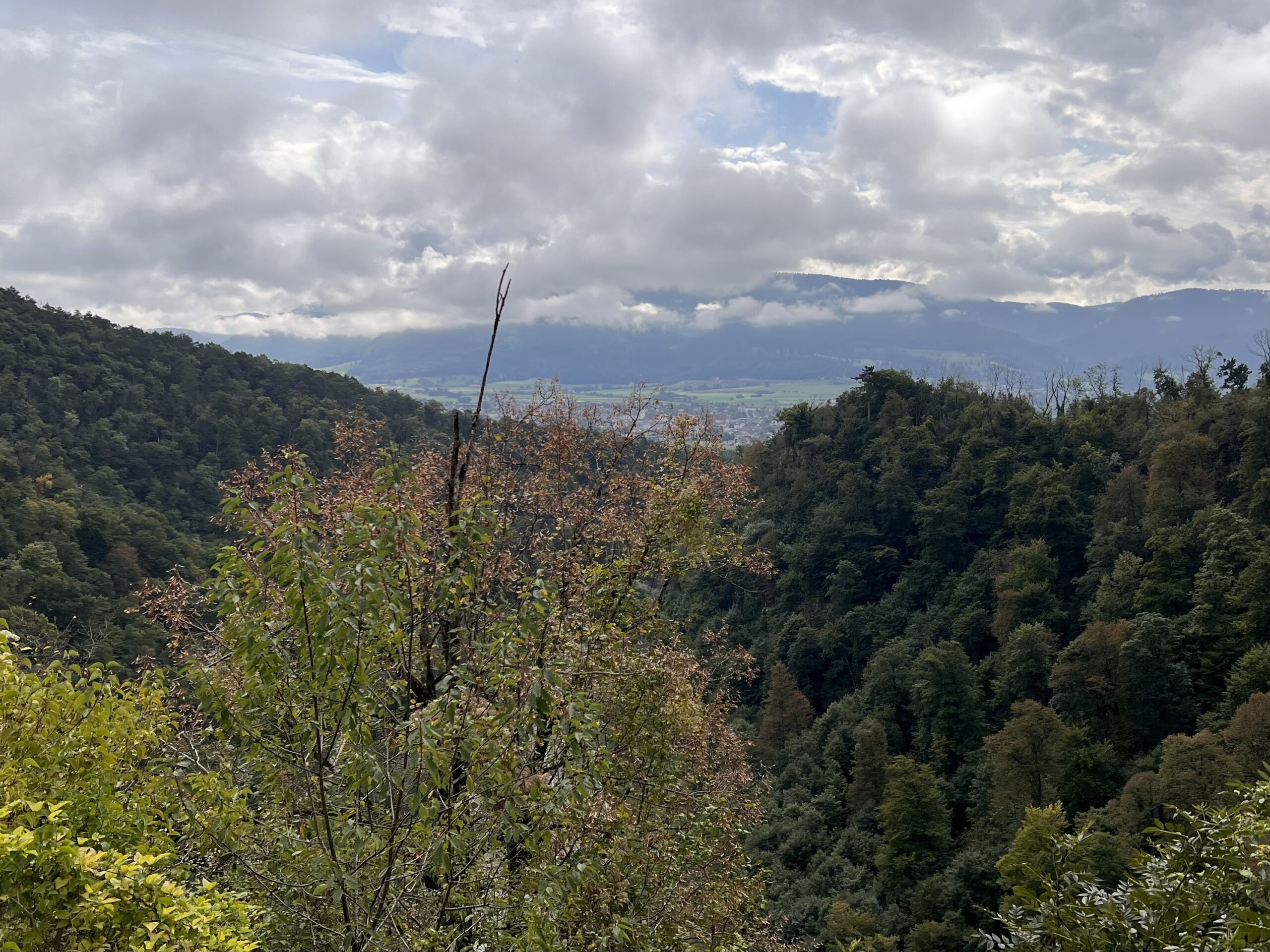
After having gathered many impressions, I go outside and a wide vista surprises me. What a gift this pilgrimage site is, to be able to come here.
Environment
In the vicinity of the pilgrimage site, there are opportunities for nature walks, and you can also go from the town of Delémont (Delsberg) to Vorbourg, and then it’s only a 2-kilometre walk.
Travelling from Basel to the pilgrimage site of Vorbourg means covering 45 km to the southwest.
Leaving the pilgrimage site of Mariastein to arrive at that of Vorbourg requires travelling 30 km to the southwest.
Leaving the pilgrimage site at Einsiedeln to arrive at that of Vorbourg involves travelling 160 km to the northwest.
~~~

 Nederlands
  English (UK)
  Deutsch
  Français