History
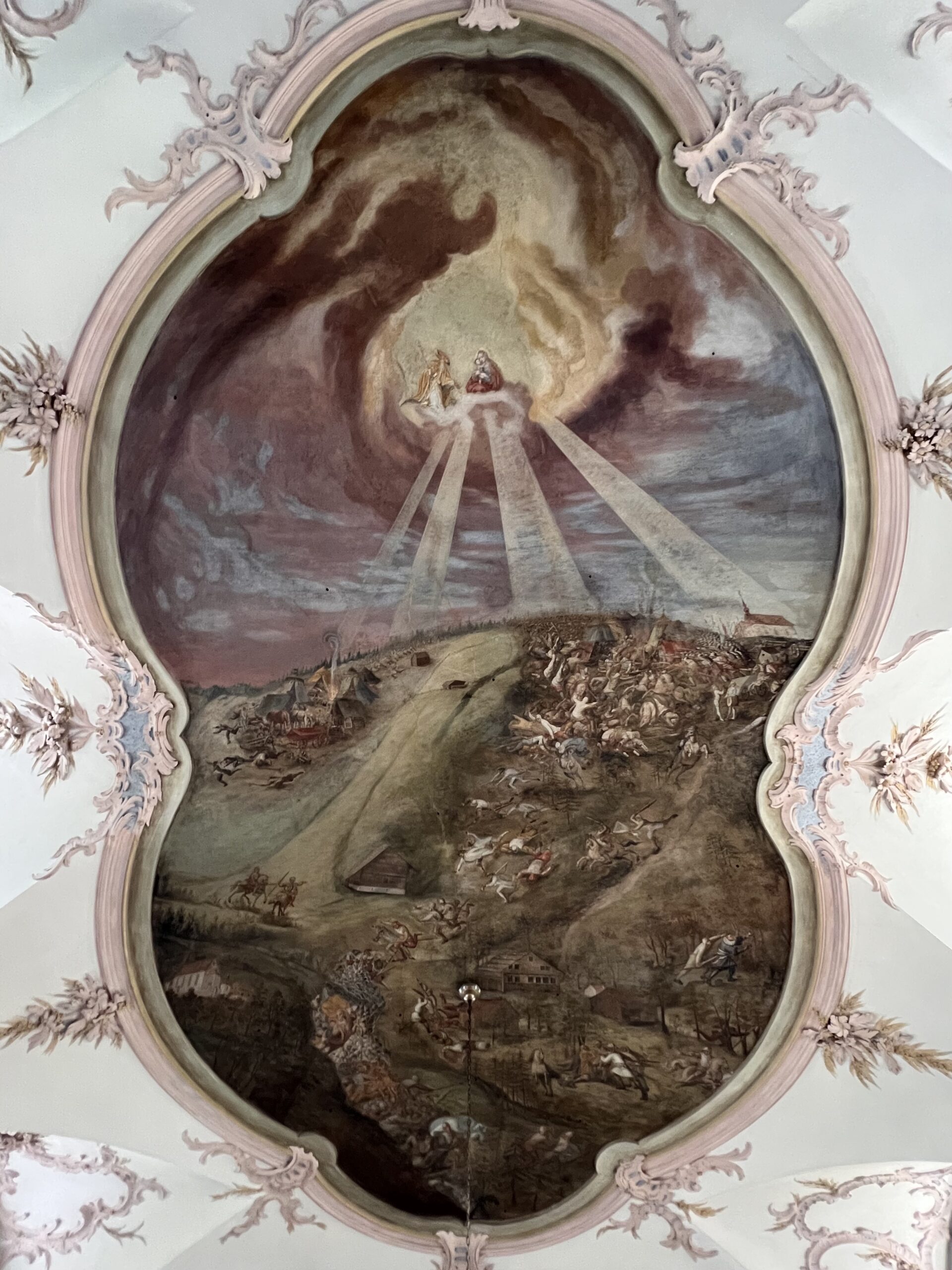
During religious wars in Switzerland, Mary appears to Catholic fighters on Mount Gubel on the night of 11 and 23 October 1531 and gives them strength. On 11 October 1531, the Battle of Kappel takes place with an unexpected victory for the Catholic fighters over the Protestants. It is noteworthy that the Catholic troops achieve victory with a surprise attack on 24 October 1531 near Mount Gubel. It is also important to know that they are heavily outnumbered compared to the Reformed troops. The Battle of Gubel culminates on the night of 23 to 24 October 1531. Many meet their deaths in the Battle of Gubel, including the leader of the Reformation in Switzerland; Huldrych (Ulrich) Zwingli (1484-1531), who also incorporates politics into his religious convictions, in contrast to his German fellow campaigner Martin Luther (1483-1546).
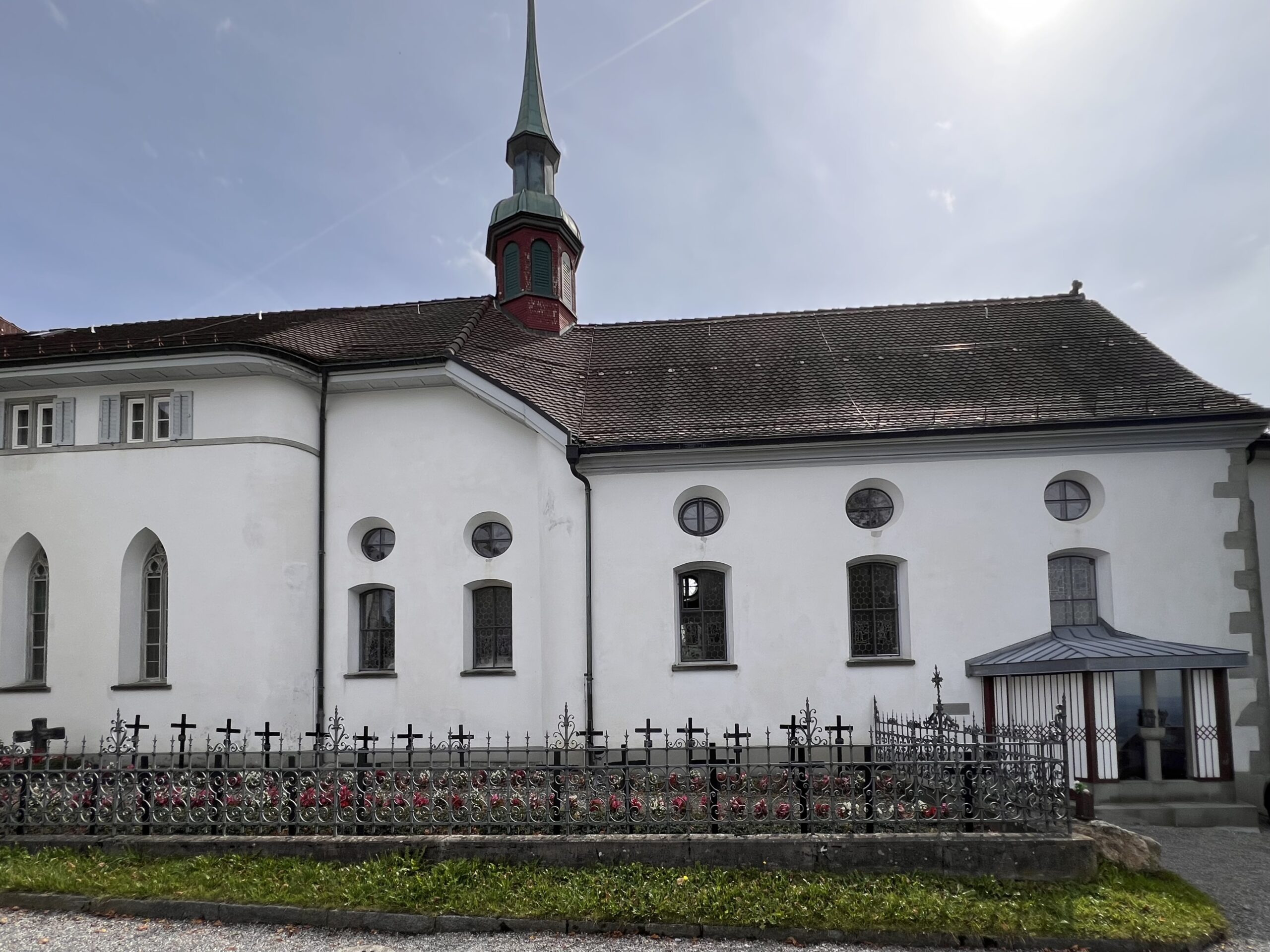
The first chapel was erected on the Gubel in 1555 and is believed to have been built on the mass graves of those who fell in 1531. The consecration of the chapel to Mary and Saint Severinus (c. 410-482) took place on 23 October 1559. This chapel developed into a heavily visited pilgrimage site and was furnished by benefactors.
In 1566, the new battle and pilgrimage chapel was built, commemorating the victory of Catholics over Protestants in 1531.
In 1647, Capuchin friars arrived on Gubel mountain and replaced some hermits.
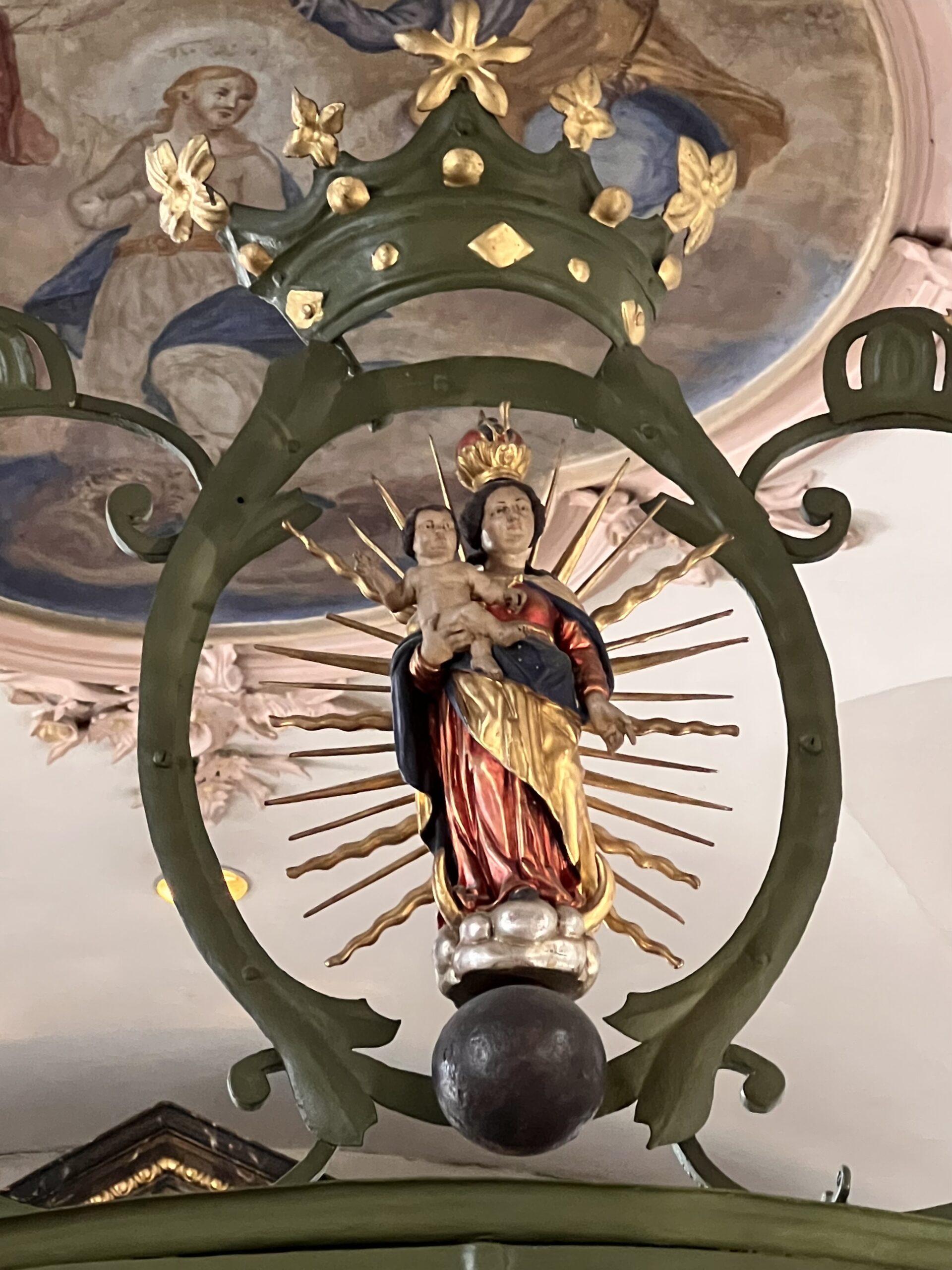
In 1686, a painting was made of the Battle of 1531. A new high altar was installed in 1705. Due to a fire in 1780, the hermits' dwellings were destroyed and the pilgrimage chapel suffered great damage; the walls remained standing and the ceiling was heavily damaged. A new altar was installed in 1780. A wrought-iron railing was also erected, containing a cannonball from 1531. A statue of Our Lady, Queen of Peace, stands on the cannonball above the railing.
The large ceiling fresco in the pilgrimage church depicts the Battle of Gubel of 1531 and is by Karl Josef Speck (1729-1798), the Elder. The artwork was painted before the fire in 1780 and later restored.
From 1846 to 1851, the current monastery was built and connected to the chapel. The chapel then became the monastery and pilgrimage church. In 1851, Capuchin nuns moved into the monastery, and on 24 September, a celebratory reopening took place. From that day onwards, there has been perpetual adoration of the Blessed Sacrament in the chapel, 24 hours a day.
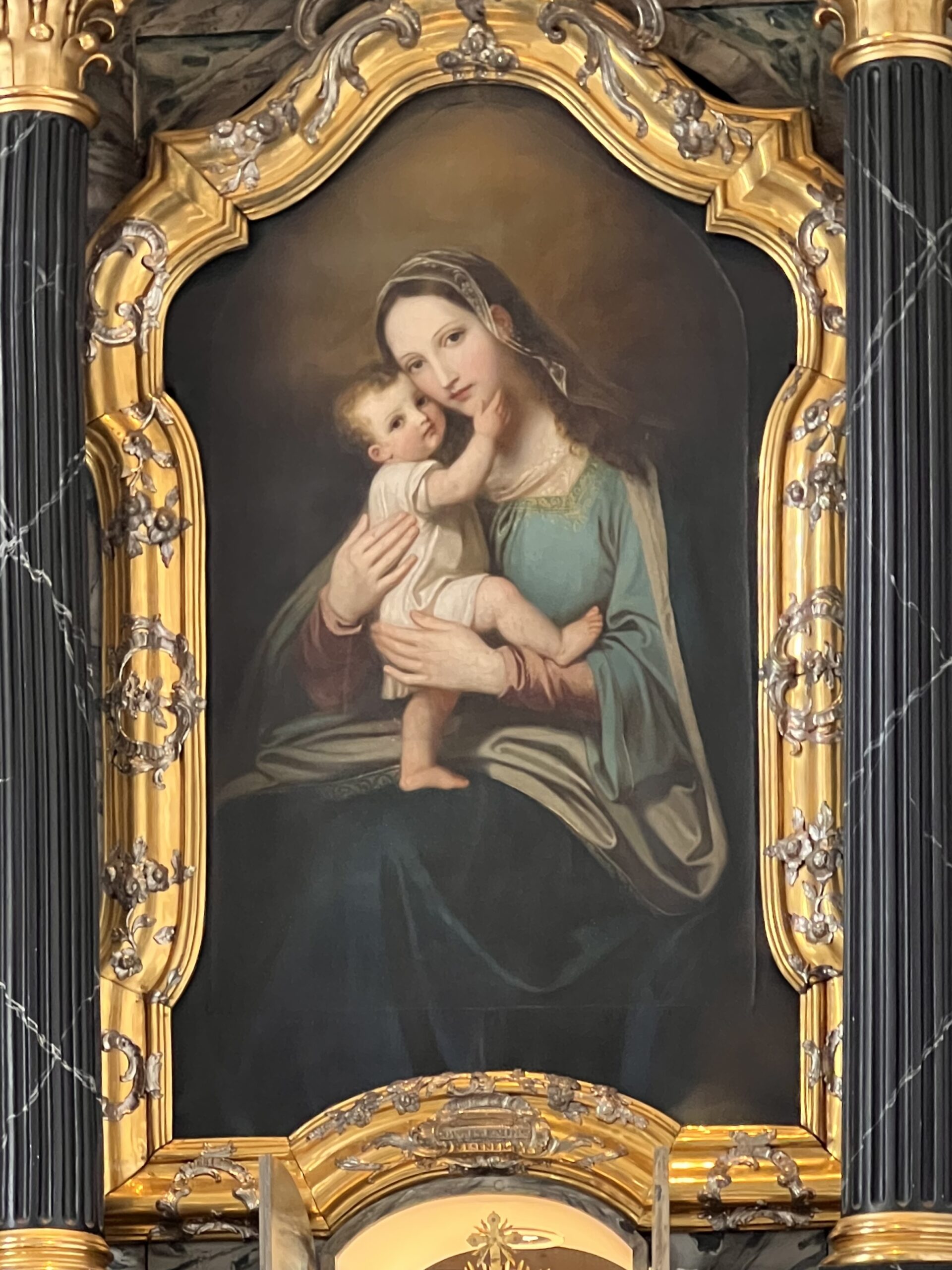
The current devotional image was created in 1849 by the Swiss religious painter Melchior Paul von Deschwanden (1811-1881).
The church's interior was renovated in 1864 and then received the Rococo style, as it still is.
In 1901, Leonhard Haas (1833-1906), Bishop of Basel and Lugano (1888-1906), consecrated the chapel, which until then had only been blessed, and the new altar.
The Stations of the Cross on the pilgrim's way were realised in 1982.
Pilgrimage site
The pilgrimage church is dedicated to “Maria Hilf der Christen” (Mary Help of Christians) and is situated at an altitude of over 900 metres above sea level. Perpetual adoration is conducted by nuns in the church. The convent and the pilgrimage chapel are open daily.
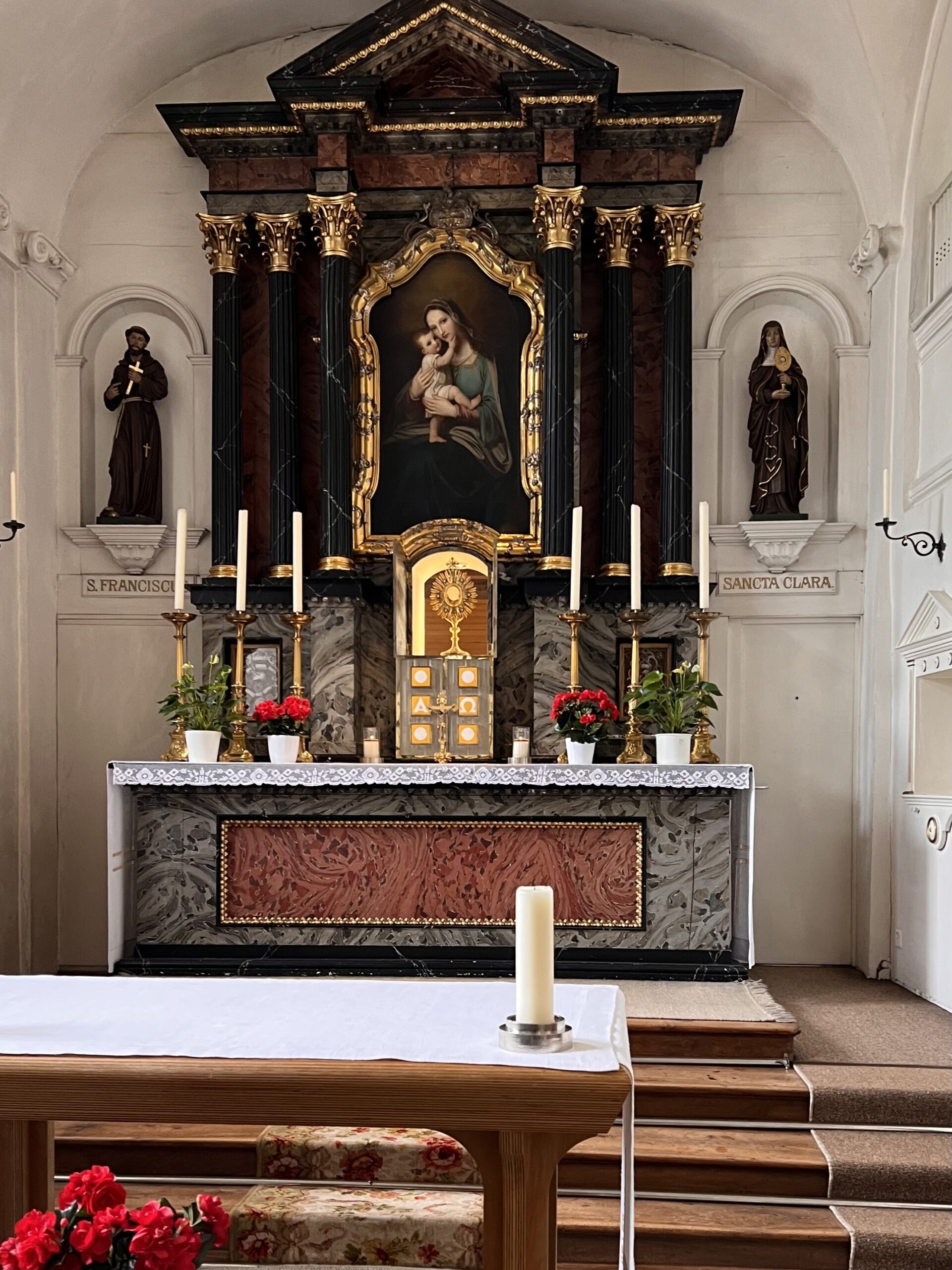
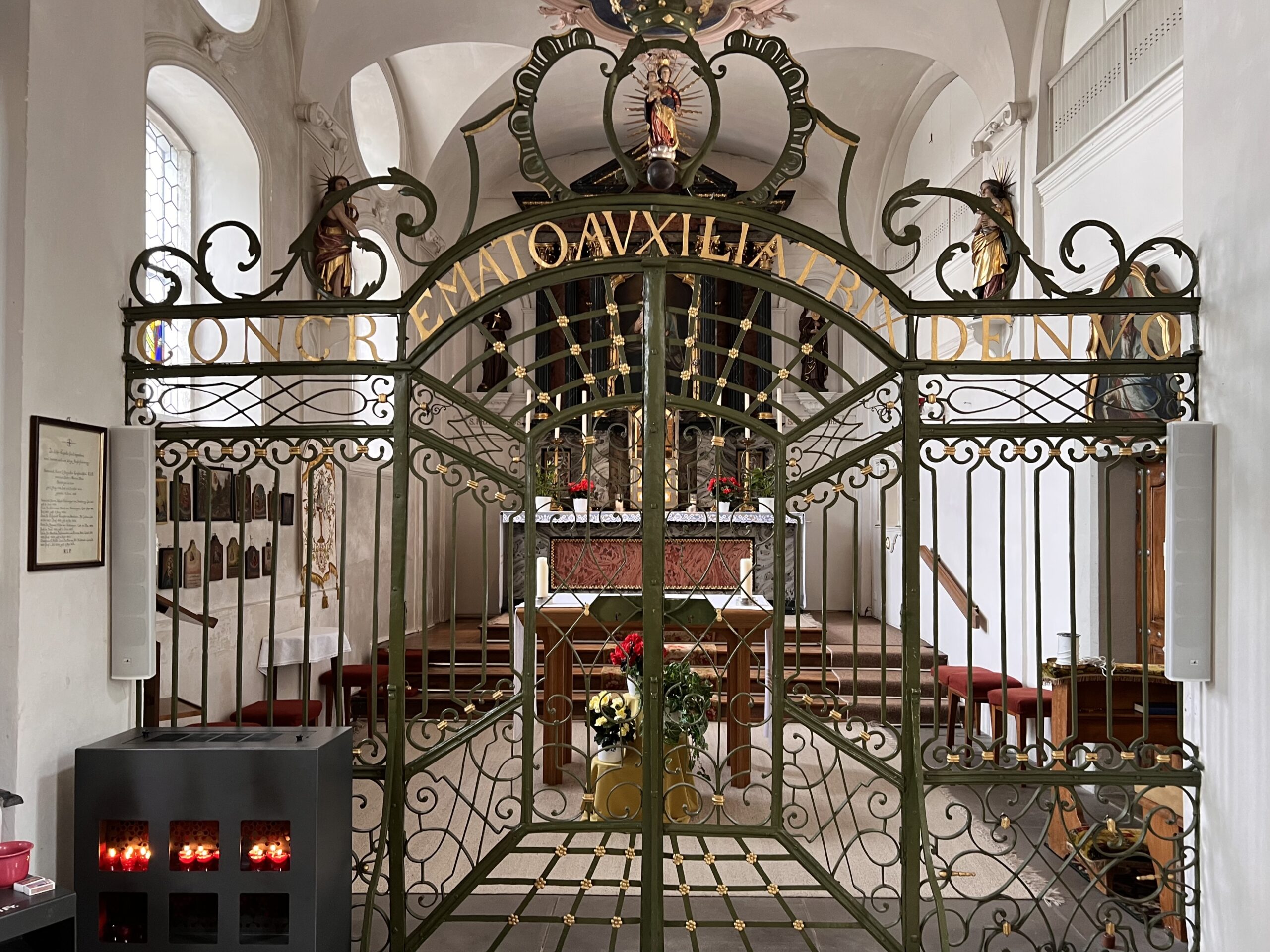
The relic statue depicts Mary with the infant Jesus in her arms, and pilgrims come to the Gubel to see it. The image is located in the presbytery, near the high altar. The “Maria Hilf” relic statue is a copy of the one in Innsbruck, Austria. Mary is flanked by Saint Clare and Saint Francis. Pilgrims cannot approach the relic statue because a high wrought-iron grille separates the presbytery from the nave of the church. In the grille are the words: “concremato auxiliatrix denuo,” which translated freely from Latin into Dutch means “the burned one is again a helper,” and refers to the fire of 1780. A cannonball bearing an image of Our Lady is affixed to the grille.
In the church, ex-votos can be seen.
The church has two patron saints, namely the Blessed Virgin Mary, as Help of Christians, and Saint Severinus.
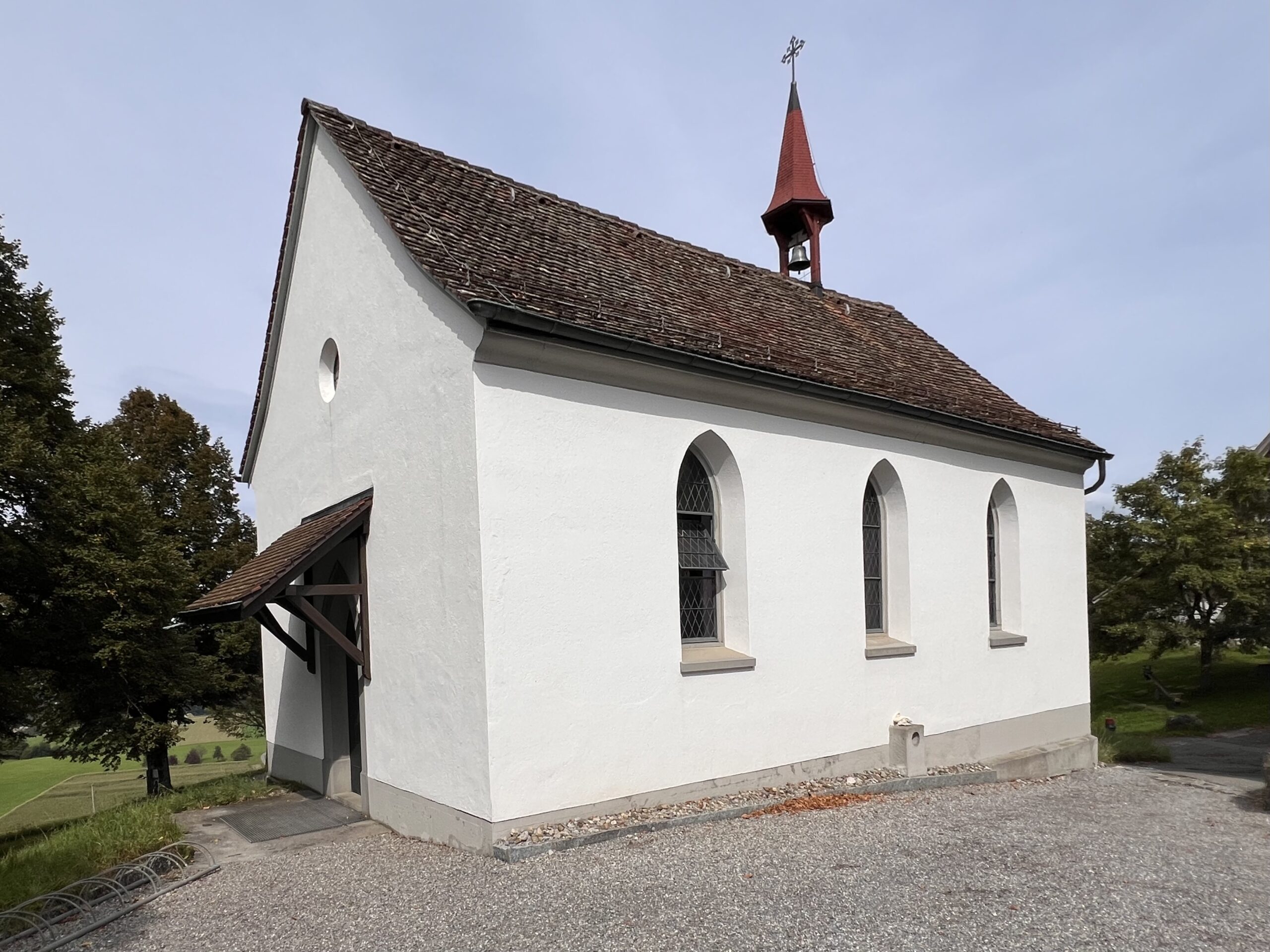
Near the pilgrimage church stands a memorial chapel to those who fell in 1531. This small building is called the Mount of Olives Chapel.
The patronal feast of Mary Help of Christians is on 24 May. The main pilgrimage day is 15 August, the Feast of the Assumption of Mary into Heaven.
ACCESSIBILITY
The pilgrimage site on the Gubel belongs to the municipality of Menzingen and the diocese of Basel. The Marian shrine is located in the canton of Zug. From Menzingen it is almost an hour's walk on foot to reach the sanctuary. The sanctuary can also be reached by car.
Address: Gubel 5, 6313 Menzingen.
Current information can be found at www.kloster-gubel.ch.
Experience
On the way to Gubel mountain, I see Stations of the Cross, and a little later I arrive at the pilgrimage site. “Maria Hilf” is both a convent and a pilgrimage site, and they are adjacent to each other. I learn that the name Gubel is derived from “cubulum, con cubare,” which in Latin means “to lie in a bed,” and this refers to livestock. The name Gubel originated around the year 800.
In the pilgrimage church, I see the iron railings with the cannonball from 1531 and on it a small image of Mary. That is quite special!
For a long time I stand still at the fence to admire the wonderful image of Mary. How lovely and engaging she is depicted! For me, this is one of the most beautiful images of Our Lady.
In the church, a plaque can be seen, bearing the names of clerics who have meant a great deal to this Marian shrine and are buried here.
On the ceiling of the pilgrimage church is a very typical fresco, namely the apparition of Our Lady and Saint Severinus to the Catholic warriors on the Gubel in the year 1531.
At the back of the church, I see a leaflet and it states that the Capuchin nuns from the convent urgently need financial support. They rely on third-party help to fund the care for the older nuns and to secure the maintenance of the pilgrimage church. Afterwards, I go outside and look at the pilgrimage chapel and the convent. Then my gaze turns to the impressive view here on the Gubel. How beautiful and pleasant it is to stay here.
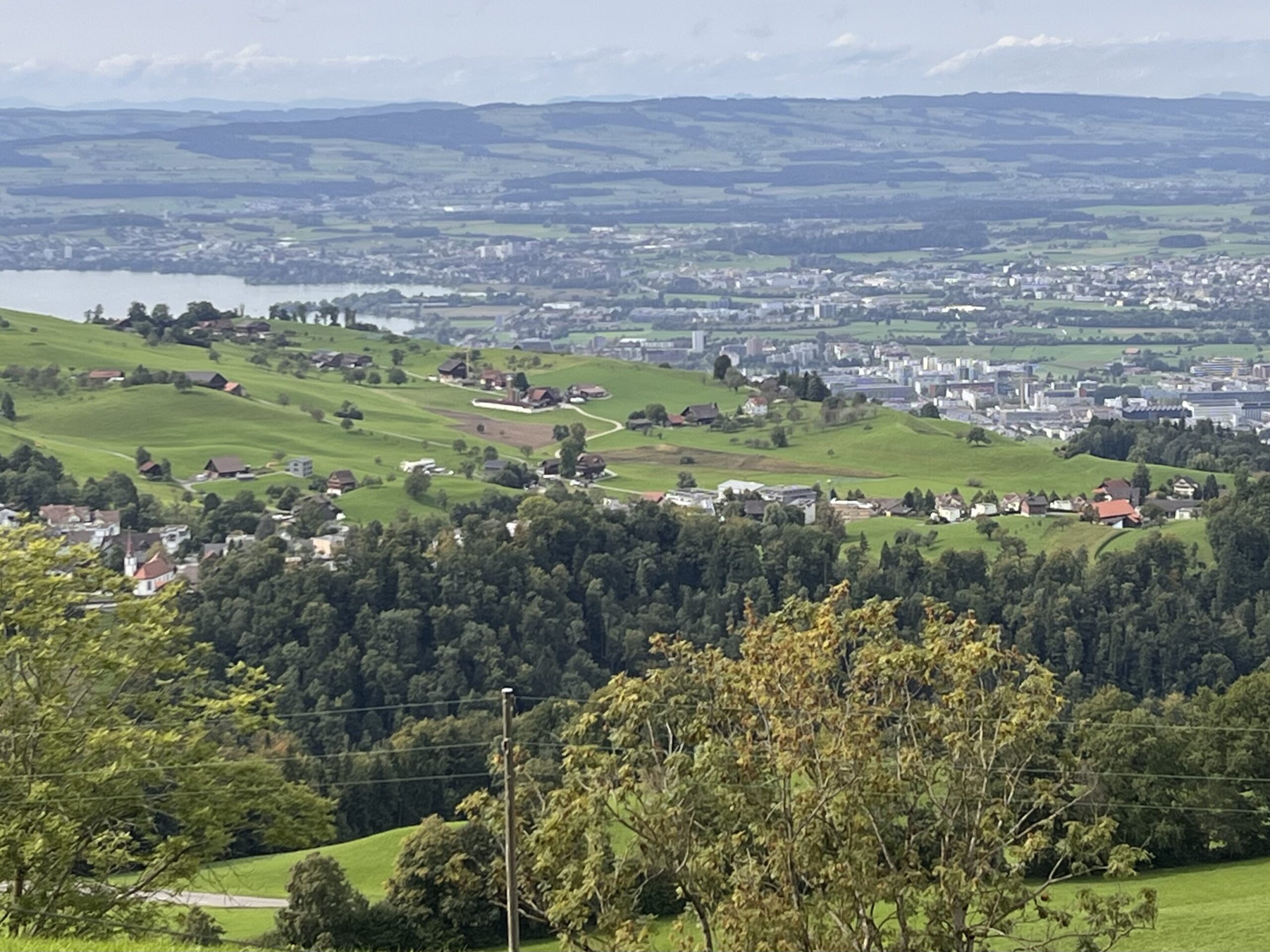
Environment
To travel from the pilgrimage site of Einsiedeln to that of Gubel is to cover 24 km to the west.
Leaving the large city of Zurich to arrive in Gubel requires travelling 36 km to the south.
The distance from Zug to Gubel is 11 km, then go east.
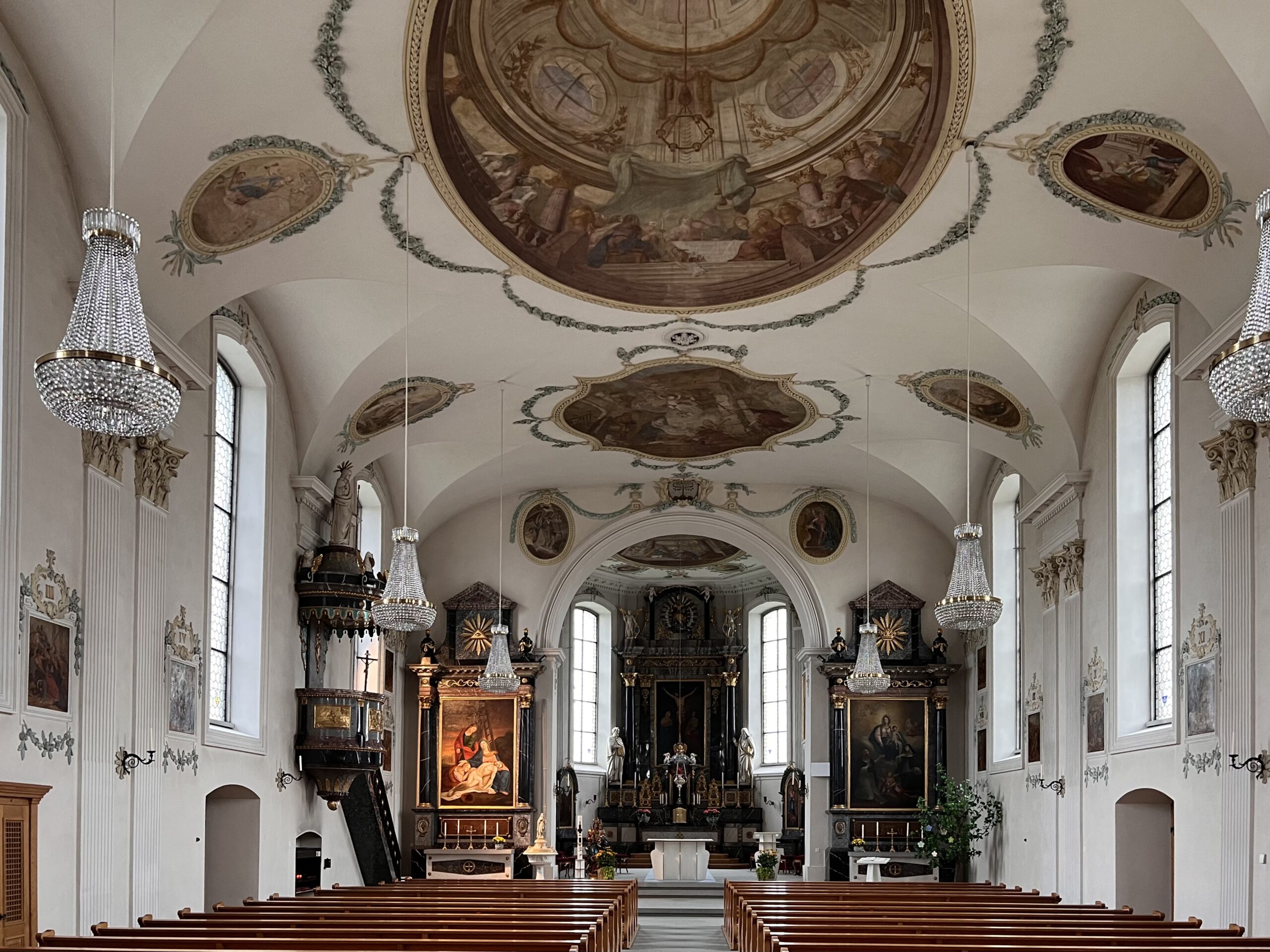
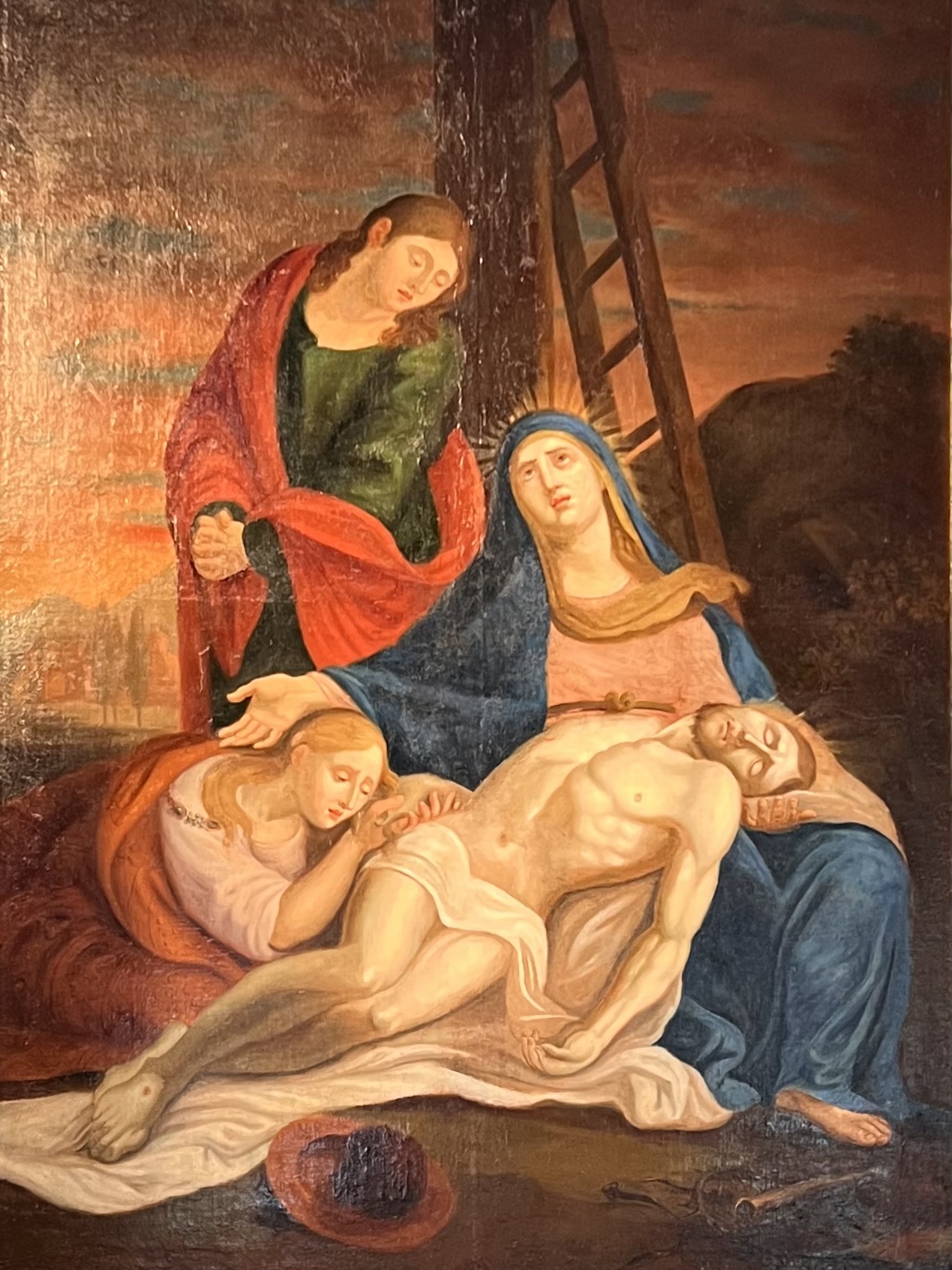
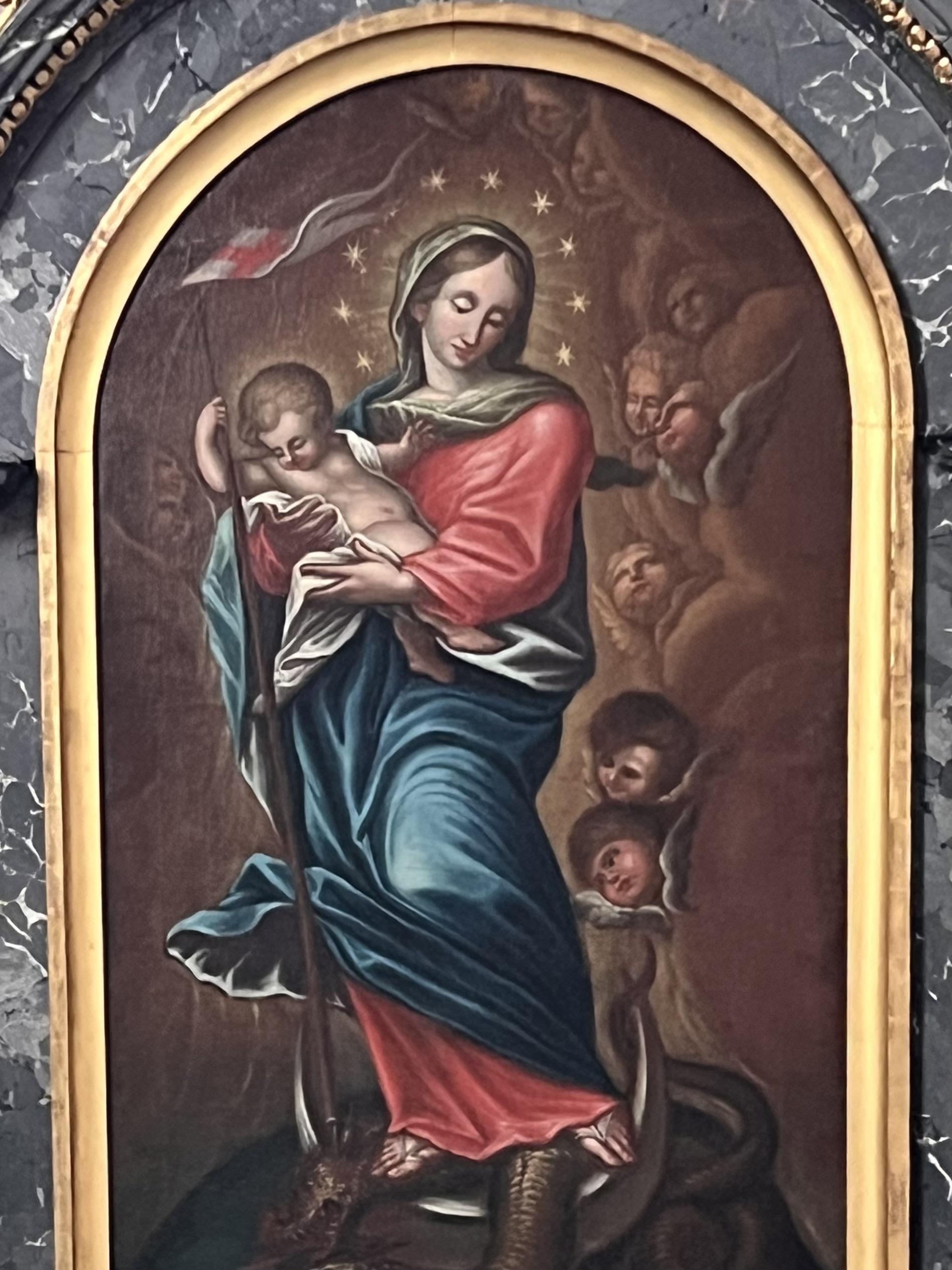
To travel from Sins to Gubel requires covering 25 km to the east. In Sins, at Kirchstrasse 16 (5643 Sins), stands the Catholic parish church, which is dedicated to the Nativity of Mary. It is a Baroque building from 1740, and the lower part of the tower dates from the 15th century. The presbytery is surrounded by many religious artworks. Within the church, the beauty of Mary can be admired, such as an image with her deceased Son and Mary with Child.
A major battle took place in Sins on 20 July 1712 between the Spanish, French and Habsburg forces. Defenders entrenched themselves in the church and church tower, which later caught fire. Hundreds died on this day. The current church was built afterwards.
~~~

 Nederlands
  English (UK)
  Deutsch
  Français