History
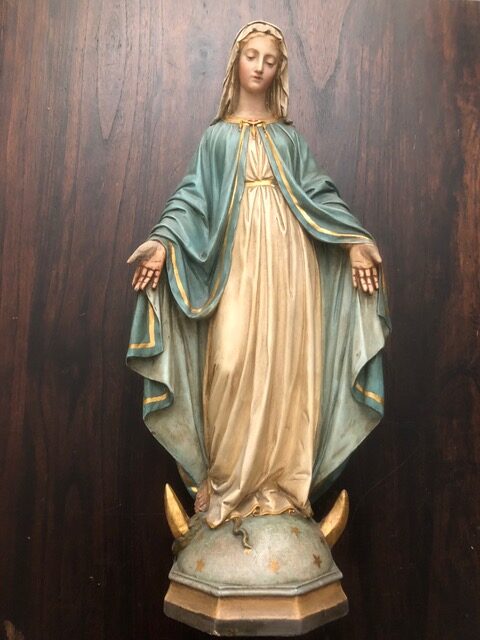
Marguerite Bays (1815-1879) hailed from a simple, agrarian background. She was a very devout woman with much devotion to the Mother of God. Her profession was a seamstress. In her youth, she decided to live as a virgin and to serve God and man. Marguerite believed that spiritual strength came from attending Mass daily, praying a lot, making the Stations of the Cross, and going on pilgrimages. Attending the Eucharist was the highlight of her day. After Sunday High Mass, Marguerite would spend a long time alone at the tabernacle. With a small crucifix in her hand, she prayed a short Stations of the Cross with 14 steps in her home every day. Marguerite also prayed the rosary daily in her home. A quarter of an hour from her house stood the pilgrimage chapel of “Notre-Dame du Bois” (Our Lady of the Wood), and she visited it frequently. Marguerite undertook several pilgrimages, including a walk to Einsiedeln. This pilgrimage was a journey of almost 500 kilometres in total, there and back.

Marguerite has a great love for the sick and the dying. She visits them, even in the middle of the night, when she is called upon.
Marguerite Bays has great interest and admiration for the works of the French Pauline Jaricot (1799-1862). Pauline Jaricot is the initiator of the Association for the Propagation of the Faith and the Society of the Holy Childhood. Marguerite, like Pauline Jaricot, has great devotion to the Sacred Heart of Jesus.
In 1850, Marguerite, aged 35, developed bowel cancer. She attributed the suffering and pain to Christ. After enduring bowel cancer for several years, she was suddenly healed by the Virgin Mary. Subsequently, she suffered for the sins of the world. Marguerite received the grace of the stigmata. This occurred on 8 December 1854, when Mary appeared to her, and her recurrent bowel cancer vanished. The onset of her stigmata coincided precisely with the day, 8 December 1854, of the proclamation of the dogma of the Immaculate Conception in Rome by Pius IX. He served as Pope from 1846 to 1878 and was born Giovanni Maria Mastai-Ferretti (1792-1878). The stigmata recurred every Friday until her death. She also experienced stigmata during Holy Week, which precedes Easter. On Fridays, Marguerite would fall into an ecstasy, reaching its peak at 3:00 PM. She would then enter a state of immobility, which witnesses likened to that of a deceased person. Simultaneously, Christ's five wounds manifested on her body. During this time, Marguerite suffered intensely and made considerable efforts to conceal these wounds from the sight of others.
In 1860, Marguerite Bays joined the Third Order of Saint Francis in order to strengthen her spiritual life. She worked in the parish of nearby Siviriez, a village of around 2,000 inhabitants. Marguerite taught religion to children, prepared girls for marriage, assisted the sick, and gave attention to the dying. Many people confided their worries to her, and she held a significant position of trust in the region.
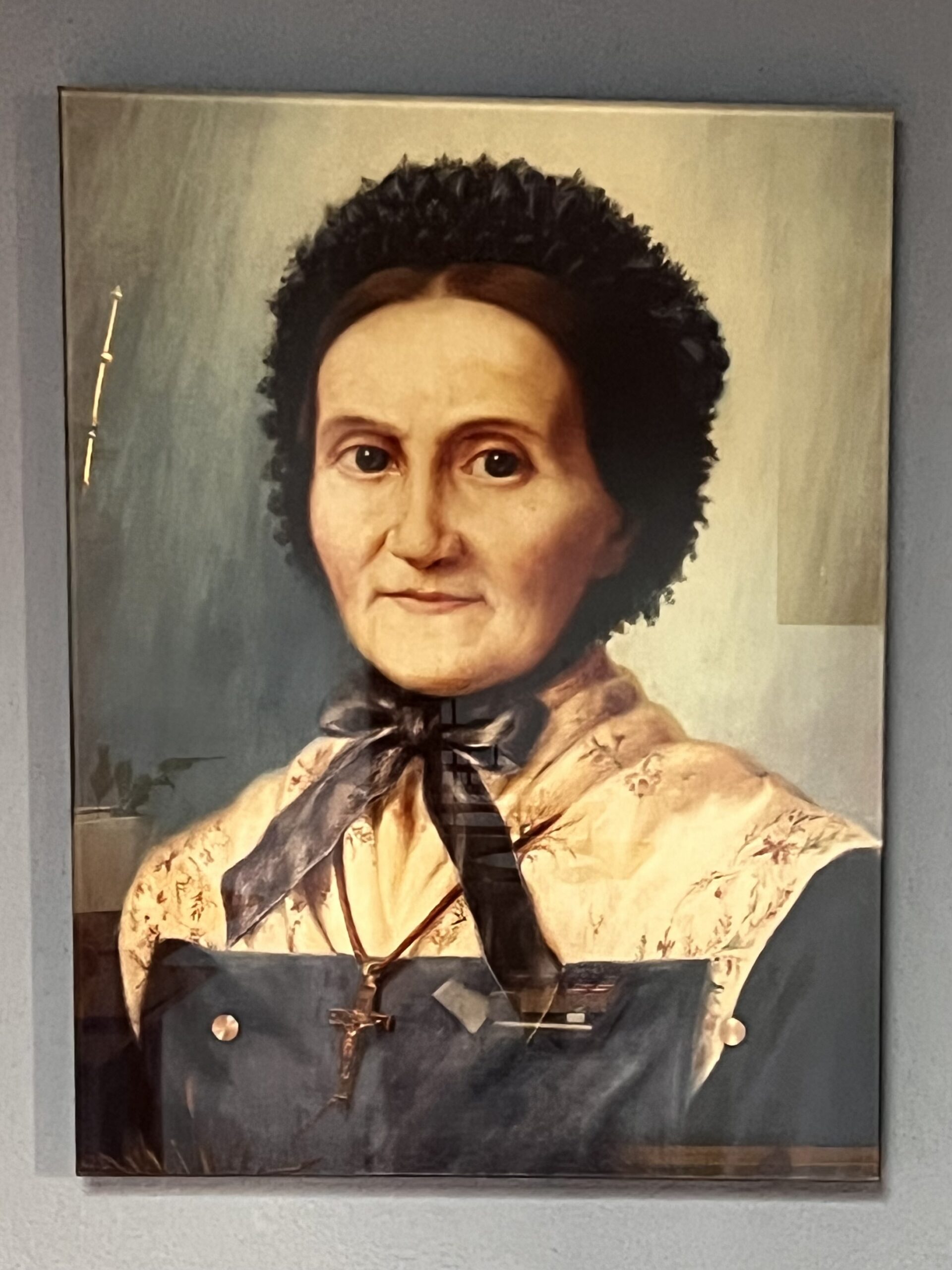
Etienne Marilley (1804-1889), Bishop of Lausanne-Geneva (1846-1879), requested a medical examination. This was carried out by Alexis Pégaitaz (1842-1907), a doctor in Bulle (1868-1906). The Bishop did not trust the events surrounding Marguerite and wanted to prove that the ecstasies were simulated and the wounds were false. On Good Friday, 11 April 1873, the medical examination took place by Dr. Pégaitaz and a colleague. The doctors tried in many ways, some of which were downright cruel, to bring her out of ecstasy into her normal state. This was unsuccessful, and finally, the two experts had to admit that they had not succeeded in finding the hoped-for counter-evidence. Several witnesses, selected by the Bishop, were present at the examination. Subsequently, Marguerite continued her simple life as a seamstress, housekeeper, religious teacher, and visitor to the sick.
The healing of cancer, the ecstasies and the 5 wounds mark a decisive turning point in the life of Marguerite Bays. She sacrifices the suffering of Fridays for sinners. Furthermore, Marguerite makes every effort to create a brotherly atmosphere in her surroundings, from which the love of God and Mary is expressed. In addition, she prays a lot when getting up, during work, later in the day, and even during the night hours. She has great confidence in prayer, even though not all her prayers are answered. As the years go by, she experiences greater depth in her inner life. At the end of her time on earth, her days are a torment full of pain, but she does not complain. Her health deteriorates and a few weeks before her death, she contracts a severe intestinal inflammation, for which no medicine can help.
Marguerite Bays was beatified on 29 October 1995 by John Paul II, Pope from 1978 to 2005, following a difficult process, and was born Karol Józef Wojtyla (1920-2005). A miracle is recognised through her intercession, which involved a two-year-old Swiss girl who was miraculously unharmed in 1998 after being run over by a tractor. The canonisation of Marguerite Bays took place on 13 October 2019 by Francis, Pope from 2013 to 2025, born Jorge Mario Bergoglio (1936-2025).
Marguerite is a mystic and is buried in the cemetery in Siviriez.
Pilgrimage site
The house where Marguerite Bays lived is located in the hamlet of La Pierraz, near Siviriez, and can be visited, as can the church in Siviriez and the cemetery where she is buried.
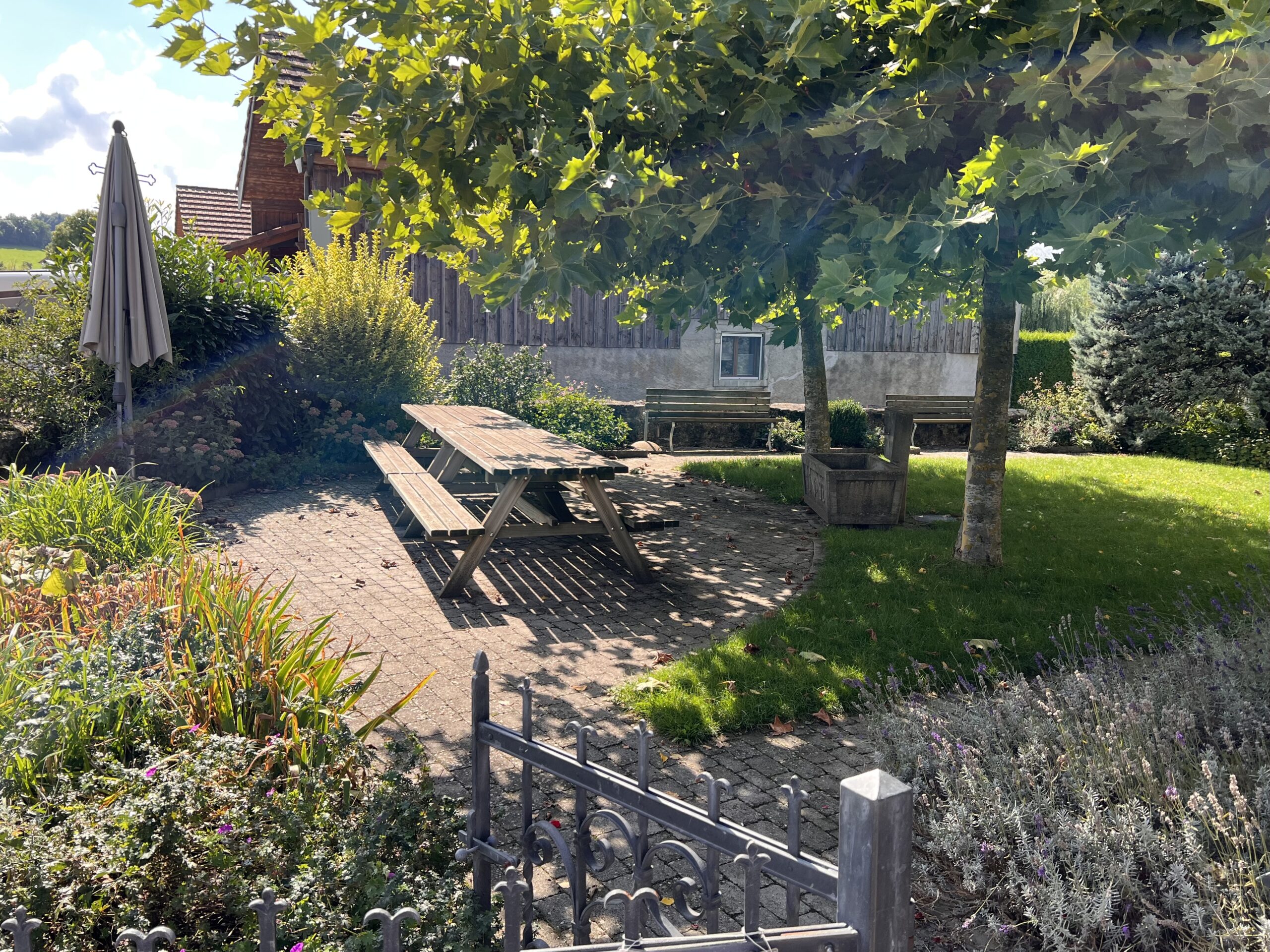
Marguerite Bays' house can be visited daily, but not all rooms are always accessible. Adjacent to Marguerite Bays' farm is a garden, where visitors can also stay.
The church in Siviriez is open daily. Marguerite was baptised in the parish church. She attended eucharistic celebrations here every day for her entire life. She also prayed the Stations of the Cross here countless times. The church also contains a hermits' chapel. Marguerite Bays is buried in the churchyard.
About 100 metres from the parish church stands a Lourdes grotto.
The feast day of Marguerite Bays is 27 June.
ACCESSIBILITY
La Pierraz is located in the canton of Fribourg.
To reach the seer's house, follow Route de la Pierre. The place of pilgrimage is in Route Sainte Marguerite opposite number 42. With postcode 1676 Siviriez.
Address: Maison de Marguerite, Route Sainte Marguerite 41, CH-1676 Chavannes-les-Forts/La Pierraz.
The address of the church where Marguerite Bays can be visited is Route de l’Elise, 1676 Siviriez.
Tourist Office, Rue du Chåteau 112, CH-1680 Romont, info@romontregion.ch.
Experience
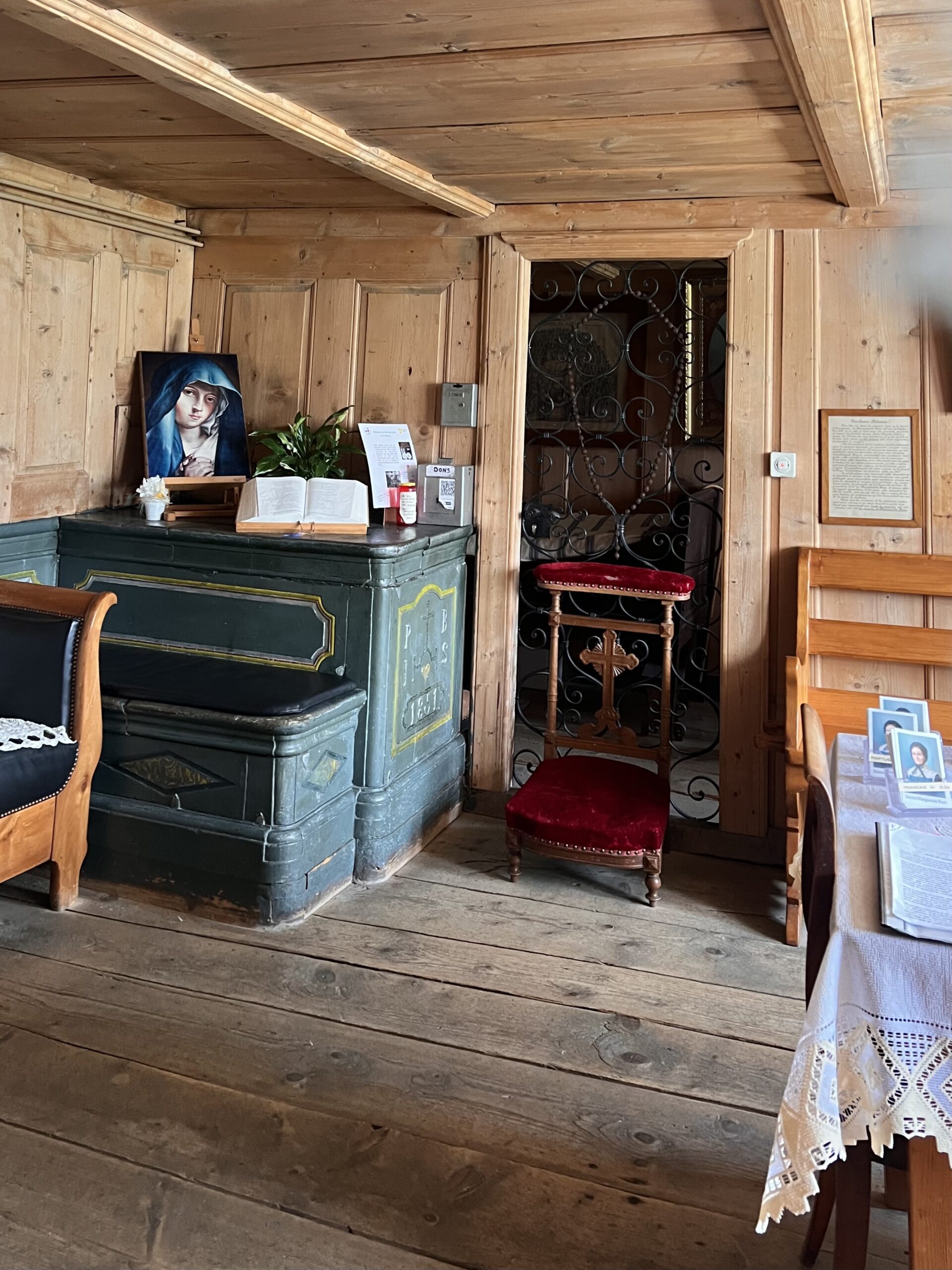
In the hamlet of La Pierraz, also spelled La Pierra, I am visiting the house where Marguerite Bays lived. The house open for visitation is the farm where she was born. Here she prayed, slept, and worked. Some rooms are accessible to visitors, and I can peek into the rooms where the door is closed. "How curious," I think to myself. Glimpses of Marguerite's life come to me. What an extraordinary woman she was! What she endured! What an exemplary person she is for others. So sociable, driven, dutiful, and pious. If I were wearing a hat, I would take it off for her now. It's called showing respect. I can enter the room on the street side and sit down. I let a few events from her life play out in my mind, and then I pray for her. She is certainly an example for many.
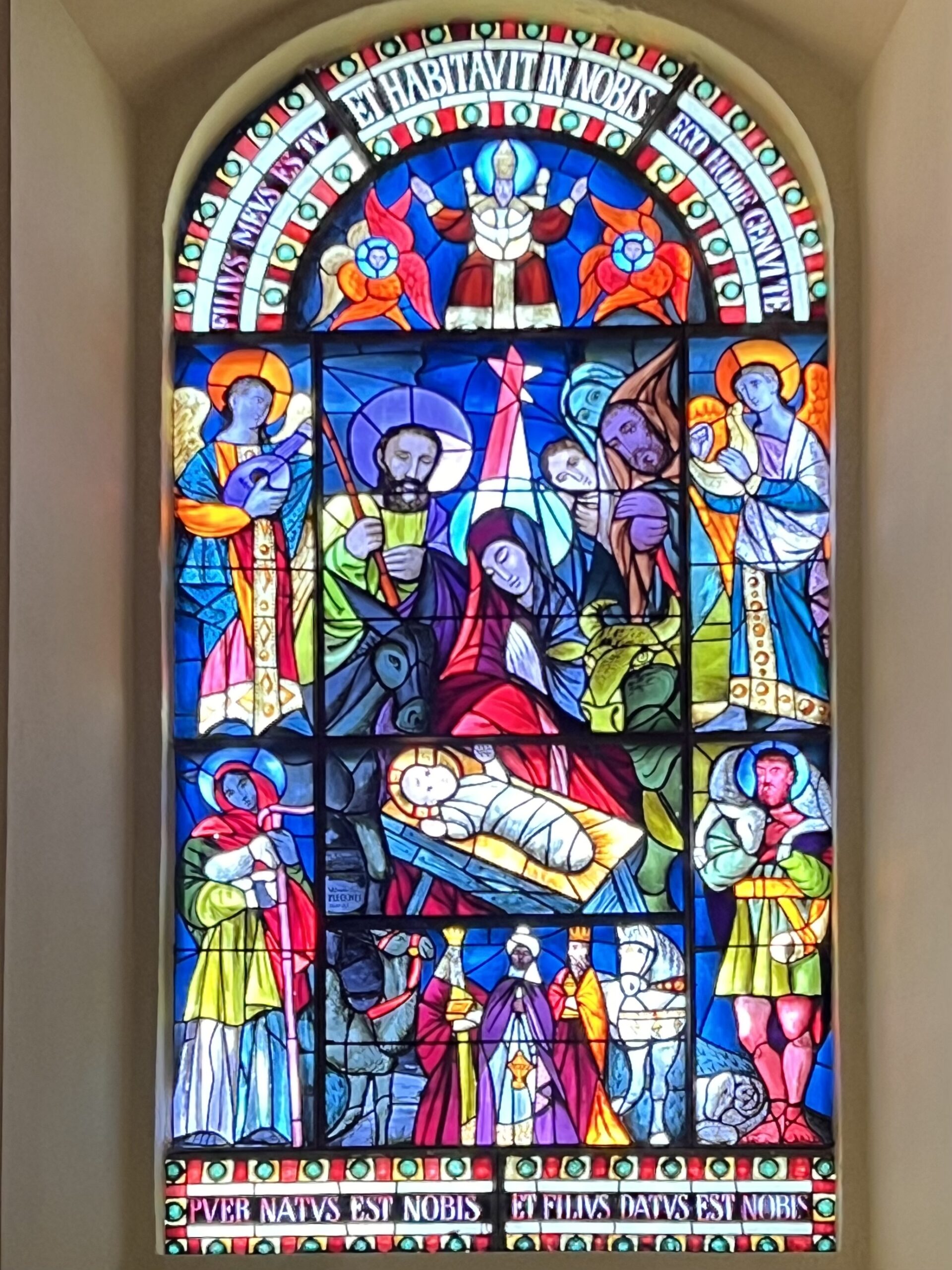
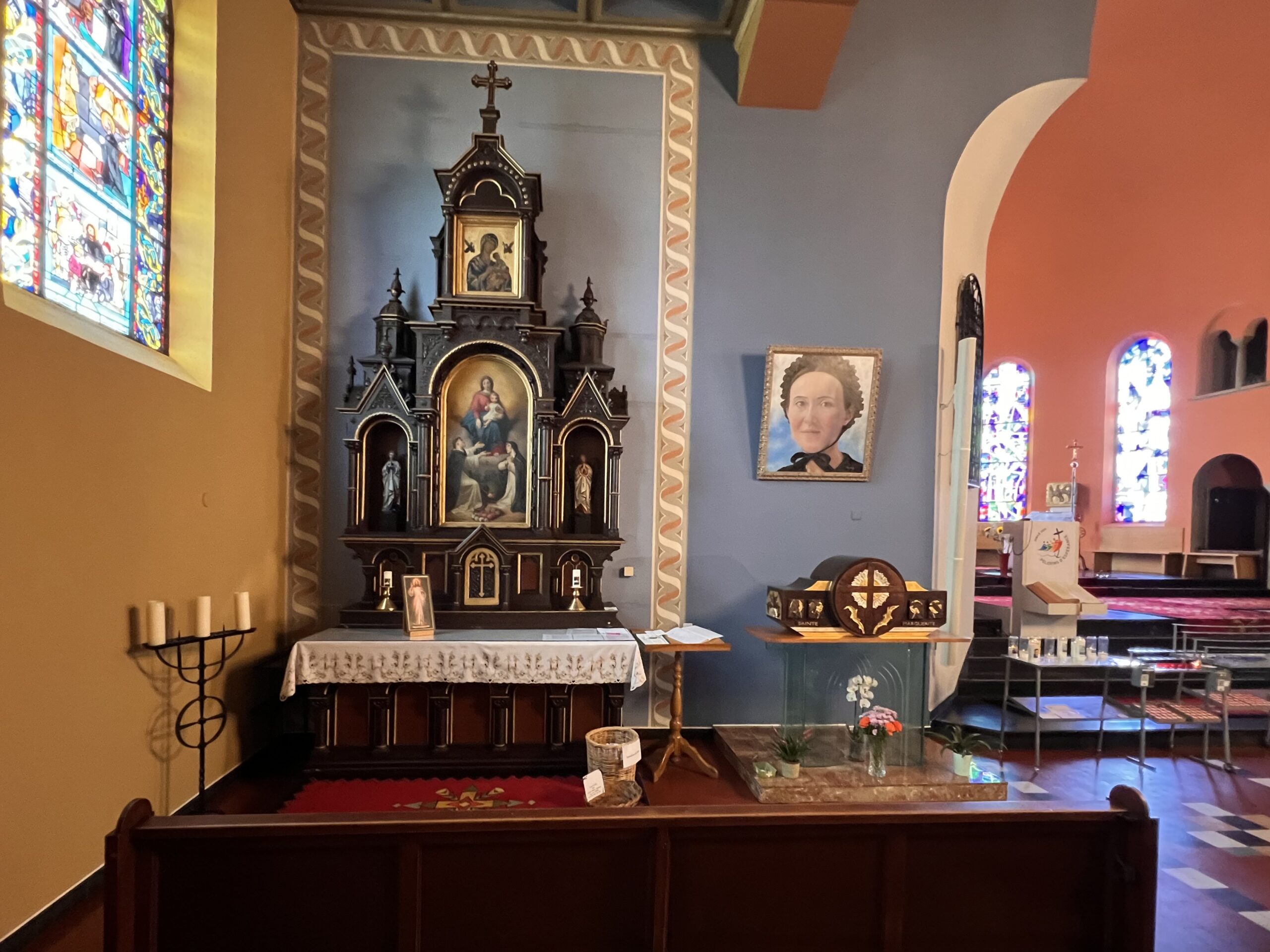
After this, I will go to nearby Siviriez and visit the church, where images of her can also be seen. There is a side altar dedicated to Marguerite Bays with a reliquary of hers. In the church, I take a seat and wonder if there are many like her. For me, the answer is: very few. In the church, there are beautiful, colourful stained-glass windows with Latin texts. On one of the windows is a text which, in Dutch, means: “You are my Son, I was born today and He has lived among us. A Child has been born to us and a Son has been given to us.”
Later in the day, I leave Siviriez and head to another pilgrimage site. On the way, I think of Marguerite Bays. It feels as though I am taking her with me to Marian sites in Switzerland.
Environment

In Romont, the collegiate church (monastery church) can be visited, and the former Capuchin church is also located in this town. In the monastery church, there is an effigy of the “Madonna at the Gate” from the 13th century, among other things. From Romont to Siviriez, it is 5 km to the southwest.

Marguerite Bays is buried in the cemetery in Siviriez. The distance from Siviriez to La Pierraz is only 2 km.
Departing from the pilgrimage site of Einsiedeln and arriving in La Pierraz is a 225km journey to the northeast.
To travel from the Swiss capital, Bern, to Siviriez requires travelling 60 km to the southwest.
Leaving Fribourg to get to Siviriez means travelling 30 km to the southwest.
From Lausanne to Siviriez means covering 33 km to the northeast.
~~~

 Nederlands
  English (UK)
  Deutsch
  Français