History
The imposing monastery dates back to 1866; Sittard was already a Marian place at that time.
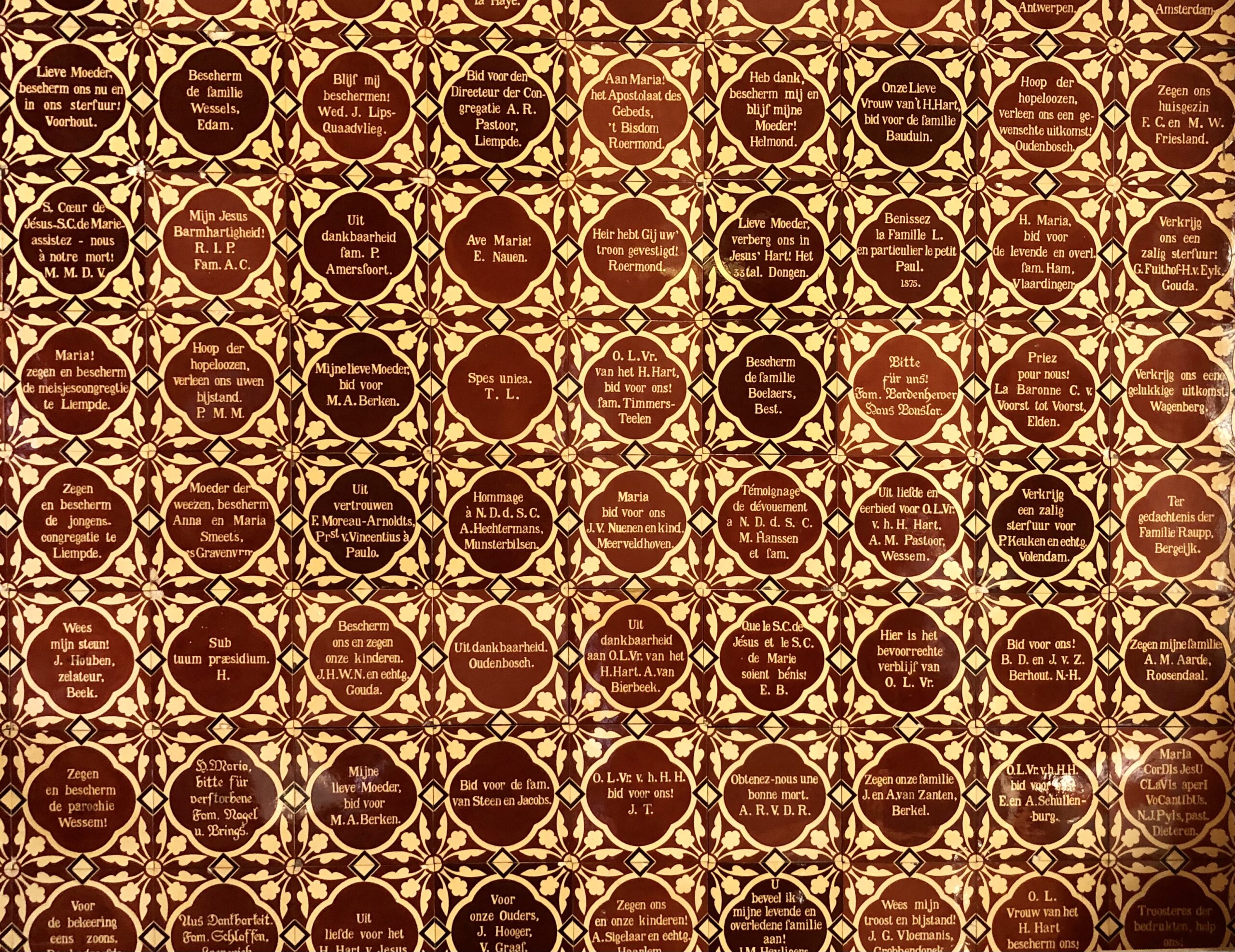
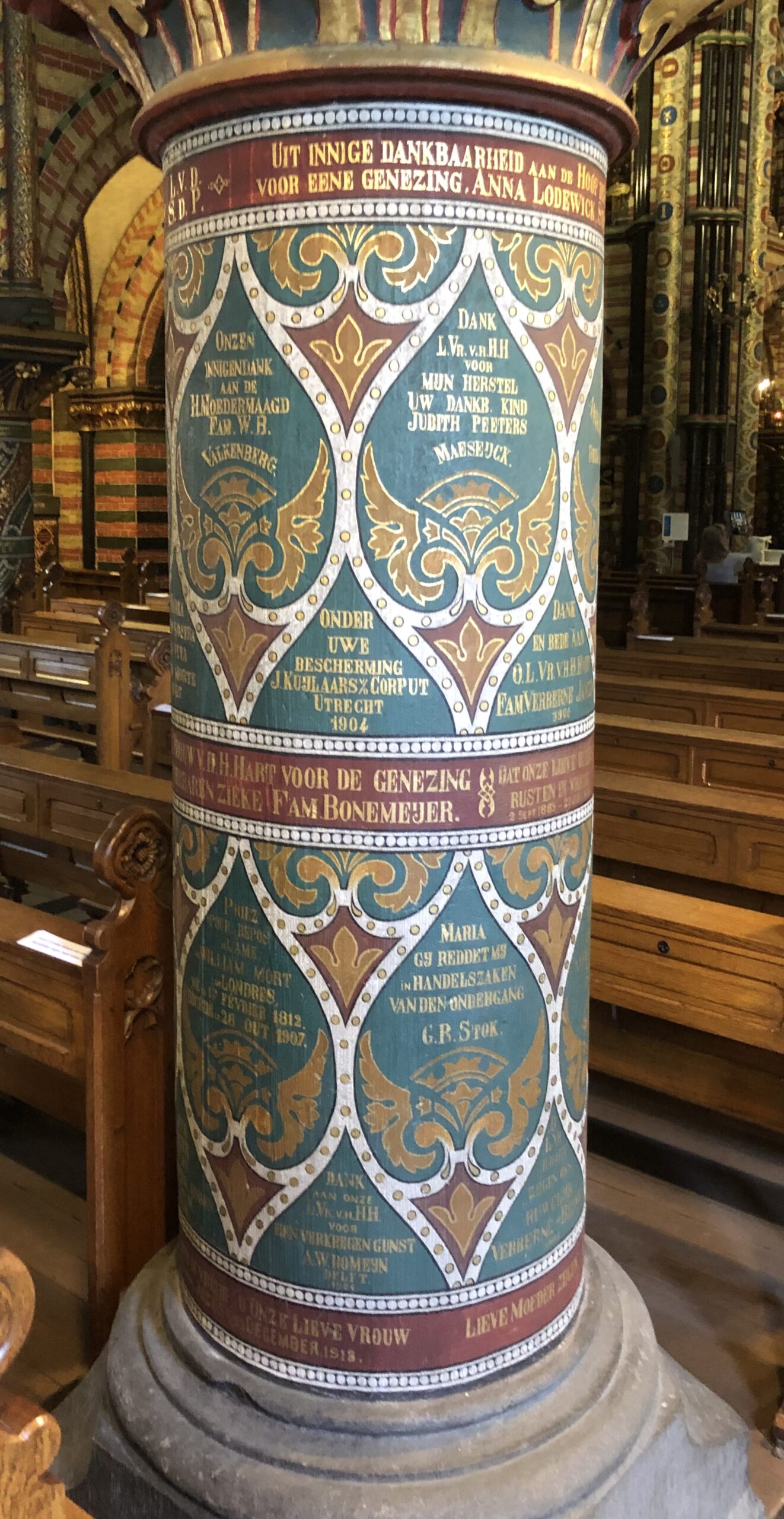
In 1873, the decision was made to build a large church. There were insufficient financial resources for the realization of the large project. To generate sufficient funds, many small donors were sought. Money for a tile with a name and/or text that would be placed in the church was the return for this contribution. Later, such an initiative was called a “crowdfunding campaign”.
The basilica is a design by the architect Johannes Hermandus Julius (Johan) Kayser (1842-1917), born in Harlingen.
The leadership of the construction of the church was in the hands of the Limburger Franciscus Xaverius Rutten (1822-1893), professor (1859-1868) and pastor-dean of Maastricht (1868-1893). The church was built in the Neo-Gothic style between 1875 and 1877 and consecrated in 1879 as “Our Lady of the Holy Heart of Jesus”.
In 1883, the church became the first in the Netherlands to receive the title of “Basilica”. This was done by Leo XIII, Pope from 1878 to 1903, who was born as Vincenzo Gioacchino Raffaele Luigi Pecci (1820-1903).
In 1867 the “Brotherhood of Our Lady of the Holy Heart” was founded with the aim of spreading piety in the Netherlands. Later the brotherhood was changed to ”Archbishopric of Our Lady of the Holy Heart”. This organization manages the basilica and is entirely dependent on donations.
The monastery and basilica form a large complex that has become a national monument.
Especially during the period 1875-1925, the basilica was a busy pilgrimage destination.
Pilgrimage site
The basilica is dedicated to Our Lady of the Sacred Heart. This dedication is originally a French Marian devotion. The church building is entirely made of bricks and tiles.
In the portal of the main entrance of the basilica, a white marble plaque is embedded, which commemorates the acquisition of the title of basilica.
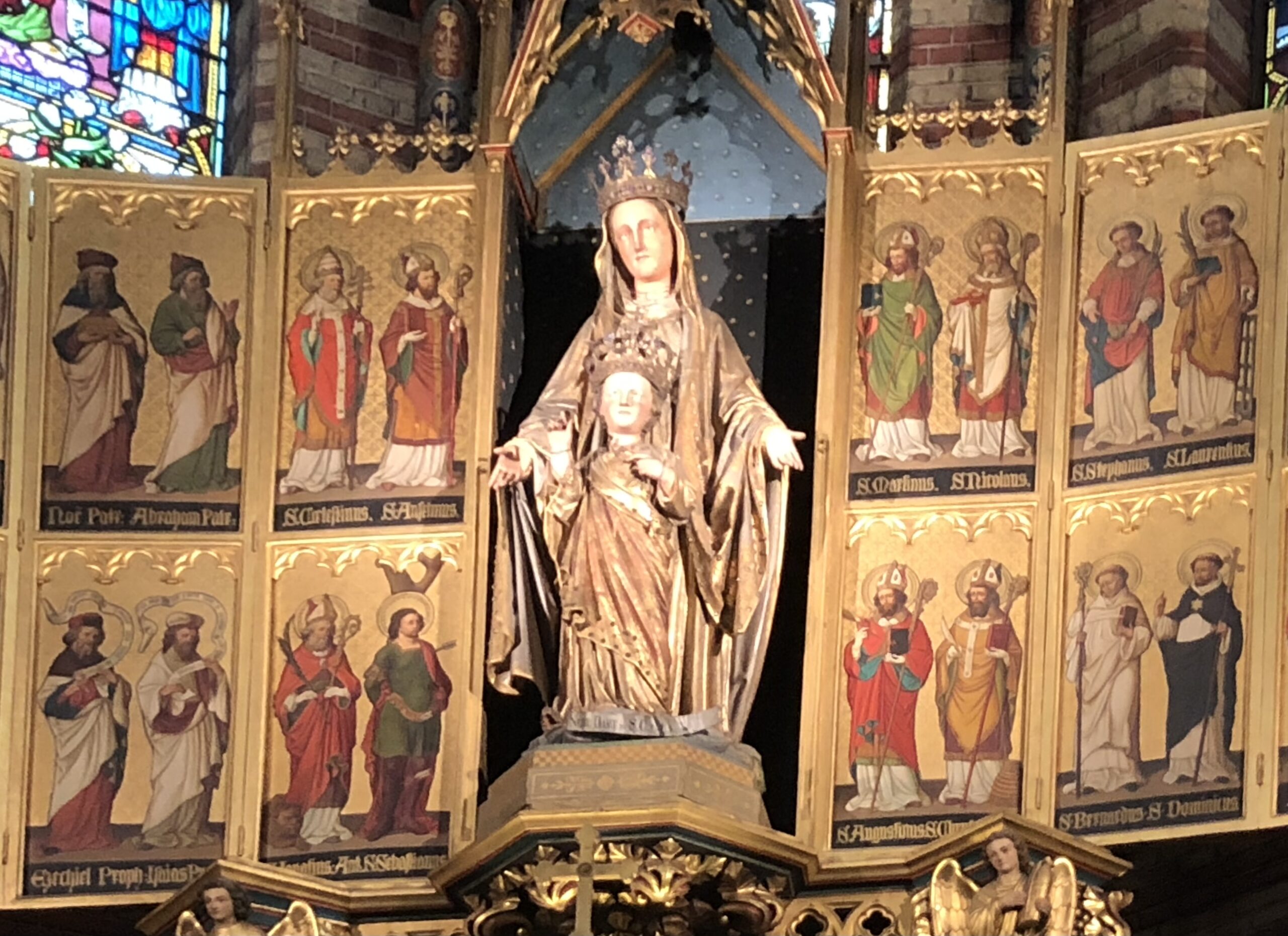
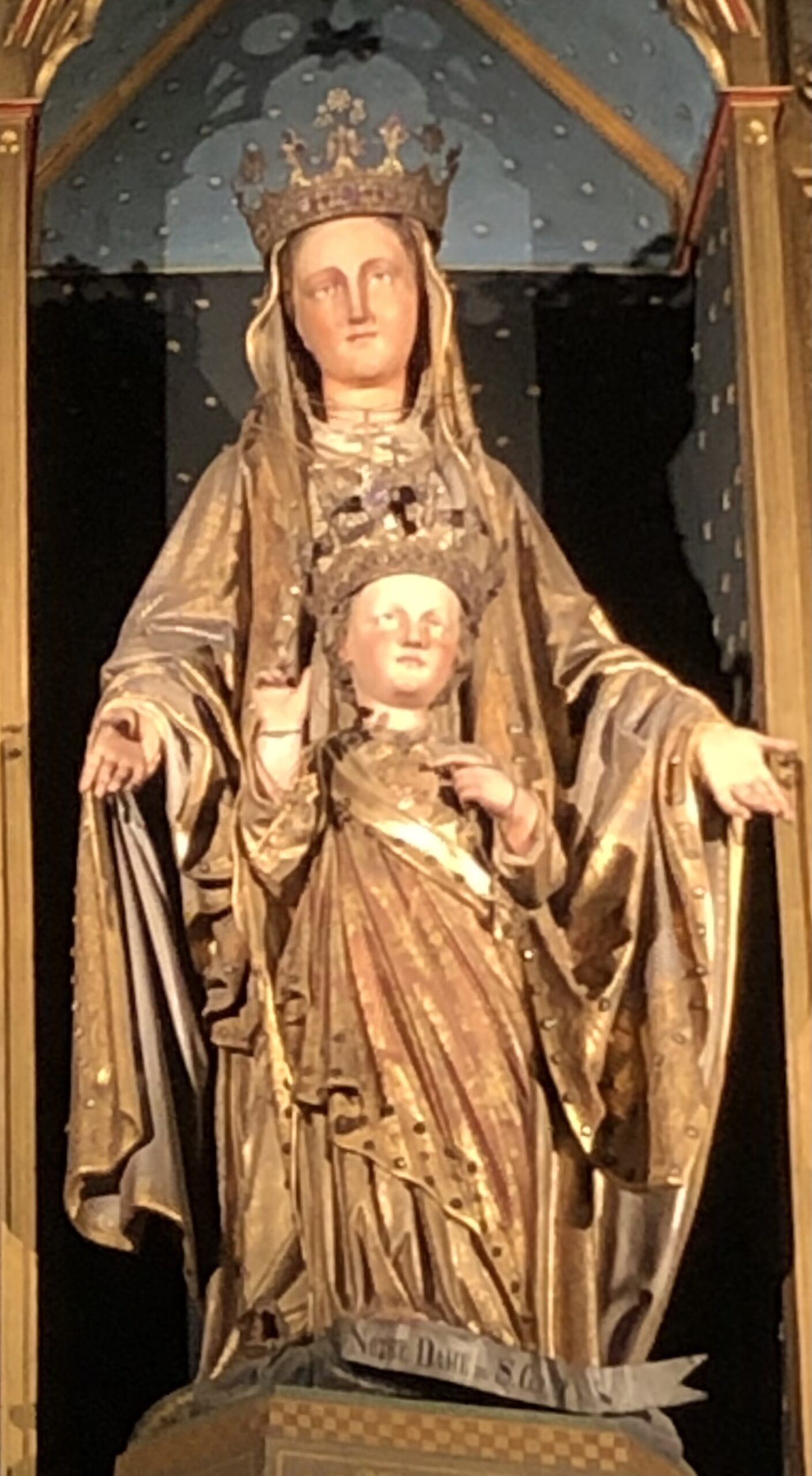
Underneath the statue is the inscription “OLV of the Sacred Heart”.
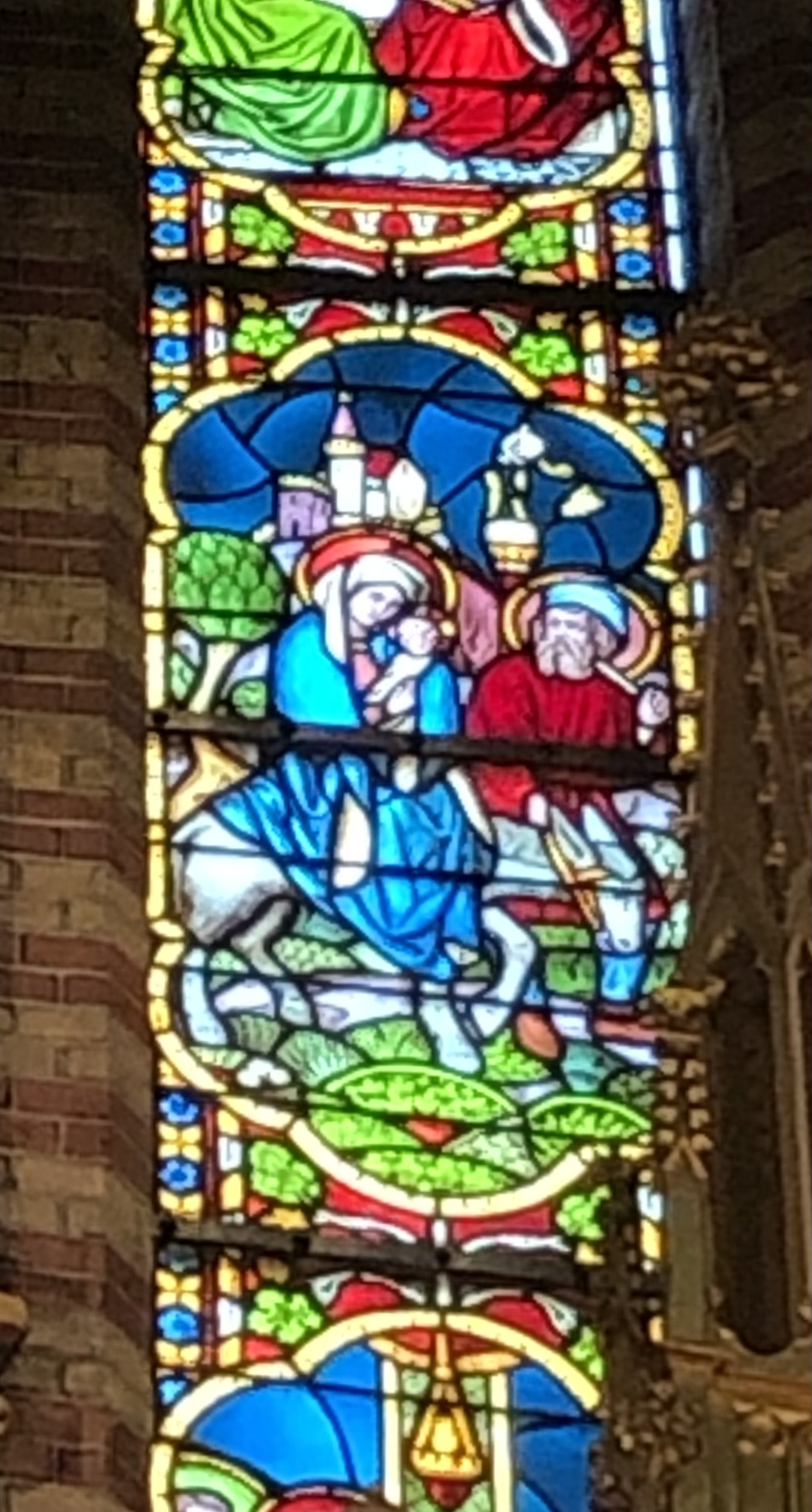
In the first basilica in the Netherlands, statues and paintings of Mary have been placed, such as in the central part of the priest's choir. Additionally, stained-glass windows with representations of Mary can be seen.
The basilica is adorned with many stones and wall tiles donated by its patrons. The more than 1,400 tiles form a unique covering of walls and pillars. This makes the basilica unique and gives the building a colorful interior.
The basilica is open to visitors from Tuesday to Sunday.
ACCESSIBILITY
The pilgrimage basilica is located in the center of Sittard, namely on the Old Market Square, between the Dominican Monastery and the Ursuline Monastery.
Address: Oude Markt 3, 6131EN Sittard.
More information can be found at www.basilieksittard.com.
Experience
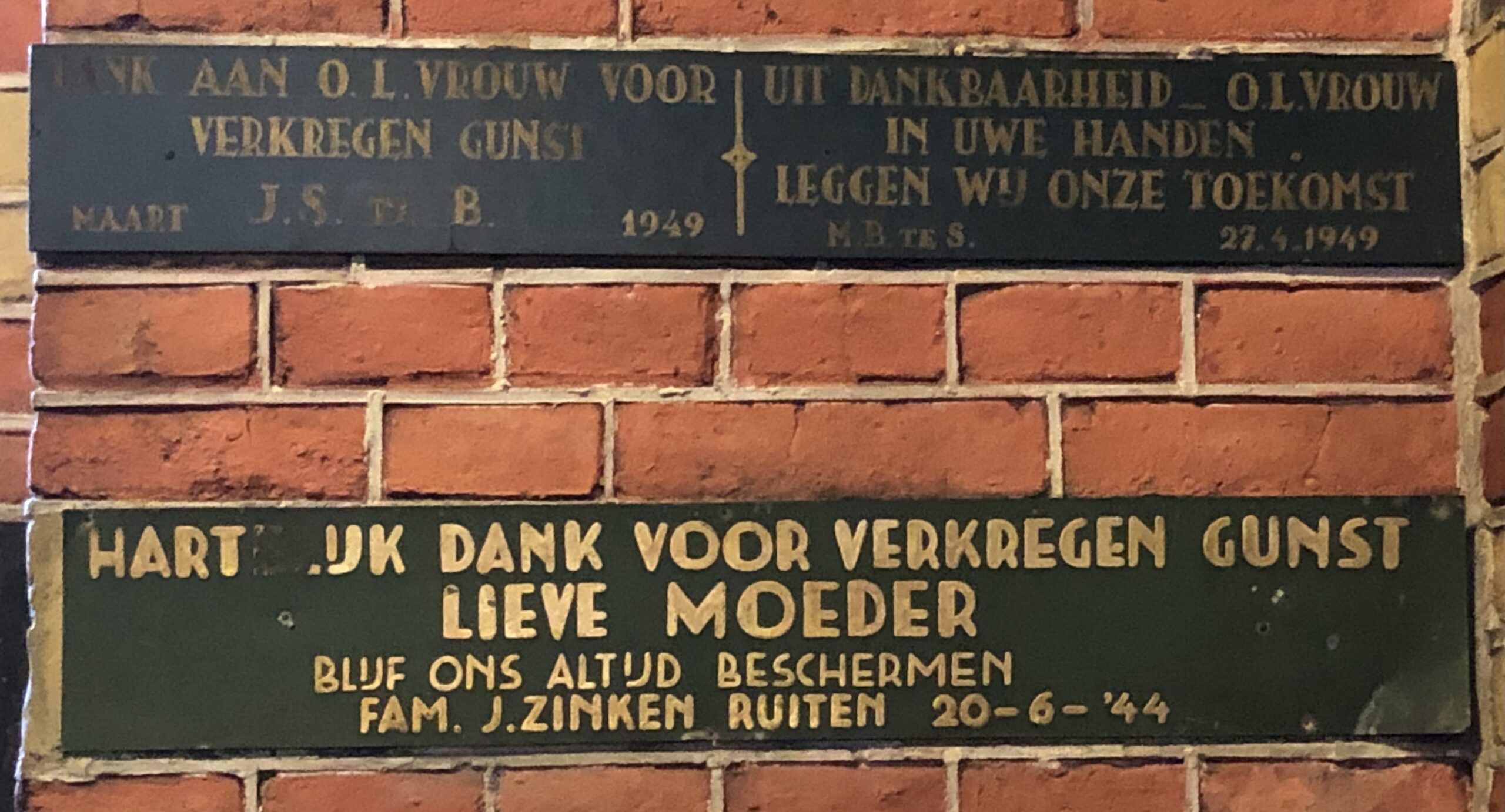
As I leave the Market, I approach the impressive monastery building Huis op de Berg. Alongside it stands the imposing basilica. As I enter the basilica, I immediately notice the countless votive plaques. I am told that each plaque is a donor of the building and that there are almost 1500 ex voto’s placed in the basilica by people and organizations from within and outside the Netherlands. What a number!
Approaching the image of grace, I look with awe at Our Lady. Mary and the Child are crowned. As I stand by the image, I pray and thank Mary for the many things that happen to me.
Next, I look at large stained-glass windows. What a high level of craftsmanship these people have!
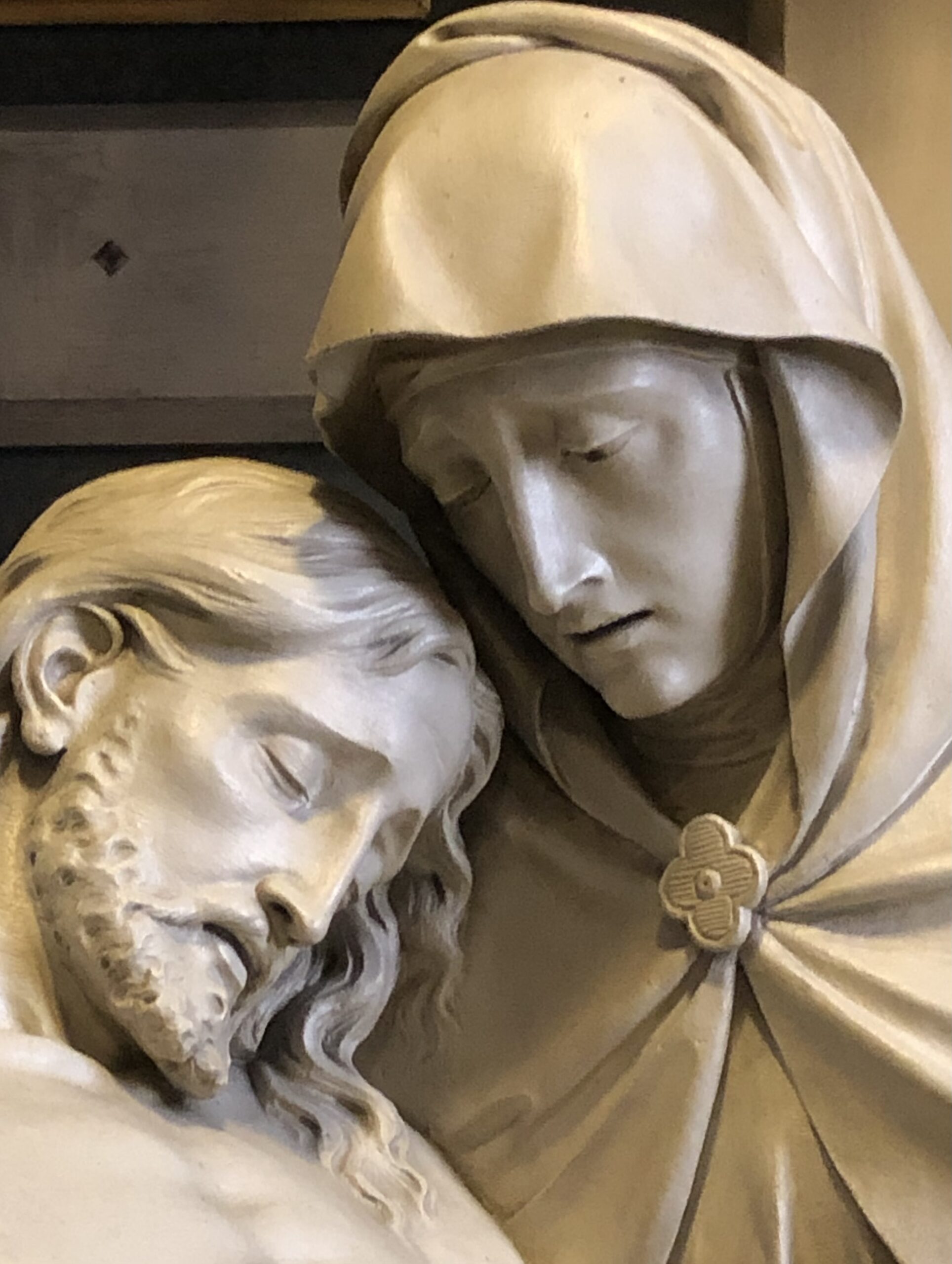
A pieta also catches my attention. Mother Mary with her dead Son and experiencing this up close gives a particularly compassionate feeling to Mary, the Mother of the Wise.
The basilica is a magnificent building, a jewel in the Limburg countryside.
Environment
There are cycling and walking opportunities in and around Sittard.
Traveling from the Marian town of Maastricht to that of Sittard requires going 28 km to the northeast.
Leaving Valkenburg aan de Geul to reach Sittard, involves traveling 32 km northwards
From the pilgrimage site ’t Zand in Roermond to the basilica in Sittard, it is 32 km to the south.
Leaving Aachen in Germany to arrive in Sittard means covering 44 km to the northwest.
From Maaseik in Belgian Limburg to Sittard, the distance is 20 km to the southeast.
Traveling from the Belgian-Limburgish capital Hasselt to Sittard, it has gone 50 km to the west.
~~~

 Nederlands
 English (UK)
 Deutsch
 Français
 Español