Pilgrimage routes exist in many countries, and the routes to Santiago de Compostela in Spain, known as the Camino de Santiago, are familiar to many long-distance walkers. A pilgrimage route provides time for not only physical activity but also for reflection, prayer, enjoying religious heritage, and experiencing nature up close.
In the Netherlands, there is a Brabant Monastery Path, which can be followed by bicycle and on foot. The cycling route has been developed in a booklet for 2025, featuring 25 routes to chapels, cloisters, and abbeys. The 25 “monastery paths” cover a total of 700 kilometres. The paths combine religious culture, nature, and exercise.
In many places, a stamp can be obtained as proof of having participated in the route.

Another pilgrimage route is the “Via Nova”. This is a European pilgrimage route through Germany, the Czech Republic and Austria. The organisation is run by “Verein Europäischer Pilgerweg Via Nova”. More information at www.pilgerweg-vianova.eu.
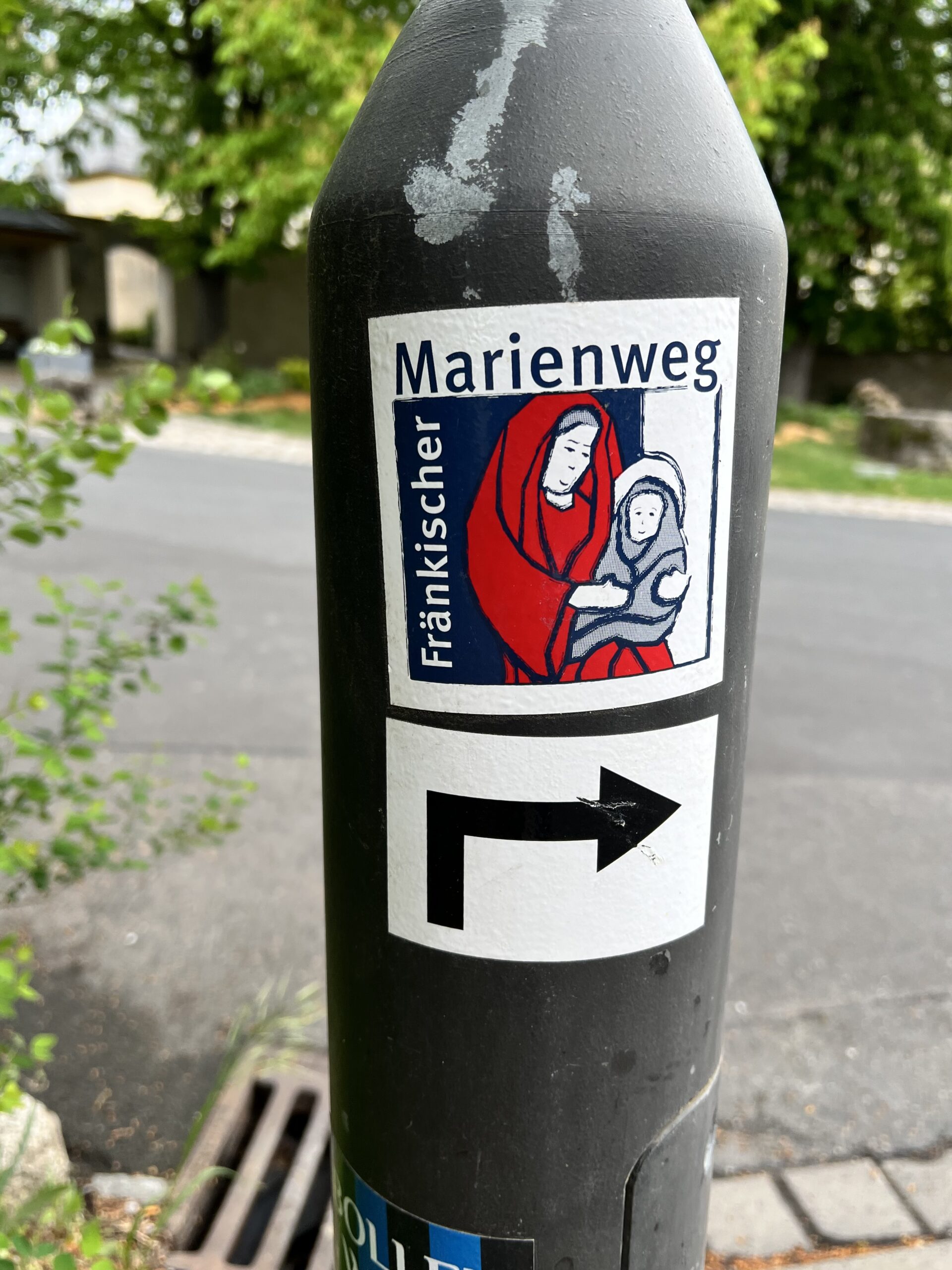
There are also walking and cycling routes to visit Marian pilgrimage sites, such as in Germany where a “Fränkische Marienweg” was established in 2002 for walkers and cyclists. The route goes through Unterfranken, Oberfranken and Mittelfranken in the dioceses of Würzburg and Bamberg. The “Mariaweg” spans a length of almost 2,000 kilometres and passes around 90 large and small Marian pilgrimage sites in German Franconia. The tour allows pilgrims to visit, among other things, Marian chapels, pilgrimage churches and monasteries. The spiritual reflection route invites pilgrimage groups and individual pilgrims to discover Mary as an example and guide. The marked route is indicated for cyclists and walkers.
More information can be found at www.fraenkischer-marienweg.de.
~~~

 Nederlands
  English (UK)
  Deutsch
  Français