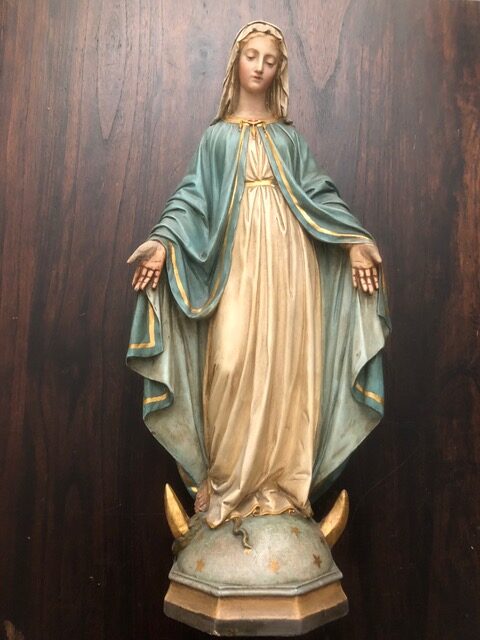
Bebbeke
History
It is presumed that Our Lady was already venerated in Lebbeke in the 8th century. An even earlier church existed before the Norman invasions in the 9th century. This church belonged to the Ghent Abbey of St. Bavo and is dedicated to the Nativity of Our Lady. The title Our Lady of Lebbeke dates back to the 10th century or earlier.
The history of Lebbeke stretches far back in time, as the place is already mentioned as “Lietbeka” in 1003 in a Charter of Emperor Henry II (973-1024).
A legend tells...
The church was built through the intercession of Our Lady. After a great flax harvest, Mary determined the site and dimensions of the church with a silk thread. Later, She also chose the stone for the construction of the church.
The founders of the church are the “Twelve Tribes”, the owners of the 12 moated farmsteads. These 12 individuals received permission from Bishop Odo of Cambrai (1060-1113) to build the church in 1108.
In 1377, a procession in honour of Mary was already held.
In the 14th century, the Confraternity of Our Lady was founded. In 2010, the fraternity received a restart.
When renewing the church floor in 1850-1852 and also during the installation of heating in 1972, the foundations of an old, Romanesque church were found. The church was extended around 1470, in 1562, and 1642.
Following the outbreak of the iconoclasm in 1566, the church was looted and severely damaged. Administration, archives and interior furnishings were also lost.
There is a, later coloured, engraving from circa 1655 by Pieter II De Jode (1606-1674) with the inscription “Consoler of the Afflicted, pray for us”. “True representation of the image of Our Lady in the Miraculous Church of the Parish of Lebbeke”.
In 1660, a new polychrome wooden Lady Altar in Renaissance style was made to a design by Leo van Heil (1605-c.1661).
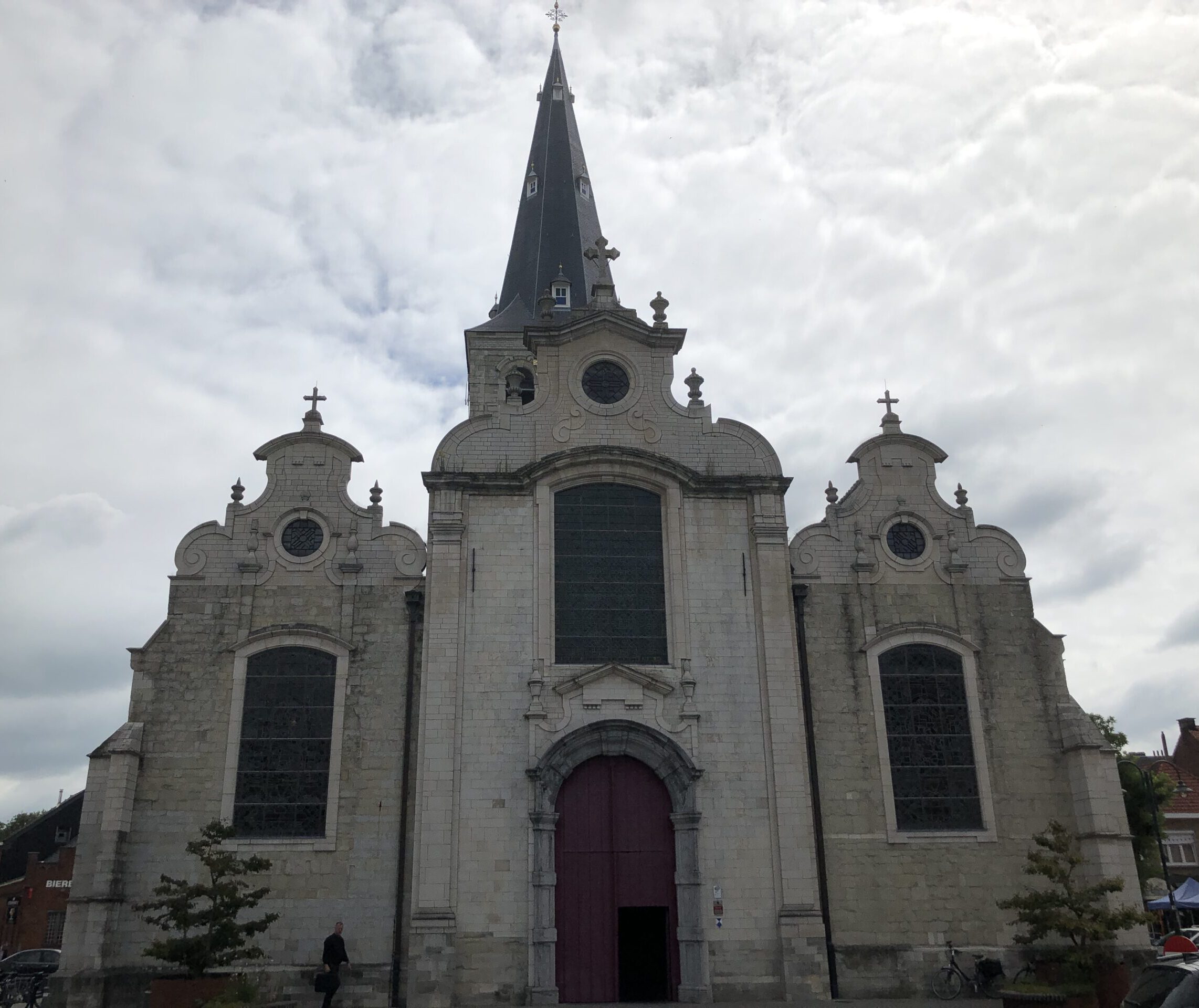
The current tower was built in 1674.
In 1679, the current high altar was realised by the Antwerp sculptor Pieter Verbruggen the Elder (1615-1686).
In the period 1712-1718, the church's facade was given its present appearance.
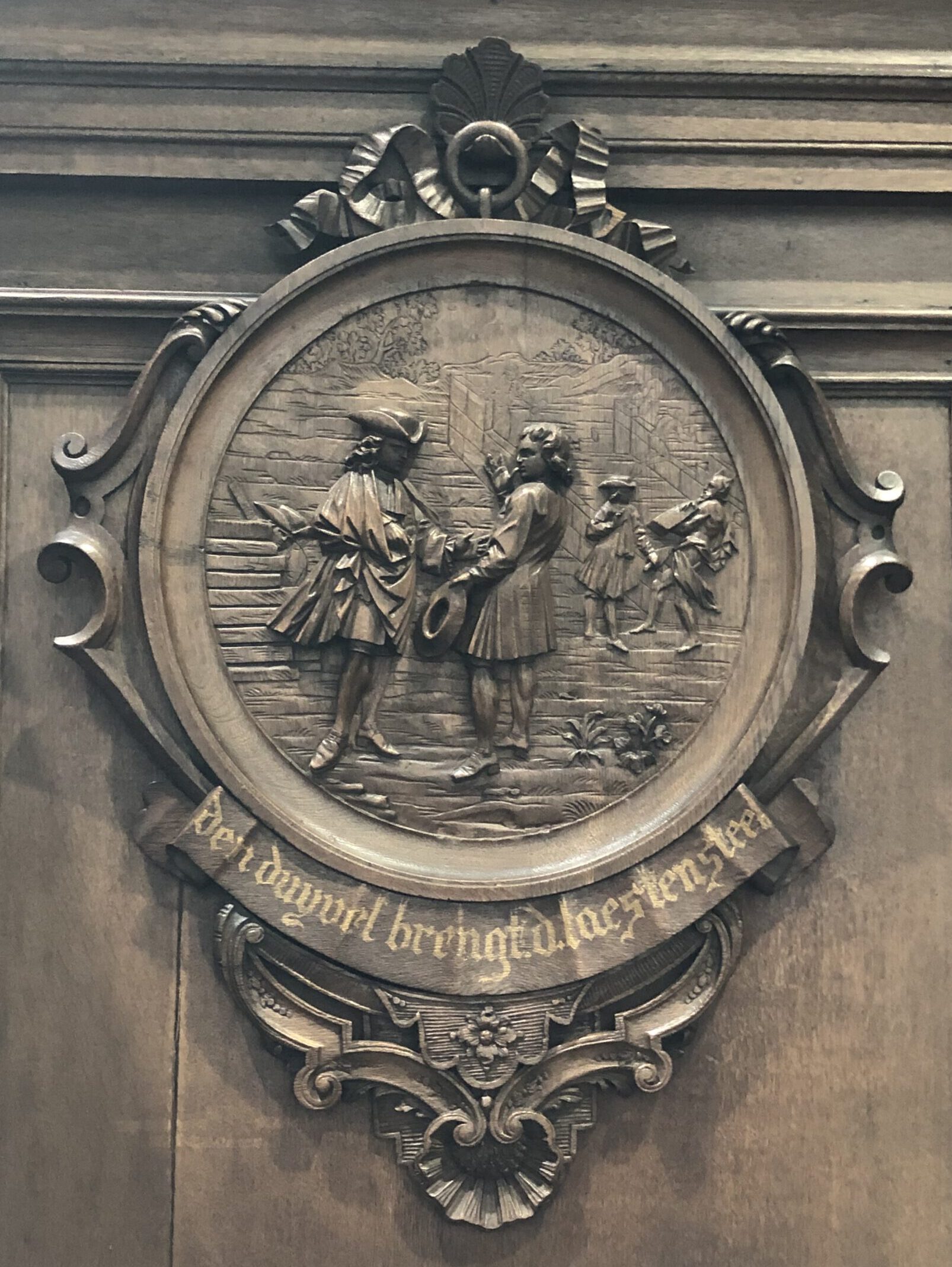
In 1722, 17 medallions were installed in the church, referring to the legend. These were made by artists including Michiel Heylbroeck (1665-1733).
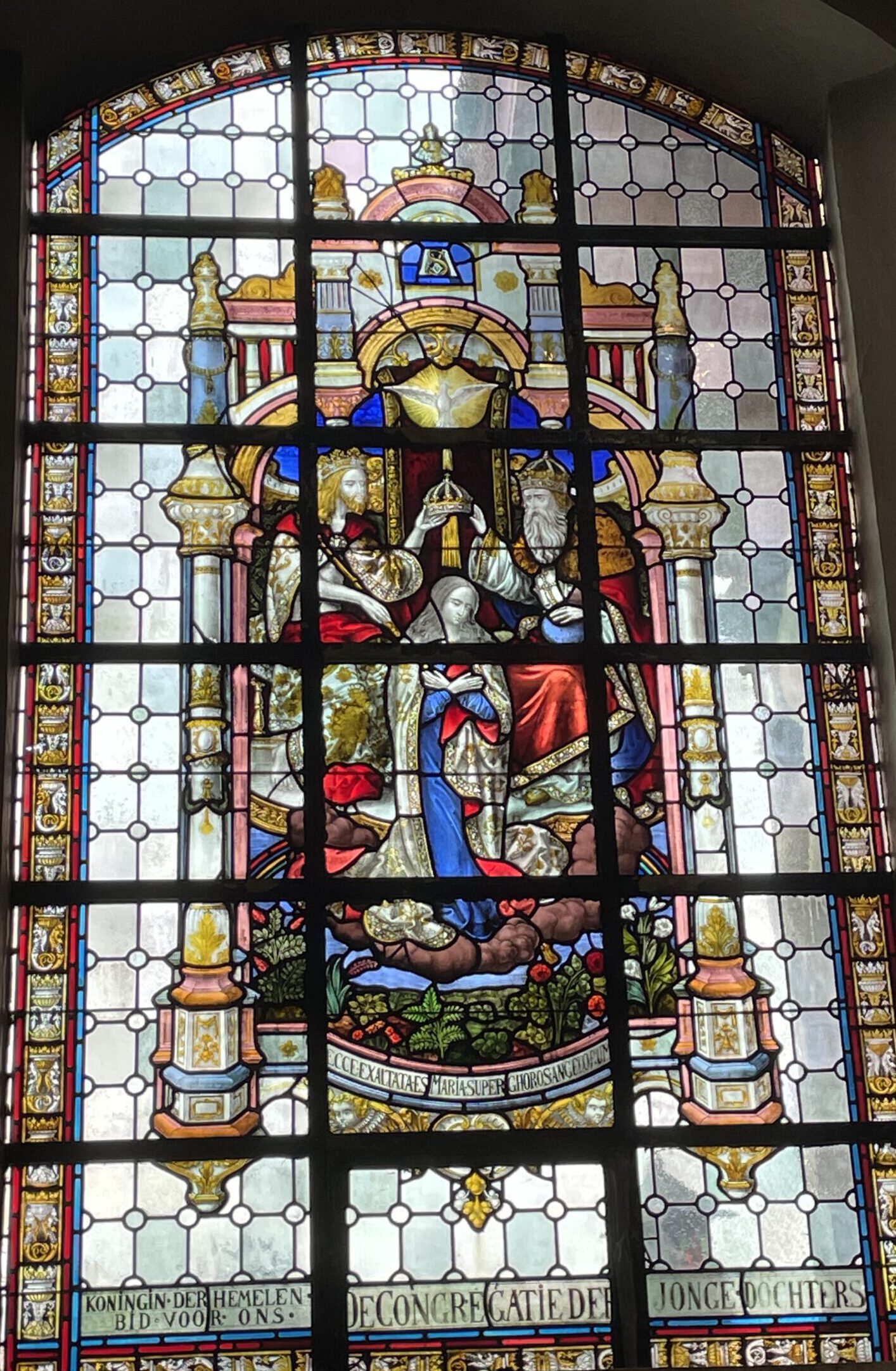
The stained-glass windows were made by the company Ladon from Ghent between 1902 and 1904. The large windows depict scenes from the life of Our Lady.

The image of Our Lady of Lebbeke, Comforter of the Afflicted, was crowned on 10 May 1908 by Monsignor Antoon Stillemans (1832-1916), Bishop of Ghent (1890-1916). This followed approval from Pope Pius X (Pope 1903-1914).
In 1942, the parish church was protected as a monument.
Restorations of the church have taken place on several occasions, specifically in the periods 1846-1848, 1894-1896, 1950-1960 and 2003-2004.
The Church of Our Lady's Nativity is a building that is partly Gothic and partly Baroque in style. The church is over 45m long, 22m wide and 52m high.
Pilgrimage site
Lebbeke is the oldest Marian pilgrimage site in the Diocese of Ghent, as a deed from 1512 shows that the celebrations, such as Mass and Evensong in honour of Our Lady of Nativity, were already held in the 15th century.
The front of the church is among the most beautiful in the country.
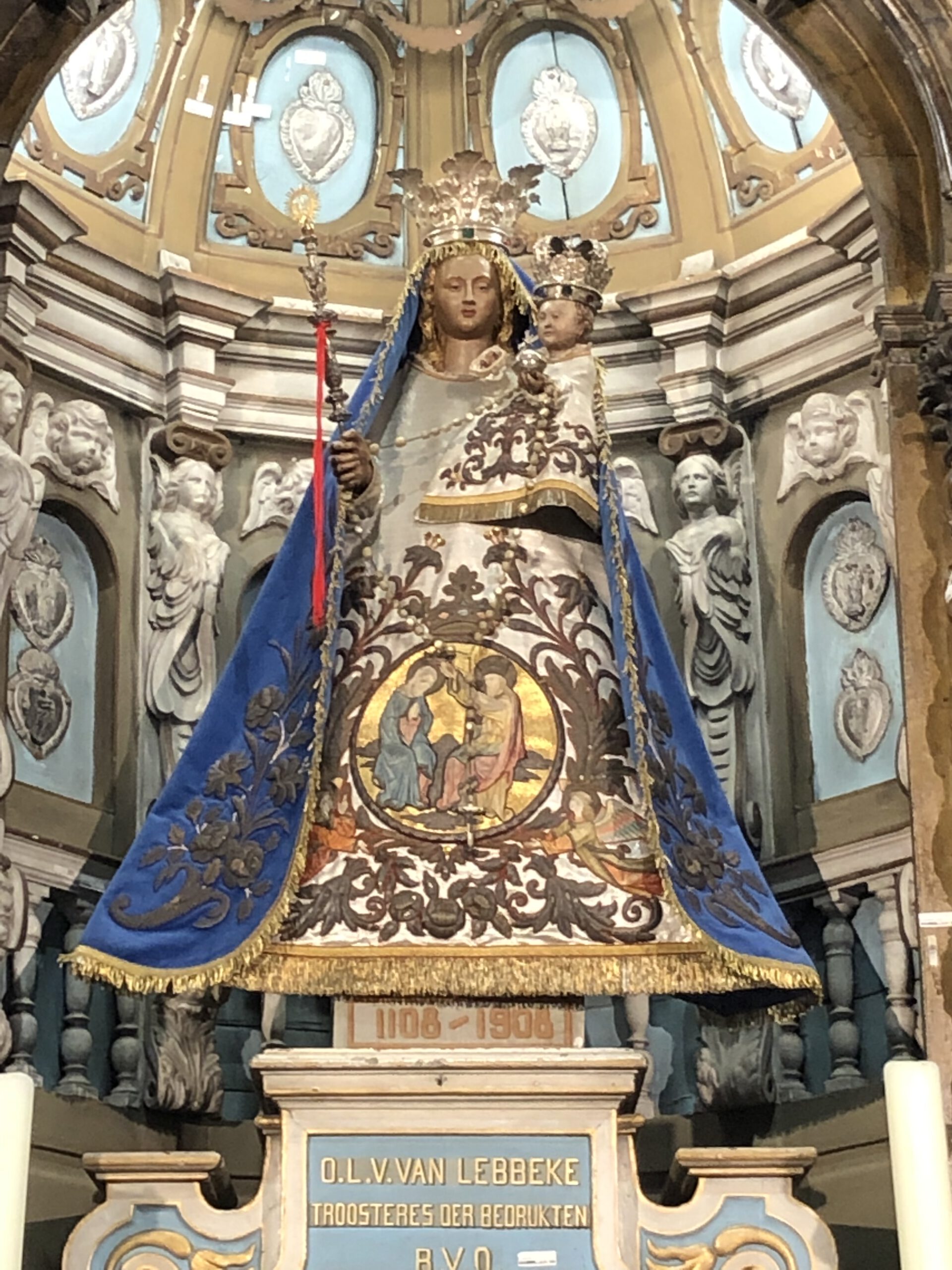
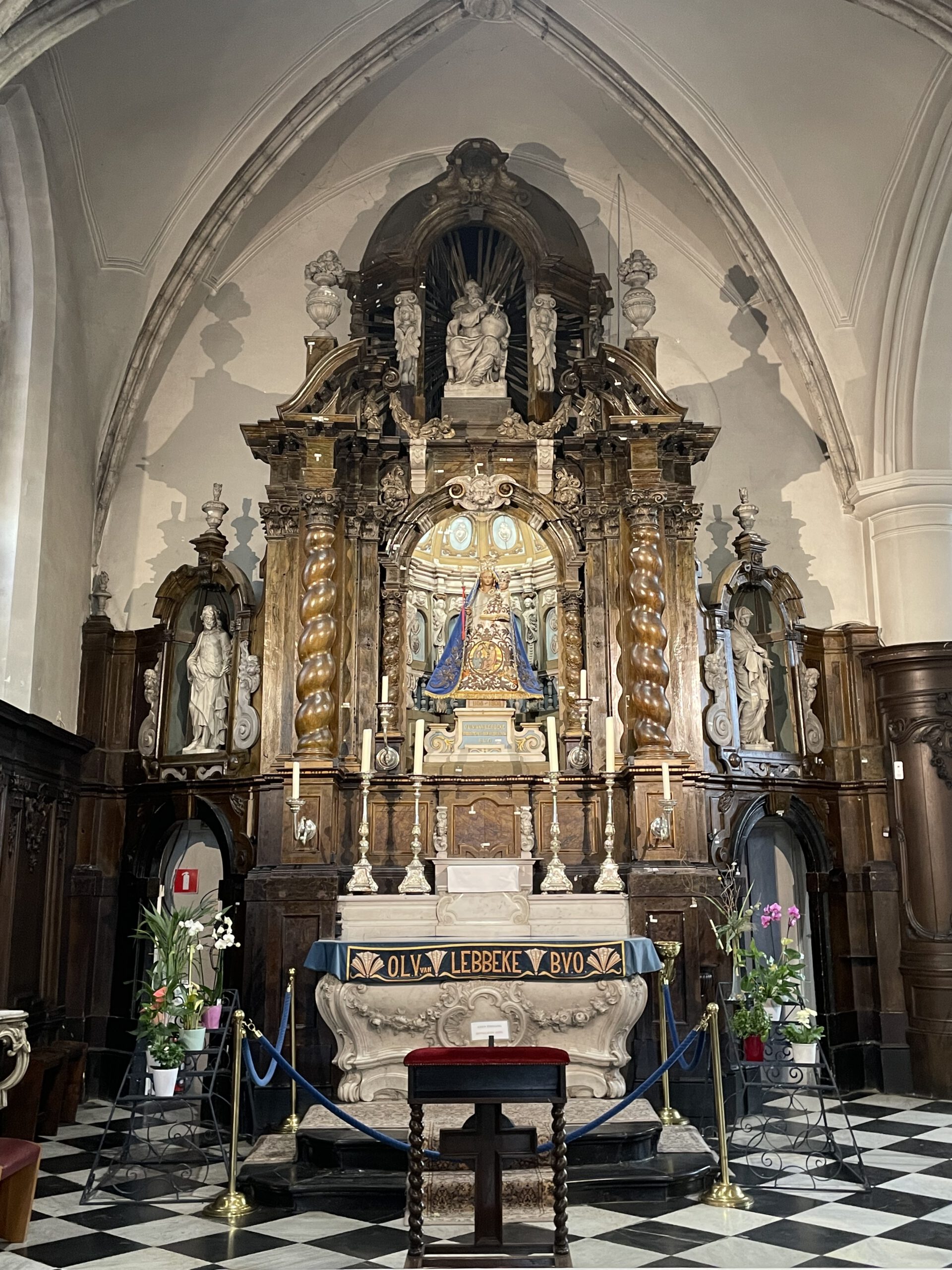
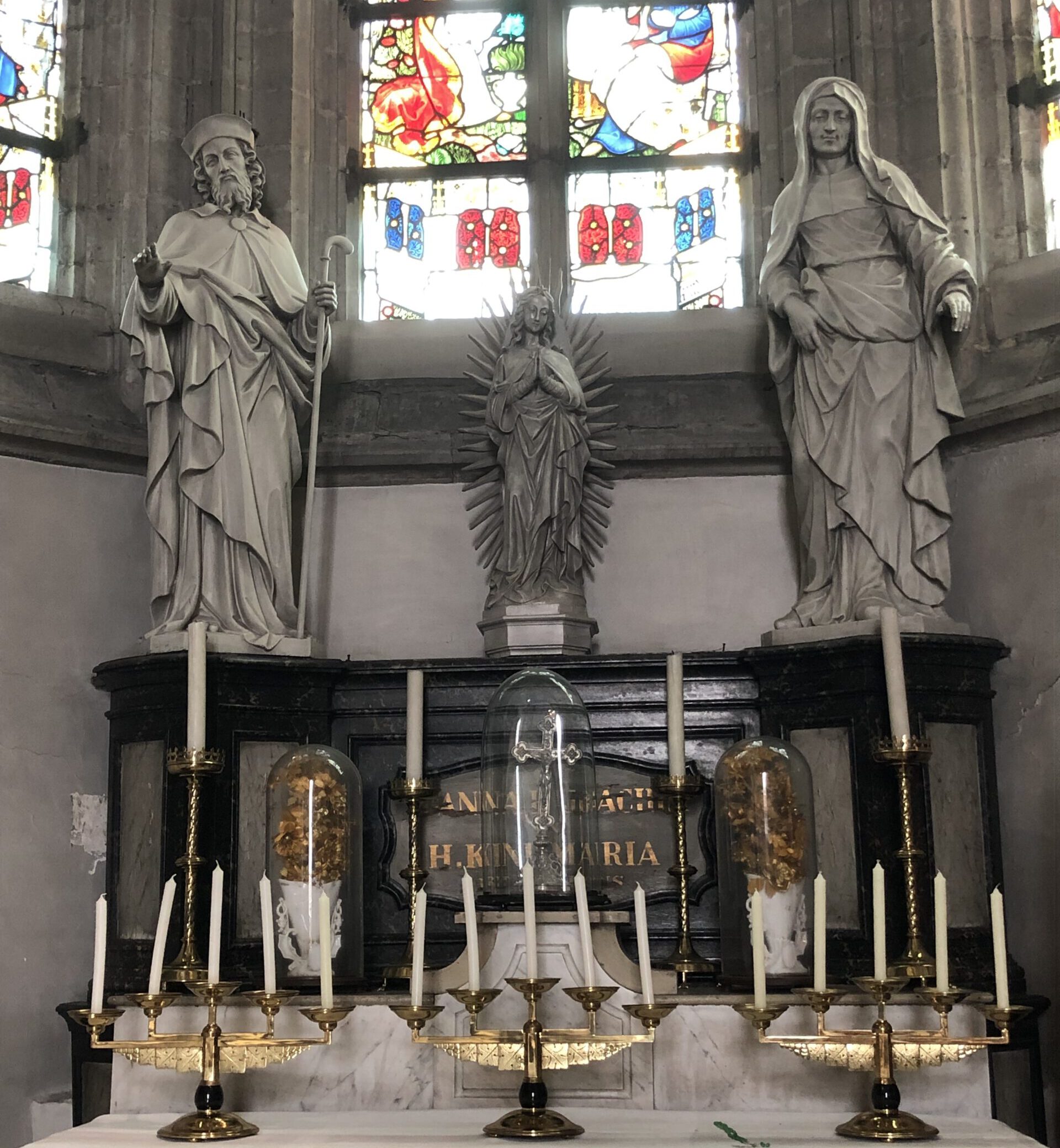
The statue of “Our Lady of Lebbeke, Comforter of the Afflicted” dates from the 16th century and is made of polychrome cherry wood. The Baroque effigy stands in the central niche of the wooden Lady Altar. This is in the northern side altar, which also has a deambulatory. Nearby is the Chapel of Saint Anne with the young Mary and her parents, Anne and Joachim.
The southern side altar from 1740 was made by Willem Ignatius Kerricx (1682-1745), with statues of Emperor Constantine and Saint Helena of Constantinople.
A remarkable painting is “Our Lady with Child and Angel.” The painting, from the Flemish School, dates from the period 1700-1750. In the church, there is also a large painting of “the Presentation of Jesus in the Temple” from 1792.
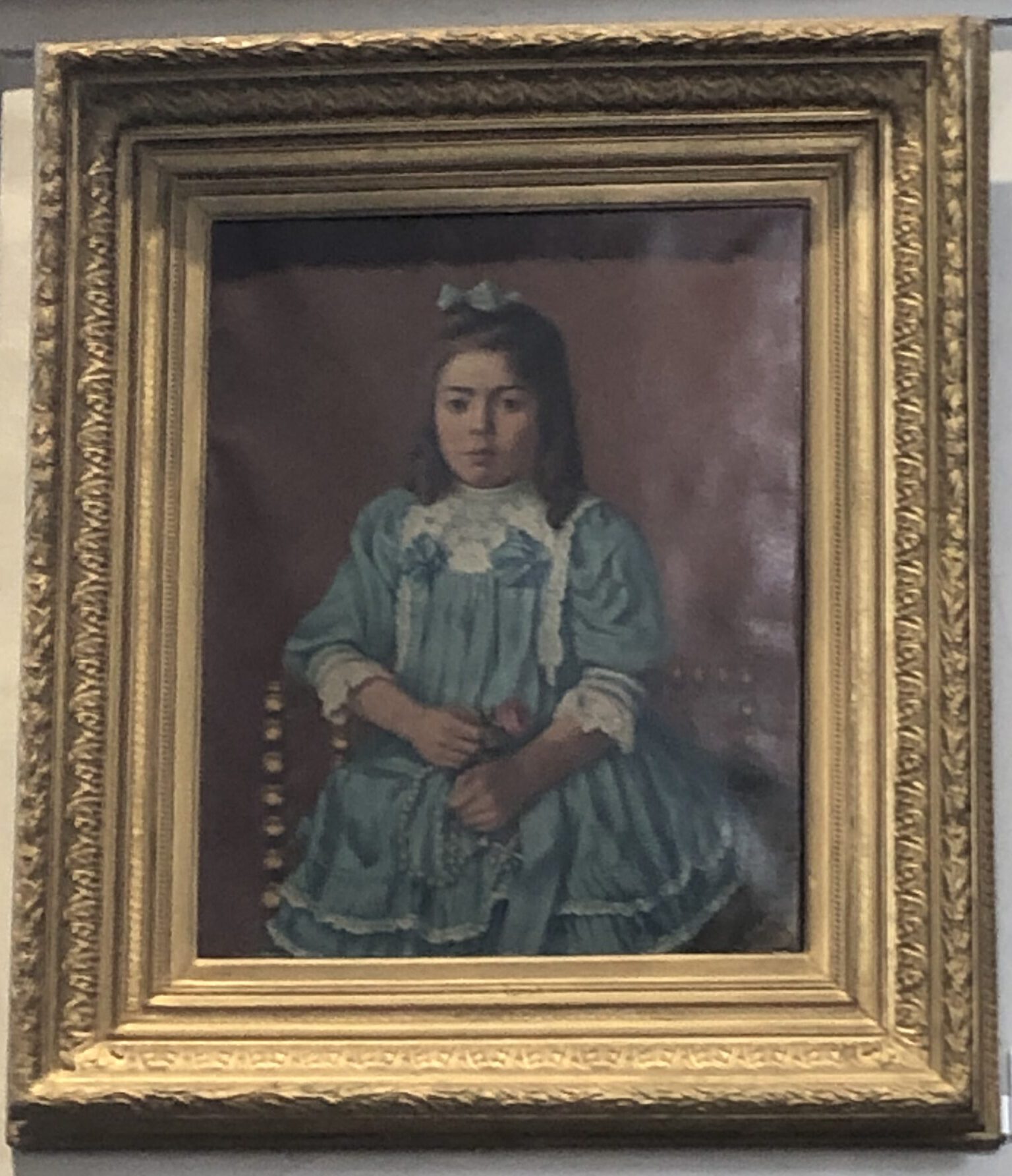
Out of gratitude, 17 children's portraits from prominent families were dedicated to Our Lady of Lebbeke. The paintings date from 1705 and later.
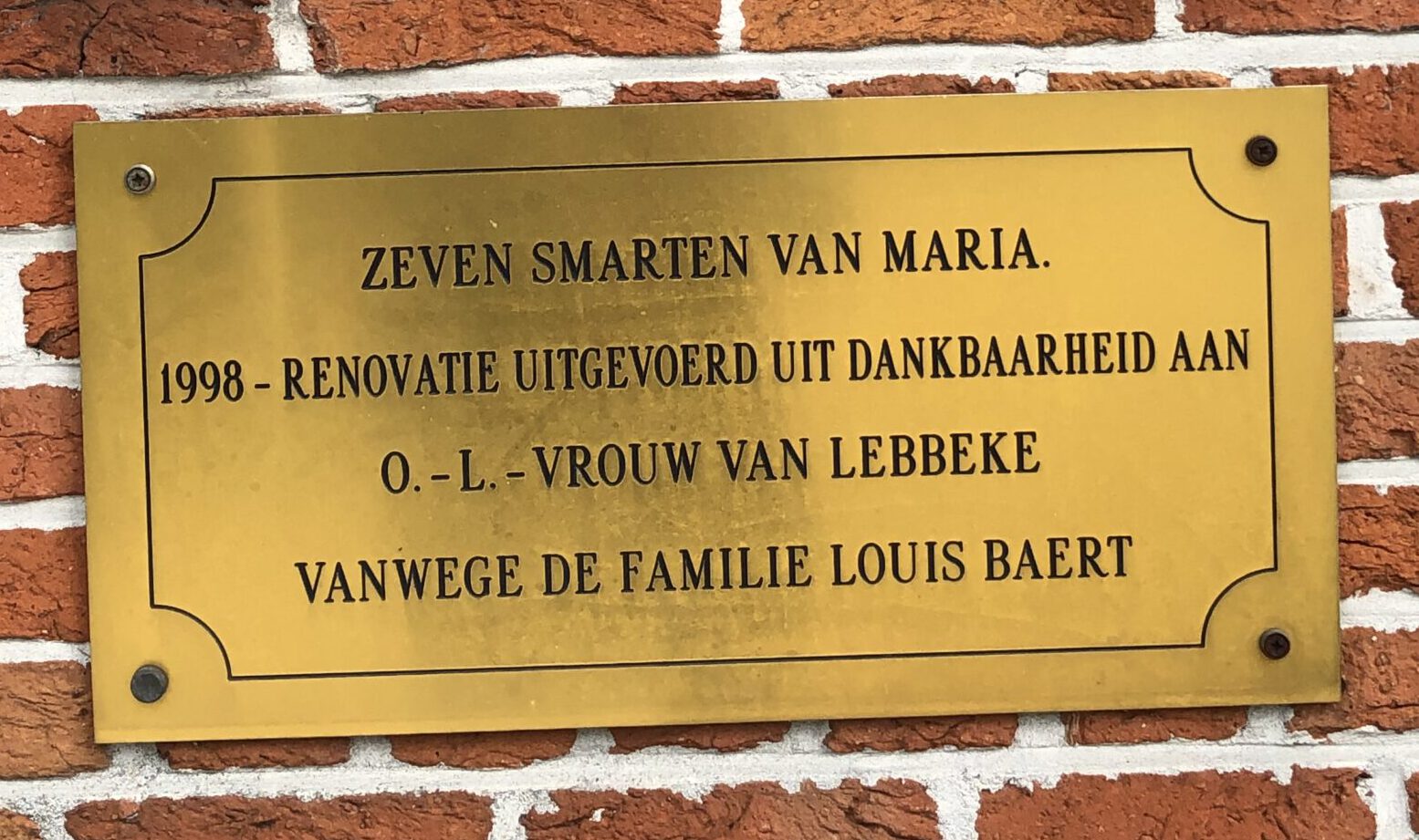
Next to the church is the Park of the Seven Sorrows of Mary. It was laid out in 1933 and restored in 1998.

ACCESSIBILITY
St. Mary's Church is located in the centre of Lebbeke.
Address: Grote Plaats, 9280 Lebbeke.
Current information can be found on www.parochiebuggenhoutlebbeke.be.
Experience
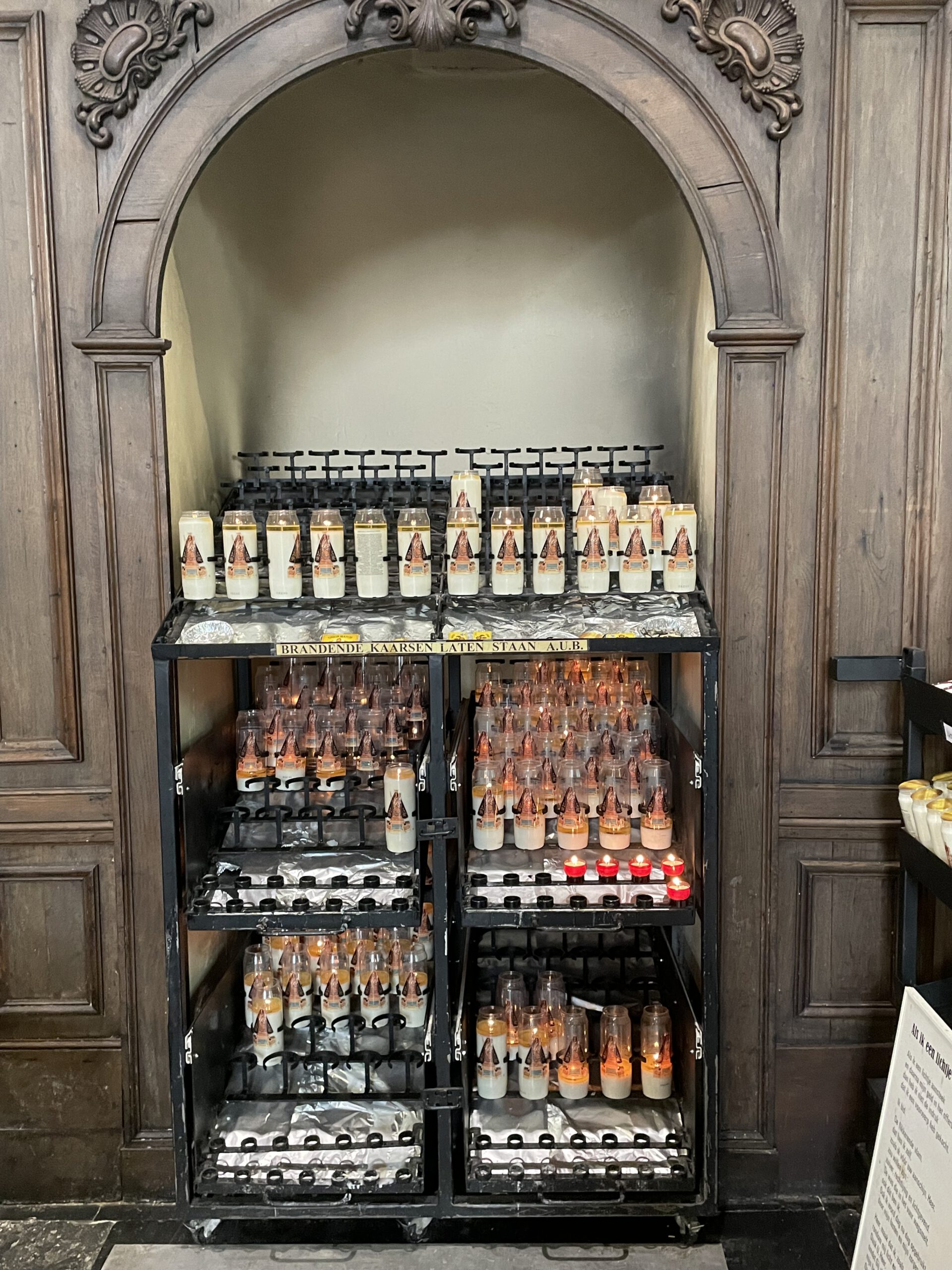
It's Sunday and just before 11:00 AM, I enter the parish church of Our Lady's Nativity. Here, Mary is venerated as “Comforter of the Afflicted”. I've arrived just in time to attend the eucharistic celebration.
After the celebration, I take a walk around the church. First, I go to the well-known and much-revered statue of Mary in the left side altar. What a beautiful statue this is! Here I pray and thank Mary that I am allowed to come and visit Her here. Then I light a few candles.
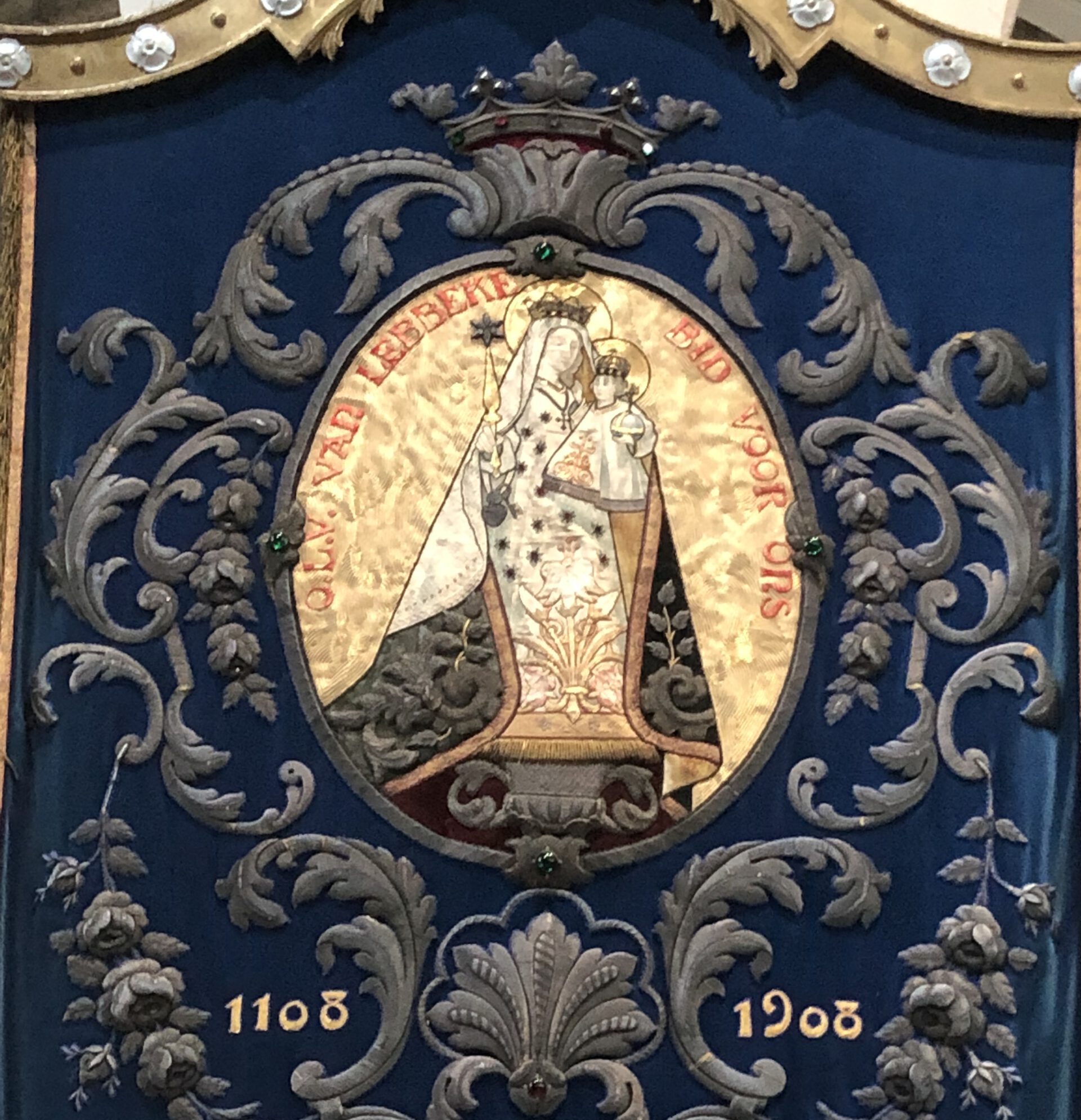
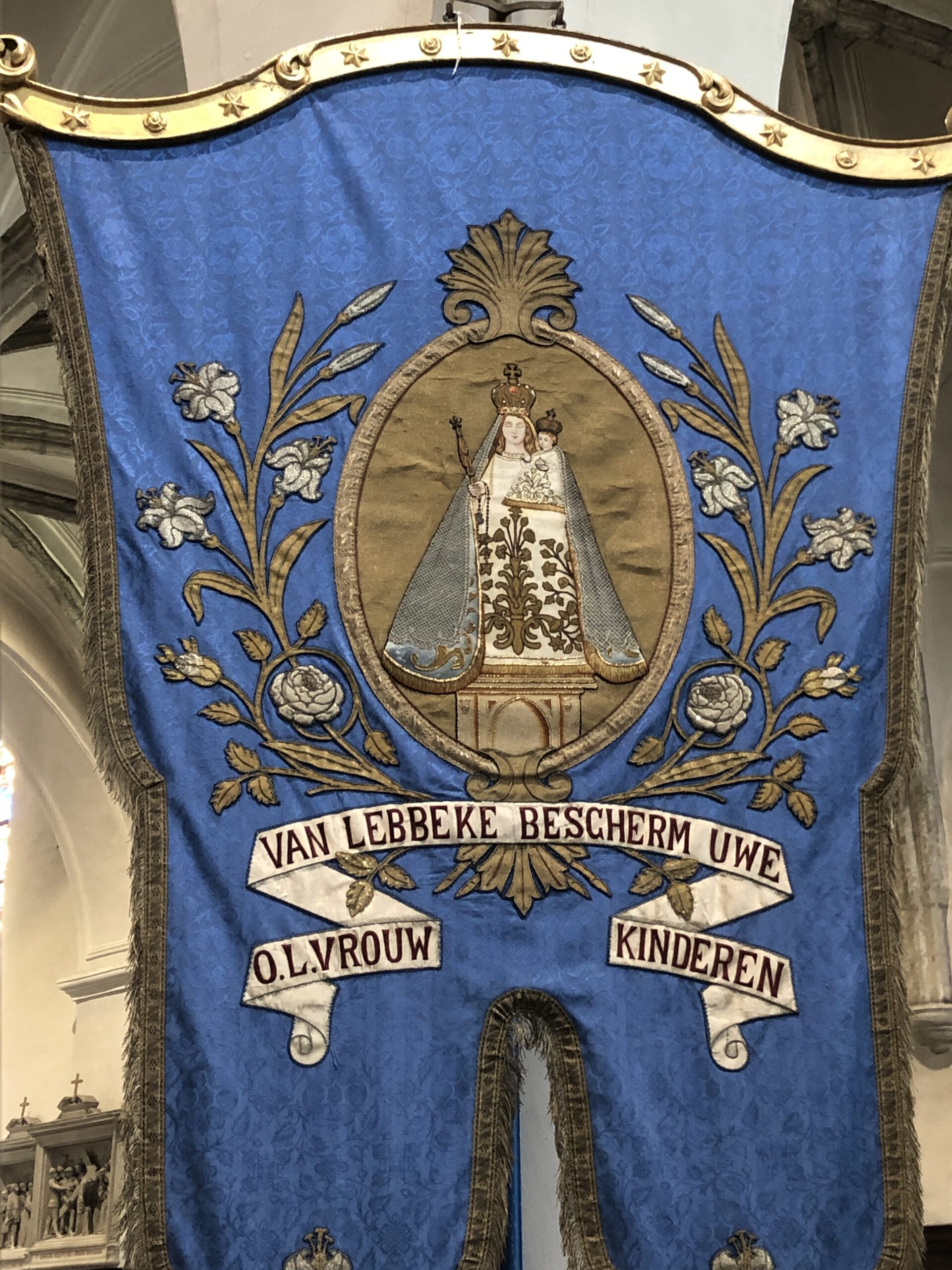
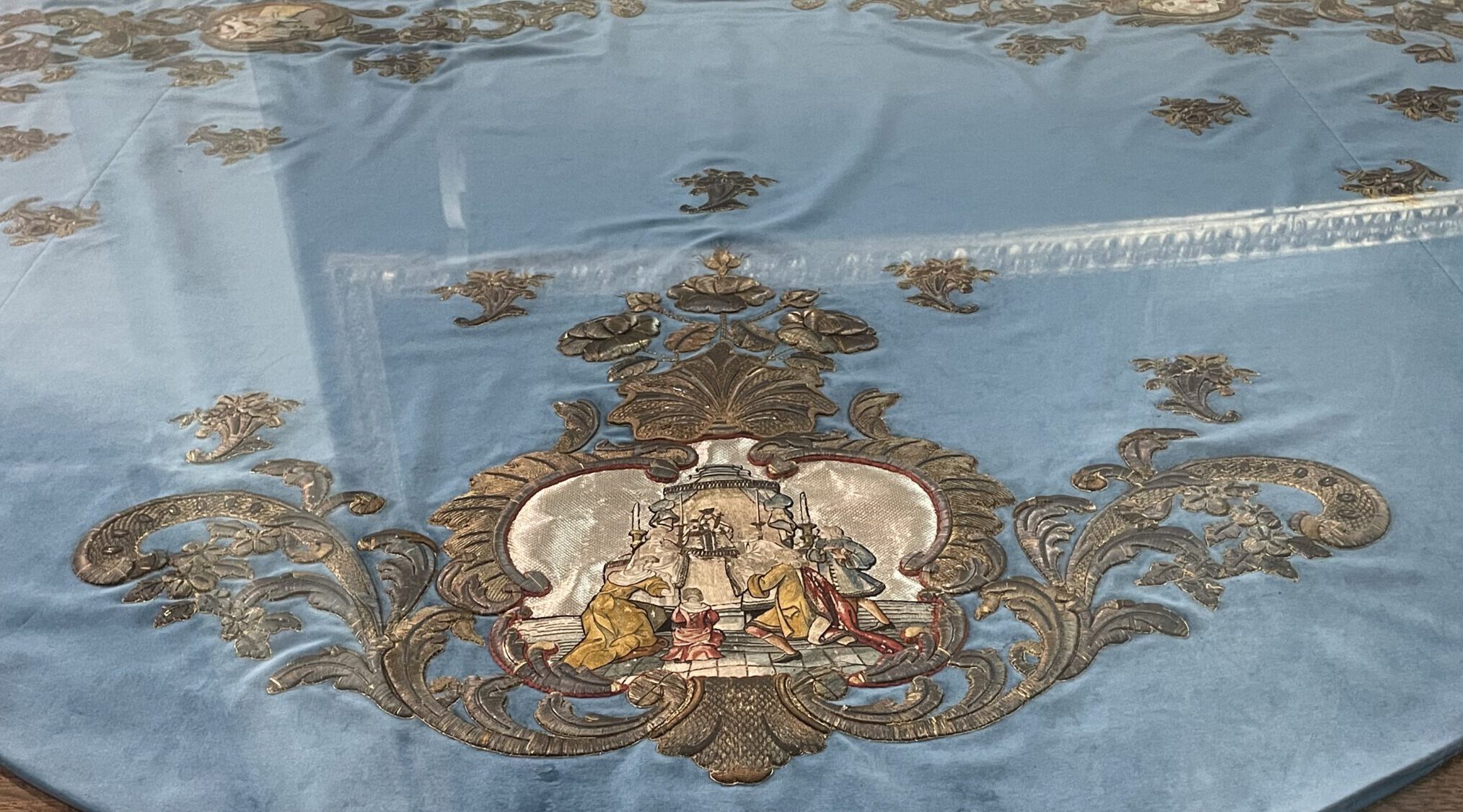
There are also several banners hanging in the church, which have been carried in processions.
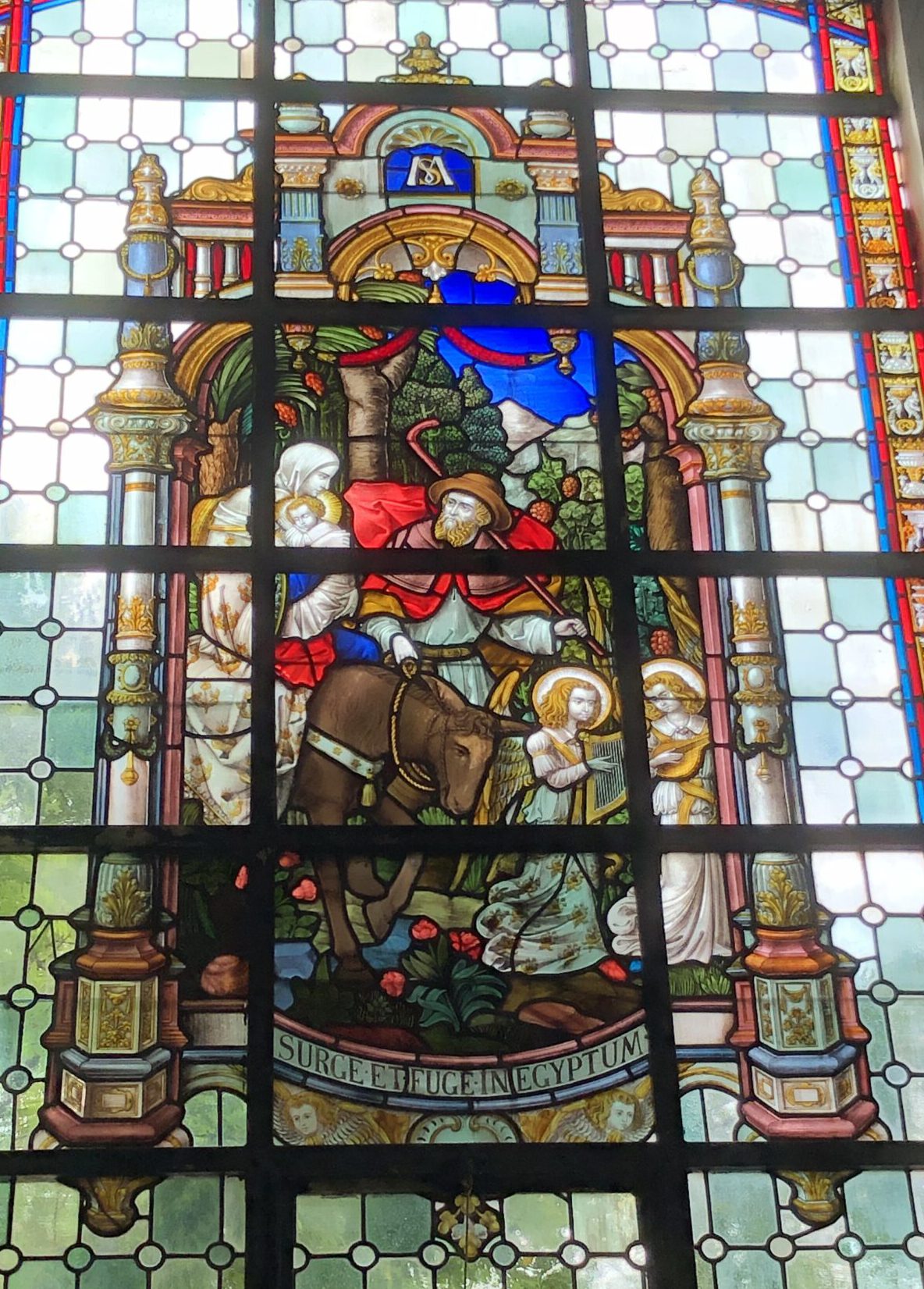
Magnificent are the large stained-glass windows, which tell of the life of Mary.
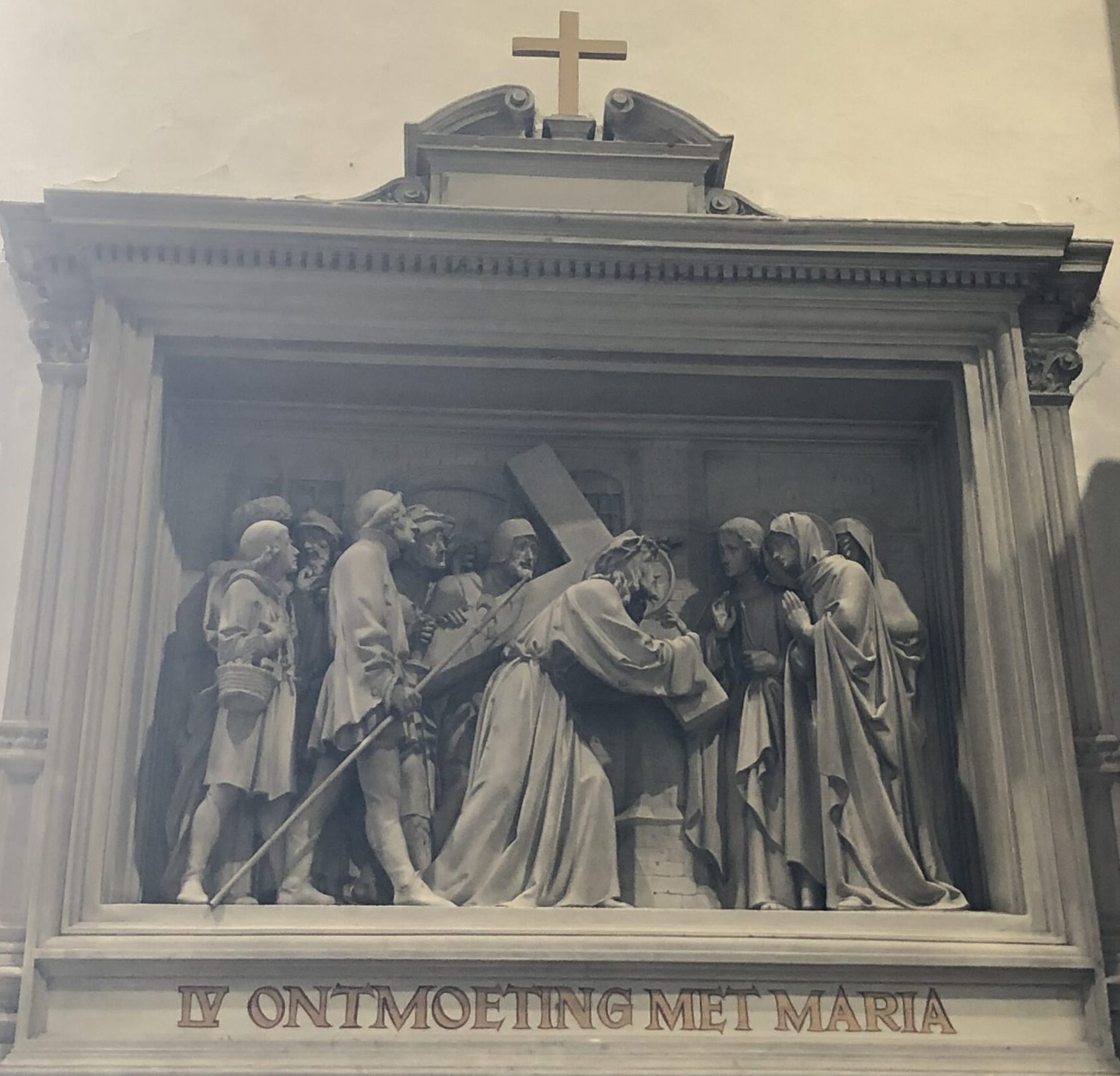
Then I'll continue my tour of the church. There's so much to see here! The plaster Stations of the Cross strike me as impressive and more than beautiful. I'm told they were made in 1908 by Aloïs De Beule (1861-1935). I linger a little longer at the ex-voto paintings of children dedicated to Our Lady. This collection is one of the oldest preserved ex-voto portraits in Belgium.
In the southern aisle, I can see 17 medallions depicting the legend of the church's construction. These were created by Corneille De Smet (1742-1815). I will also visit St. Anne's Chapel.
In the north aisle, I admire oak panelling with medallions depicting the 15 mysteries of the Rosary. The work dates from 1754 by Philippe Alexander Nijs (1724-1805). Visiting this church gives a good feeling, and I'll take that home with me.
Posted: 12 July 2022
~~~

 Nederlands
  English (UK)
  Deutsch
  Français