History
Two stories form the basis of the founding of Notre-Dame de Verdale. In the 11th century, a plague epidemic ravaged the region, claiming many victims. A young, noblewoman lived in a cave high above the little river Le Tolerme. She had left home a few years earlier, wanting to lead a devout and serene life in a secluded place. The woman took in many of the sick, caring for them exemplary with all her means. Because of this, she was well-regarded and cherished by the people. Eventually, she too contracted the disease and died of the plague. In memory of the very helpful woman, the local farming community built a small chapel. This place grew into a small pilgrimage site for those seeking help with illness.
During the Hundred Years' War between England and France (1337-1453), the plague broke out in the Quercy region in 1349. This highly contagious and deadly disease caused many deaths. A young shepherdess, named Elisabeth from the village of Gorses, tended her sheep on the slopes by the river Le Tolerme. She often did this near the hamlet of Verdale. One day, Elisabeth was praying and suddenly Mary appeared to her. Our Lady promised the shepherdess that the rural population would be freed from the plague. She asked Elisabeth to build a chapel for Her in the place where Mary and the shepherdess were. Later that day, a woodcutter discovered a statue of Mary in a hollow tree trunk. The appearance of Mary and the discovery of the statue gave the people in the region cause to believe that a chapel to Mary should be built. Construction began, but the next morning the work had been dismantled. This happened for several consecutive days, and no one understood why. Then a worker threw his hammer into the air and shouted to Mary where She wished the chapel to be. The hammer fell next to a steep rock face, and that's where the chapel was built.
In the 14th century, a larger chapel is built on the site.
Pilgrimage site
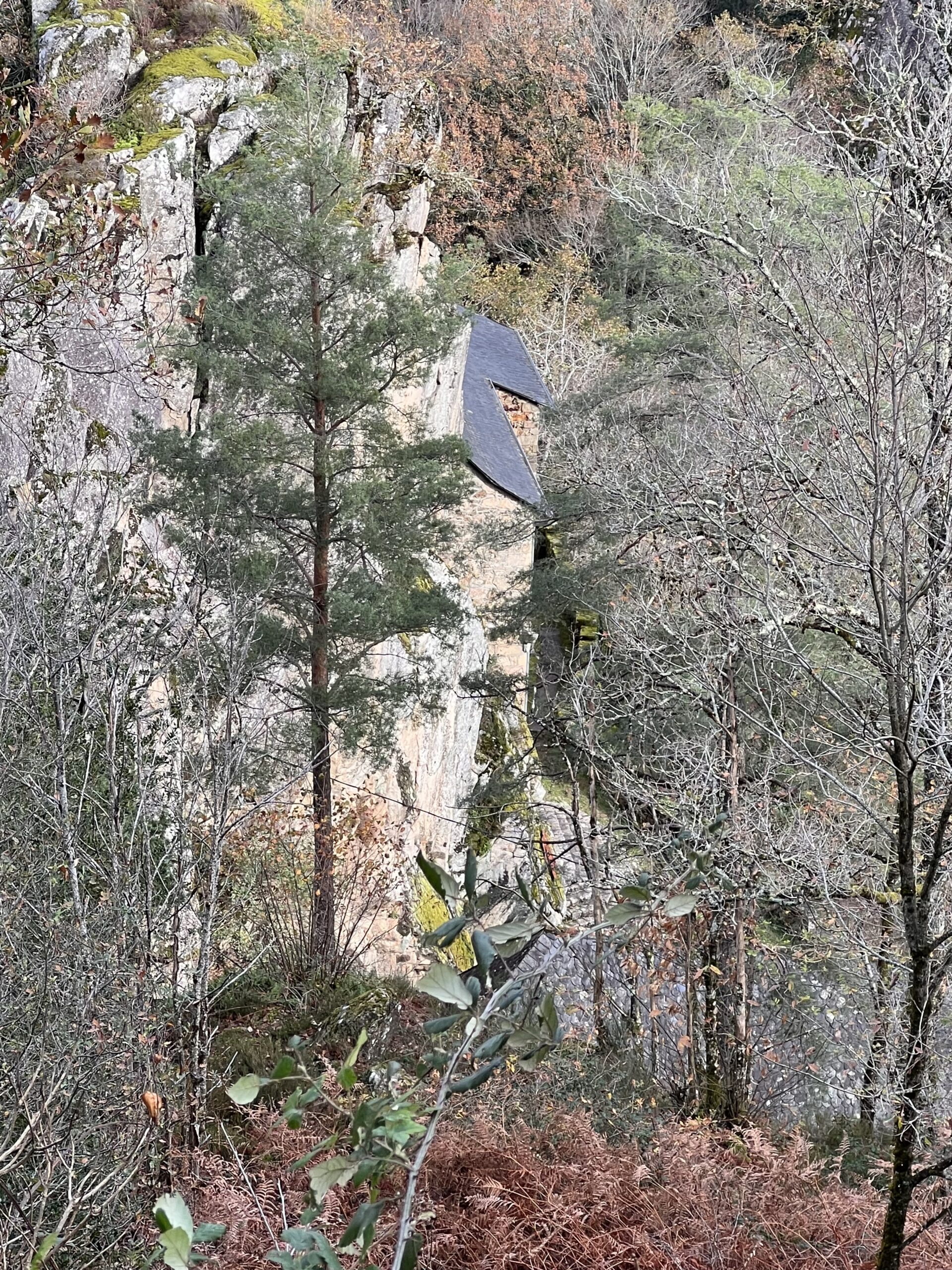
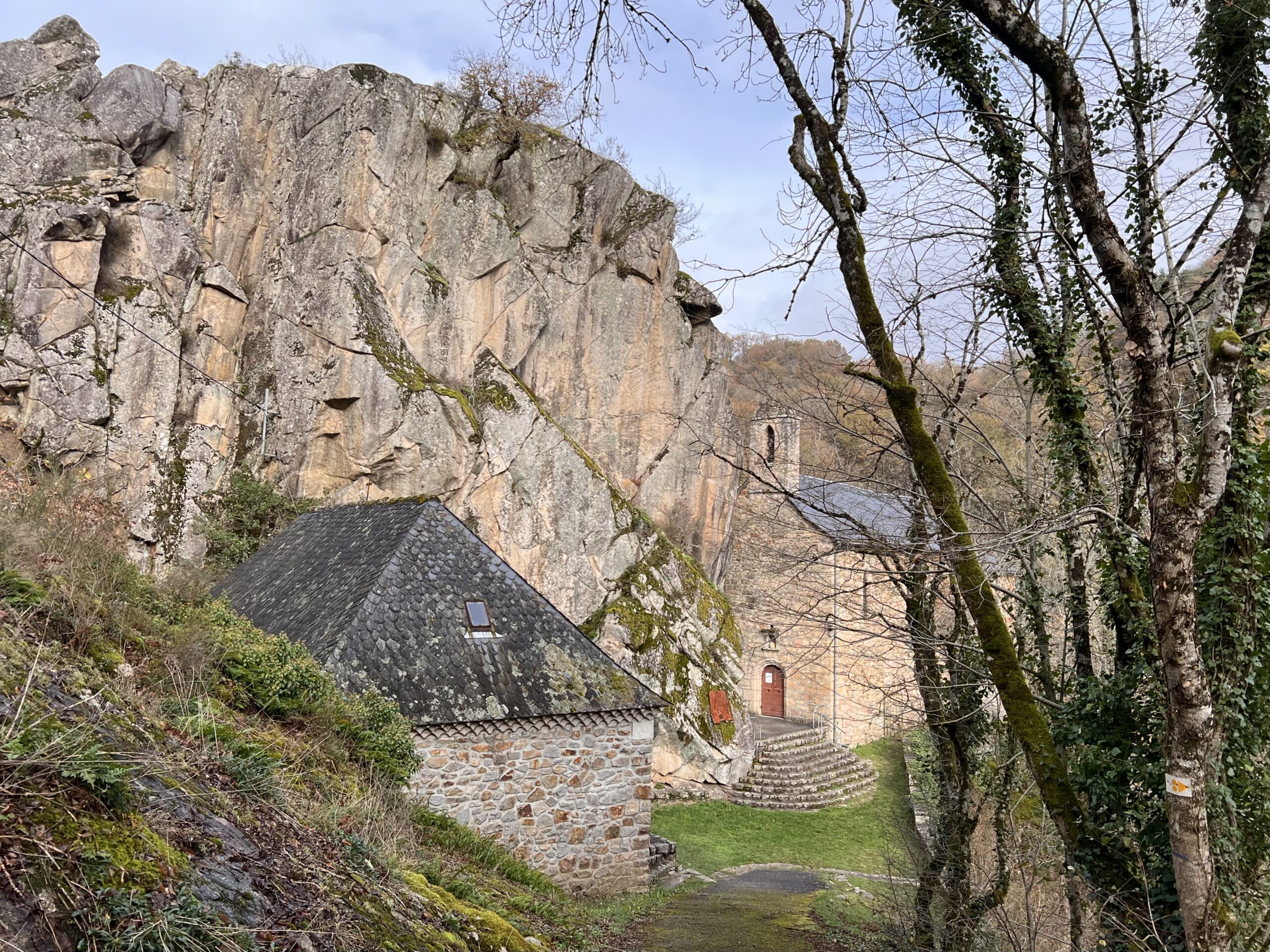
The Notre-Dame de Verdale chapel is remote and often closed. This chapel was built in 1847 and replaced a chapel that had been destroyed multiple times. The Marian chapel stands against rocks, halfway down a ravine.
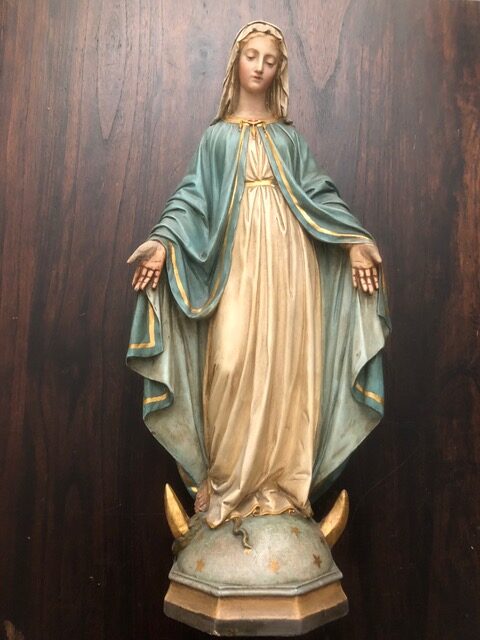
In the church stands a 14th-century polychrome wooden statuette of Mary with Child.
On August 15th, there is the annual pilgrimage, which attracts many visitors.
The Mary Chapel is open very little during the year. Visitors can access the chapel in the months of July and August, and then only on Thursday afternoons for a few hours.
ACCESSIBILITY
Latouille, Lentillac and Verdale belong to the Lot department, the Occitanie region, and the arrondissement of Figeac.
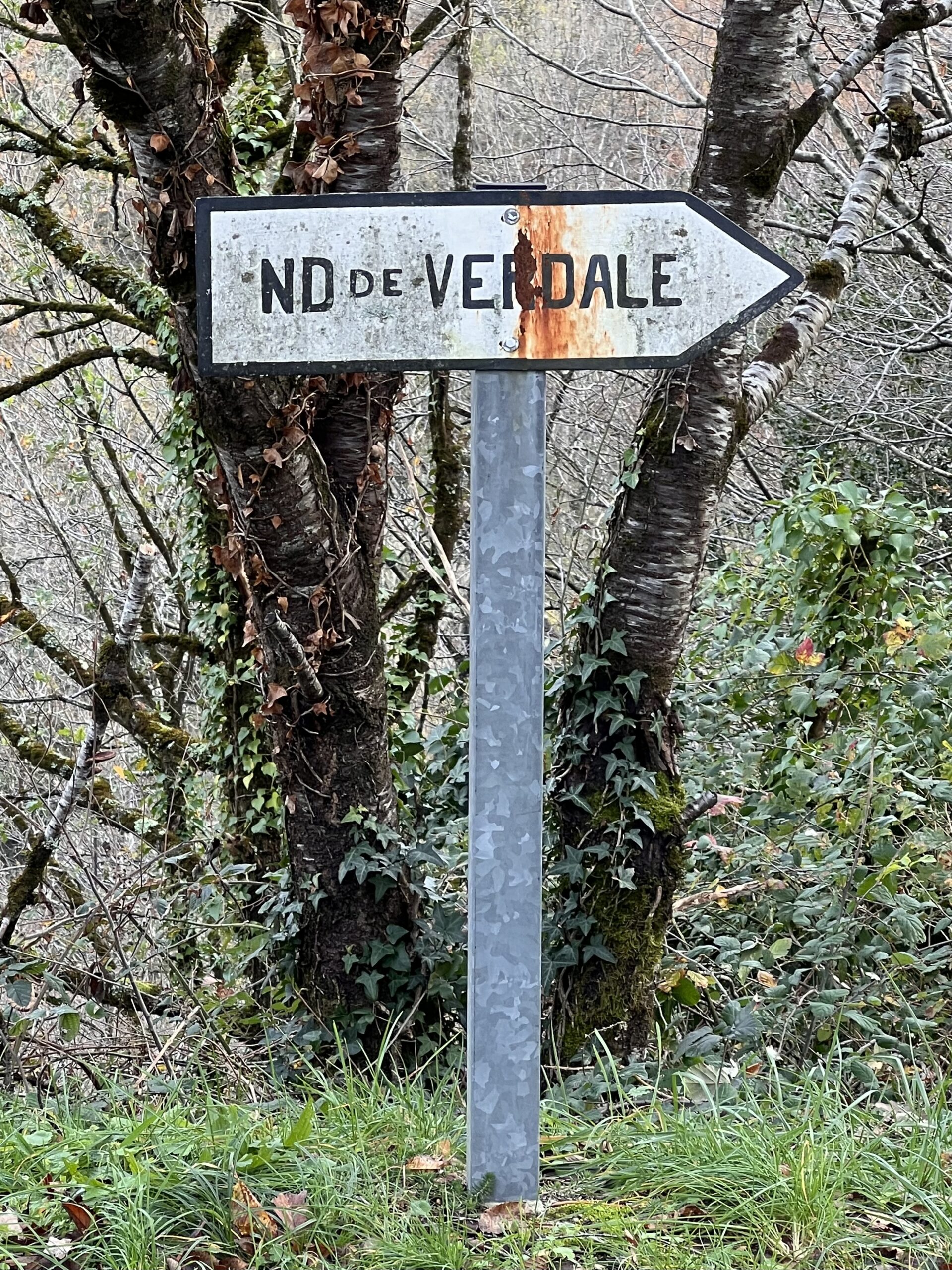
After the village of Latouille, it is 3 km via rather narrow roads to the Notre-Dame de Verdale chapel. You should follow the D30 road.
The road to Verdale is uphill. The last stretch can be done on foot or by car. The car can be parked on a plateau, and then it's about 400 metres downhill along a narrow path.
Address: Route Notre-Dame de Verdale, 46400 Latouille-Lentillac
Experience
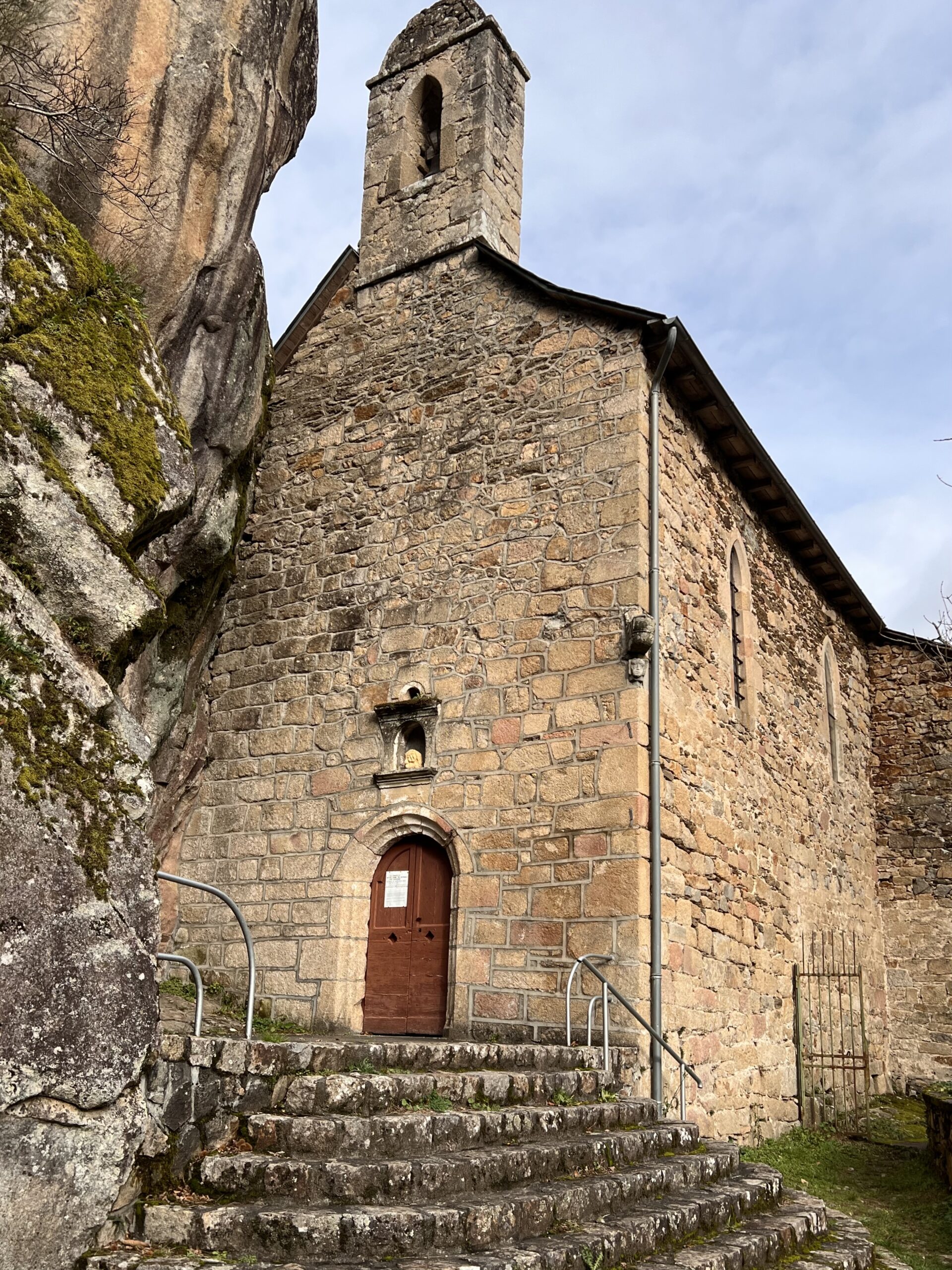
Between mountains, rocks, ravines, trees and water lies the chapel of Notre-Dame de Verdale (Our Lady of Verdale), named after the hamlet of Verdale. Many birds fly past the mountains. Are they looking for a large prey?
After parking the car on a high plateau, it's a walk down a path. After about 400 metres, I arrive at the chapel. As I expected, the door is hermetically sealed, as the chapel is only open for visitors on Thursday afternoons in July and August. It's now mid-November, so I can only admire the exterior of the chapel and also the impressive beauty of nature. I go up ten steps and see a notice on the door, which gives information about the opening hours and the celebration of a mass.
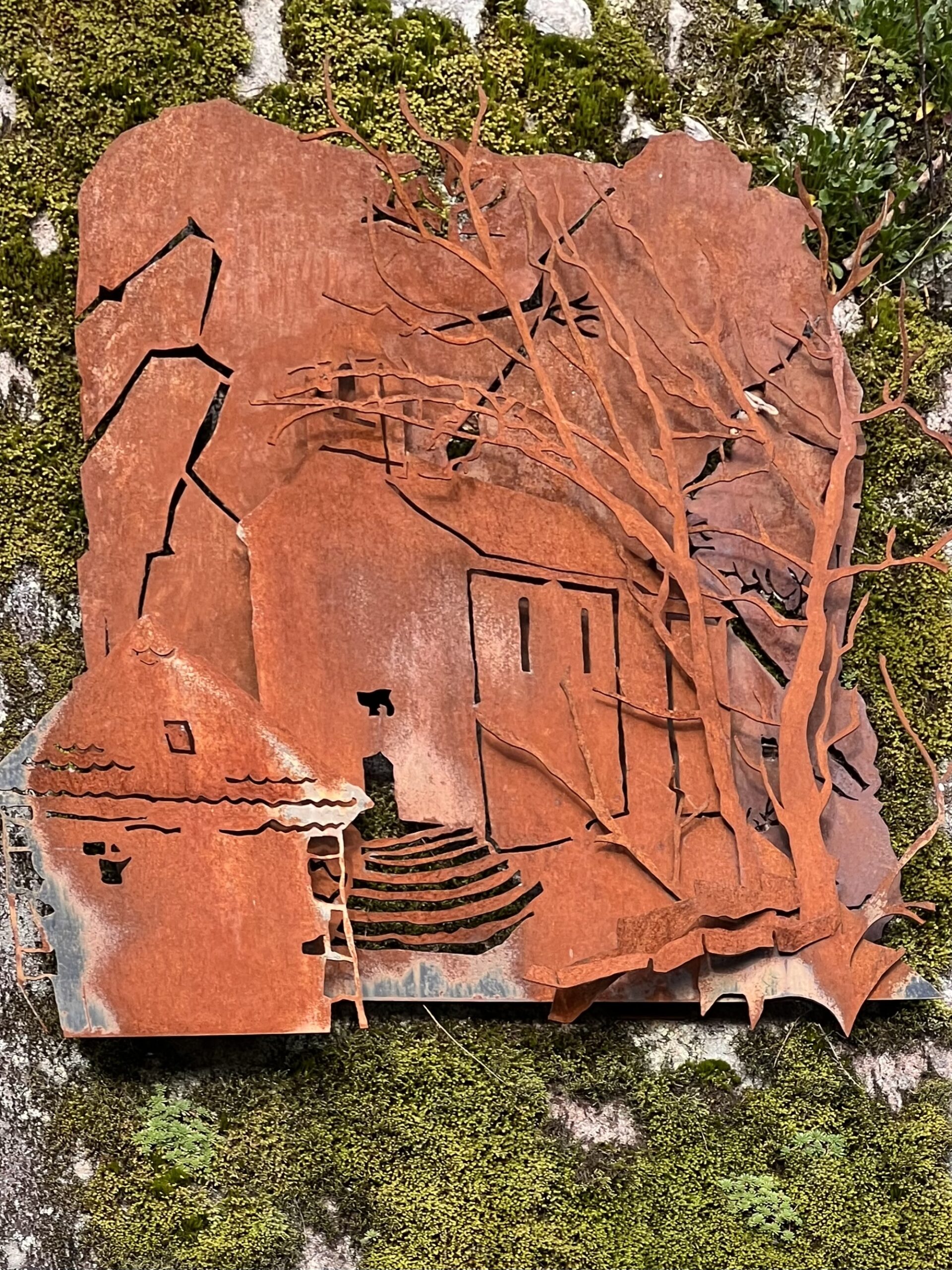
On a rock, next to the chapel, hangs a square terracotta-coloured artwork depicting the chapel. In the bottom left corner, there is a small tower that no longer stands next to the chapel. Too much changes over the years.
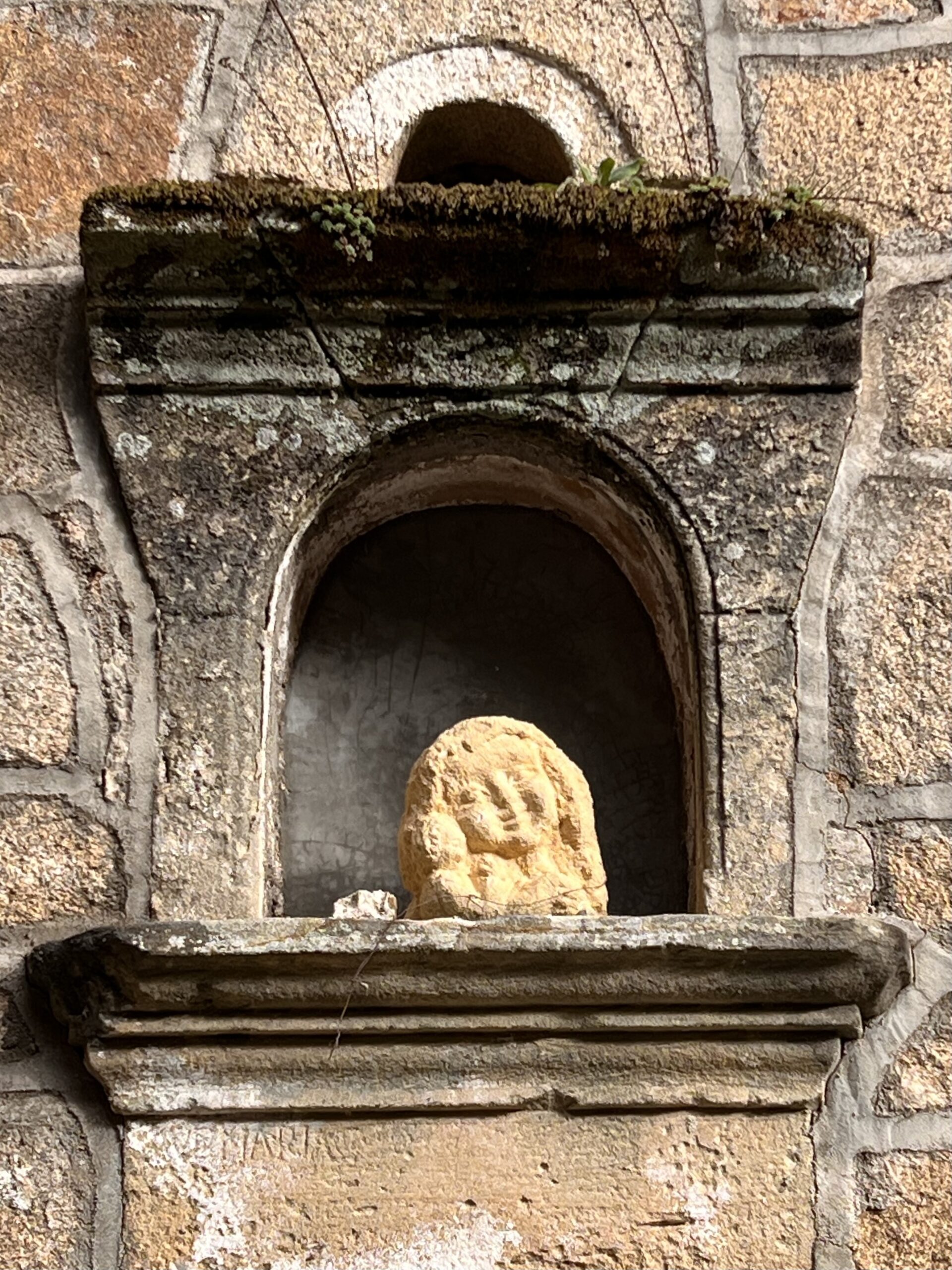
Above the door, in a niche, is placed the head of a statue of Mary. As I move closer, Mary's face looks friendly and the head of her Child is visible against her right cheek. I descend the steps again and reach the lawn, look at the chapel, and think of Mary. Afterwards, I pray a few Hail Marys. It feels like a special experience to be here.
Next, I’ll continue exploring. It’s possible to see the building from the side, and the path also goes to the rear of the chapel. I’ll take the narrow path, and next to me, a deep ravine beckons. How much people must have braved to build this little church. It seems like a gigantic undertaking just to get the necessary materials here. Steep roads, narrow and slippery paths, and for miles nothing but trees, rocks, and dangerous precipices. Imagine trying to bring heavy stones up here.
Environment
In the environs of Notre-Dame de Verdale, there are many cycling and walking opportunities. Special routes have been laid out to explore nature on foot or by bike. The nearby Lake Tolerme is also worth a visit.
The small village of Latouille is 3 km from the chapel.
Lentillac is an old village with monumental buildings and a small Romanesque church from the 11th century. It is located a few kilometres from the pilgrimage site.
From Gorses to Notre-Dame de Verdale is 14 km to the northeast.
Departing from Saint-Céré to arrive at Notre-Dame de Verdale requires travelling 10 km to the east.
To get from Gramat to Notre-Dame de Verale, travel 30 km to the northeast.
Leaving the town of Figeac to arrive in Notre-Dame de Verdale means travelling 44 km north-east.
To go from Souillac to Notre-Dame de Verdale, you need to travel 55 km to the east.
~~~

 Nederlands
  English (UK)
  Deutsch
  Français