History
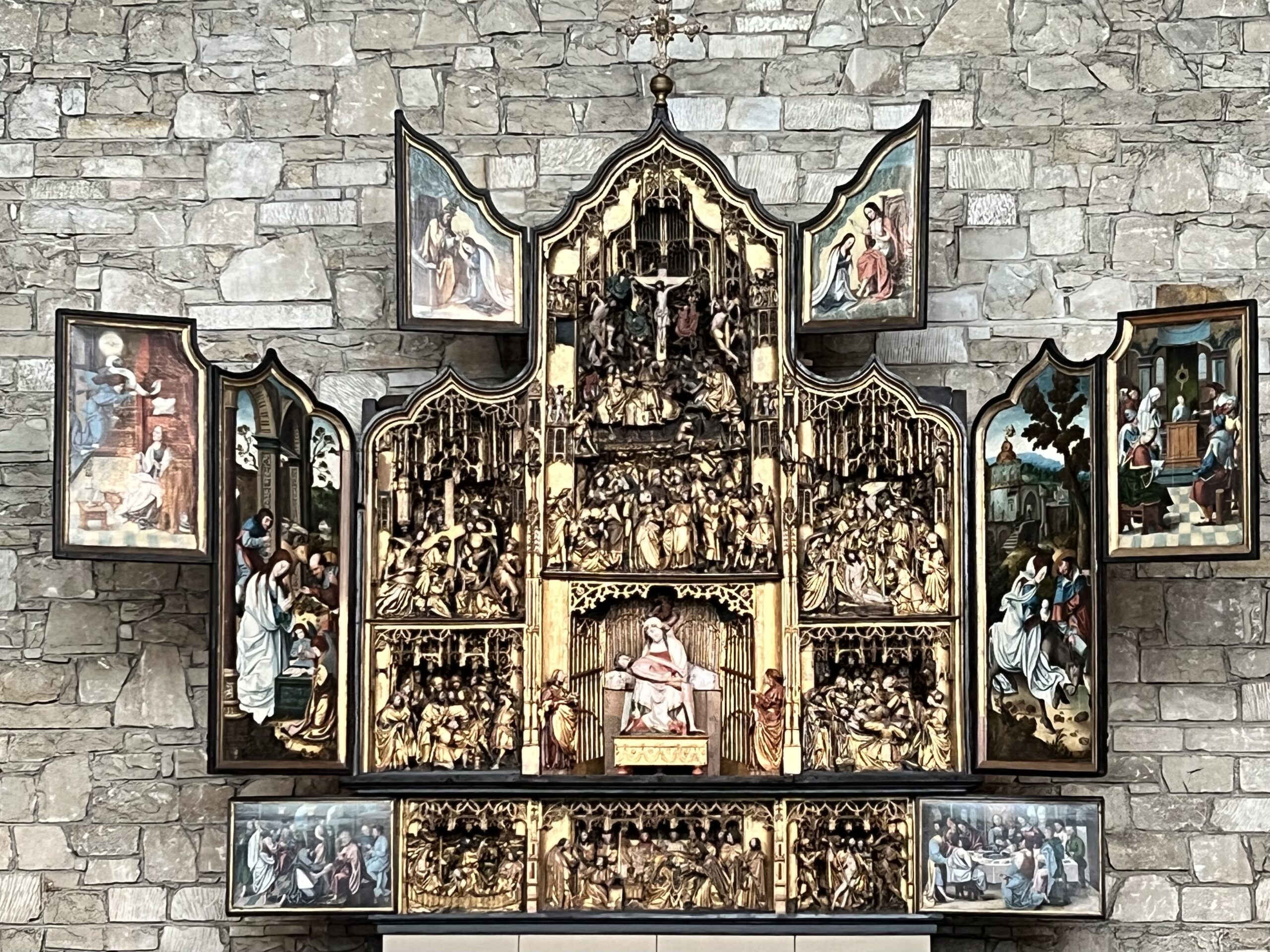
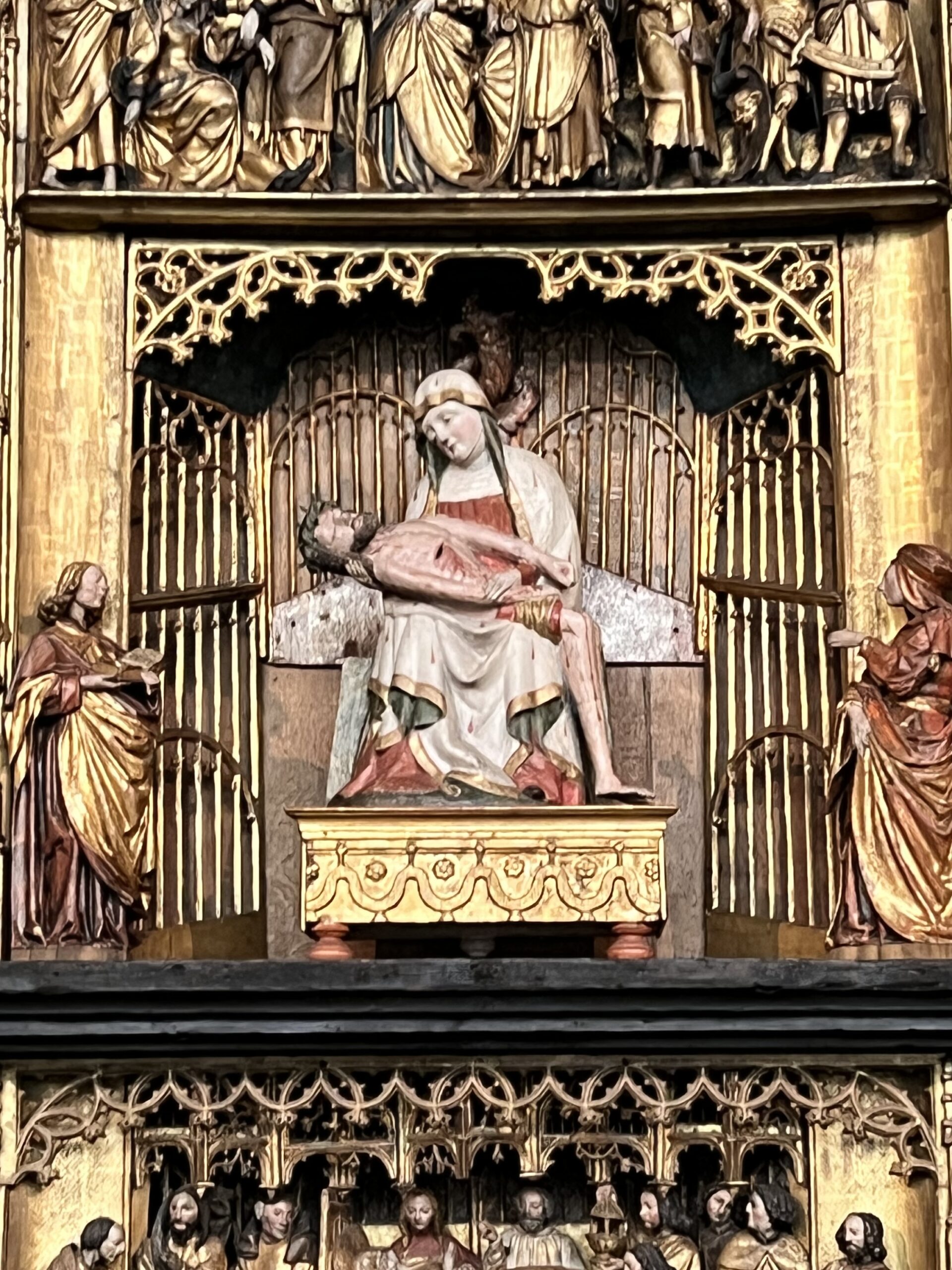
The history of the shrine image dates back over 500 years. Heinrich Fluitter from Heimbach, a simple workman who is a thatcher, had a great devotion to Mary. During a visit to Cologne in 1470, he discovered a late Gothic Pietà. He was deeply impressed by the image of Mary holding her dead Son on her lap. The man kept looking at the statuette and was deeply moved by it. This statuette suited him. As the man had no money with him, he borrowed 9 Mark to buy the small image. He then took the statuette home with him. On the way through the Kermeter, in the forest between Heimbach and Gemünd, near the present-day Mariawald Abbey, he placed the statuette on the ground. He immediately built a wooden chapel for the statuette and simple accommodation for himself. From that moment on, he lived as a hermit and remained there until his death. The event of the man and the statuette soon became known throughout the region, and the first people came to pray at the Pietà. The visitors experienced that their prayers were answered, as they were strengthened and comforted. The number of pilgrims continued to increase. The then parish priest from Heimbach asked the Cistercian sisters to guide the pilgrimages of the visitors. Subsequently, a monastery with a church was built next to the chapel in 1479. In 1487, the monastery “Maria im Wald” was officially founded. In 1511, the monastery church was consecrated, and in 1520, the small altarpiece and the special Pietà from the chapel found a place in this church. The significant objects were placed in the church. The small Pietà was later placed in a carved wooden tabernacle, and this is still the place of the shrine image.
In 1687, the late Gothic church from 1479 was destroyed by fire. Following this, the village got the church which was consecrated to Saint Clement. On 9 September 1725, the church of Saint Clement was consecrated. In 1788, the church sustained fire damage, and repair work followed. Part of the church tower dates from the Romanesque period of the 1479 church.
In 1795, the monastery was closed by Napoleon's French troops. The monks had to leave, and the monastery and church inventory was looted, destroyed, or sold. The Pietà was safely put away in time.
On the orders of Marc-Antoine Berdolet (1750-1809), Bishop of Aachen (1802-1809), the carved wooden altarpiece and the Pietà are placed as devotional images in the church of St. Clemens in Heimbach on June 22nd, 1804. Since that day, Heimbach has become a well-known pilgrimage site. The number of pilgrims increases significantly, and the church of St. Clemens becomes too small.
During the Second World War (1939-1945), the church suffered a great deal of damage.
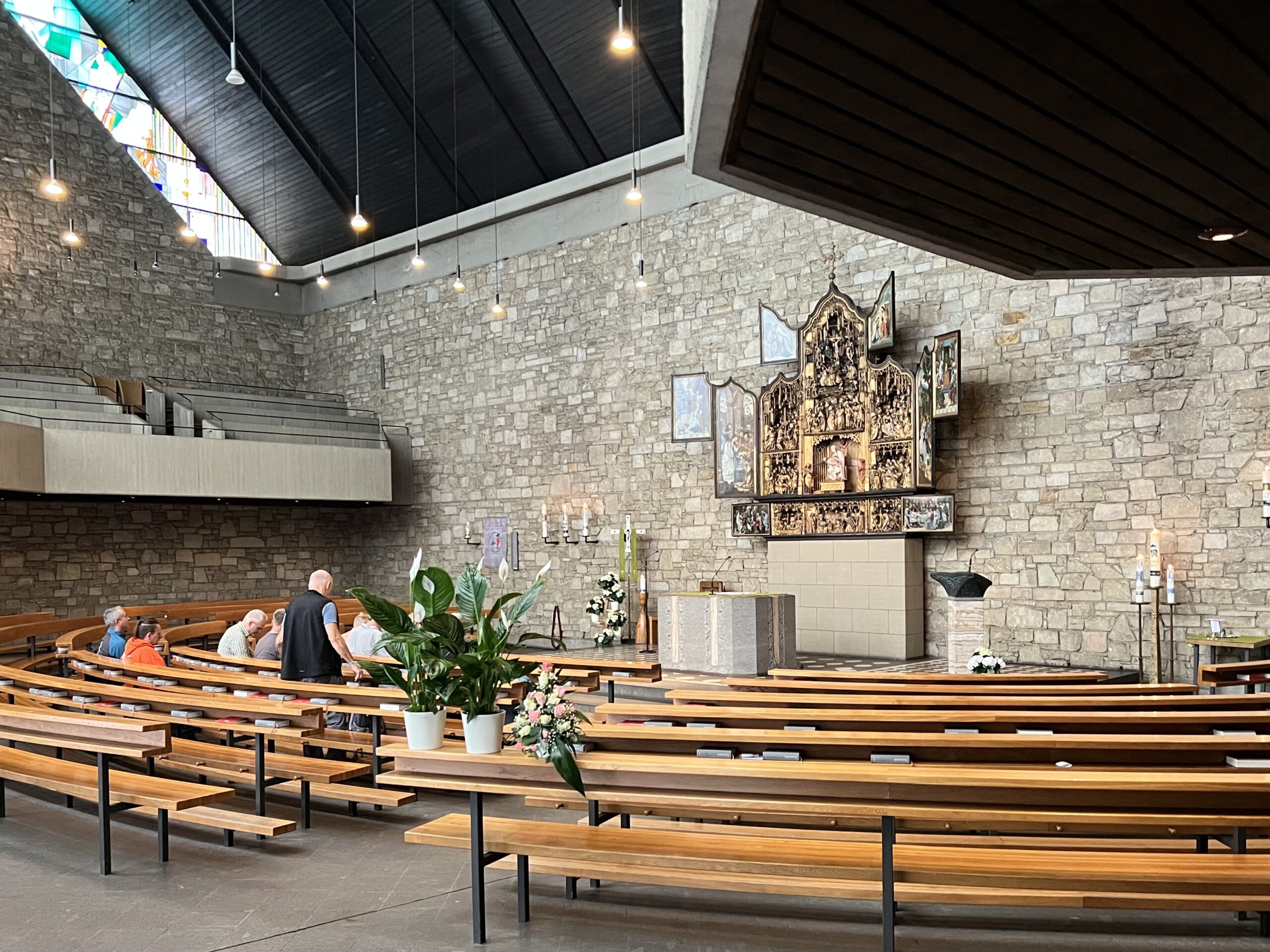
Under Joseph Olivier (1932-2001), pastor in Heimbach from 1975 to 2001, plans were made for the construction of a new church to be dedicated to Christ the Saviour. Construction of the pilgrimage church, which was built next to St. Clemens Church, began on 19 March 1978, the feast day of St. Joseph. This became St. Salvator's Church, which was consecrated on 24 May 1981 by Klaus Hemmerle (1929-1994), Bishop of Aachen (1975-1994). Subsequently, the Pietà and the carved wooden tabernacle were added to St. Salvator's Church.
Pilgrimage site
The pilgrimage church stands in the middle of the village. The pilgrims come for the pieta of the sorrowful Mother. This vesper image is placed in a large Antwerp carved wooden tabernacle. The effigy shows the “Schmerzenhaften Mutter” (Sorrowful Mother) and is associated with many prayers.
The Pietà is housed in the Church of St. Salvator, which was built onto the parish church of St. Clement.
Next to the main portal of the church is a Baroque Way of the Cross group.
Impressive in the Church of St. Salvator is the altarpiece by Dutchman Pieter Claes Soutman (c. 1580-1657) from Haarlem, who was a pupil of Peter Paul Rubens (1577-1640) between 1616 and 1624. It is a copy of Rubens' Descent from the Cross, the original of which is located in the cathedral in Antwerp.
In mid-September, there are many pilgrims at the pilgrimage site. There are then extra eucharistic celebrations and a procession.
The parish office is located in the cloister of St. Salvator's Church.
Approximately 60,000 pilgrims visit Heimbach every year.
The church is open daily.
ACCESSIBILITY
Heimbach is located in the state of North Rhine-Westphalia, in the North Eifel Nature Park.
The parish office St. Clemens is located at Teichstrasse 9a, 52396 Heimbach.
Address of the pilgrimage site: Teichstrasse, 52396 Heimbach.
More information can be found at www.heimbach-wallfahrt.de.
For information about “Mariawald” please see the source: www.mariawald.de.
Experience
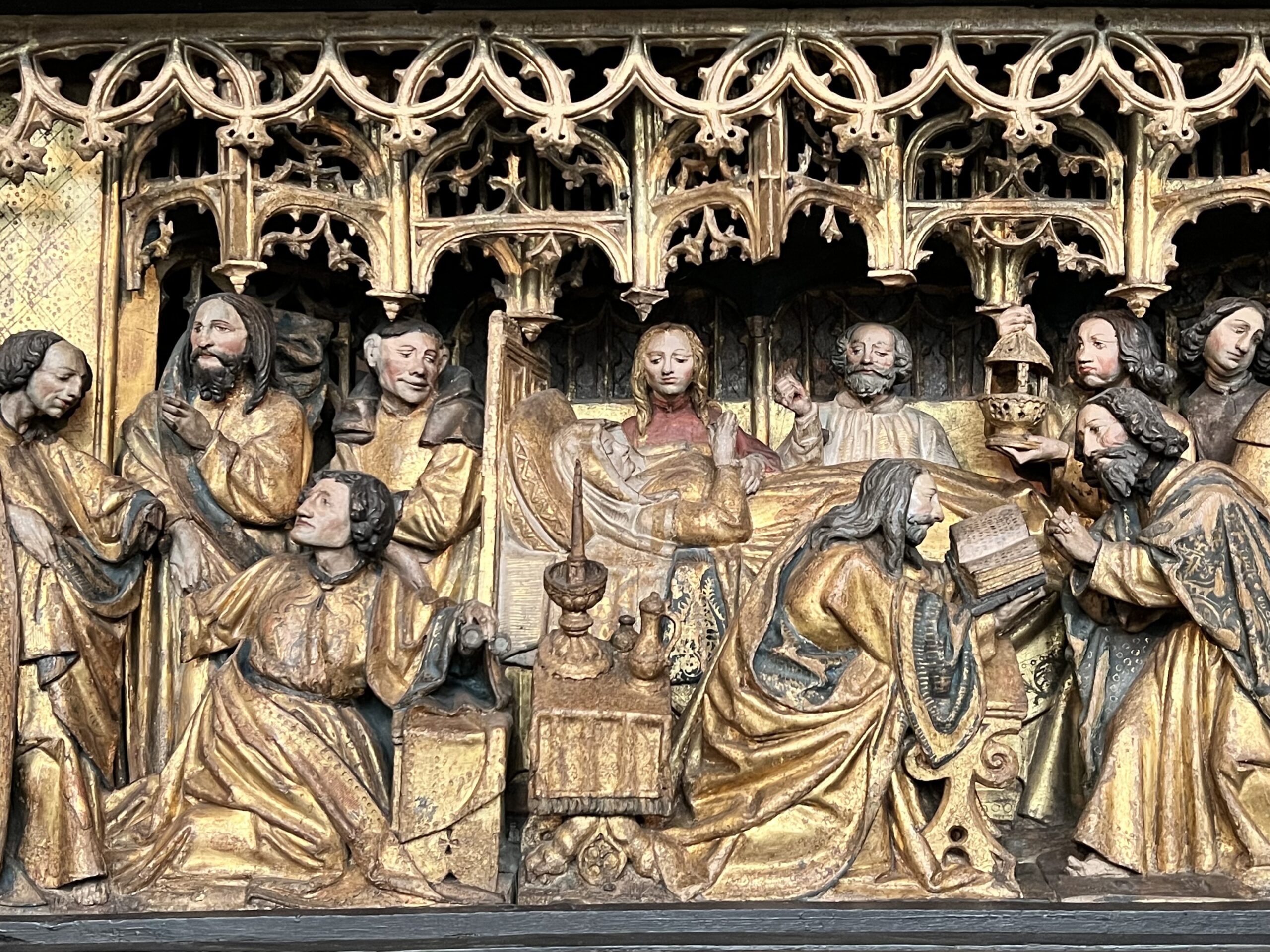
In Heimbach, you can visit two adjoining churches. These churches are St. Clemens and St. Salvator. In the later built church, which is dedicated to St. Salvator, stands the special altarpiece with colourful depictions, including of Our Lady. An image of the death of Mary is also incorporated here. What a beautiful work of art this is!
Next, I'll go around the church space and then on to the adjoining Church of St. Clement. Here too, there is much beauty to behold.
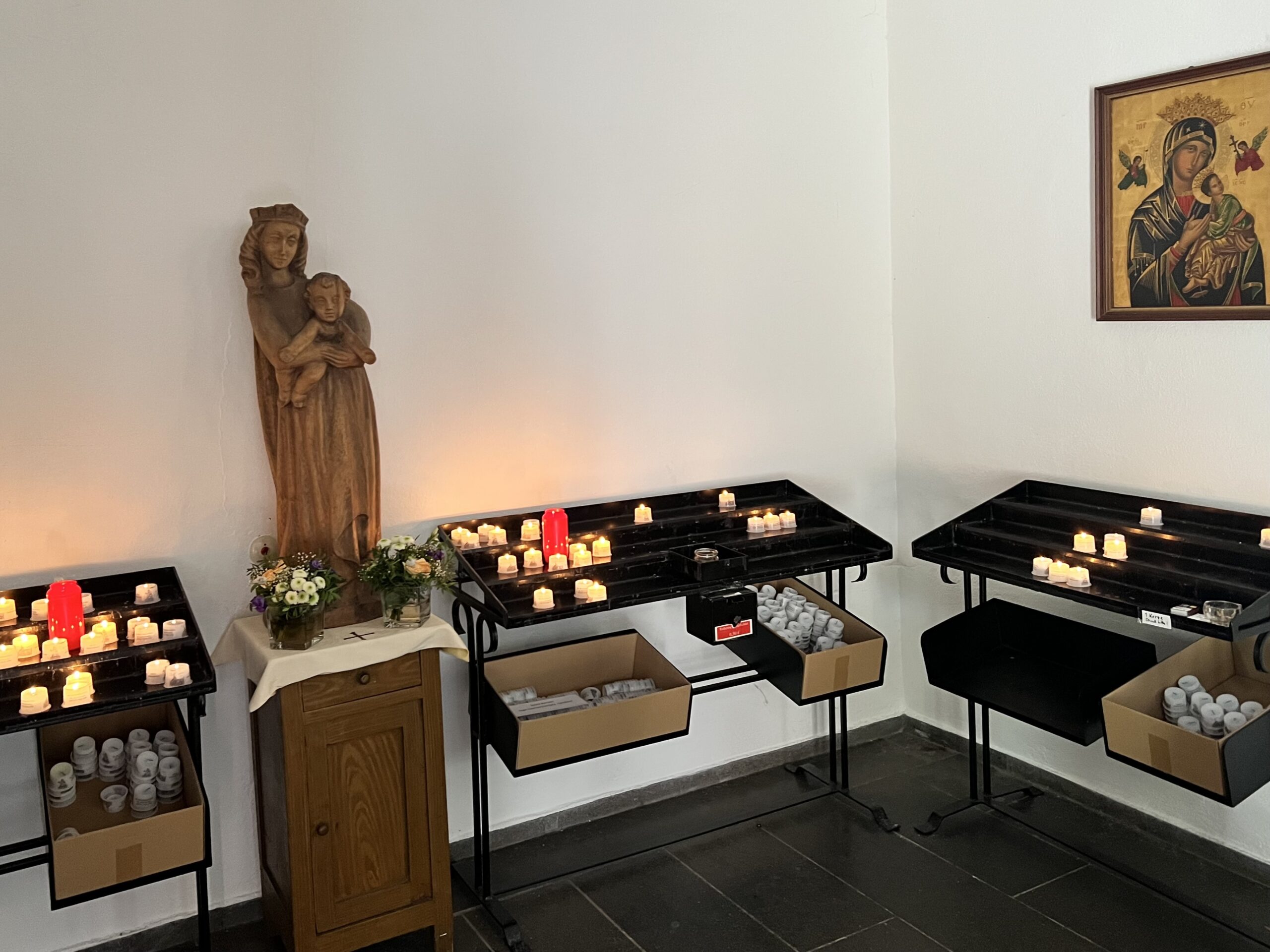
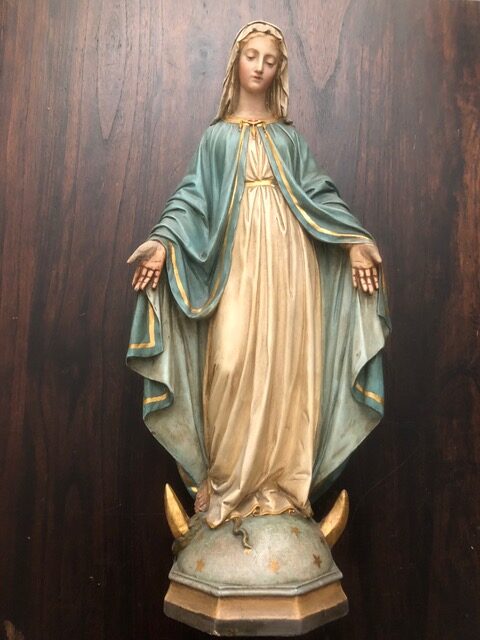
In the corner with a statue of Mary and a painting of Our Lady of Perpetual Help, I light some candles and pray for the well-being of friends. I also turn to Mary and thank Her for allowing me to visit here. How much I have been blessed with!
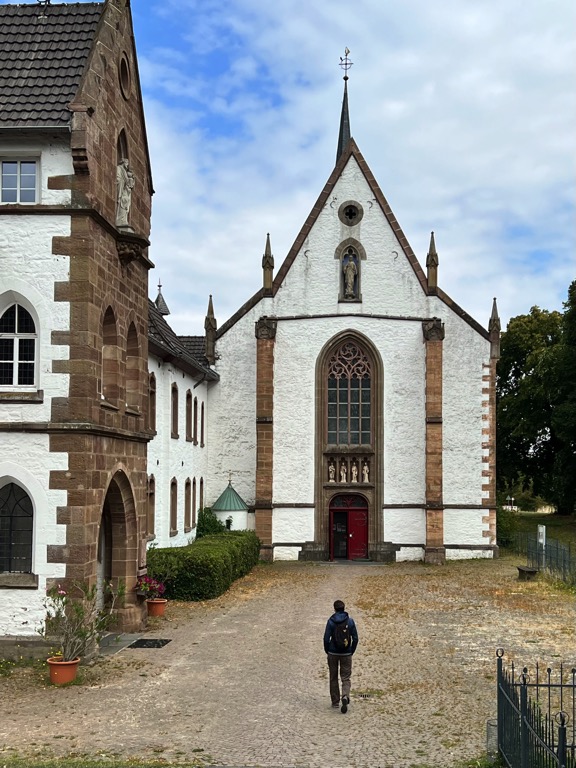
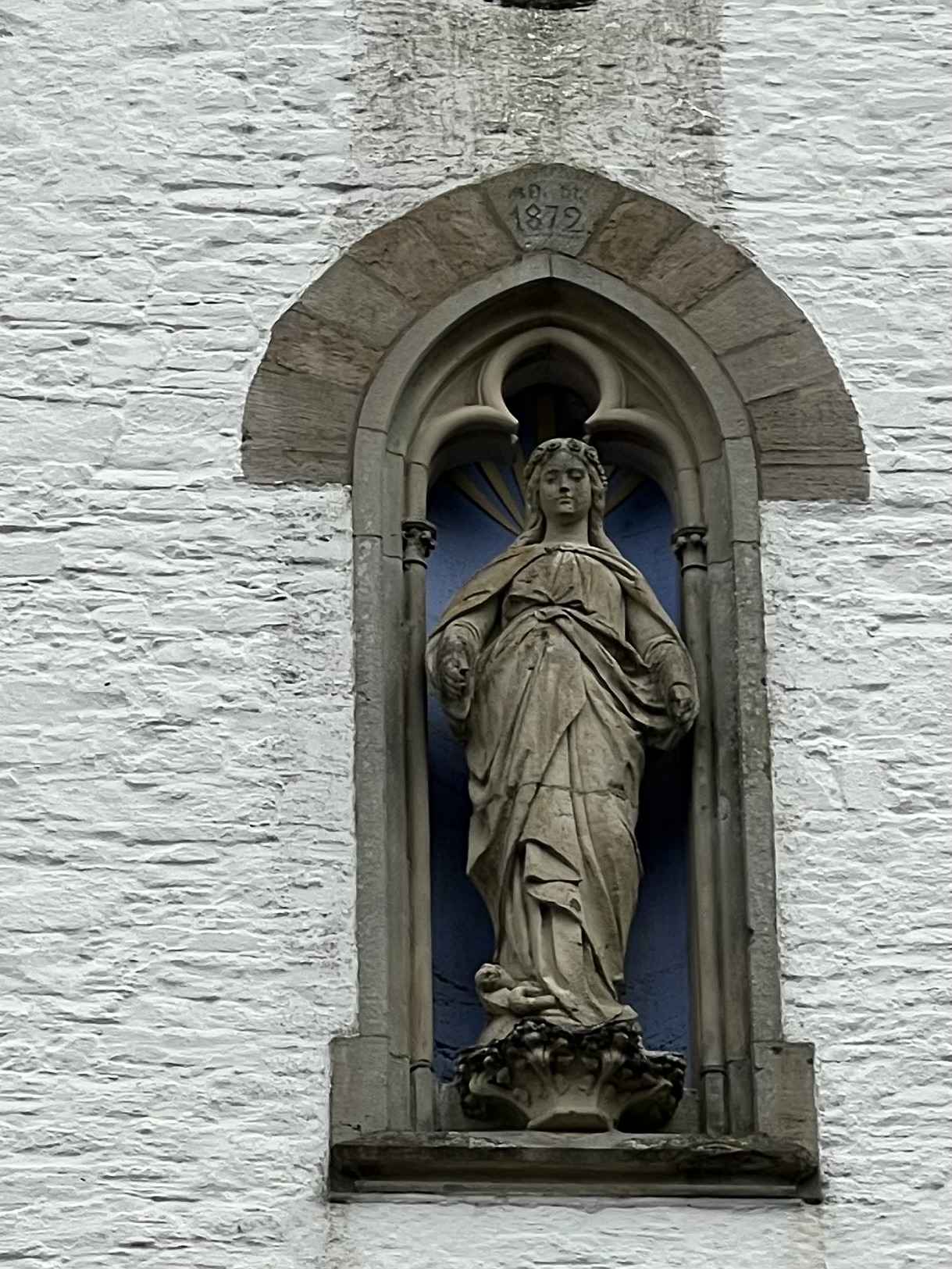
After visiting the pilgrimage site in Heimbach, I am going to the Mariawald Abbey with its church. When I stand before the entrance, I look up and metres above the portal, in a niche, there is a statue of Mary from 1872.
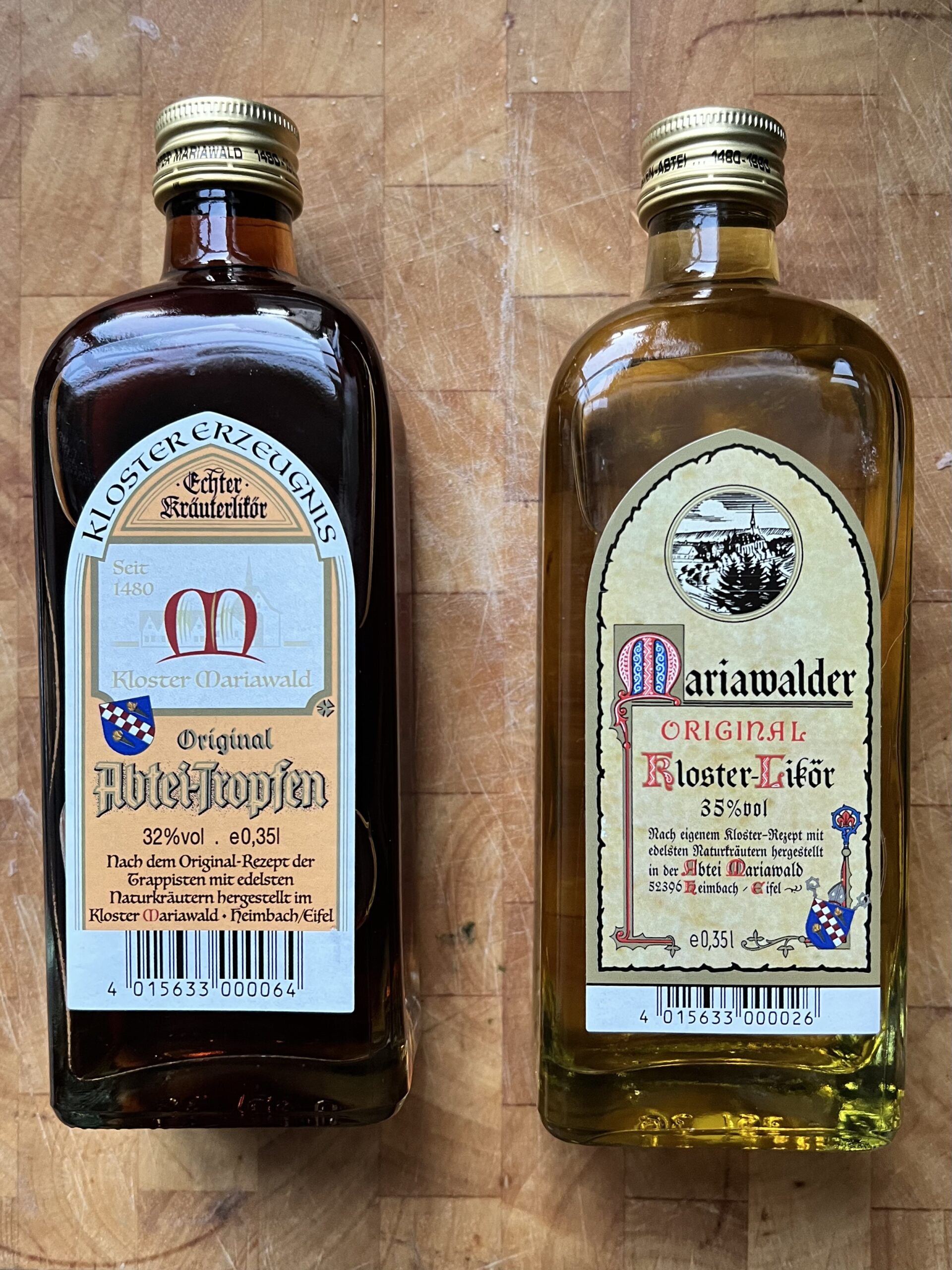
After visiting the abbey church, we're going to buy some souvenirs for friends. To do this, we'll go to the shop selling devotional items, which is located opposite the Mariawald Abbey and church. Here you can also buy Mariawald liqueur, along with many figurines, candles, and books.
Environment
From Mariawald Abbey to the pilgrimage site in Heimbach is 4 km to the north.
To leave the Emperor Charlemagne city of Aachen/Aken and go to Heimbach, one must travel 66 km to the southeast.
Leaving Cologne to go to Heimbach means covering 65 km to the southwest.
Leaving picturesque Monschau to go to Heimbach is to travel a distance of 31 km in a northeasterly direction.
Going from Düren to Heimbach means going 31 km south.
~~~

 Nederlands
  English (UK)
  Deutsch
  Français