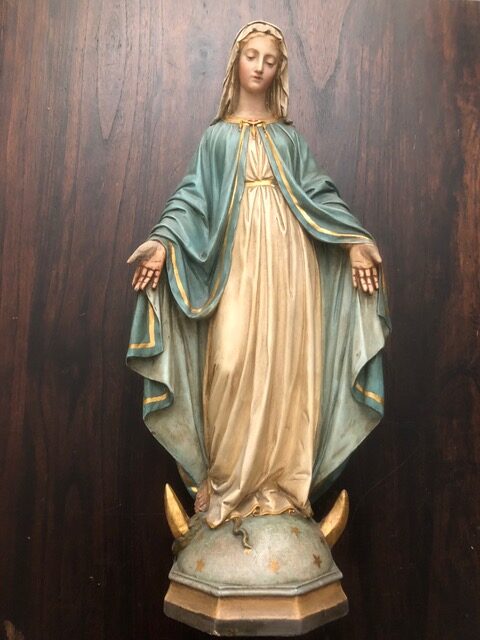
History
Since the Middle Ages, Mariastein has been a place of pilgrimage in the Swiss Jura mountains.
Around 1384, a legend arose, bringing fame to this place. The story goes that a peasant woman was looking after her cattle and child on a mountain where the abbey now stands. To make a short break more pleasant, the woman lay down in a cave. Due to fatigue from the work done, the mother immediately fell into a deep sleep. When the peasant woman awoke some time later, she realised her child was missing. Fear immediately gripped her, and this grew as she searched for her little darling. In the valley, the woman finally found her child, and to her great relief, he was unharmed. Her child recounted a fall of many metres from the mountain, and that during the considerable tumble, he had been caught by a wondrously beautiful woman, who suddenly disappeared after miraculously saving the little one. The child's mother and father were convinced that this lady was Our Lady. As thanks for the mysterious rescue of his child, the father had a chapel built in the cave where his wife had slept. This place became a destination for pilgrims.
A stone-built Marian chapel has been documented since 1434. In 1464, a fire destroyed this chapel, and it was rebuilt in 1470.
During the Reformation, there was further adversity in 1530 when the second chapel was plundered and destroyed. Again, a new chapel was built.
In 1541, there was a second rockfall with a remarkable rescue. It involved Jonkheer Hans Thüring Reich Vonn Reichenstein II (+1562). A depiction in the chapel shows the fall without life-threatening injuries. This fall also draws many pilgrims to Mariastein.
The Swiss Benedictine Congregation was founded in 1602, and in 1648, Benedictine monks from Beinwil came to Mariastein. They built the monastery complex and the pilgrimage church. These monks live according to the rules of Saint Benedict, which includes praying several times a day. In addition, they work for pilgrimages, the archive, education, pastoral care, and the monastery newspaper.
In 1798, soldiers of the French Revolution (1789-1799) destroyed the church and the Benedictine monks were driven out. Statues of Mary were saved in good time and kept hidden in secret places. In 1804, monks returned to Mariastein.
In 1874, the monastery and church were closed due to the “Kulturkampf” (1872-1879), a cultural struggle between the government and the Catholic Church.
On 15 August 1926, the devotional image was crowned and on this day the church received the honorary title of basilica. This was done by Luigi Maglione (1877-1944), Nuncio to Switzerland (1922-1939), on the orders of Pius XI, Pope from 1922 to 1939 and born Ambrogio Damiano Achille Ratti (1857-1939).
From 2019, Orthodox men and women have been living in the former Catholic monastery in Beinwil. The monastery is then given the name “Heiliges Orthodoxes Kloster Johannes Kapodistrias”. There is also a small museum in Beinwil.
In the period March 2025-April 2026, the square in front of the basilica was remodelled and made traffic-free.
Pilgrimage site
Mariastein is, after Einsiedeln, the most important pilgrimage site in Switzerland. The Marian site includes a basilica, a farm, a guesthouse, a grotto, a monastery, a monastery hotel, a monastery shop, and a restaurant. The miraculous image is surrounded by putti. The monastery stands above the mountain grotto of the Marian shrine. Benedictine monks are active in the sanctuary and live according to the rules of Saint Benedict of Nursia (480-547), which include communal prayers five to six times a day. They are involved in pilgrimages, pastoral care, and the archives, publish a monastery newspaper, and carry out educational activities.
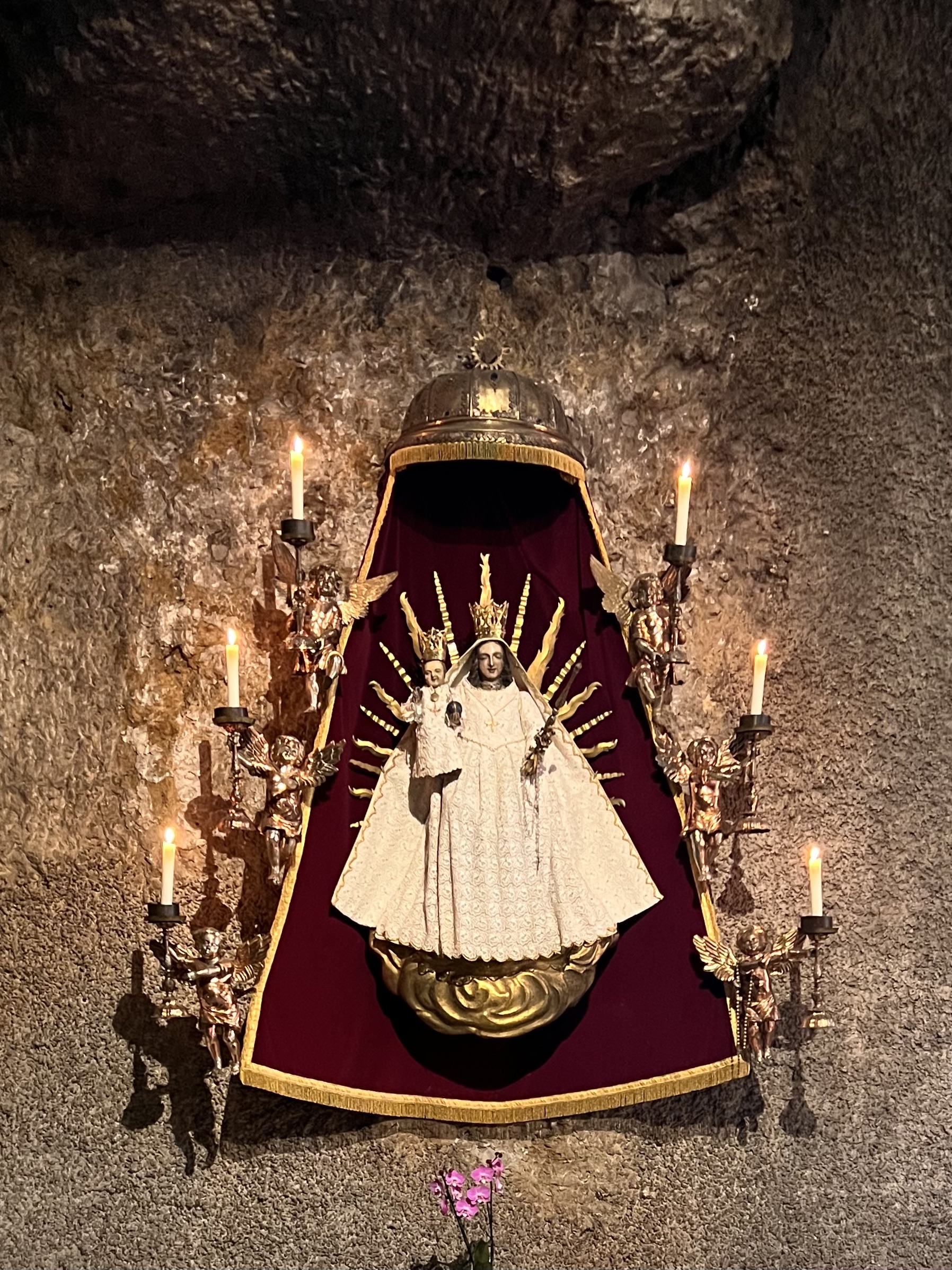
Pilgrims come to Mariastein, and they primarily visit the grotto and the basilica. There, they try to find contemplation and/or peace through prayer. They also come to thank Mary, praise Her, and ask for Her help. Among the visitors are also those interested in the cultural aspects and/or artistic expressions within the sanctuary. Pilgrims gain strength there, experience a safe place, feel more than welcome, and encounter fellow believers.
The heart of the sanctuary is the devotional chapel in the underground grotto, where Mary is venerated and invoked as mediatrix. The image of grace is made of stone and Mary and Jesus look cheerful. The statue dates from the period of transition from late Gothic to the Renaissance, around 1500. Many miracles have been attributed to the statue.
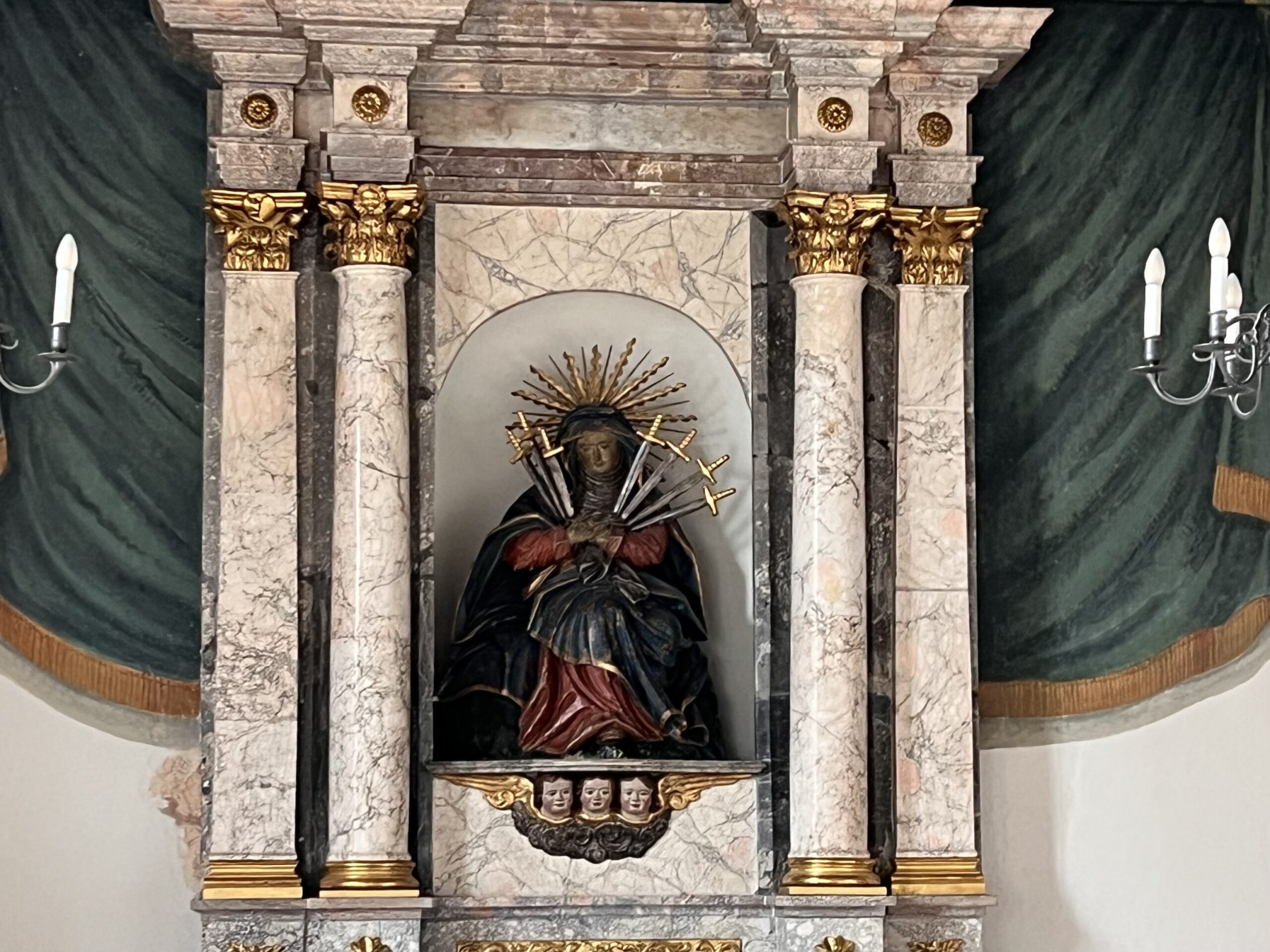
A chapel is dedicated to Our Lady of Sorrows, and Mary is depicted there with swords in her breast.
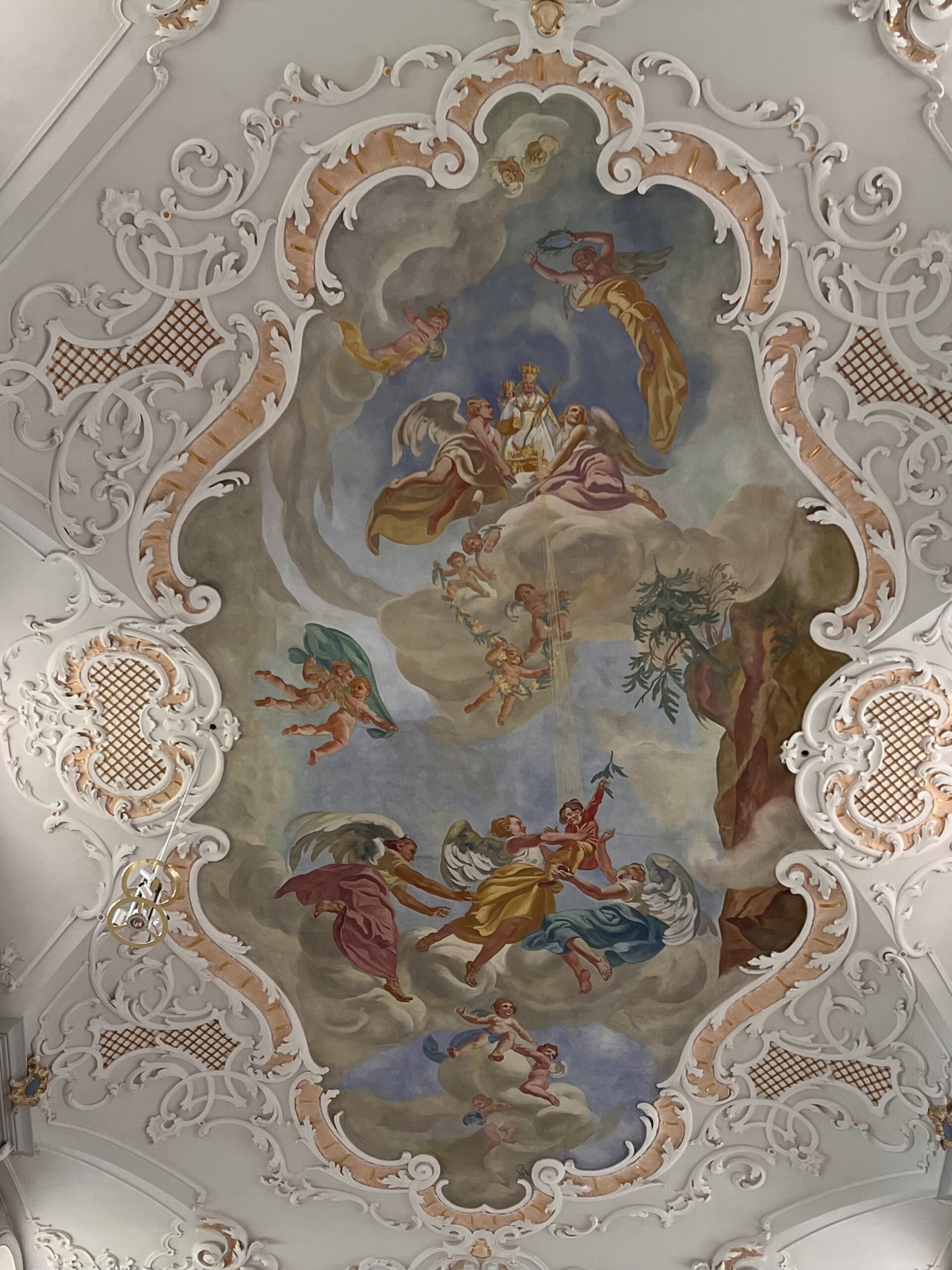
In the basilica hangs a painting of the Coronation of Mary, painted by Francesco Innocenzo Torriani (1648-1700). The legend of the child's fall, the searching mother, and the salvation of Mary is depicted in the church.
Since 1974, there has been an association of friends, namely the “Friends of Mariastein Abbey”, which has around 2500 members. There are overnight accommodation facilities at the abbey.
Around 250,000 pilgrims and tourists visit Mariastein every year.
The monastery, basilica and underground grotto chapel of the pilgrimage site are open daily.
ACCESSIBILITY
Mariastein belongs to the municipality of Metzerlen-Mariastein and is situated in the canton of Solothurn at over 500 metres above sea level.
Up-to-date information can be found at www.kloster-mariastein.ch.
The address of Mariastein Abbey is: Klosterplatz 2, 4115 Mariastein.
Experience
I am doing a tour of Switzerland to visit Marian pilgrimage sites. My first stop is Mariastein. At that sanctuary, I would very much like to visit the underground cave with the chapel of grace and, if possible, the basilica and monastery shop. I have heard that Mary has been venerated here as Mother of Consolation in a natural mountain cave since the 15th century. Centuries before that, followers of other religions came to the cave. Today I am going to Mary in the stone.
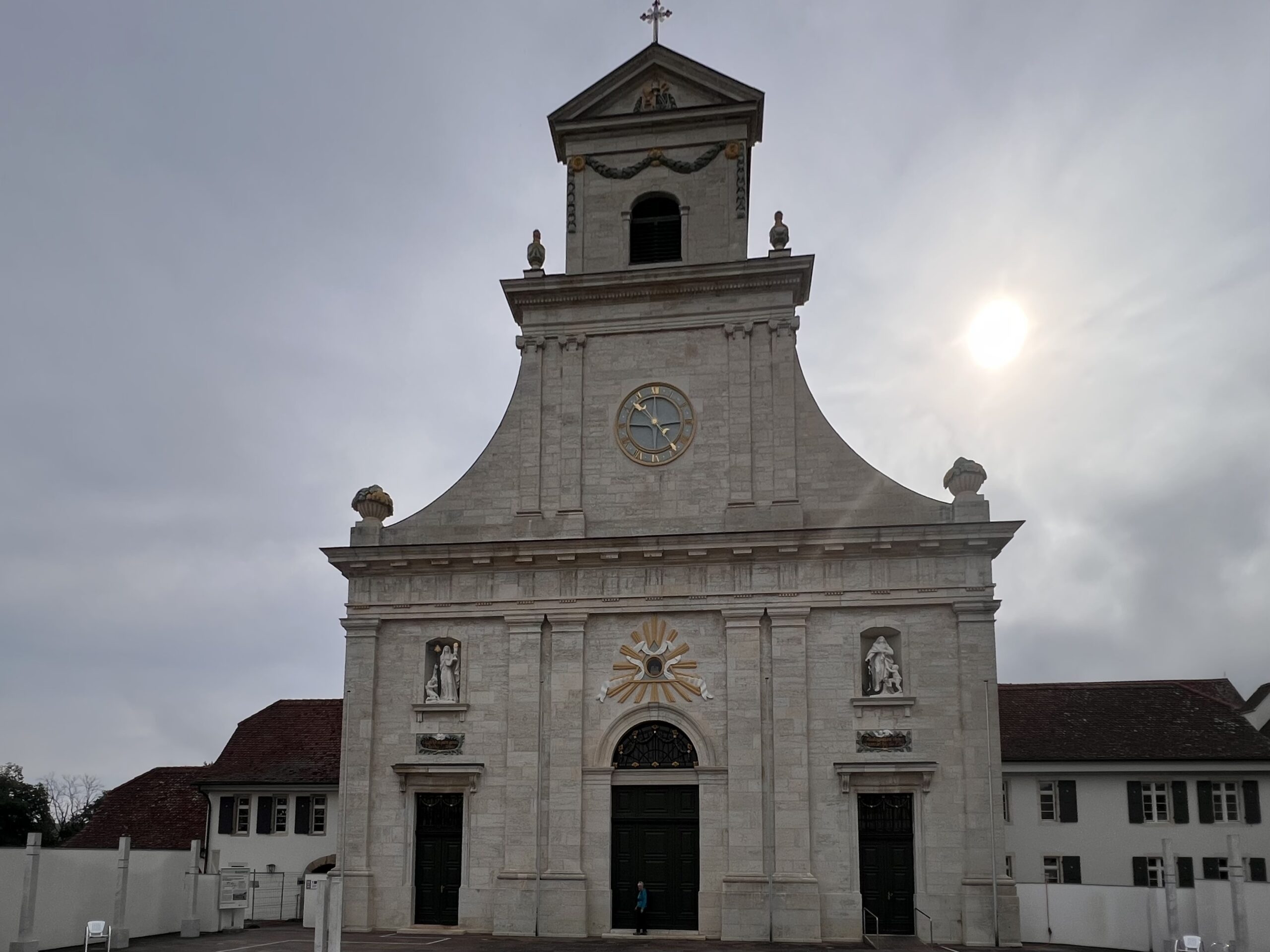
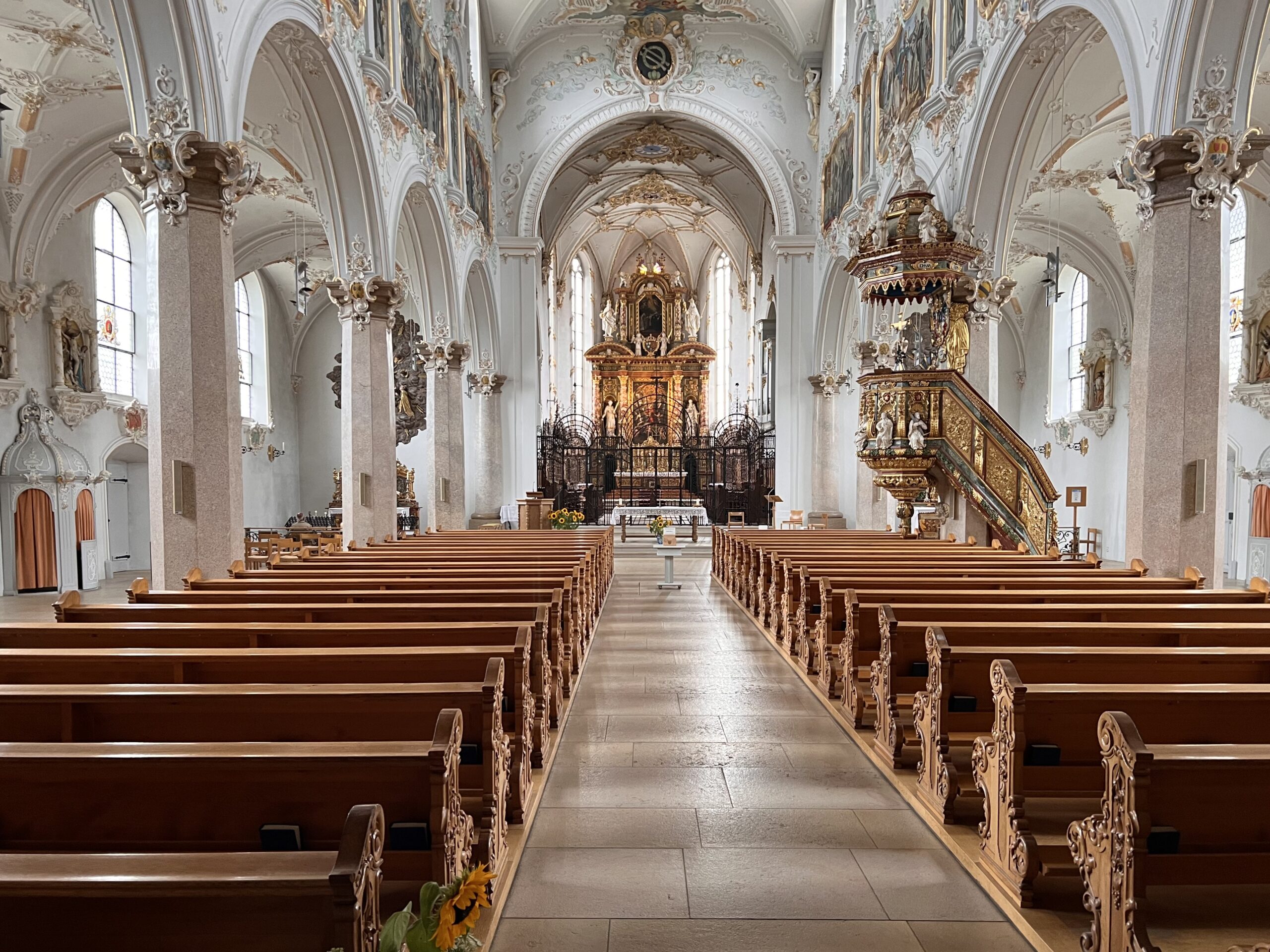
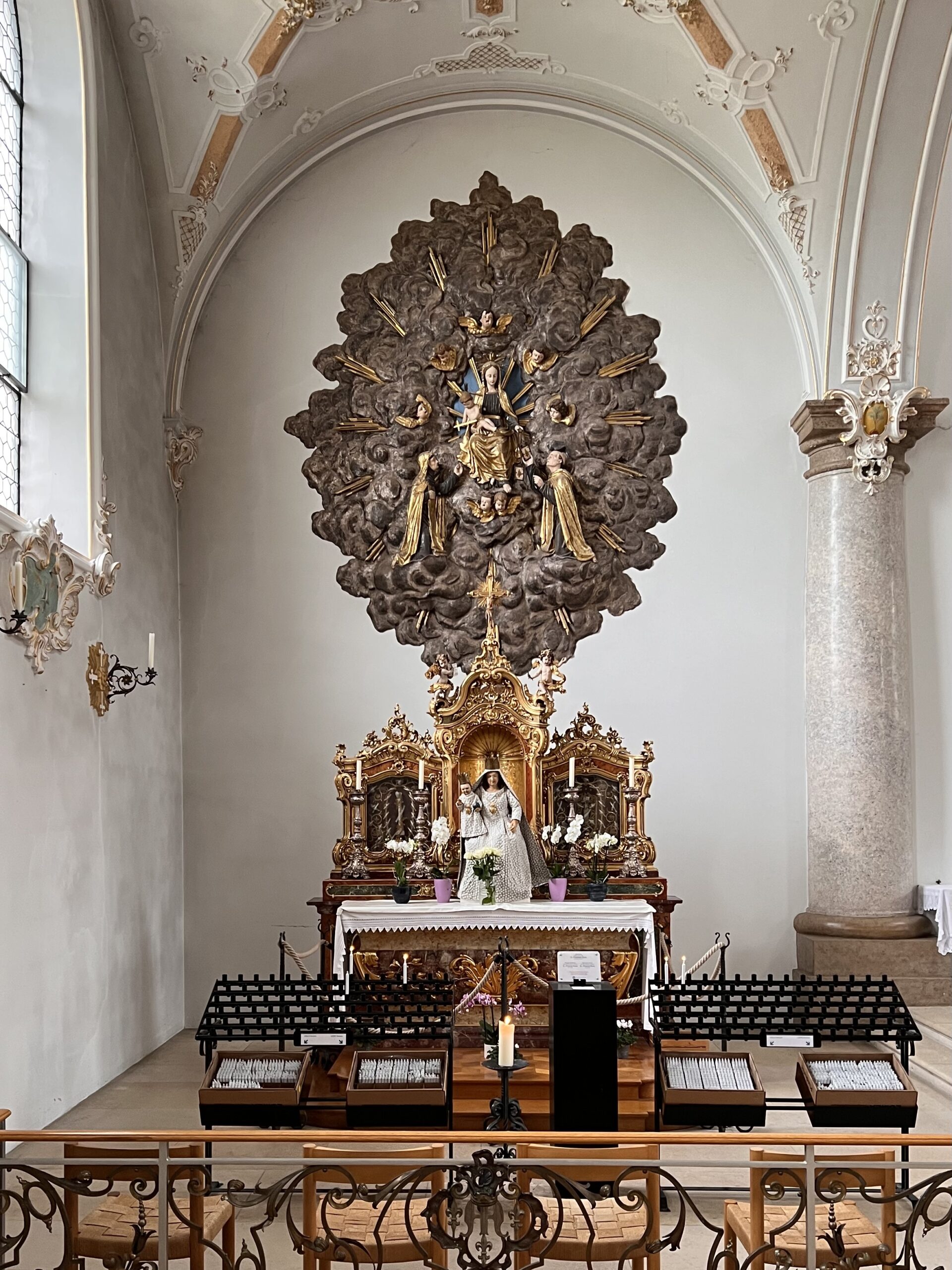
The facade of the basilica immediately invites me inside. Within the church, I see only beauty, with numerous depictions of Our Lady in artful portrayals, as seen at the side altar. I view the decorated rear wall of the high altar as a majestic painting of the Coronation of Mary in heaven.
If I continue the tour, it's to admire the large Stations of the Cross, which are beautifully framed with clearly legible text below.
When looking up, one sees a large ceiling adorned with paintings. Mary is surrounded by many angels.
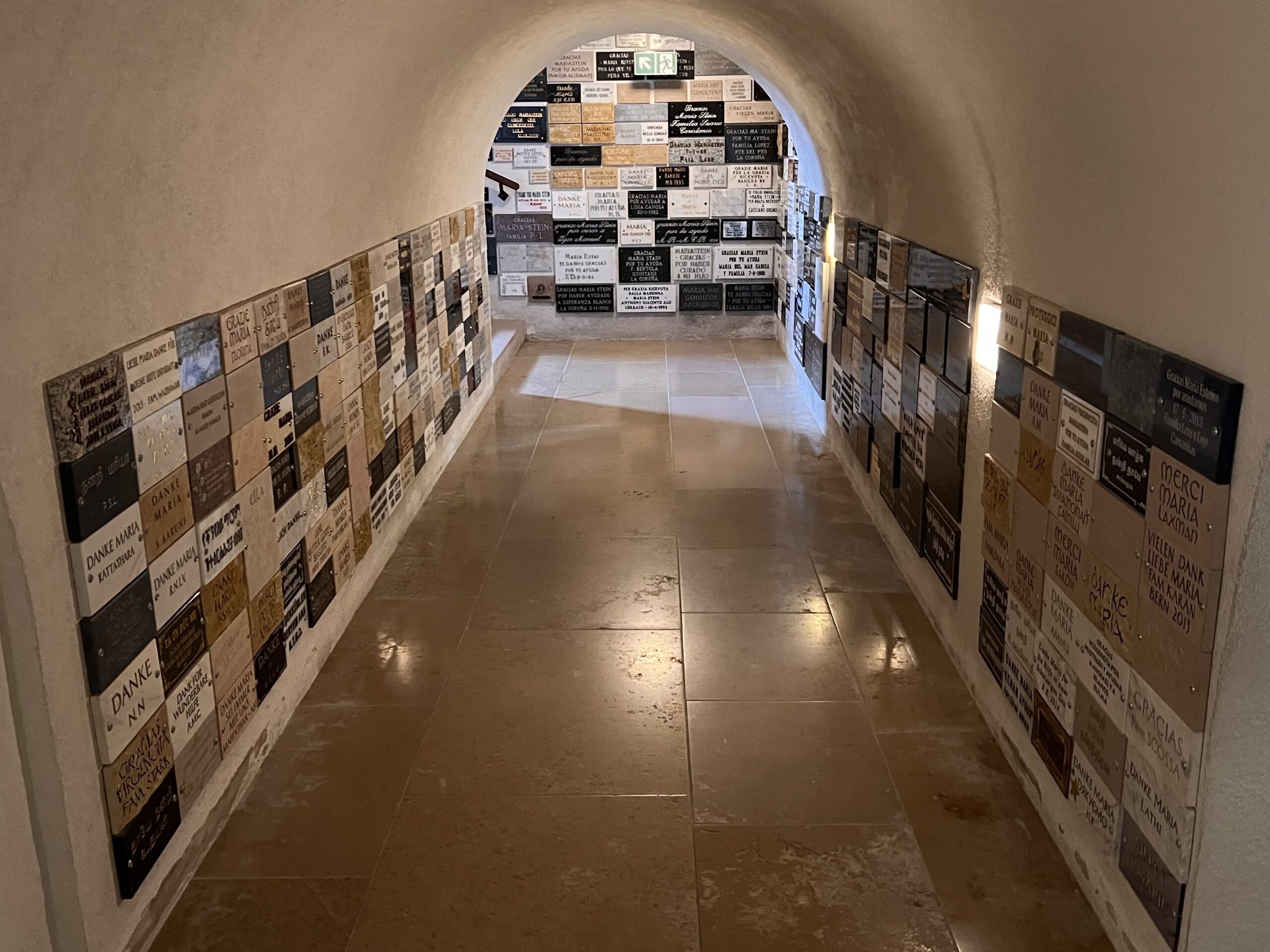
Then I'm going to the grotto, and the path there is a sloping passage with many ex-votos, a few bends, and then about 60 steps to enter a particularly beautiful space. Here, the Gothic image of Mary is venerated in an underground devotion chapel situated beneath the basilica and monastery. The origin of the image is unknown. I see Mary as “the Mother of Comfort,” who has met countless pilgrims here. To stay in this rock grotto gives a very special feeling. It's a privilege to have had this unique experience. To absorb the impressions, I take a seat. The two events of falling off a cliff and surviving them come to mind, as well as the many storms the sanctuary has weathered. Then it's time for prayer to Our Lady, and friends and acquaintances come to mind.
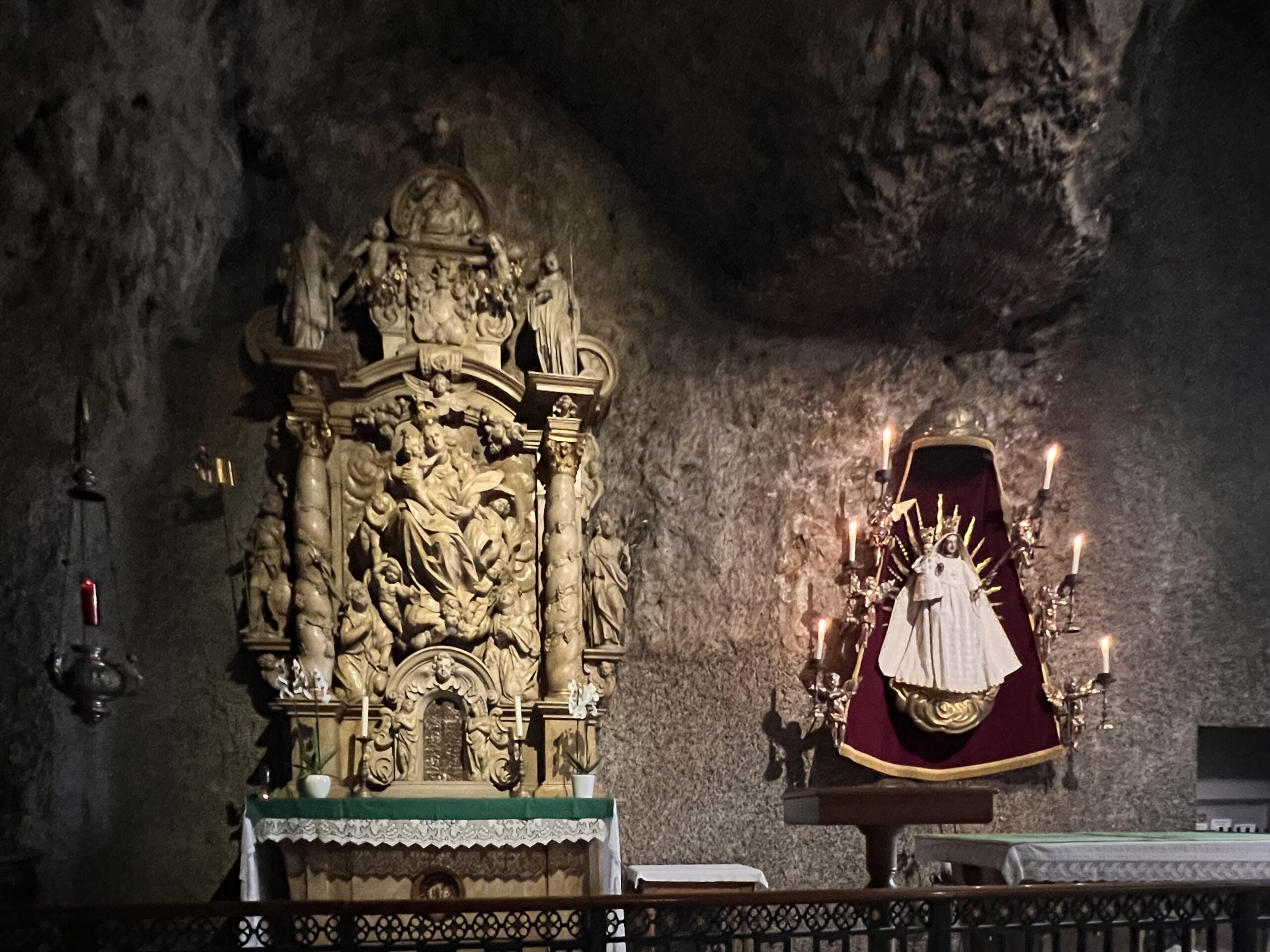
As I leave the rock grotto and follow the path upwards, the current reality of this pilgrimage site comes to my attention. The economic viability of this pilgrimage site is under pressure, and to guarantee continuity, the monks have started the project “Aufbruch ins Weite – Mariastein 2025” (Setting off into the distance – Mariastein 2025). They want to face the future more effectively. Despite the dwindling monastic community, the Benedictines wish to preserve the viability and vibrancy of this Marian shrine. To achieve this, help is needed in terms of manpower and finances to pass on the cultural and religious heritage. The immediate surroundings are being improved with a brand-new, traffic-free forecourt in front of the basilica. They also intend to further expand pastoral care, as well as communication, guest accommodation, and hospitality services. Just now, upon entering Mariastein, I experienced that a new car park has already been completed. I have also read that the municipality of Metzerlen-Mariastein is co-financing and is having pipes laid underground.
I will be able to return once all the work here is completed. Next year? The reopening is scheduled for autumn 2026 and other work on buildings, outside the basilica, will be finished by early 2027.
Environment
There is natural beauty to be enjoyed in and around Mariastein. There are plenty of cycling and walking opportunities.
From Basel to Mariastein is 20 km south-west.
Travelling from the pilgrimage site of Einsiedeln to Mariastein means travelling 140 km to the north-west.
From the capital Bern to Mariastein is 115 km to the north.
Departing from Zurich to arrive in Mariastein involves driving 100 km to the west.
~~~

 Nederlands
  English (UK)
  Deutsch
  Français