History
Around 1300, the pilgrimage to Pöllauberg began with the veneration of an image of Mary. Towards the end of the 14th century, pilgrim interest grew.
In 1339, Katharina von Stubenberg from the nearby Pikeroi castle donated a sum of money multiple times to enable the construction of a church. A year later, the construction of the current church began near the source of a spring, on land donated by a nobleman. Thanks to Katharina von Stubenberg's donation, Saint Catherine is venerated in the church. Construction was completed in 1377, but work and funds were still needed for the furnishings. The entire project was made financially possible by donations from noble individuals.
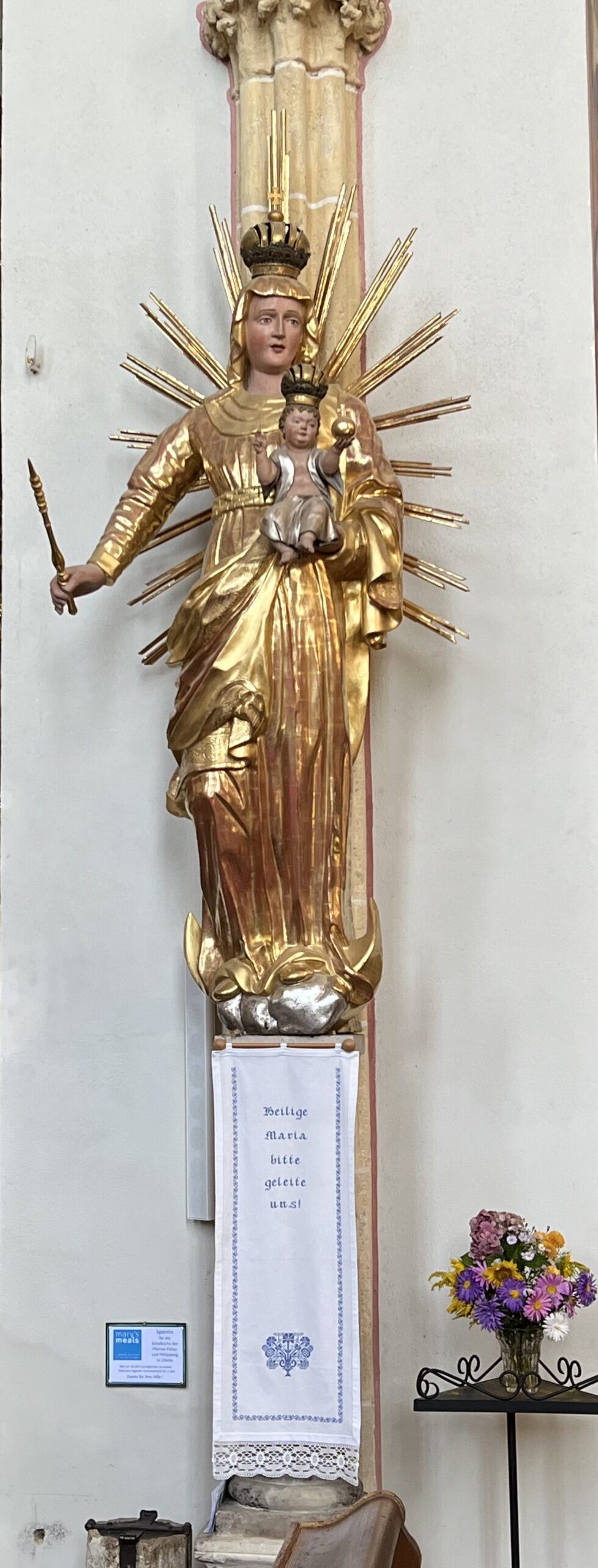
The statue of Mary is from around 1480; it has Baroque embellishments. The church was enlarged in 1532. A gold-coloured statue on a console depicts Mary with Child and dates from 1616.
In 1674, a lightning strike caused a major fire in the church, necessitating the renovation of the roof, tower, and a large part of the furnishings. Provost Michael Josef Maister (c.1629-1696) was in charge of the repairs as administrator.
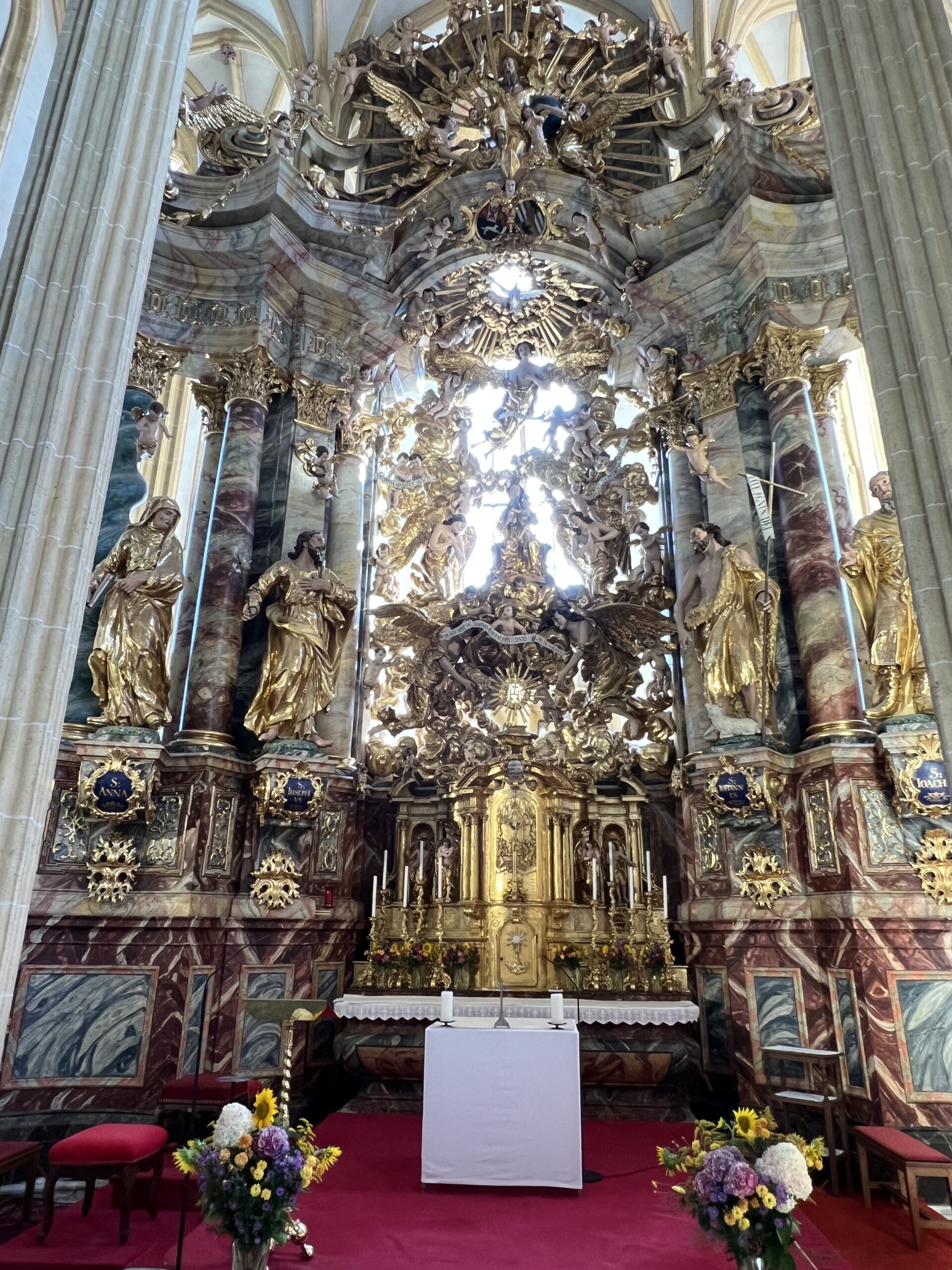
In 1707, the church was given the function of parish church. Remigius Horner designed the Baroque high altar in 1714. In that same year, Marx Schokotnigg (1661-1731) and his son Josef Schokotnigg (1700-1755) created the statues. Side chapels were also built.
In 1955, an extensive restoration of the church's exterior took place, and in 1976, the church's interior was restored.
In 1986, Pöllauberg was chosen as the most beautiful flower village in Europe, and in 2003, as the most beautiful in all of Styria.
Pilgrimage site
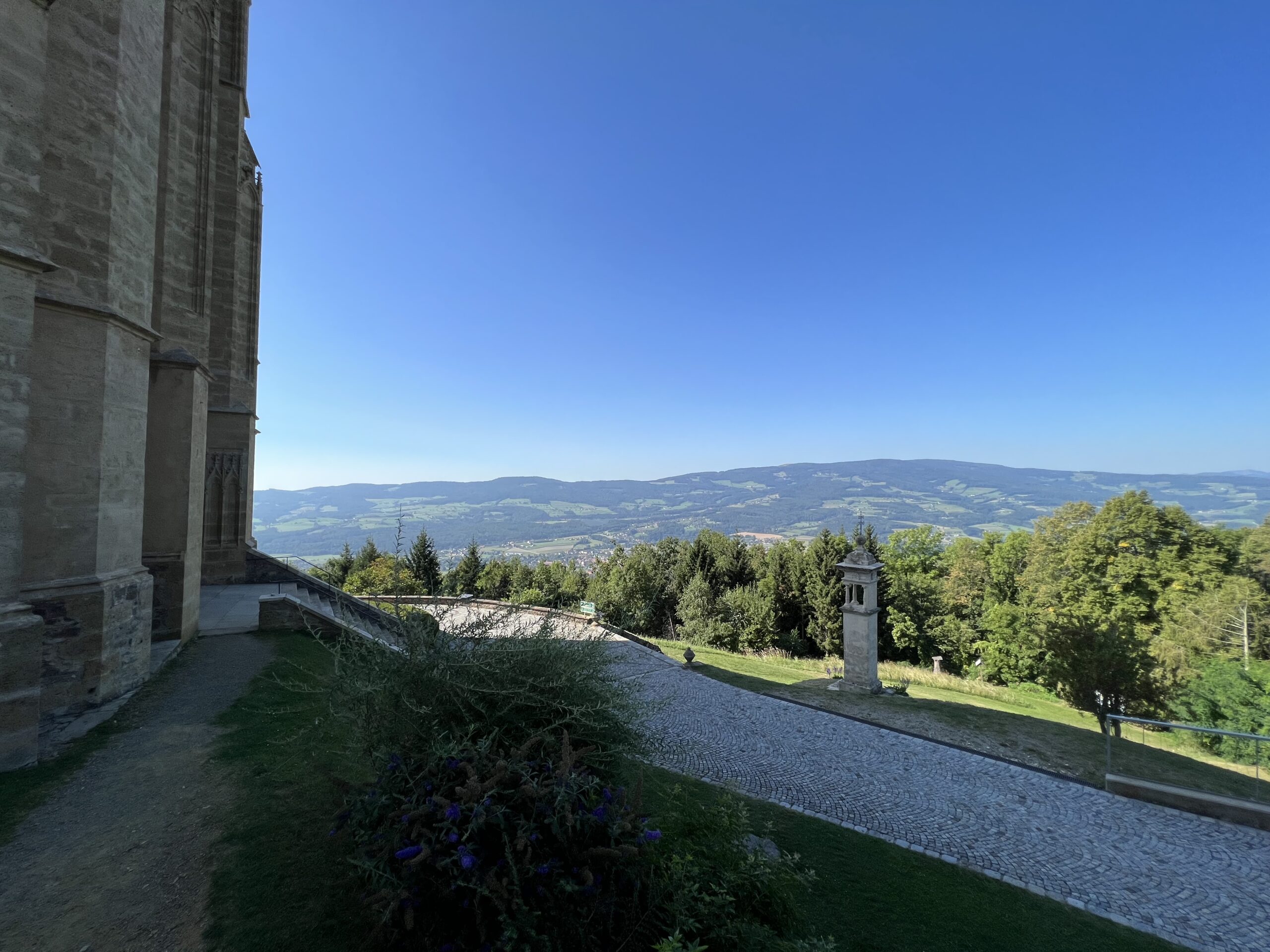
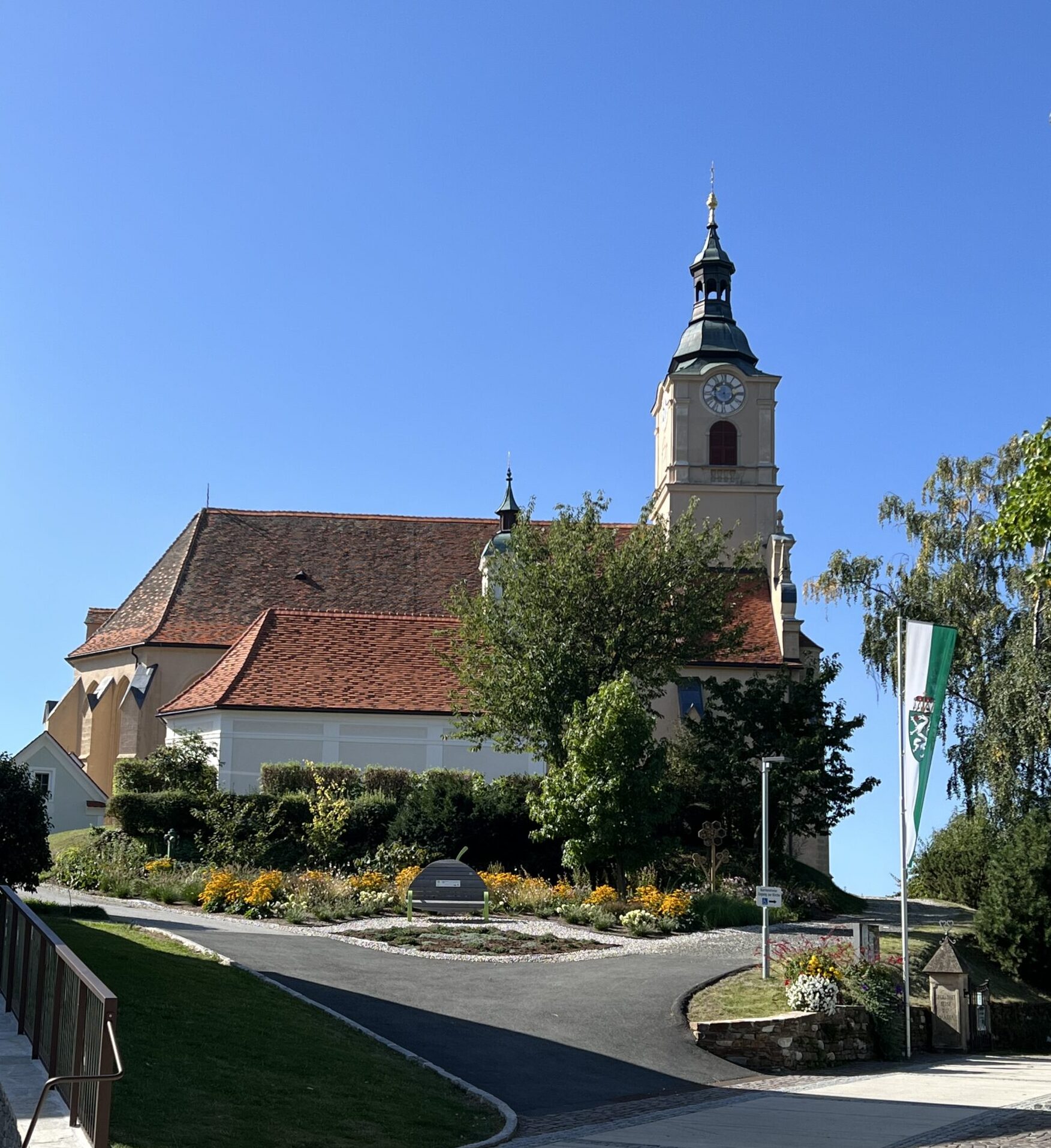
The church in Pöllauberg is situated within a vast nature reserve and is dedicated to the Nativity of Mary. The Gothic building dates from the 14th century and stands at an altitude of over 700 metres on the Sabbatberg, an offshoot of the Massif Mountains. A spring originates at the highest point of the mountain, which was very special to people in the Middle Ages.
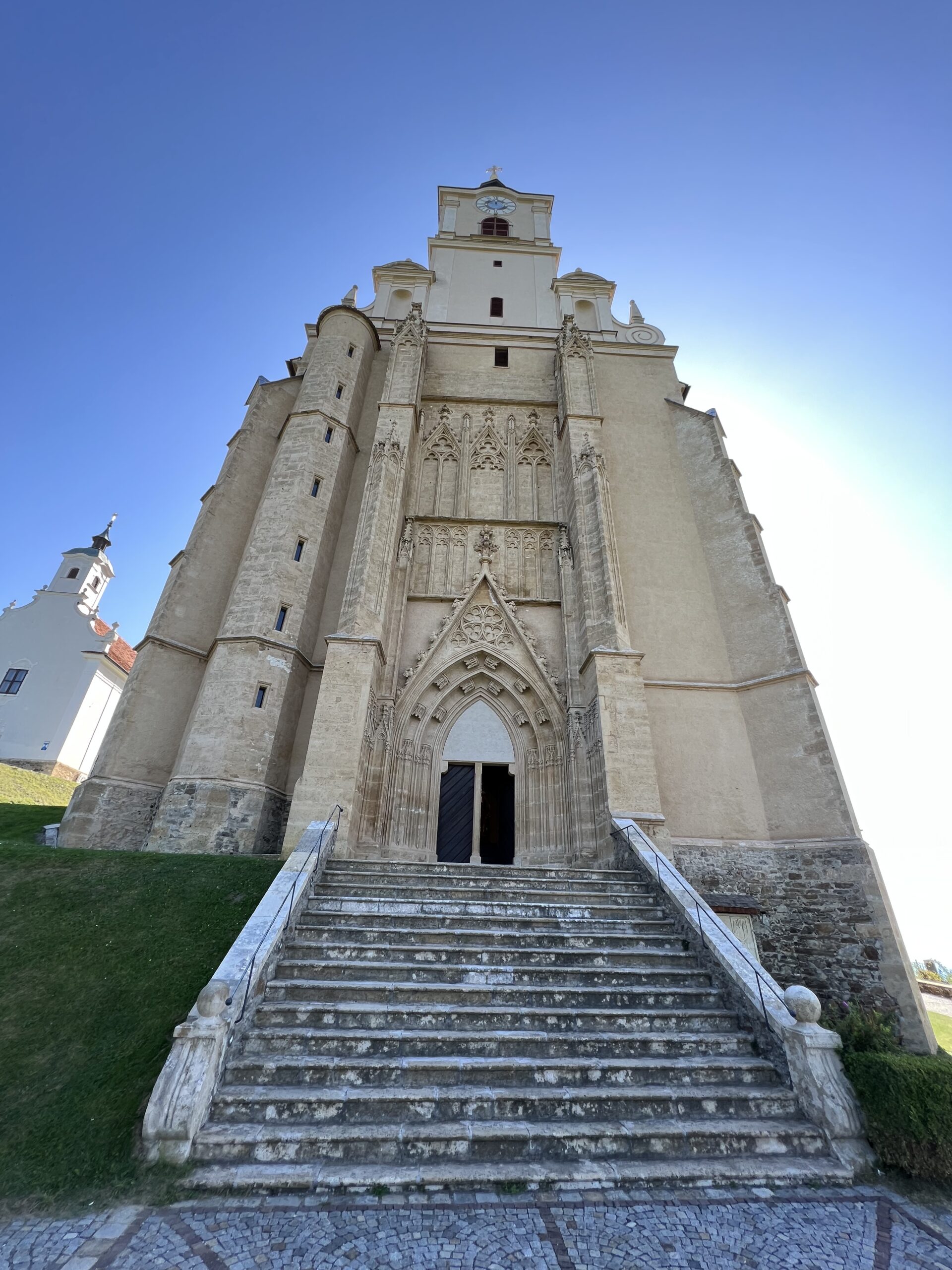
The church entrance is reached via a stone staircase with 15 steps.
Two statues of Mary date back centuries, one from the 15th century and another from the 17th century. The devotional image, dating from approximately 1470, is the focal point of the high altar. Mary is seated, holding a sceptre and an orb, with her Child seated on her left knee. Both are crowned.
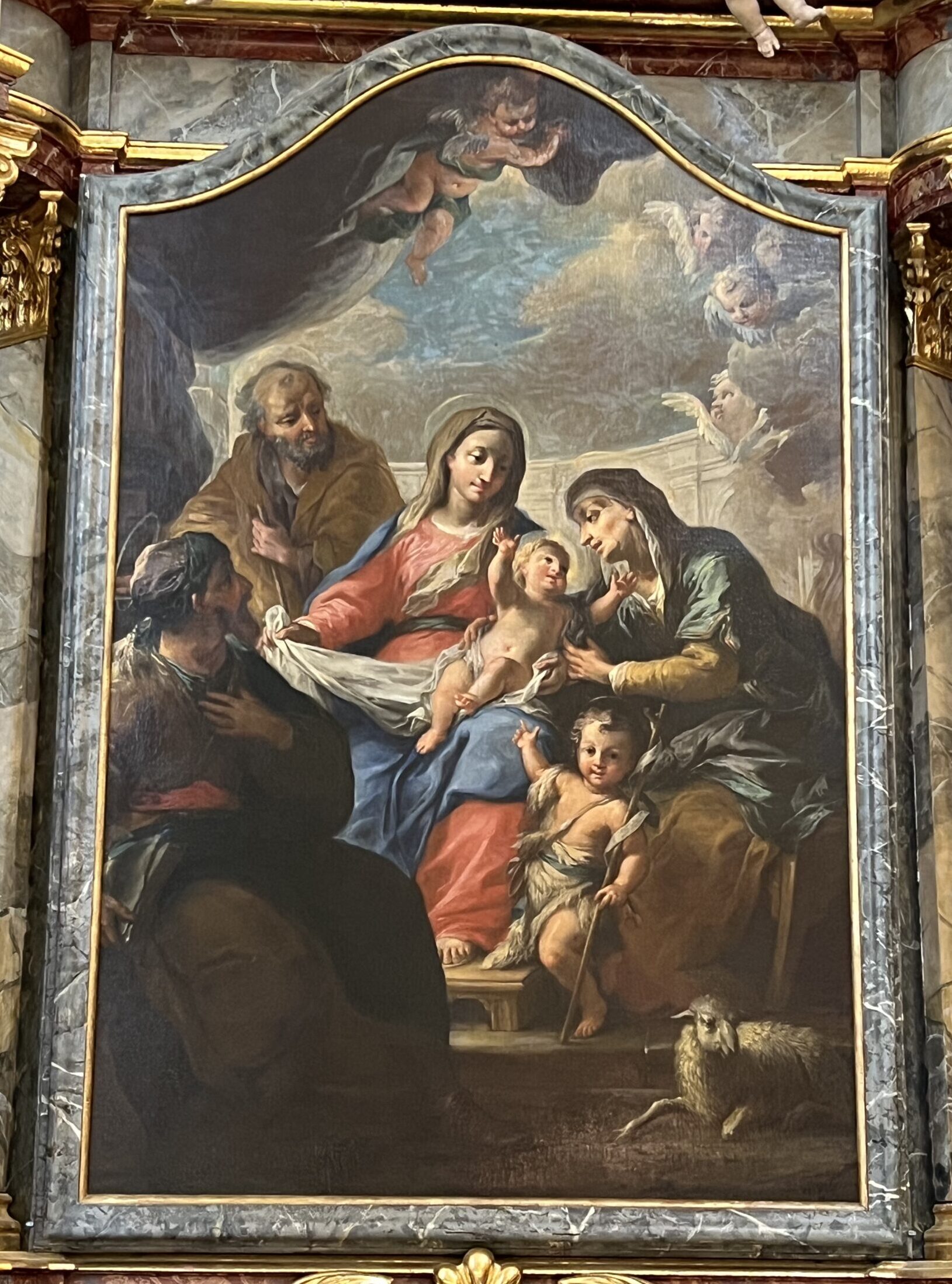
The church features many artworks, including a Baroque-style painting of the Holy Family in a side altar. The artwork was created by the Italian-born Martino Altomonte (1657-1745).
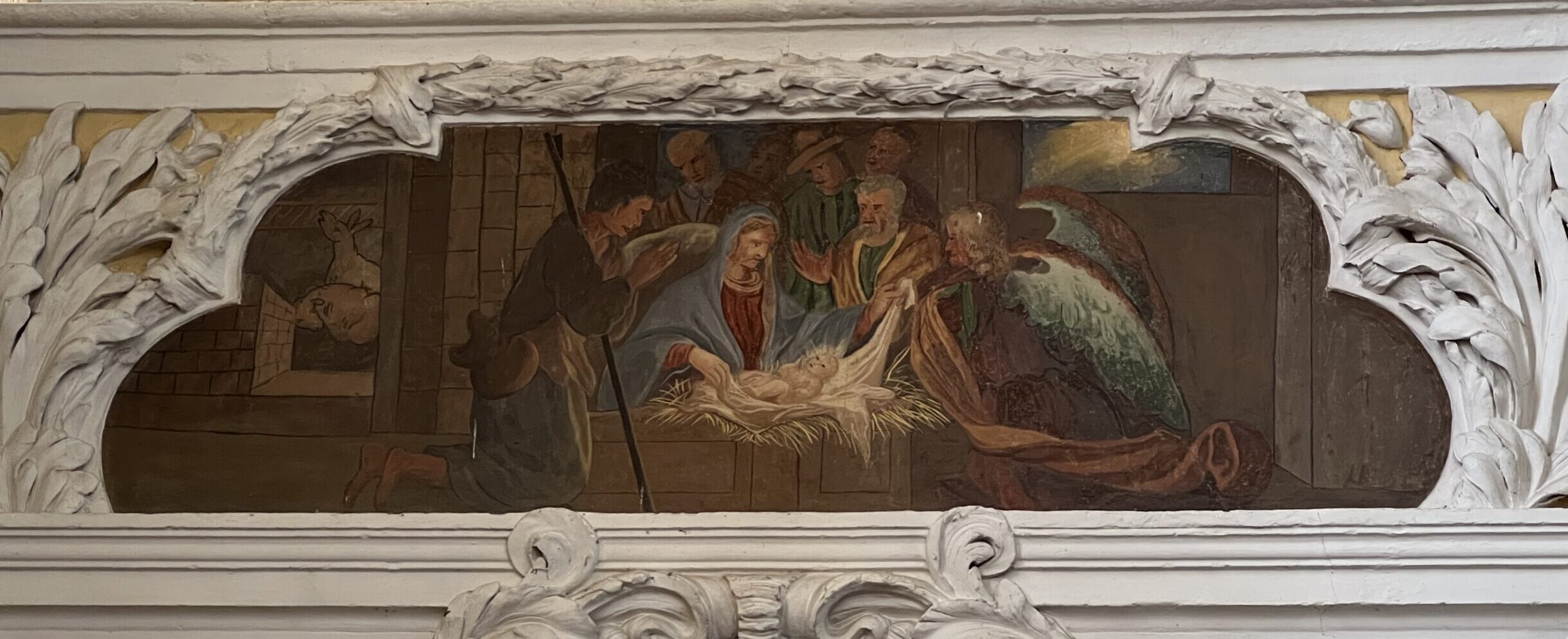
The ceiling frescoes in the church were made by Joseph Adam Ritter von Mölk/Mölck (1718-1794).
In the church there is also a large “pillar Madonna” from the year 1616.
Near the pilgrimage church is St. Anne's Church with a depiction of Mary's mother from 1644. This church is Pöllauberg's first pilgrimage church.
Maria Pöllauberg is one of Styria's most significant pilgrimage sites, with an average of 100,000 visitors coming to the church annually.
ACCESSIBILITY
Pöllauberg is located to the northeast of the large city of Graz, in the state of Styria, about 6 kilometres northeast of Pöllau.
The address of the pilgrimage site is:
Oberneuberg 1, 8225 Pöllauberg.
Current information can be found at https://poellauberg.graz-seckau.at.
Experience
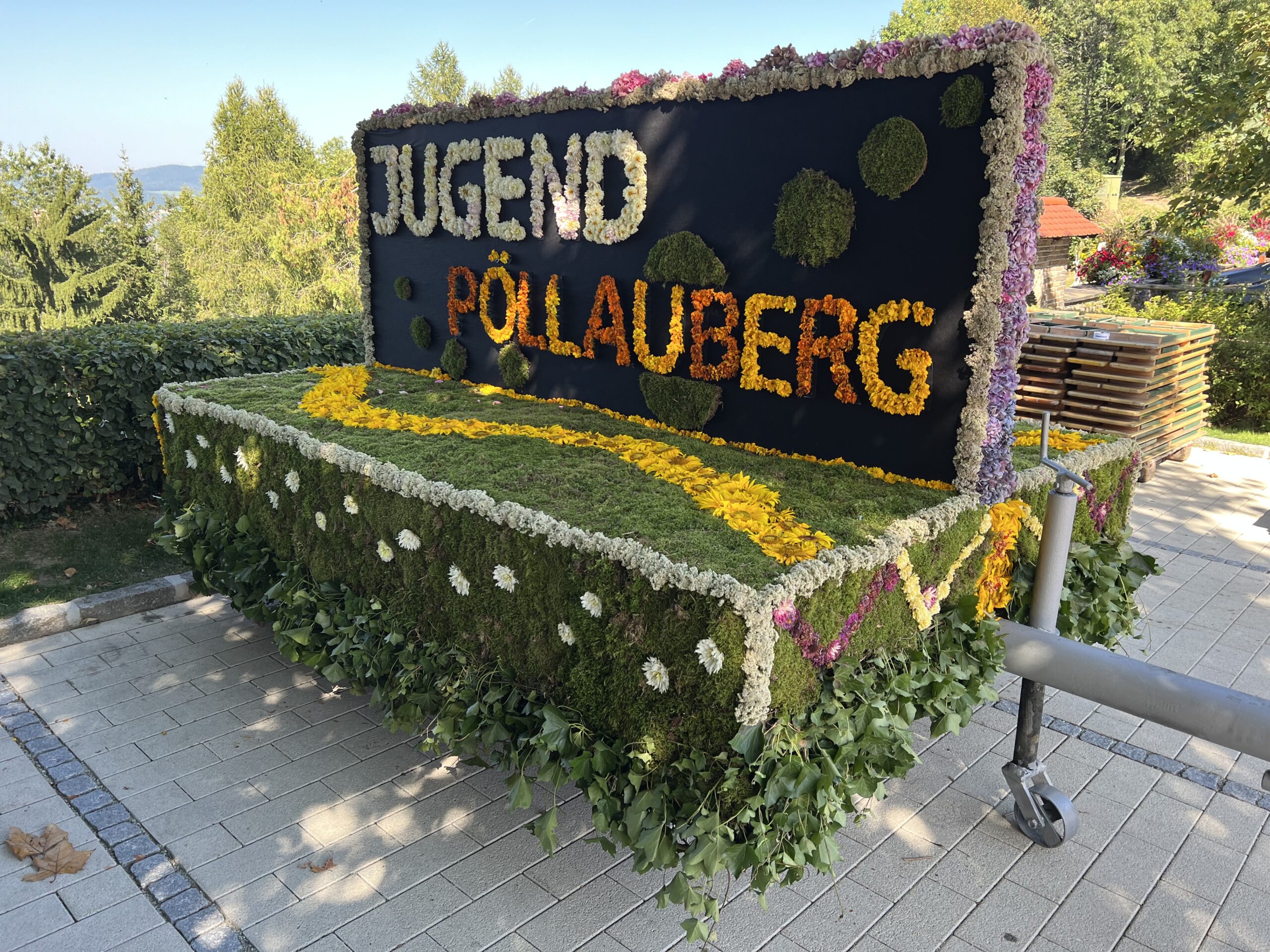
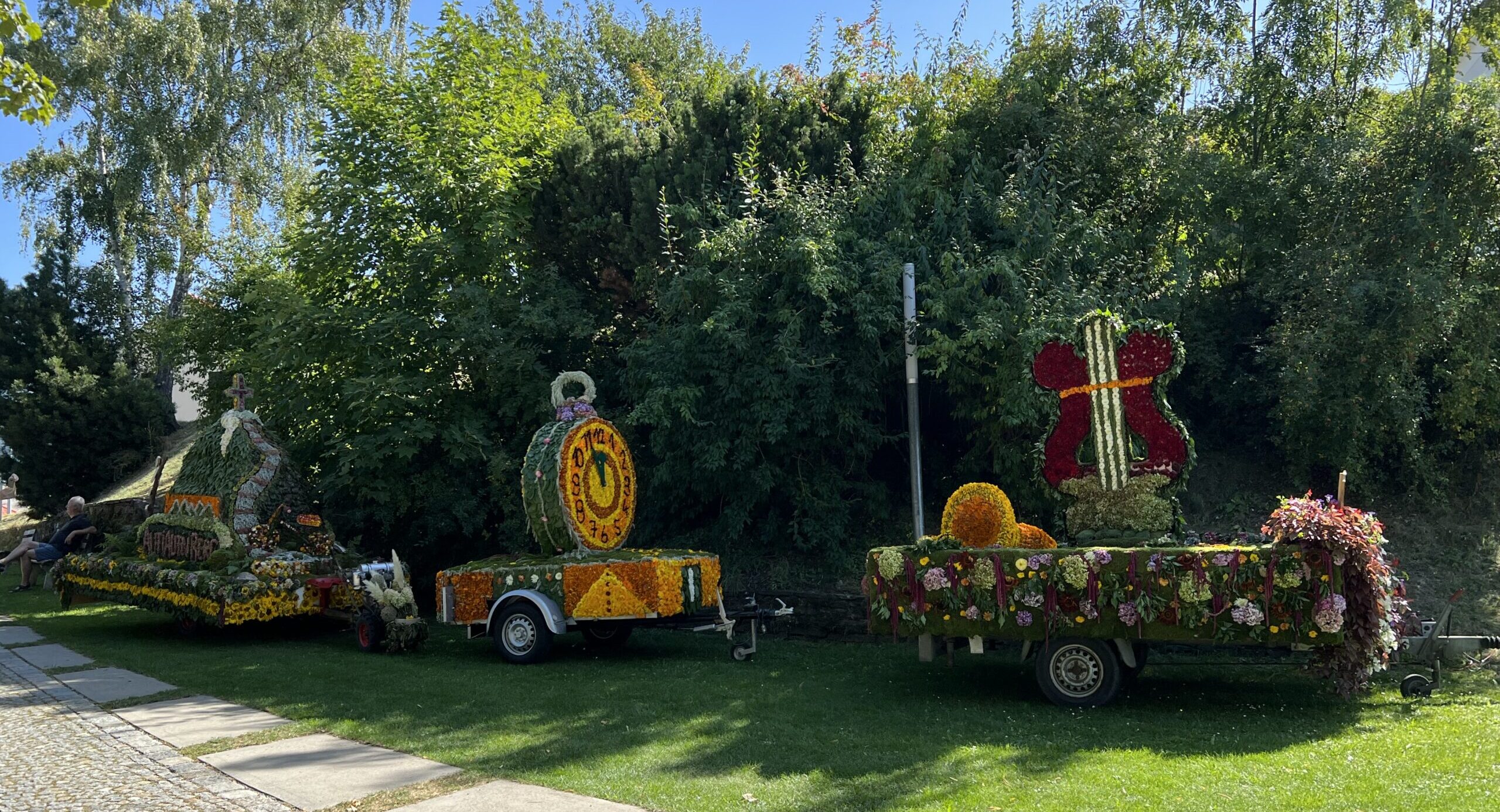
It strikes me how many flowers are blooming here. The houses and streets display their magnificence with flora. Near the pilgrimage church, there are wagons that look as if they've come straight from a flower parade. I understand that a procession was recently held with these decorated carts and trailers.
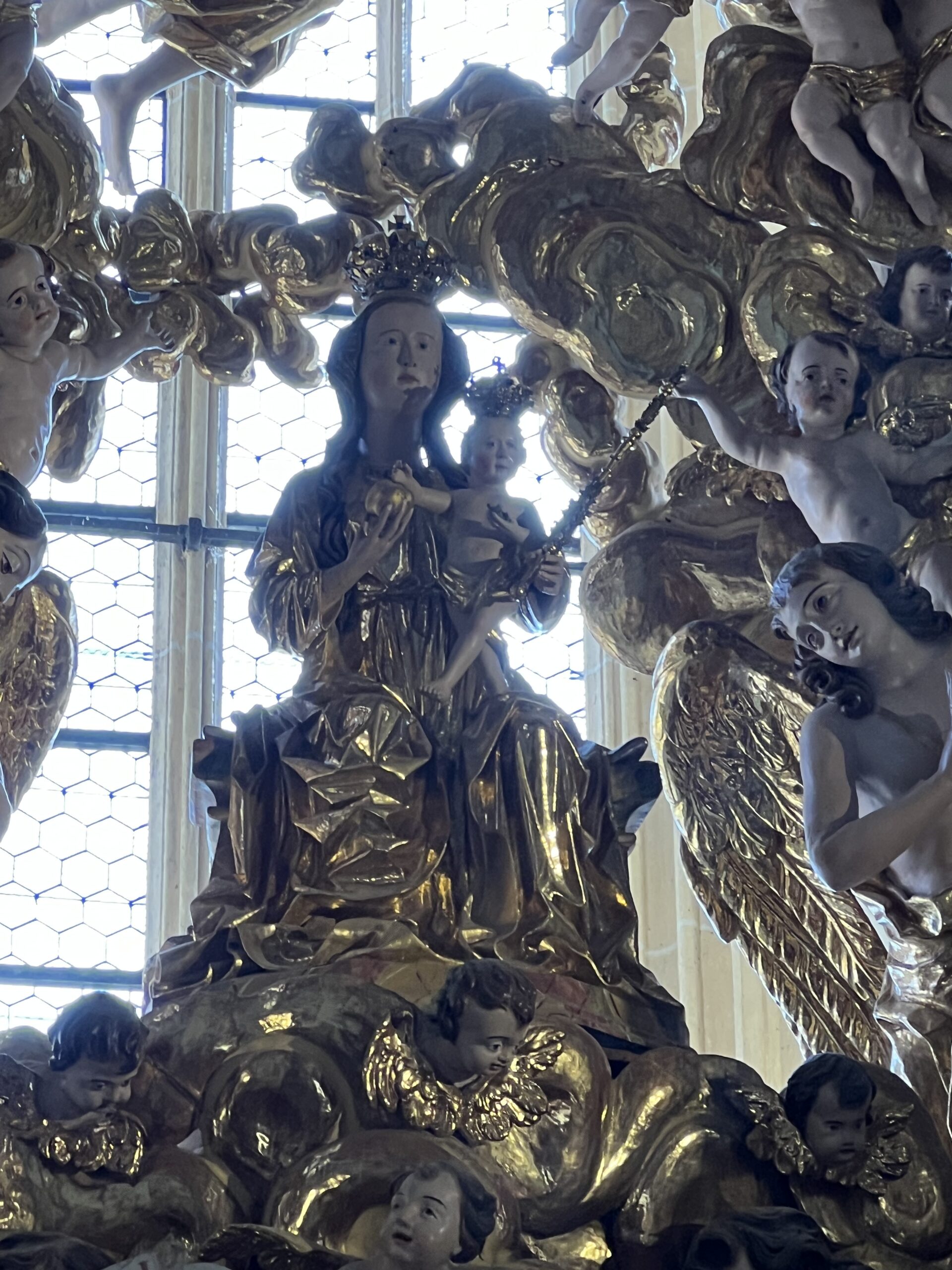
The pilgrimage church is stunning with its effigies and paintings. The touching effigy of Mary at the high altar is sure to catch every visitor's eye. This church also features more statues of Our Lady, including a pillar Madonna. I also see many ex-votos in this pilgrimage site.
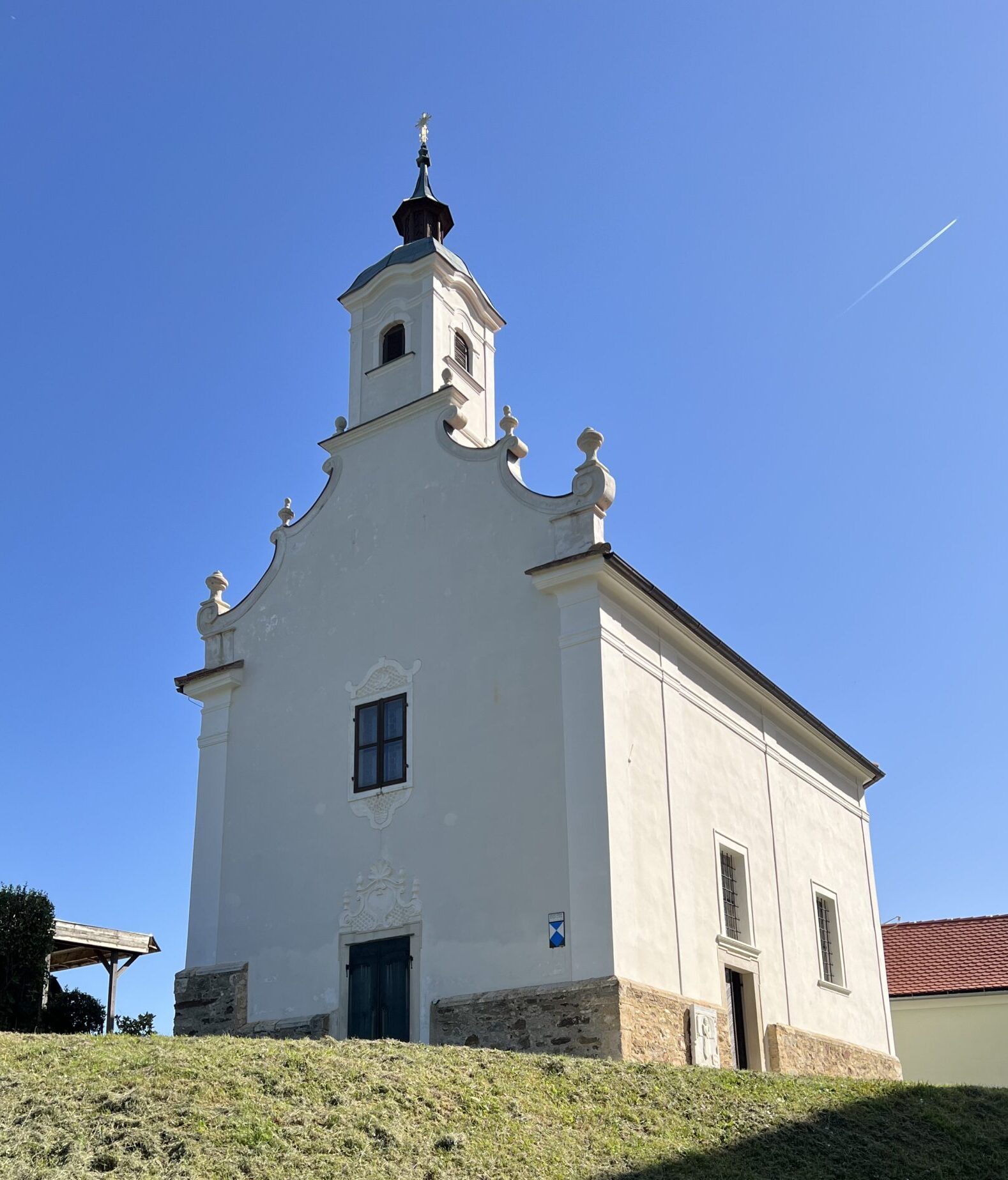
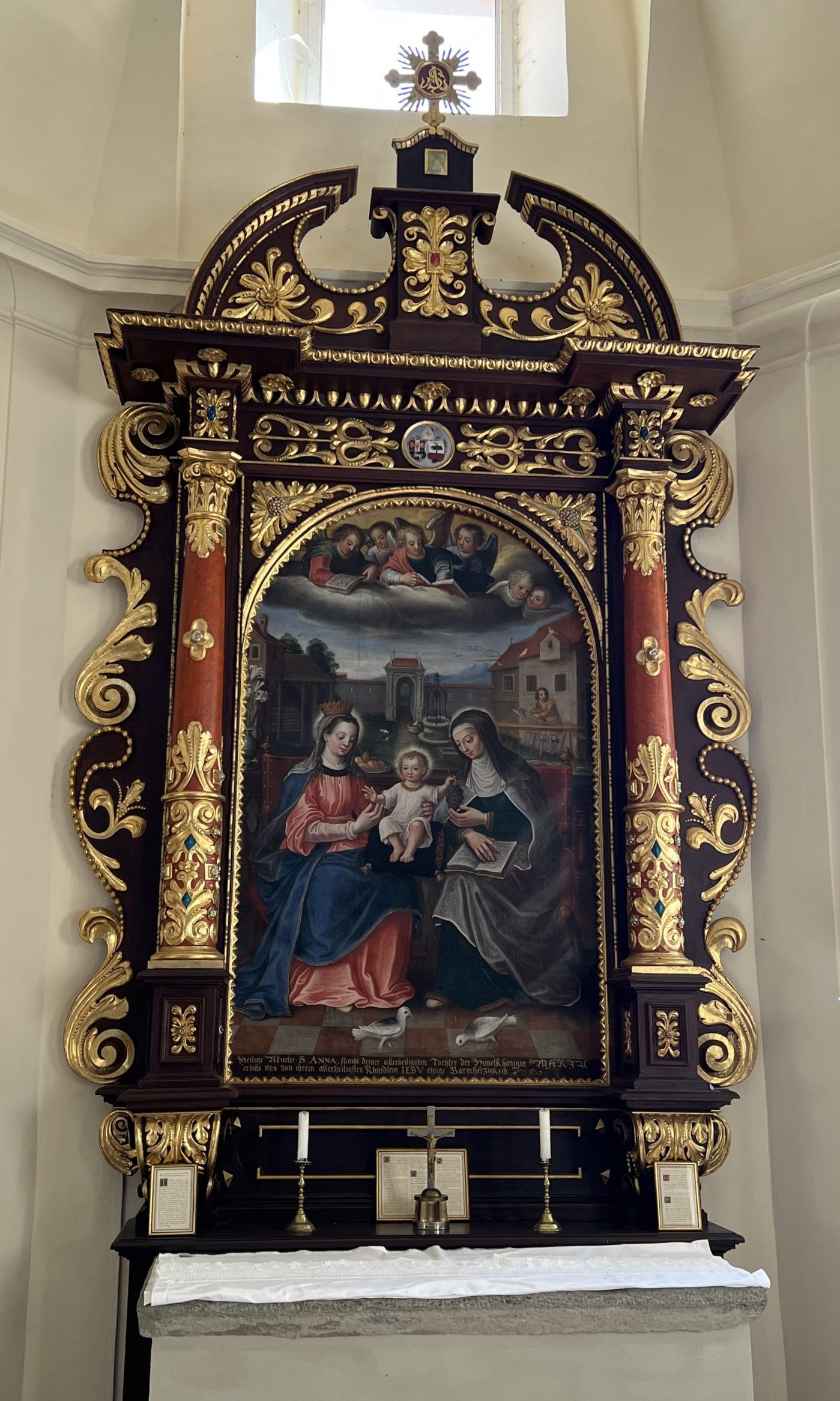
Next to the pilgrimage church stands the Church of Saint Anne, which is also well worth a visit. In this space, the elderly Anne is depicted with her daughter Mary and grandchild Jesus. Anne holds grapes in her hand.
When I leave St. Anne's Church, I come across a war memorial from 1929 by artist Fritz Silberbauer (1883-1974), which was expanded in 1953 for the fallen in the Second World War (1940-1945). I also pause now to reflect on the horrors of war.
Next to the churches stands a Baroque stone pulpit, made in 1673.
Around the two elevated churches are a few shops and restaurants. I'm going to take a look there... I still need to process the impressions of this particularly beautiful place of pilgrimage.
Environment
The city of Graz is located 69 km south-west of Pöllauberg. Vienna, the capital of Austria, is situated 145 km north of the pilgrimage site. The large Austrian pilgrimage site of Mariazell is located 126 km north-west of Pöllauberg.
Posted: 12 December 2023
~~~

 Nederlands
  English (UK)
  Deutsch
  Français