History
The fact that a pilgrimage site of Loreto (“Loreta Praha”) was also established in Prague is the work of Benigna Katharina von Lobkowicz (1594-c.1653). In 1626, this woman initiated the construction of the pilgrimage site, following a pilgrimage to the Italian Loreto where she visited the Holy House. The architect was Giovanni Battista Orsi (1600-1641) from Vienna. Construction began on 3 June 1626 in the Baroque style and was completed swiftly. Due to wartime circumstances, the festive consecration was only held on 25 March 1631. The blessing was performed by Count Ernst Adalbert von Harrach (1598-1667), Archbishop of Prague (1623-1667).
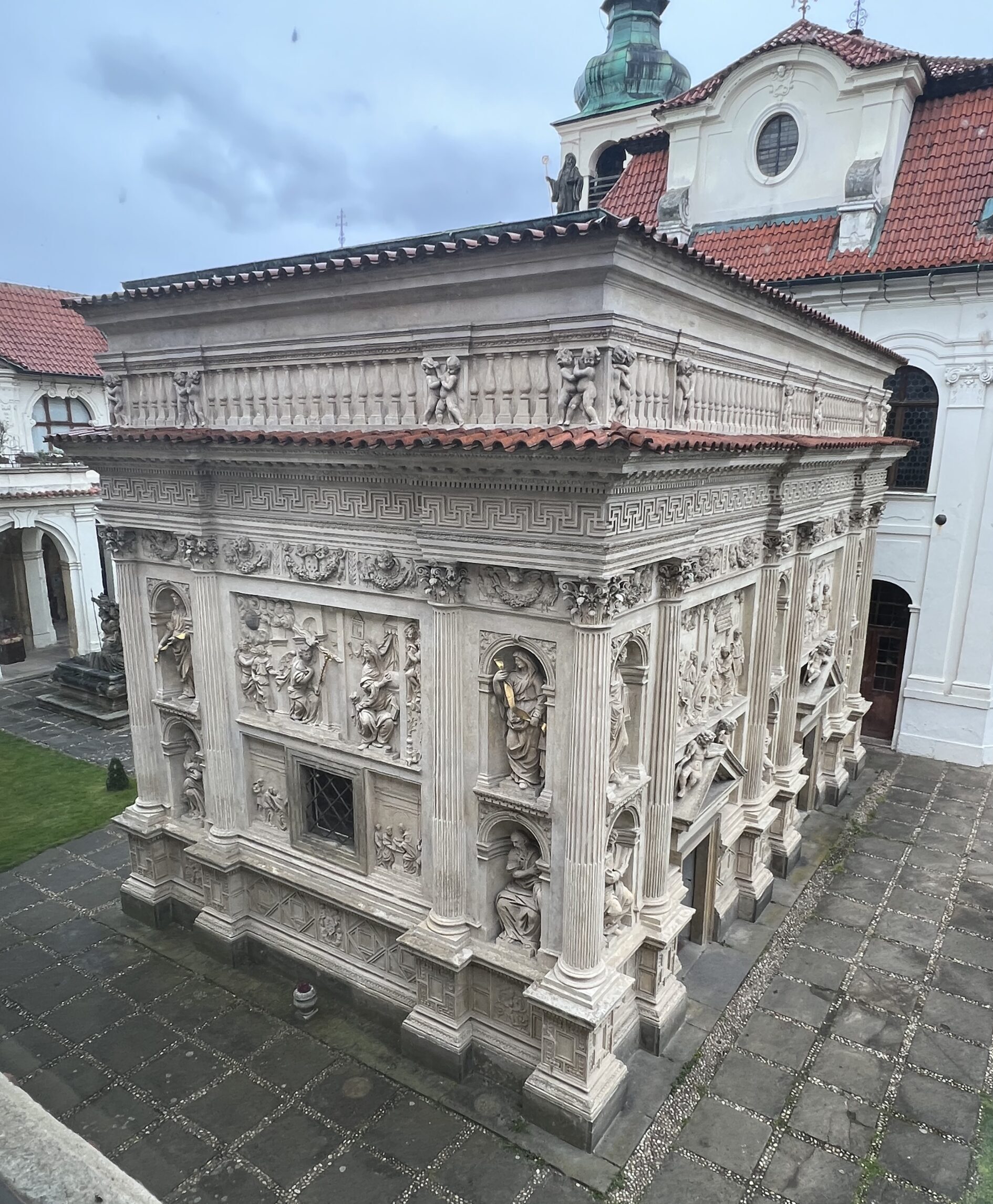
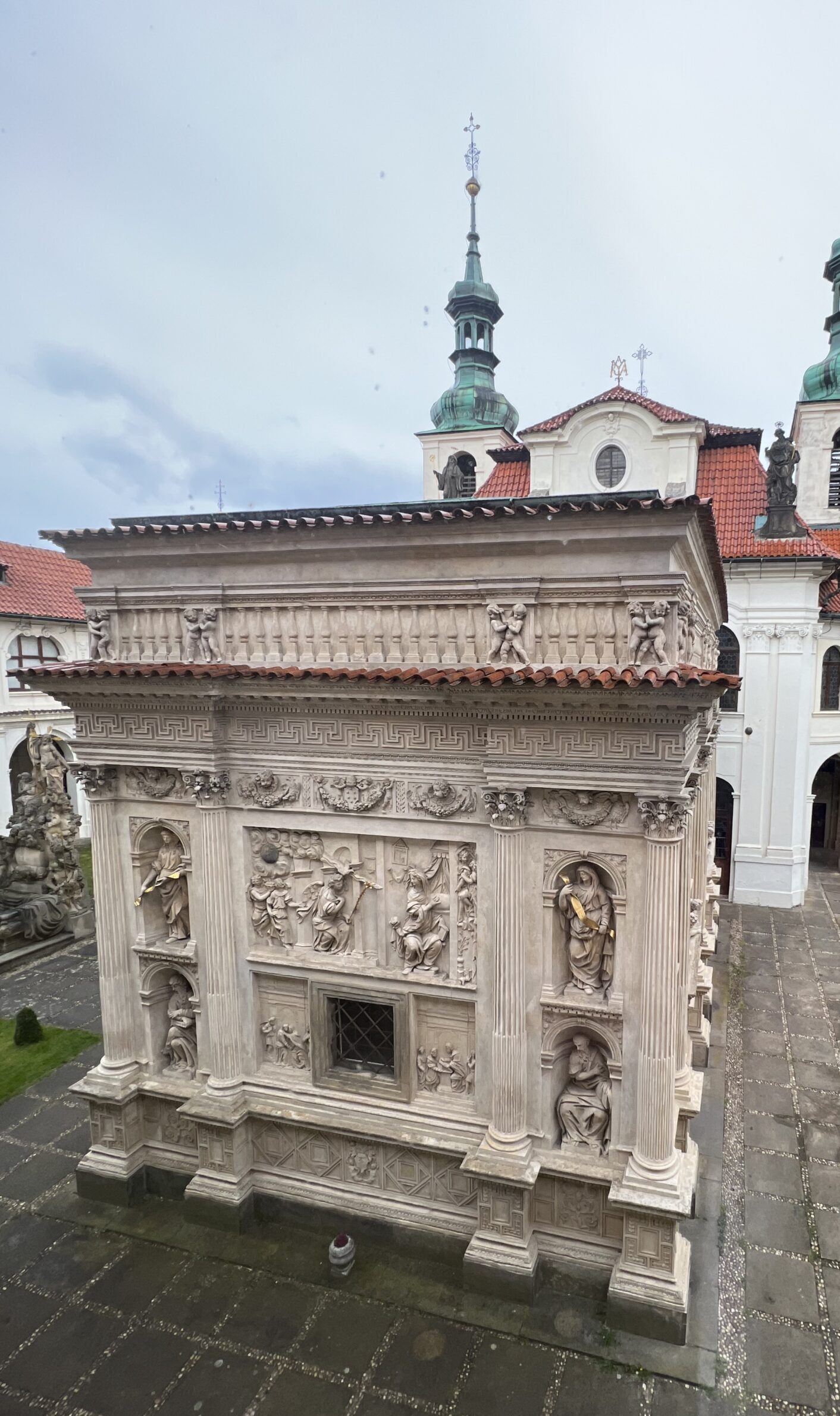
Maria Elisabeth Apolonia Countess Kolowrat-Tilly (1629-1665) financed the sculpted walls of the Holy House. The Italian Giovanni Bartolomeo Cometa (1620–1687) carried out the work in the years 1671–1673. Among the scenes depicted are the birth of Mary, her engagement, the Annunciation by the angel to Mary, Mary's visit to her cousin Elizabeth, the Holy Family at the census in Bethlehem, and the death of Mary. He also changed the designs, which did not please the financier. In the western wall of the Holy House, as in the Italian Loreto, there is a window, and according to legend, the reason for this is that the Archangel Gabriel entered through it. In the interior, as in Loreto, there is a grille. The statue of Mary is made of wood and dates from around 1627. Mary is seated on a throne. The year 1671 is inscribed under the window. From this, it follows that the Holy House in Prague is a faithful replica of the “Santa Casa” in the Italian Loreto.
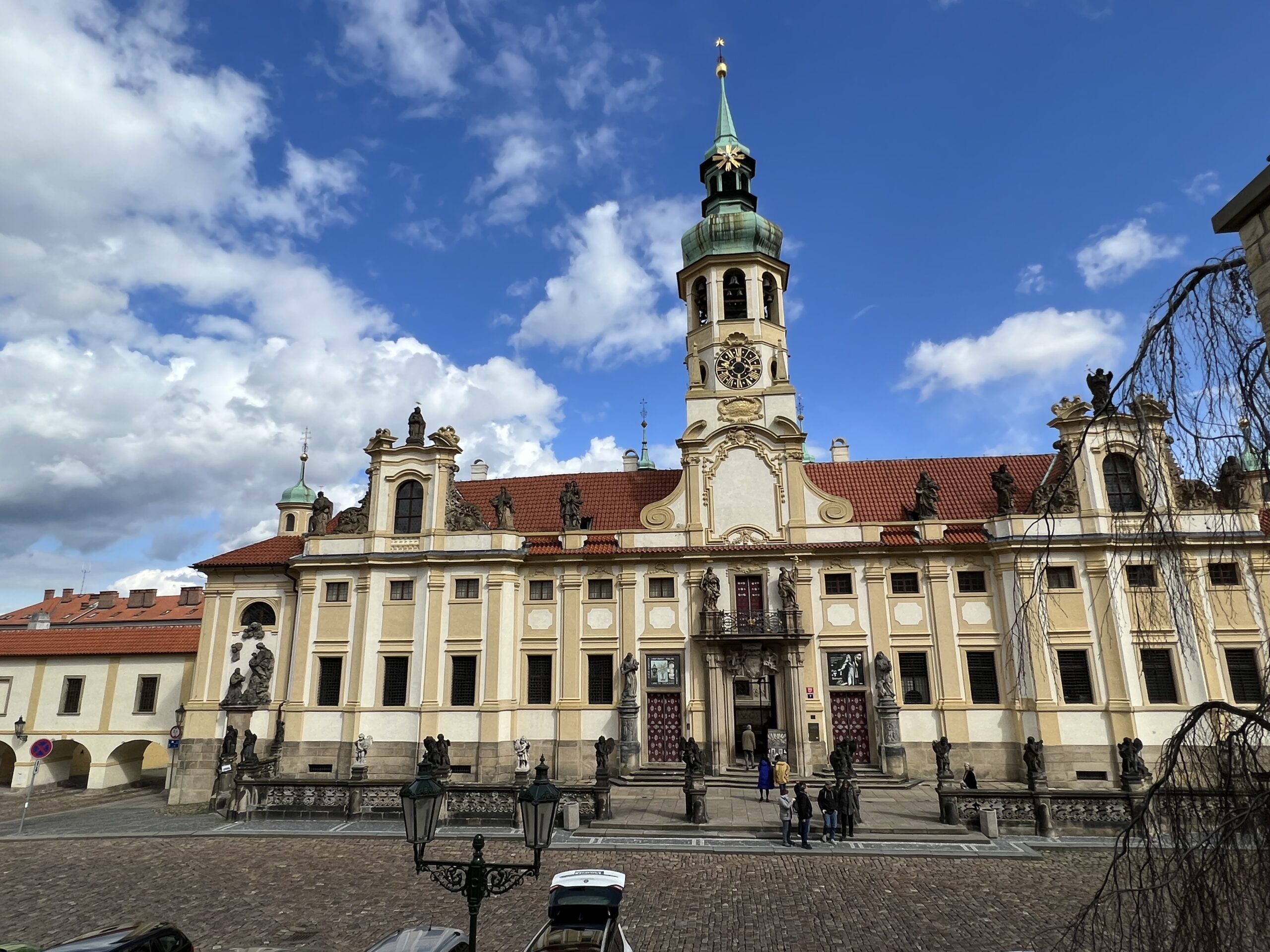
The facade was created around 1720 to a design by the Bohemian architect Kilian Ignaz Dientzenhofer (1689-1751). The construction of the sanctuary was completed in 1722.
A Stations of the Cross depicts many images. There is also a chapel of Our Lady of Sorrows with a Gothic Pietà from c. 1450. The effigy was donated in 1685 and the donor purchased the artwork in 1640. The chapel was built in 1686.
An Anna chapel from 1687 at the Stations of the Cross has also been included. Furthermore, the dedication in the temple is displayed. A chapel of the Holy Family was also built in 1691, along with angels.

In the sanctuary stands a Church of the Nativity of Christ in the east wing of the cloister. The main altar, created between 1735-1737, depicts a praying Mary by artist Matthias Schönherr (1701-1743).

From the very beginning, the Capuchins have looked after the sanctuary. However, during the period 1950-1989, this was not possible due to the violent communist occupation.
Pilgrimage site

The Loreto Sanctuary in Prague is a cultural monument, showcasing Baroque art. The Holy House is a replica of the cottage in Nazareth that is located in Loreto, Italy. Legend tells that Mary's Holy House was brought by angels from Nazareth to Loreto, Italy. Here in Prague stands a recreated cottage of the Holy House from Loreto. The Holy House is situated in the courtyard and forms the centrepiece of the sanctuary. The house is surrounded by a cloister.
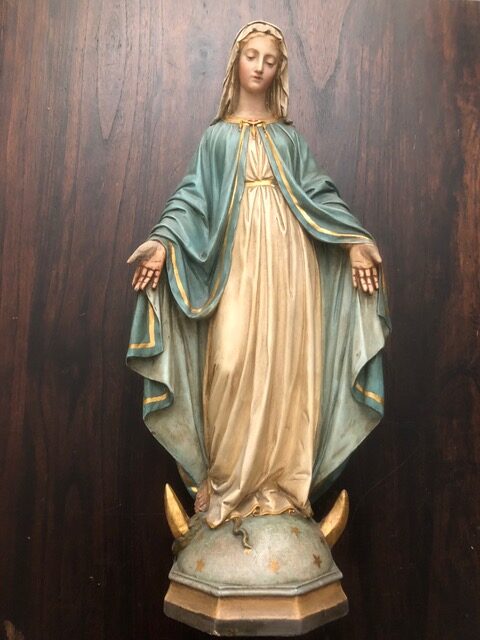
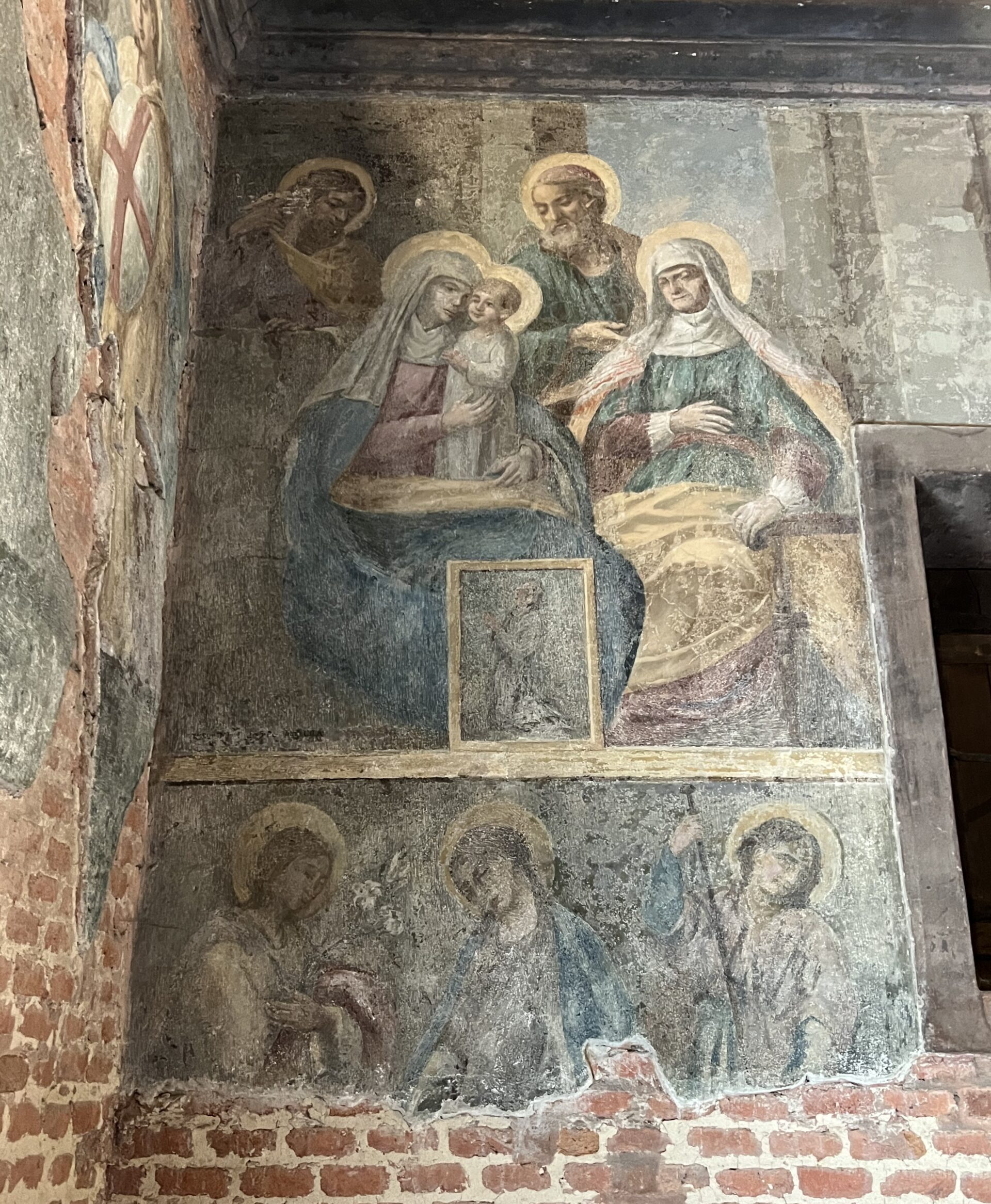
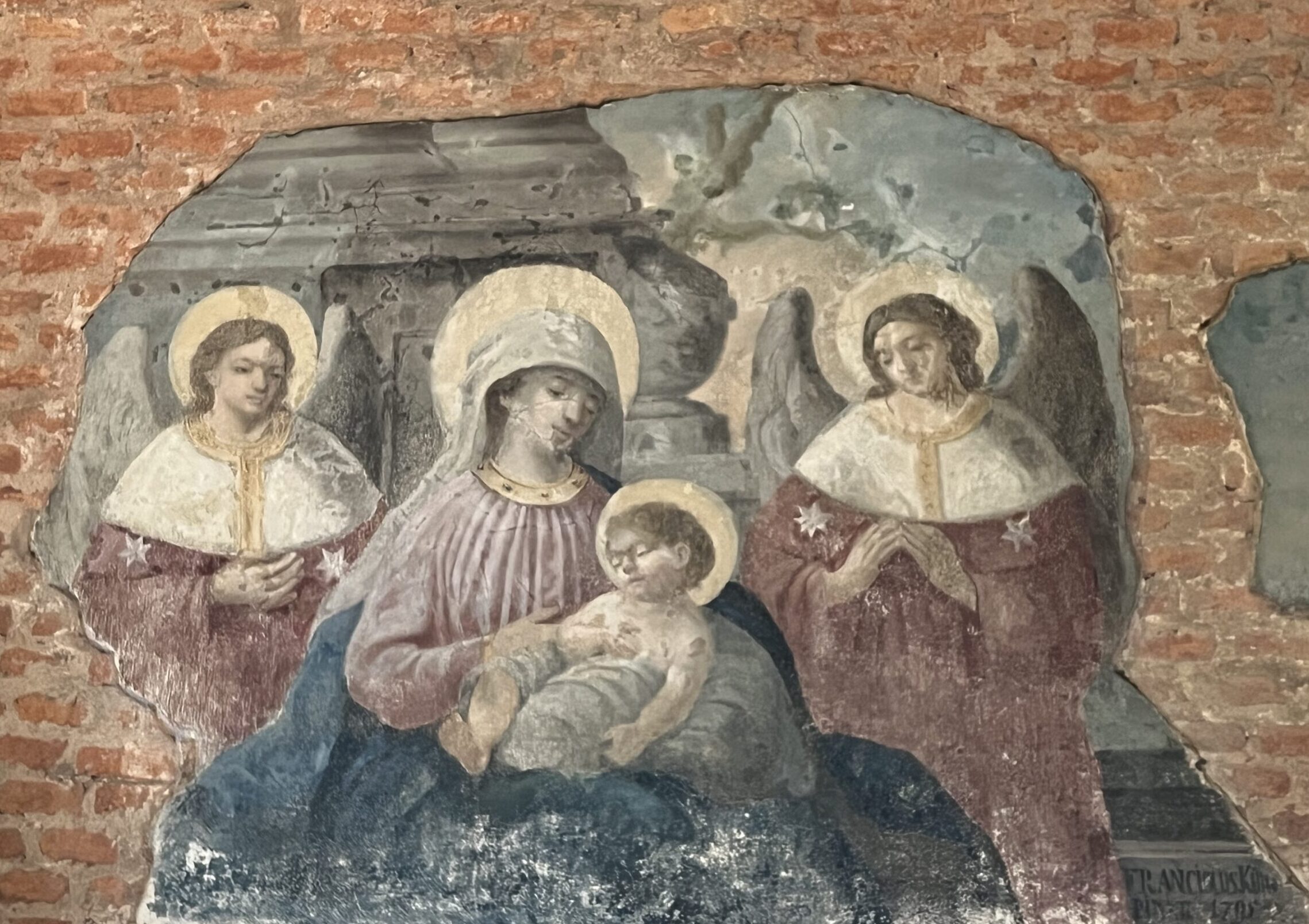
The altar in the Holy House is protected by a grate. Behind this stands the shrine statue of Our Lady of Loreto. It is a wooden replica of the Italian statue. In a niche, Mary sits on a throne. Underneath the window is the year 1671. The frescoes in the house depict special events from Mary's life. These were created in 1795 and differ from the paintings in the Italian Loreto.

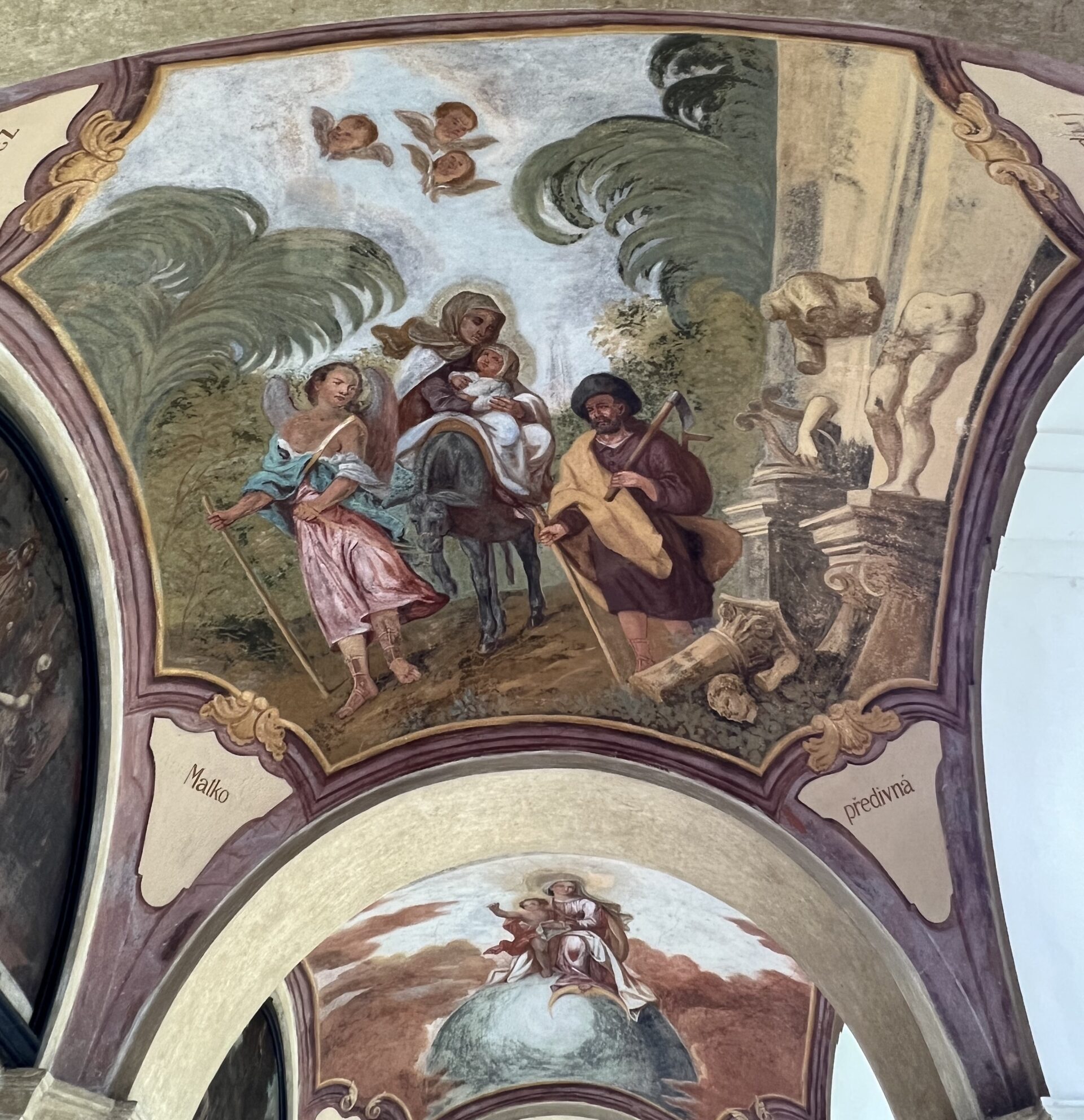
The decoration surrounding the Holy House depicts stages from the life of Mary, such as her birth, betrothal, the Annunciation, the Visitation, the Holy Family, and her death. The relocation of the Holy House is also depicted.
Behind the Holy House stands a Baroque church of the Nativity of Christ with an interior in the Rococo style. The cloister displays many chapels with altars and paintings of saints.
The carillon in the sanctuary's tower rings out a Marian song at the start of each hour. The 27 bells were cast in Amsterdam, Netherlands. This tradition stems from a legend from 1694. A widow from a nearby poor neighbourhood adopts 27 children. Then the plague arrives, and all the children die from it. Each time a child dies, the woman has the death knell rung for a silver coin. When the children have died from the plague, the widow also dies, and her money is also gone. Our Lady of Loreto then has angels sing, and the carillon continues every hour with a Marian song.
The sanctuary possesses two Baroque fountains, which are richly decorated and were installed around 1740.
In the Church of the Nativity, there is a crypt with frescoes, which was only discovered in 2011. This is not accessible. However, the crypt is projected in 3D form in the last room of the cloister. The frescoes depict the death and resurrection of Christ and were applied in 1664.
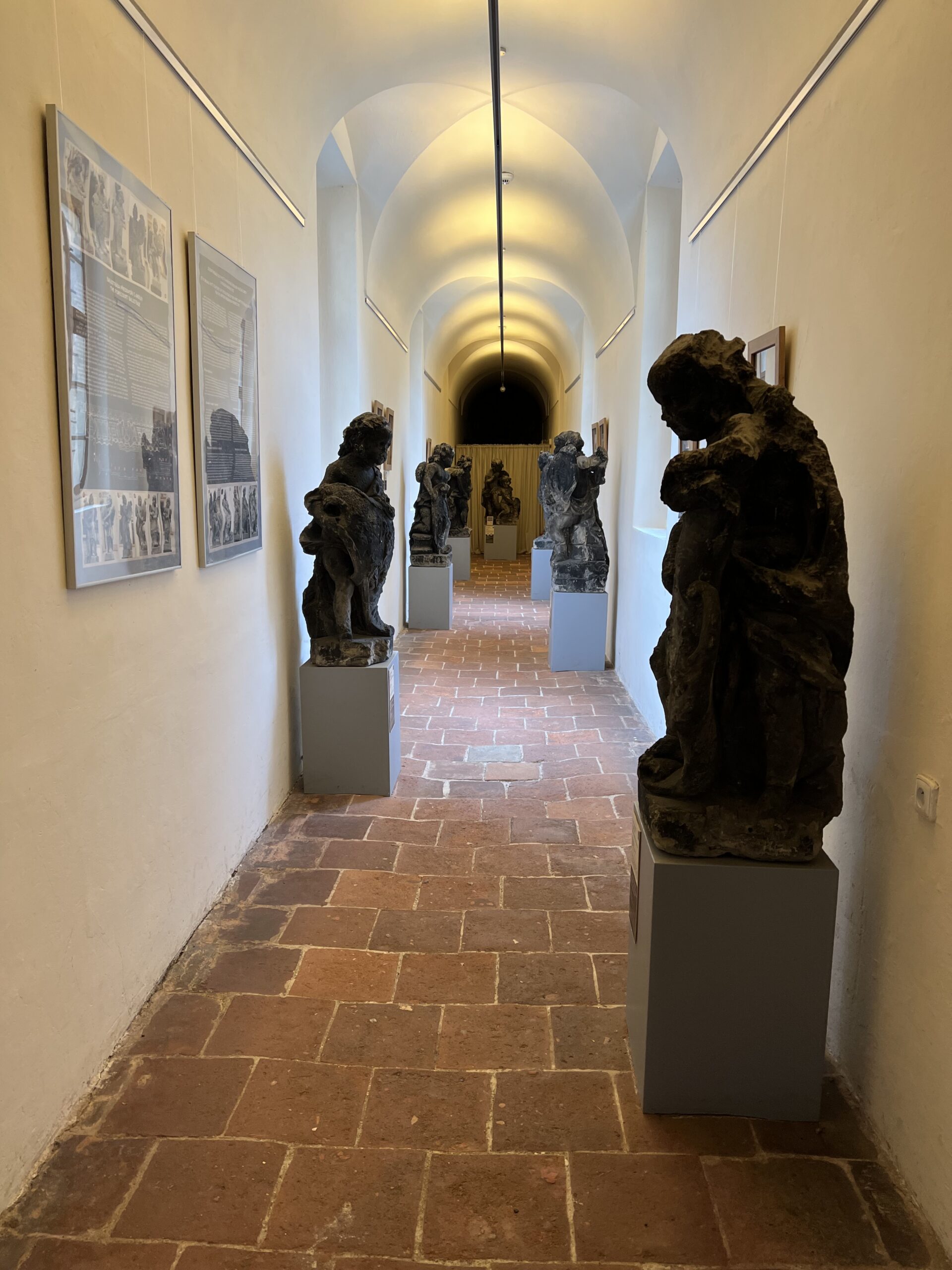
The treasury of the sanctuary was opened in 1962 and is located on the first floor of the cloister. Paintings, statues, jewellery and monstrances are on display there. The showpiece is a silver monstrance with 6222 diamonds, which was made in Vienna between 1696 and 1699. The design is by Johann Bernard Fischer von Erlach (1656-1723). Many expressions of gratitude to Mary are also exhibited there.
The House of Loreto also has a shop selling devotional items.
The Loreto Chapel is not only the oldest Loreto shrine in Bohemia, but also the most famous and most visited resort.
The Chapel of the Holy House of Loreto is open daily.
ACCESSIBILITY
The Loreto Sanctuary in Prague is situated on Loreto Square, behind the Castle.
Address: Loreta Prague, Loretánské náměstí 7, 11800 Prague 1.
Current information can be found at www.loreta.cz.
Experience
After parking the car at the hotel in the city centre of Prague and taking the suitcase up to the room, I will go to the Loreto Sanctuary. I cross the river that divides the city into two areas. The road goes uphill. After about two kilometres of walking, I arrive at the Prague Loreto Sanctuary. Notice the impressive, cream-coloured facade with the former monastery rooms to the right, which now houses a hotel. The green spires also catch my eye. I go inside and the first thing I do is visit the Holy House (Santa Casa).
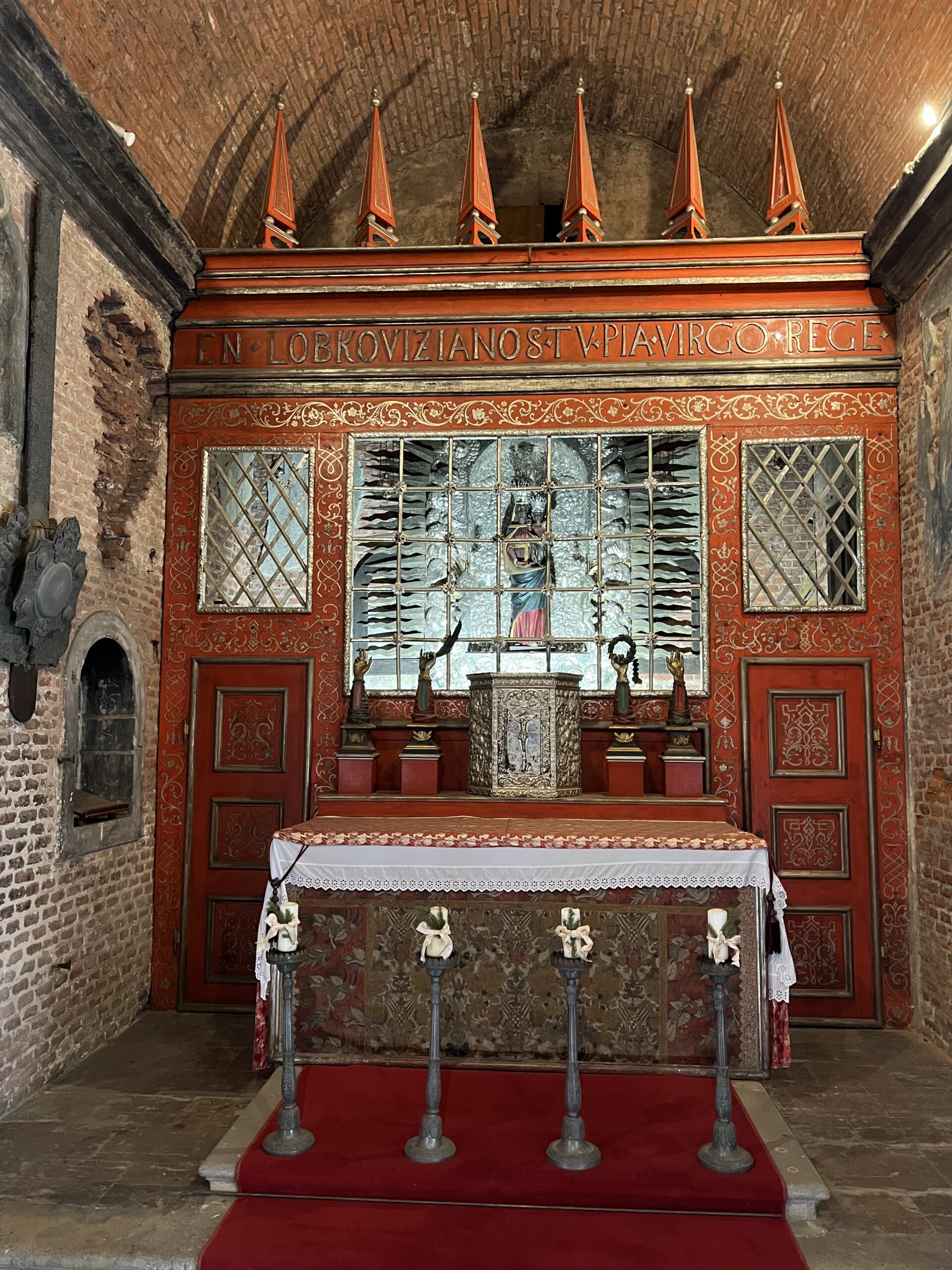
The interior of the Holy House immediately reminds me of the one in Loreto, Italy. A great deal of effort has been made to create a faithful replica here. Visitors are drawn into a special atmosphere by the ancient walls, frescoes, and the altar of Mary. I stand before the silver altar and the wooden statue of Mary. I find the painted scenes from the life of Mary particularly beautiful. For many, it is closer to experiencing “Loreto” here than in Italy. The Holy House has been brought closer to the people of the Czech Republic and neighbouring countries.
I also visit the treasury on the first floor of the cloister with relics and monstrances, among other things. Here are more valuables such as chasubles, mitres, and crucifixes. The showpiece of the collection is “The Prague Sun” with more than 6000 diamonds. The valuable work of art was made in Vienna between 1696 and 1699. There is a lot of information to read here about the past of this sanctuary. A portrait of an influential woman also hangs here. She meant a lot to the realisation of this sanctuary.

The cloister of the sanctuary reveals much to visitors, such as many statues of saints and frescoes. What expressions of extraordinary art! The vaults were painted by the German artist Felix Anton Scheffler (1701-1760). An extensive “Maria atlas” with many depictions of Our Lady's pilgrimage sites is displayed high on the walls of the cloister. I recognise, among others, a painting of Zichem (Scherpenheuvel) with the tree, which was added between 1687 and 1693.
The visit to this sanctuary has made a great impression on me. It feels like a great gift to be allowed to be here.

Environment
There is much to visit in Prague, including a cathedral and two churches dedicated to Saint Nicholas.
One of the oldest churches in Prague is St. Gallus' Church, built around 1280 and rebuilt in the 17th century. The interior of the nave features paintings depicting scenes from the life of Mary.
Address: Havelská 539/24, 11000 Staré Mesto.
The Sanctuary of Příbram is located 60 km south-west of Prague, and 91 km west of the capital is the town of Plzeň. To visit the large city of Brno, one must travel 208 km to the south-east.
~~~

 Nederlands
  English (UK)
  Deutsch
  Français