History
Příbram is historically a mining town. Mining dates back many centuries to the time of the Celts (around 600 BC). The region yields lead, iron ore, silver and uranium.
With its surrounding walls and corner chapels, the current complex of the Holy Mountain is reminiscent of a fortress or castle, namely the Maria-burcht. The form of the oldest part of the building dates from around 1650. A legend lies at the root of the sanctuary. In 1260, a knight had a chapel built as thanks to Our Lady. Mary had heard his prayer for protection against enemies, such as robbers and soldiers. Another story is that a knight asked the bishop for permission to build a chapel. This bishop was Ernst von Pardubitz/Arnost z Pardubic (c. 1300-1364), Archbishop of Prague (1344-1364), who, in 1348, carved a wooden statue of Mary himself and kept it on the altar of his castle chapel.

The Saxon invasion of Bohemia in 1631 was a severe blow to the region and the chapel. The enemy army set up their tents there, and the chapel was used as a horse stable. The soldiers burned almost everything, but they left the statues on the altar standing.
On 10 June 1632, Jan Procházka, a blind beggar, goes to the Holy Mountain with his 10-year-old grandson. He has had the same dream for several days consecutively, in which he is summoned to go to the Holy Mountain and ask Our Lady for the healing of his eyes. The man and his grandson pray on the mountain for a few days, and then a miracle happens, as the man can see again, as promised in the dream. This miracle becomes known among the local people and subsequently in the wider area. As a result, the place exerts great attraction on believers.
In 1634, Ferdinand II (1578-1637) visited the simple chapel to praise Our Lady. He was Holy Roman Emperor (1619-1637). During that period, Ferdinand II was also King of Bohemia and Hungary and Archduke of Austria. He was there with his son Ferdinand III.
Following this visit, many nobles arrived at the Holy Mountain. The complex of the Holy Mountain was realised by many philanthropists of noble descent, including Countess Maria Eva Elisabeth von Sternberg (1605-1668) and Countess Maria Katharina Strozzi (1633-1714).
In 1646, Ferdinand III (1608-1657) visits the Holy Mountain twice. He is Holy Roman Emperor (1637-1657) and also King of Bohemia and Hungary. Ferdinand III is also Archduke of Austria.
In 1647, the Jesuits took on the care of the Holy Mountain. The number of pilgrims increased year by year. In 1659, plans for a large sanctuary were discussed with, among others, the Italian architect Carlo Lurago, also known as Luraghi (1615-1684). Shortly afterwards, hostilities began due to the violence of war.
In 1665, the Jesuits brought the statue of grace to the Holy Mountain. This happened after the violence of war, which the town of Příbram suffered from. In that same year, the construction of the sanctuary was resumed. Architect Lurago was again involved in the further realisation of the pilgrimage church and monastery between 1659 and 1674.
On 27 August 1673, the consecration of the partially completed shrine takes place. This is performed by Matthäus Ferdinand Sobek von Bilenberg (1618-1675), Archbishop of Prague (1669-1675).
A painting of Our Lady of the Holy Mountain by portrait painter Karel Skréta (1610-1674) dates from 1654.
On 30 August 1676, Leopold I (1640-1705) visits the Holy Mountain. He is Holy Roman Emperor (1658-1705) and also King of Germany, Hungary, Croatia and Slovenia.
The place of pilgrimage also experiences great setbacks, such as the plague in 1680 and the war with the Turks in 1683, which claim many victims.
At the end of the 17th century, more than 1000 miraculous healings were recorded.
On 22 June 1732, the miraculous image is crowned.
In 1773, the Jesuits were forced to leave; processions were banned, monasteries closed, and church property seized.
In 1861, Redemptorists arrived at the Holy Mountain and organised pilgrimages. The clergy remained there until 1950, when they had to leave due to political upheavals. Monastic life was forbidden by the communist rulers. In 1990, the Redemptorists were allowed back and returned to start numerous restoration works.
Through the approval of Pius X, Pope in the period 1903-1914, born Giuseppe Melchiorre Sarto (1835-1914), the church was elevated to the status of a basilica in 1905.
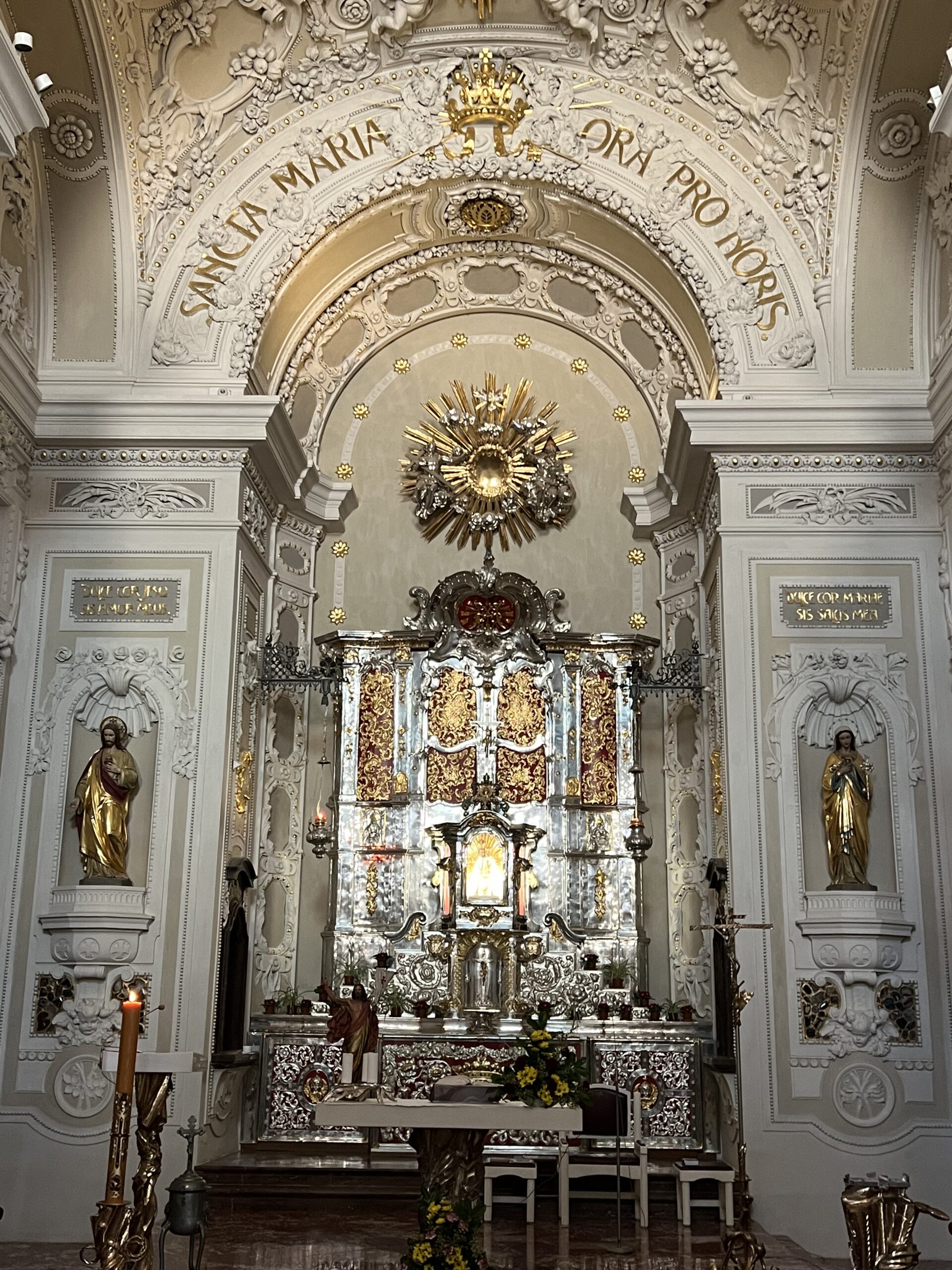
In 1998, the 650th anniversary of the miraculous image was celebrated. In 2000, the Stations of the Cross in the adjacent park were restored and consecrated. A museum and a shop selling devotional items were established by the Stations of the Cross in 2001. In 2005, the celebration of 100 years of the basilica was held, with gifts including a new altar and a new throne for the miraculous image, created by sculptor Otmar Oliva (1952).
In 2015, renovation works were carried out on the interior of the monastery and the shop for the sale of devotional items. An interactive, permanent exhibition was also created, situated by the Stations of the Cross.
Pilgrimage site
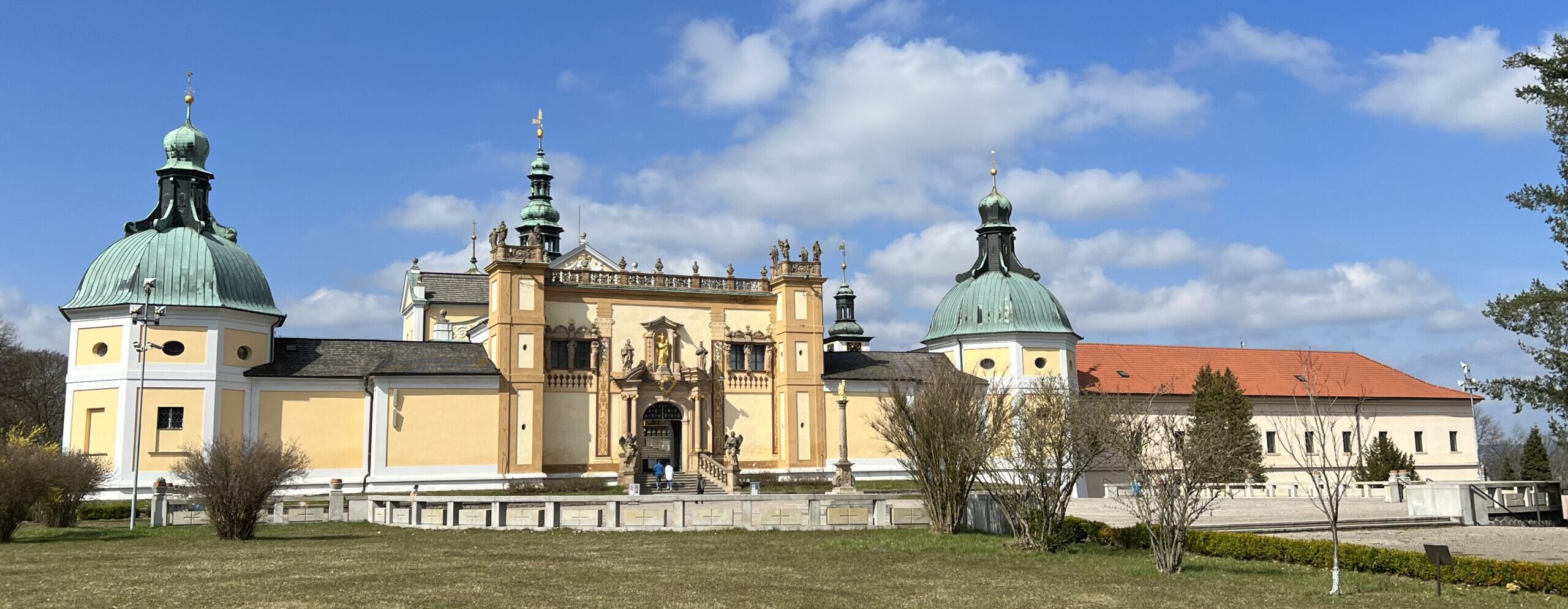
The Holy Mountain is a well-known place of pilgrimage to Mary. The shrine is dedicated to Mary's Assumption.
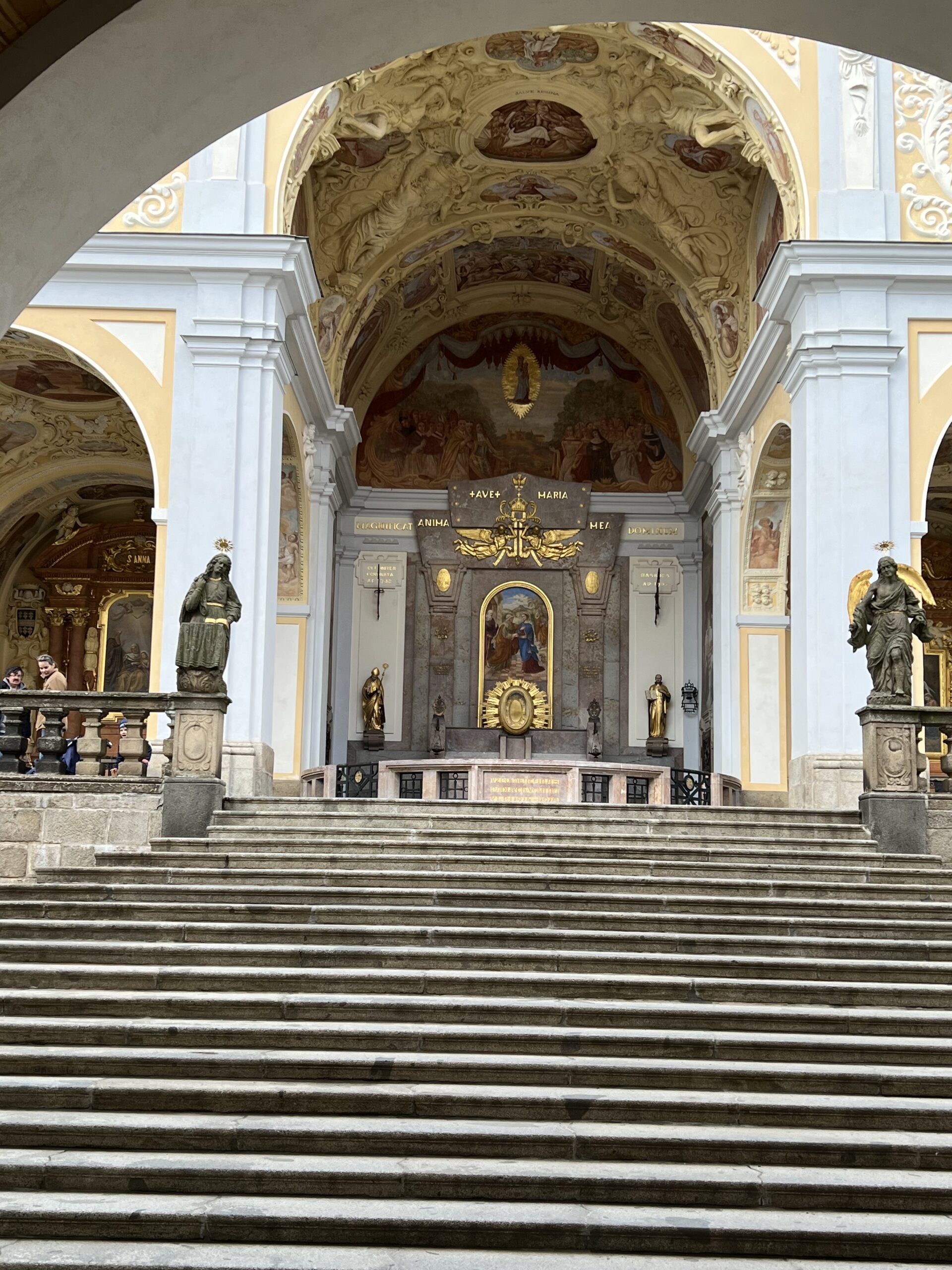
A walled, more than 400-metre-long, staircase with over 300 steps connects the town of Příbram with the Holy Mountain. Under the direction of the Bohemian architect Kilian Ignaz Dientzenhofer (1689-1751), the staircase was built in 1728. The staircase was renovated in 1993. This Holy Mountain (Svatá Hora) is the oldest and most famous place of Marian pilgrimage in Bohemia. The Marian site, with its Baroque expressions, attracts believers and art lovers from home and abroad.
The central part of the sanctuary stands on a plinth 42m long, 31m wide and about three metres high. This is where the basilica stands, measuring 20m long and wide and 18m high. The silver altar is the work of several artists from different periods. On this altar stands the icon of Our Lady. It was first located in the castle chapel of Príbram and later the effigy was brought to the sanctuary. The icon, dating from the 14th century, is 50cm high and carved from wood. The effigy is the most important feature of the pilgrimage site. The crowning of the image in 1732 is commemorated annually.
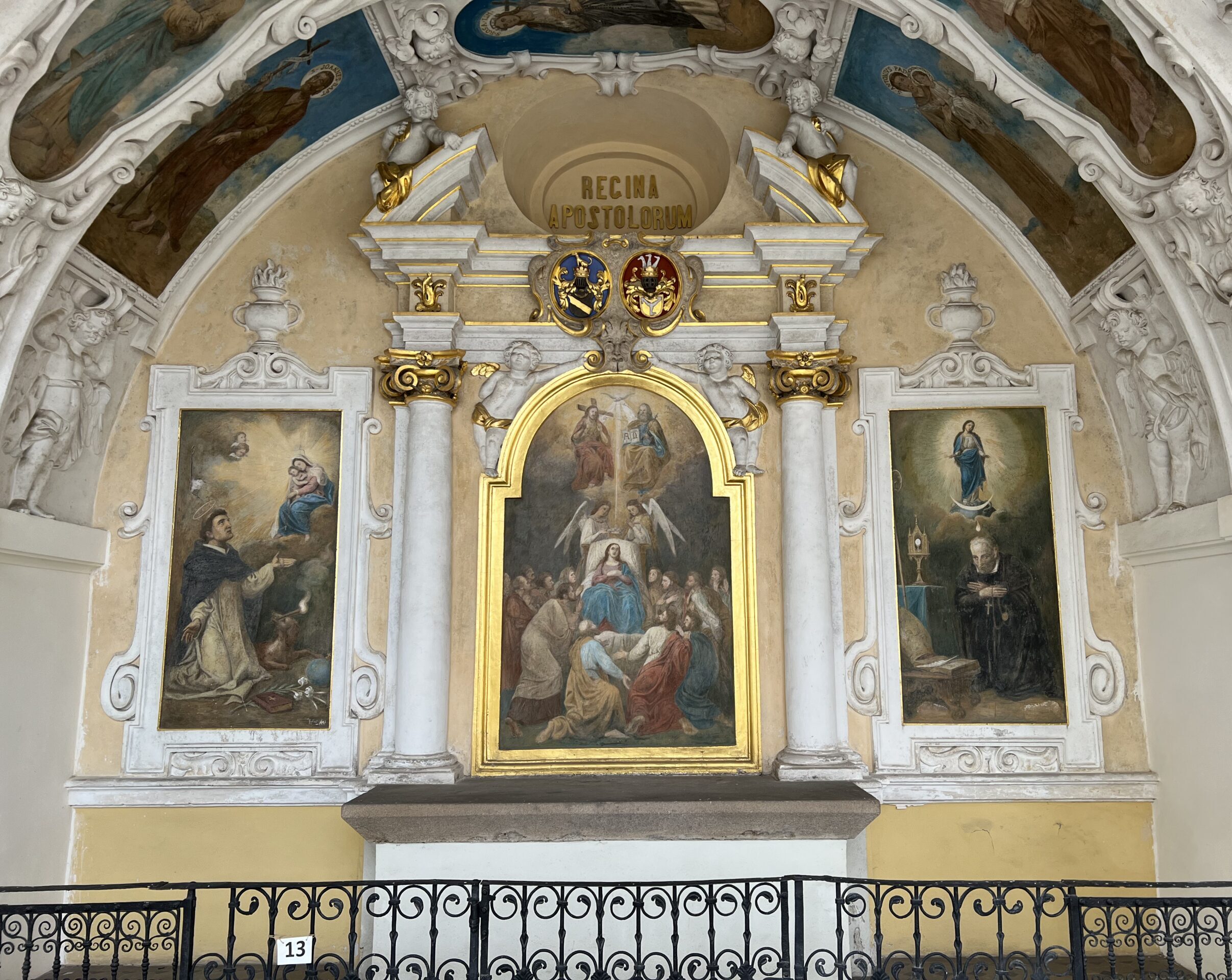
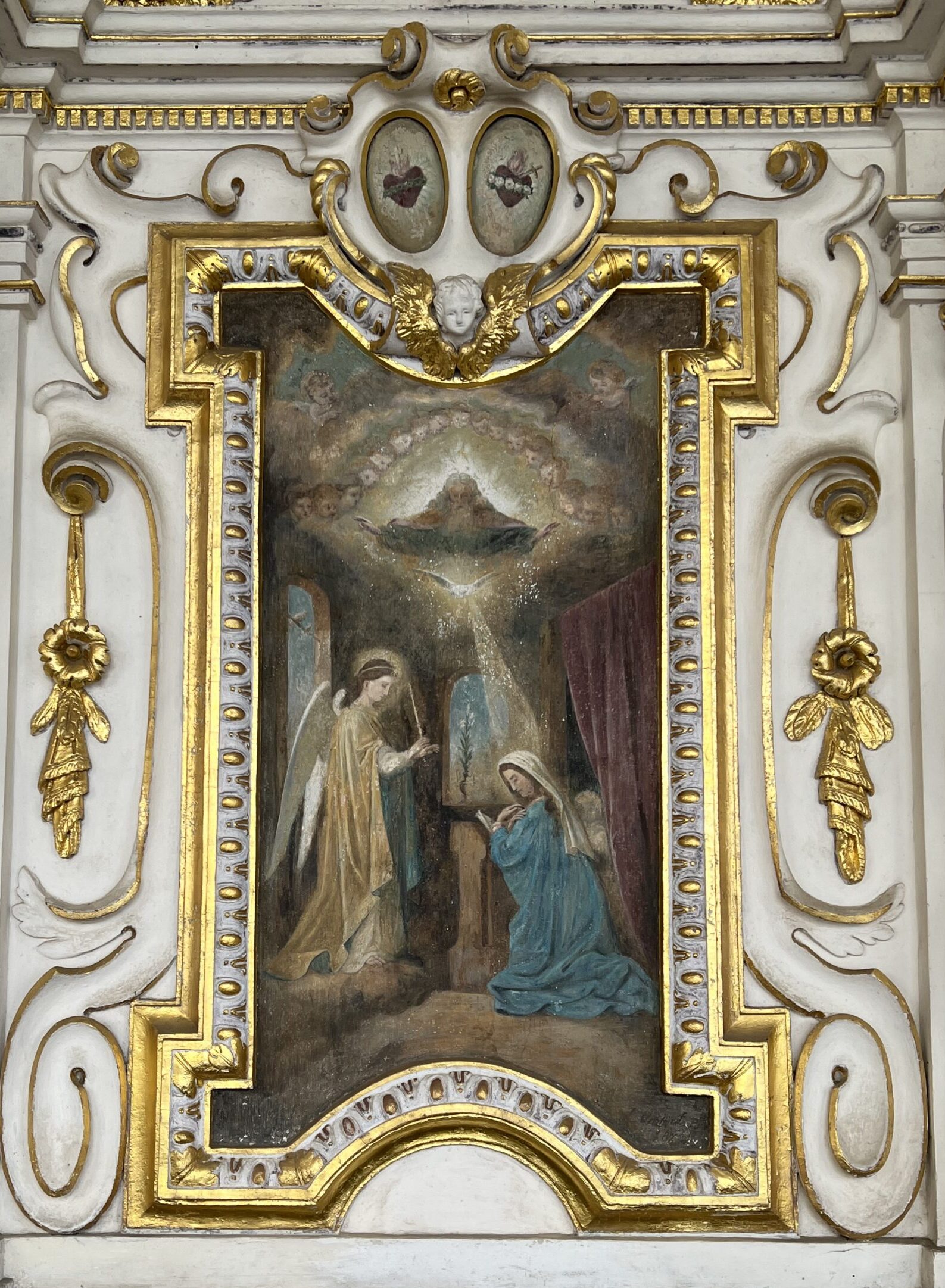
In the covered cloister of the sanctuary, most of which was built between 1661 and 1698, there are chapels, including the Prague chapel of the Annunciation of Mary. Among other things, the betrothal of Mary is also depicted.
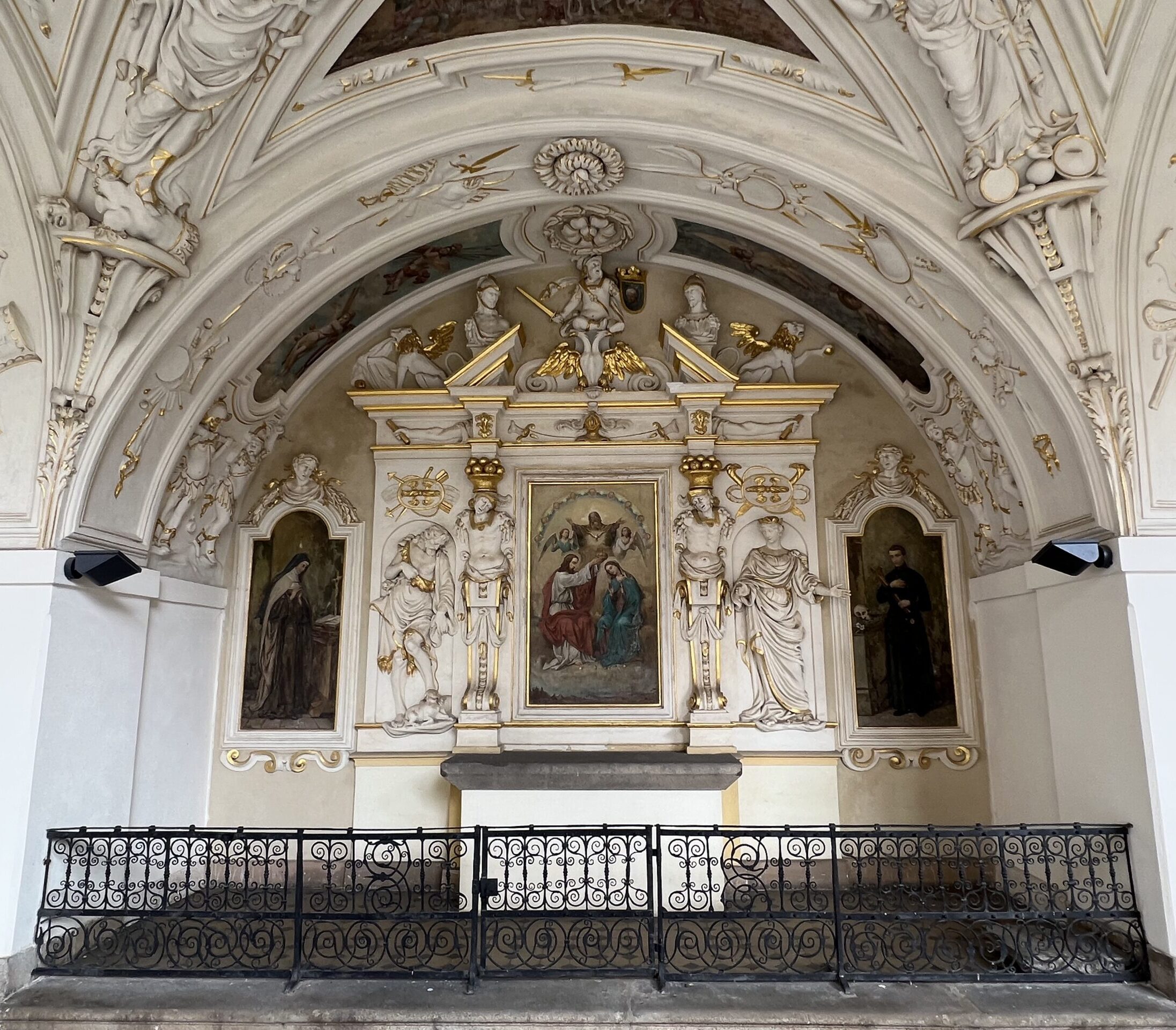
The chapel of the Assumption of Mary is also called the Pilsen Chapel. The altar statues of Saint Bartholomew, patron saint of Pilsen, the Virgin Mary, and Saint Nicholas are dated to the year 1879.
The chapel of the cloister of Mary was donated in 1661, and here you can also find statues of Catherine of Siena and Saint Nicholas from 1875.
The monastery has a treasury, bell tower, and clock tower on display.
The baroque basilica is open daily.
ACCESSIBILITY
The Sanctuary of the Holy Mountain is located near the centre of the town of Príbram, a town of approximately 36,000 inhabitants, in the Central Bohemian Region, at the foot of the Brdy Hills. Príbram is located about 60 km south-west of Prague.
Address: Svatá Hora 590, Příbram II, 26101 Příbram
Actual information can be found on www.svata-hora.cz.
Experience
At the bottom of the mountain, there is a car park and there I will park the car in line and go up on foot. After gaining some altitude, I arrive at a large square with a view of the wide front facade of the shrine. In the middle of the square stands a tall pedestal with a statue of Mary on top. Here, one can enjoy the expansive view and get a good view of the town of Příbram.
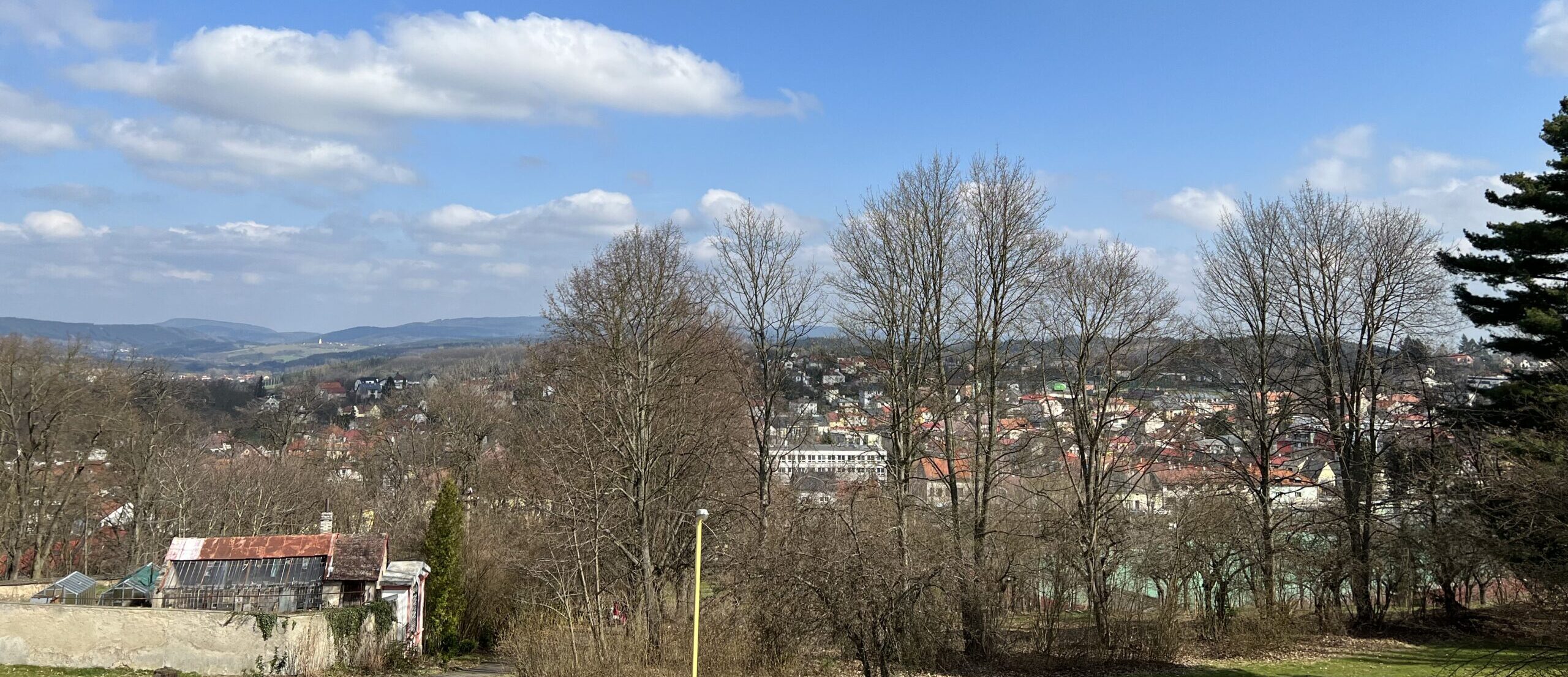
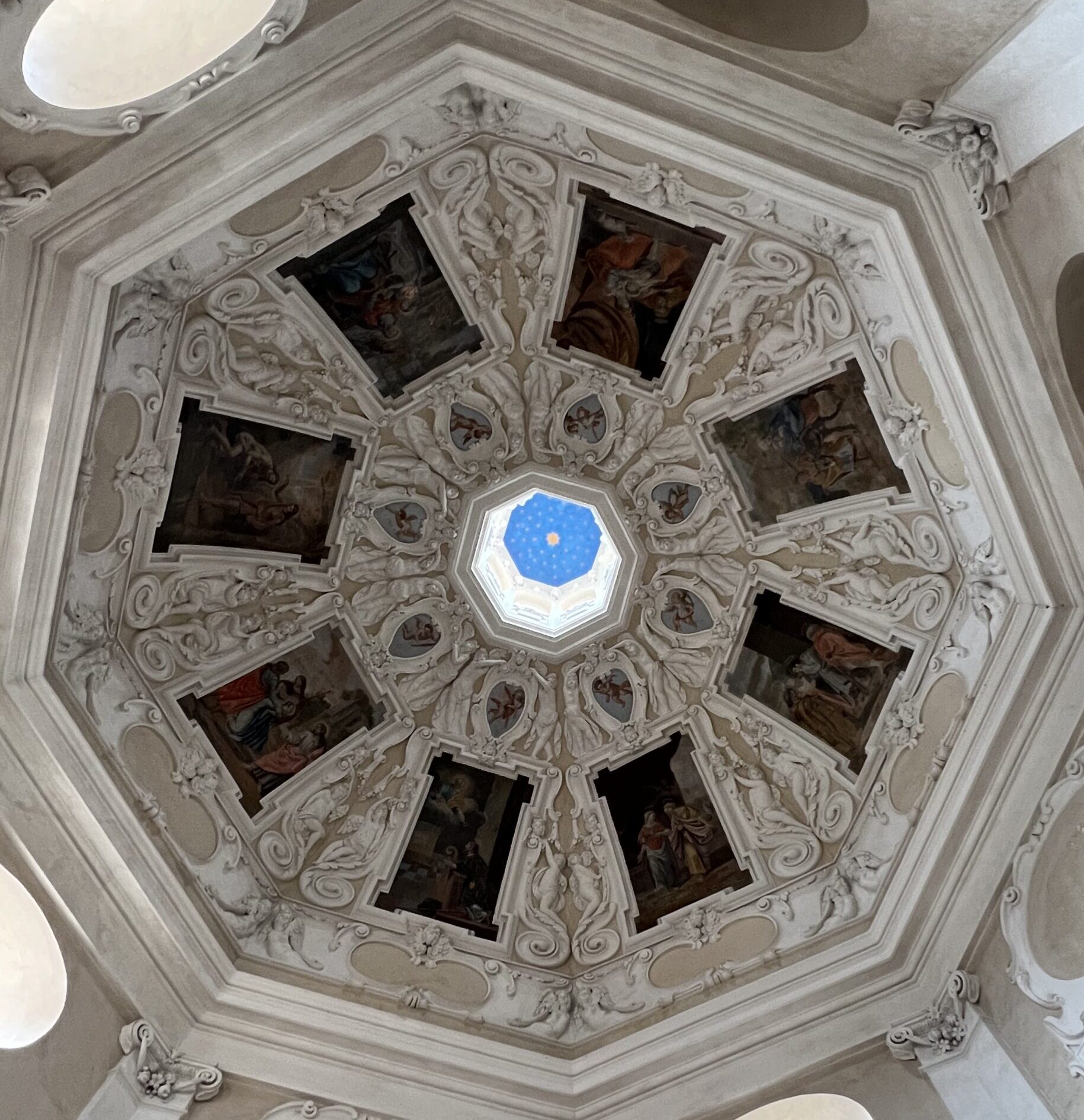
Later on, I will go into the sanctuary and walk around the covered cloister. It is entirely painted and there are chapels to pause at for a while. The history of this place is depicted by many images. Mary is often portrayed through phases of her life. I also see representations of Saint Nicholas. I will pay the statues a long visit. What a lot of beauty to enjoy here!
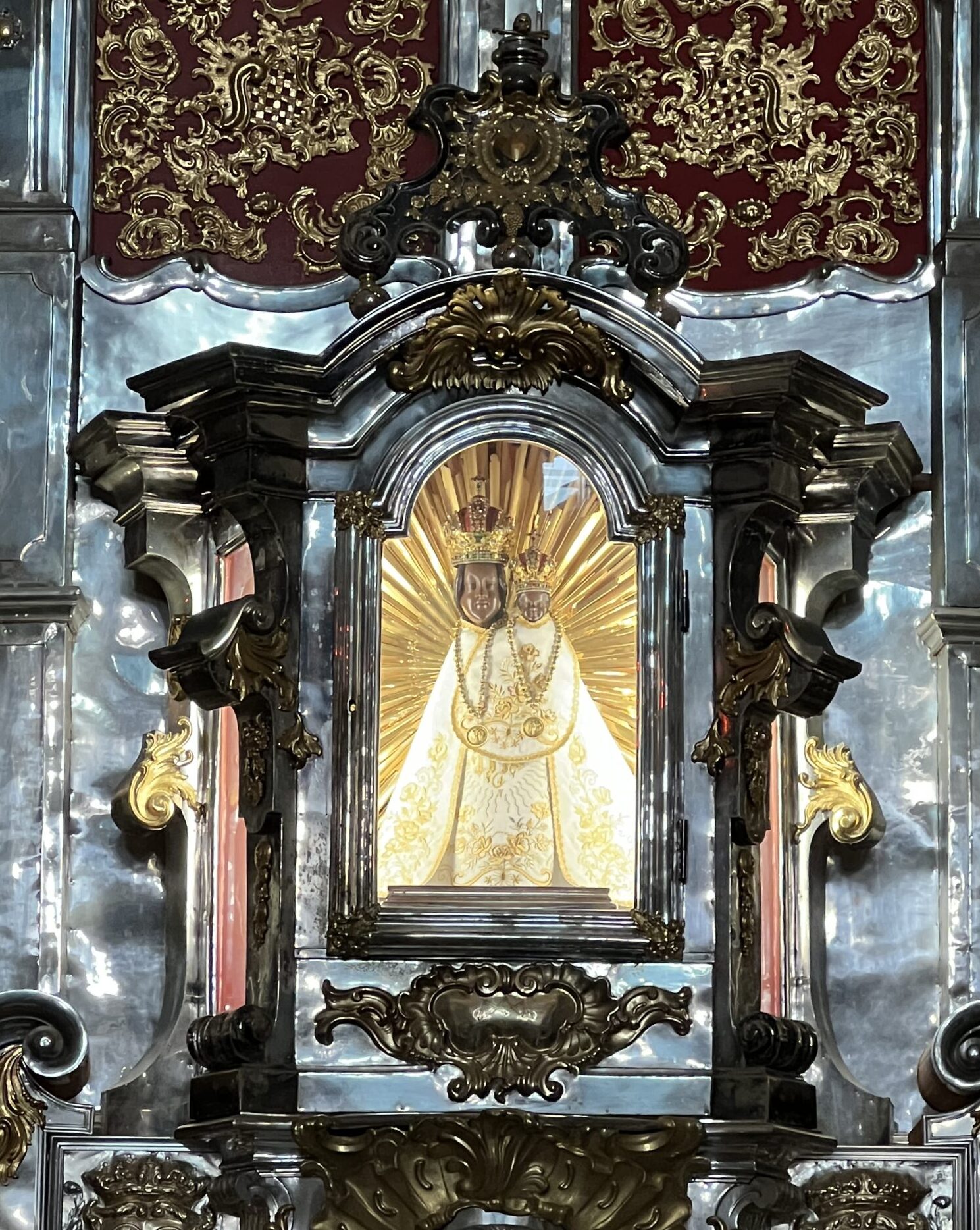
After the grand tour, I go up the stairs into the basilica. There, I am amazed by the sheer amount of art to admire. What splendour! The statue of Our Lady of Grace is the central point in a space filled with statues, paintings, frescoes, and candles. This is the ideal place to pray to Mary and thank her for a safe journey. Afterwards, my thoughts turn to friends who could use a little support.

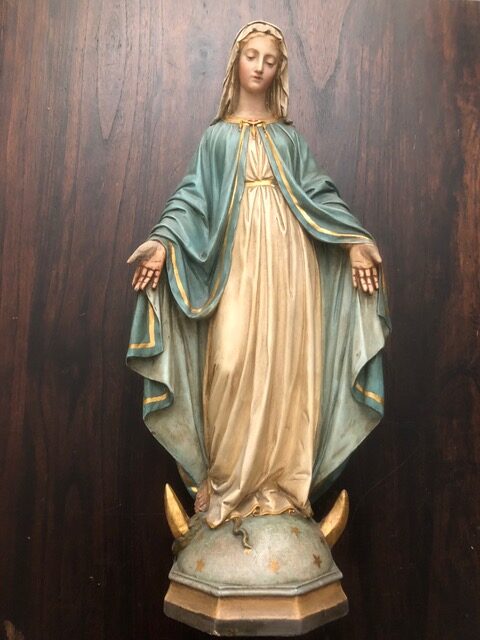
Next, I visit a shop selling religious items and buy a statue of Mary. Then I leave the sanctuary and go to the adjacent shops with all sorts of items about this sanctuary, Prague and the Czech Republic. What a beautiful and moving visit to the largest pilgrimage site in Bohemia and one of the most beautiful pilgrimage sites in Central Europe.
Environment
Travelling from the Sanctuary of Příbram to Prague means going 60 km to the northeast. To visit the city of Pilsen from Příbram, you need to travel 62 km in a westerly direction. The city of Karlovy Vary is located 180 km northwest of Příbram. To visit České Budějovice, the European Capital of Culture in 2028, you need to travel 100 km in a southerly direction.
Posted: 9 January 2024
~~~

 Nederlands
  English (UK)
  Deutsch
  Français