An iconostasis is a wooden or stone wall that separates the altar area, the Holy of Holies which only the priest has access to, from the nave; the part of the church where believers are allowed. The iconostasis is found in Orthodox churches. Icons of saints are displayed on the screen.
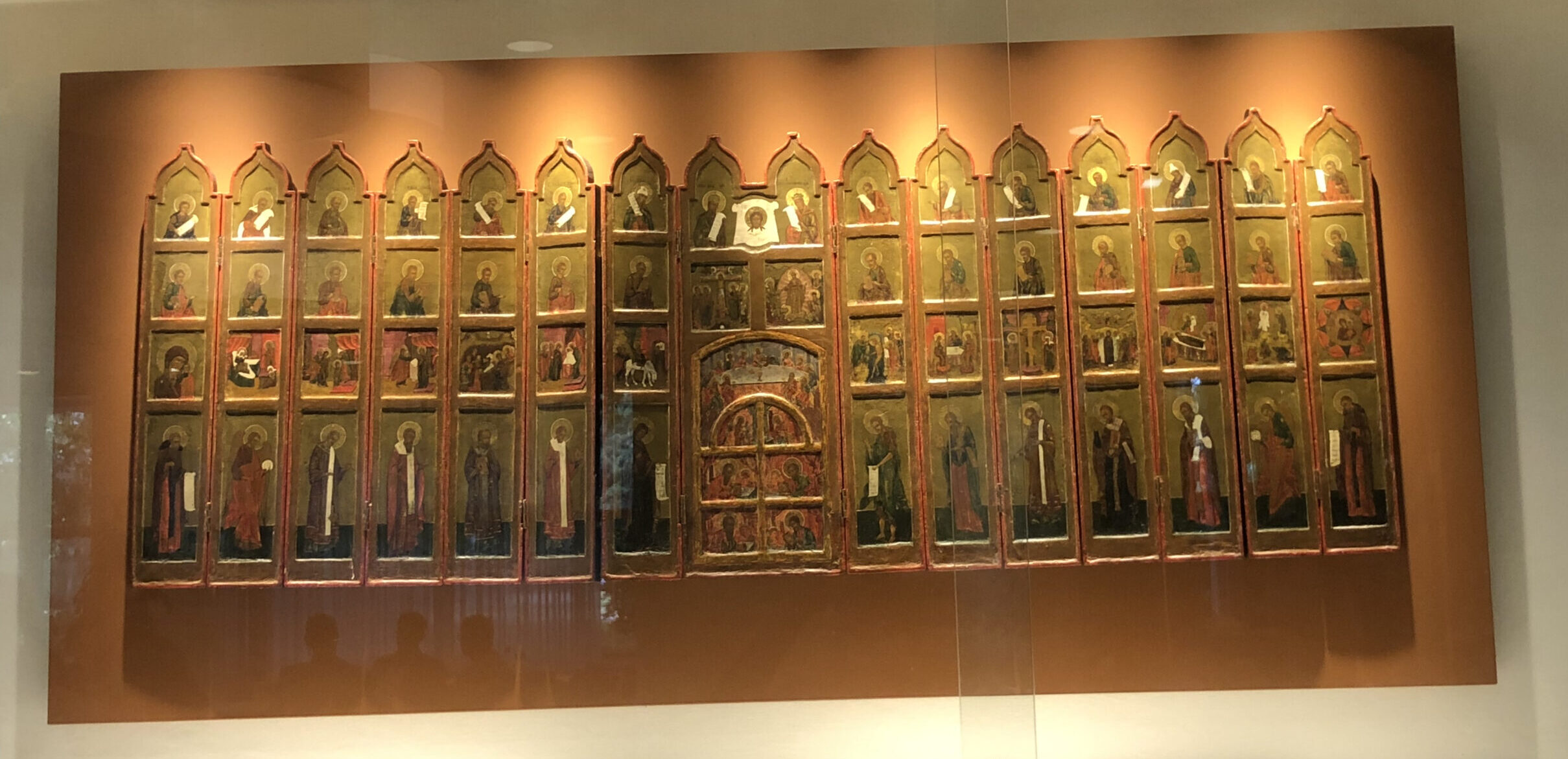
A travel iconostasis is a miniature wall, adapted for portability. The small panels on the wall are attached to each other by means of hinges. This allows the shelves with images to be folded up to make them easy to carry when travelling.
The travelling iconostasis is taken along in processions, on military campaigns, on journeys, and into homes. In the army, a movable iconostasis can be used to hold a service in the open field. The military's victory is achieved with the assistance of the carried iconostasis. A travelling iconostasis is also placed in the private chapel of the wealthy.
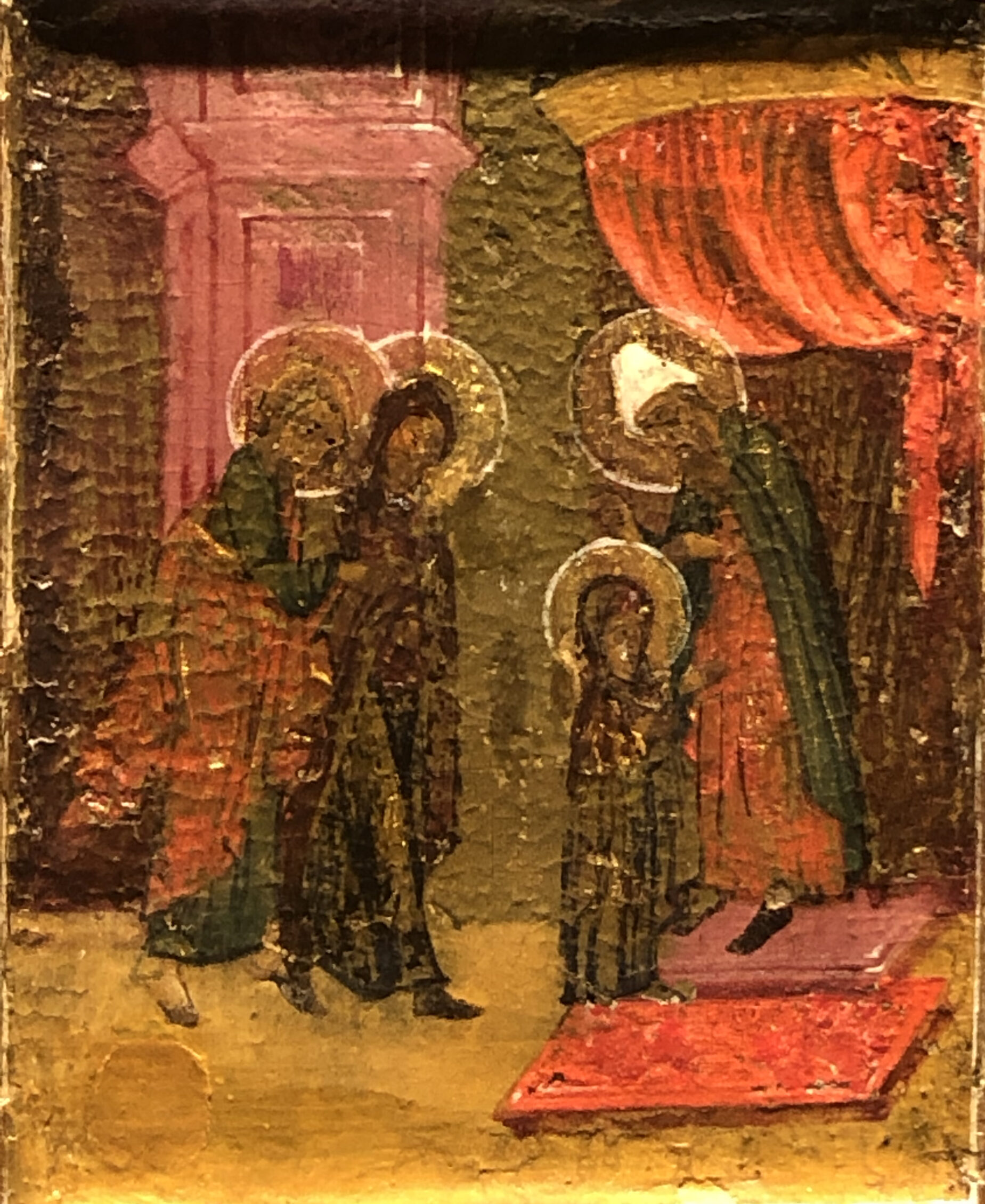
When a believer of the Orthodox Church is unable to attend church, a travel iconostasis offers a solution. In this way, one can pray to the depicted saints on the travel iconostasis outside of a church building.
In Radboud University Nijmegen, there is a pilgrimage iconostasis in the Anton van Duinkerken Hall. The movable partition with icons belongs to the Reinier Post Foundation. Regnerus Richardus (Reinier) Post (1894, Kloosterburen – 1968, Nijmegen), was a Dutch Roman Catholic priest, historian, and professor in Nijmegen. The Reinier Post Foundation aims to manage the separate assets of the Catholic University Nijmegen, now Radboud University Nijmegen, and this includes investing in Catholic art.
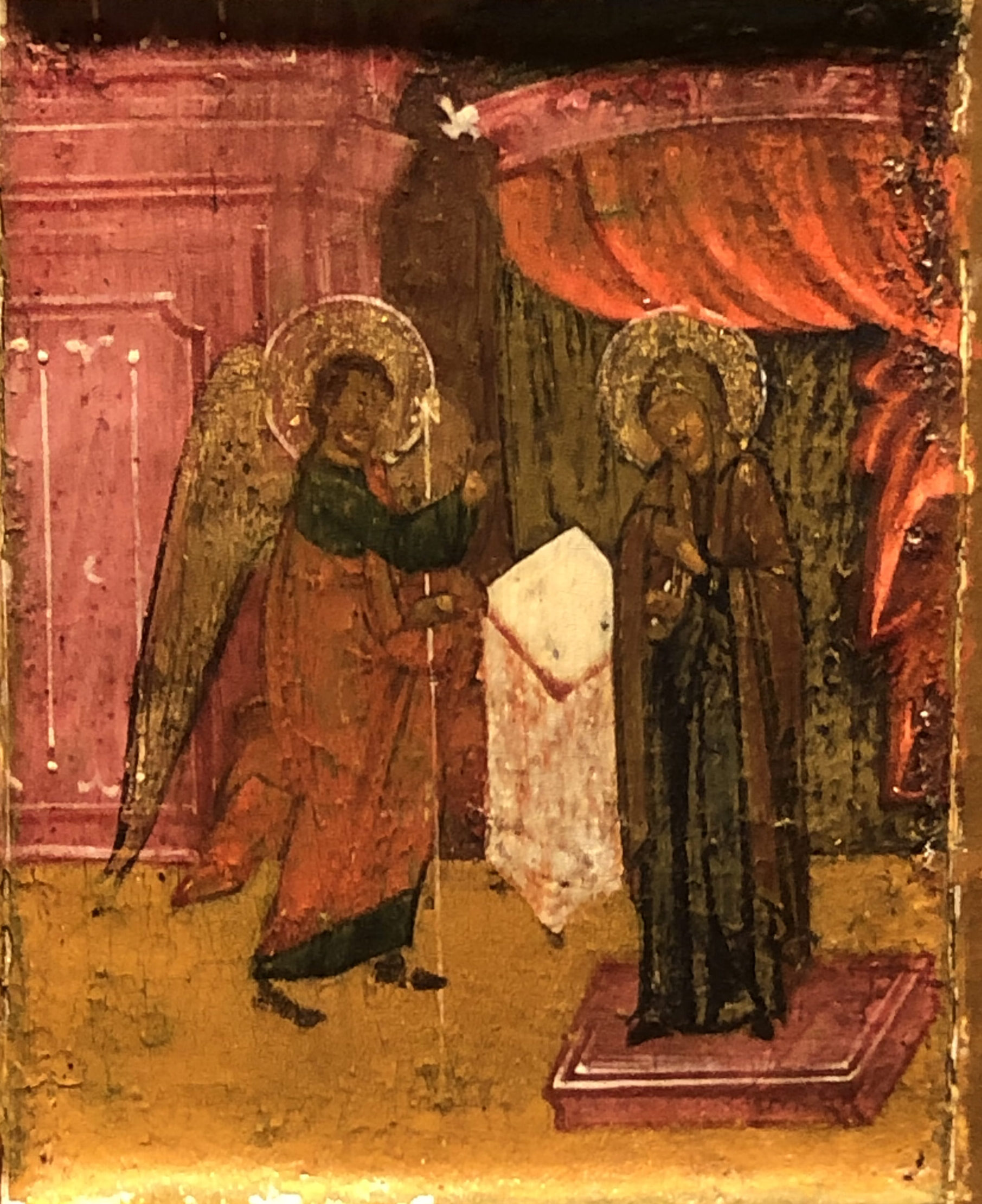
The travelling iconostasis present dates from the 19th century and originates from Russia. Since 1986, the coastal artwork has belonged to the art collection of Radboud University Nijmegen. The travelling iconostasis features 68 images and consists of 15 panels, which are connected by hinges.
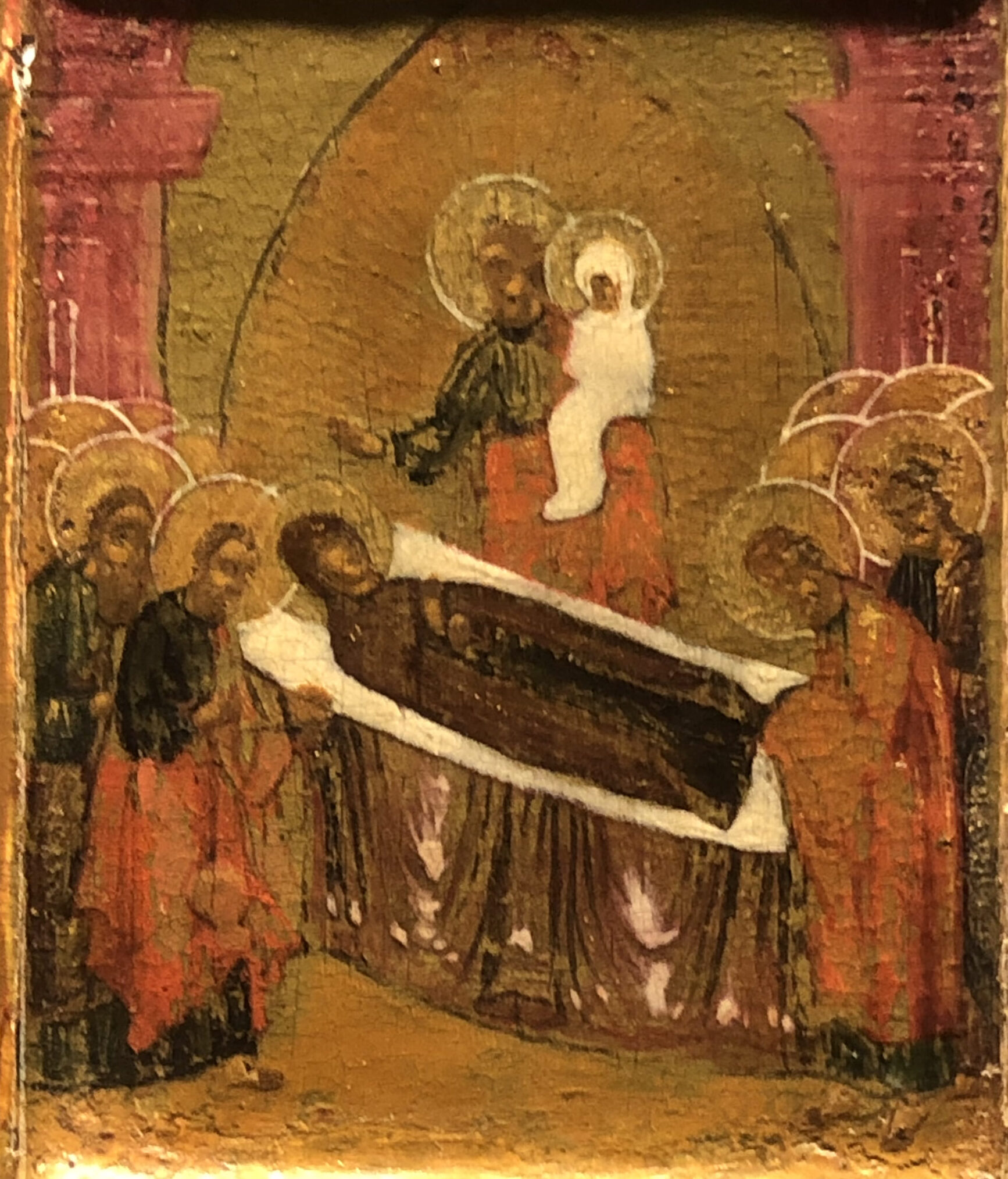
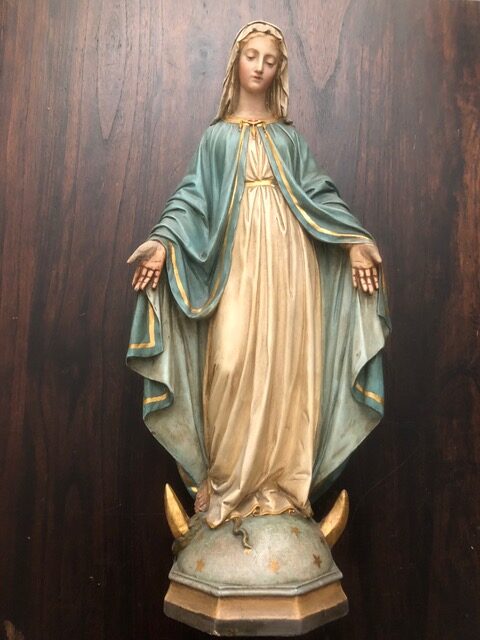
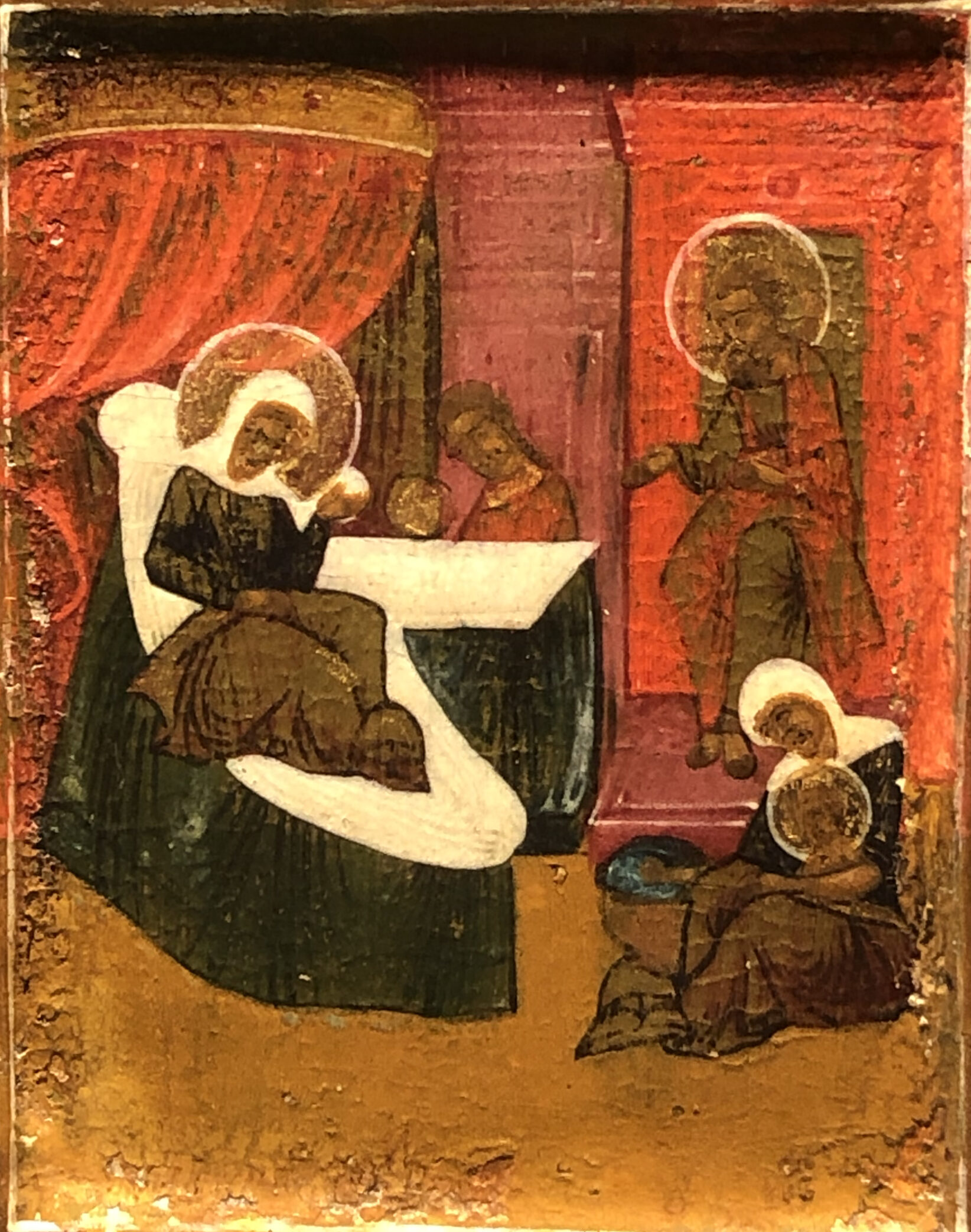
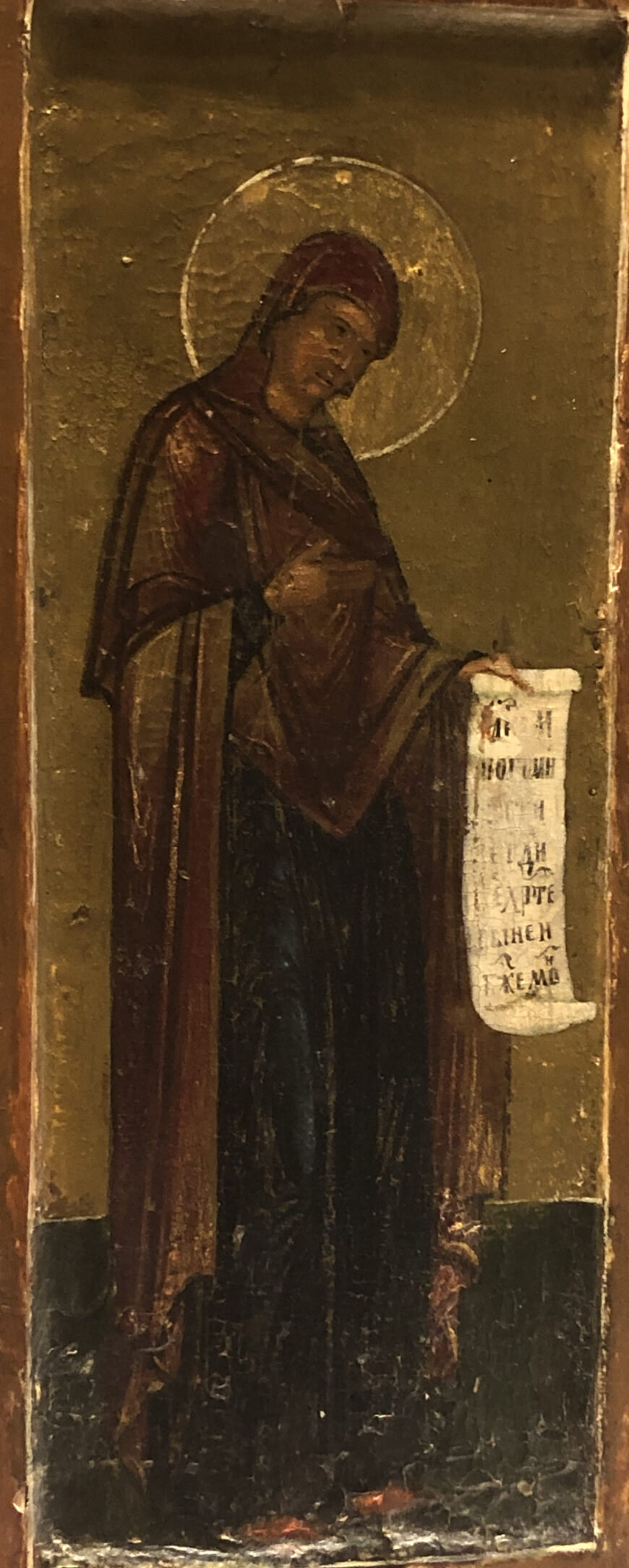
Maria is opvallend veel aanwezig op de reisiconostase. Zij wordt afgebeeld als “Moeder Gods van Kazan”, “Geboorte van Maria”, “Presentatie van Maria in de tempel”, “Annunciatie”, “Ontslapen van Maria” en “Moeder Gods”.
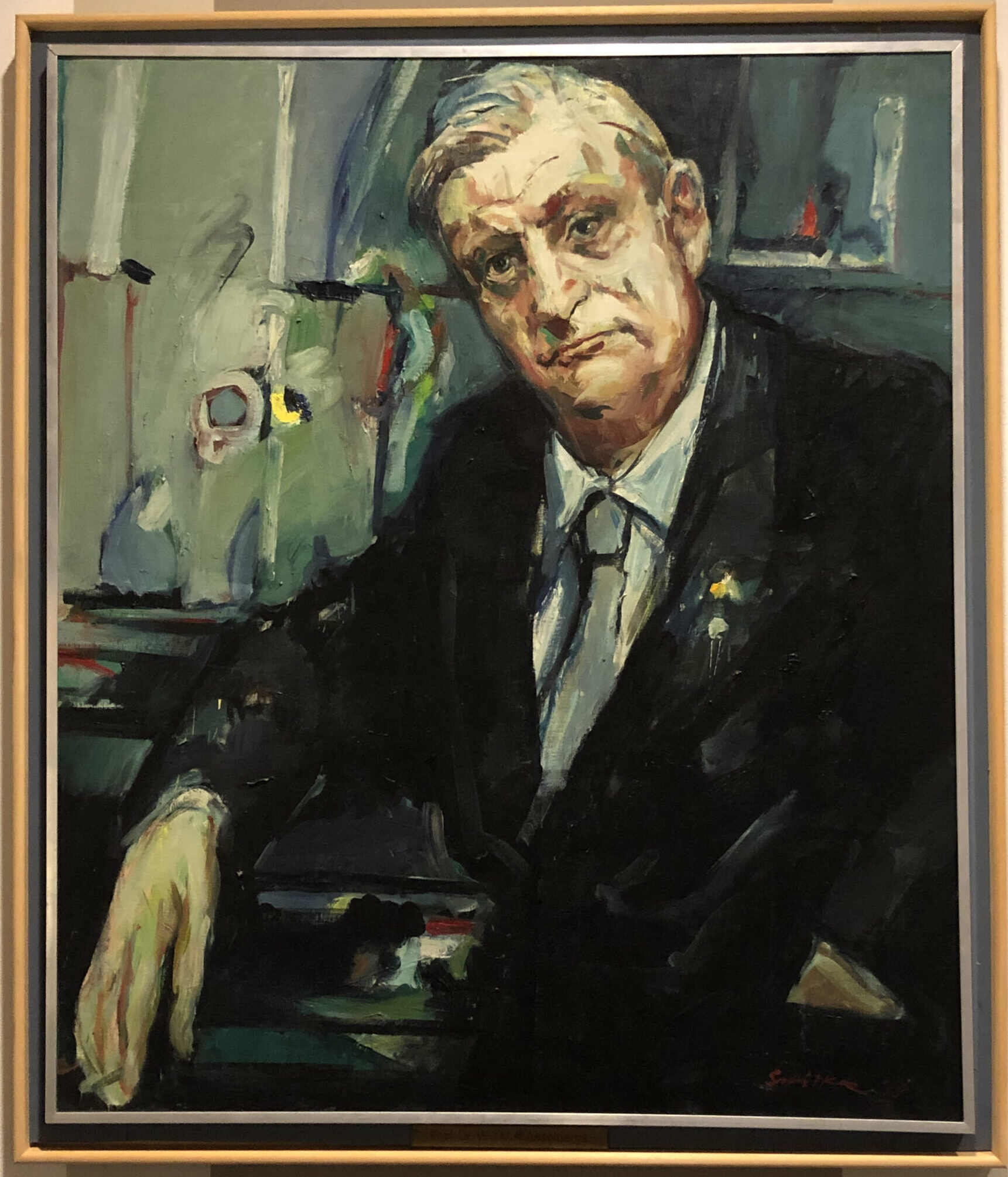
The hall, in which the iconostasis is displayed behind glass, is named after Anton van Duinkerken. The name Anton van Duinkerken is the pseudonym of Wilhelmus, Johannes, Maria, Antonius (Willem) Asselbergs (1903, Bergen op Zoom – 1968, Nijmegen). Willem Asselbergs was a Burgundian, poet, essayist, professor, man of letters, literary historian, literary critic, polemicist, orator and writer. He revealed himself as a great cultural proponent of Catholic Netherlands.