History
The origin of the pilgrimage site at Riffian is based on a medieval legend. The story is as follows: One night a farmer from Riffian sees a radiant light and goes towards it. The man finds an image of the Sorrowful Mother of God amongst stones and sand in a small river. He wishes to honour Mary and builds a small chapel for the image. The discovery of the image becomes known in the region. Serious accidents involving construction workers prevent the prosperous construction of a slightly larger chapel. Swallows carry blood-stained wood shavings to a nearby hill. This is seen as a sign from Mary to build a chapel on the hill. People from Riffian set out to fulfil the will of Our Lady. They build a chapel at the indicated spot. Later, a cemetery and a church are built on the site.
In the 12th century, a Romanesque church was built, and virtually nothing of it is visible today in the foundations of the present church.
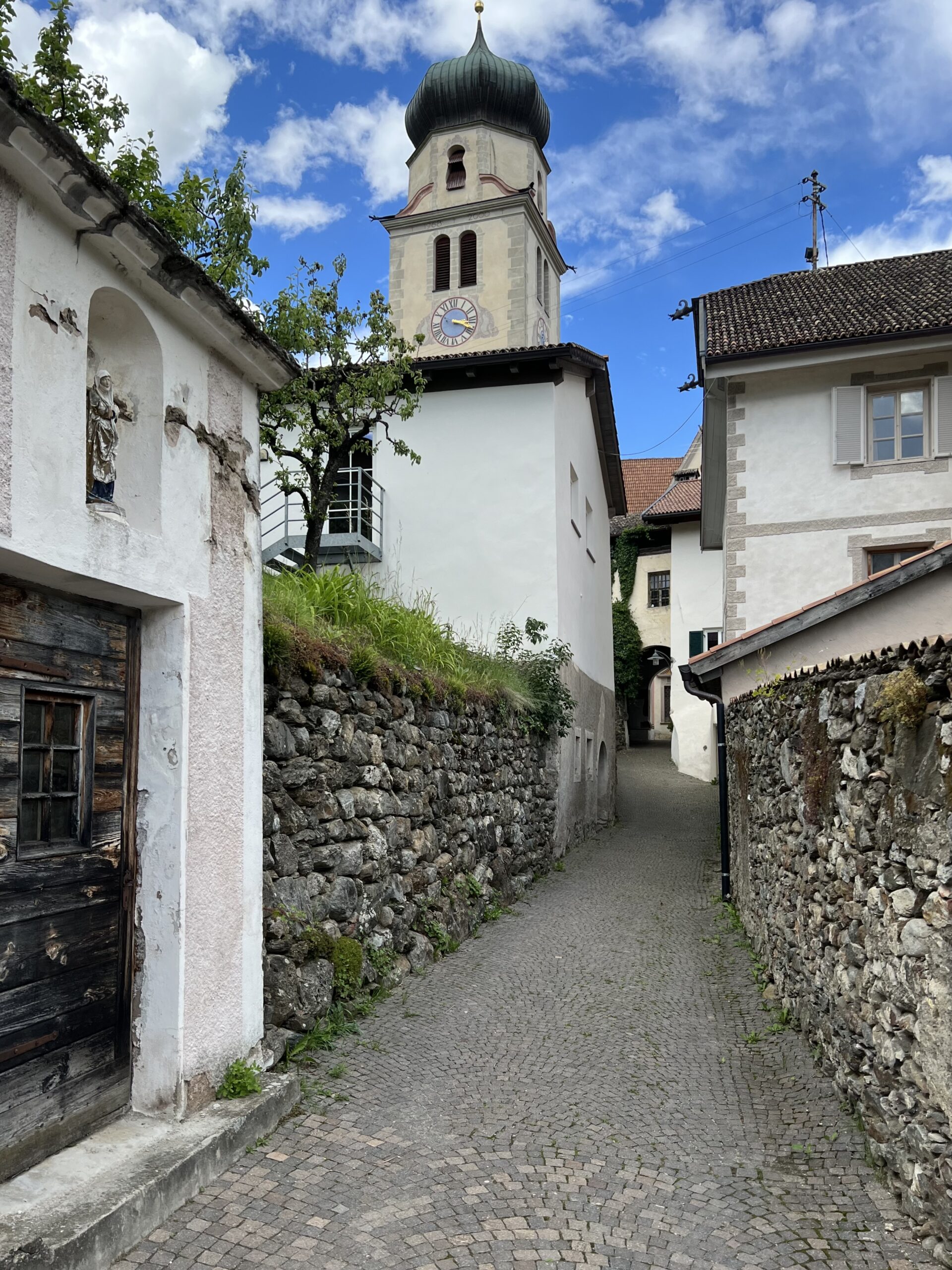
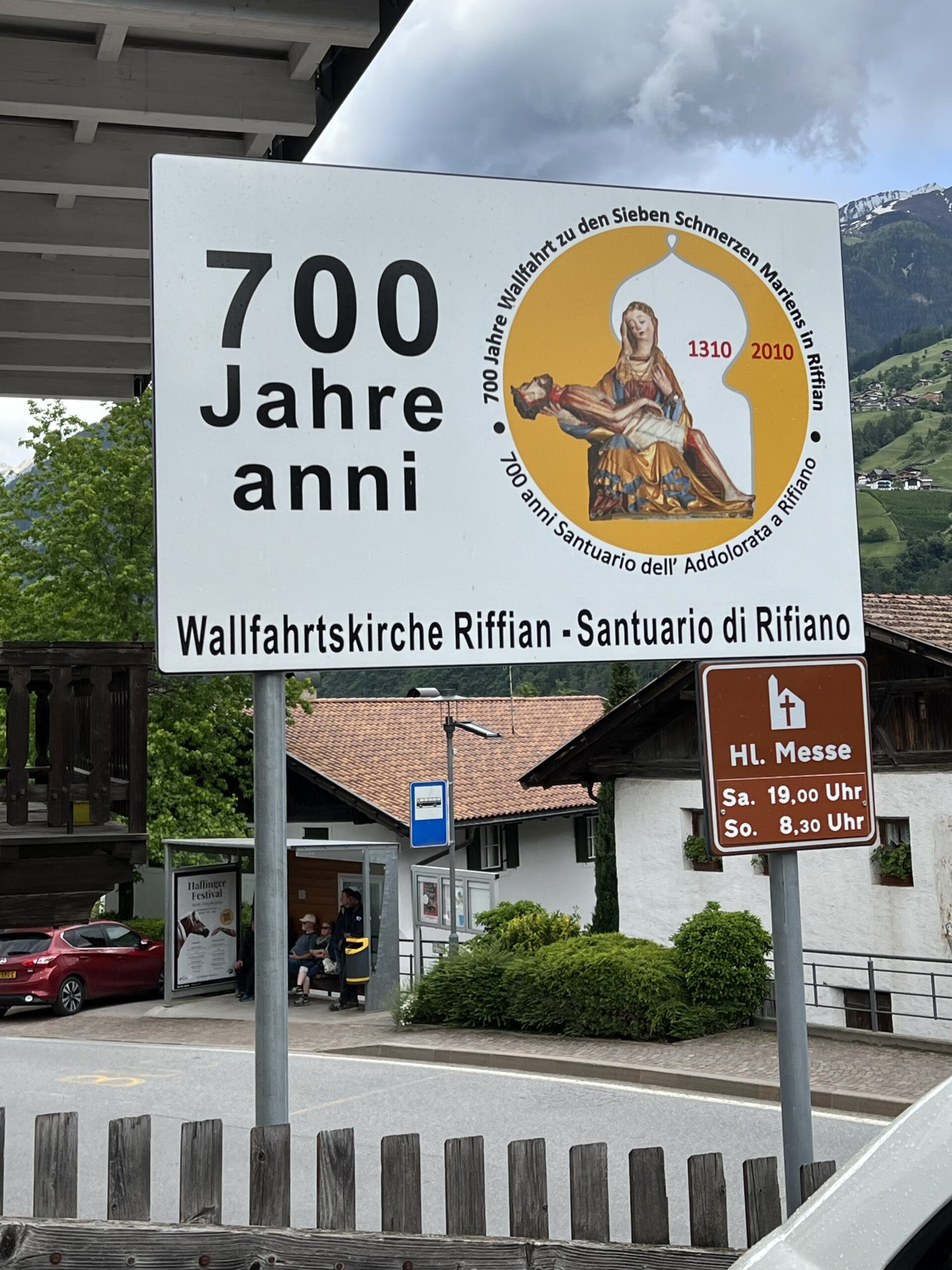
In 1310 mention is made of a church in Riffian and indulgences are granted to those who visit Riffian. The pilgrimage has therefore existed since 1310. In 1368 a new place of worship was established, which was enlarged in 1465.
The baptismal font dates from the late 14th century. The Pietà is from c. 1415 and depicts the image of grace, which was originally located in the cemetery chapel.
Some frescoes were made in the 15th century.
The current pilgrimage church was built between 1669 and 1671 under the direction of architect Francesco Delai (1638-1678). This church was enlarged several times, later in the 17th century and then again in the 18th century.
On 16 November 1749, the devotional image, dating from the 14th century, was ceremoniously placed on the altar, made in 1749, in the church. The figures on the altar are by sculptor Balthasar Horer (1705-1760).
The pulpit dates from 1750. In 1767, the stonework was completed and the church attained its current size.
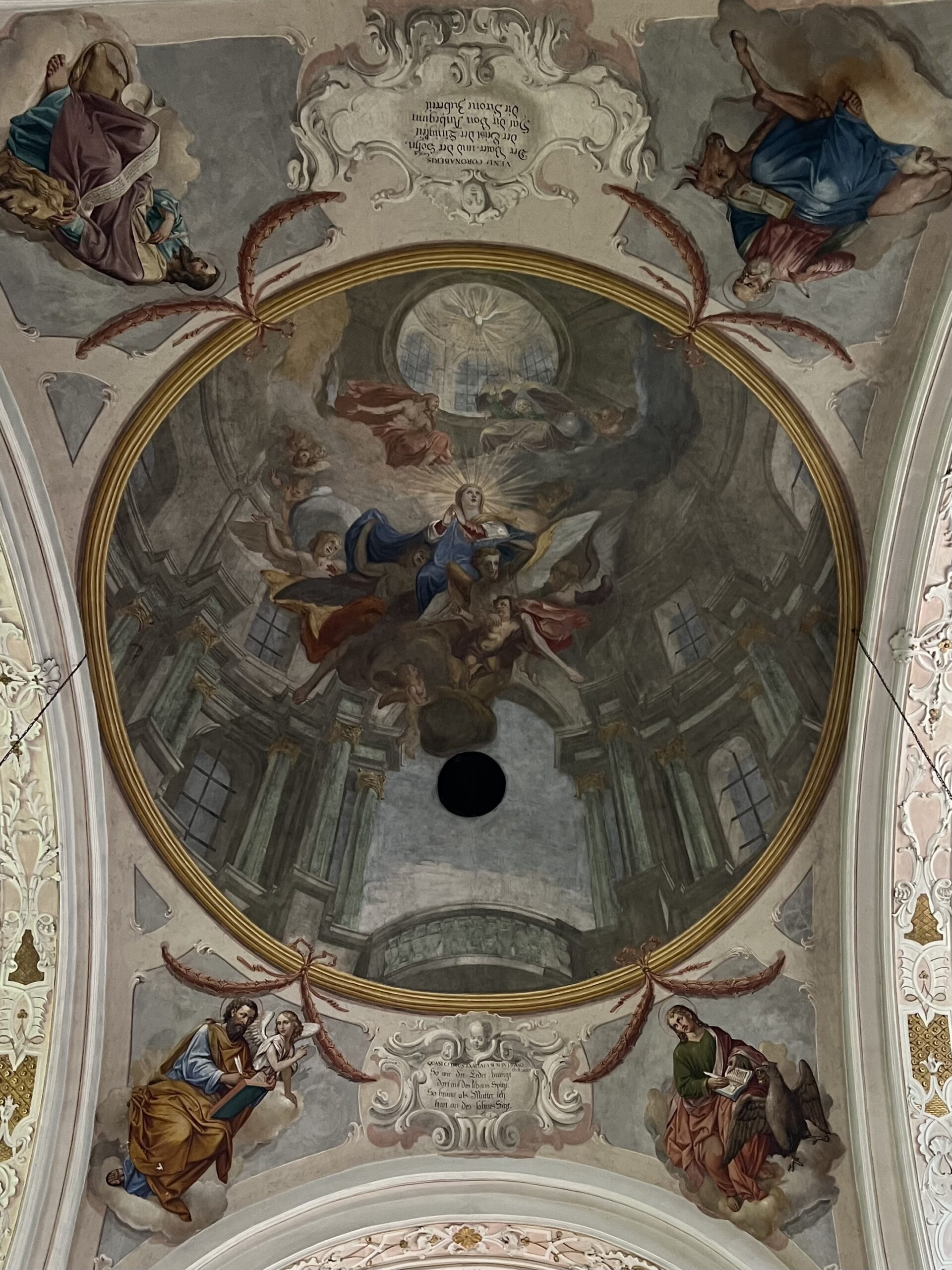
The ceiling frescoes, including this one of the Assumption of Mary, are by Joseph Leopold Strickner (1744-1826). This Austrian painter and copper engraver created the artworks in 1777.
In 1948-1949, the roof was covered with copper plates.
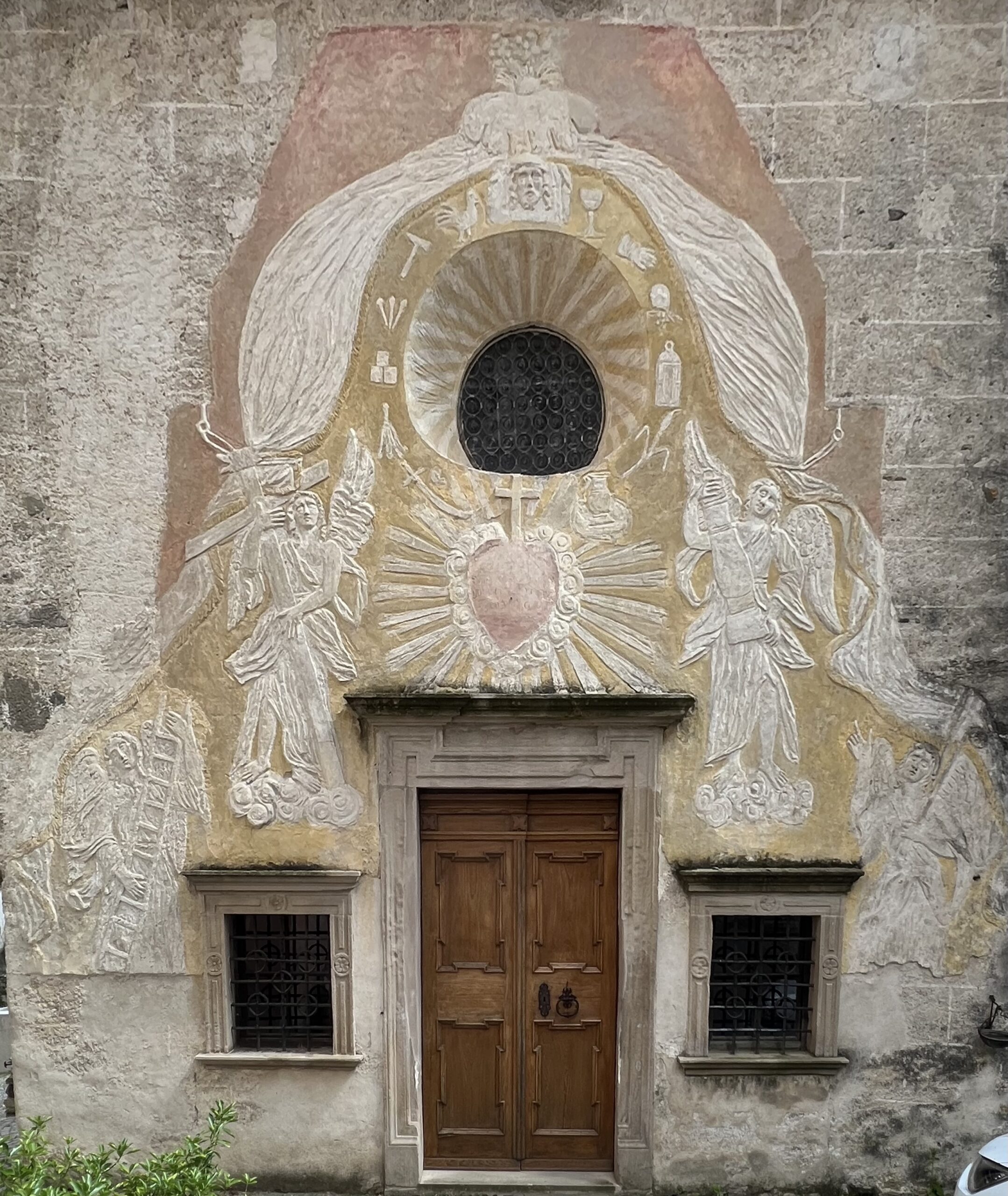
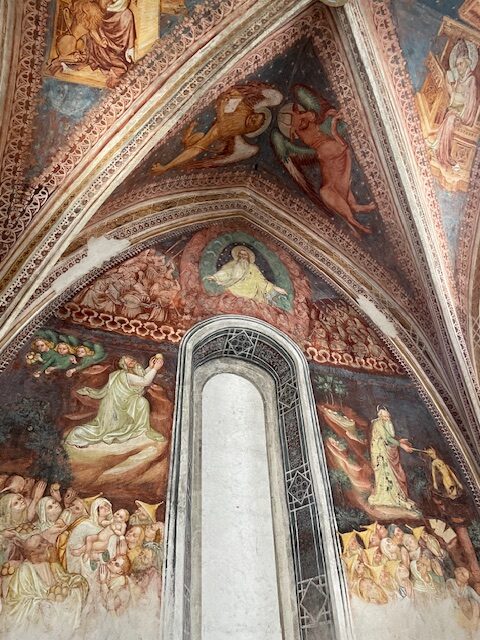
The cemetery chapel, which stands next to the church, was built at the end of the 14th century. In a room below the building is an ossuary, where bones are kept. The chapel has many frescoes.
Pilgrimage site
Riffian is a village with around 1,200 inhabitants and is situated over 500 metres above sea level. The region has many vineyards, and Riffian attracts a significant number of tourists every year. The pilgrimage site is considered to be one of the oldest and best-known Marian shrines in South Tyrol.
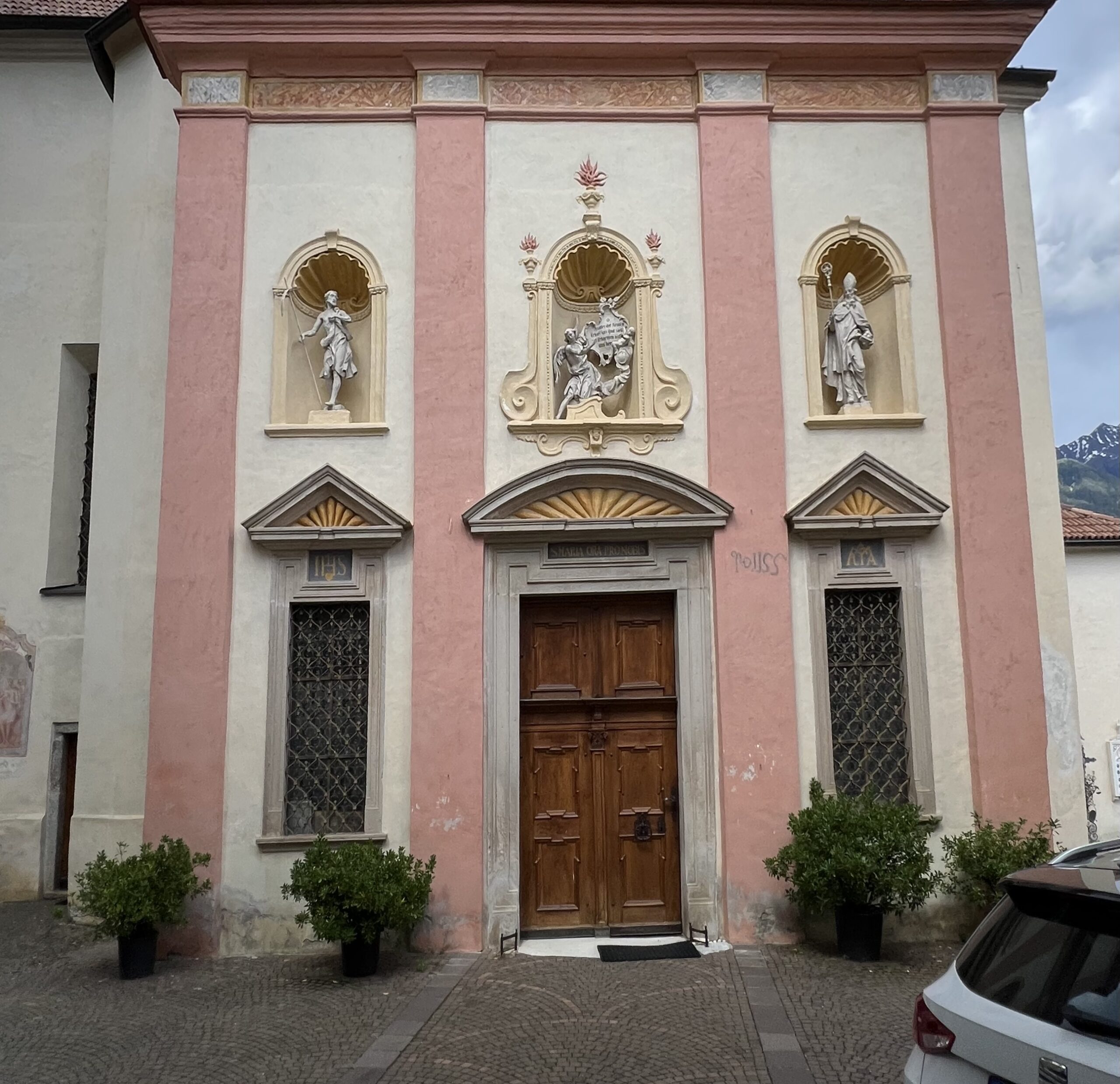
The pilgrimage site is a special place of strength and answered prayers.
Near the pilgrimage church, there is a Way of the Cross with bronze statues, and it was made in 1958.
The pilgrimage church, with a 37-metre tower, was built in the Baroque style.
In a niche on the front facade stands an angel with the text “O Mutter der Armen. Erhöre us und siehe mit Erbarmen auf uns herab”. In Dutch, this means: “O Mother of the poor. Hear us and look down on us with compassion”. This makes a reference to this pilgrimage site.
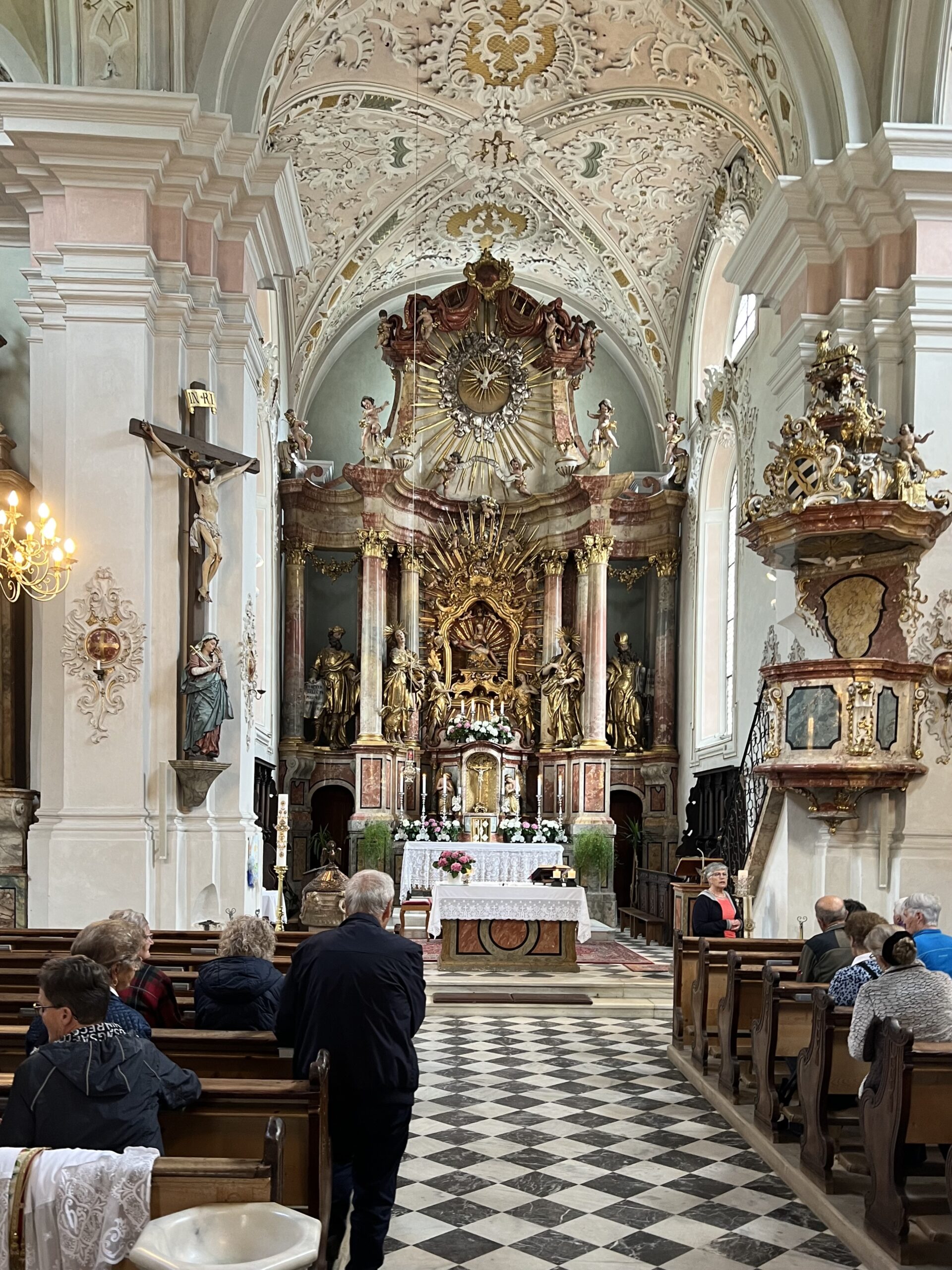
The miraculous image is surrounded by 7 putti, who bear depictions of the 7 sorrows of Mary. These paintings were created by Joseph Wengenmayr (1723-1804). To the left of the miraculous image stands the statue of John the Evangelist and on the other side is the likeness of Mary Magdalene.
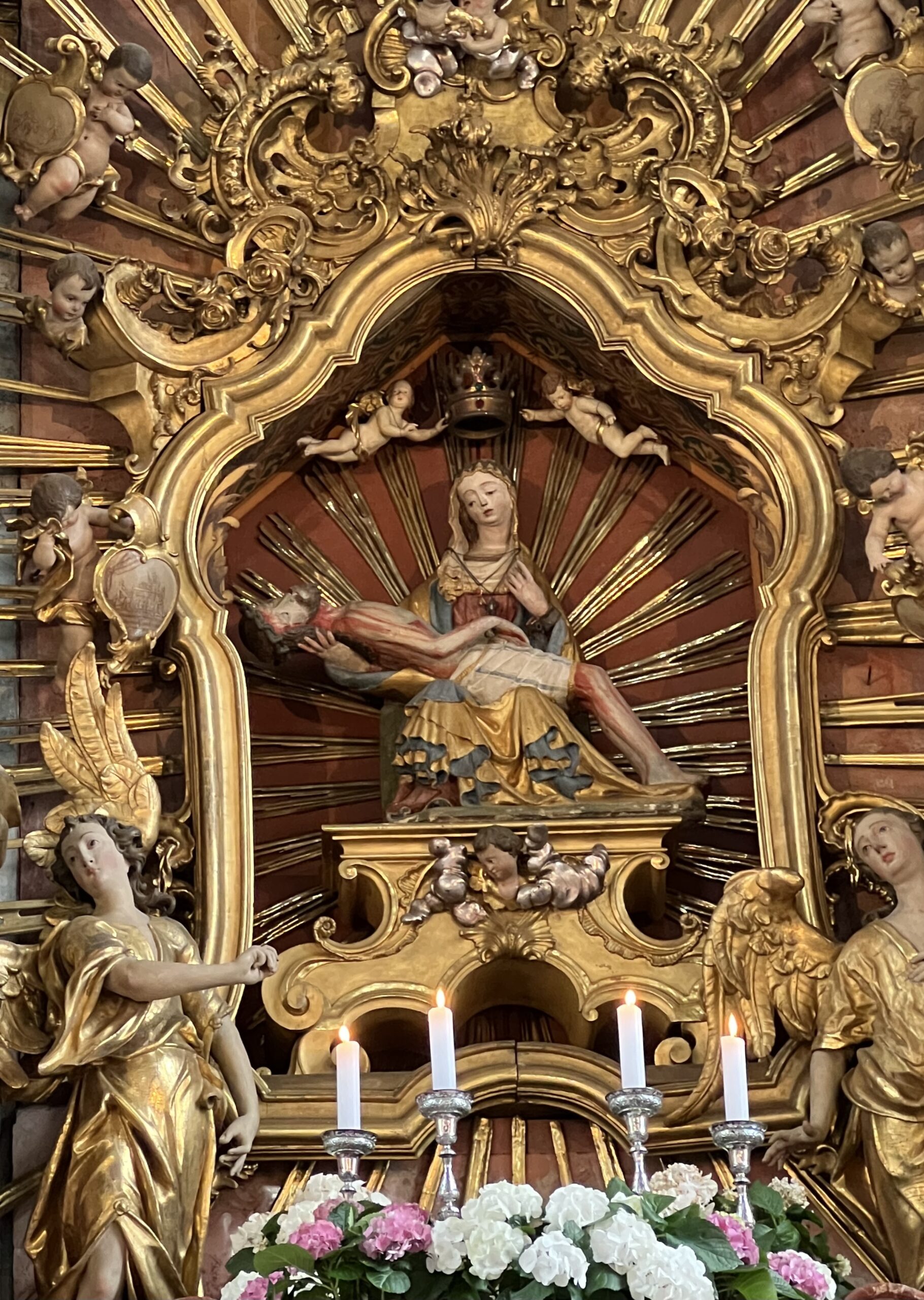
The image of Our Lady of Sorrows dates from the 18th century and is made of clay and cement. The effigy is located near the main altar, where triumphal arches have been erected.
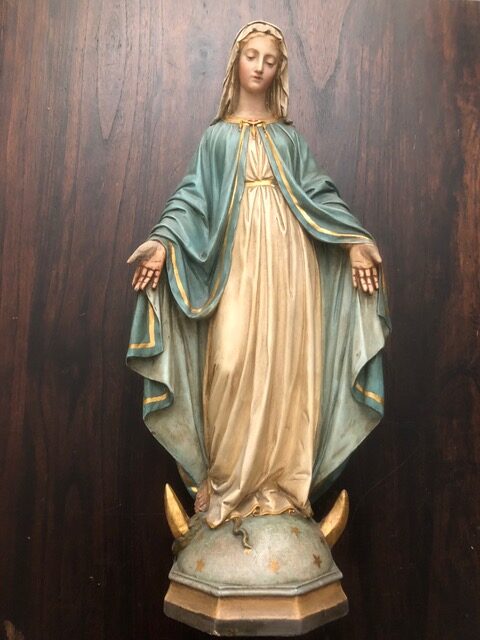
To the right of the altarpiece, in the right-hand side altar, stands Mary, the Immaculate Conception, on a terrestrial globe, conquering the serpent and the dragon. The statue was made in 1720 by Matthias Pußjäger (1654-1734). Four angels hold symbols of Mary: a tower, a mirror, a star, and a lily. The left-hand altarpiece depicts Mary as Queen of the Rosary, surrounded by a few saints.
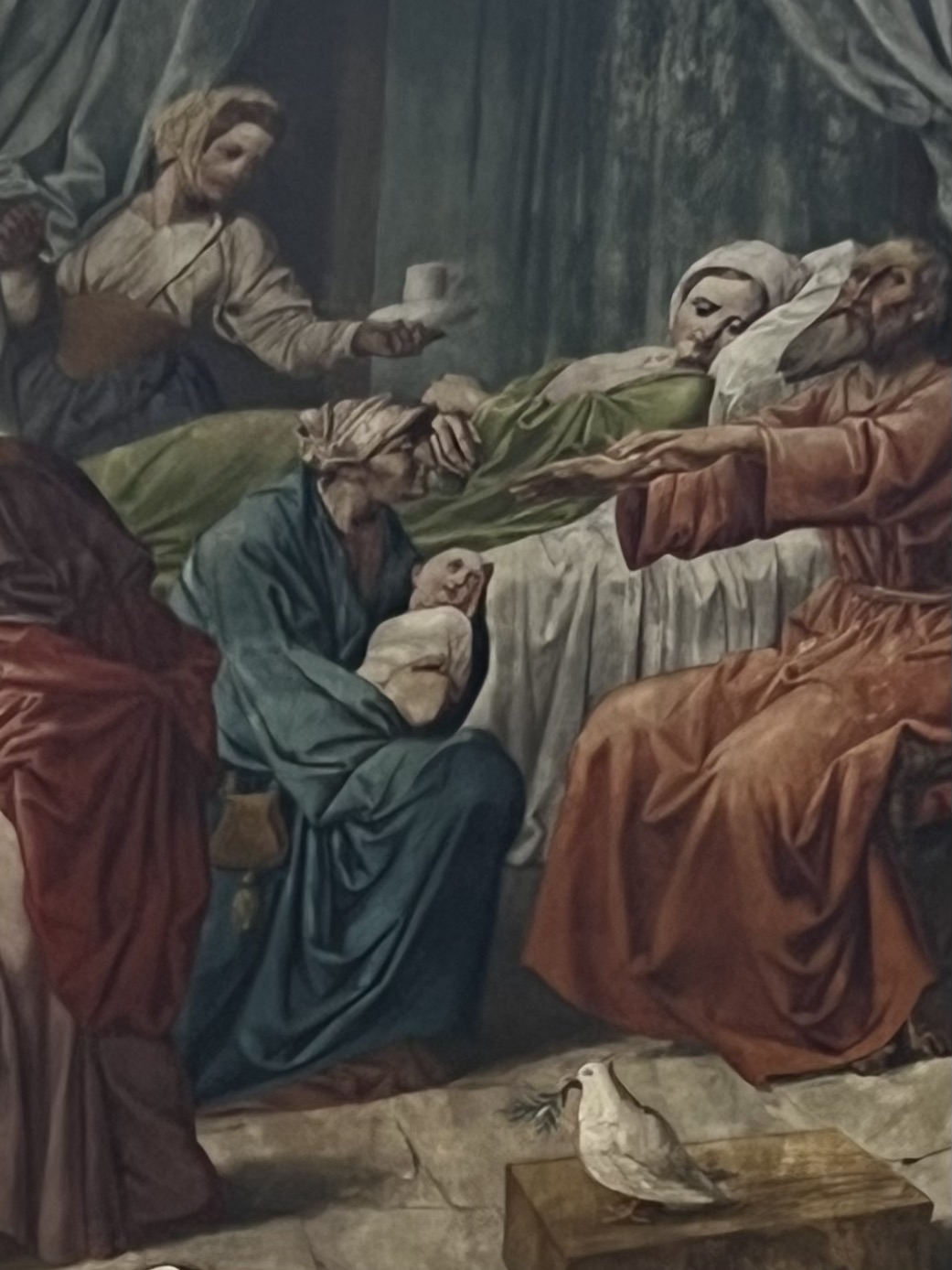
A ceiling fresco shows the Assumption of Mary. On a side wall, scenes from the life of Mary are depicted. The church also contains votive offerings of thanksgiving.
On the side walls are two scenes from the life of Mary painted: the birth and the death. These were made in 1897 by Hans Rabensteiner (1849-1930). On the walls are 14 Stations of the Cross, and these were made by Joseph Wengenmayr (1723-1804).
The cemetery chapel displays centuries-old frescoes, including depictions of God surrounded by angels, the finding of Jesus in the temple, the destruction of cult images by Empress Helena, and the damaged painting of the flight into Egypt.
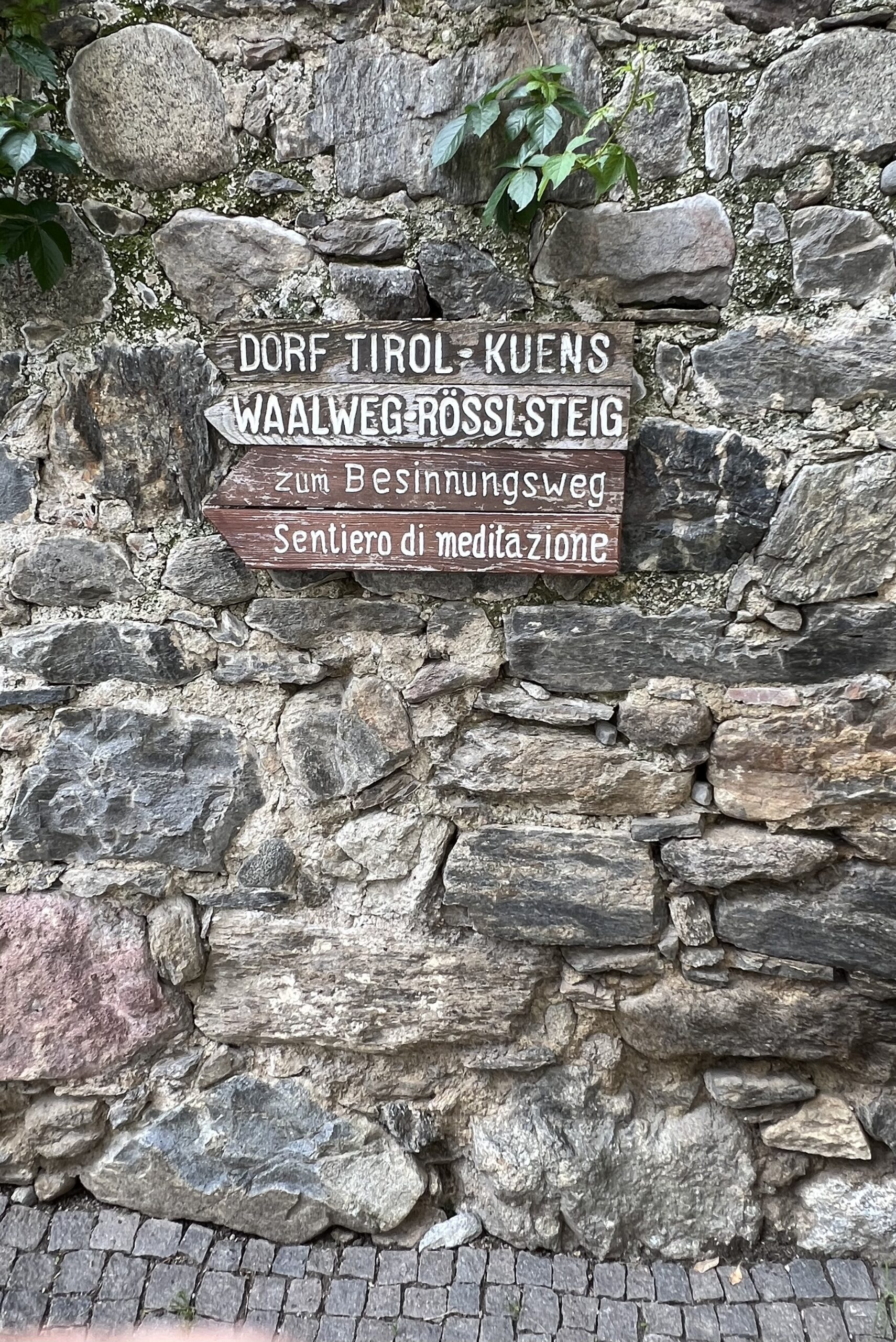
There is a contemplation path “To the Seven Sorrows of Mary”, made of pine wood by Hartmut Hintner (born 1970).
The pilgrimage church is open daily.
ACCESSIBILITY
Riffian lies in the province of Bolzano, slightly above Meran/Merano in the Passeier Valley. Riffian is situated on the SS44 road.
The address of the pilgrimage site “Wallfahrtskirche Zu den Sieben Schmerzen Mariens” (“Santuario della Madonna Addolorata”) is: Via della Chiesa 24, 39010 Riffian/Riffano.
Current information can be found at www.wallfahrtskirche.riffian.com
Experience
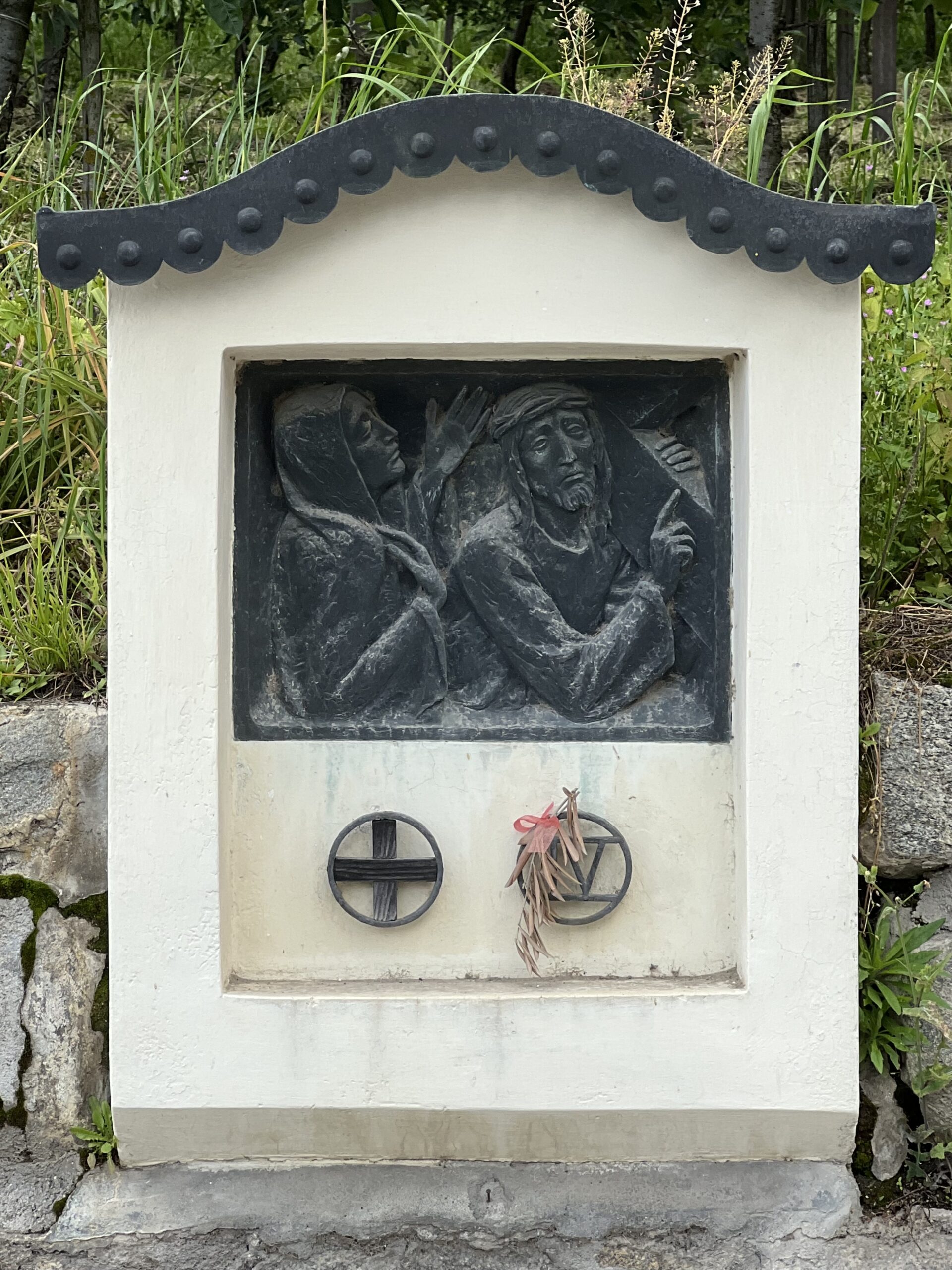
Today, a visit to the pilgrimage church in Riffian named “To the Seven Sorrows of Mary”. A Way of the Cross guides pilgrims from the main road to the church, which is situated slightly higher up.
The cemetery chapel was built in 1400, and there I see old frescoes from 1415 with damaged depictions of, among other things, the Flight into Egypt, the Adoration of the Magi, and Moses smashing the golden calf. Such gifted artists!
Next, I come to the pilgrimage church. How impressive the façade is! Above the Baroque portal is an angel, flanked by two saints: John the Baptist and Saint Nicholas of Myra. The angel holds a tablet with the text, which I translate into English: “O, Mother of the poor, hear us and look down on us with compassion.” This feels like an invitation to go inside quickly. Above the entrance door, it reads “S. Maria ora pro nobis,” which in English means “Saint Mary, pray for us.”.
In the church, a Eucharist service is underway and is nearing communion. So, there's a bit of a wait before one can walk around the church. To pass fifteen minutes, I take a seat on the back pew and gaze in admiration at the high altar. The devotional image is a 14th-century Pietà. Mary's gaze is fixed on her Son, and his is filled with sorrow. Baroque angels surround the vesper image.
After more than 15 minutes, the mass is over and I leave the wooden pew to begin the church round. During the walk around, I see images of, among others, John the Evangelist, the Prophet Isaiah, Mary Magdalene, and the prophetic Simeon.
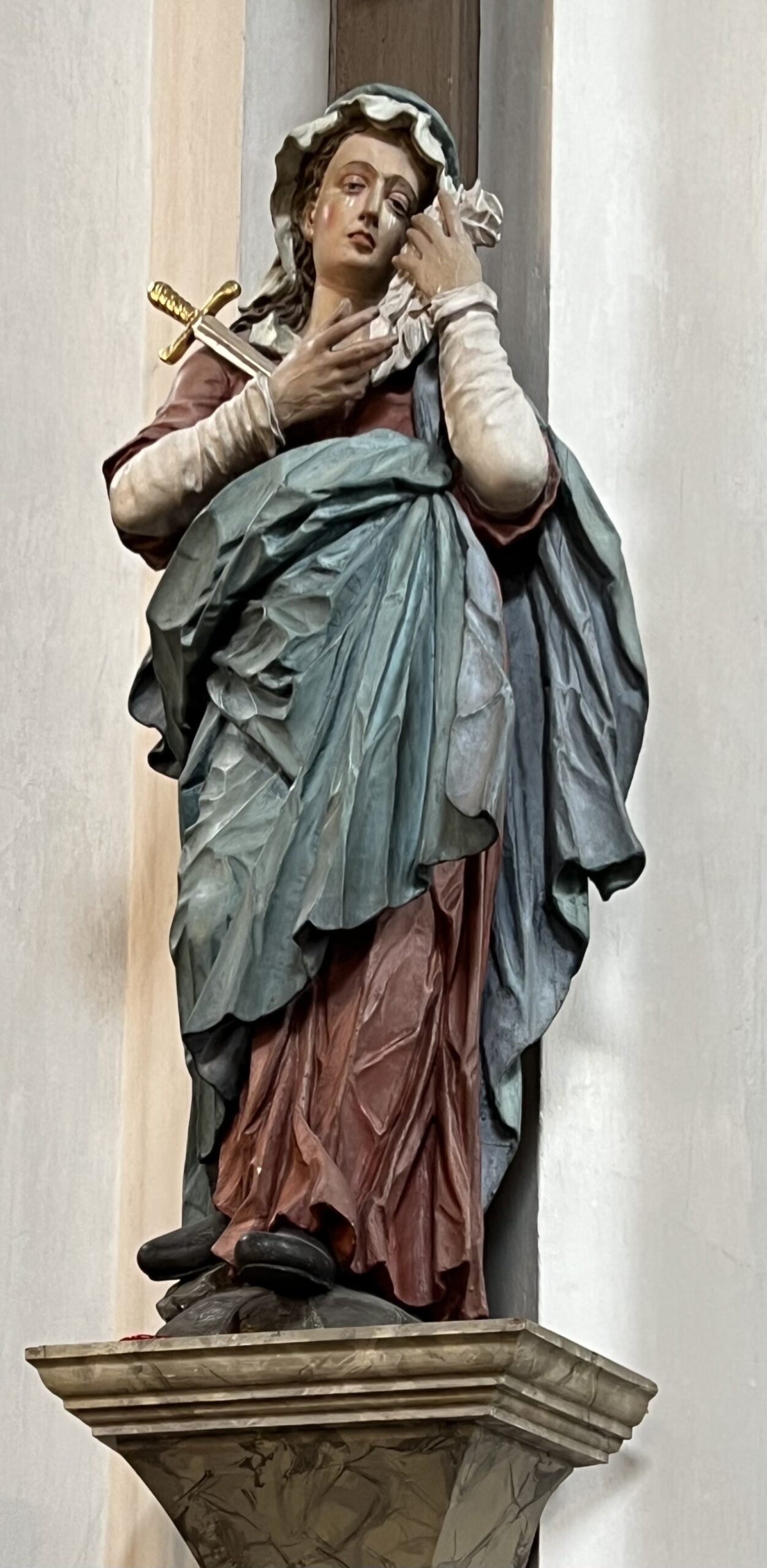
A depiction of the sorrowful Mother of God stands on a raised platform. Mary has a sword through her heart and stands on a globe, while trampling the serpent. In this pilgrimage church, the Virgin Mary is also depicted as the Queen of the Rosary.
I find the painting on the ceiling with the Assumption of Mary very striking. The four evangelists are depicted around this image. Afterwards, it's time for prayer at the miraculous image. Good acquaintances and friends who can use strength come to my mind.
After praying, I look for a long time at the Pietà and thank Mary for being able to visit this pilgrimage church. In my thoughts, I take wonderfully beautiful memories of this visit with me.
Environment
In the Rif region, there are many opportunities for hiking and cycling. The mountains reach heights of around 2000 metres.
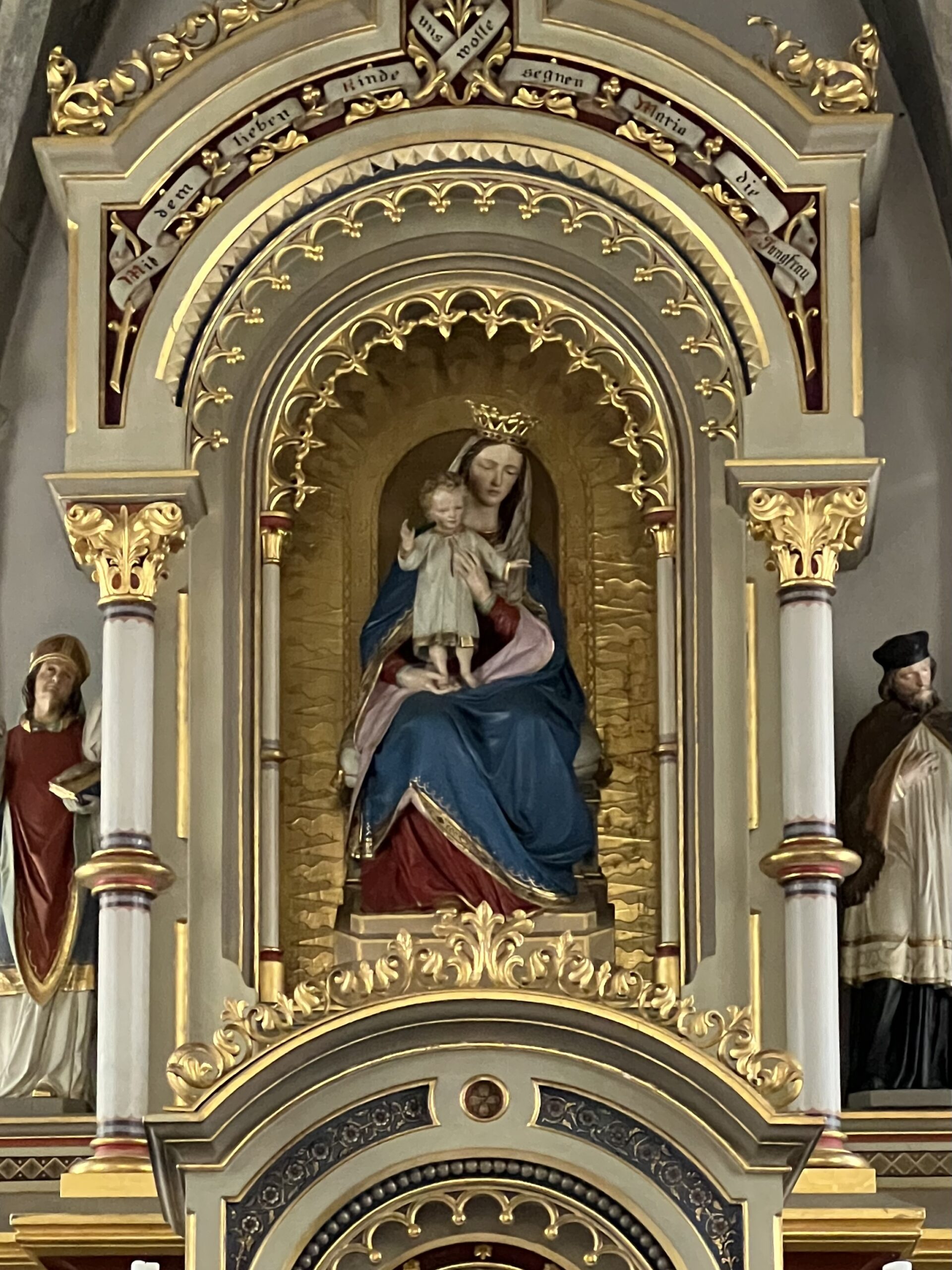
Near Riffian lies the village of Plaus, which can be reached by travelling 18 km to the west. The Church of St. Mary, dating from 1403, houses a beautiful statue of Mary.
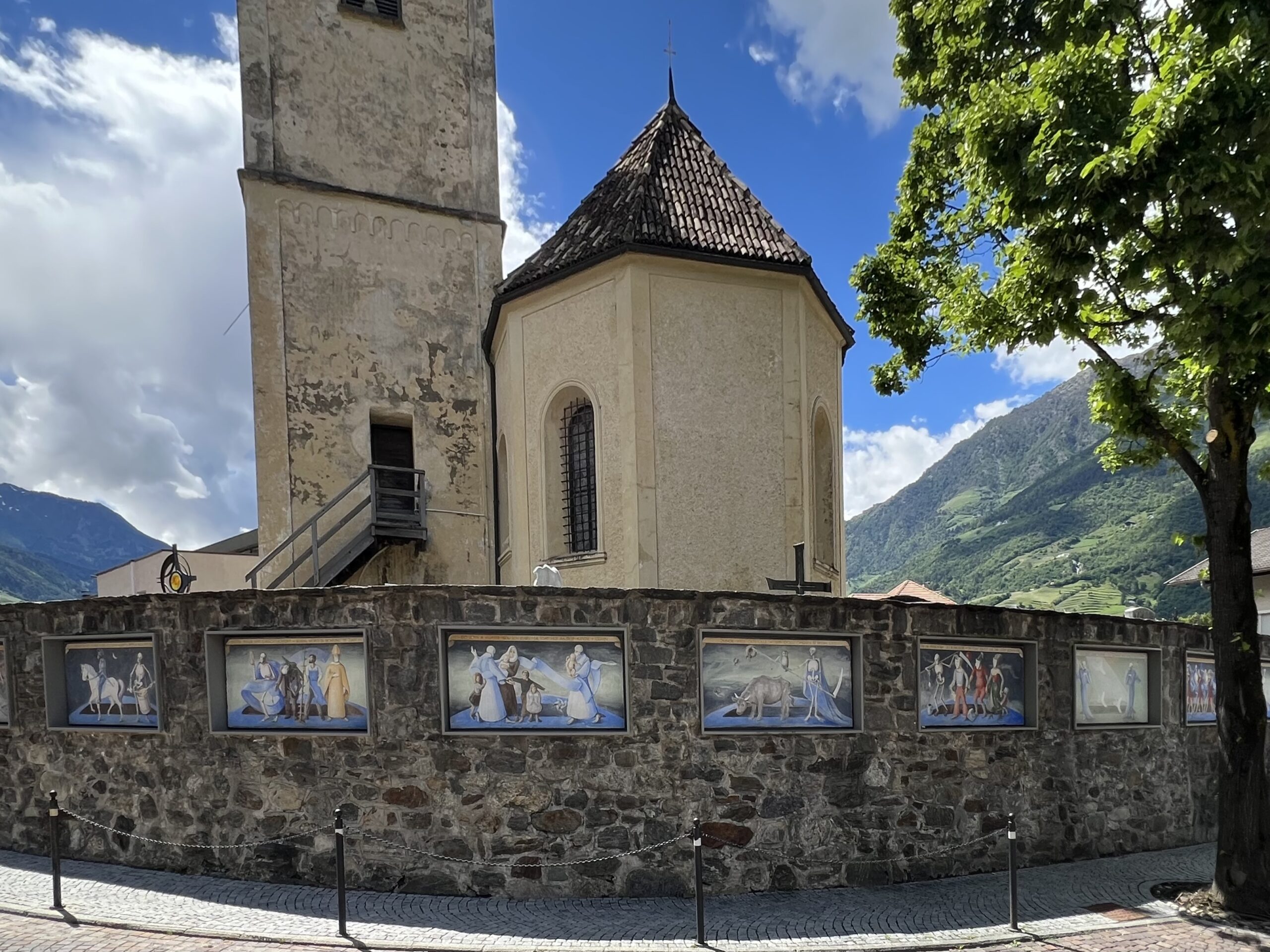
For the church, 18 images have been placed on the walls. These represent the Dance of Death from 2001.
From Riffian, it's 8 km to reach Mera/Merano.
Bozen/Bolzano is located 38 km south-east of Riffian.
From Riffian, it is 47 km to the southwest to get to the pilgrimage site of Martell/Martello.
To leave Riffian to visit the pilgrimage site of Maria Trens is to go 57 km north-east.
Going from Riffian to the pilgrimage site Eppan means driving 36 km to the south.
Posted: 3 July 2024
~~~

 Nederlands
  English (UK)
  Deutsch
  Français