History
The valley near Rocamadour has been inhabited since the Magdalenian period, around 15,000 to 8,000 BC, where many centuries later, Amadour made history.
One legend identifies Amadour as Zacchaeus, a disciple of Jesus. In another story, he is the husband of Saint Veronica, with whom he comes from the Holy Land to France. Veronica is the woman who offers Jesus a cloth to wipe the blood and sweat from his face as he carries the cross on the road from Jerusalem to Golgotha. In both stories, Amadour must have lived in the 1st century. Research indicates that he lived as a hermit in the 2nd or 3rd century near the rocks of what is now called Rocamadour. He had great devotion to Our Lady.
In the early 11th century, there was already a church in the village of Rocamadour. The first mention of the veneration of Mary dates back to 1105. This is evident from a document by Paschal II, Pope during the period 1099-1118, born Ranieri di Bieda (1055-1118), to the abbot of Saint-Martin de Tulle. It states that the important pilgrimage site of Rocamadour was acquired by the Abbey of Tulle. From 1105 to 1802, Rocamadour belonged to the diocese of Tulle.

The first major pilgrimage is recorded in 1112. From 1152 to 1188, Géraud d’Escorailles (+1188) was abbot of the monks of Saint-Martin of Tulle, and under his leadership, significant impetus was given to pilgrimages to Rocamadour. He took the initiative to record the miracles in “The Book of Miracles”. From 1172 onwards, there were more than 100 inexplicable events attributed to the intercession of Mary. Rocamadour was then one of the most important pilgrimage sites in Europe.
In 1166, a resident of the place expressed his dying wish. He wanted to be buried at the entrance to the chapel. The final wish was respected, and during its execution, the remains of Amadour were discovered at the foot of the rock. The remains were discovered by Robert de Thorigny/Torigni (1106-1186), who became a Benedictine monk in 1128 and later the abbot of Mont Saint-Michel (1154-1186). The body was perfectly preserved, even after many centuries. Subsequently, it was interred in the church, near the altar. The discovery of Amadour's body also brought great fame to the pilgrimage site.
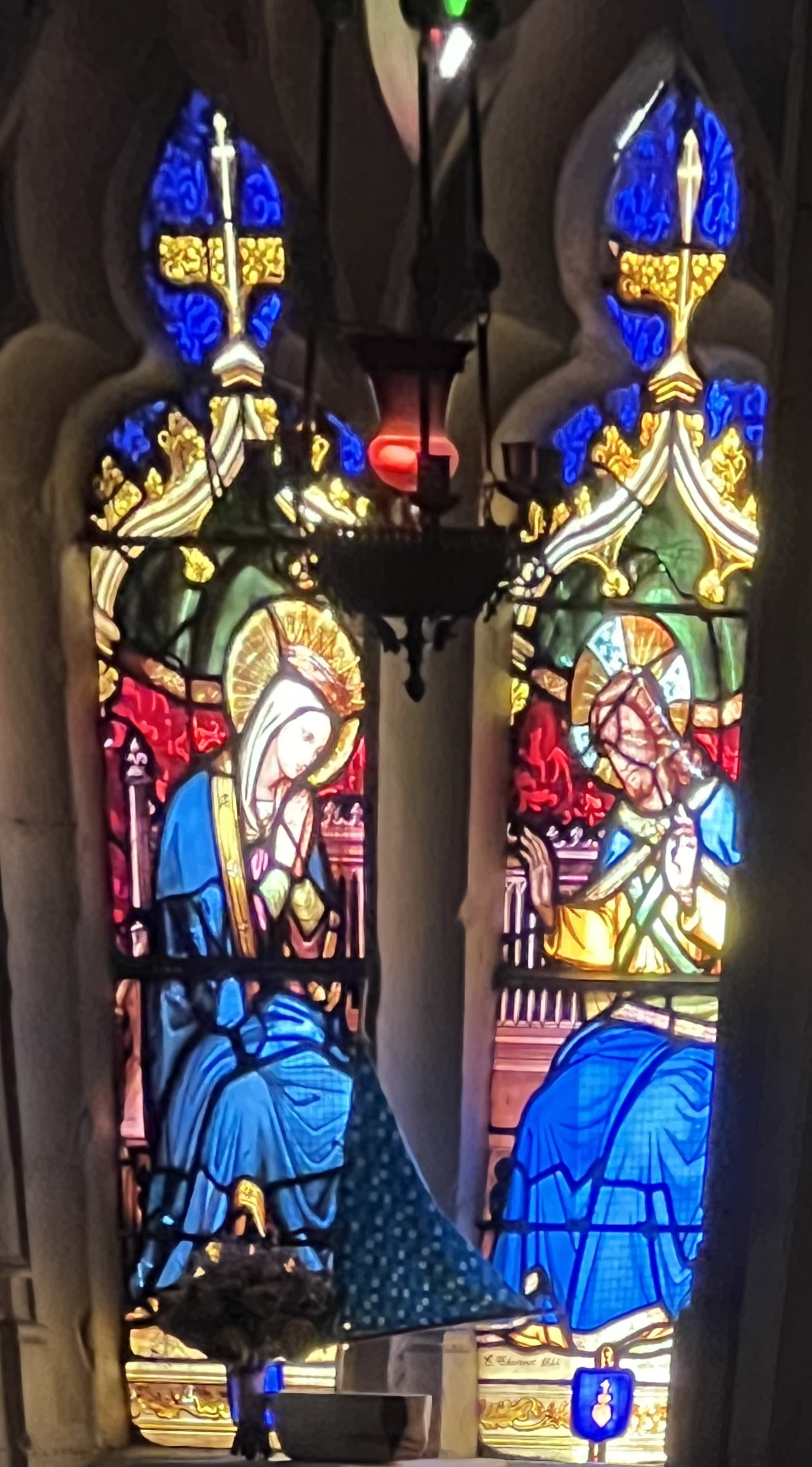
The Battle of Las Navas de Tolosa (now Santa Elena), near Jaén in Spain, took place on 16 June 1212. It was the decisive battle of the Reconquista, driving out the Almohad Muslims. Among the Catholic fighters were French knights led by Simon of Montfort (1188-1218), who had previously been in Rocamadour preparing for battle. They carried the banner of Our Lady of Rocamadour, which ensured their victory over the numerically superior Muslims.
In 1317, a chapter of canons replaced the Benedictines at Rocamadour. It was particularly around this time that Rocamadour gained great fame. It also marked the starting point for a pilgrimage to Santiago de Compostela in Spain.
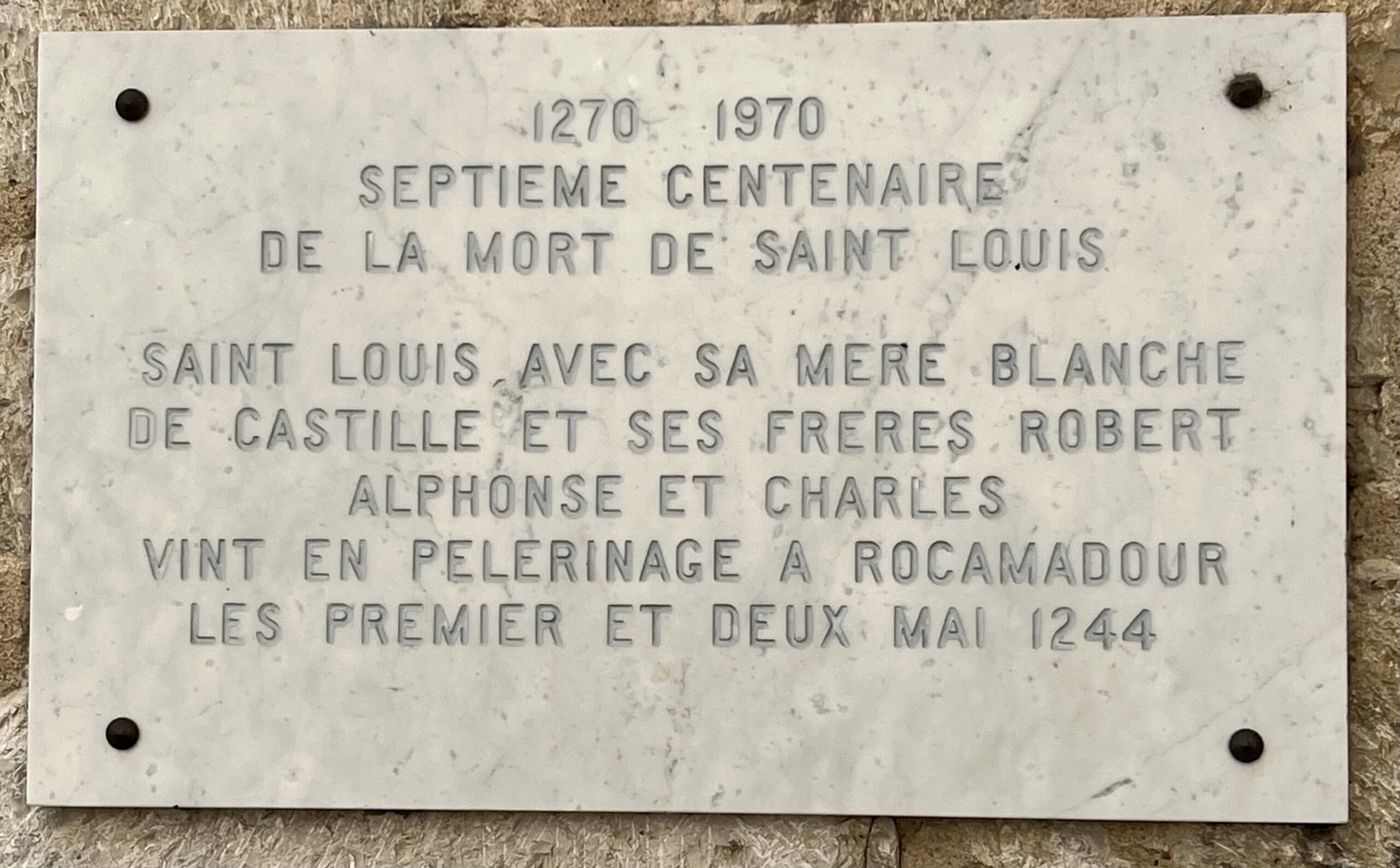
On 25 August 1270, Louis IX (1214-1270), King of France (1226-1270), is murdered. He is en route for his second crusade and dies in Carthage, Africa. A memorial stone (1270-1970) has been erected in Rocamadour in remembrance of the murder of Saint Louis, who was canonised in 1297. This is done by Boniface VIII, Pope from 1294-1303, born Benedetto Gaetani (1235-1303). Louis IX is known as Saint Louis. He visits Rocamadour on pilgrimage on 1 and 2 May 1244 with his mother Blanche de Castile (1188-1252) and two brothers: Robert (1216-1250), later Count of Artois; Alphonse (1220-1271), later Count of Poitiers and Toulouse; and Charles (1227-1285), who later became Count of Anjou and King of Naples and Sicily.
In the 12th, 13th, 14th, and 15th centuries, many nobles and prominent clergymen visited Rocamadour. The pilgrimage site was then one of the great Christian sites. The Marian shrine experienced a golden age and welcomed many high-ranking individuals, such as:
-in 778: Roland/Roeland/Roelant/Orlando (c.736-778), Count/Knight of the Breton March and nephew of Charlemagne (c.745-814)
-in 1147: Bernard of Clairvaux (1090-1153), instigator of the Second Crusade (1147-1149) and great devotee of Mary
-in 1170: Philip of Alsace (1142-1191), Count of Valois (1167-1185) and Count of Flanders (1168-1191)
– in 1170: Maria of France (c. 1145–1198), Countess of Champagne (1164–1181), daughter of Louis VII, the Younger (1120–1180), King of France (1137–1180)
- in 1159 and 1170: Henry II of England (1133-1189), King of England (1154-1189) and Duke of Normandy (1150-1189) and Count of Anjou (1151-1189) among others, visits Rocamadour twice.
-in 1212: Simon van Montfoort (1188-1218), participant in the 4th Crusade (1202-1204), leader of the Albigensian Crusade (1209), Count of Toulouse (1214-1218) and Count of Rouergue (1214-1218)
– in 1216: Engelbert (1185-1225), Bishop of Cologne (1216-1225), Count of Berg/Burg (1218-1225), was later canonised (Saint Engelbert)
– in 1219: Dominicus Guzmán van Caleruega (1170-1221), founder of the Friars of the Preachers, later Saint Dominic)
– in 1226: Anthony of Padua (1195-1231), later Saint Anthony
– in 1244: Blanche of Castile (1188-1252), wife of Louis VIII (1187-1226), King of France (“The Lion”) with three children, see the memorial stone with accompanying explanation.
-in 1304: Philip IV, the Fair (1268-1314), King of France (1285-1314).
-in 1320: John XXII, pope in Avignon (1316-1334), born in Cahors as Jacques Duèze (1249-1334).
-in 1324: Charles IV, the Fair (1294-1328), King of France and Navarre (1322-1328). Marie of Luxembourg (1304-1324), Queen of France and Navarre (1323-1324).
-in 1335: Philip VI of Valois (1293-1350), Count of Anjou (1325-1350) and King of France (1328-1350). Joan of Burgundy (1293-1349), Queen of France (1328-1349).
-in 1463: Louis XI/Lodewijk XI (1423-1483), King of France (1461-1483).
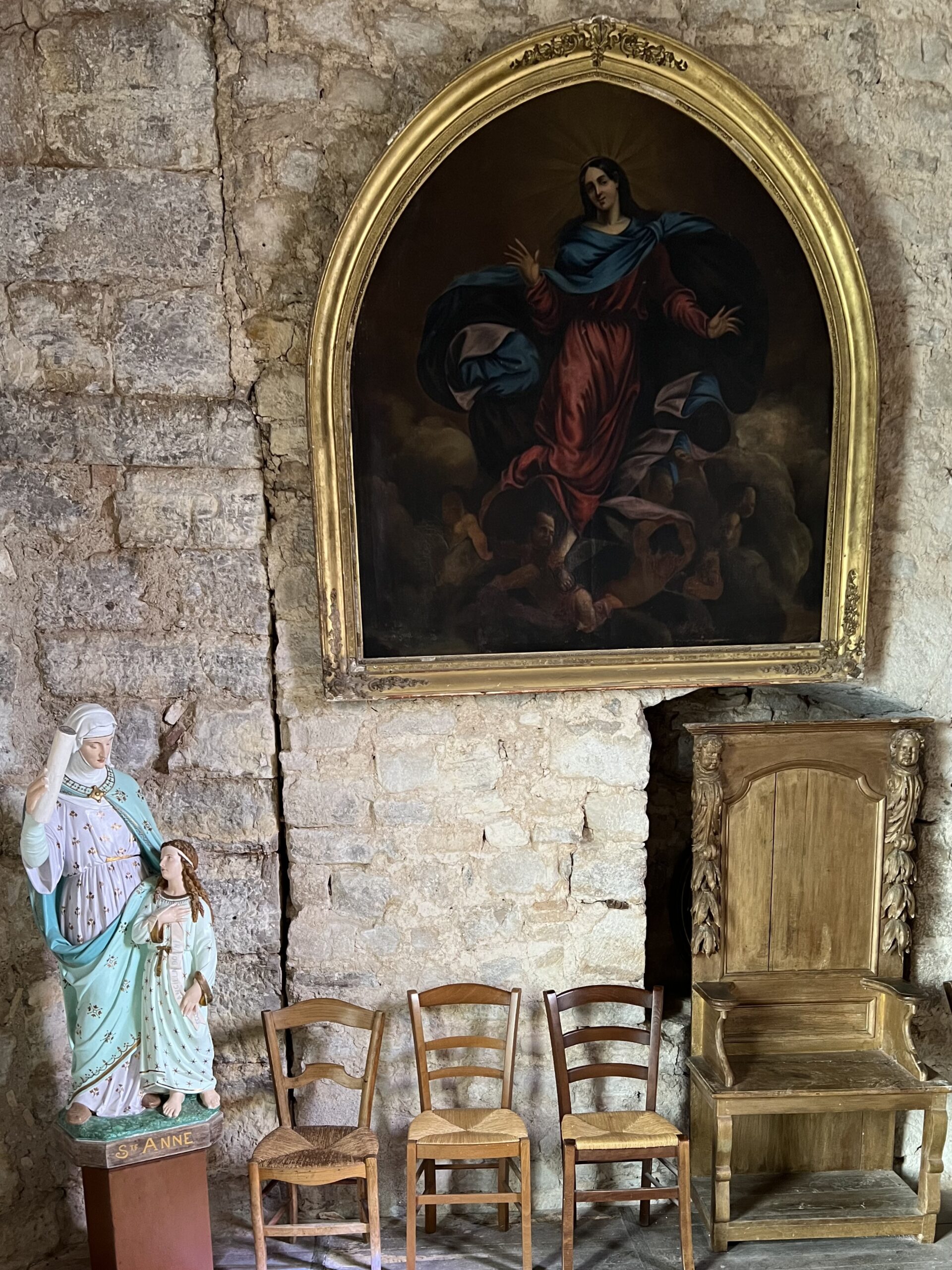
In 1369, English troops occupied Rocamadour. This happened during the Hundred Years' War (1337-1453) between the House of Valois and the House of Plantagenet (House of Anjou) over the French crown.
In 1429, Charles le Victorieux (1403-1461) has a vision of Mary, who tells him to drive out the English, who have been occupying parts of France, including Rocamadour, for years. Jeanne d’Arc (1412-1431), the French heroine, persuades him to have himself crowned king. He listens to her, and Charles VII becomes king of France (1422-1461). Later, he makes no effort to save Jeanne d’Arc from the stake.
In 1562, Protestants plundered the sanctuary and these Huguenots subsequently set it ablaze. The invaders destroyed the body of Saint Amadour and then burned it. They also destroyed the town's archives, meaning much information about the past was lost forever.

During the French Revolution (1789-1799) the shrine fell into disrepair. In 1856, Jean-Jacques David Bardou (1798-1863), Bishop of Cahors (1842-1863), provided the necessary funds for the shrine's restoration. He organised a national lottery to fund the works. Later, the person responsible for the restoration works was Pierre-Alfred Grimardias (1813-1896), Bishop of Cahors (1866-1896). Jean-Baptiste Chevalt/Cheval (1818-1876), a priest from the diocese of Cahors, led the work between 1858 and 1872. Armand-Benjamin Caillau (1794-1850), a priest and writer from Paris, also encouraged the revival of Rocamadour. He experienced healing through the intercession of Our Lady and promised to promote pilgrimages. In 1834, he also wrote a book about Rocamadour titled “Roc-Amadour”.
Following the golden period, many more people come to the pilgrimage site, such as Sister Emmanuelle (1931-2008), born in Brussels as Marie-Madeleine Cinquin (1908-2008), in 1991. She is a member of the Congregation of Our Lady of Sion in Jerusalem, where she is a lecturer in philosophy and literature. In 1971, she retires as a teacher and comes to Cairo to fight against poverty.
After Lourdes, Rocamadour is the most visited pilgrimage site in France.
Pilgrimage site
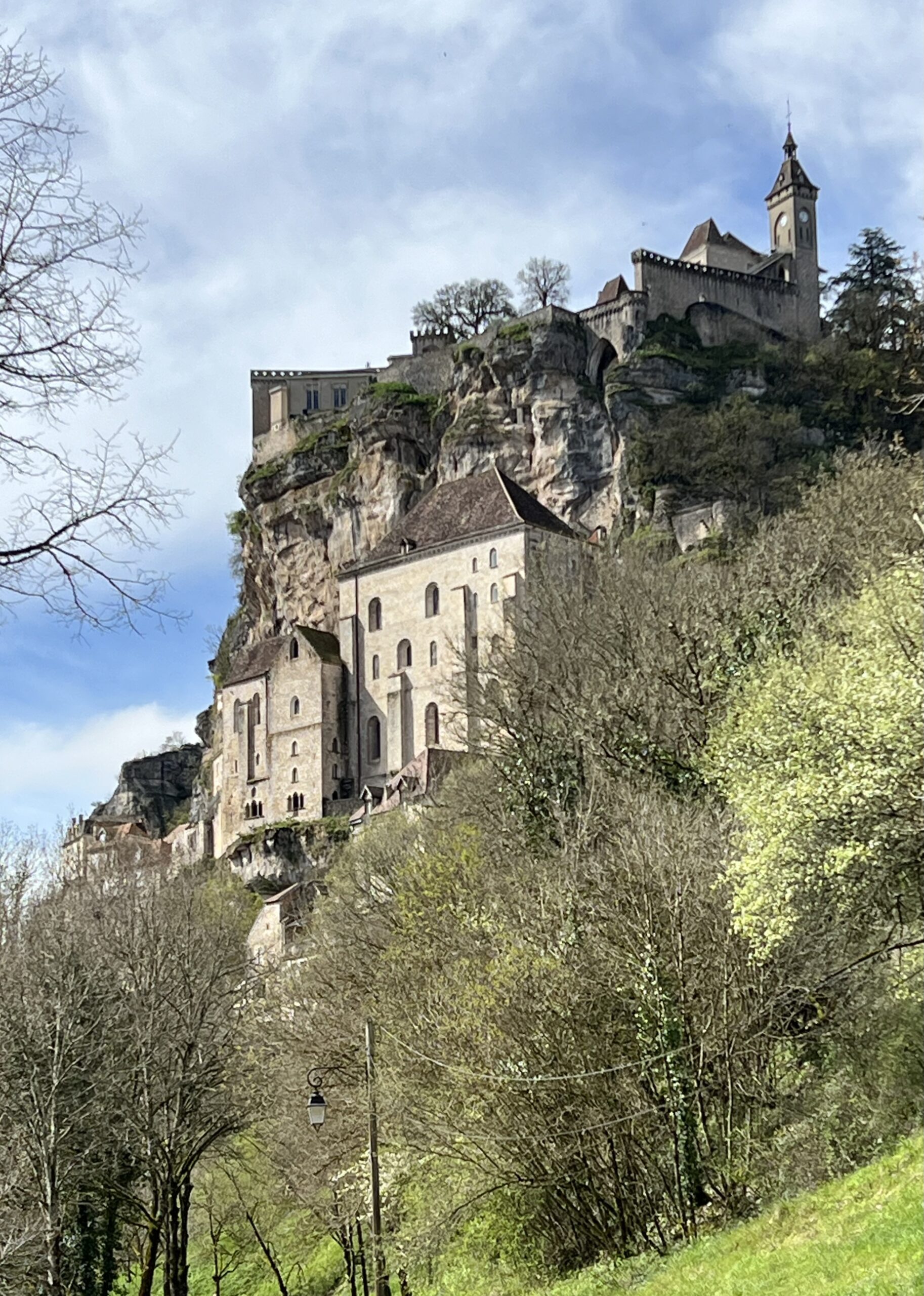
The sanctuary of Rocamadour is made up of medieval buildings, which are built into and against a steep cliff face some 150 metres high.
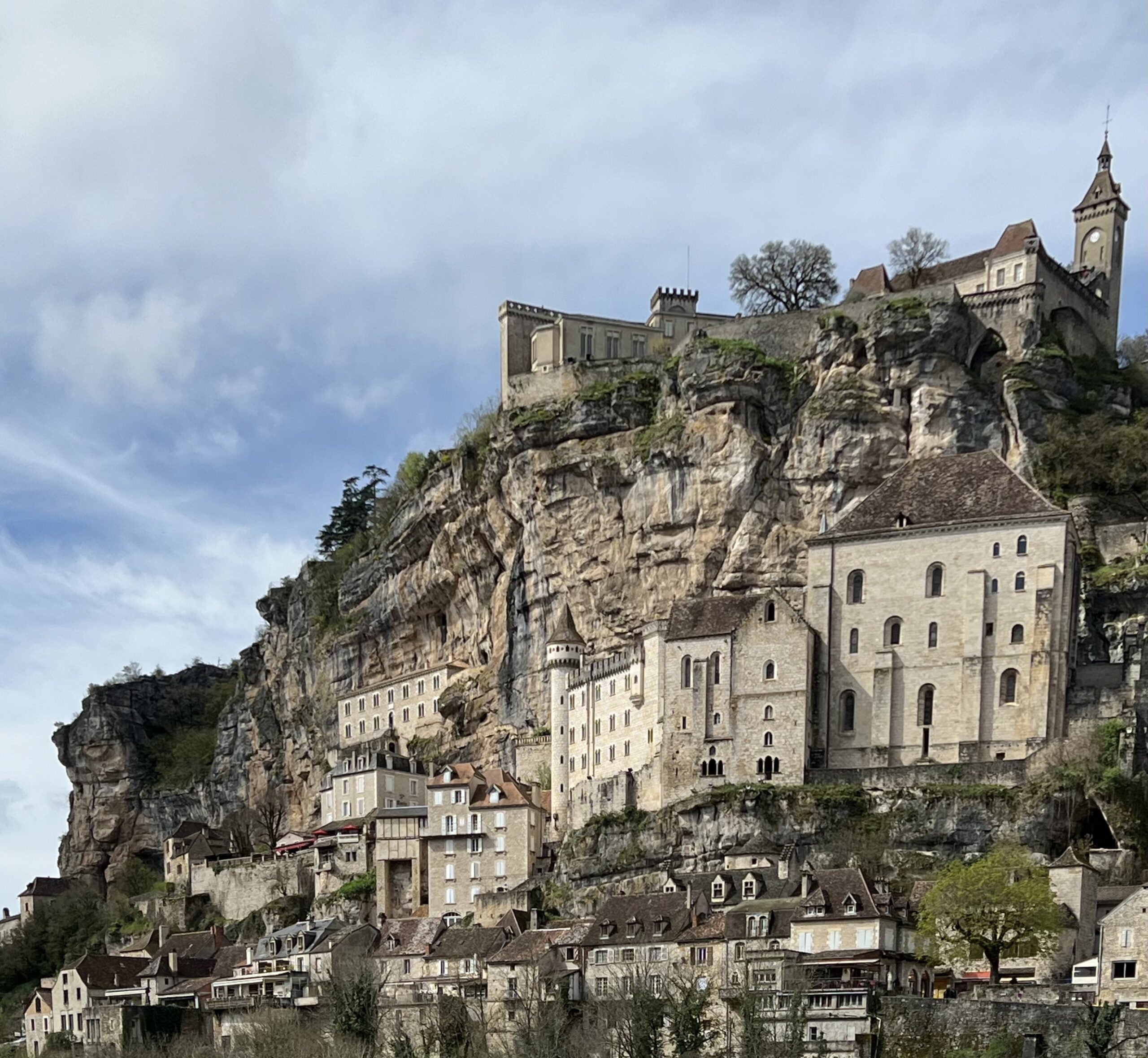
In Rocamadour, seven chapels/churches have been built:
Basilica of the Holy Saviour/Saint-Sauveur
2. Chapel of Saint Amadour
3. St John's Chapel
4. St. Blasius Chapel
5. Chapel of St Anne
6. Chapel of Saint Michael
7. Chapel of Our Lady
The Chapel of Saint-Amadour lies beneath the basilica and is considered a crypt. It is the lowest-lying chapel of the sanctuary.
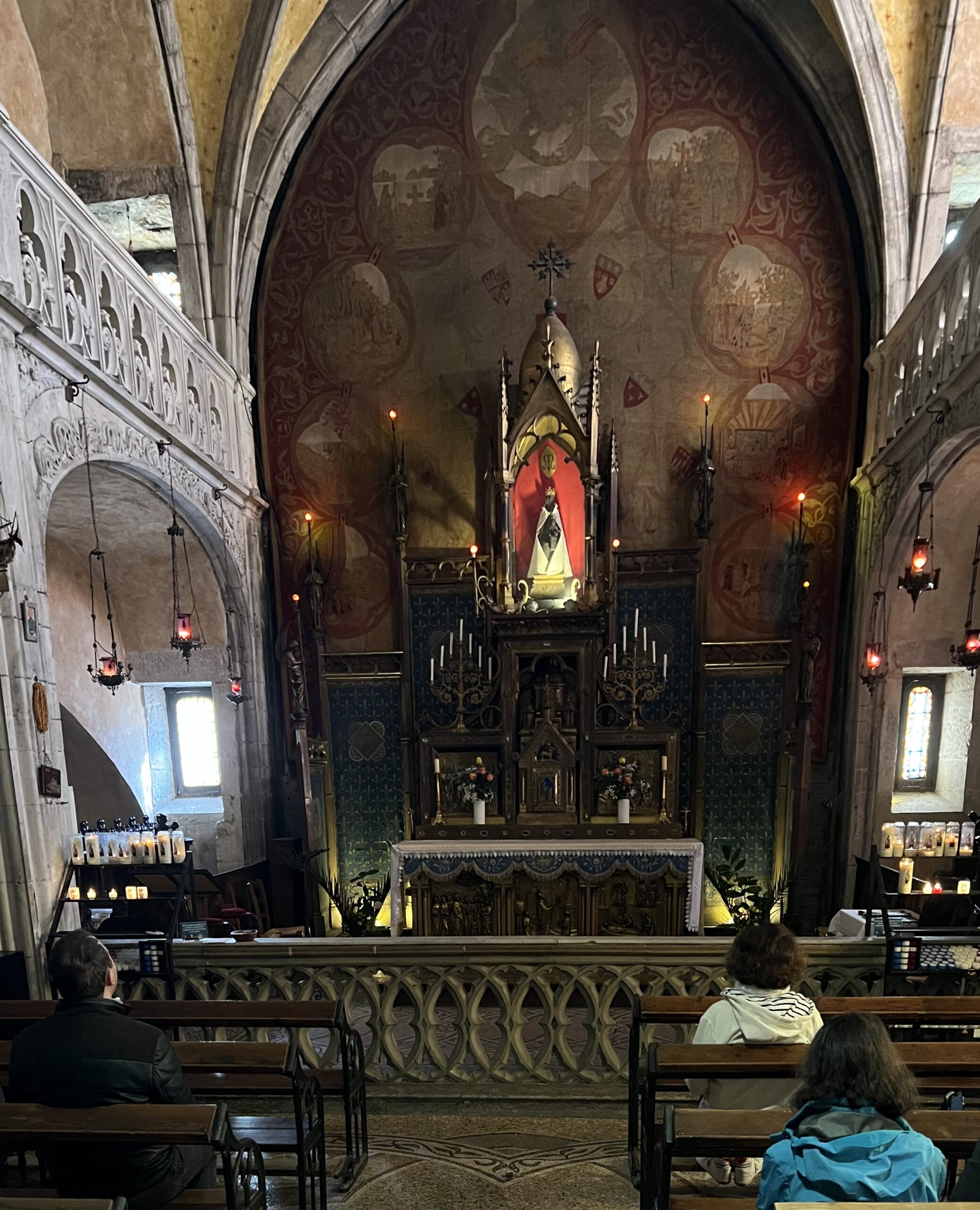
The Chapel of Our Lady is the central point of the sanctuary. In 1479, the chapel was destroyed by a falling boulder. The initiative to rebuild came from Denys/Denis de Bar (+1517), Bishop of Tulle (1471-1495). The dimensions of the current building are: length ±13m, width ±9m, and height ±8m. The altar dates from 1889 and features the effigy of the Black Madonna. The statue is from the 12th century and was once covered with a layer of silver. The miraculous image is made of wood. The effigy is black due to the reaction of the silver layer and the effect of smoke from many candles. Mary is depicted in a seated position. She wears a tight-fitting gown, with a gold trim visible at the neck and wrists. Mary holds the infant Jesus on her right knee. Both are crowned.

In Rocamadour there is a bishop’s palace, in which no bishop has ever lived. In 1930, it was converted into a museum of sacred art. This museum is also known as the Francis Poulenc Museum. Francis Jean Marcel Poulenc (1899–1963), a composer of varied works with a strong focus on melody, visited Rocamadour. He came here in 1936, shortly after a close friend of his had died in an accident. This brought home to him the fragility of existence. In Rocamadour, he rediscovered the faith of his childhood. His stay there subsequently inspired him to such an extent that he composed religious works.
The Via Crucis starts at the Porte Saint-Martial and winds up the rock face to the castle, which is built on the rock. The fortress walls date from the 14th century, with the present buildings added later.
ACCESSIBILITY
Rocamadour is located in the Occitanie region and belongs to the Lot department.
Address: Community of the Sisters of Notre-Dame, Rue de la Mercerie, 46500 Rocamadour.
Further information is available at:
www.notre-dame-du-calvaire.fr
-www.mairierocamadour.fr
Experience

On approaching Rocamadour, an impressive cliff face catches my eye from a distance. I enter the town via the Porte du Figuier.
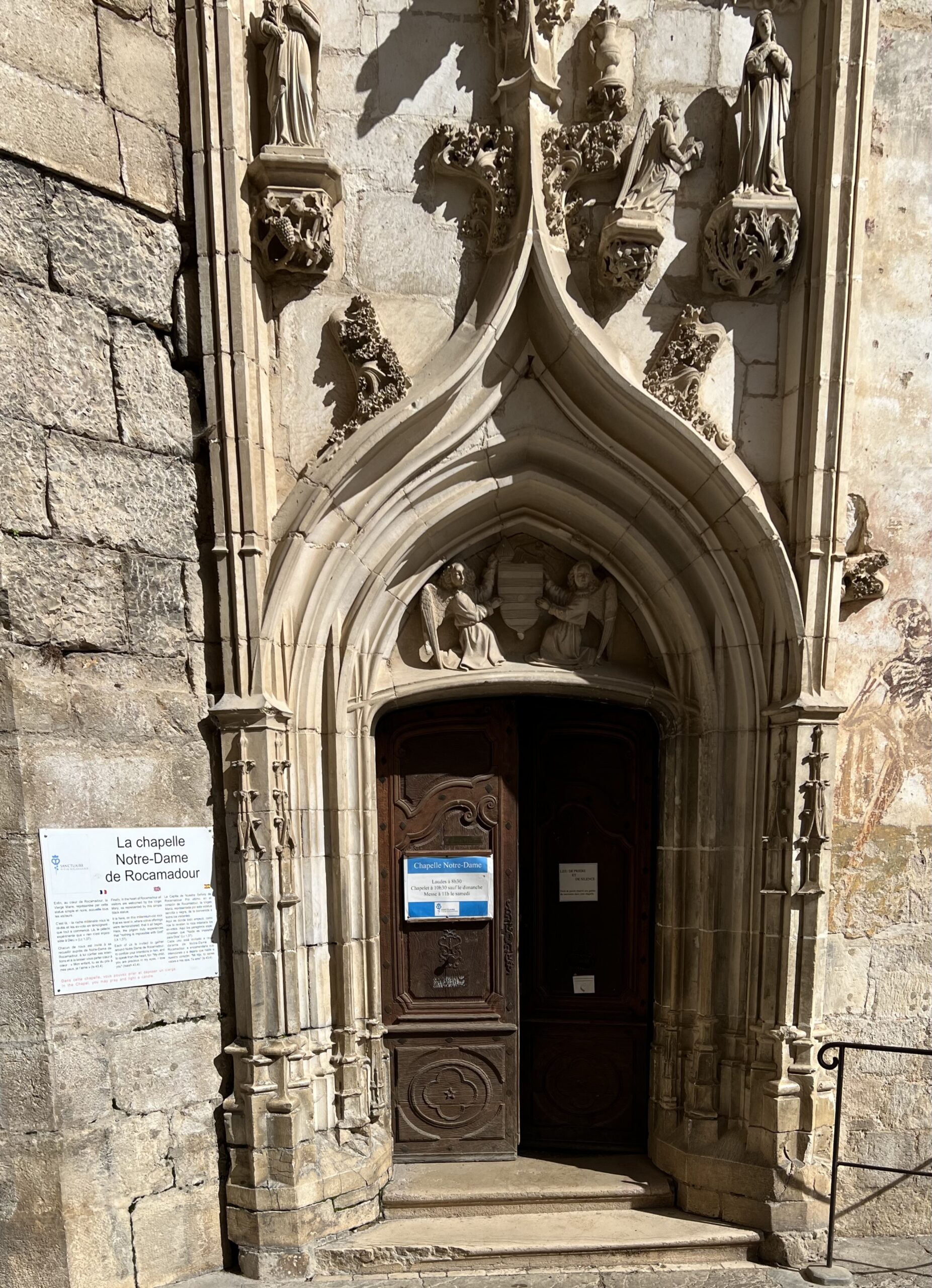
As I get closer to the sanctuary, the path goes uphill. Many steps await shoes. After 140 steps, I arrive at the Place des Senhals, and then another 76 steps further to get to the forecourt of the chapels. A total of 216 steps if I've counted correctly. Many pilgrims have traversed the long, stone staircase on their knees. I decided against that.
In the Chapel of Our Lady, which lies next to the basilica, stands the effigy of the Black Madonna. Standing by the statue, I wonder how many visitors have been here. A prayer follows in this special, somewhat dark space.

Then it's time to visit the other chapels, and my thoughts turn to the history of Rocamadour. Not only is there much prayer here, but also many battles have been fought. It's a shame that fervent followers of religions clash so much.
I'll take the many steps again, but this time going down. I come across a few little shops and buy something for some friends.

Environment
Rocamadour is located 142 km south of Limoges and 164 km north of Toulouse.
Montauban is 112 km to the south. Cahors is 62 km south-west of Rocamadour. Souillac is 22 km to the north. Gramat is 10 km to the east and to visit Figeac requires a journey of 45 km to the south-east.
~~~

 Nederlands
  English (UK)
  Deutsch
  Français