History
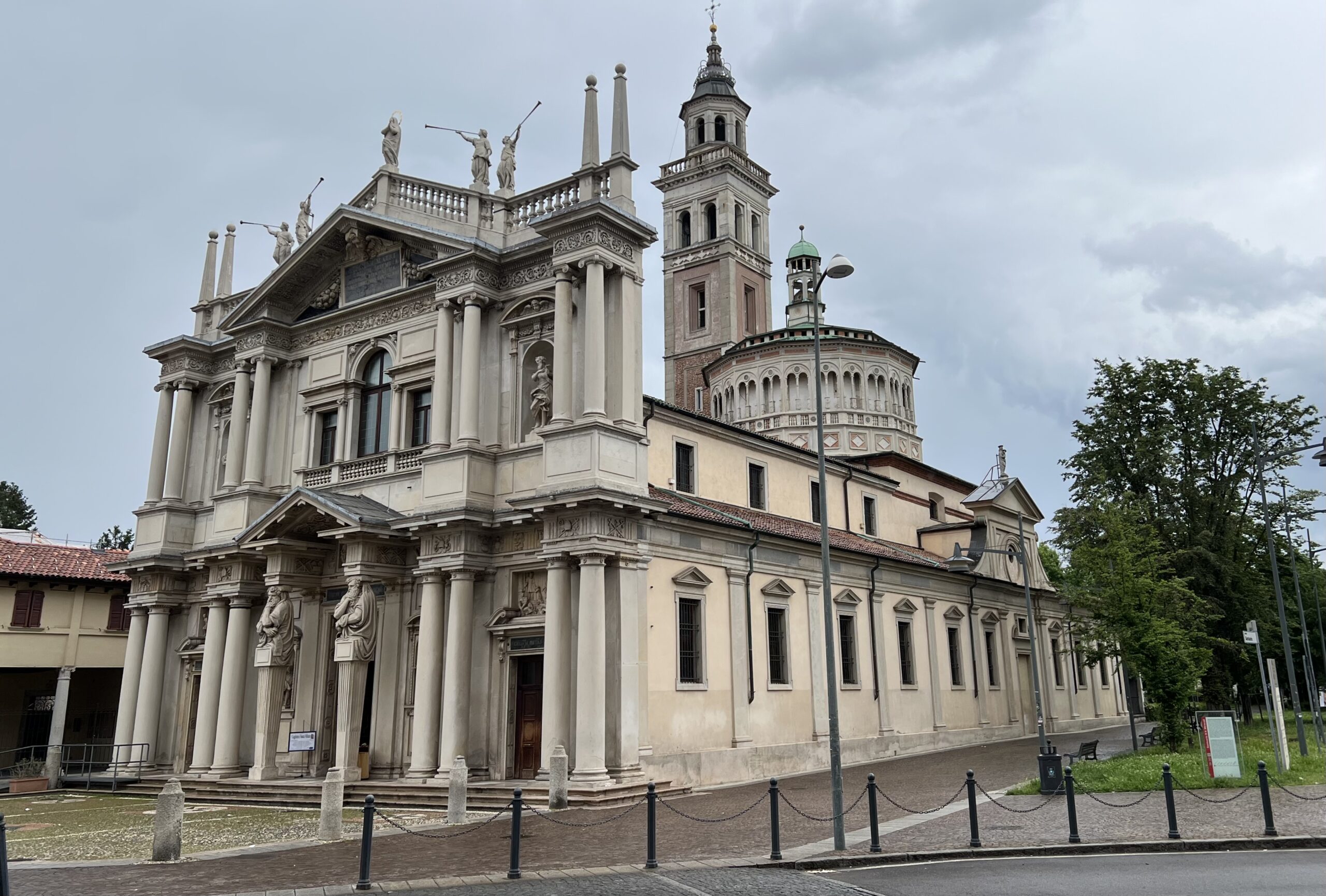
A legend led to the construction of this place of pilgrimage. The story is about a sick person being healed. The legend tells of Pedretto, a young man who had been ill for several years. Our Lady of the chapel on the Varesina road (Strada della Varesina) heals him in 1460. She urges the young man to have a church dedicated to Her built.
Maria's request is granted. The church is built, but it collapses. The church is rebuilt, but there is another collapse, and this happens for a third time. After the church has fallen into ruin for the third time, the inhabitants of Saronno decide to form a committee. It is a group consisting of 2 representatives of the nobility and 4 from the common people. This initiative leads to the construction of a large church. On 8 May 1498, the foundation stone of the sanctuary was laid. The complete structure is completed in several phases.
The Renaissance section was realised between 1498 and 1516, featuring an apse, chancel, dome, and tower, among other elements. Giovanni Antonio Amadeo (c. 1447–1522) was its architect. He was also a sculptor and engineer.
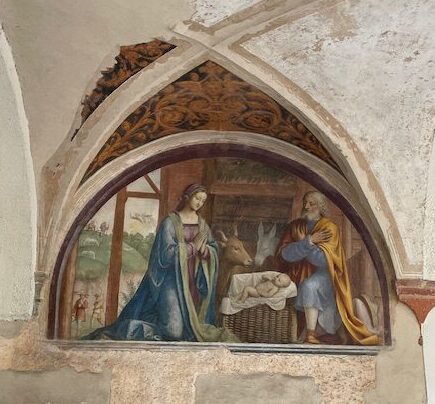
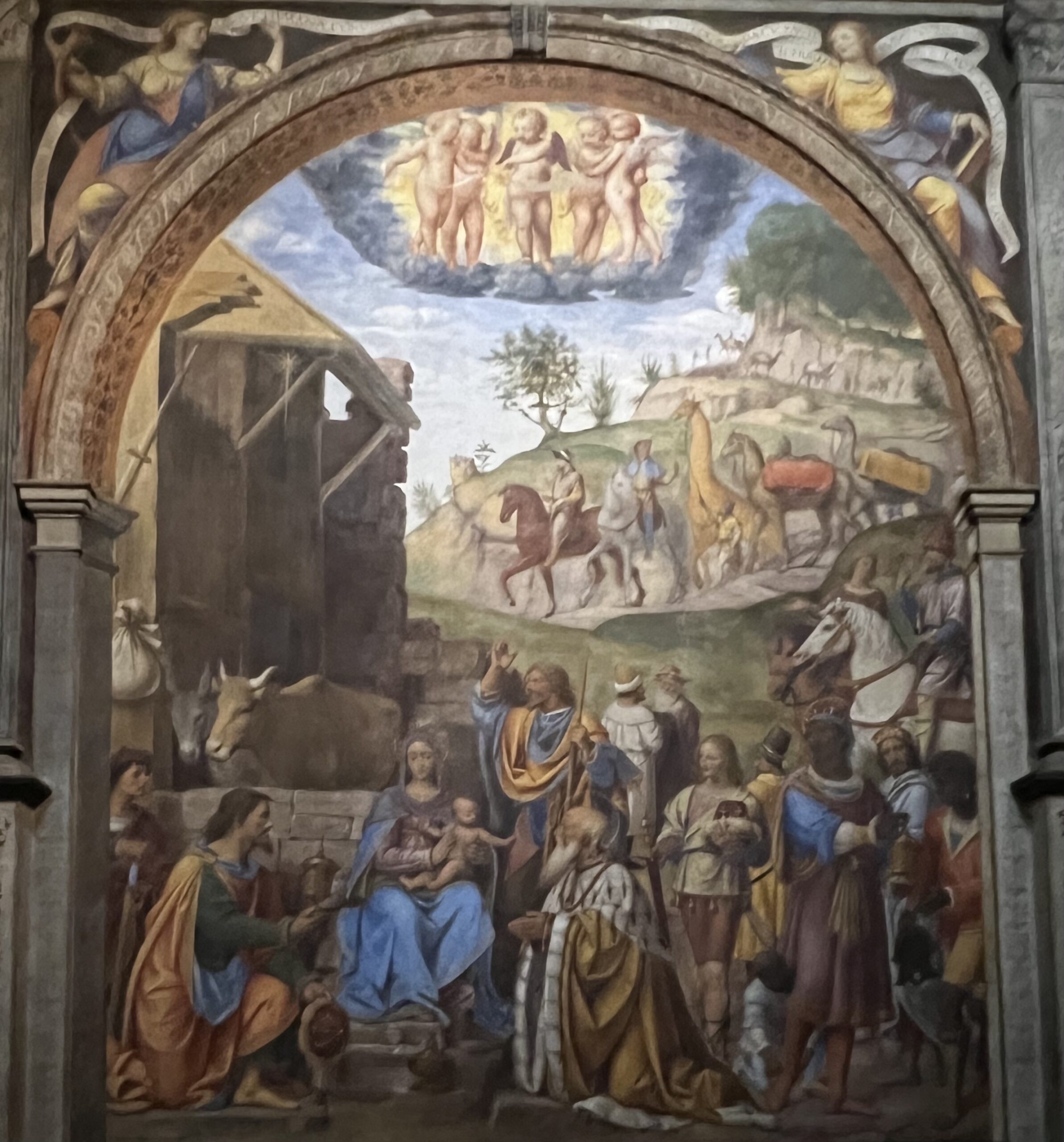
Many fresh frescoes have been applied in the basilica. The Renaissance painter Bernardino Luini (c. 1480-1532) created the paintings of phases of the life of Mary in 1525.
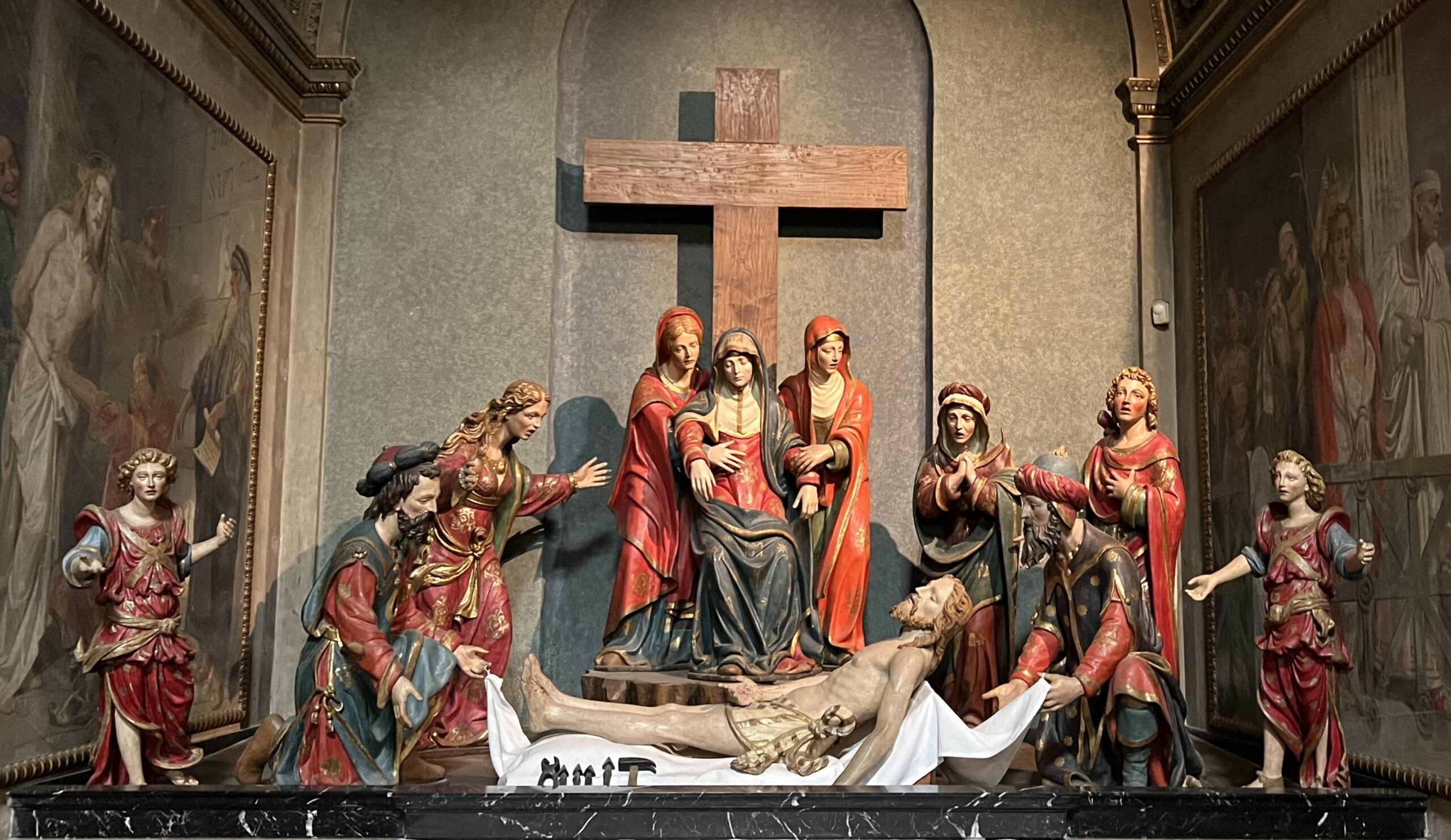
In the side chapels are wooden groups of the Descent from the Cross and the Last Supper by woodcarver Andrea da Corbetta/da Milano/Retondi (c.1475-c.1547) from 1529.
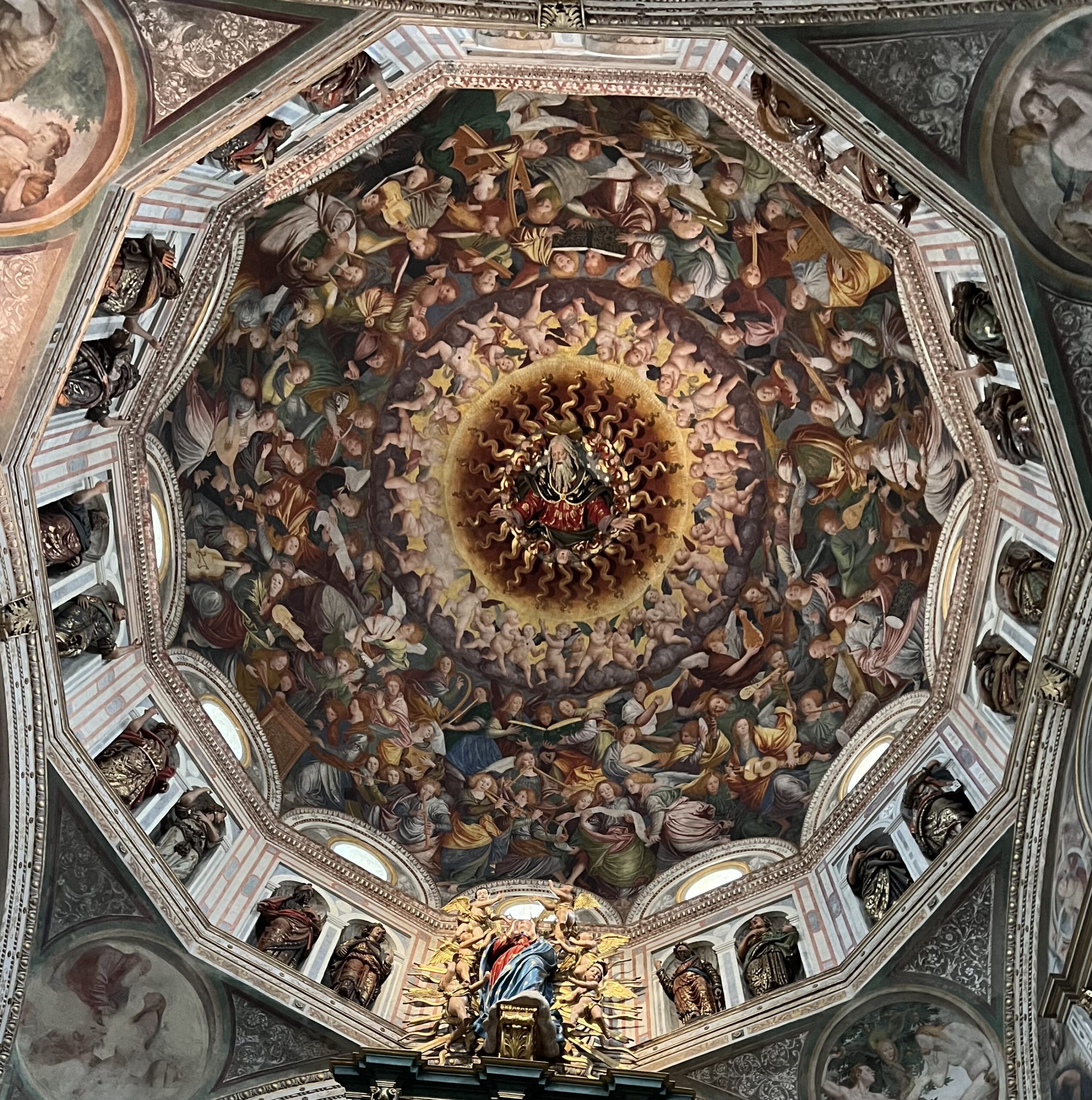
Architect, sculptor and Renaissance painter Gaudenzio Ferrari (c. 1475-1546) in 1535 depicted the Assumption of the Virgin Mary into Heaven by angels on the great dome. Ferrari also created other works in the church, including depictions of four scenes from the Old Testament. After Ferrari's death, painter Bernardino Lanino/Lanini (c. 1512-c. 1582) completed this work in 1547.
In 1556, there was the extension of the nave and the construction of the sacristy. The architect was Vincenzo Seregni (1519-1594), who is also known as Vincenzo da Seregno and Vincenzo dall’Orto. He also practised as a sculptor and engineer.
During the period 1570-1613, the enlargement of the ship, the colonnade and the facade is in Baroque design. The design of the facade is by architect and painter Pellegrino Tibaldi (1527-1596). He is also known as Pellegrino Pellegrini and Pellegrino da Bologna. The small bell tower dates from 1594. In 1598, Camillo Procaccini (1561-1629) created paintings for the church.
The upper part of the façade was installed in 1630. Architect and painter Carlo Buzzi (c.1605-1659) provided the design. He was also known by the names Albutio, Albuzio, Buti, Butio and Buzio. Furthermore, there are paintings from 1677 by, among others, Filippo Abbiati (1640-1715).
In 1817, Pompeo Marchesi (1783-1858) made the baptistery and pietà.
In 1904, frescoes were painted by Giacomo Mantegazza (1857-1939), who was born in Saronno.
In 1923, the church was elevated to the status of a basilica by Pius XI, Pope from 1922 to 1939, born Ambrogio Damiano Achille Ratti (1857-1939).
Over the centuries, the sanctuary has developed into one of the most important in Lombardy, not only for believers but also for art lovers.
Pilgrimage site
In Saronno, a town of around 40,000 inhabitants, is the “Santuario della Beata Vergine dei Miracoli”, which in Dutch is the “Heiligdom van de Zalige Maagd van de Wonderen”.
Many fresh frescoes can be seen on the walls and the dome, including some paintings about phases from the life of Mary, such as a Christmas scene.
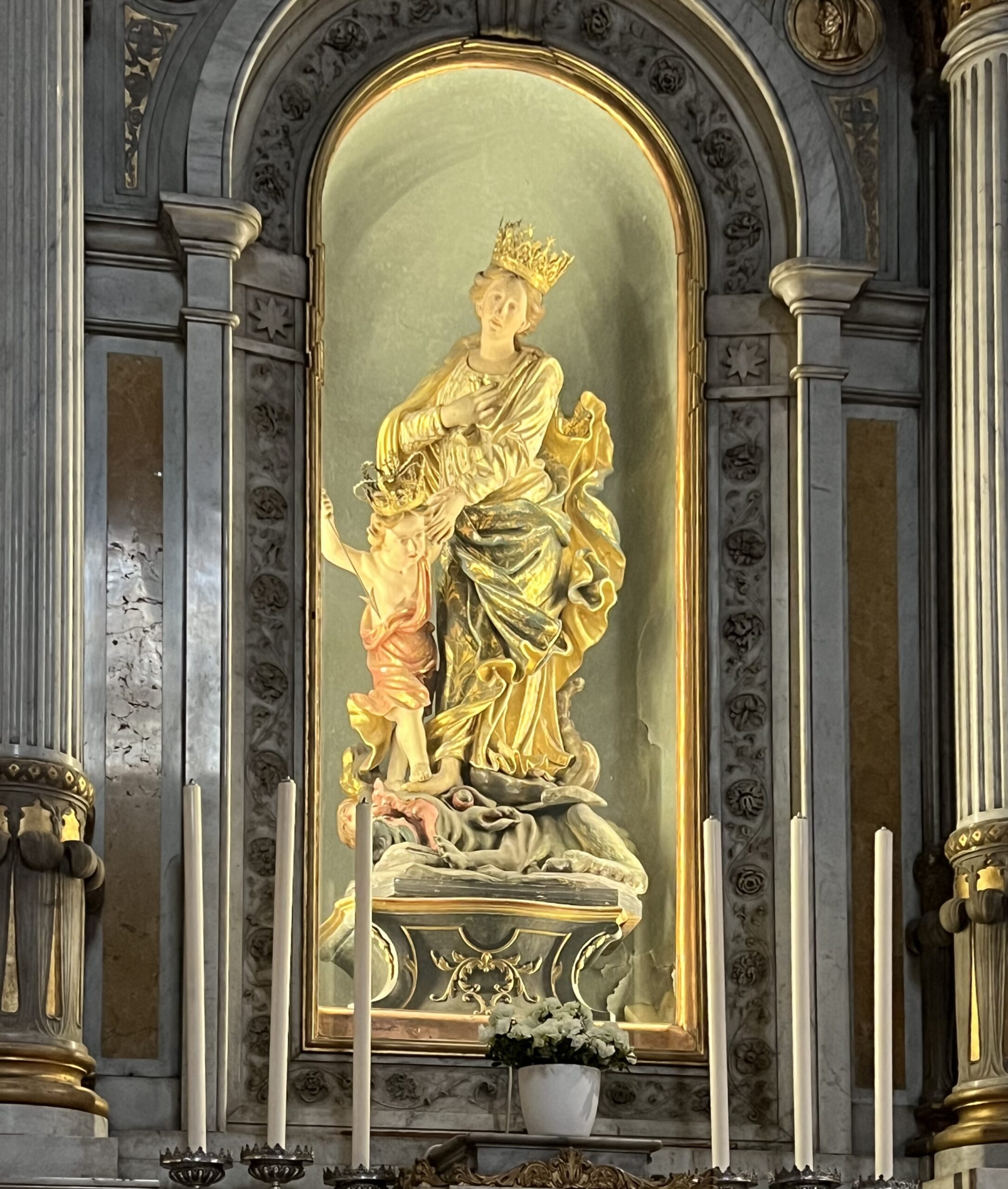
In the apse, the statue of Our Lady of Miracles is housed in a shrine.
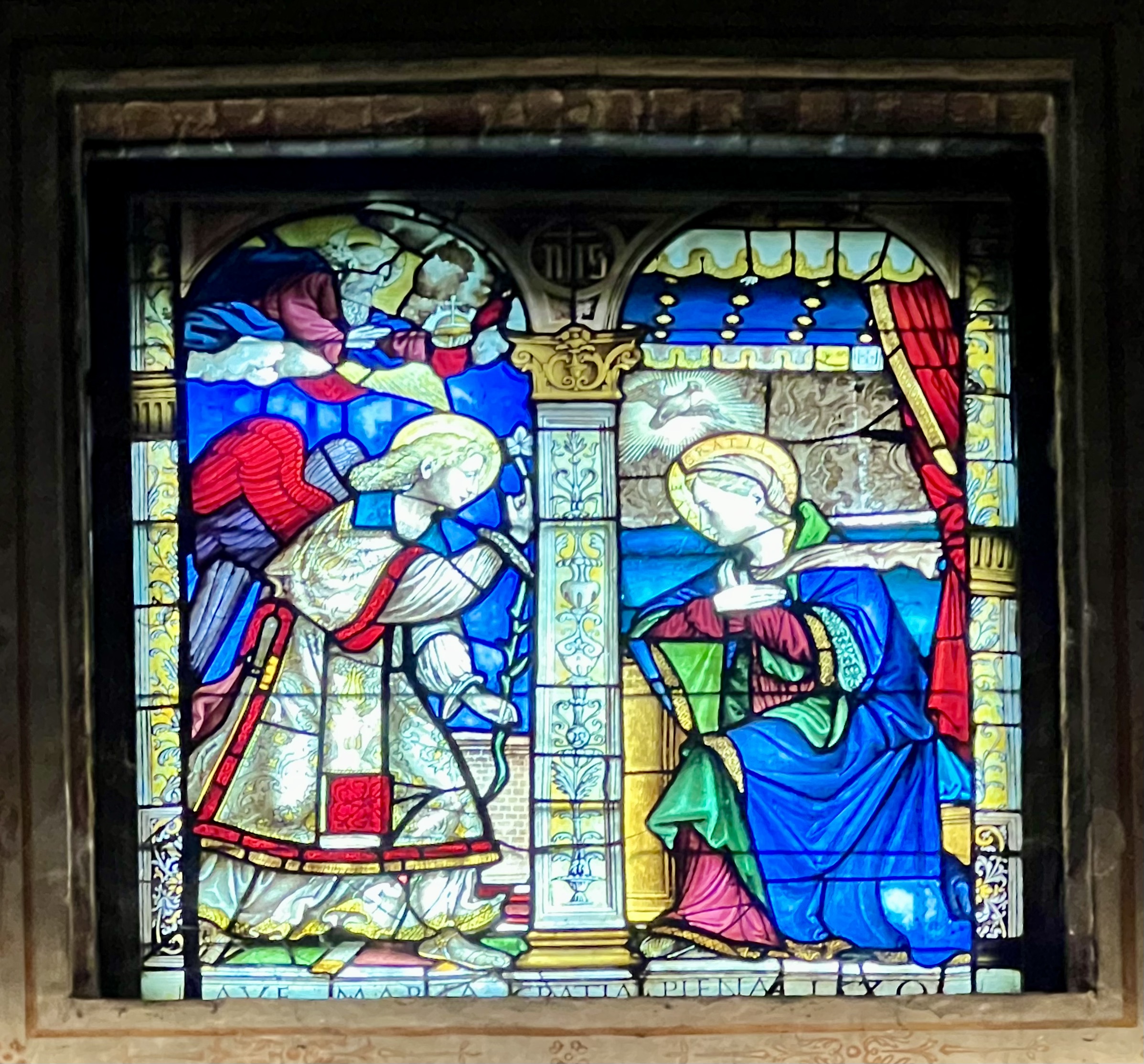
The basilica features colourful stained-glass windows.
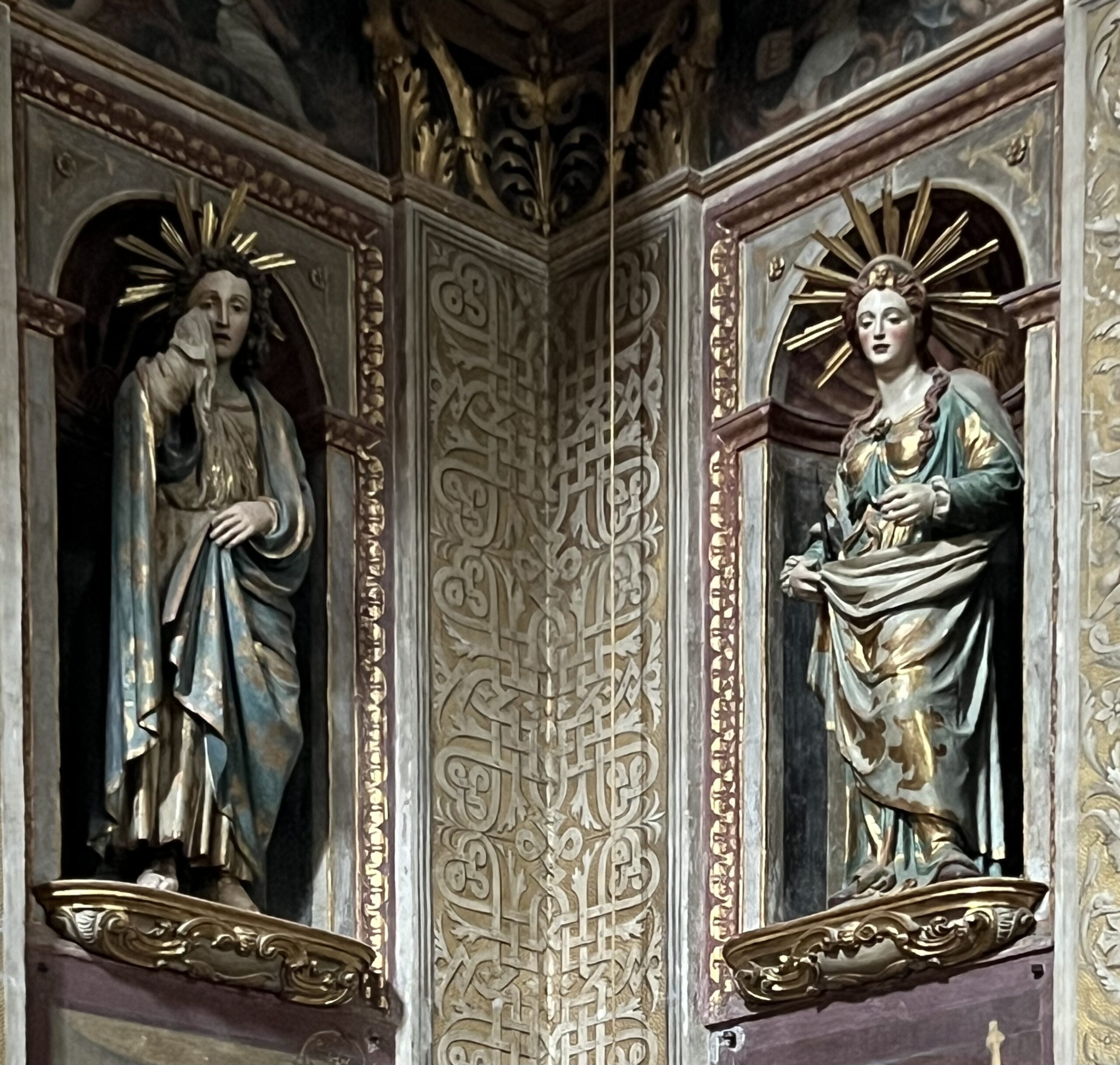
In the niches of the basilica near the chancel, large statues of Mary have been placed.
The basilica is open daily.
ACCESSIBILITY
Saronno is located northeast of Milan, in northern Italy, and belongs to the province of Varese.
The address of the pilgrimage basilica is: Piazzale Santuario 2, 21047 Saronno. This is near Via Varese.
Current information can be found at www.chiesadisaronno.it and at www.santuariodisaronno.it.
Experience
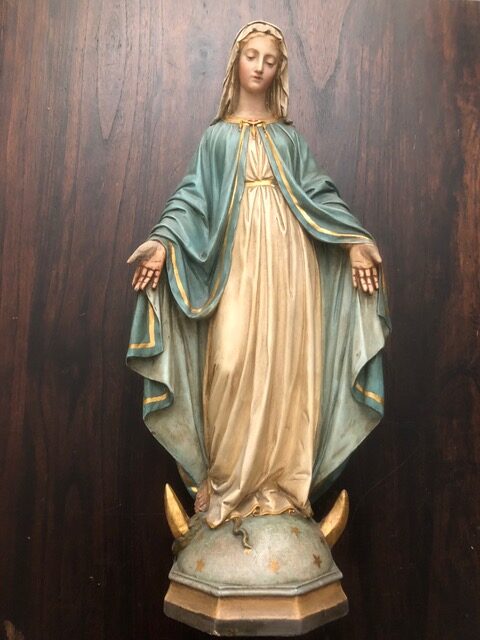
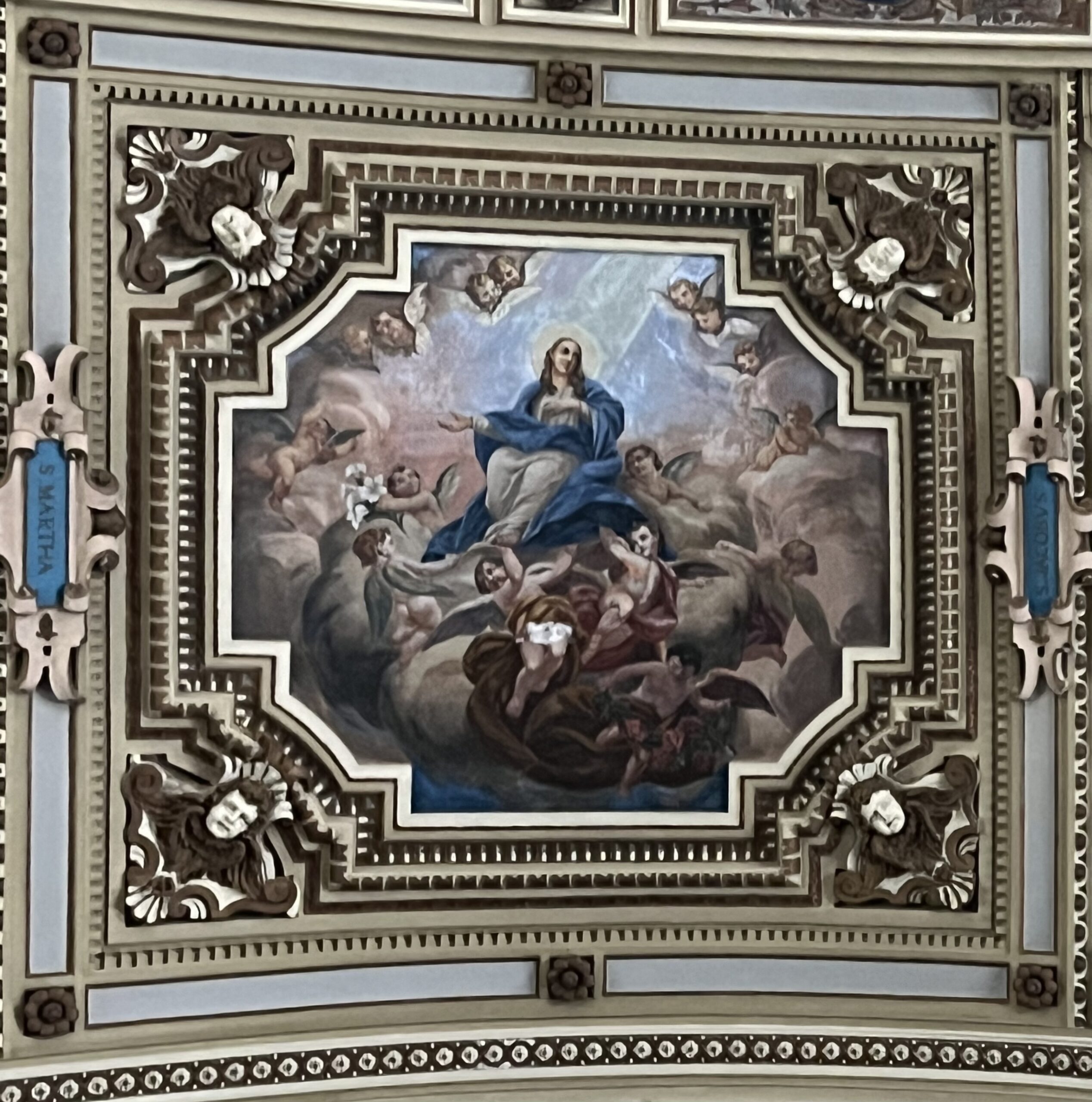
On the edge of Saronno's town centre stands the pilgrimage basilica. A stately church with an equally solemn-looking tower, 47 metres high. I'm not going into the church yet, as someone is being paid their final, ecclesiastical respects here. While waiting, I'm heading to the town centre to visit the church of Saints Peter and Paul. There, I'll pause at an impressive statue of Our Lady. The frescoes on the ceiling also make a great impression on me.
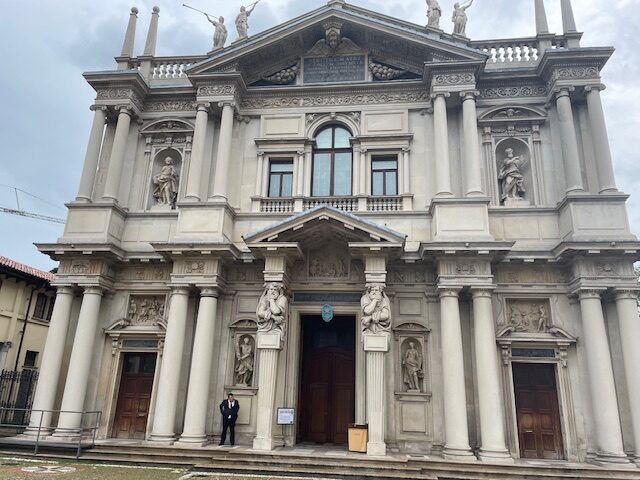
An hour later, the basilica is almost deserted and I can look around. This shrine is more than worth lingering in for a bit. Murals, statues, and scenes mean this house of worship has a lot to offer visitors. The depicted stages from Mary's life move me again this time.
The miraculous image of Mary is located at the very back of the chancel. Nevertheless, pilgrims can get very close to it. When I stand so close to Our Lady, the stories of the history of this place come to mind. After that, it is time for prayer and intentions for good people in my immediate surroundings.

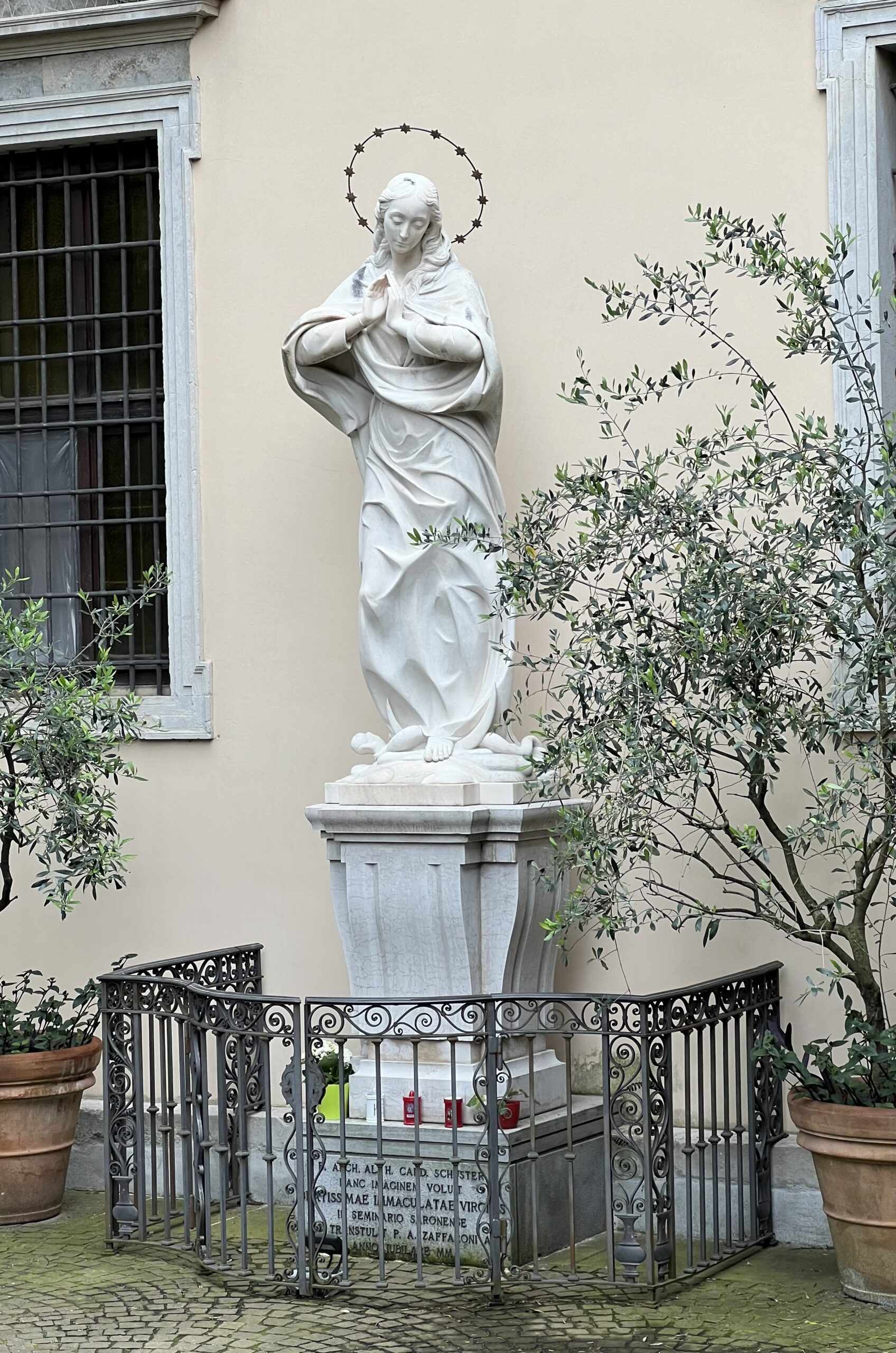
After praying and admiring the magnificent interior of the basilica, I leave the church via a side door. Then I enter an ambulatory, where there is a beautiful, white statue of Our Lady. Many restoration works are in progress here. It would seem this pilgrimage site has faith in the future. In a few years' time, the works will be completed, and I would quite like to come back here.
Environment
Saronno is an ancient city with many religious expressions. The town is also known for its amaretti biscuits and the liqueur “Amaretto di Saronno”. The religious heritage is extensive in Saronno, including the Church of Saints Peter and Paul.
From Milan to Saronno is 28 km to the northwest.
Departing from Turin and going to Saronno is a journey of 150 km to the northeast.
From the pilgrimage site of Ghisallo, it is 54 km south-west to get to Saronno.
From the sanctuary of Montichiari, it is 135 km to go west to arrive in Saronno.
Leaving from the pilgrimage site of San Damiano to go to Saronno, the distance is 125 km north-westwards.
Posted: 28 June 2024
~~~

 Nederlands
  English (UK)
  Deutsch
  Français