AKEN
History
Aachen is the imperial city of Charlemagne (c. 747-814). He was King of the Franks (768-814) and Duke of Bavaria (788-814). Charlemagne was crowned emperor on Christmas Day 800 in Rome by Leo III (750-816), Pope from 795 to 816. He was then Emperor of the Holy Roman Empire (800-814). The name Charlemagne is in German “Karl der Grosse”, in English and French “Charlemagne” and in Latin “Carolus Magnus”.
Charles the Great was married five times, with his final marriage taking place in 794 to Hildegarde of Alemannia (776-800). After her death, the emperor did not enter into any further marriages.
Charlemagne possesses a powerful personality. He has shaped the historical consciousness of a united Europe.
On the initiative of Frederick of Hohenstaufen (1122-1190), as Frederick I Barbarossa, the name Barbarossa comes from the reddish beard, Holy Roman Emperor from 1155-1190, Charlemagne was canonised. This happened on 29 December 1165 by Guido of Crema (c. 1110-1168), who was Antipope Paschal III from 1164 to 1168.
The Aachen Cathedral has a long history. Eudes (Odo) von Metz (742-814) is the architect of the grand structure. Marble from Italy was used as a building material, among other things. In 786, Charlemagne received permission for this from Hadrian I (c. 700-795), who was Pope from 772 to 795. In 798, the large columns were placed in the church. It is more than an octagonal Palatine Chapel, built between 792 and 804 on the initiative of Charlemagne. The consecration of the church took place in 805, for which Charlemagne had four precious relics transferred from Jerusalem in 800: the veil of Mary, the cloth in which the head of John the Baptist was once wrapped, swaddling cloths from the birth of Jesus, and a loincloth of Jesus. The relics are kept in a 13th-century shrine. Around the year 805, the Church of St. Mary was immediately a much-visited pilgrimage church.
The tomb of Charlemagne is also in the Cathedral. His mortal remains lie in a large shrine.
The Cathedral is the coronation church of Roman-German kings, as between 936 and 1531 more than 30 German kings were crowned here.
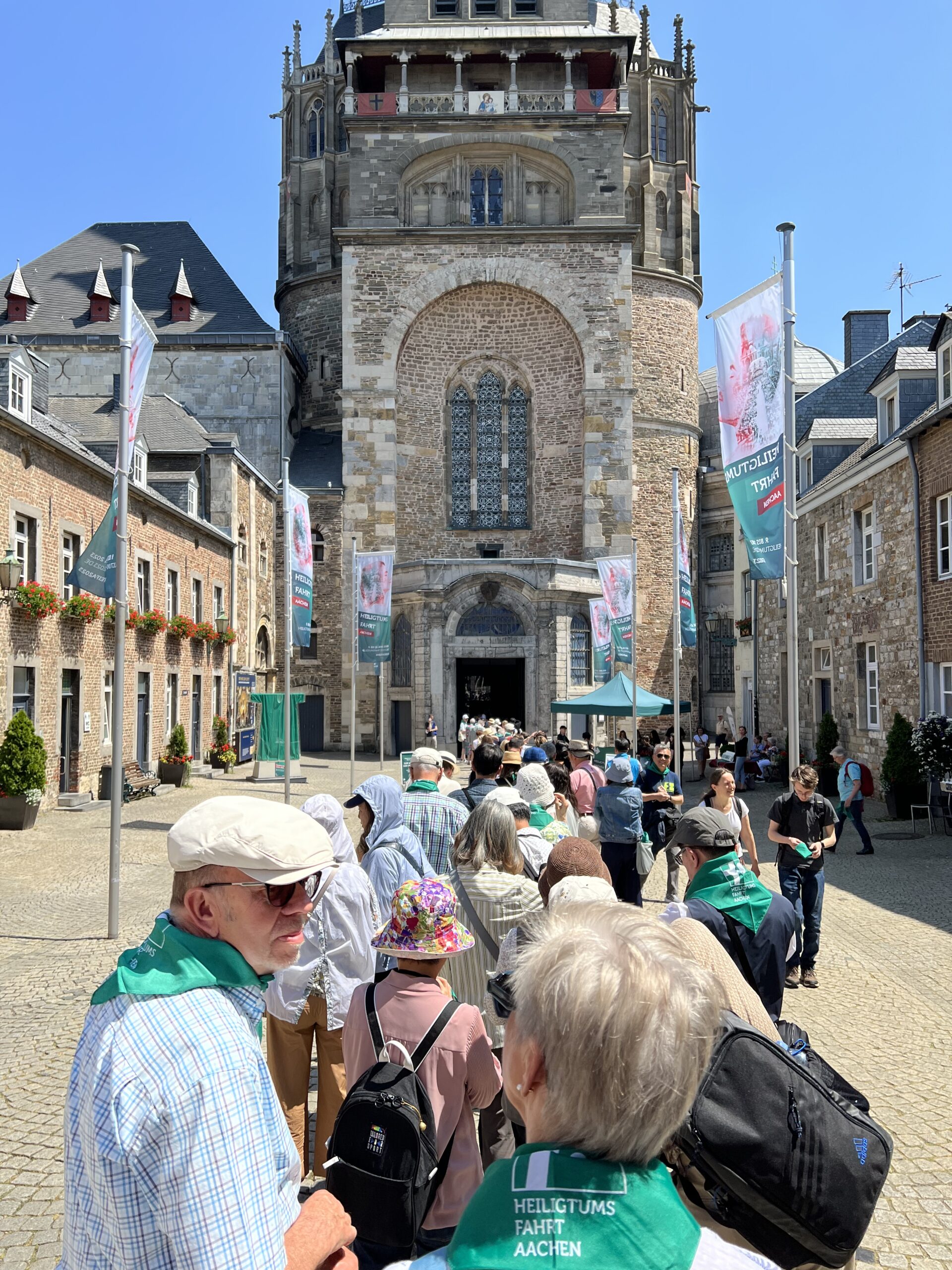
The Pilgrimage of the Relics has been held since 1349, and every seven years, thousands of pilgrims from home and abroad come to Aachen Cathedral to venerate the special relics. The treasures are kept in the Shrine of the Virgin Mary from 1239 and are then removed from it and displayed to the pilgrims for the duration of the Pilgrimage of the Relics.
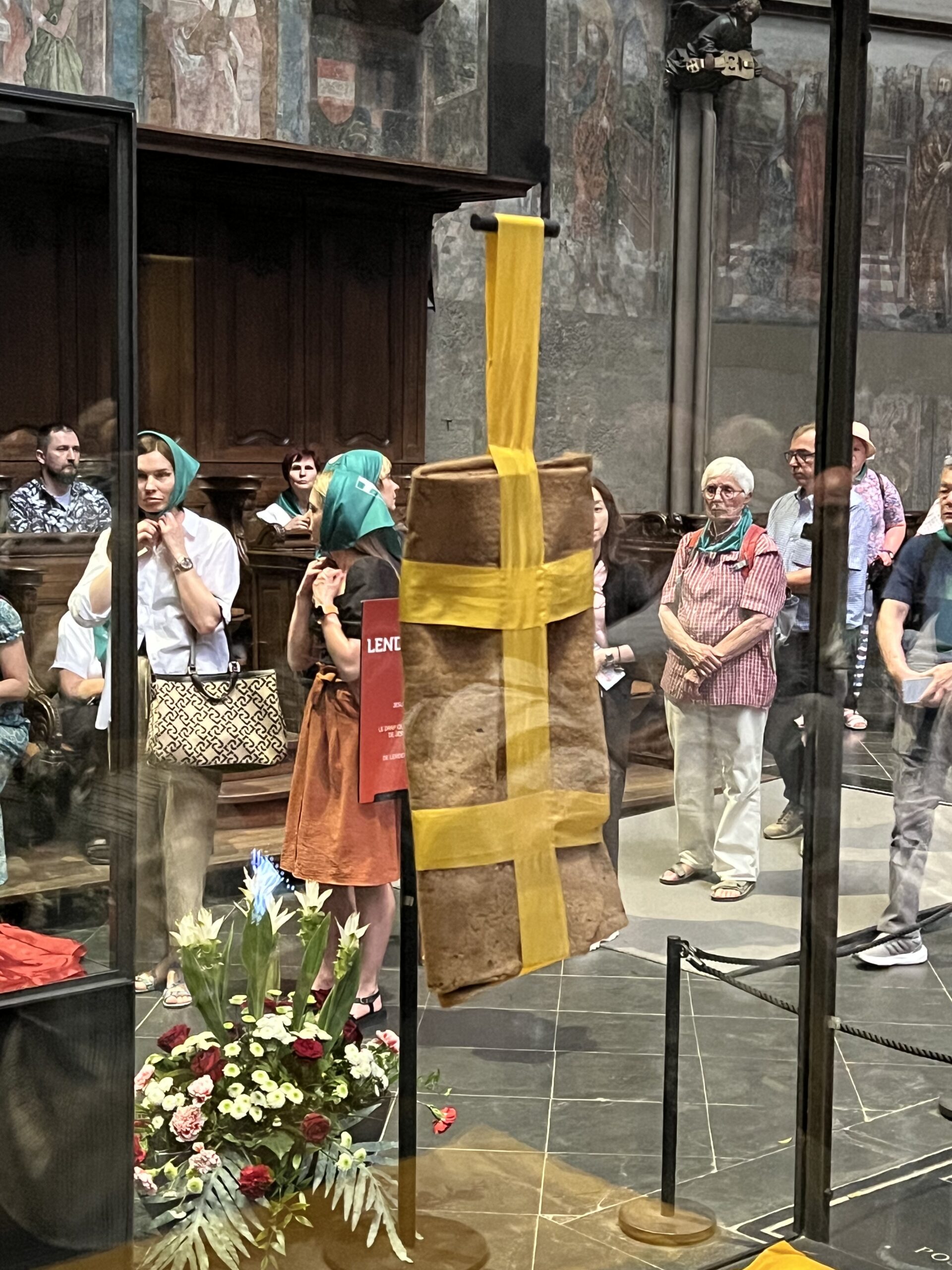
Once every seven years, the Pilgrimage of the Sanctified Cloths is organised. During this event, four sacred cloths are venerated, and these are:
Mary's robe that She wears on the night Jesus is born
- the cloths in which Mary wraps her newborn Son
the cloth in which the head of John the Baptist is preserved
the shroud that Jesus wears on the cross.
During the Great Novena of the Cathedral of Aachen, the relics are put on display in Aachen Cathedral, and a period of 11 days has been scheduled for this, during which numerous other activities also take place.
In 1978, the Aachen Cathedral became the first German building to be placed on the UNESCO World Heritage List.
Pilgrimage site
Aachen is a city with over 250,000 inhabitants and its Cathedral stands in the centre. It is one of the most famous monuments of Western European architecture. Since 1930, the Cathedral has been the cathedral church of the Diocese of Aachen.
Upon entering, a model of the building is striking. Next, you see the octagon, which is the eight-sided part of the building's interior. The round structure has a dome approximately 32 metres high. It is noteworthy that over the centuries this dome has never been destroyed by wars or fires. Hanging here is the Barbarossa chandelier, donated in 1165, the year of Charlemagne's canonisation, by Emperor Frederick I Barbarossa. The octagon is surrounded by two superimposed ambulatories, with the outer walls having sixteen corners.
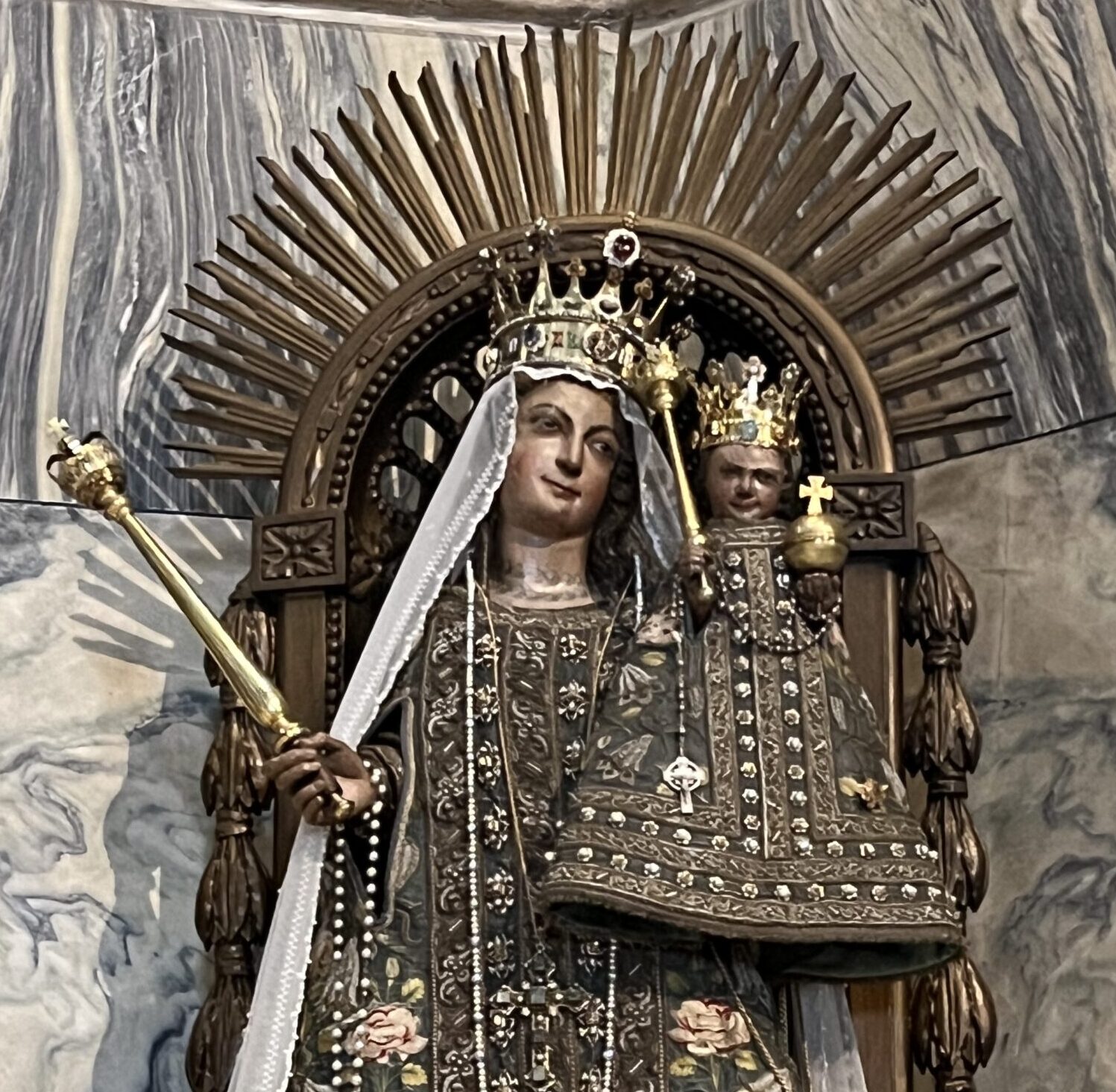
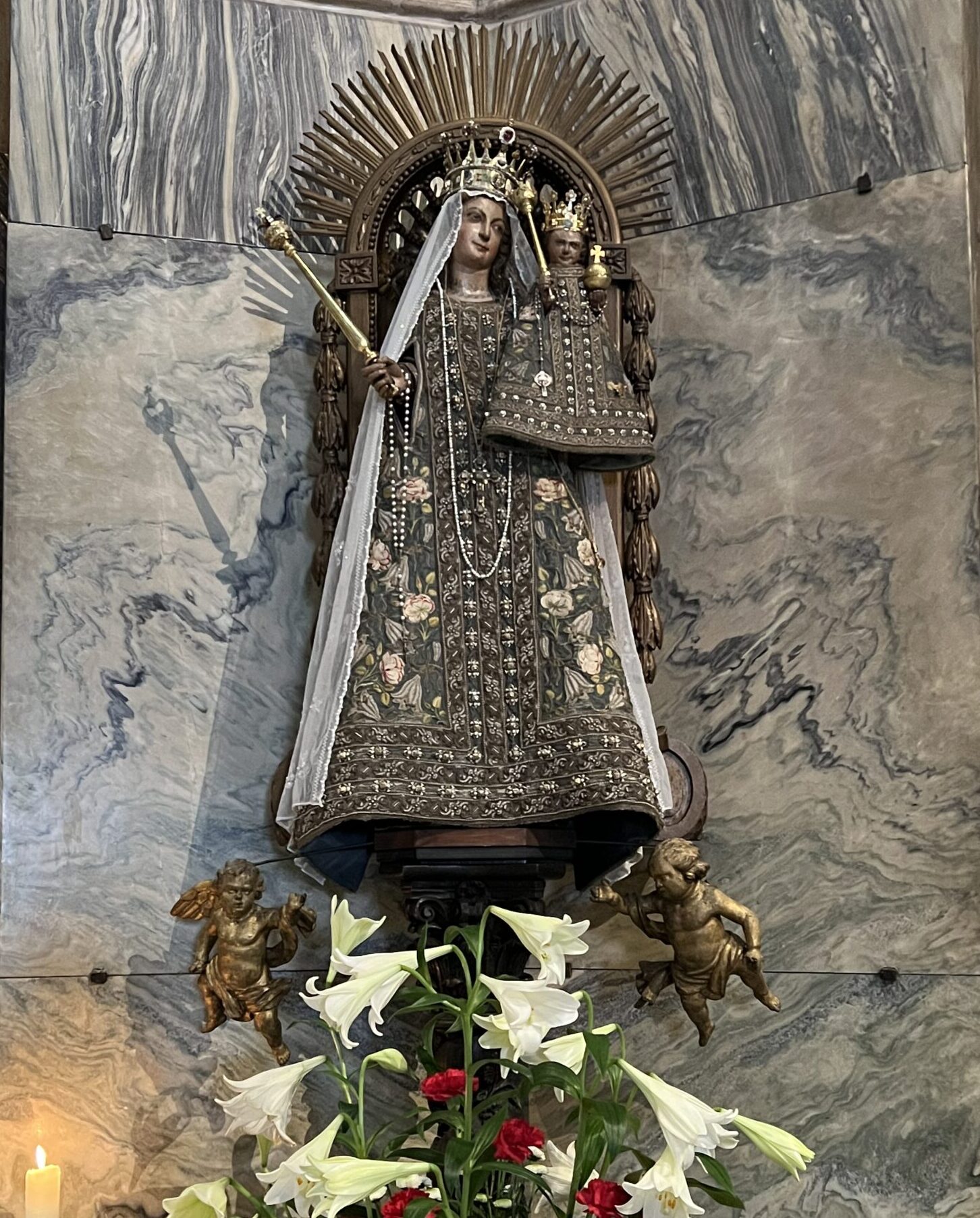
In the octagonal part of the church, on a pillar on the right-hand side, is the shrine of grace, the “Gewandmadonna” (Clad Madonna). Mary is also referred to here as “Our Lady of Aachen”. The image dates from the 14th century. It is said that Mary is the richest woman in Aachen, as she possesses around 40 precious dresses and an extensive collection of jewellery.
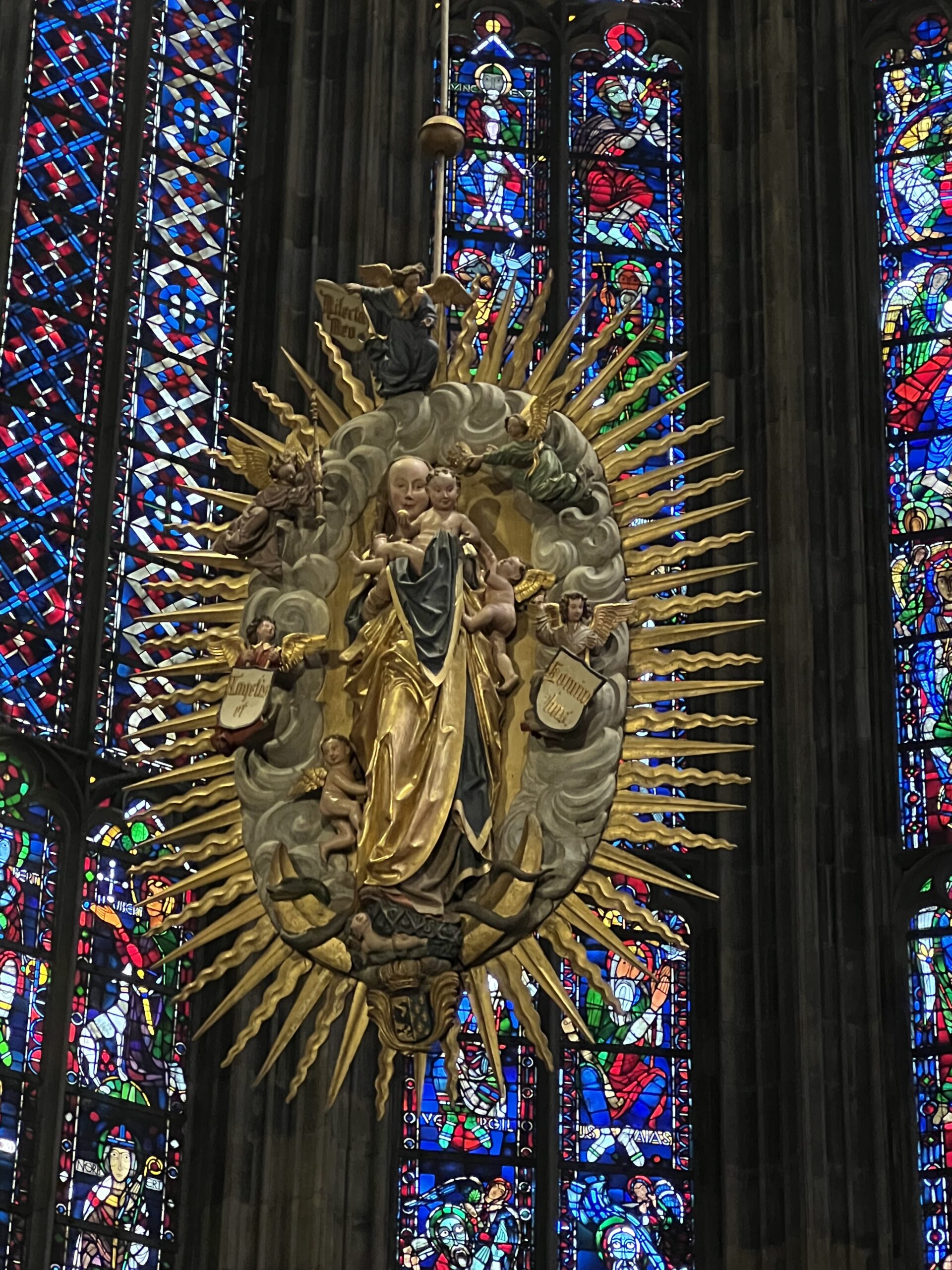
In the choir hangs a Marianum; a sculpture with two effigies of Mary placed back to back, surrounded by a halo of rays. It was made in 1524 by sculptor Jan van Steffenswert (c. 1460–c. 1538). The Marianum is signed “IAN BIELDESNIDER”.
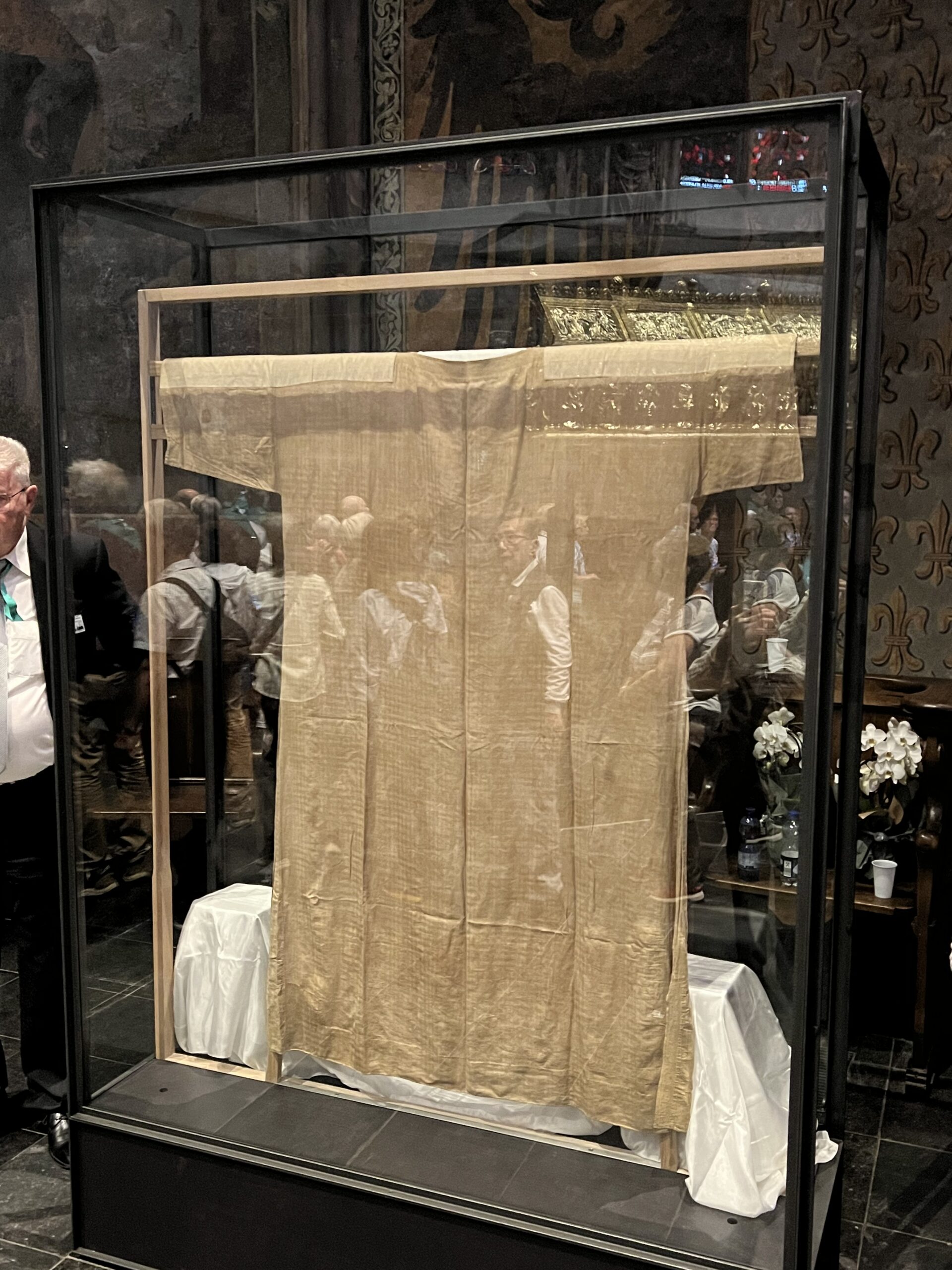
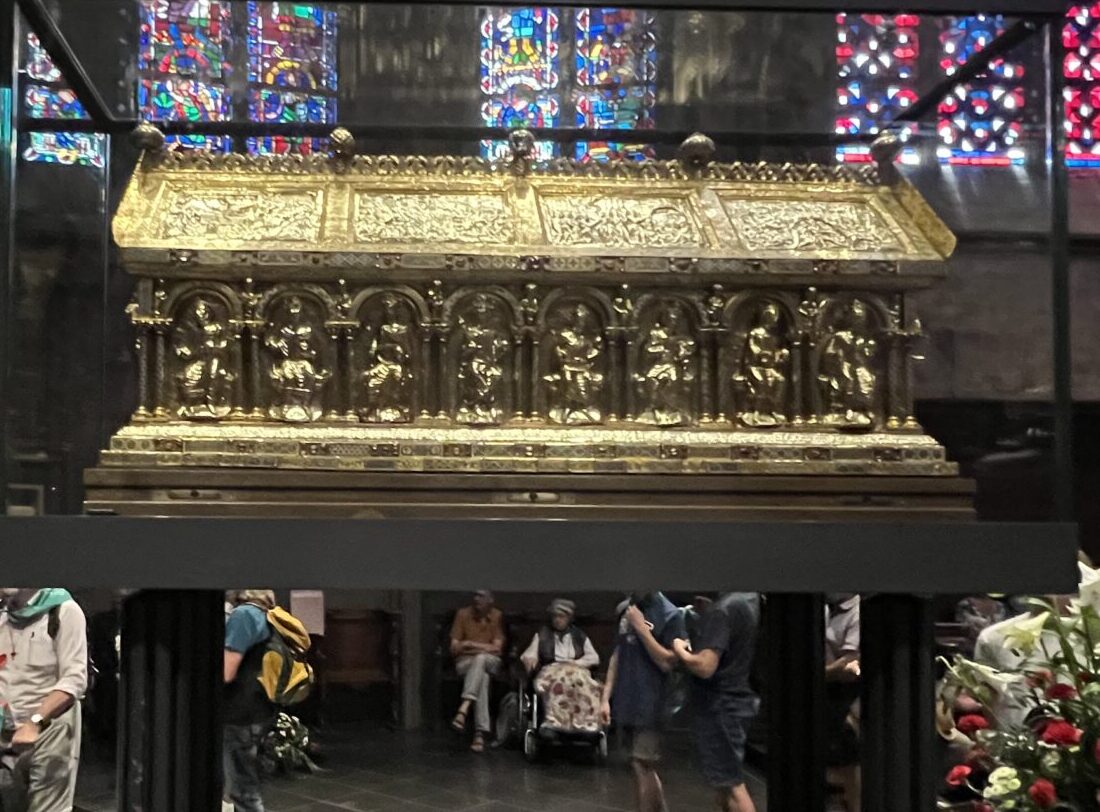
In the Shrine of Mary, which was made between the years 1220-1239, are kept the four relics of Aachen: namely, a robe of Mary, the cloth in which the head of John the Baptist lay, the swaddling clothes of Jesus, and His loincloth. These treasures are displayed to pilgrims once every 7 years. The shrine is decorated with images of Mary, Jesus, Charlemagne, Pope Leo III, and the 12 apostles.
In 2023, the Pilgrimage attracted 110,000 visitors. As the Pilgrimage could not take place in 2021 and 2022 due to the coronavirus pandemic, the next Pilgrimage will be in 2028. In this way, the tradition of holding a Pilgrimage once every seven years on average will be restored, to venerate the relics of Mary, Jesus and John the Baptist.
Around a million people visit the Cathedral every year.
The Cathedral is open daily and free to visit.
ACCESSIBILITY
Aachen is situated in the state of North Rhine-Westphalia and near the tripoint of Belgium, Germany, and the Netherlands.
The address of the Cathedral is: Domhof 1, 52062 Aachen.
Current information can be found at www.aachenerdom.de.
Experience
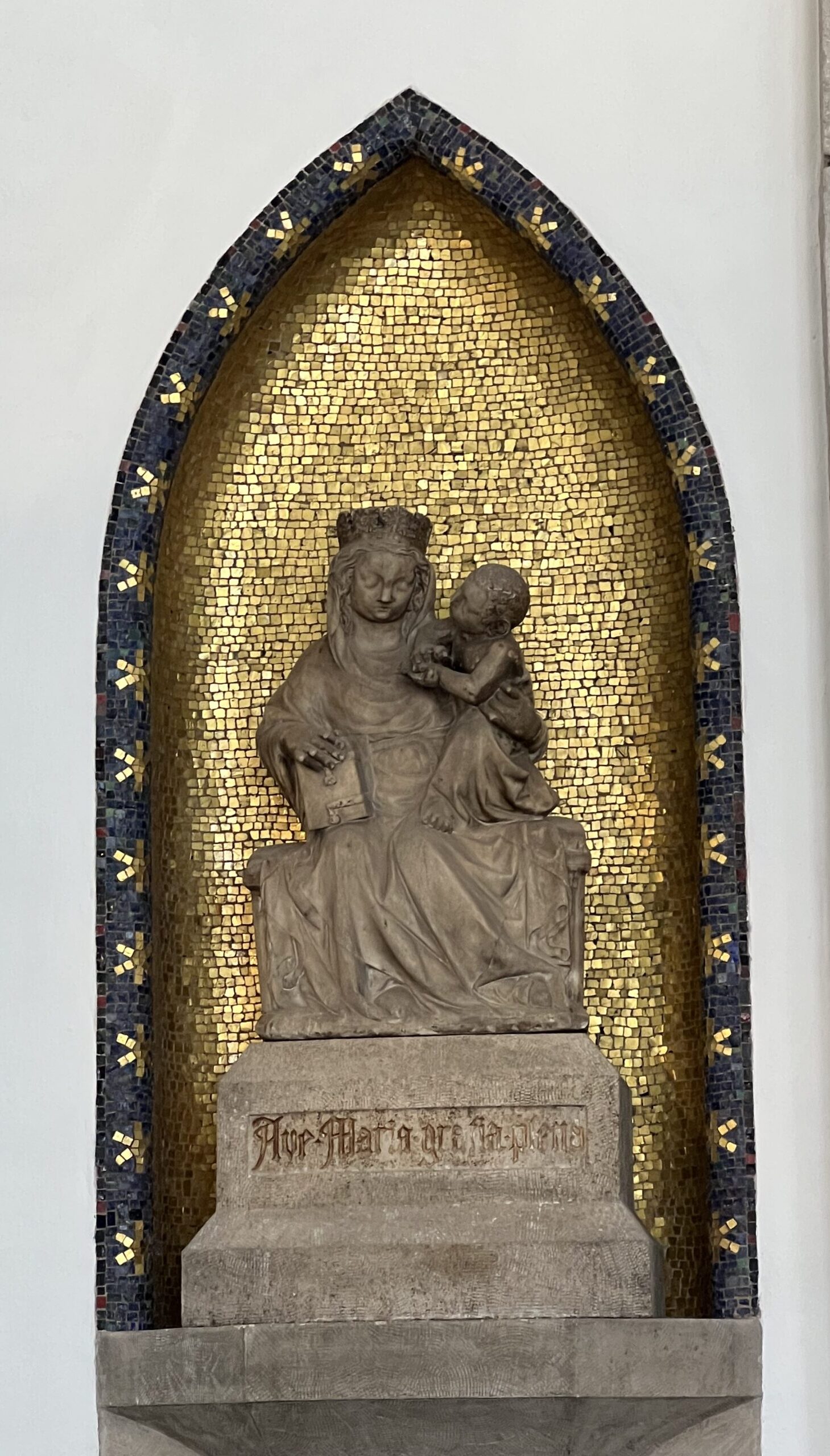
Upon entering, I see a 14th-century effigy of the Madonna and Child by the entrance on the left. The statue is made of alabaster from Lorraine. Glass mosaic has been used in the niche, and the commemorative plaque below the statue is in memory of Gerhard Chorus (1285-1367), who was Mayor of Aachen for 20 years.
I find the magnificently carved Marianum hanging high in the choir to be beautiful. What craftsmanship from the woodcarver Jan van Steffenswert. Many gaze at it for prolonged periods.
In the golden Shrine of Charlemagne from 1215 lies the body of Charlemagne.
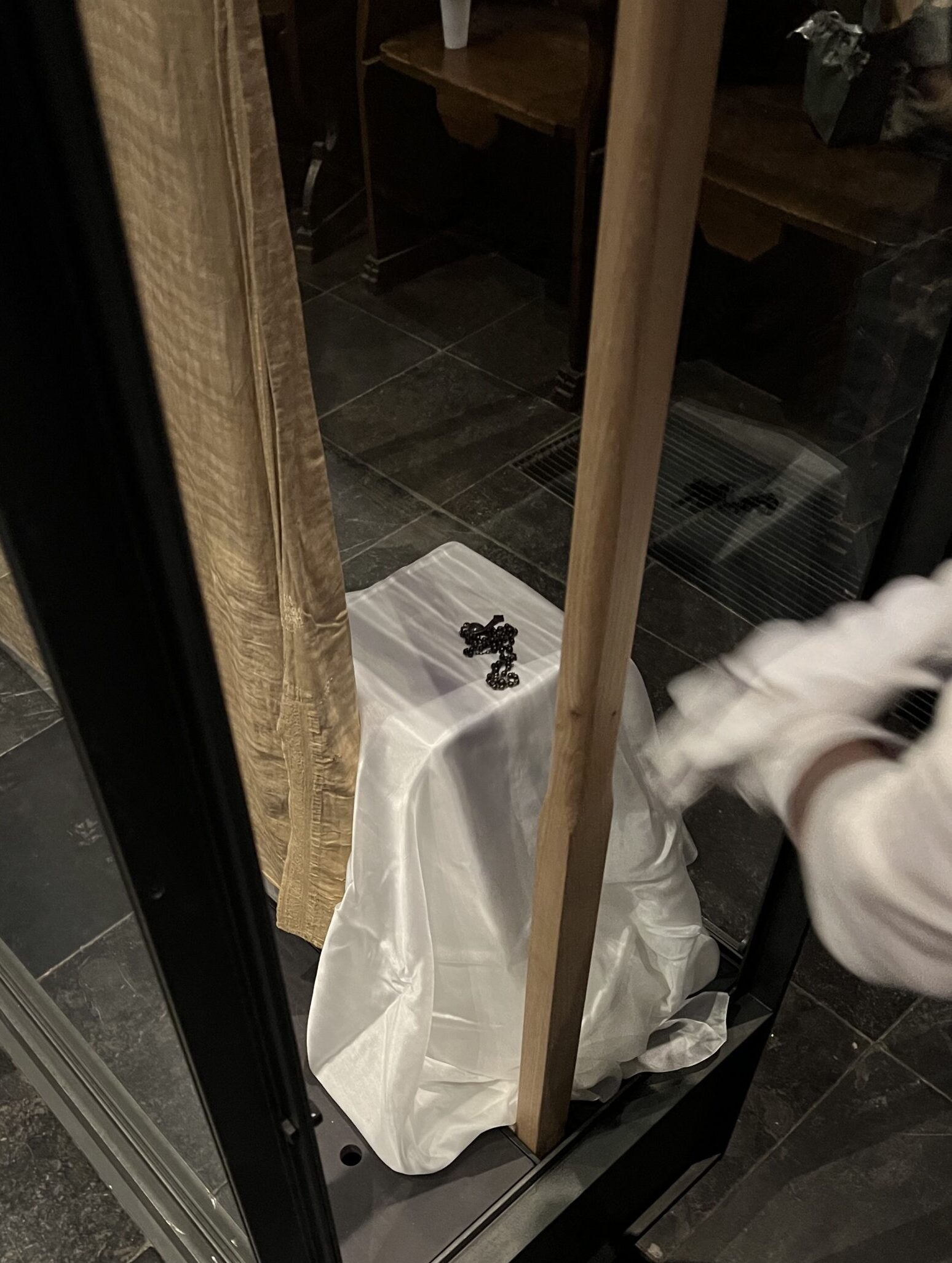
I have visited the cathedral many times, including during the Pilgrimage of the Relics. It's a slow process to get to the relics at that time, as there is much greater interest in the cathedral than usual. Seeing the four relics is a very special experience. Approaching the mantle of Mary renders me speechless, and when I reach the display case with the mantle, I hand my rosary to an usher, who briefly places it by the mantle of Our Lady. I couldn't wish for a better blessing for my rosary.
In the Cathedral you can also visit the St. Nicholas Chapel and, as I have a special connection with Nicholas of Myra/Bari, I go to the chapel and see stained-glass windows depicting scenes from Nicholas's life. I learn that this chapel was built before 1474.

In Aachen, I will also visit the Eisenbrunnen, the Aachener Rathaus, Burtscheid and various museums.
Environment
The picturesque town of Monschau is less than 35 km from Aachen. The distance from Aachen to Cologne is just over 70 km. To visit Liège, you need to travel 55 km. For a visit to Valkenburg, it's only 28 km to cover, and Maastricht is 12 km further.
~~~
STOLBERG
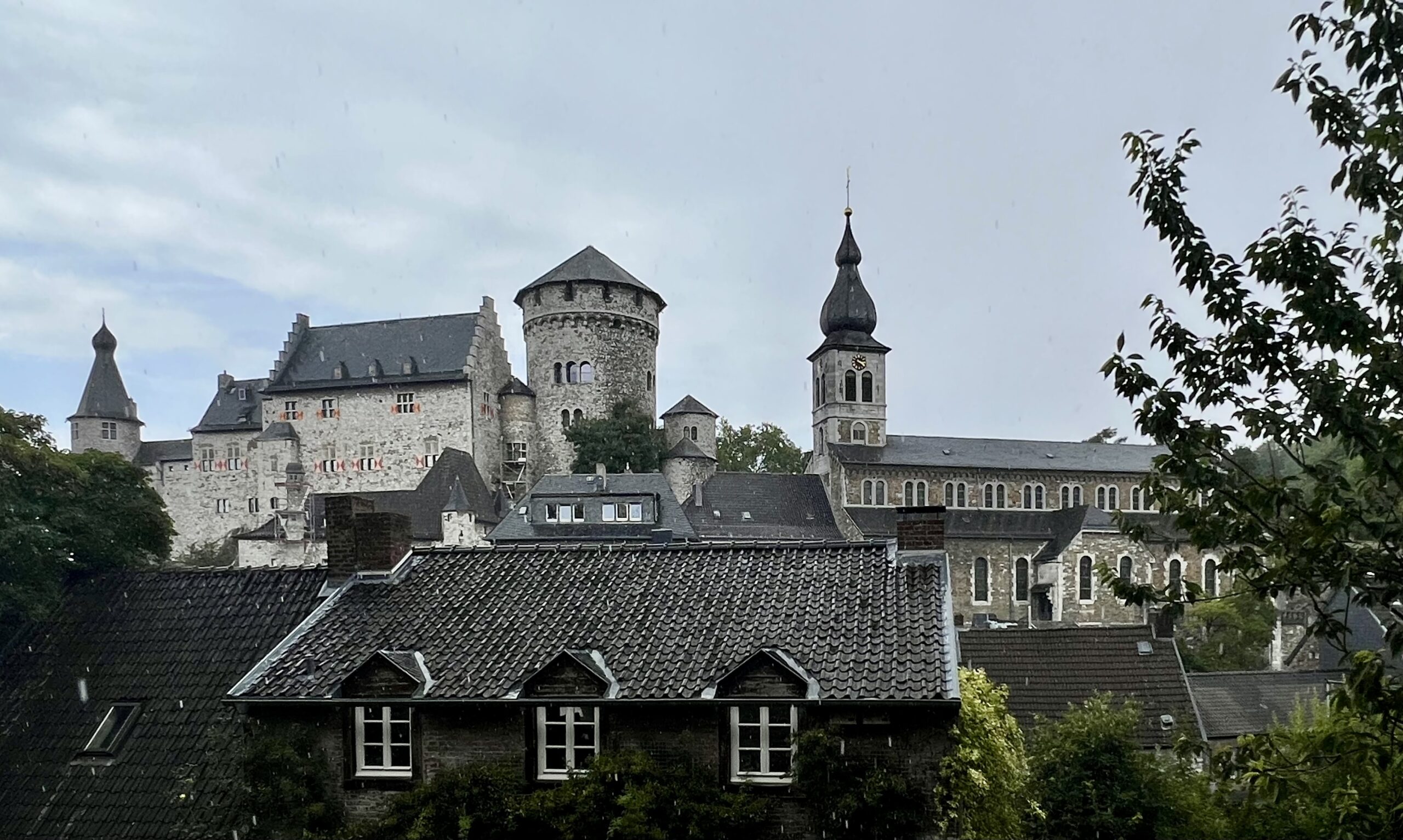
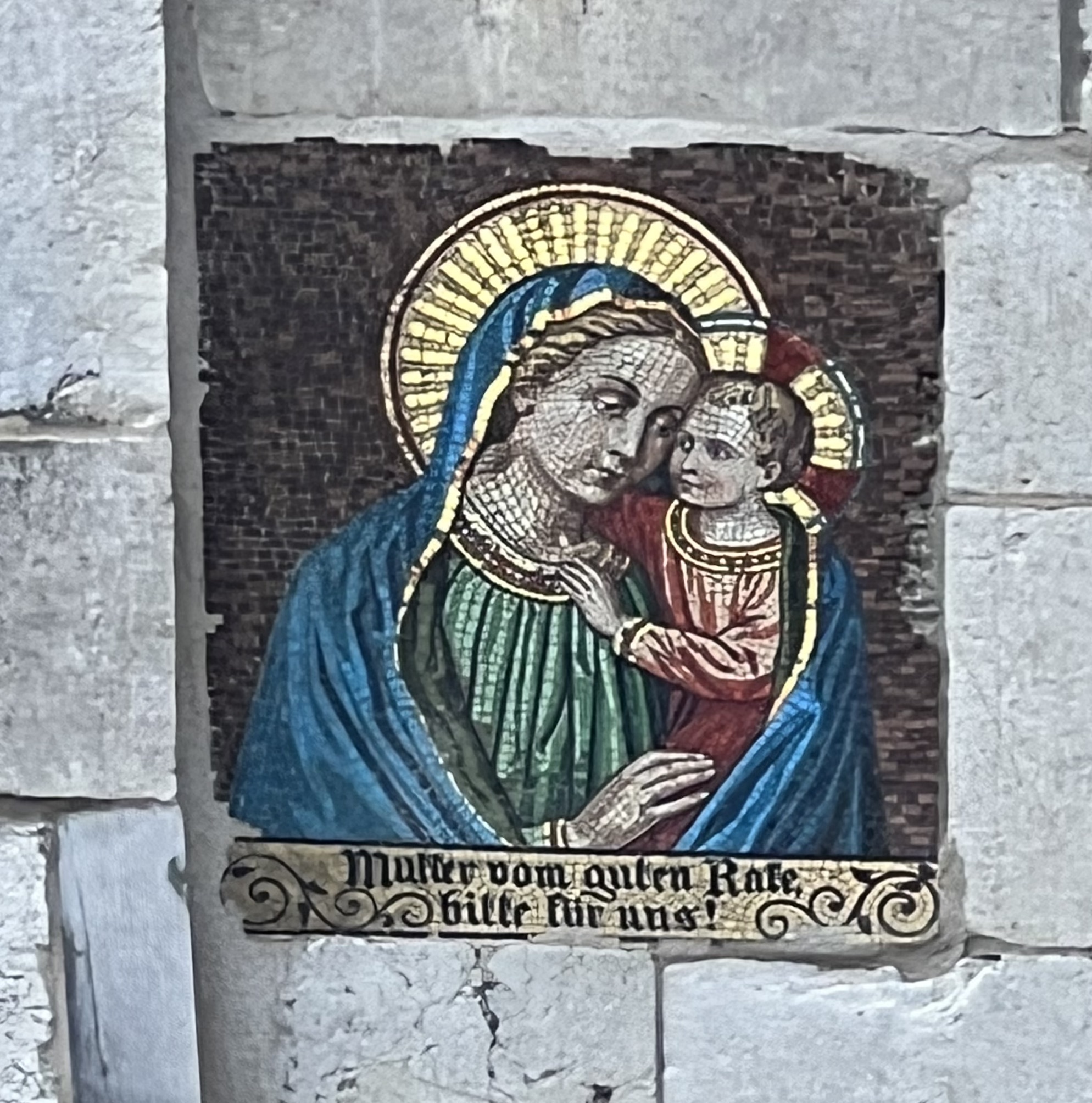
To go from Aken to Stolberg is 12 km to the east. In Stolberg, in the “Altstadt” (Old Town), there are hundreds of listed buildings, including St. Lucia. Next to this stands the ancient castle. In this part of town, which is so rich in history, many narrow streets can be seen.
~~~
MARIA LAACH
Visiting Maria Laach means going 126 km to the southeast.

At the large monastery complex of Maria Laach stands the abbey church, forming the heart of the Benedictine abbey. This basilica has 6 towers and is considered one of the most beautiful Romanesque structures in Germany.
The monastery is situated on Lake Laach. The body of water was formed around 10,000 BC by volcanic eruptions. In 1093, the monastery was founded by Count Palatine Henry II of Laach, also known as Henry II of Lorraine (1049-1095).
Also remarkable is that Konrad Adenauer (1876-1967), the later, first Chancellor (1949-1963), found refuge in the abbey when he fled from the Nazis.
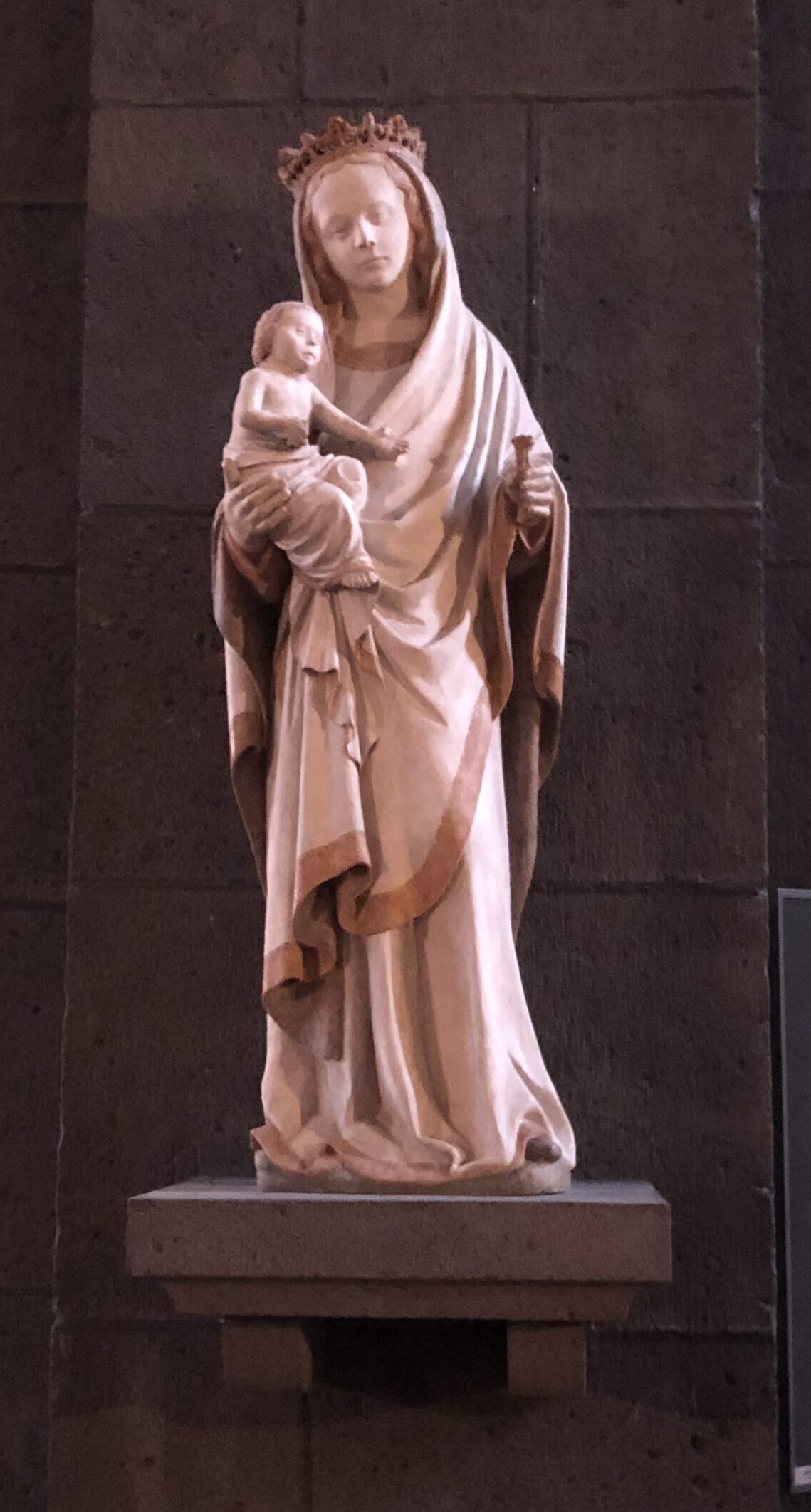
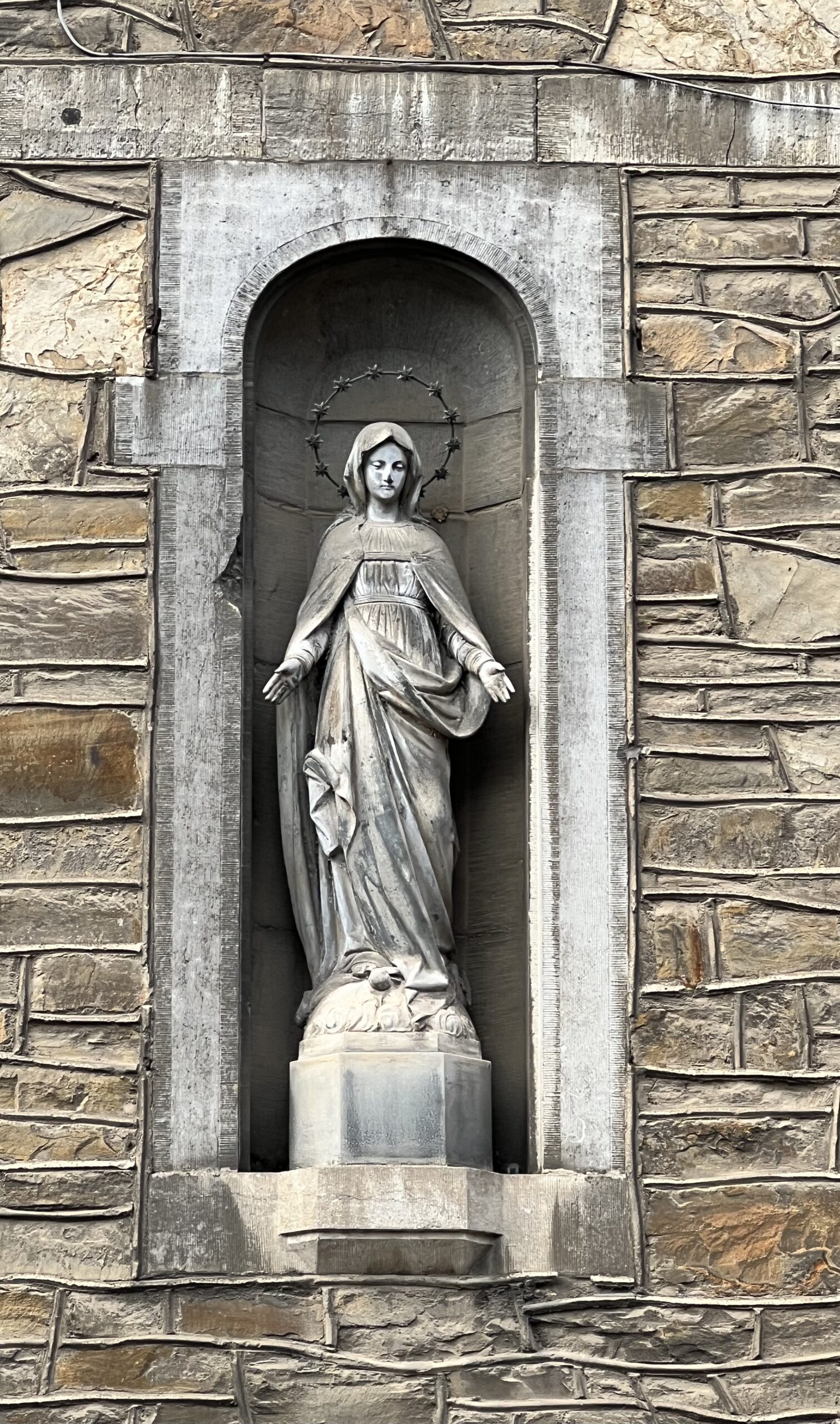
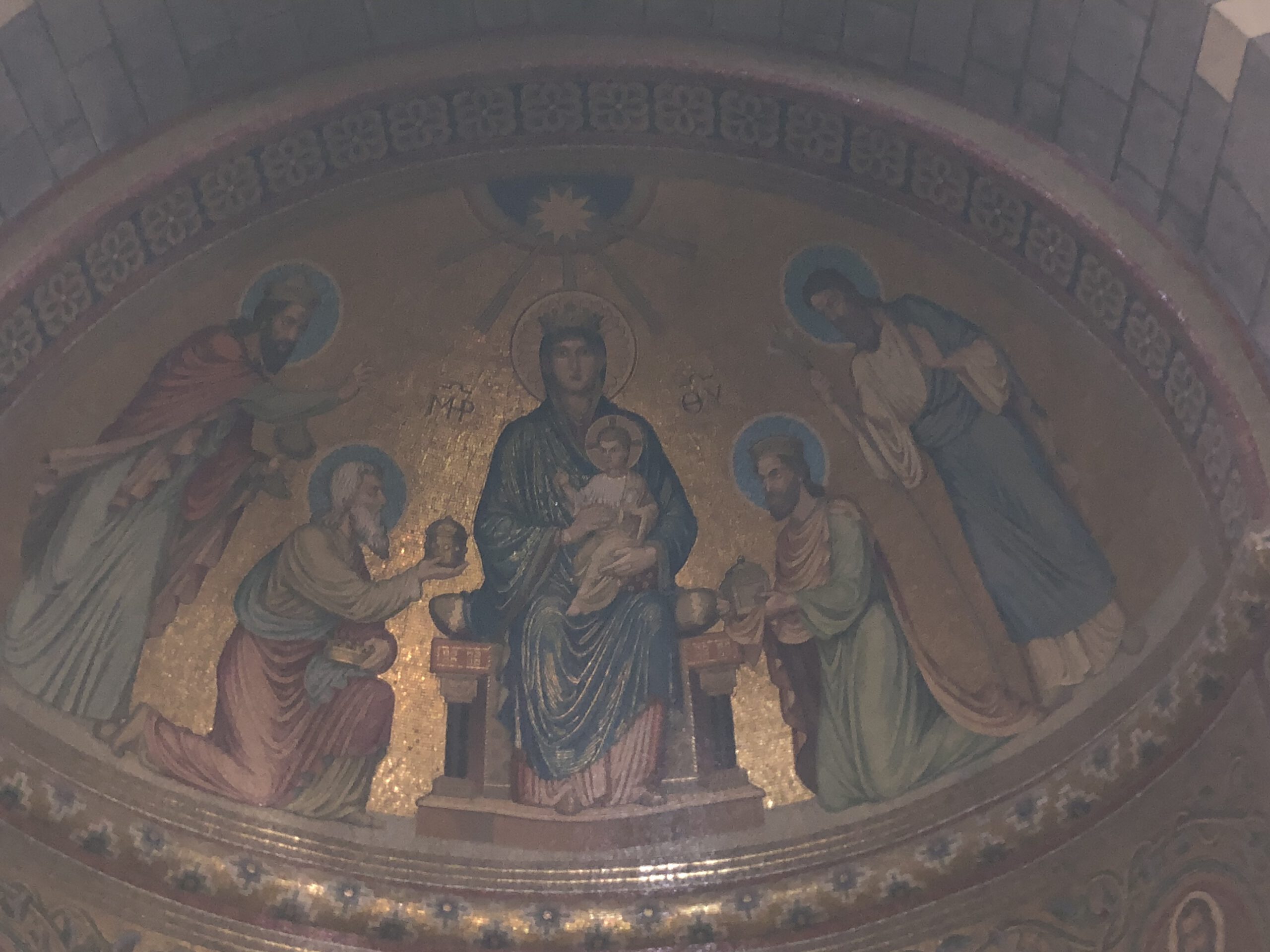
The frescoes, which are located under and around the organ gallery, were created around 1500. In 1802, the abbey was dissolved by the French ruler. In 1862, Jesuits became the inhabitants of the monastery and they added the word Maria to the original name, Laach Abbey. In 1892, the complex was once again inhabited by Benedictines. Images of Mary have been placed in and around the basilica.
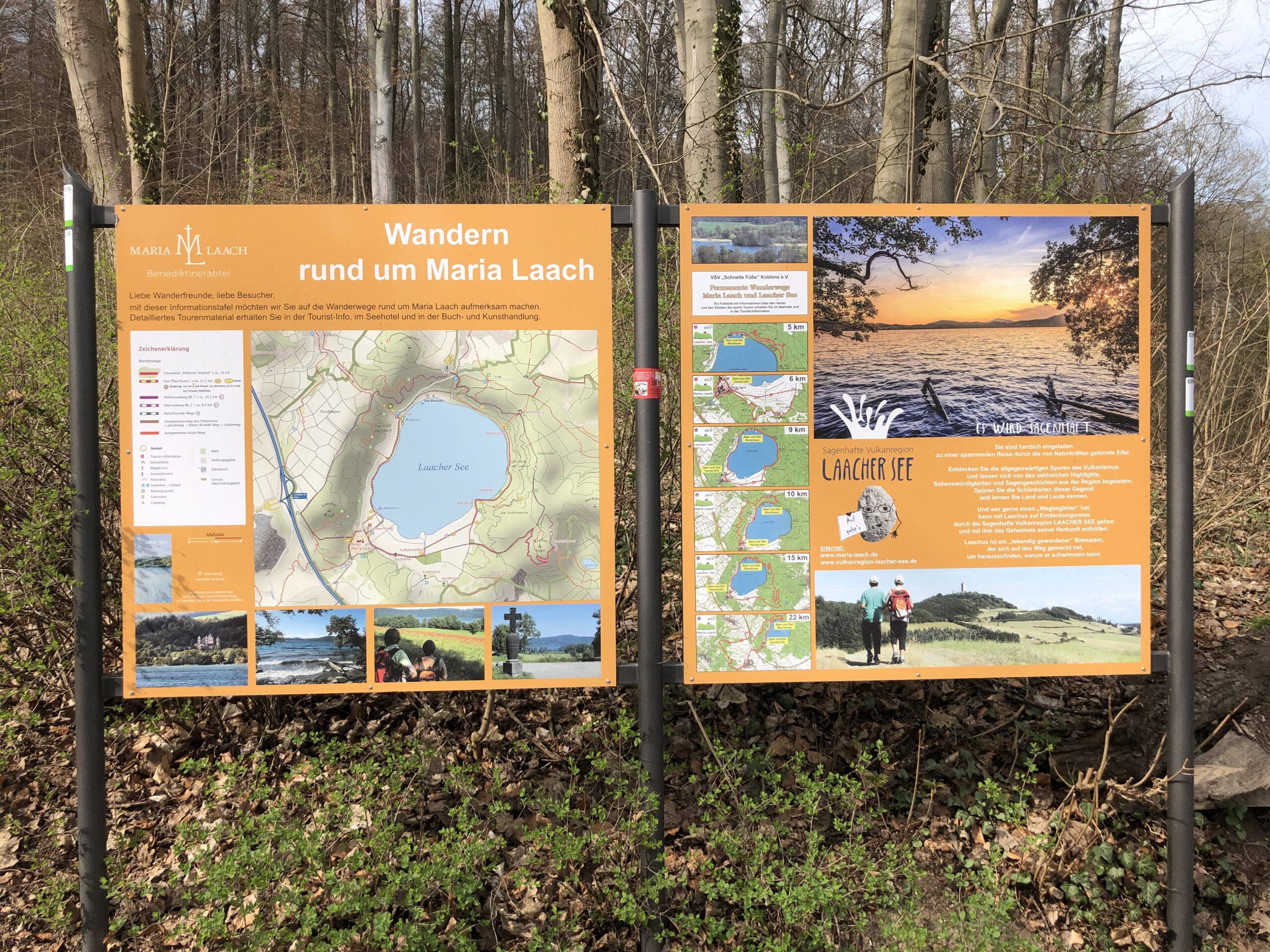
In the complex, in addition to the basilica, you can also visit the book and art shop, the monastery flower shop, the restaurant, the monastery forum, and the hotel. There are many walks to be taken in the immediate vicinity.

Address: D-56653 Maria Laach, and up-to-date information can be found at www.maria-laach.de.
~~~

 Nederlands
  English (UK)
  Deutsch
  Français