History
Since the 13th century, there have been pilgrimages in the vicinity of Todtmoos.
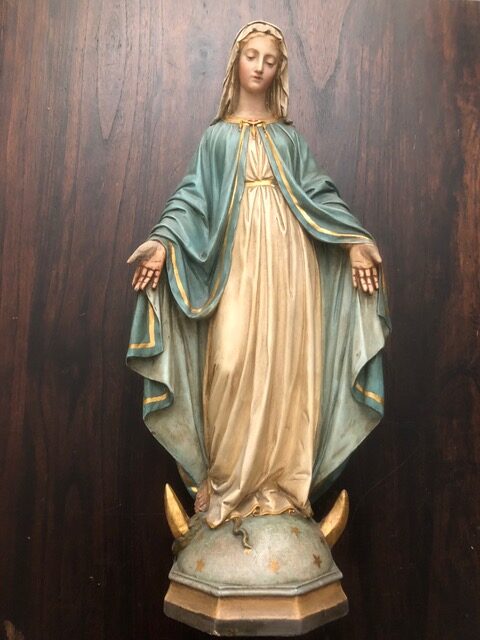
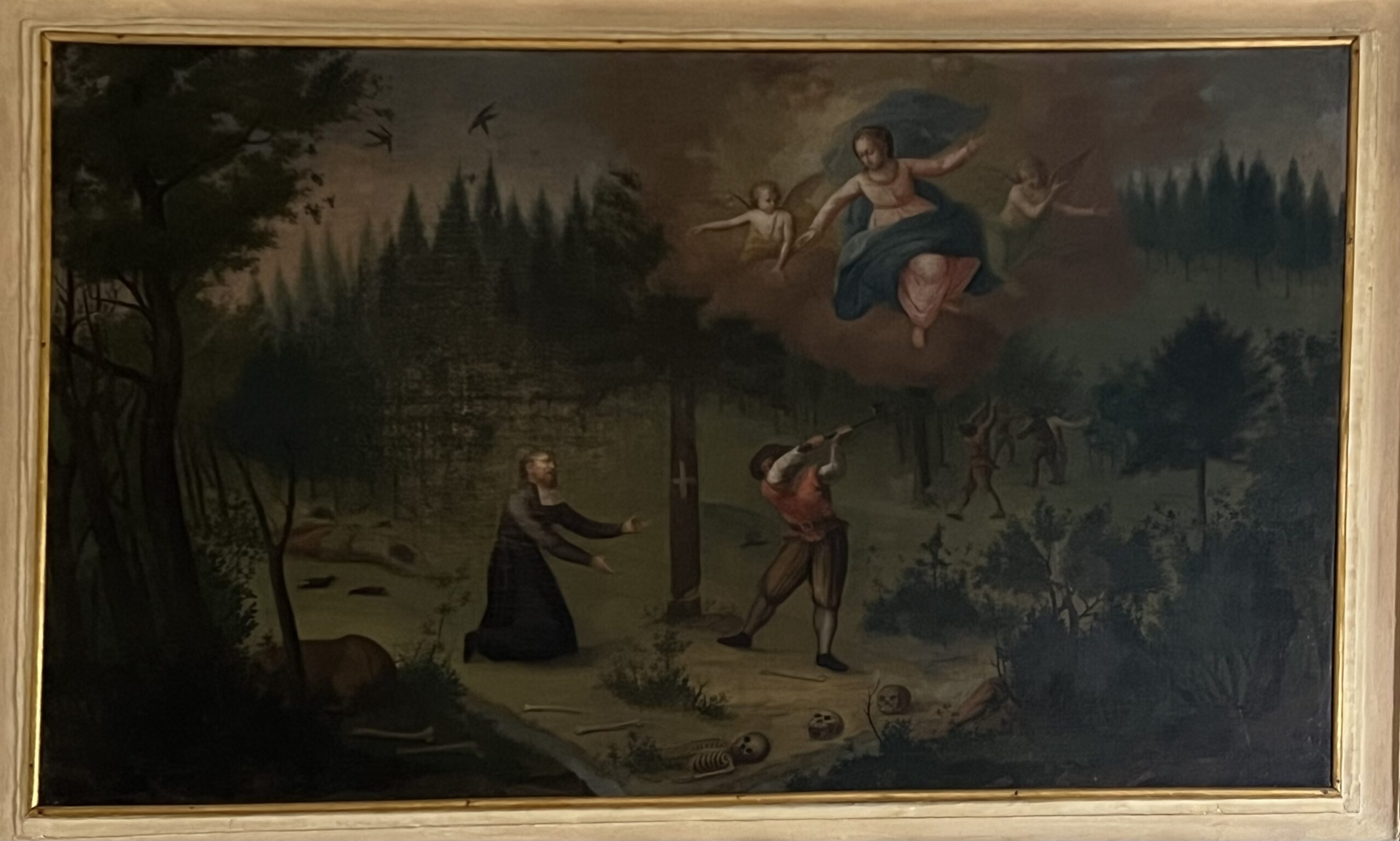
In 1255, Mary appeared to the priest Dietrich von Rickenbach. She instructed him to build a wooden chapel. Later, the current church was built on this site. In 2022, a statue of him was erected in the Marienplatz near the church.
In old pilgrimage books, several miracles are recorded that occurred through the intercession of Our Lady of Todtmoos. These miracles include protection against famine, thunderstorms, emergencies, the threat of war, pandemics, and the healing of the sick. There is also mention of children being brought back to life from death.
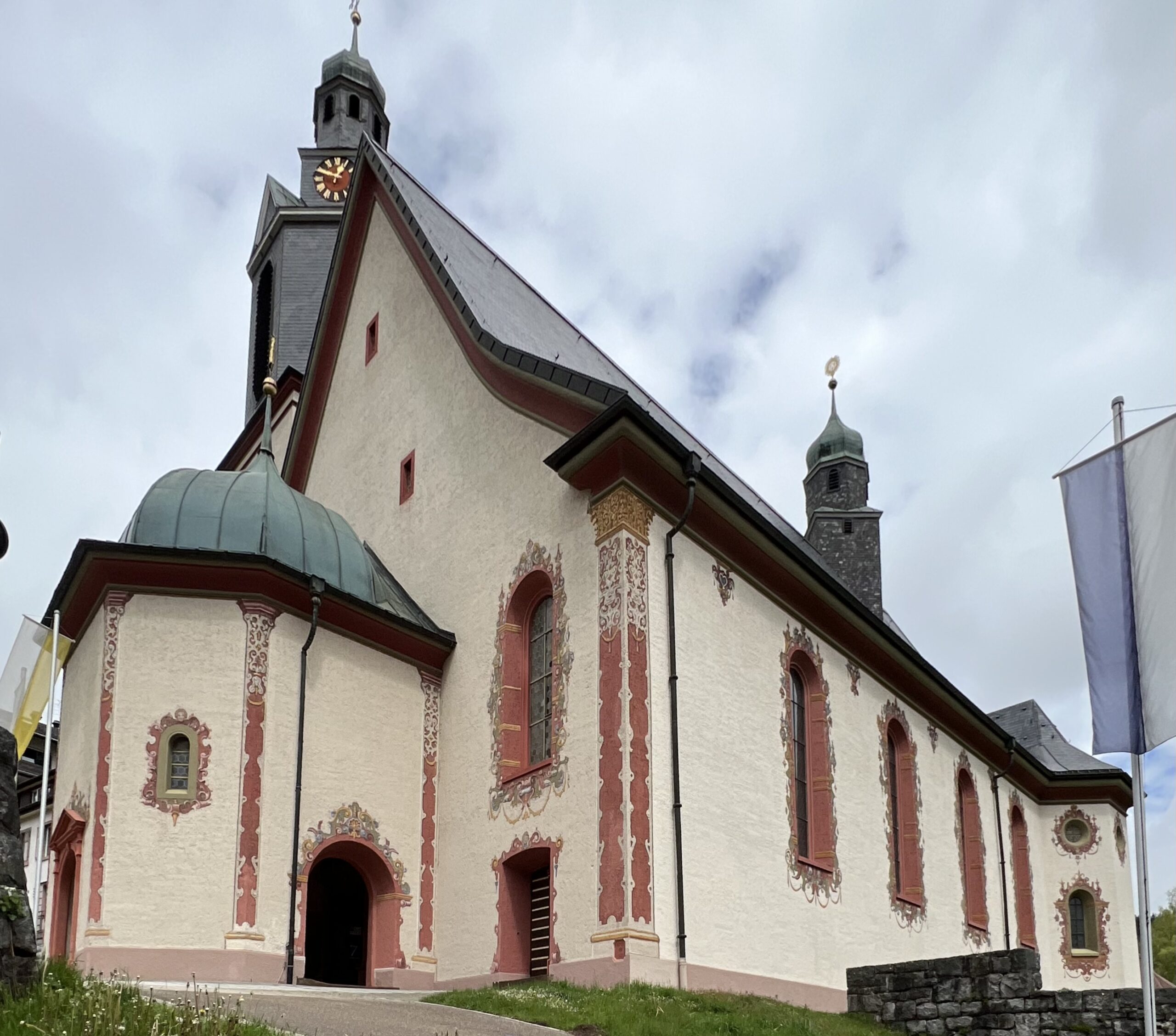
The first stone chapel was built on Schönbühl in 1268 under the protection and funding of the Swabian Count Rudolf of Habsburg (1218-1291), the first Holy Roman Emperor and King of Germany (1273-1291). Due to the increasing number of believers, the chapel was extended in 1300.
In 1471, the brotherhood was established, namely the Todtmoos Assumption of Mary Brotherhood for the Consolation of Poor Souls.
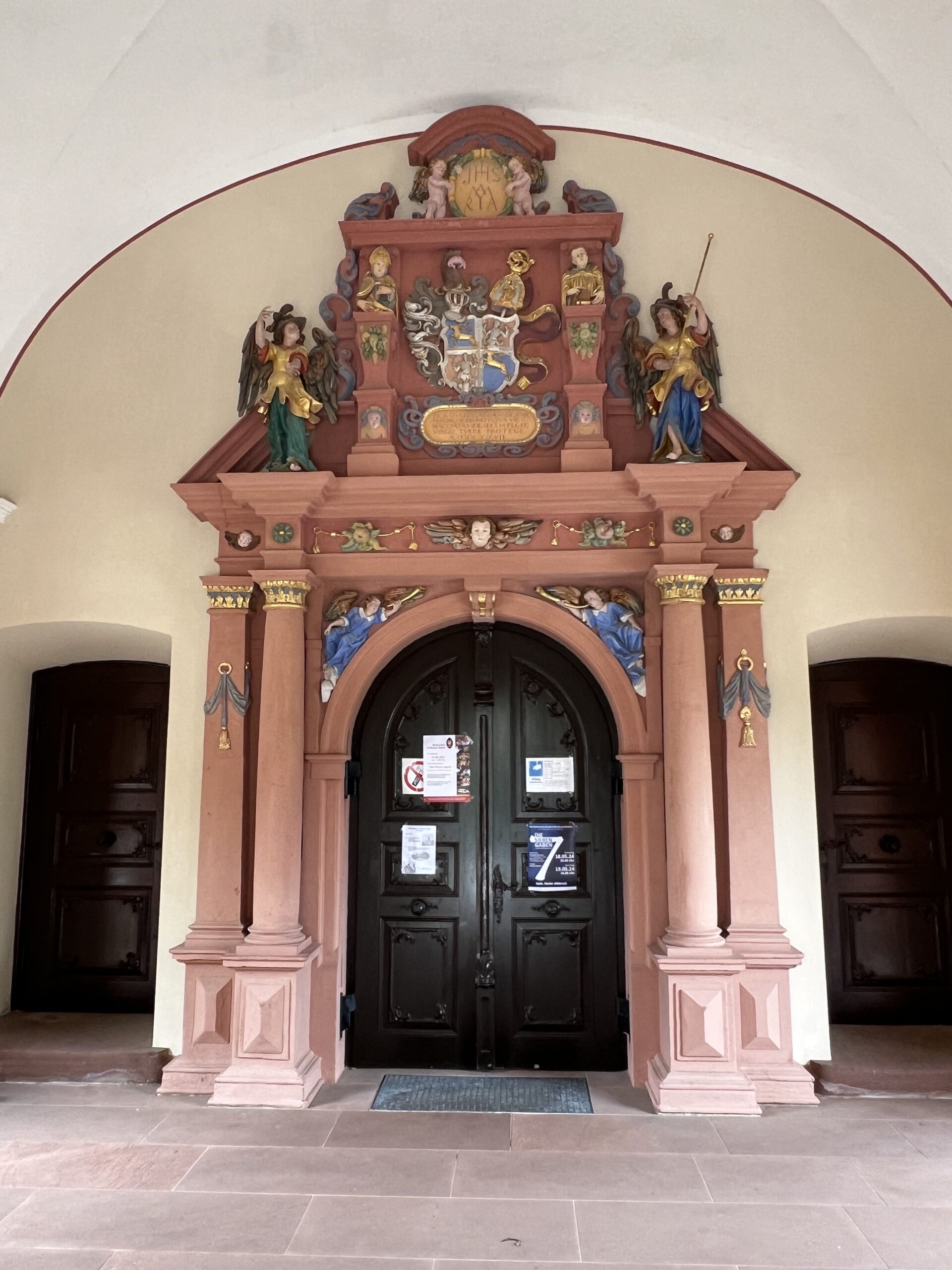
A new, larger church was constructed between 1627 and 1632. This forms part of the current church building. The main portal was consecrated in 1627. Above the gate, the coat of arms of Abbot Blasius II Münster (1572-1638) is affixed, who was the head of the monastery of St. Blasius in the Black Forest (1625-1638). Next to the coat of arms are the busts of Saints Benedict and Blasius.
Opposite the church, a rectory and monastery were built in 1733. The architect was the Austrian Johann Michael Beer von Bleichten (1700-1767). This occurred under the strict supervision of Franz II (Johann Georg) Schächtelin (1680-1747), Benedictine abbot of St. Blasius' Monastery (1727-1747). In the period 1757-1758, Lorenz Pfluger (1719-1772) created a new high altar.
In 1759, the icon of grace, a Pietà from around 1390, was moved from the side altar to the new high altar. The pilgrimage site was then one of the most visited places of Mary in the wider region, extending into France and Switzerland.
The pilgrimage church was expanded on the Schönbühl mountain between 1770 and 1778, under the direction of Prince-Abbot Martin Gerbert, monastic name of Franz Dominik Bernhard Gerbert (1720-1793). The architect was Franz Joseph Salzmann (1724-1786).
The sanctuary suffers a setback when Joseph II (Josephus, Benedictus, Joannes, Antonius, Michael, Adamus, 1741-1790), Holy Roman Emperor (1767-1790), introduces reforms and opposes religious devotion. In 1783, he also bans the brotherhood and confiscates their considerable assets. Pilgrimages are also no longer permitted. This situation lasts until the early 19th century.
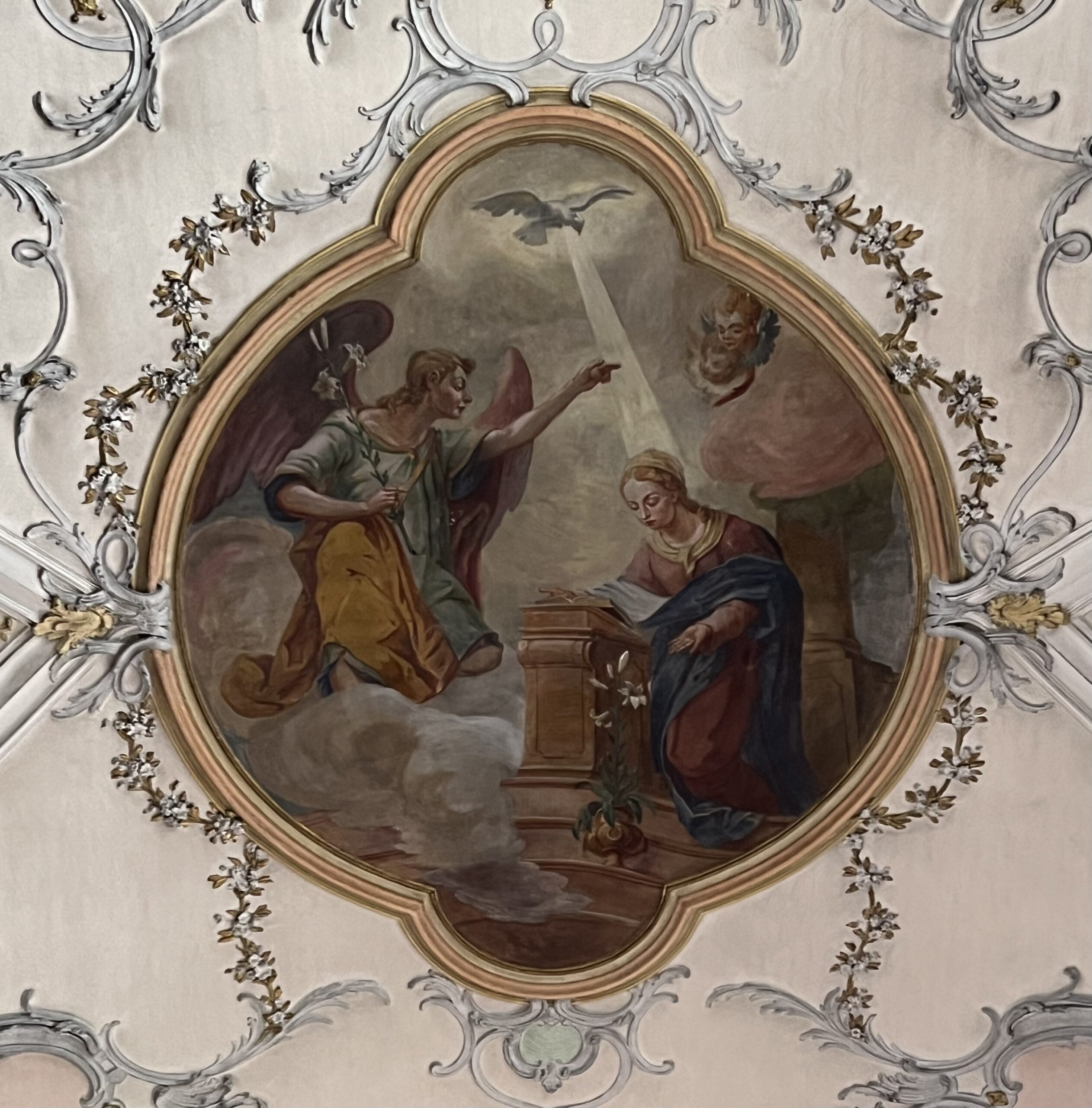
In 1901, the painter Victor Mezger (1866-1936) restored ceiling paintings depicting phases of the life of Mary.
A further enlargement of the church building took place in 1927-1928, based on a design by Fritz (Friedrich) Hirsch (1871-1938).
Under pastor Karl Schnorr (+1988), the interior of the church is restored. This takes place during the period 1952-1966 and again in 1977. Schnorr served as pastor in Todtmoos for 40 years and in 1978 he was appointed an honorary citizen of Todtmoos.
After the Second World War (1939-1945), the painter Manfred Arnold Schmid (1911-2009) restored the Baroque style in the church.
In 1987, members of the Order of Saint Paul, hermits who live as recluses, took over the management and organisation of the pilgrimage site. The “Pauliner” have been taking care of the pilgrimages and the Marian sanctuary to this day. They live in the large presbytery opposite the church.
In 1988, the exterior of the church was successfully restored.
Todtmoos is not only a place of pilgrimage, but also a climatic health resort and gingerbread town.
Pilgrimage site
The town of Todtmoos has approximately 2,500 inhabitants and is situated at an altitude of over 800 metres.
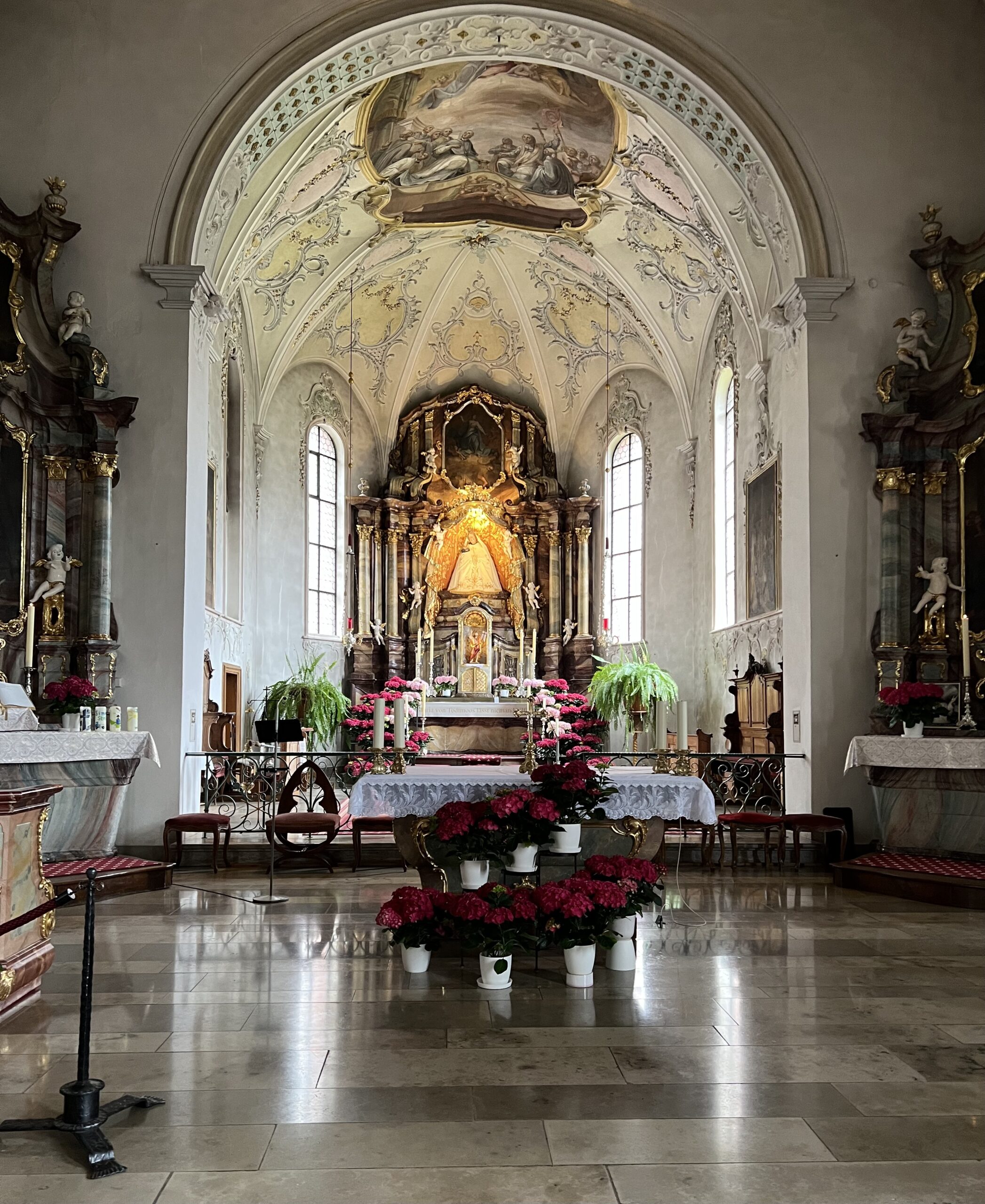
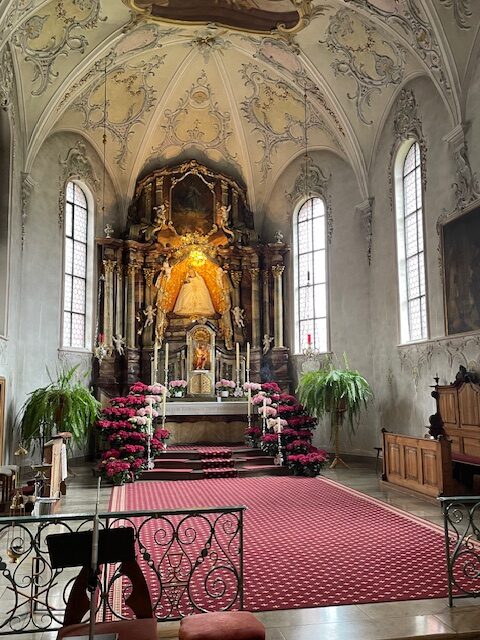
The interior of the church “Unserer Lieben Frau von Todtmoos” (Our Lady of Todtmoos) is richly decorated with elements from the Baroque period.
The devotional image “Unserer Lieben Frau” (Our Lady) stands above the high altar. It is a Pietà, presumed to date from 1390. Only the heads of Mary and Jesus are visible, as the effigy was damaged by fire.

In the right-hand side chapel, there is a mural depicting the origin of the pilgrimage. A painting showing the apparition of Mary to priest Dietrich von Rickenbach in 1255 has been created and is displayed in the right-hand side chapel.
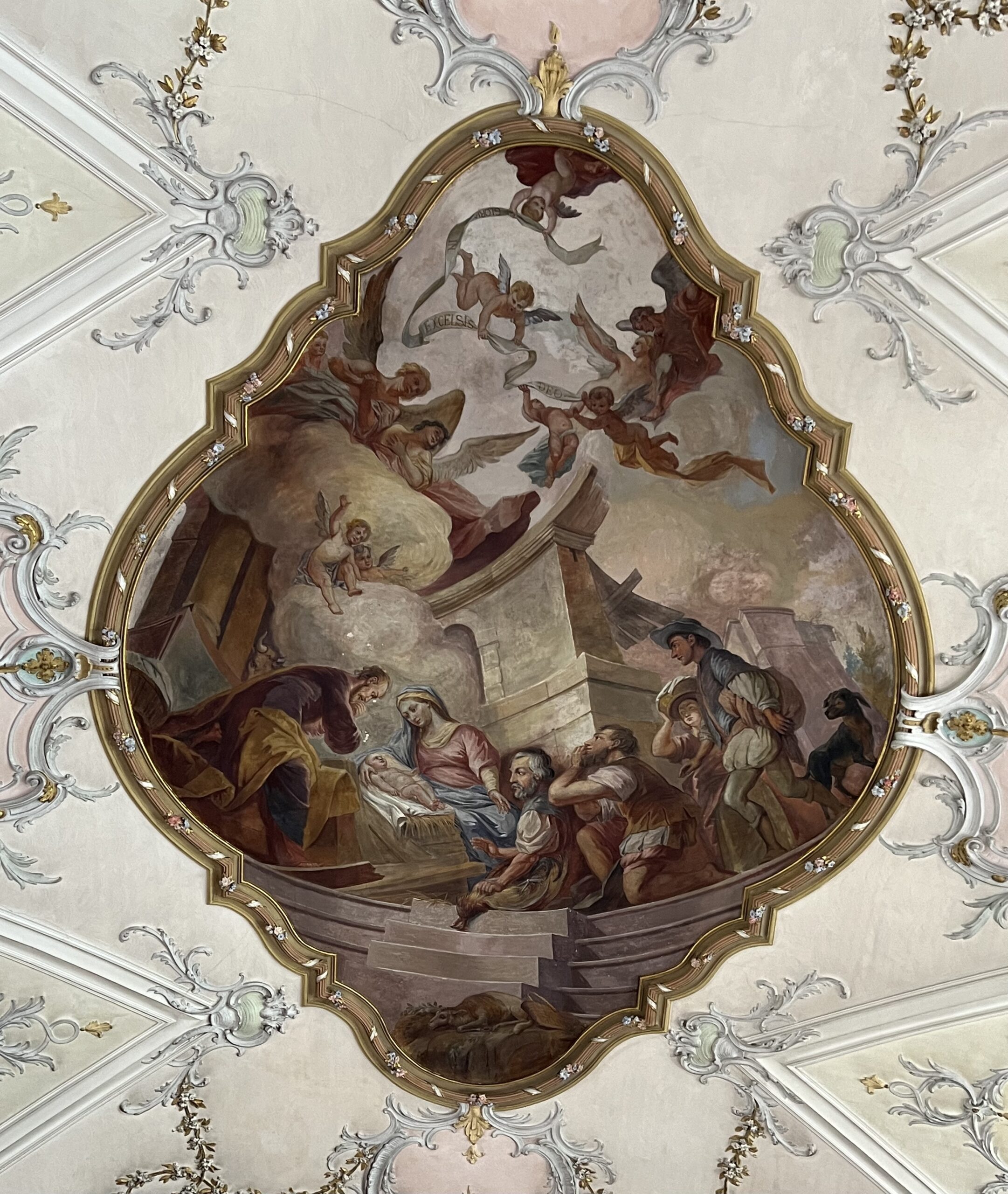
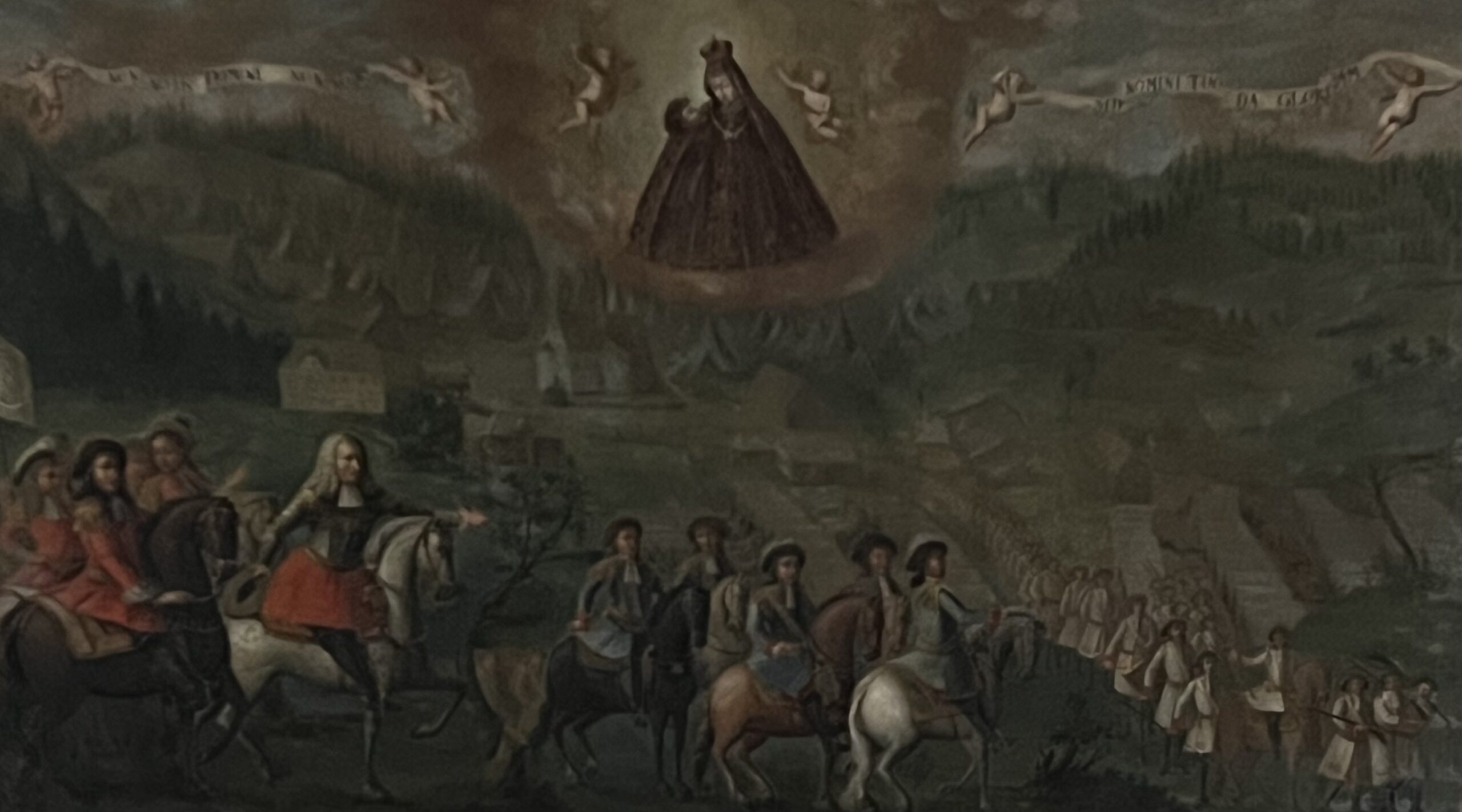
The church features large frescoes, including the apparition of Mary to pilgrims, the angel Gabriel's annunciation to Mary that she will conceive Jesus, the birth of Jesus and Mary's visit to her cousin Elizabeth.
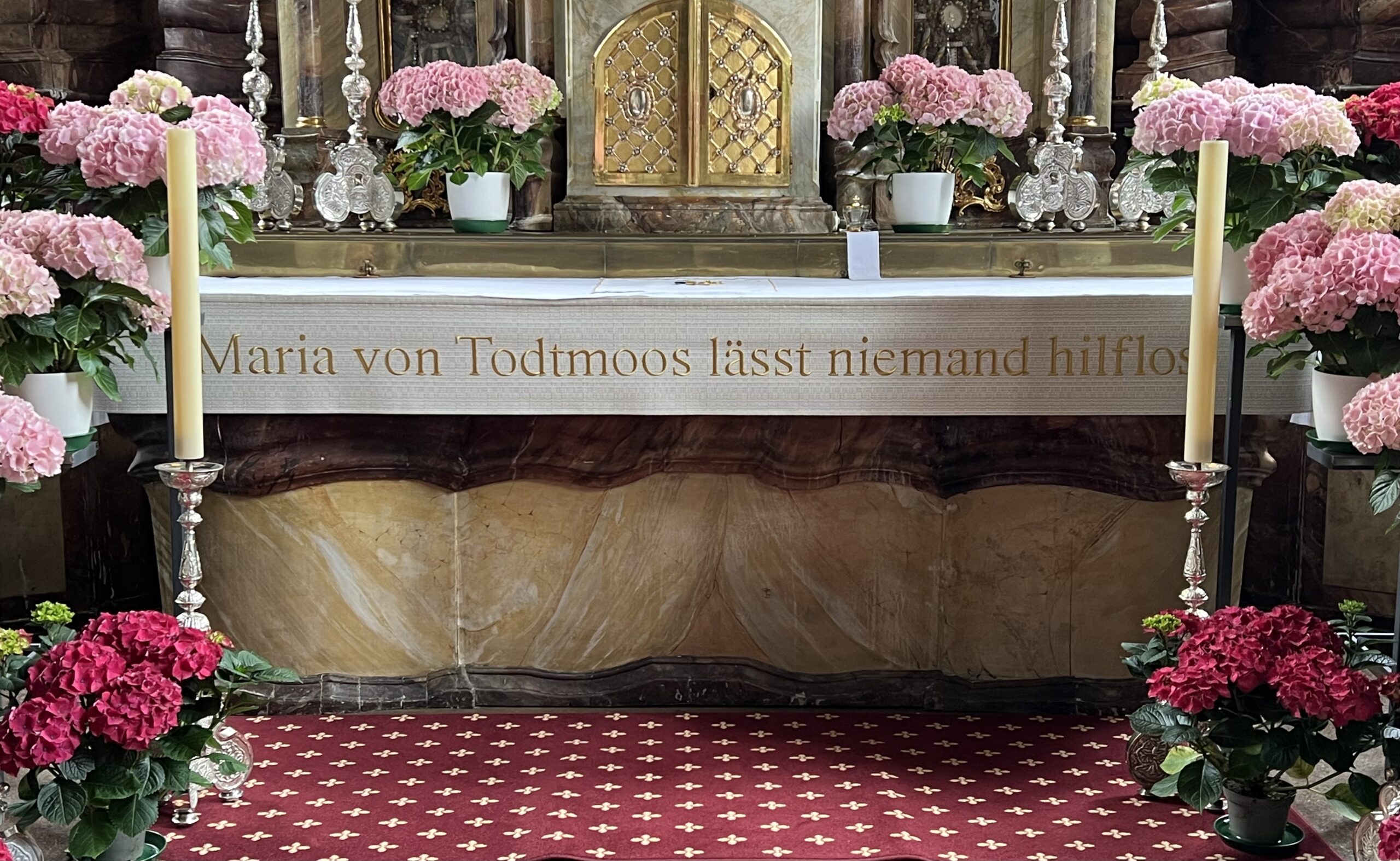
In the church, there is a statue of Mary on an elevation. Below this is the German text: “Maria von Todtmoos lässt niemand hilfloos” with the years 1268-2018. In Dutch, this means: ”Mary of Todtmoos leaves no one helpless”. There are side chapels dedicated to Blasius, Anne, the Descent from the Cross of Jesus, and the Death of Mary. This last artwork, from 1775, is by the Baroque painter Johann Anton (Antonius) Morath (1718-1783). Mary is surrounded by the apostles and an angel appears.
The pilgrimage church is open daily.
ACCESSIBILITY
Todtmoos is located in the state of Baden-Württemberg, in the heart of the Black Forest.
The address of the pilgrimage church is: Kirchbergstrasse 10, 79682 Todtmoos.
For current information, please consult “www.se-todtmoos-bernau.de”.
Experience
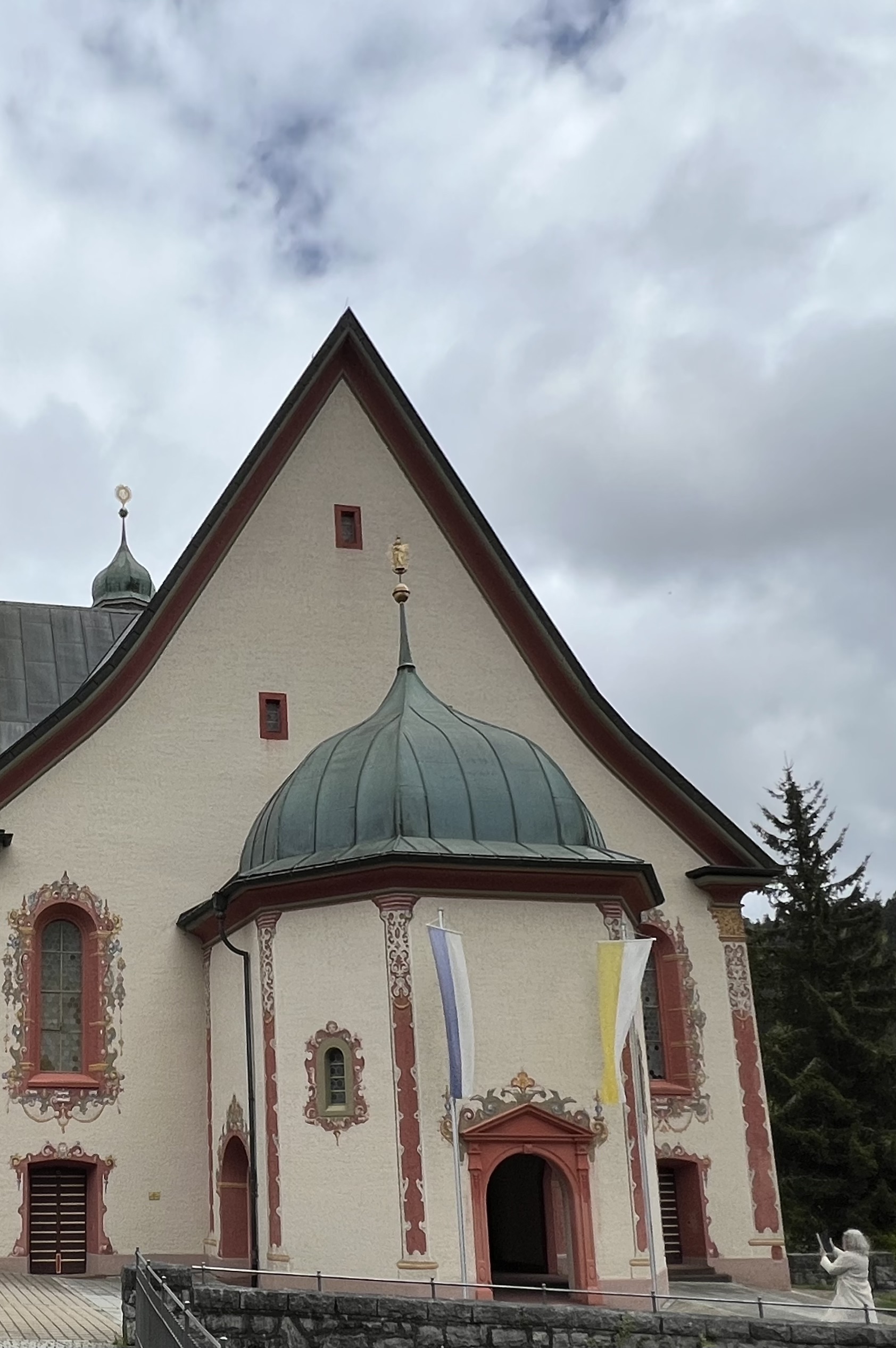
The pilgrimage church is situated against a hill with views of the surrounding countryside. The church is a beautiful building, located in a stately spot by a mountain stream. The main portal of the pilgrimage church is spacious with an ornate entrance door, above which the year 1627 is inscribed.
On entering the church, I met a priest, and we got into conversation about this sanctuary. When parting, he accepted a card from the Mary Room from me and said that he would visit the medium. He encouraged me to take many photos and write beautiful texts, as some publicity is welcome.
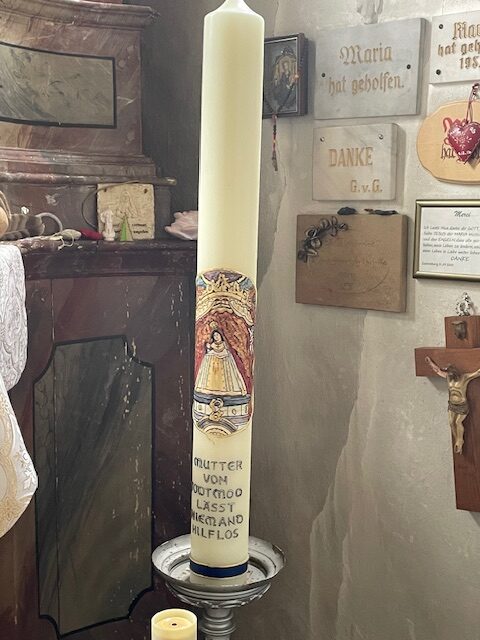
When admiring the interior of the church, I come to the high altar. The eye-catcher is the miracle statue of Our Lady, which depicts a Pietà here. Mary looks very sadly at her Son. Only the heads of both are visible. At the bottom of the altar is the German text “Maria von Todtmoos lässt niemand hilfloos”, which translates to Dutch as “Maria of Toodtmoos leaves no one helpless”. Here too, it is clear that Mary has an eye for everyone. In the pilgrimage church, you can see that Our Lady has more than one mantle. She has a particularly beautiful collection of clothing.
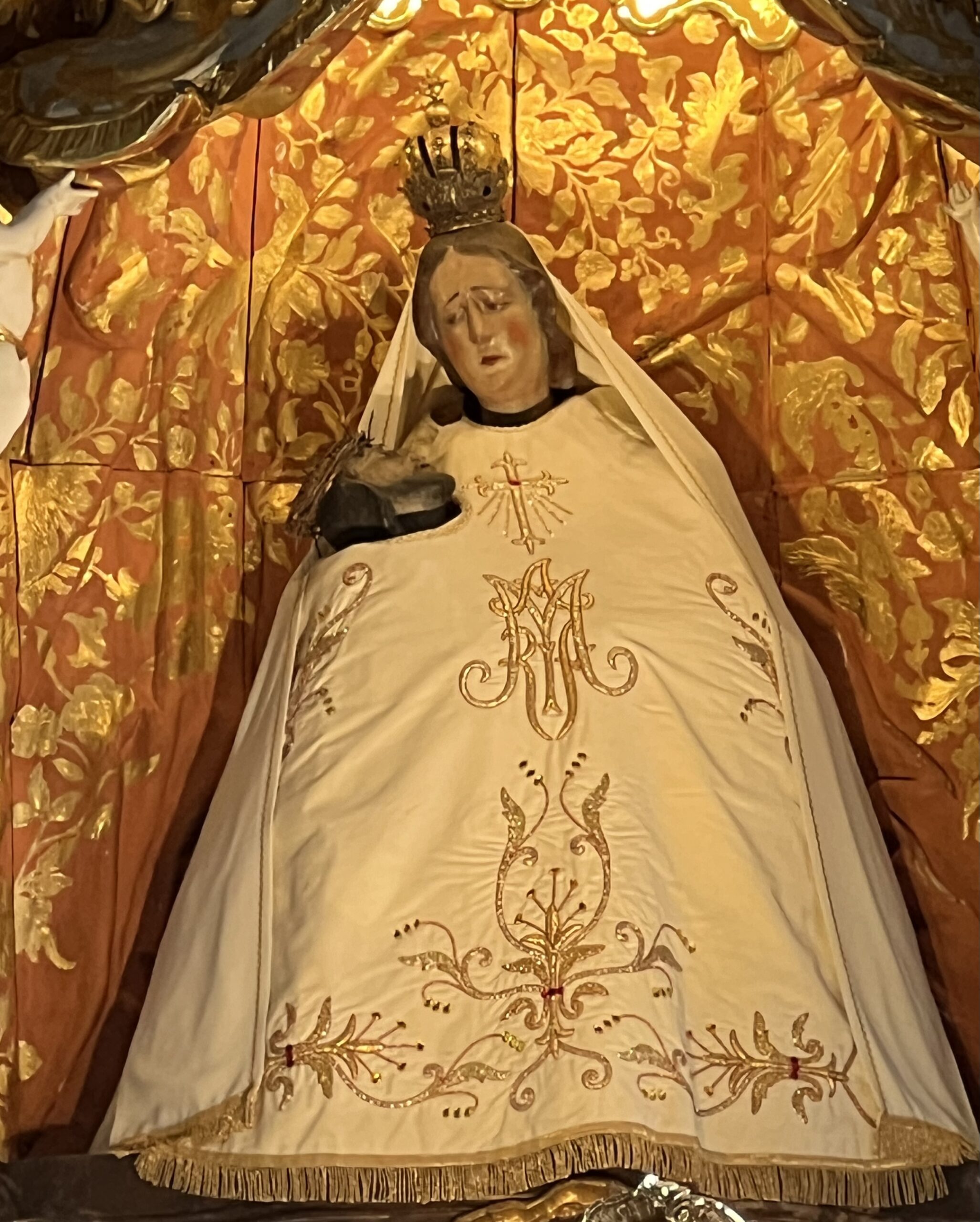
The side altars feature moving, painted scenes and there is a lot of information in the church about the helpful Mother of the Black Forest. There is also a great deal to read about the history of the church and the pilgrimages. Ex votos bear witness to gratitude and paintings are affixed to the walls.
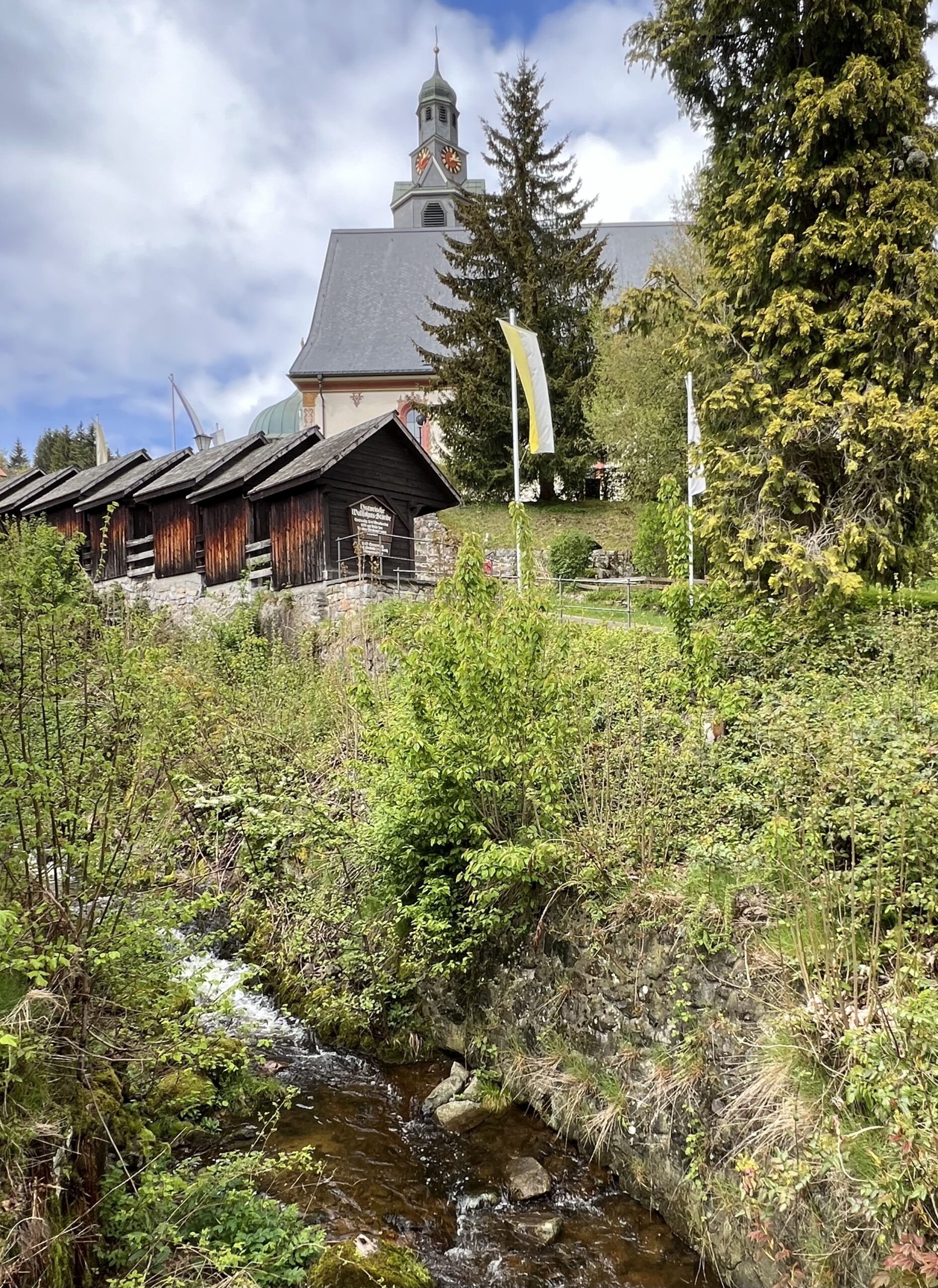
After leaving the pilgrimage church, it's time to get acquainted with the immediate surroundings. There are many stalls on the approach to the church. All these small, wooden buildings are closed, and this conjures up images of times past. Once, busy vendors of devotional items were here.
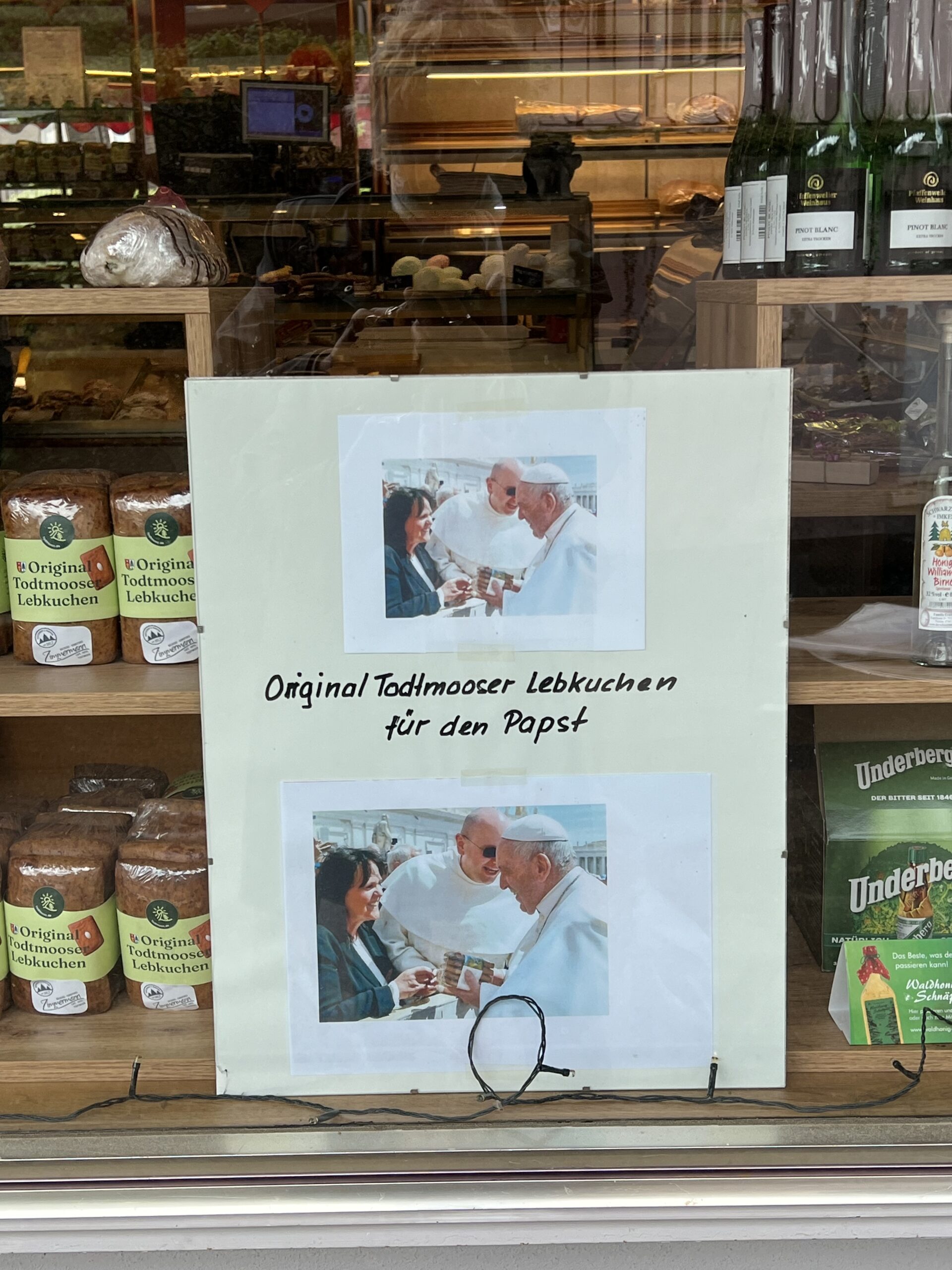
About 100 metres from the church, there is a bakery with a cafe. The Zimmermann business's speciality is gingerbread, and there are plenty of “Lebkuchen”. In the shop window, there are even photos of Pope Francis, as he receives the special gingerbread. What was the Pope's reaction after tasting the original Todtmooser gingerbread?
Environment
The town of Feldberg, with the highest point in the Black Forest at 1493 metres, is located 27 km from Todtmoos. The city of Freiburg im Breisgau lies 50 km north of Todtmoos, and for visiting the pilgrimage site of Triberg, it is 78 km. The Swiss city of Basel is situated 56 km to the south. To visit the French town of Colmar, one must travel 110 km to the west.
Posted: 24 May 2024

 Nederlands
  English (UK)
  Deutsch
  Français