History
The town of Utrera originated over 1000 years BC.
A legend from the late 15th/early 16th century is told in 1619 by Diego Guzmán, abbot of the monastery in Utrera. It is 1490 and in Seville, a woman moves into a house with other women. The year 1507 brings misfortune, for a plague epidemic rages in Seville and its surroundings, and all the women in the house die from it, except for the woman who moved in in 1490. Subsequently, this woman goes to live with her daughter in Utrera, and she brings with her a statuette of Our Lady of Consolation, whose maker is unknown. The woman decrees that after her death, the statuette will go to the Beguinage in Utrera. Antonio Barreda (+1554) becomes a hermit in 1520 and travels to Rome to obtain permission for a hermitage. The permission is granted, and other men join him. Afterwards, the initiator becomes the superior of the community. He is succeeded by a new hermit leader, who replaces a painting of Mary with the woman's statuette, which had gone to the Beguinage after her death. In 1557, the hermitage is closed, and a woman from Utrera takes the statuette home to keep it safe. Two years later, the hermitage is inhabited again, and the woman returns the image.
In 1560, a Portuguese monk arrived at the hermitage, and shortly thereafter, miracles occurred through the statue of Our Lady of Consolation. This monk wished to establish a monastery and, to this end, received help from nobles, including Mariá de la Cueva y Toledo (+1566), assistant to Queen Isabel de Valois, also known as Isabel of France, and Isabel de la Paz (1545-1568), the third wife of Philip II of Spain (1527-1598). She was married to Juan Téllez-Girón y Fernández de Velasco (1494-1558), Count of Ureña (1531-1558). Mariá de la Cueva y Toledo requested Fernando de Valés y Sales (1483-1568), Archbishop of Seville (1546-1568), to consent to the construction of a monastery. In 1561, a monastery was built, and nobles generously donated to the monastery for its construction and furnishing.
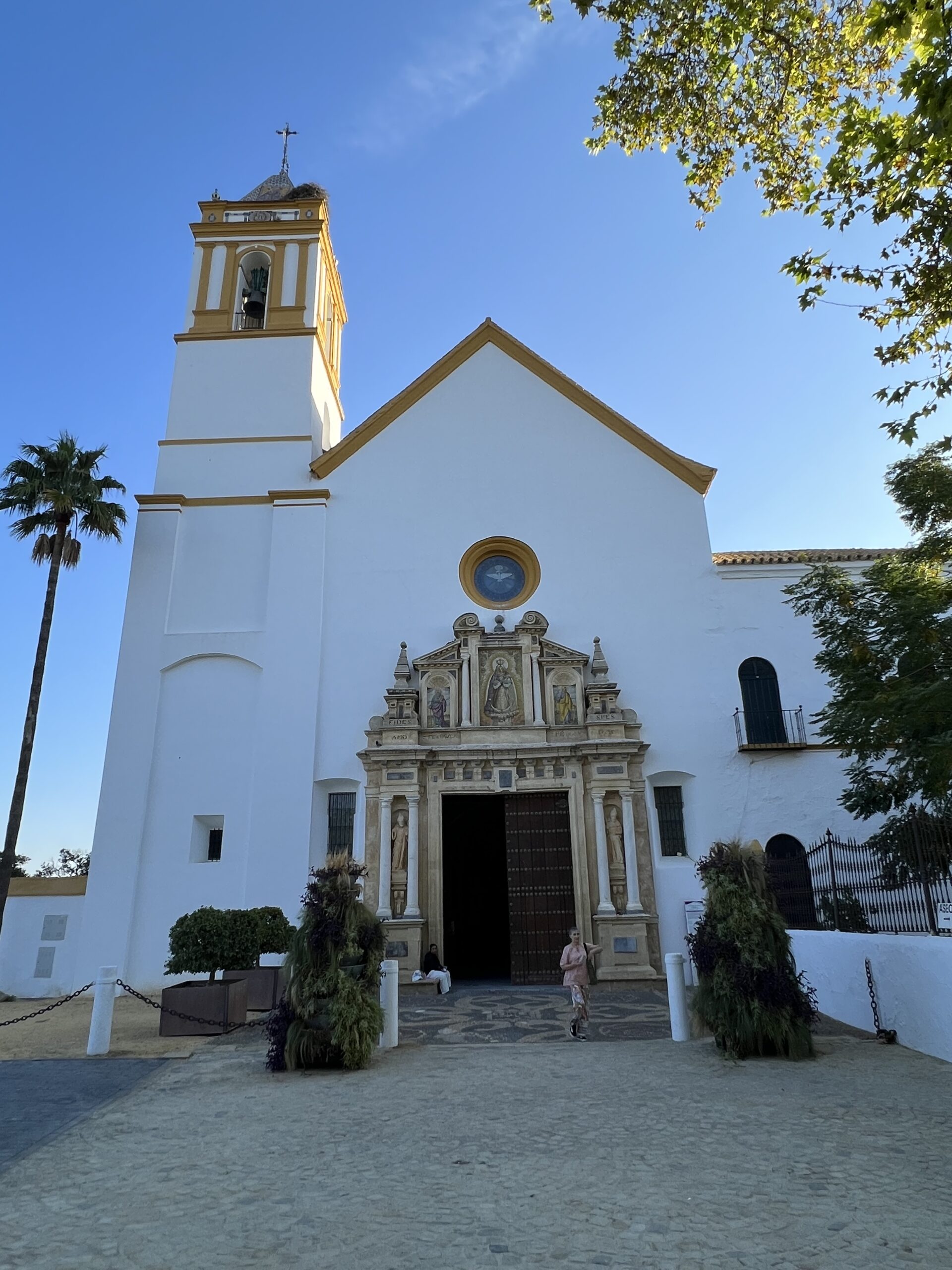
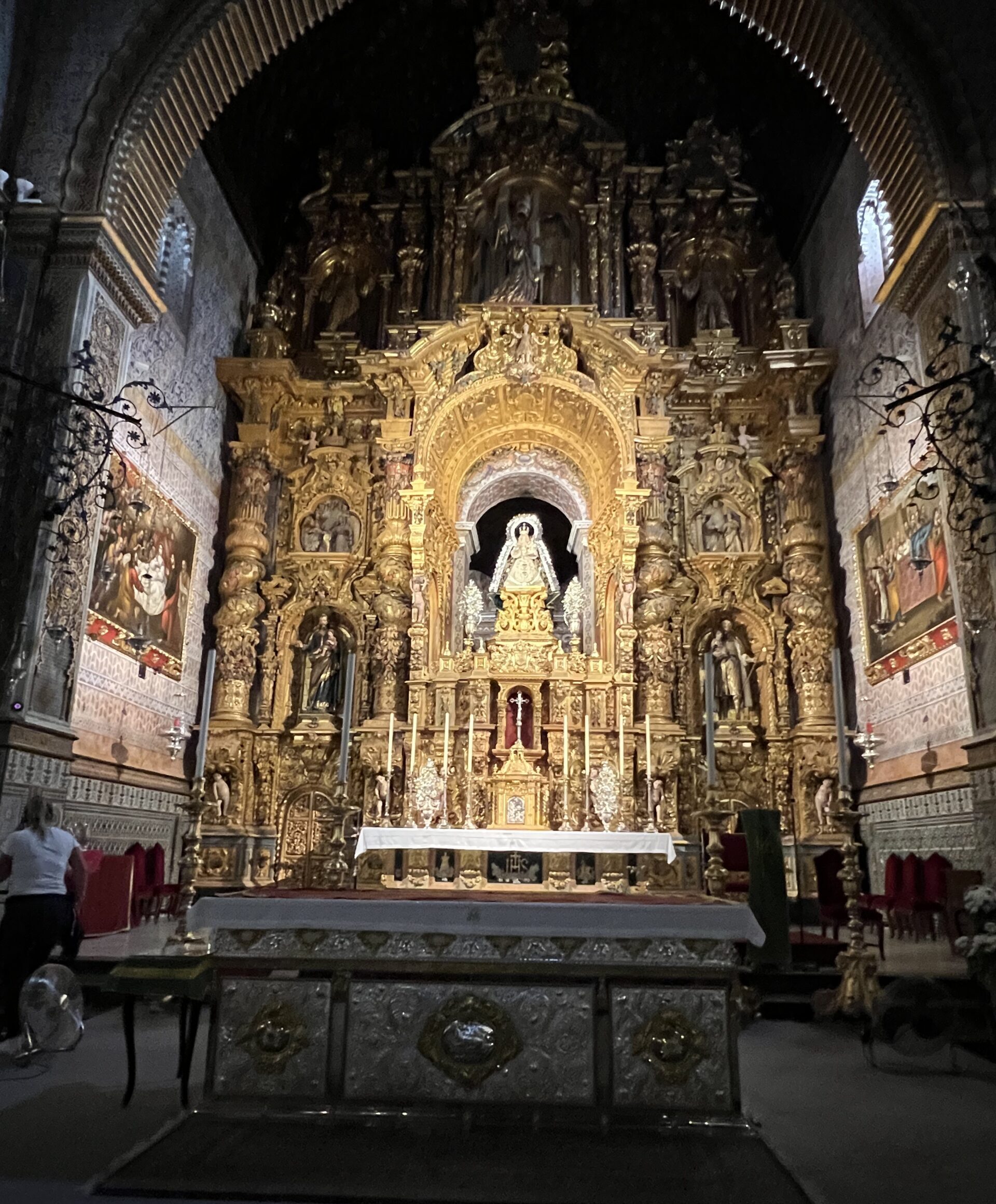
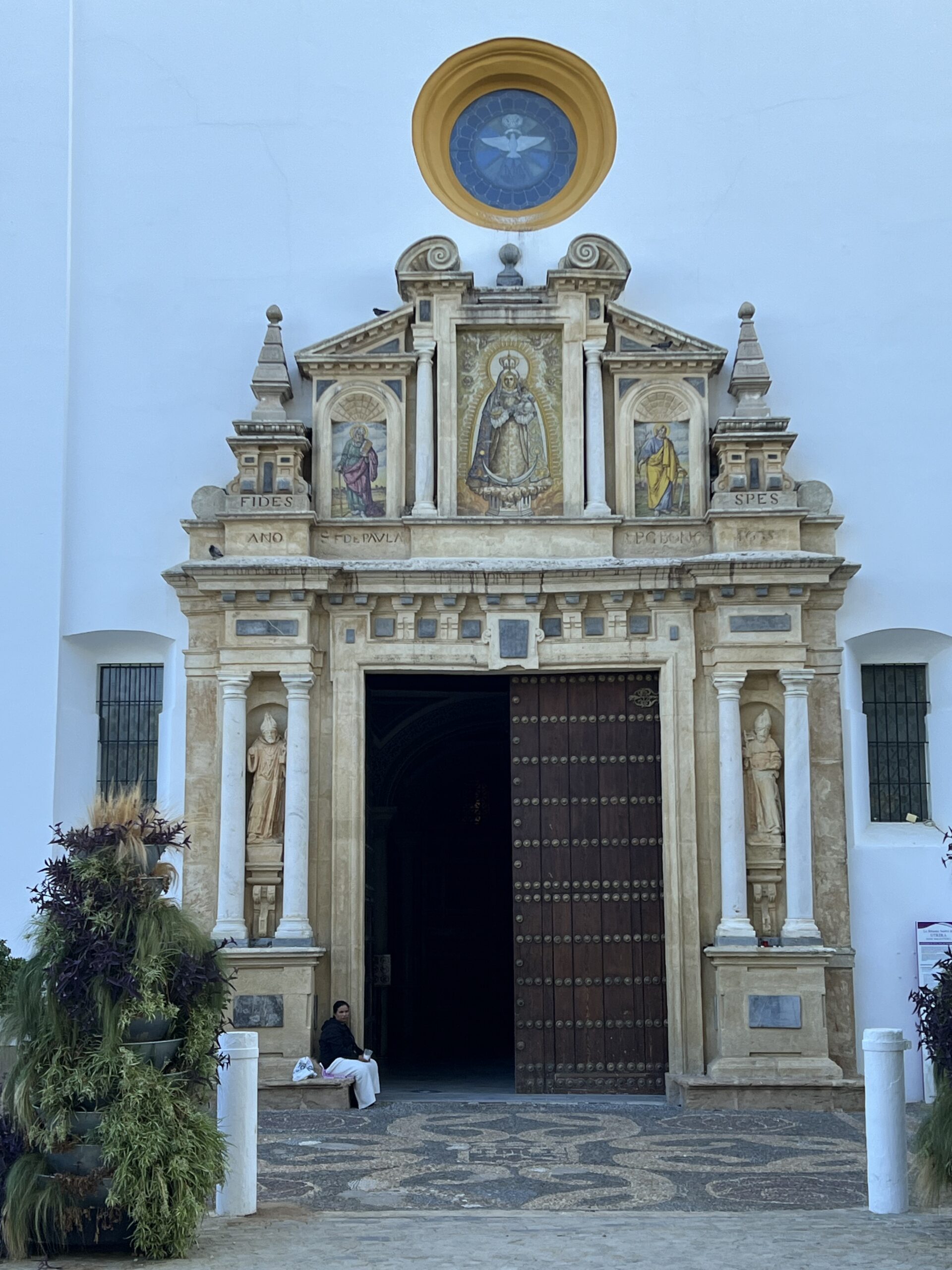
The pilgrimage church was built and expanded over a long period from the late 16th to the early 18th century. The structure was completed in 1714. The statues on the facade date from 1635. The main altar is from the 18th century.
A turbulent period then begins… In the years 1808-1809, the convent is used as a hospital. This happens during the Peninsular War (1808-1814). In 1810, Napoleon's French troops arrive; they close the convent and the friars are forced to leave. The statue of Our Lady of Consolation is temporarily moved to the church of Santa Maria de la Mesa in the centre of Utrera. In 1813, the friars are allowed to return to the convent, and the image of Mary is restored to its familiar place. In 1835, the convent is confiscated by the government and becomes a prison. In 1841, peace returns to Utrera, and processions are once again permitted. In 1842, a brotherhood is founded for the preservation of the sanctuary.
The statue of Mary was crowned on 1 May 1964, with the approval of Paul VI, Pope between 1963 and 1978, born Giovanni Battista Enrico Antonio Maria Montini (1897-1978).
Utrera is a town where the dancing of flamenco originated and the town has a flamenco festival.
In the middle of the city stands the church of “Iglesia de Santa María de la Mesa” (Church of Saint Mary of the Table), on Calle del Padre Miguel Román. The building is constructed in the Gothic style.
In 2003, remains were found of the most important synagogue on the Iberian Peninsula.
Pilgrimage site
The pilgrimage site of Utrera with its church is more than worth visiting. This Marian shrine is called “Santuario de Nuestra Señora de Consolación” (Shrine of Our Lady of Consolation). The church is built with Moorish influences, which can be seen in the arcades and tile motifs. Our Lady of Consolation is the patron saint of Utrera. The shrine belongs to the Convent of the Friars Minor and was founded at the end of the 16th century.
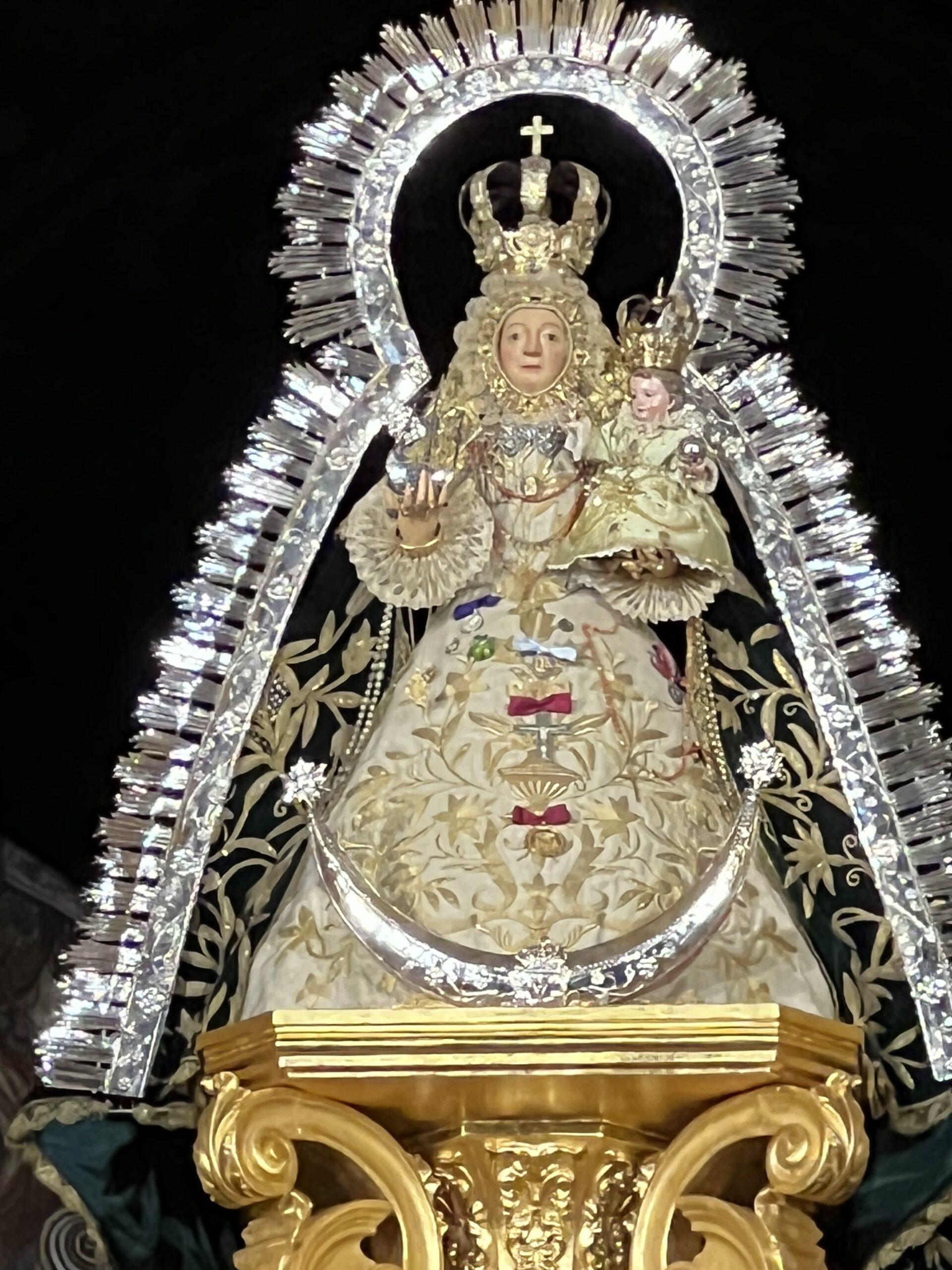
The statue of Mary in the altarpiece of the high altar stands several metres tall, and both Mother and Child are crowned.
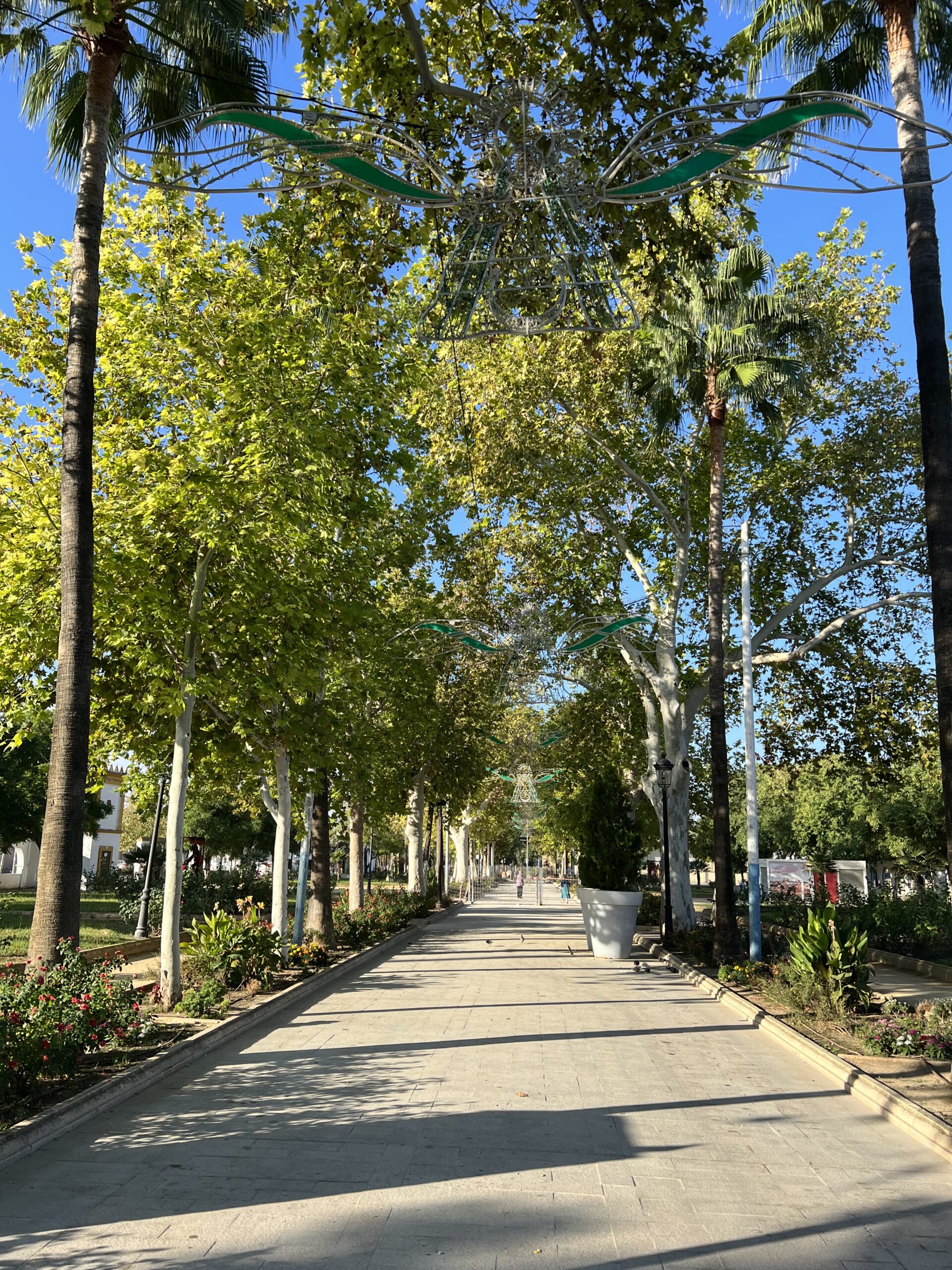
Next to the pilgrimage church is the “Parque de Consolación” (Park of Consolation) play park.
During Holy Week (“La Semana Santa”), processions are held.
The sanctuary is open to visit daily.
ACCESSIBILITY
Utrera is located in the south of Spain and belongs to the province of Seville, in the region of Andalusia. The town is situated on the Guadalete River. The pilgrimage site is next to a football stadium.
Address: Paseo de Consolación, 41710 Utrera.
More information can be found at www.santuariodeconsolación.org.
Experience
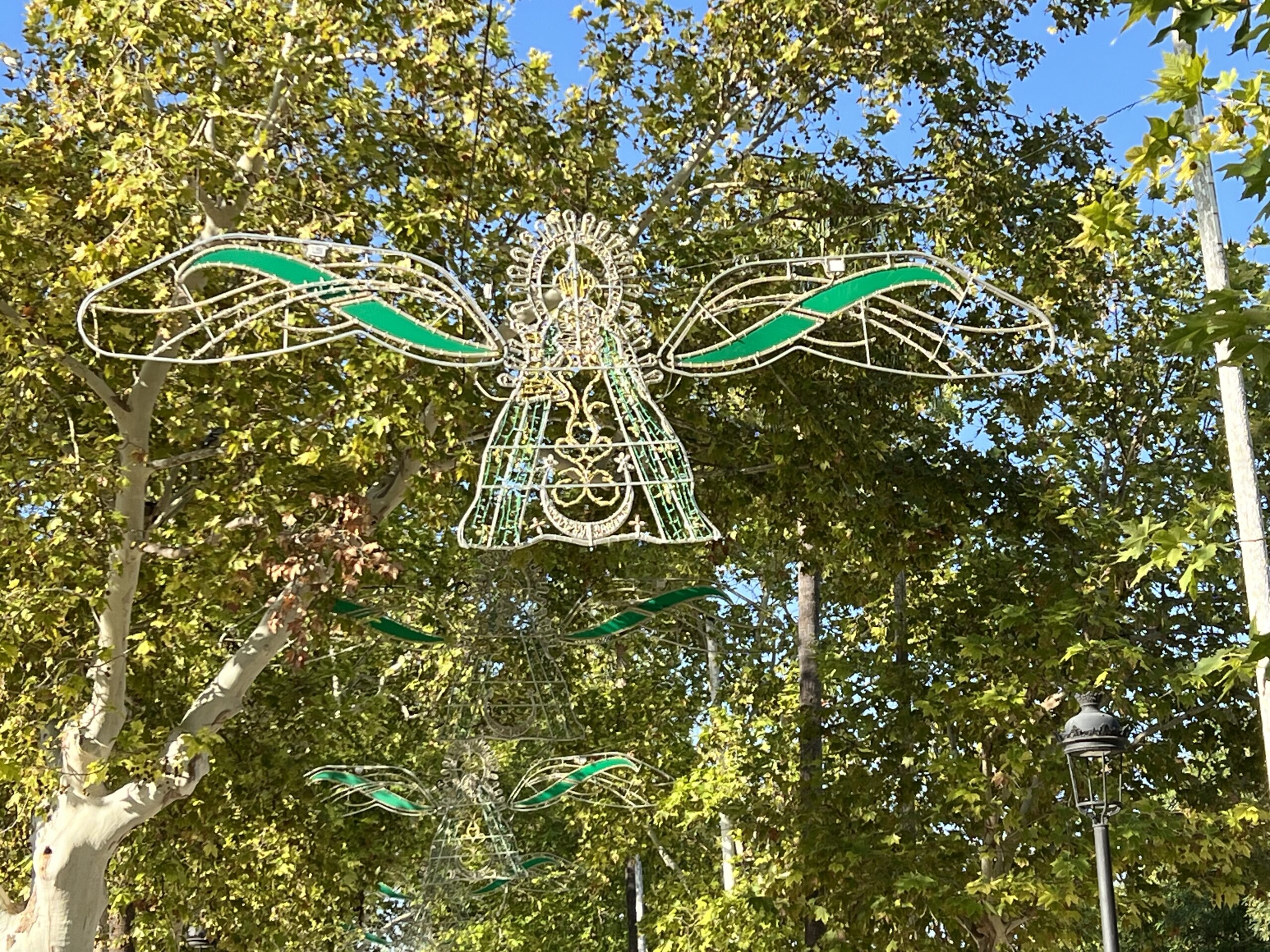
The pilgrimage site welcomes visitors with a long avenue adorned with decorations in the trees and artworks in the beautifully landscaped garden.
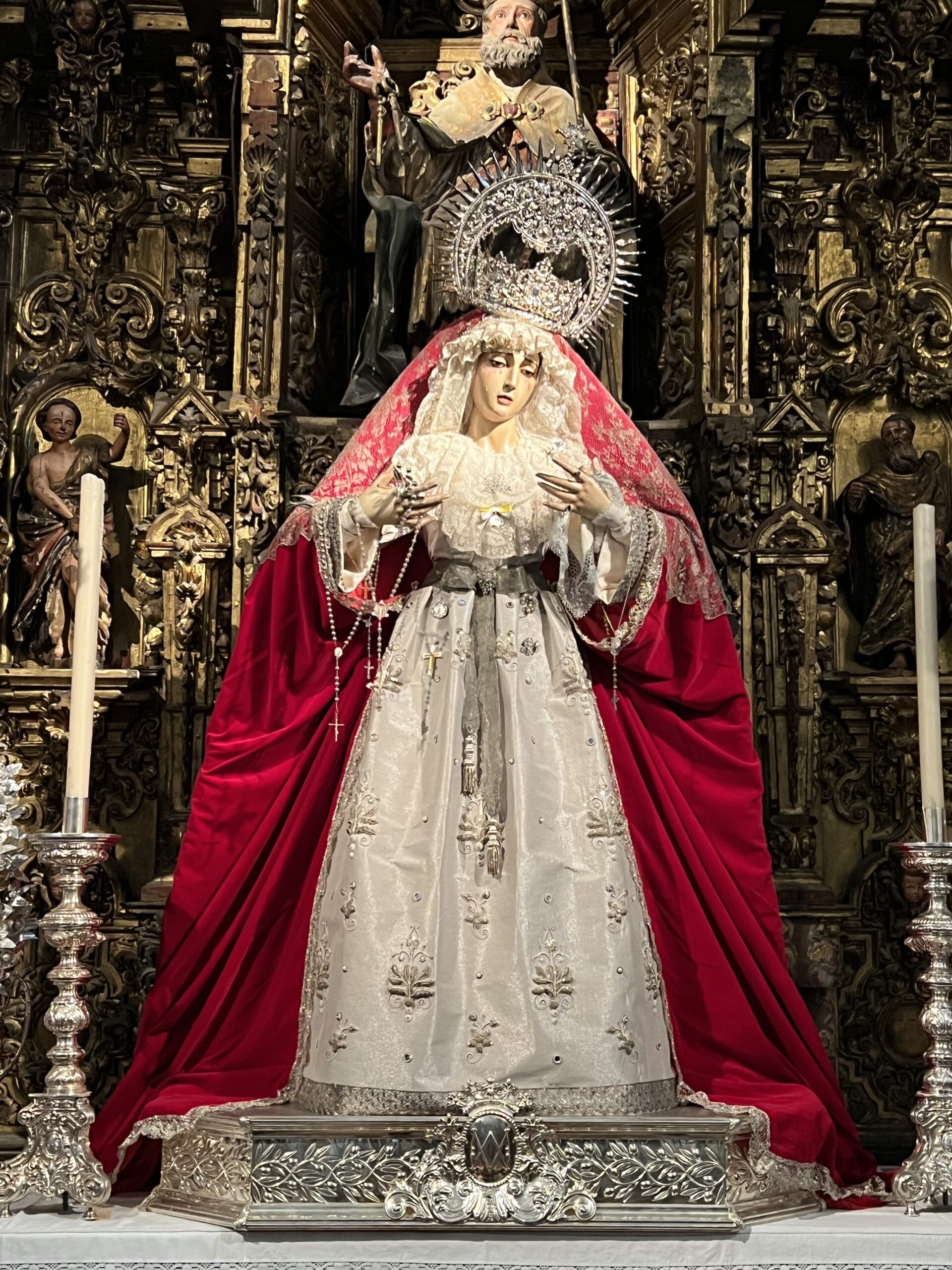
When I enter the pilgrimage church, my gaze is immediately drawn to the high altar, above which is the statue of Our Lady. Mary is depicted beautifully. This is the place for prayer.
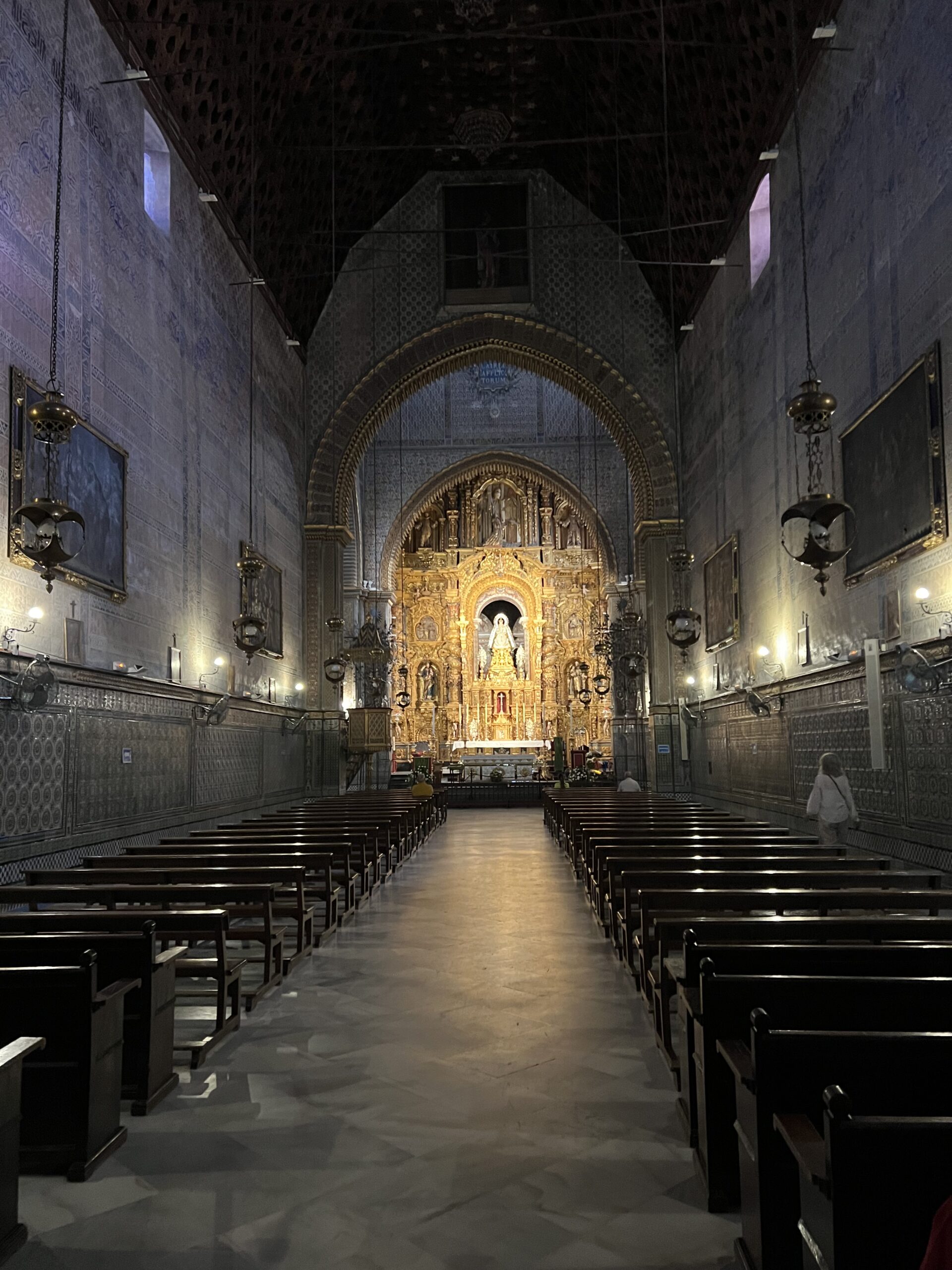
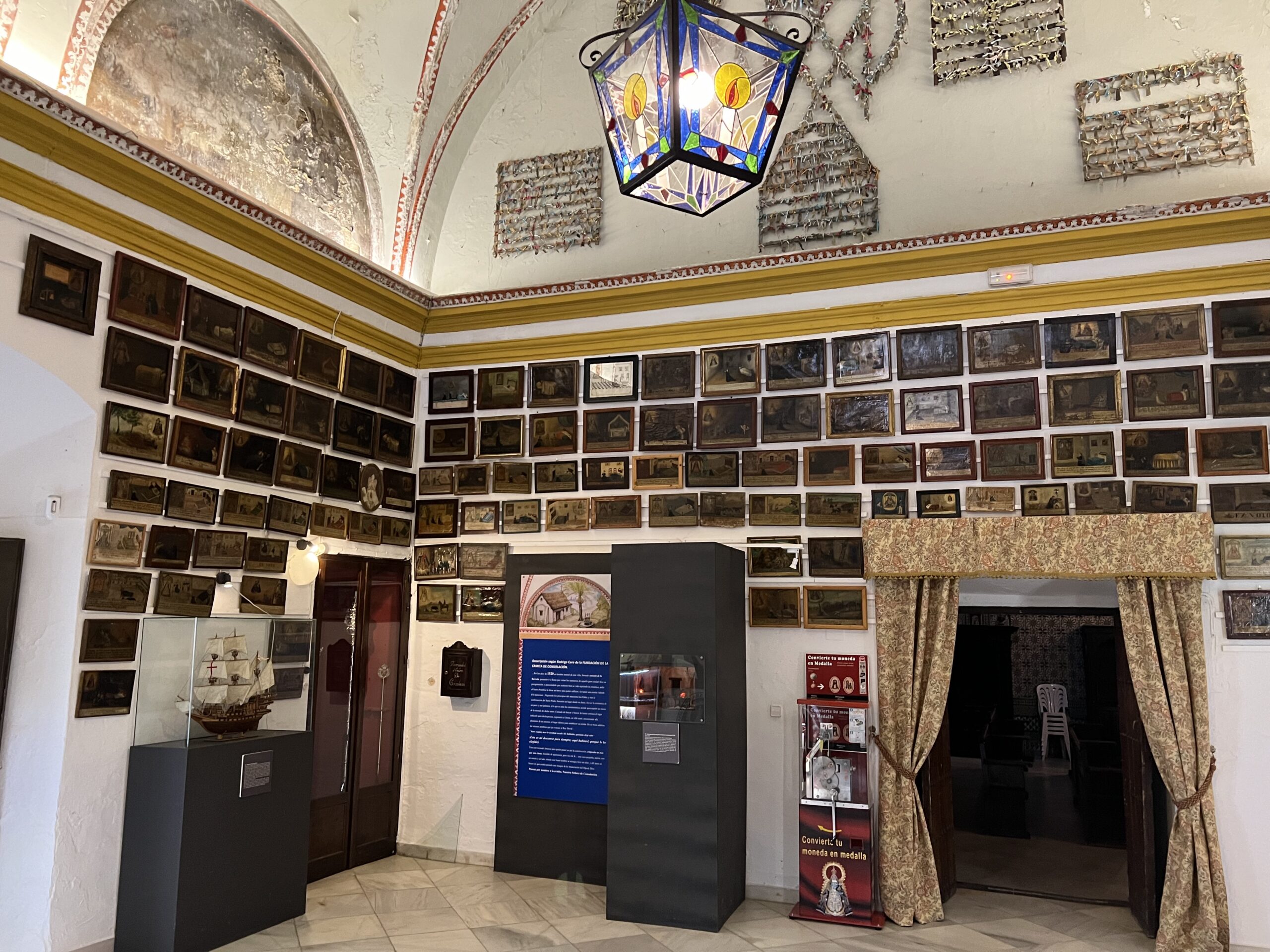
In the pilgrimage church, many paintings and ex-votos can be seen as thanks to Our Lady.
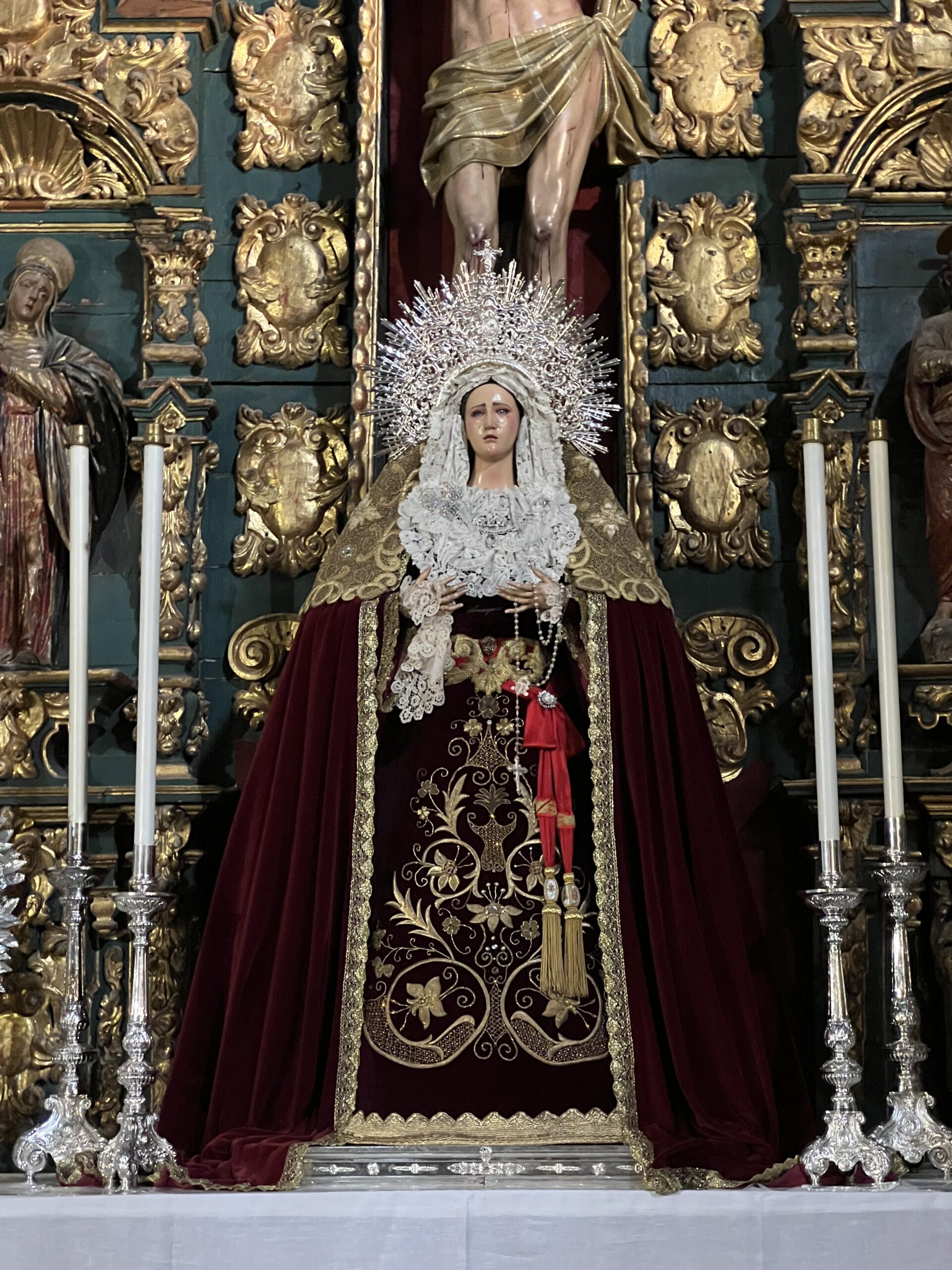
Besides visiting the pilgrimage site, I will also go to the centre of Utrera to see the impressive church of “Santa María de la Mesa”. I will also admire the interior of the Church of San Francisco, namely the “Iglesia de San Francisco” at Plaza del Altozano 16, 41710 Utrera. This church is also located in the centre of town. There are beautiful statues there, including an impressive effigy of Mary. The church was built in 1645 and features many 18th-century decorations and has a striking dome.
Environment
Utrera is situated in the Sierra de Utrera Natural Park, which boasts abundant flora and fauna. If you're seeking nature, adventure awaits here. This area offers many possibilities, such as hiking and cycling tours, horse riding along numerous trails, and mountain biking over undulating terrain. Rock climbing and paragliding are also available. There is also a walking route as part of the Camino de Santiago; the “Camino de Santiago”. The remains of the 13th-century Utrera Castle can be visited, known as “El Castillo Medieval y Recinto Amurallado” (the medieval castle and walled enclosure).
In the centre of Utrera, at C. Antonio Maura, 41710 Utrera, stands the monumental church of “Santa María de la Mesa” (Saint Mary of the Table), which is open on a few days of the week. The oldest part of the building dates from the 15th century and the architect Martín de Gaínza (1505-1556) was involved in later works. The tower has a height of 60 metres.
The distance to Seville is 32 km, the journey to the pilgrimage site of El Rocío is 113 km long, and it's 185 km to Malaga.
Posted: 18 November 2023
~~~

 Nederlands
  English (UK)
  Deutsch
  Français