History
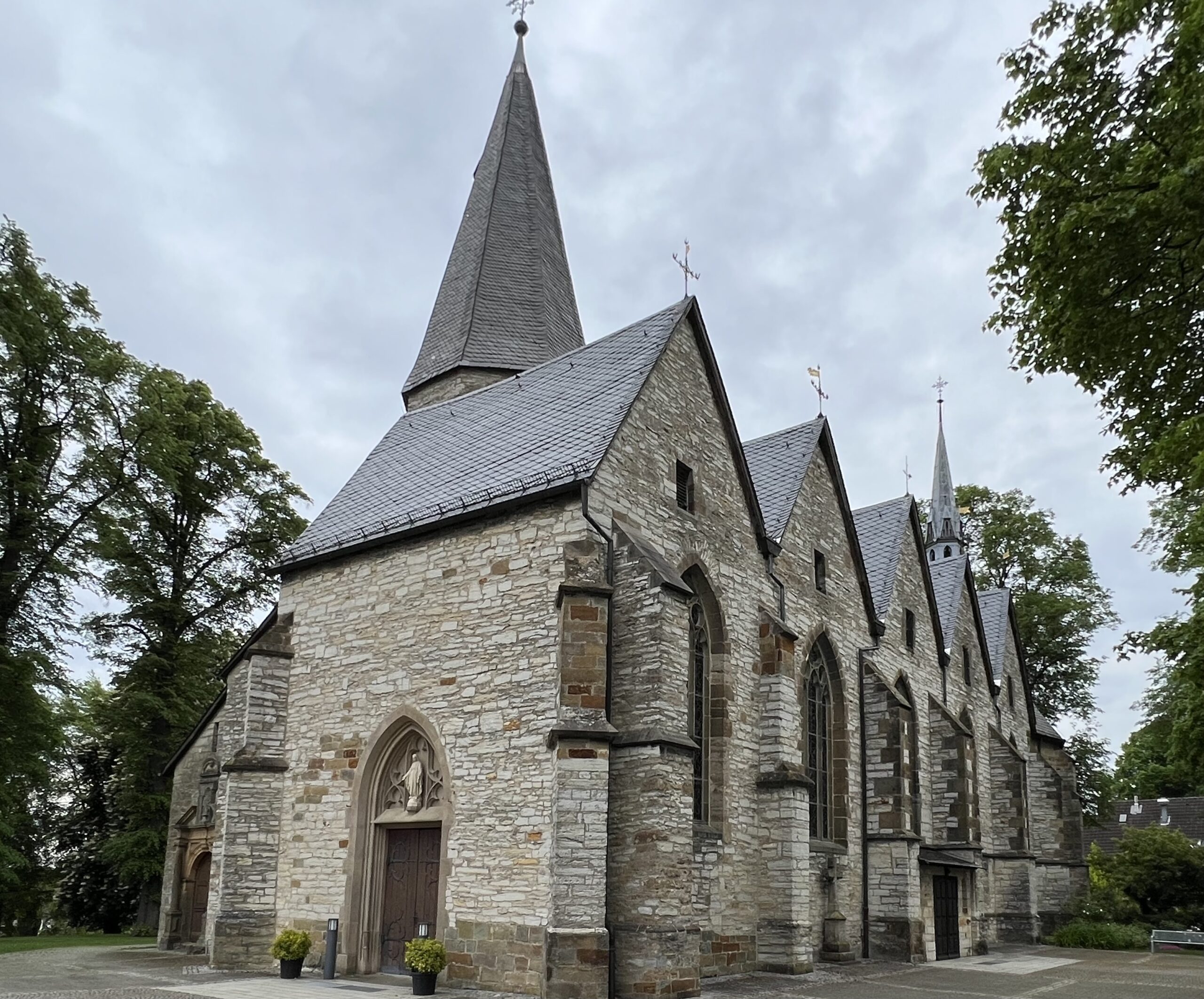
The pilgrimage site has its roots in a legend... In 1171, a pilgrimage is made because Knight Wilhard von Vernede (Verne), who was part of Duke Heinrich der Löwe's (Henry the Lion's) entourage (c. 1129-1195), travelled to the Holy Land. The Duke is also known as Heinrich III von Sachsen (1142-1180) and Heinrich XII von Baiern (Bavaria) (1156-1180). When the knight goes on pilgrimage, he pays a visit to the chapel to ask for God's blessing. On his way, he cuts a branch from a rose bush and carves a small statue of Mary from it. The knight keeps the figurine and hides it among his equipment. Daily, he takes the figurine into his hands and prays to Mary, asking for Her help and protection during the dangers of the pilgrimage. One day, the knight loses the figurine. Two years later, he returns and goes to the chapel in Verne. When he approaches the rose bush, he sees a miraculous light, and within it stands the figurine he carved. Subsequently, the figurine is placed in the chapel.
The chapel becomes a church through the enlargement of the building. This church has been rebuilt and enlarged several times in past centuries. The nave dates from c. 1175. The Lady Altar dates from 1670.
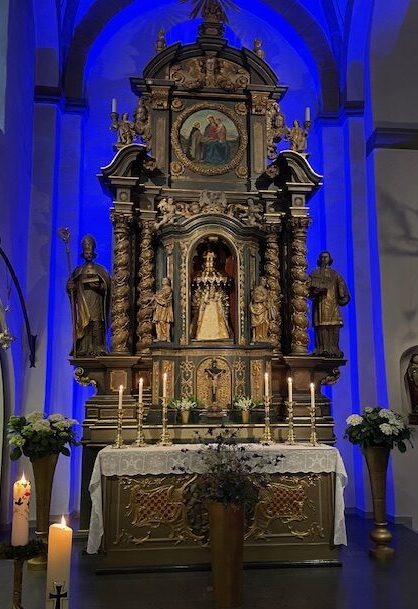
The altar of Our Lady dates from 1670, and here stands the carved wooden statue of grace. This is a seated Madonna from the period 1200-1225. The 45 cm statue is therefore about 50 years younger than the legend of Ritter Wilhard from 1171. The statue of grace is named: “Our Lady of Verne, Comforter of the Afflicted,” and in Latin, Comforter of the Afflicted is “Consolatrix Afflictorum.” Centuries ago, the statue was painted and many years later clothed. To do this, the arms were lengthened. Hidden within the statue of grace are several relics in a small box from c. 1100.
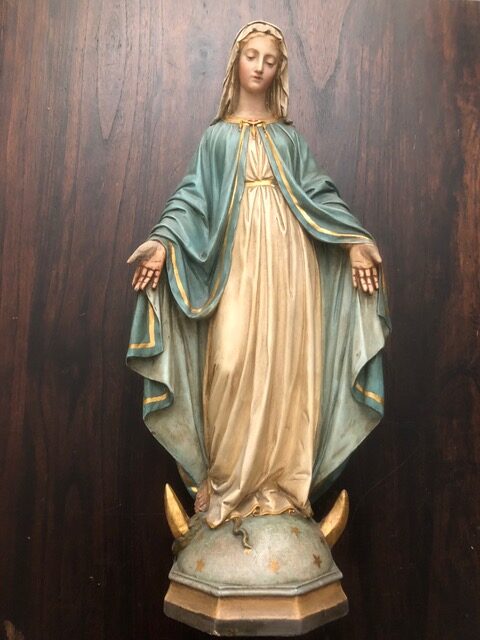
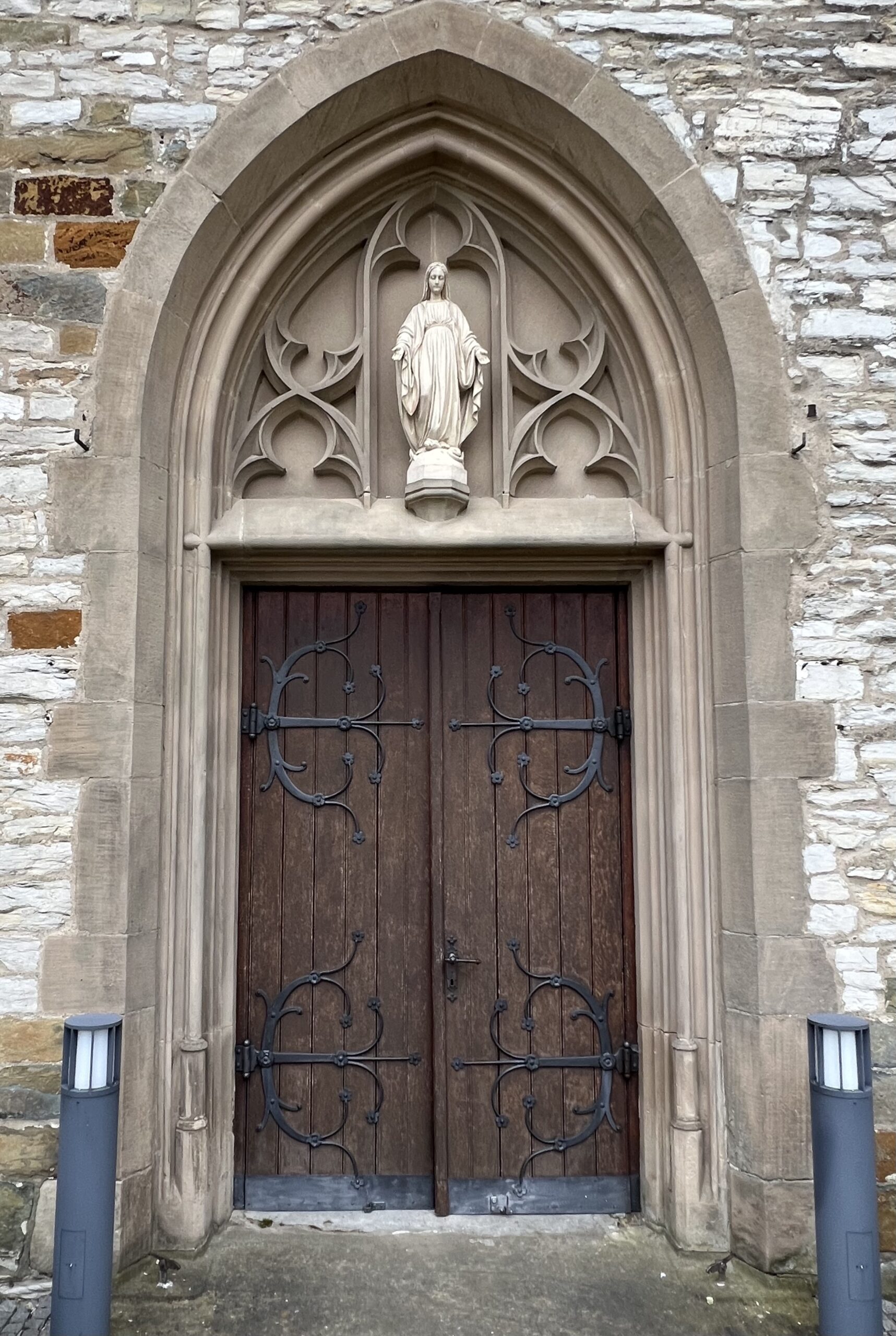
In 1744, a throne of gilded copper was made for the statue of grace. The donor was Gerhard Georg Wilhelm von Vogelius (1708-1755), vice-chancellor of the Diocese of Paderborn. The statue of grace has been in its current location since 1910, following a renovation of the chancel. Architect Franz Mündelein (1857-1926) from Paderborn created a new, Neo-Gothic portal in 1899. The statue above the entrance is Mary as the Immaculate Conception.
On 17 August 1913, the devotional image was crowned by Karl Jozef Schulte (1871–1941), Bishop of Paderborn (1910–1920), Archbishop of Cologne (1920–1941) and Cardinal (1921–1941). This took place on the occasion of the 150th anniversary of the pilgrimage from Paderborn.
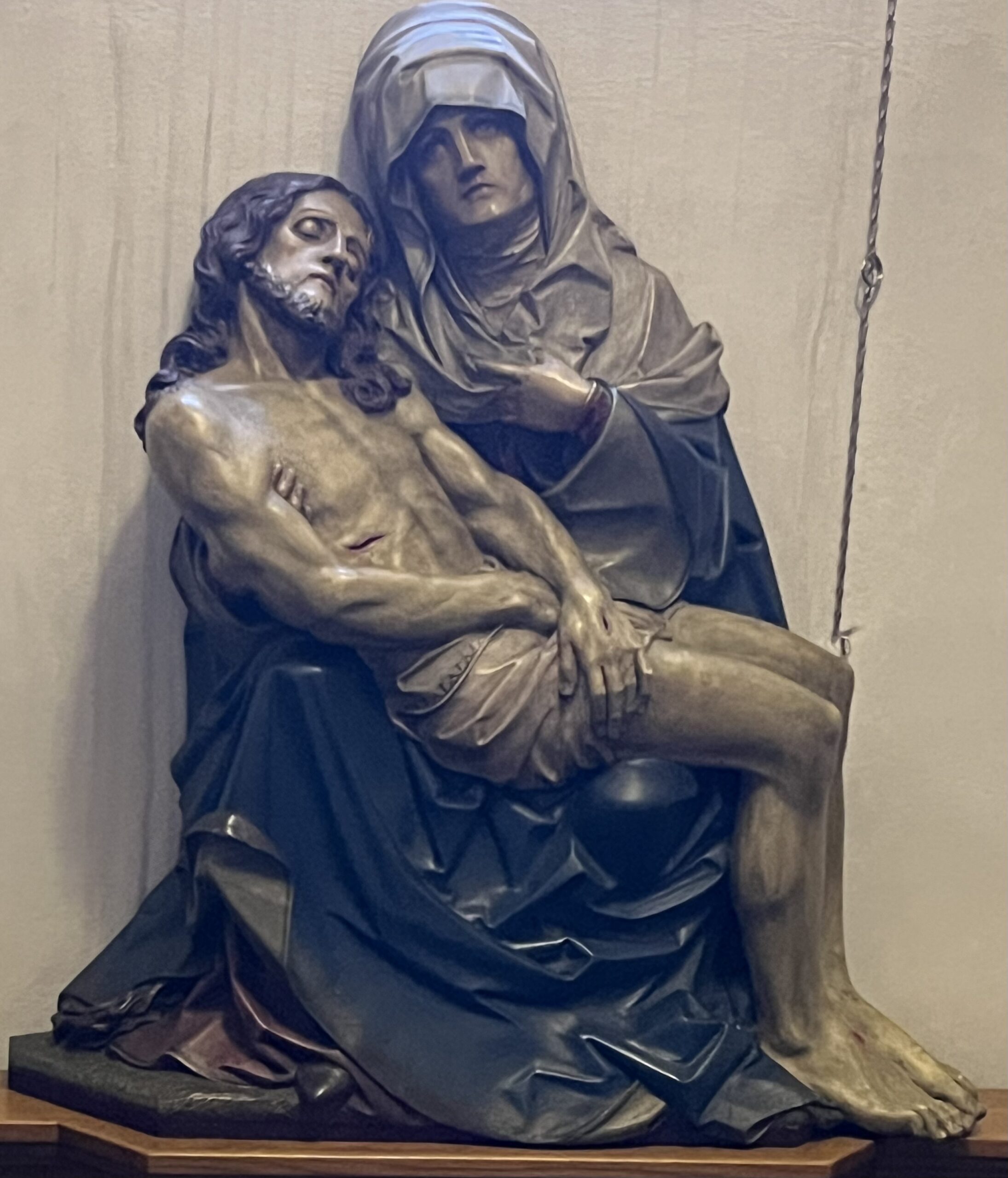
In 1920, sculptor Ferdinand Mündelein (1861-1933) from Paderborn created the Pietà.
The location of the “Kapelle am Brünneken”, situated on the edge of the village, may once have had a holy spring for the worship of the horse goddess Epona. The chapel is located near the former castle of Knight Willard from the 12th century. A chapel has stood here since the early 17th century. After 1851, another chapel was built in honour of the Virgin Mary, funded by donations from believers. The interior was restored in the 1970s/1971.
Pilgrimage site
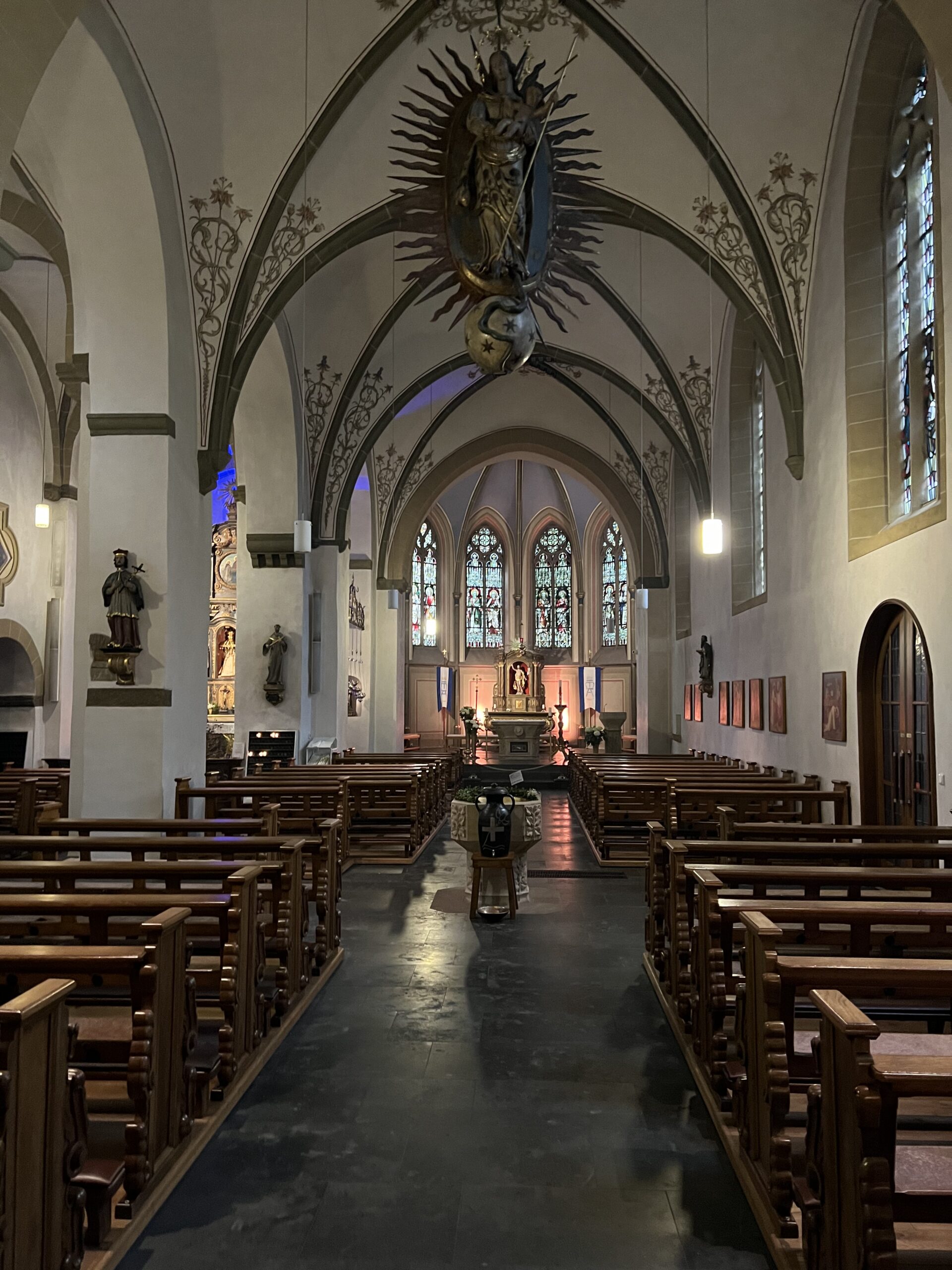
Verne is Germany's oldest Marian pilgrimage site. Pilgrimages have been taking place here since 1171. The village has a population of about 2,400 and belongs to the municipality of Salzkotten.
The pilgrimage church stands in the centre of the town. On the exterior of the presbytery, there is a relief of the shrine icon with the inscription “Trösterin der Betrubten, anno 1769” (Comforter of the Afflicted, anno 1769).
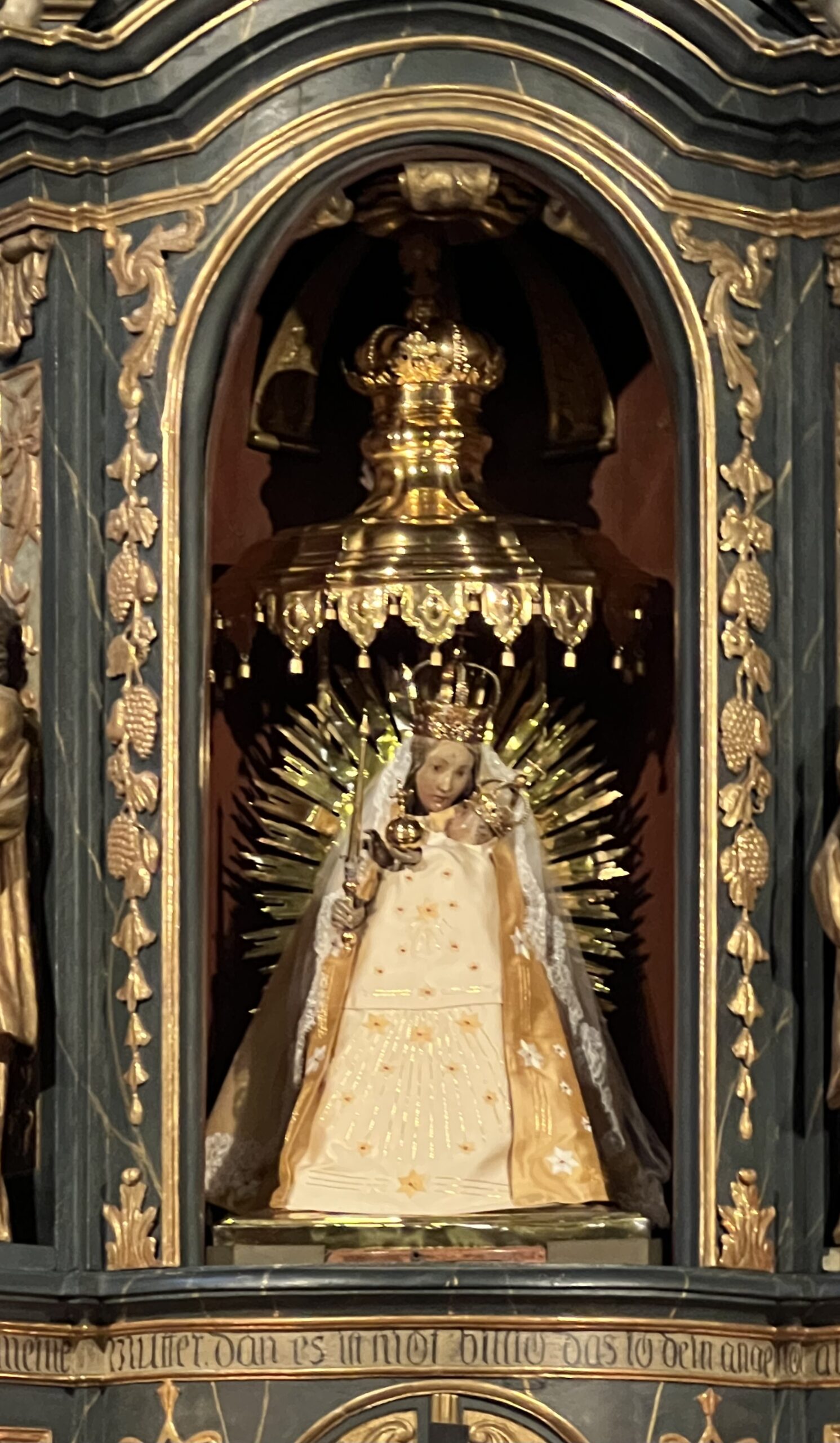
The image of grace dates from around 1220 and has some relics incorporated into it. The effigy is of a seated Mary and is placed in the High Altar from 1670. The statue of Mary is the oldest part of the church. The effigy features a golden crown surrounded by golden rays. Mary is holding her Child with her left hand. The effigy has been in its current location since 1910.
A “double Madonna” of about 2 metres in size hangs from the vault of the nave. Mary is trampling the serpent and holding Jesus on her left arm.
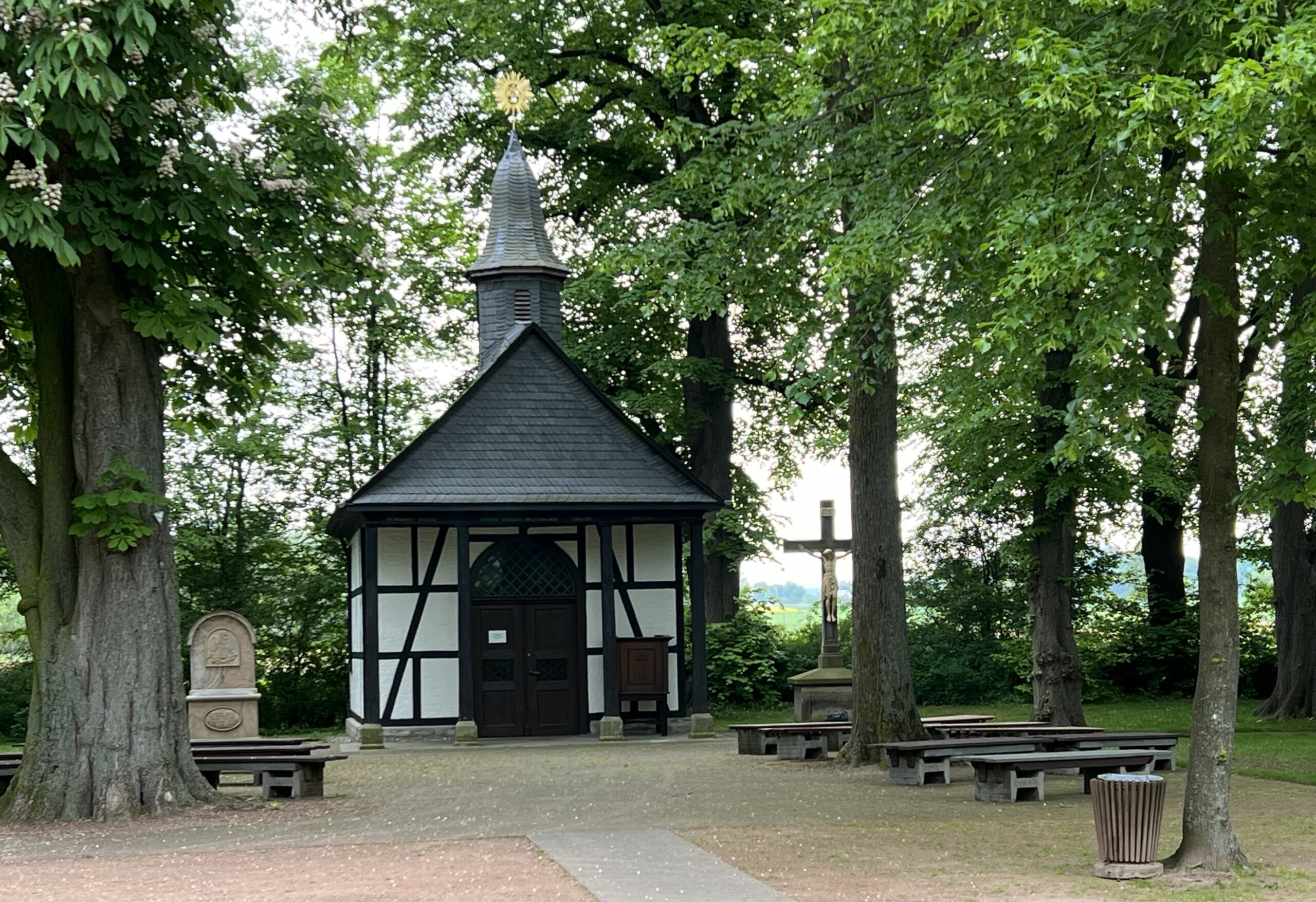
The church holds gifts from believers; these include ex-votos and silver objects, which are displayed in the treasury. There too are the mantles of the grace image.
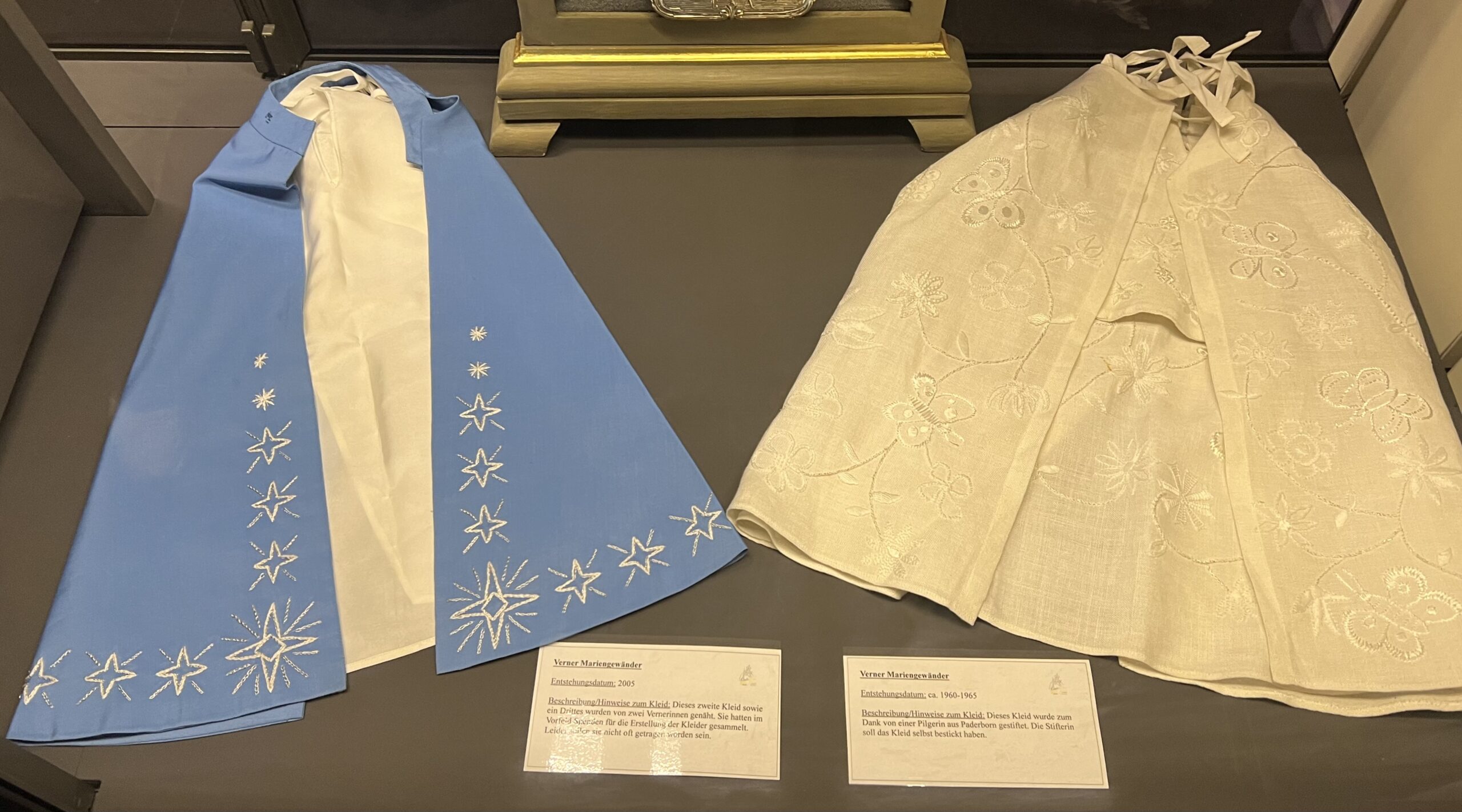
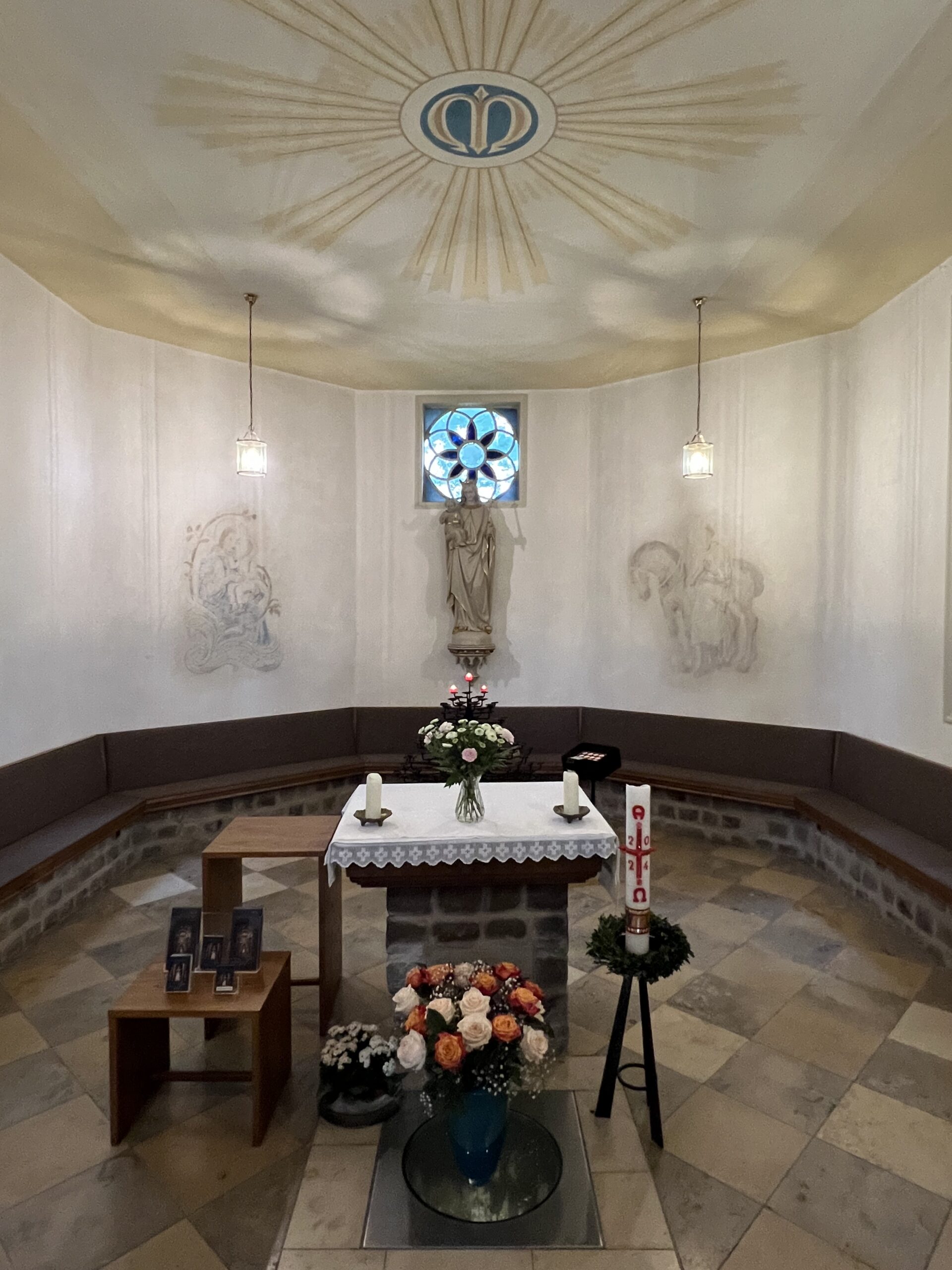
Just outside the village outskirts is the “Kapelle am Brünneken”. The chapel is approximately 1 km from the pilgrimage church. Along the road to the chapel are 7 pillar statues from 1679, depicting the 7 joys of Mary. In Verne, these joys are: the Incarnation of the Son of God, the birth of Jesus, the arrival of the Magi, the resurrection of Jesus from the dead, the Ascension of Jesus, the coming of the Holy Spirit, and the Assumption of the Mother of God. On the Marian altar stands the image of Our Lady of Verne, Comforter of the Afflicted. Every Monday, there is a service in the early evening. Next to the chapel is a cross from 1913. Here, Ritter Willard carved a branch of a rose bush to make a small statue of Mary. There is also a spring near the chapel.
ACCESSIBILITY
The village of Verne belongs to the municipality of Salzkotten and is located in the state of North Rhine-Westphalia. The pilgrimage church is located in the middle of the village at Marktplatz 3, 33154 Salzkotten (Verne). The rectory is at Marienplatz 4, 33154 Salzkotten (Verne).
Current information can be found at www.wallfahrt-verne.de.
Experience
In the early evening, I arrive in Verne and go to the pilgrimage church. This is a special place, as this is where the pilgrimage in Germany began.
The exterior of the church invites a swift visit. Above the entrance door stands a familiar depiction of Mary. After greeting Her, I enter the church. Immediately I experience a meditative atmosphere, which invites prayer. First, it is then to thank Mary for allowing me to visit Her here.
A large statue of Our Lady with Child hangs high in the centre of the church. Mary is surrounded by rays, stands on a large globe and tramples a snake. The small Jesus holds a long cross.
I walk further into the church and come to the left side altar. The image of grace is in this altar, and I believe I recognise Saint Nicholas next to it. The old, small image of grace shows Mary with Child. The Mother holds a sceptre, wears a cloak and is crowned. Golden rays and a golden throne make Her even more striking. I continue my tour of the church and a little later a parish employee enters the church. I strike up a conversation with her, and she asks if I would like to see the treasury. I don't have to think long about this, and the woman opens the door to the treasury. There I see Mary's wardrobe. The woman proudly tells me about the church and invites me to take many photos and write beautiful texts. More publicity for the pilgrimage to Verne is welcome.
After speaking with the parish employee, I continue my tour of the pilgrimage church. A painting with the year 1171 hangs here. The image is of Mary with a kneeling man with crutches. The Holy Mary Protection Confraternity Verne 1171 is written on it. What a long history this pilgrimage has.
The church has many stained-glass windows depicting Mary. A likeness of the Mother and her deceased Son has also been placed in the monumental church.
At the back of the church is a prayer card with an image of the devotional statue on the front and on the back the text of a prayer for the year 2024. The text is in German and when I translate it into Dutch, it says:
“Mary, Mother of the Church, you trusted in God throughout your life. Strengthen in me my trust, when I am surprised, as you were surprised by the angel's message.
Strengthen my trust, Mary, as I wonder how things will continue.
Strengthen my faith, Mary, as I look at the conflicts and wars in the world.
Strengthen my faith, Mary, in the power of the Spirit, which may grow and work in the Church.
Strengthen my trust, Mary, in the hours of happiness, joy, but also in the moments that are full of worries.
Strengthen my faith, Mary, when I need strength for my beliefs.
Mary, through trust in You, help me to grow further in trust in Your Son.
Mary, Undoer of Knots, pray for me.
Amen.”
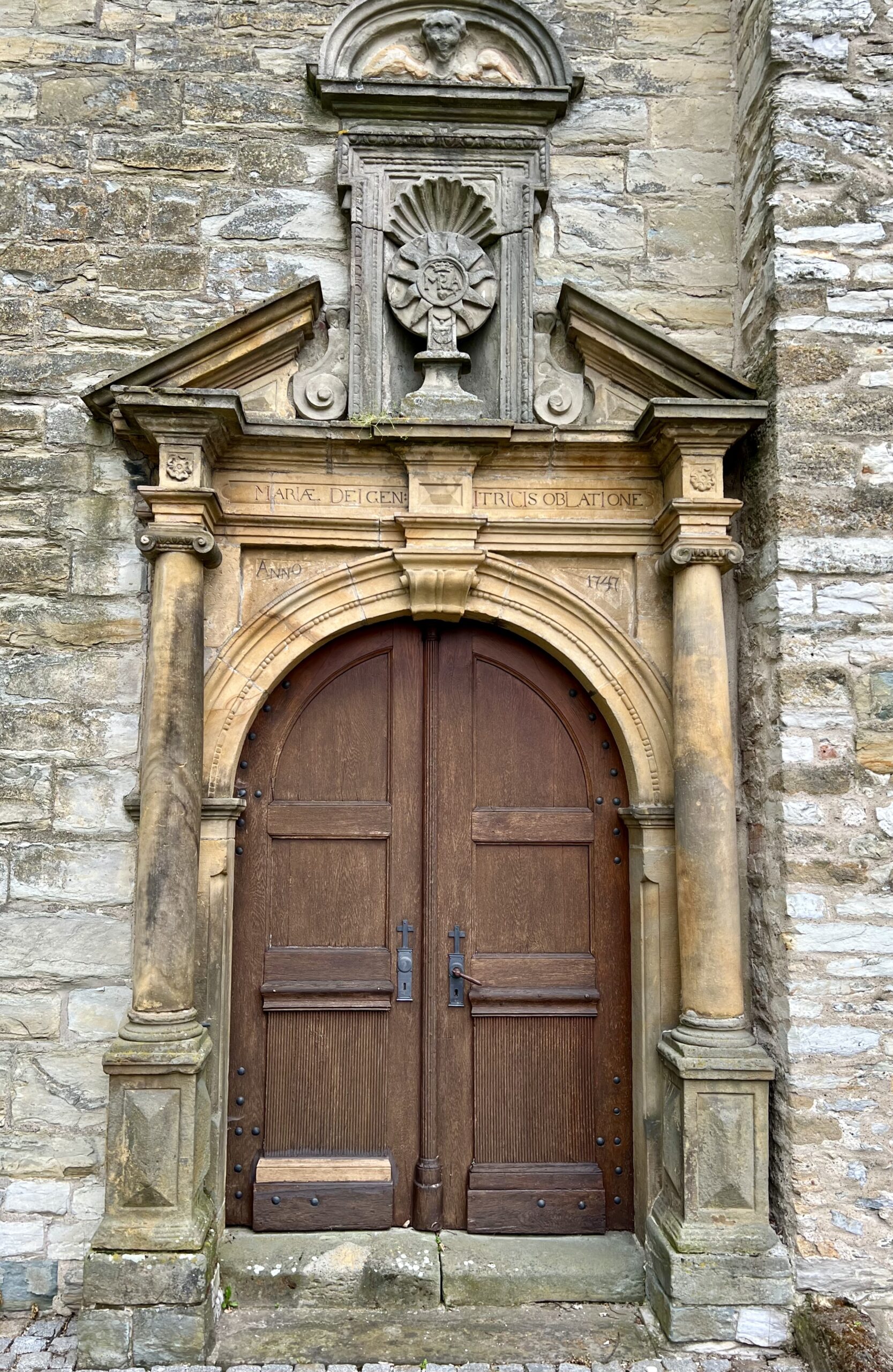
Then I leave the church and see a closed door with the year 1747 on it. Above it is the Latin text “Mariae Deigen Itricis Oblatione”, which means: ”Mary’s house with a nettle offering“. This refers to the ”Comforter of the Afflicted".
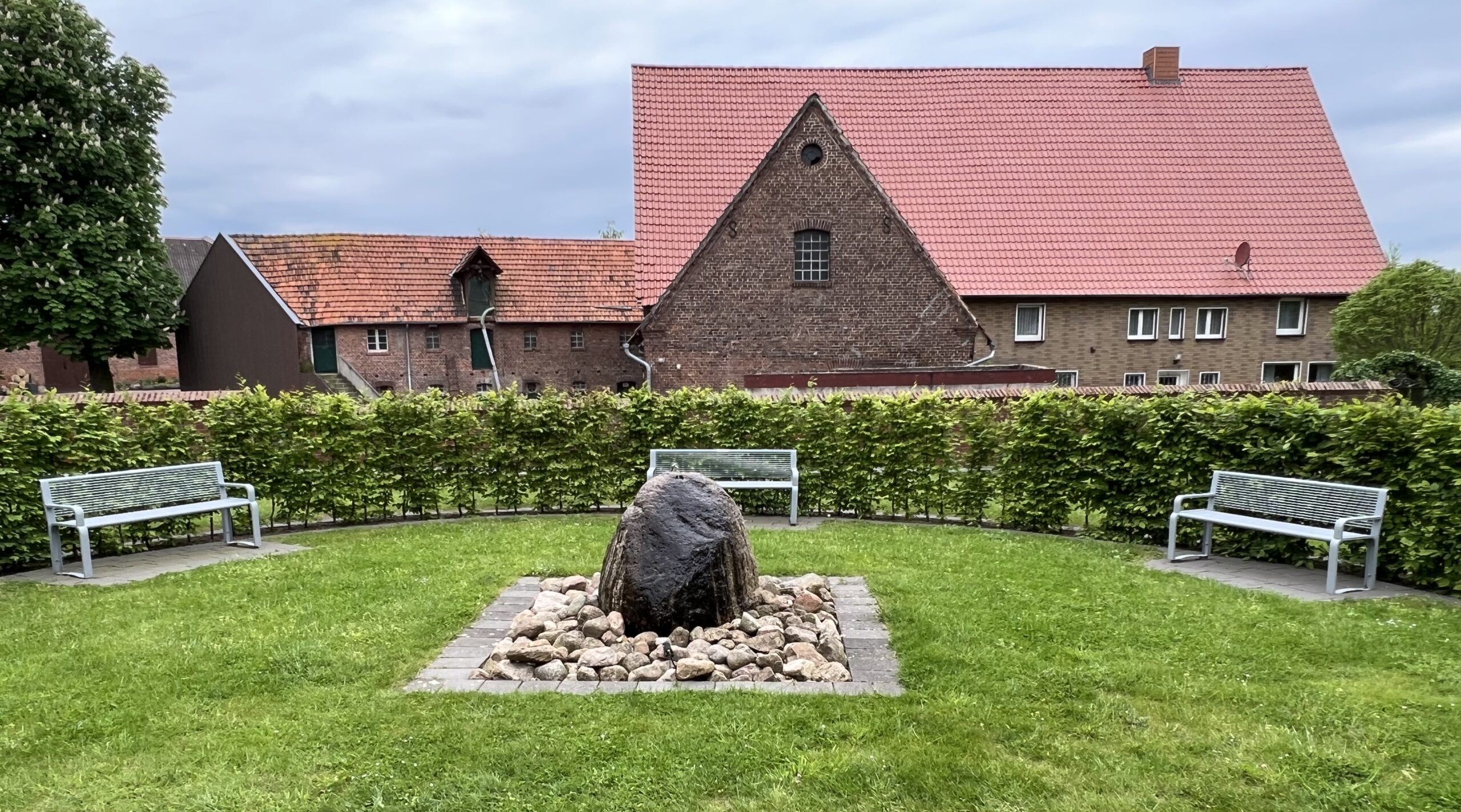
A small park has been laid out in front of the church. A large boulder lies there, and water comes out of it. This is very special, and thoughts of living water come to mind.
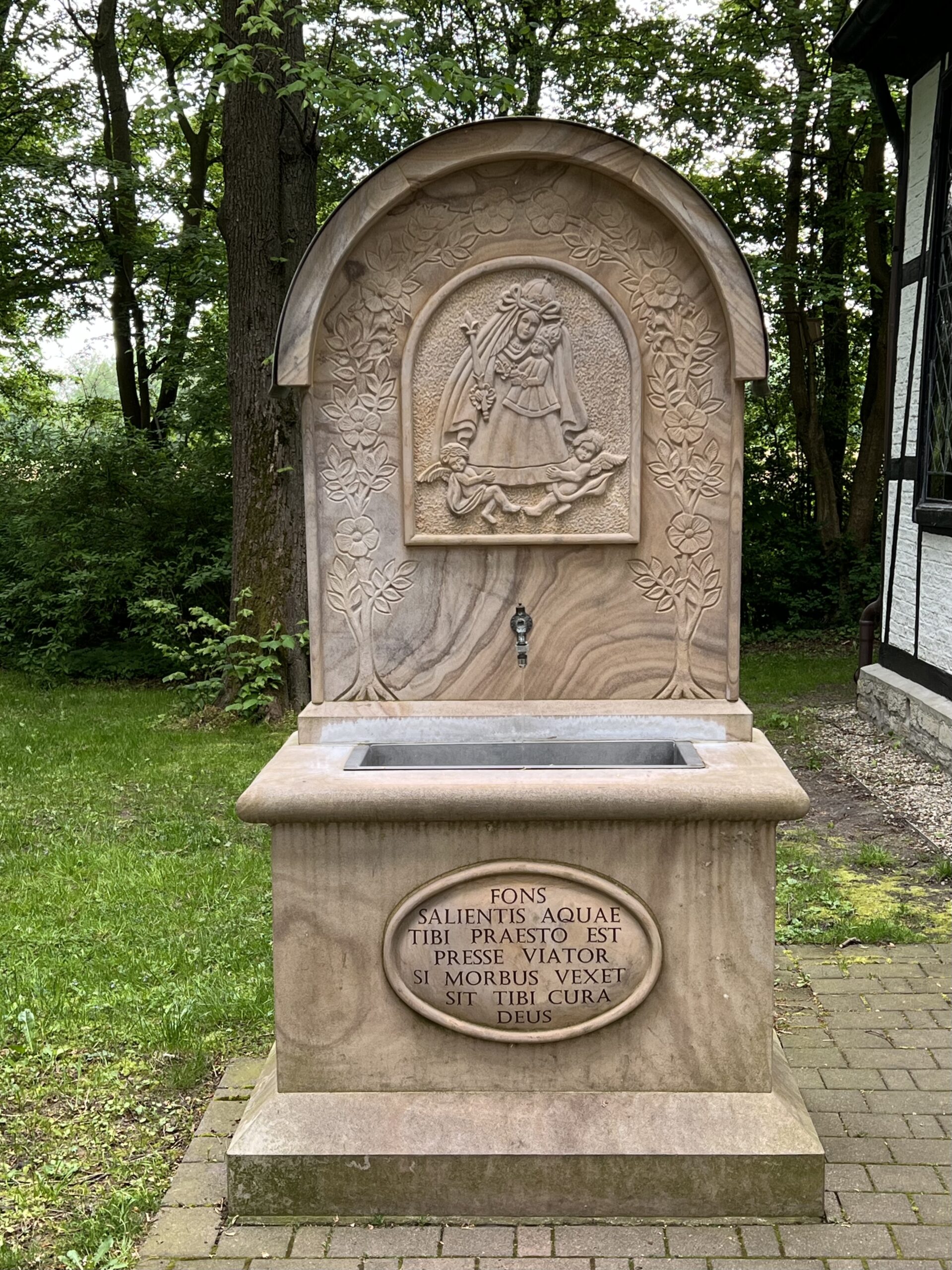
The next day, I visit a beautiful chapel named “Brünneken Kapelle” from 1851. The spring chapel is situated on an idyllic site with a spring and Stations of the Cross from 1701, which were renovated in 1927. Beneath the spring is the Latin text: “Fons salientis aquae tibi praesto est presse viator si morbus vexet sit tibi cura Deus”. This means: “a fountain with spring water is ready for you, traveller, if you are ill, may God care for you”. With these words in mind, I look back on a very eventful visit to Verne.
Environment
From the major pilgrimage site of Werl to Verne is 57 km east.
Departing from the old town of Paderborn and heading to Verne means travelling 17 km westwards.
From the big city of Dortmund to Verne is 90 km to travel east.
To travel from the monumental city of Kassel to Verne is 106 km north-west.
From the city of Bielefeld to Verne is 57 km south.
Posted: 11 June 2024
~~~
