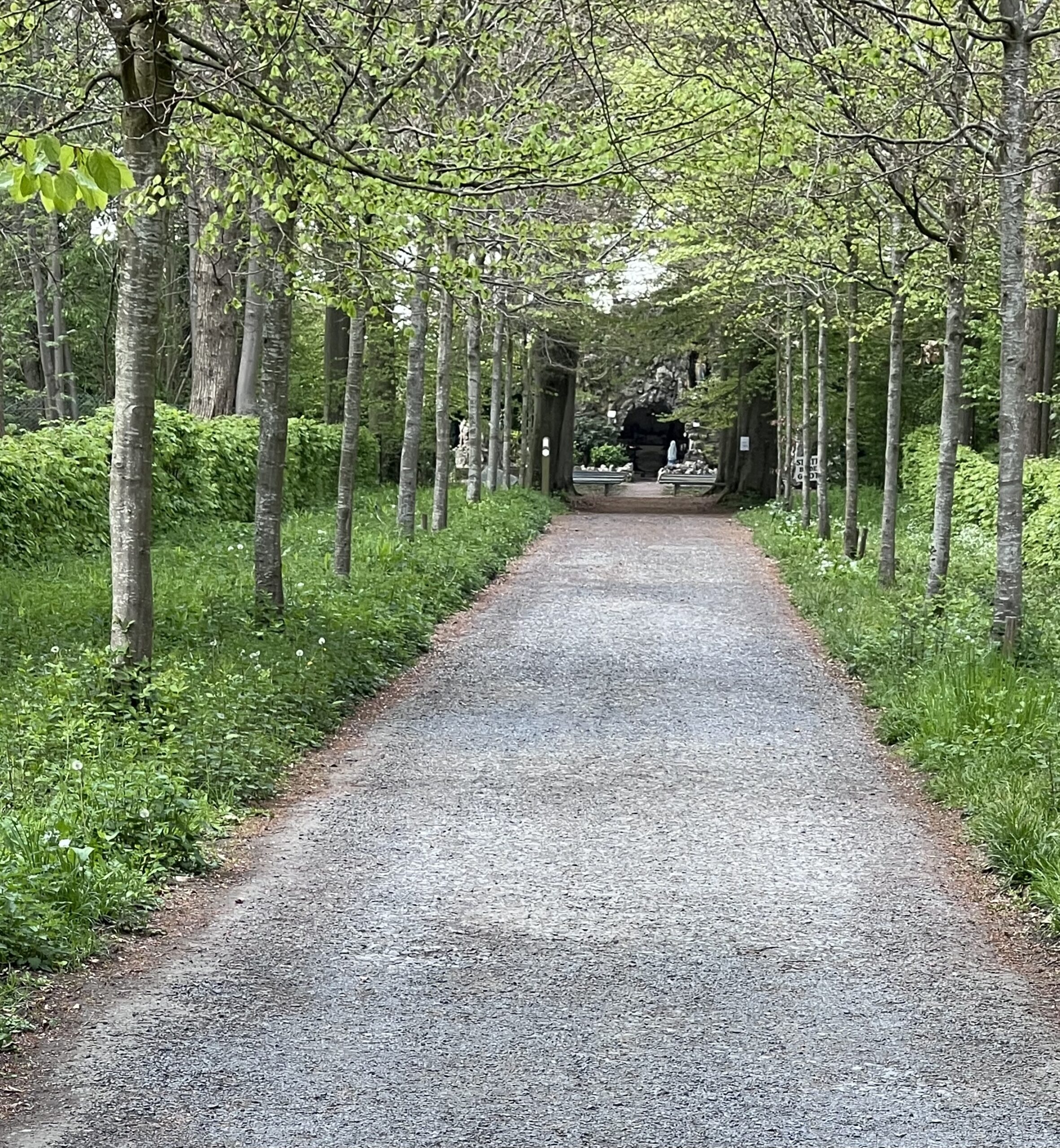
Next to the buildings of the St. Sixtus Abbey, opposite the "De Rakkertjes" childcare centre, a Lourdes grotto lies in the St. Sixtus forest, about 400 metres from the road. A wide path leads visitors to the grotto.
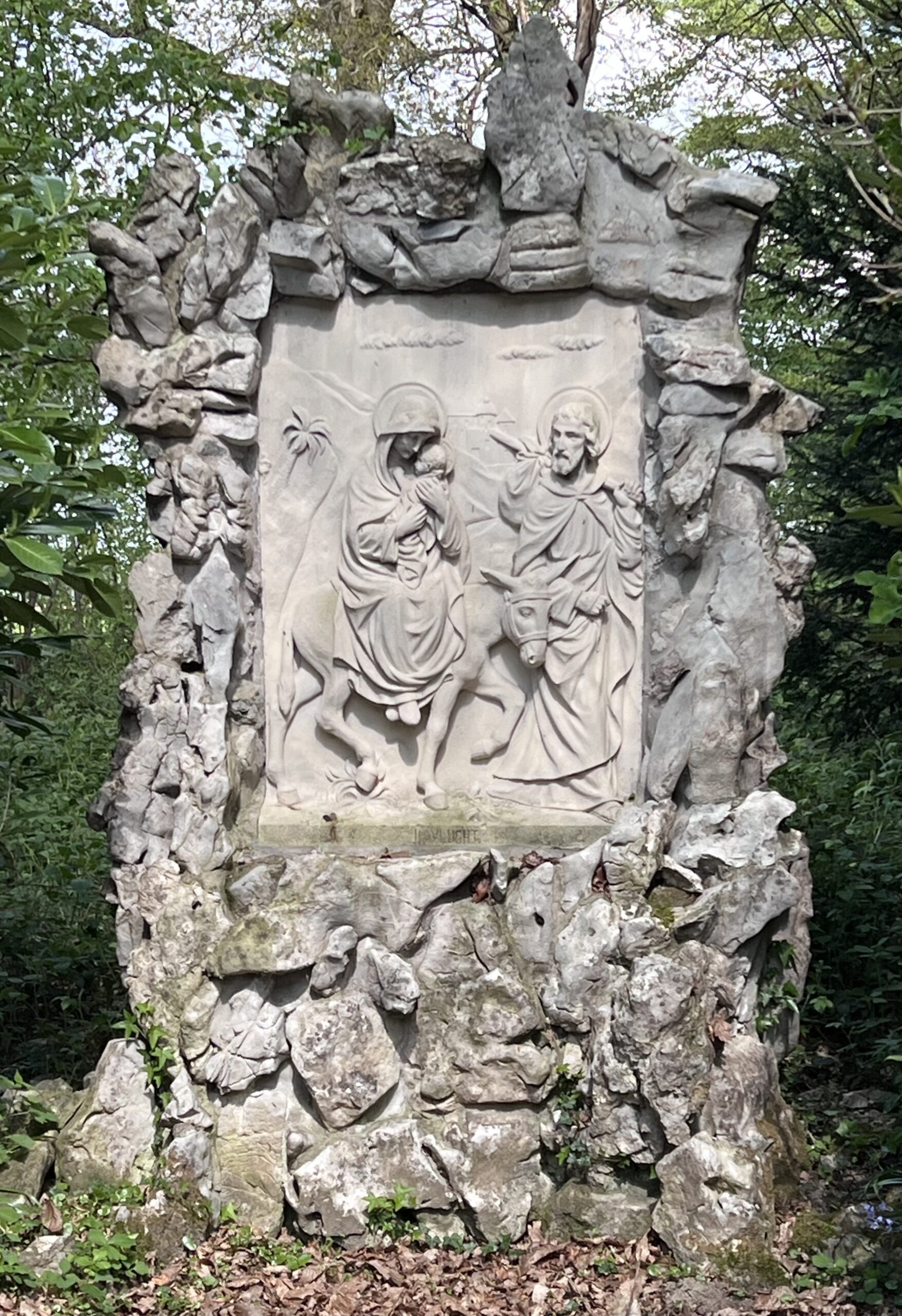
The impetus for the construction of the Lourdes Grotto stems from events near the Abbey of Saint-Sixtus during the First World War (1914-1918). During the war years, Bonaventura De Groote (1875-1941), abbot (1910-1941), promised to build a Lourdes Grotto if the abbey and its inhabitants emerged from the war period relatively unscathed. This came to pass, and the grotto was realised using mountain stones from the vicinity of the abbey in Rochefort. The Lourdes Grotto was completed in 1921 and consecrated a year later. The grotto, featuring effigies of Mary and Bernadette, is a token of gratitude to Mary, bearing the honorific title Our Lady, Queen of Peace. In 1923, the area around the grotto was expanded with stations of the Seven Sorrows of Mary. A pulpit was added in 1929. A commemorative plaque, located near the grotto, recounts its history.
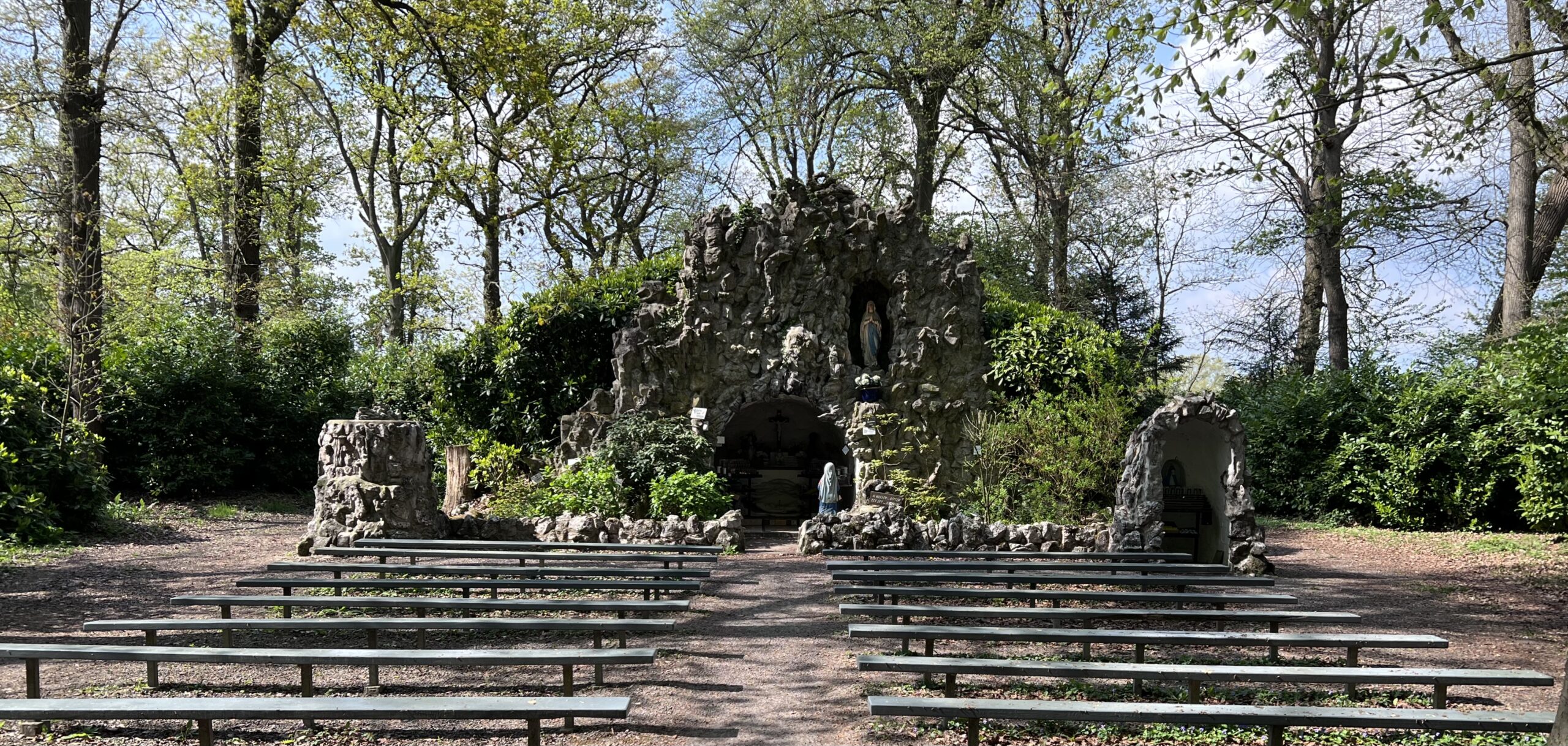
In front of the Lourdes grotto, there are benches where many visitors can find a seat. This is an opportunity to pray to Mary and share your thoughts with Her.
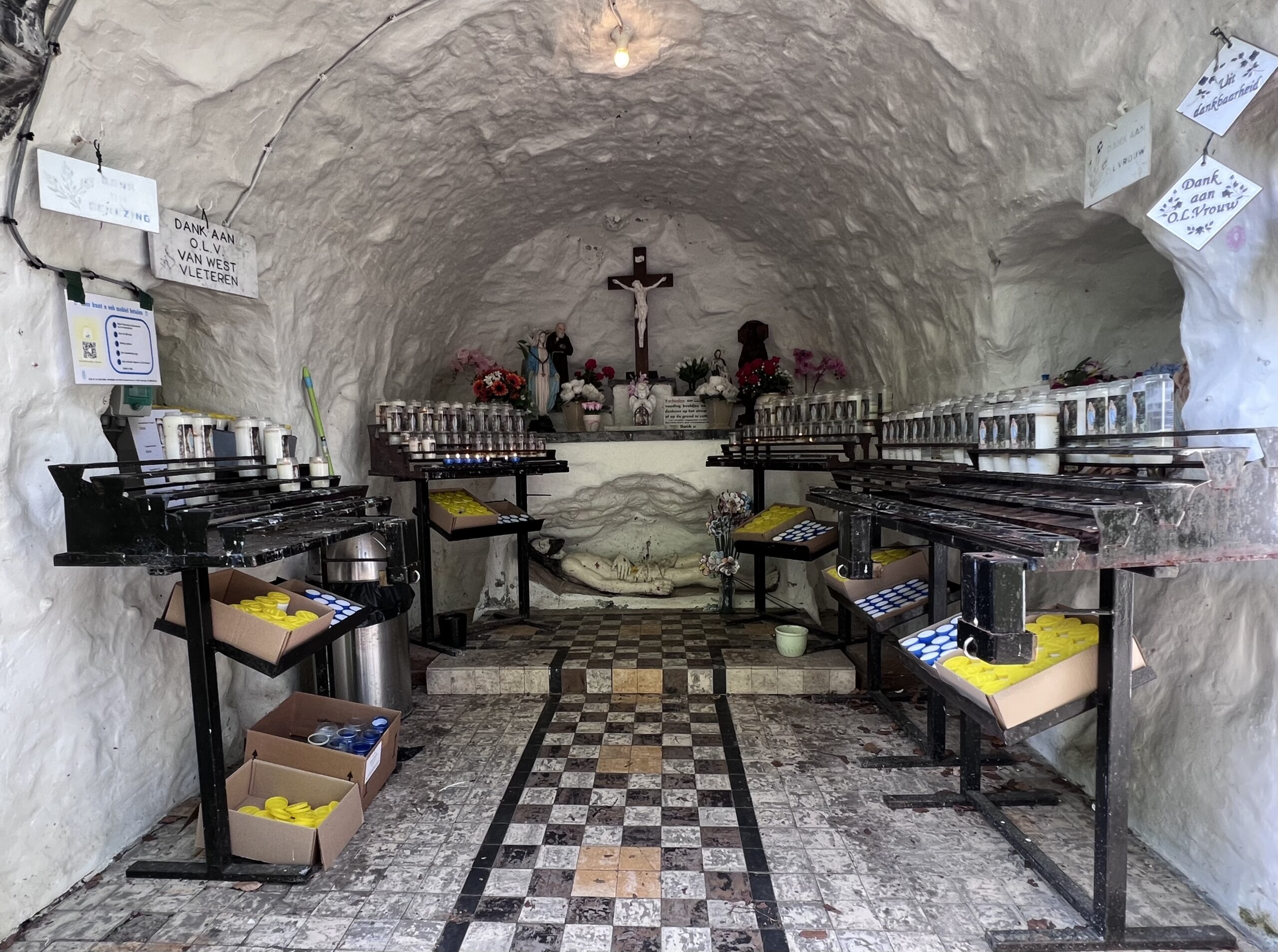
In the large niche, diagonally below the statue of Our Lady of Lourdes, candles are burning, and these are also available. Here, tiles are affixed with thanks to Mary.
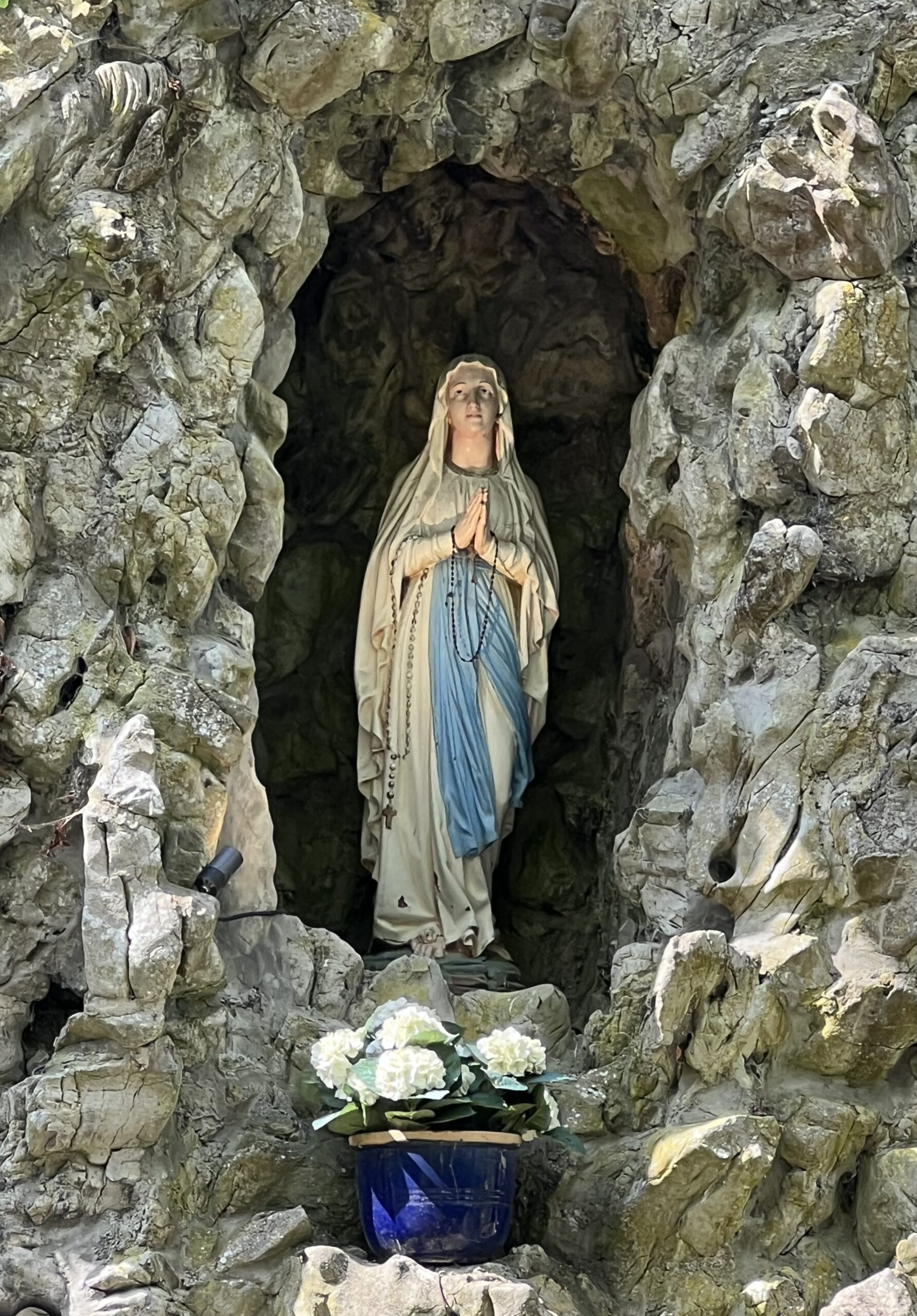
The kneeling Bernadette Soubirous looks up at the image of Mary. This depiction immediately evokes a tender feeling.
The whole thing makes a very neat impression and is beautifully situated. A visit to the Lourdes Grotto is definitely worthwhile.
Donkerstraat, 8640 Vleteren
~~~

 Nederlands
  English (UK)
  Deutsch
  Français