History
The origin of the pilgrimage site… In 1435, a shepherd finds a stone statue of Mary in a hollow oak tree. The man takes the statuette home. The next morning, the statuette is gone, and the shepherd goes to look for it. He finds it again in the oak tree. This happens twice more. When the shepherd finds the statuette for the third time, he gets angry and wants to smash it. Suddenly, the man hears a heavenly voice, and he is held back from his intended act. The shepherd is so startled by the voice that he falls before the statuette and asks Mary for forgiveness. Afterwards, the shepherd builds a small chapel for the statuette at the tree. He kneels beside it and prays. The statuette in the tree is located along the road towards Baden-Baden, Speyer, and Heidelberg. Many passers-by stop at the statuette and lay their needs and worries at Mary's feet. The sick experience healing and in 1473, another small chapel is built near the oak tree where the statuette was found. This is arranged by Matthias (Freiherr) von Rammung (1417-1478), Bishop of Speyer (1464-1478). The statuette of Mary is later placed in the current pilgrimage church. The remains of this small chapel can still be seen in the choir of the pilgrimage church. Services have been held in the chapel since 1487.
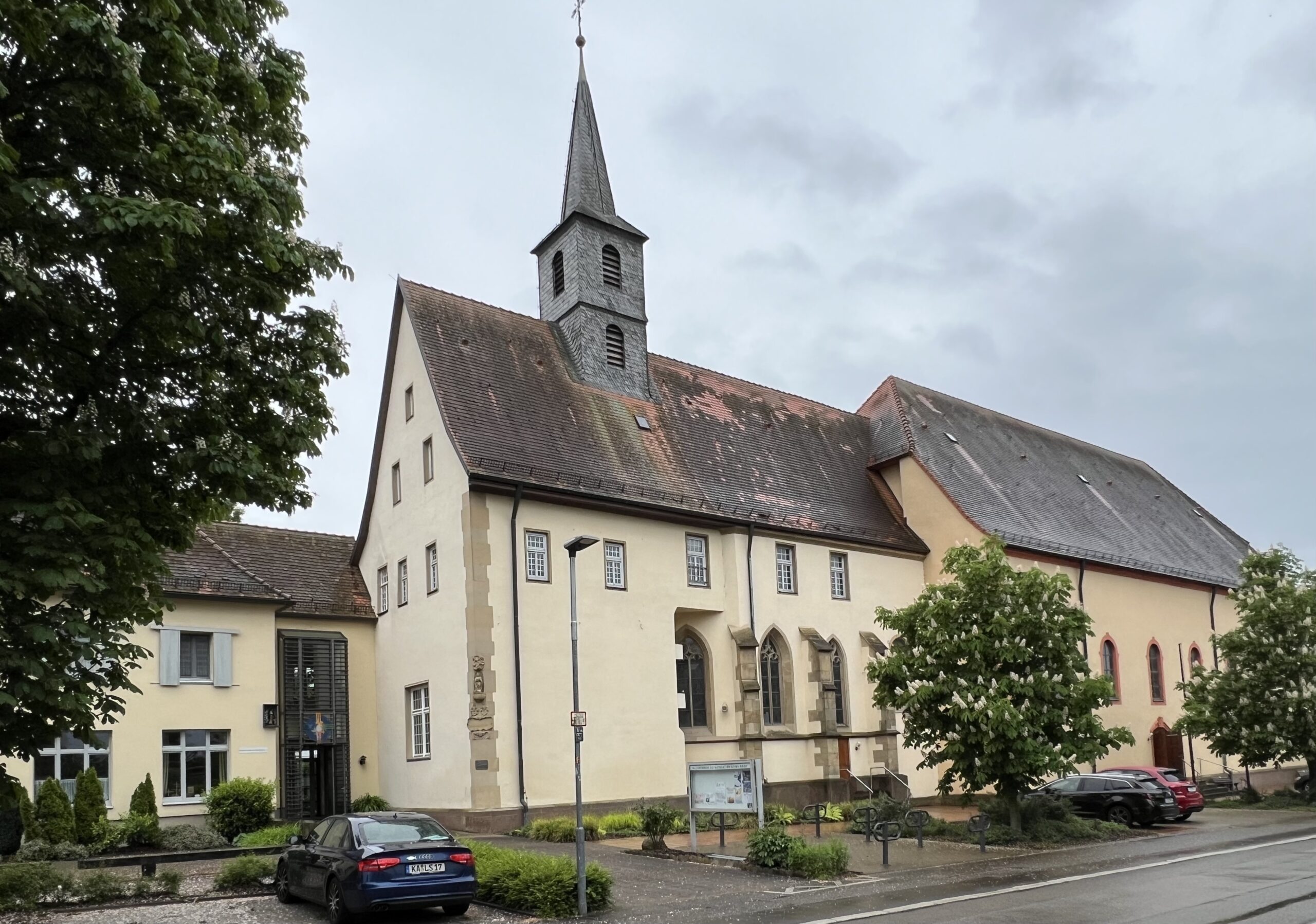
In 1616, a plan is drawn up for a Capuchin monastery next to the church. This is an initiative of Prince-Bishop Philipp Christoph von Sötern (1567-1652), Bishop of Trier (1610-1623) and later Archbishop of Trier (1623-1652). In 1639, the plan becomes reality. The first stone is laid by Kaspar von Baumberger (+1651), imperial captain and commander, who drives the French troops out of Philippsburg. He also co-finances the chapel and does so out of gratitude for Mary's help in defeating the French army. In 1639, the monastery is built.
Martin von Cochem (born Martin Linius, 1634-1712) was a German Catholic priest, Capuchin, theologian, and writer. In 1712, he wrote the lyrics for the Marian hymn ”Die geistliche Rose” (“Ein schöne Ros aus heilgem Land blüht in dem Paradiese”). He died in Waghäusel, and the grammar school and rectory in that town are named after him.
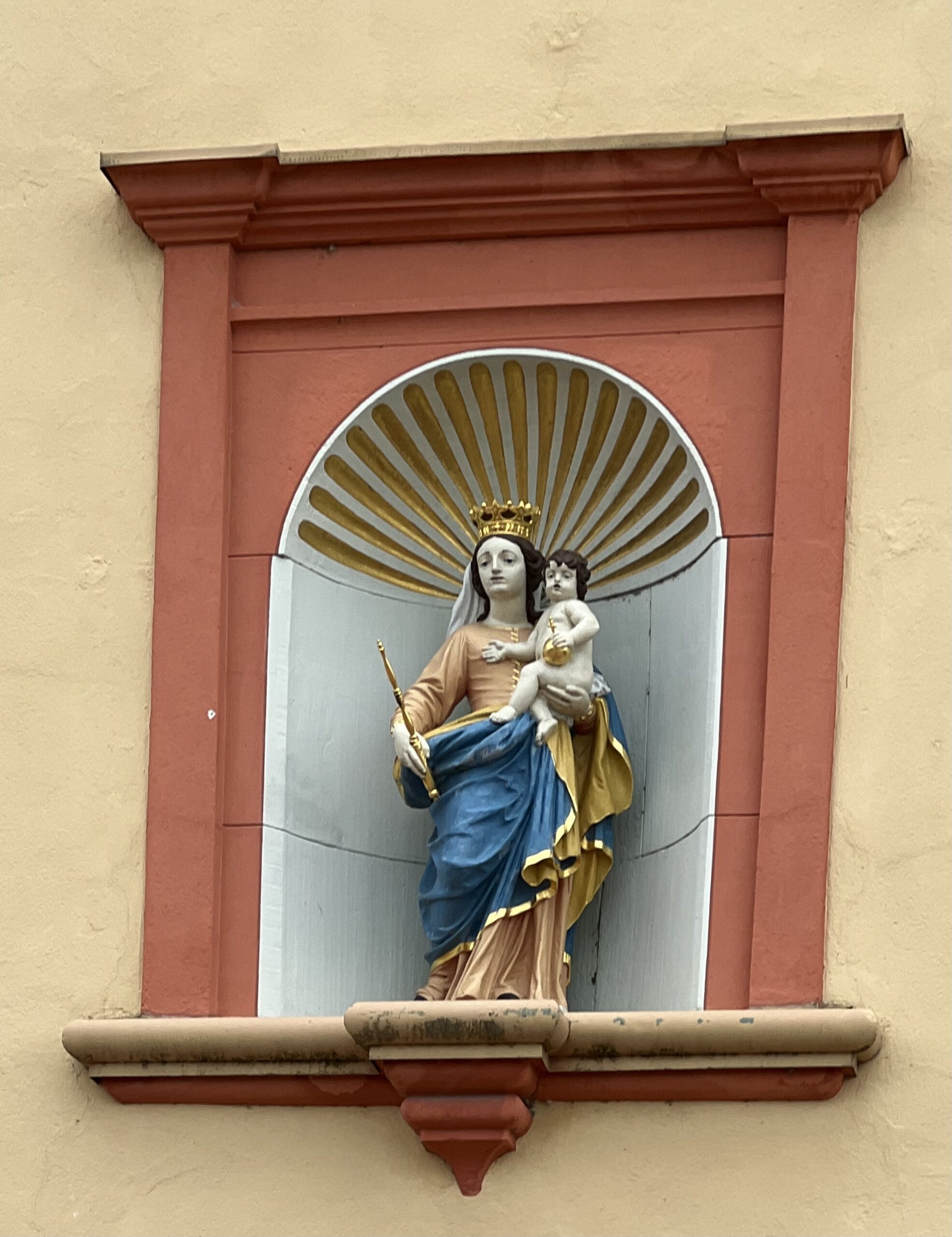
In 1682/1683 the church required expansion. In 1690, French troops arrived, and the friars had to leave the monastery. In 1698, the friars were allowed to return. Between 1776 and 1778, the church was extended again. Above the church entrance, a late Baroque effigy of Mary and Child was added, created by Joachim Günther (1720-1789).
In the pilgrimage site of Waghäusel, many come to visit, including nobles, military commanders, and clergy. High-ranking guests include:
-Frederick V (1596-1632), Count Palatine, Elector (1610-1623) and King of Bohemia (1619-1620).
-Prince Eugene of Savoy-Carignan (1663-1736), a field marshal.
-Ludwig Wilhelm von Baden-Baden (1655-1707), Margrave and military commander. He triumphed over the Turks at the Battle of Slankamen (1691) and visited Waghäusel three times. His wife, Franziska Sibylla Augusta von Sachsen-Lauenburg (1675-1733), also visited the pilgrimage site.
- Joseph I (1678-1711), Habsburg King of Austria, King and Holy Roman Emperor, also King of Bohemia and Hungary (1705-1711).
A great devotee of Mary in Waghäusel is Damian Hugo Philipp von Schönborn-Buchheim (1676-1743), Count (1701-1743), Cardinal (1715-1743), Prince-Bishop of Speyer (1721-1743) and of Constance (1740-1743). He also served as Minister of the Holy Roman Empire (1708-1712). He initiated the construction of the Eremitage and had it built near the church. The architect was Michael Ludwig Rohrer (1683-1732). The Baroque building was realised between 1724 and 1729. It was intended to be a place of rest and contemplation. It also served as a hunting lodge.
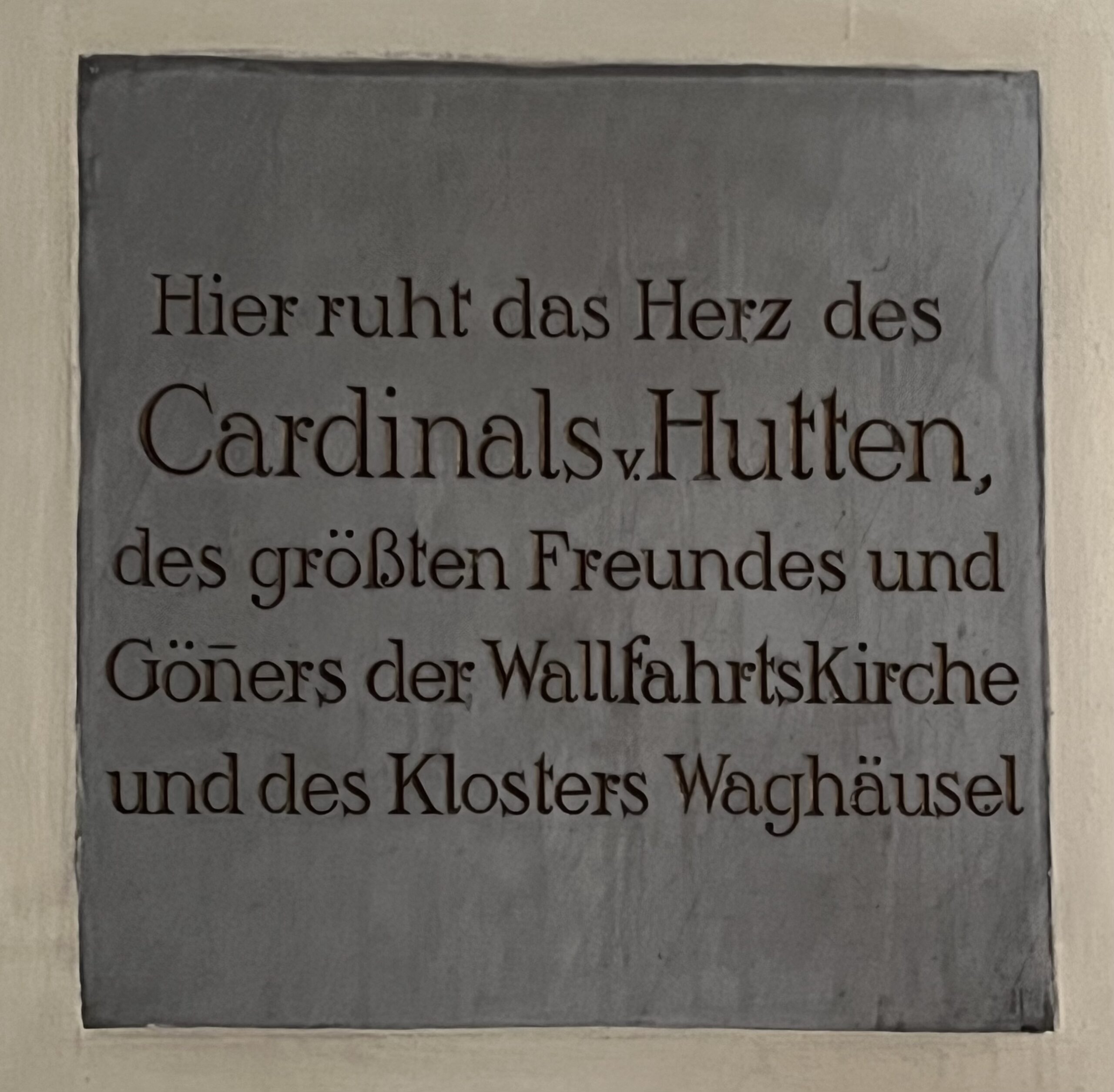
Franz Christoph von Hutten (1706-1770), Prince-Bishop of Speyer (1744-1770) and Cardinal (1761-1770), wished for his heart to be interred near the altar of Mary after his death. This took place a few days after his demise. The urn was spared during the fire of 1920.
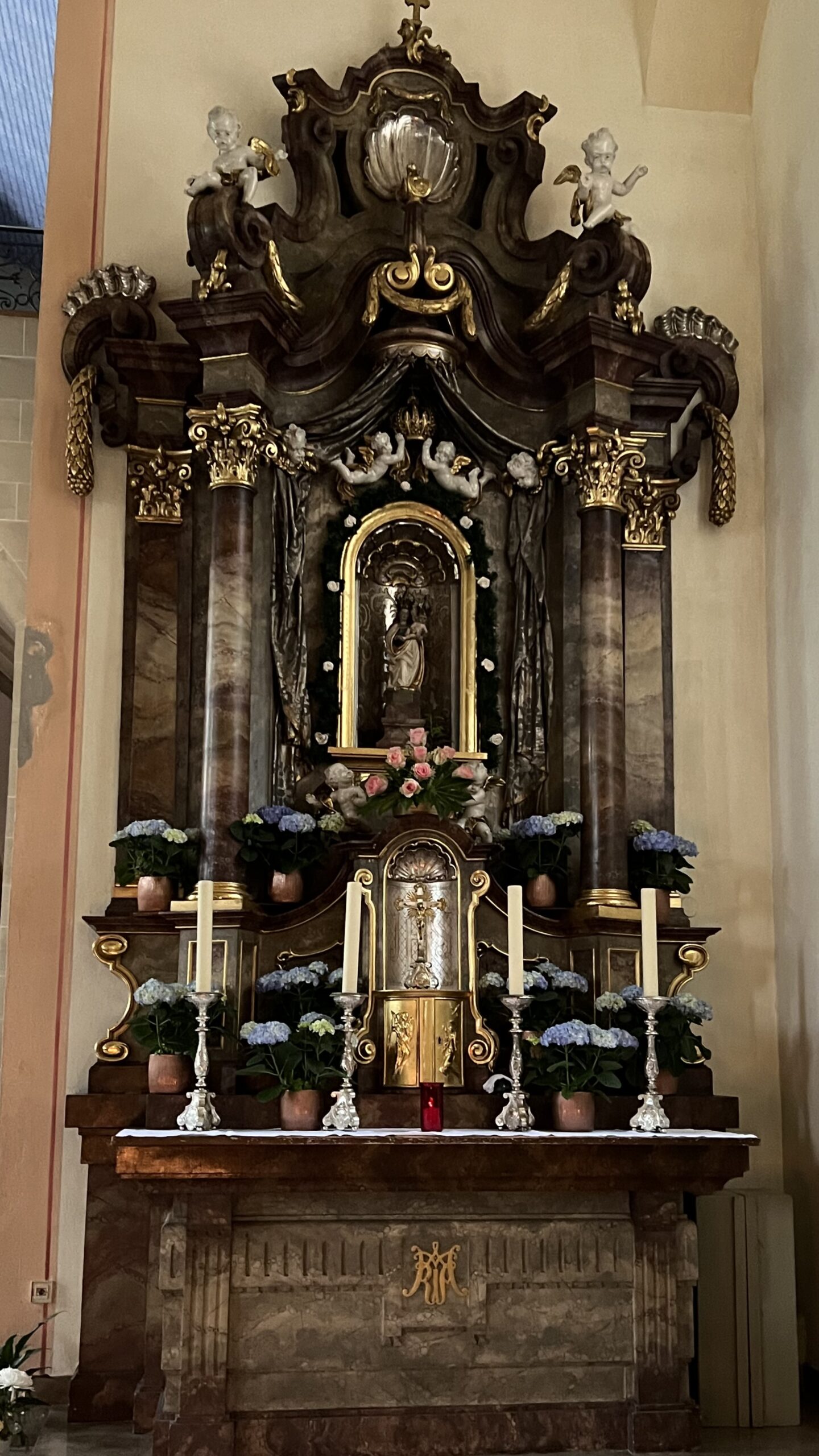
In the 20th century, the pilgrimage site faced significant setbacks. In November 1920, the church and part of the monastery burned down. Restoration took place in 1921. In 1930, a new altar of grace was installed in the church. It was created by sculptor Emil Sutor (1888-1974), who was also responsible for the St. Joseph altar.
In 1944 the building was damaged by wartime activity.
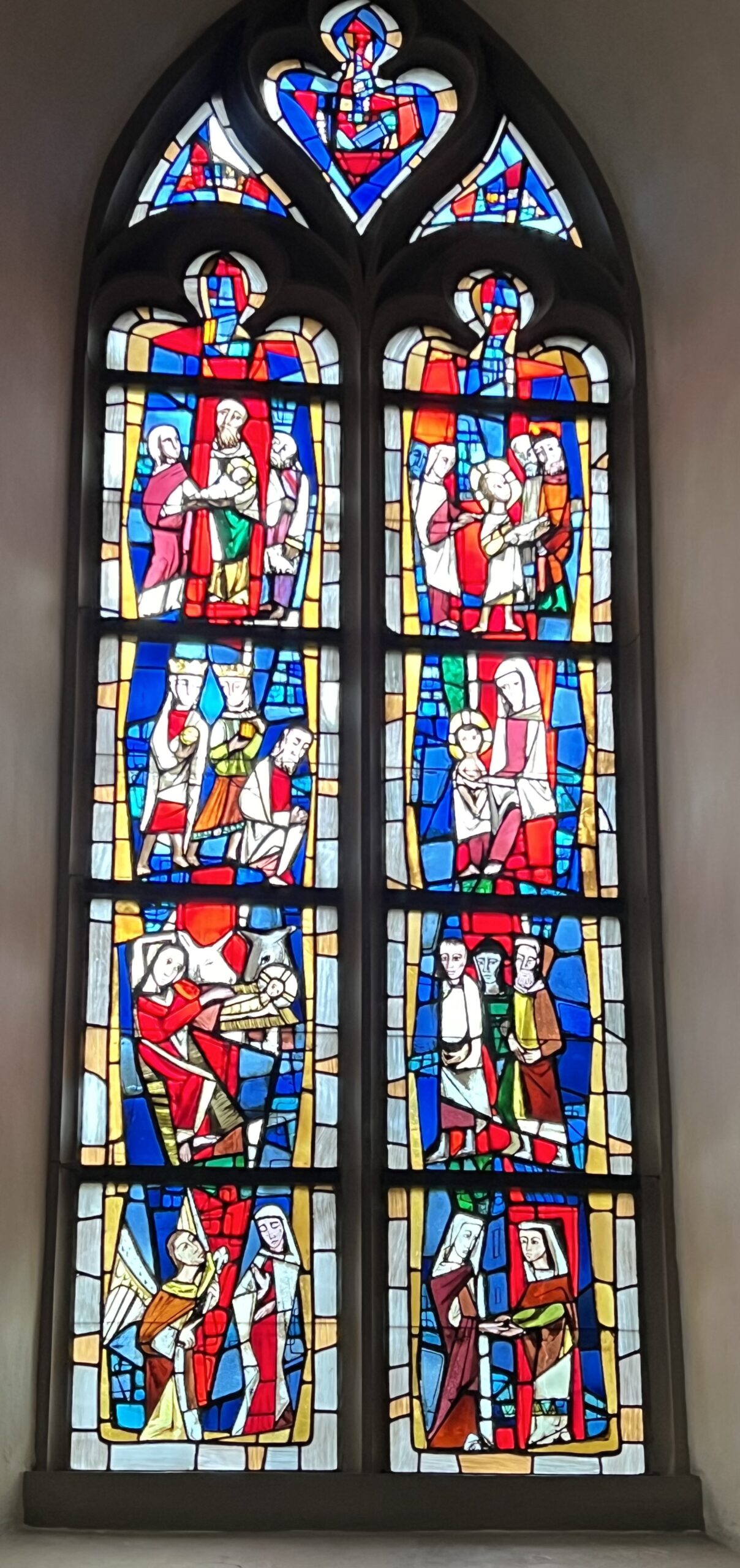
The stained-glass windows were designed in 1960 by Valentin Peter Feuerstein (1917-1999). In 1997, the Eremitage came into the possession of the town of Waghäusel.
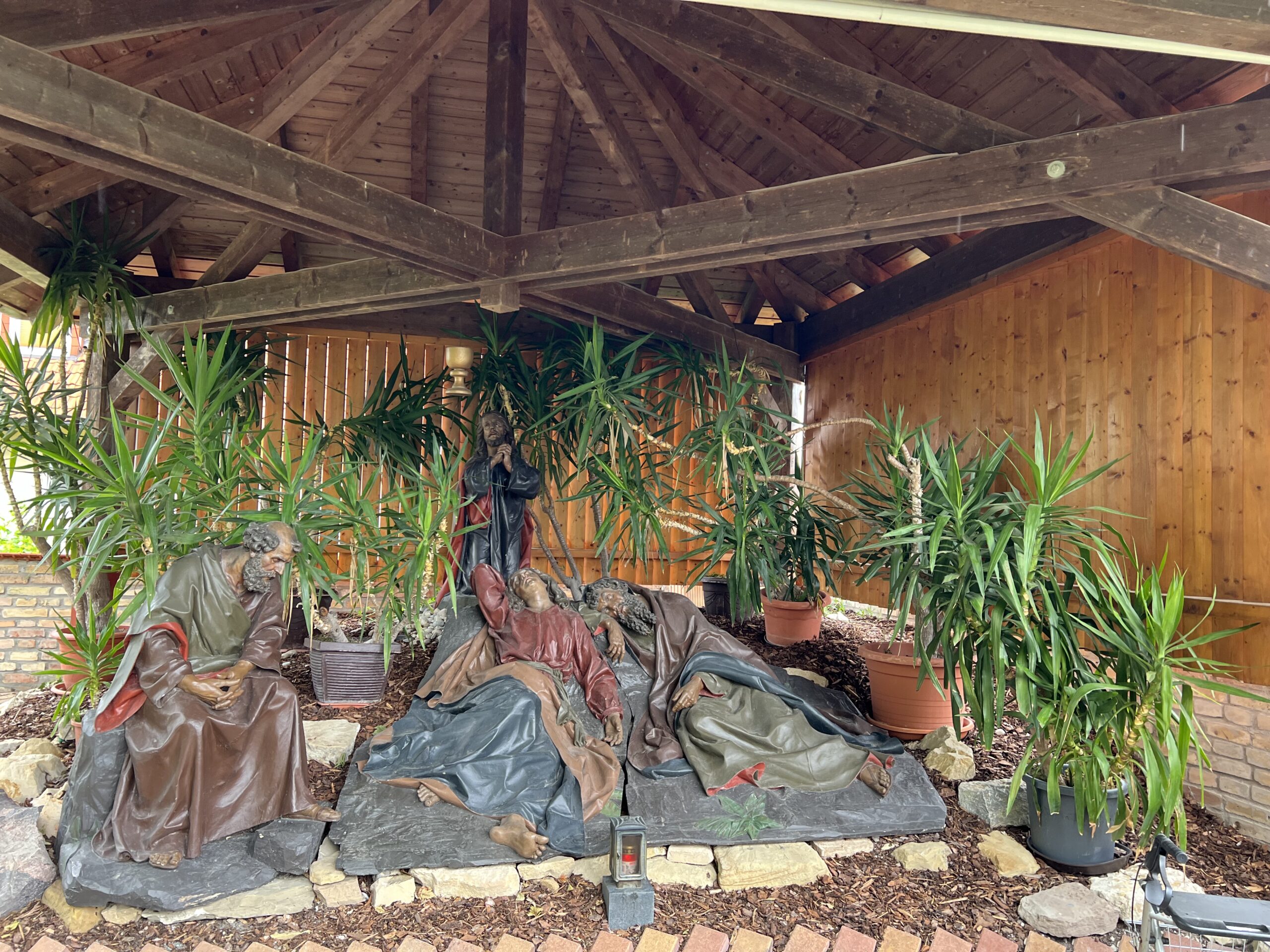
The figures of the Mount of Olives scene were made of wood in 1890. In 1998, the entire set was restored and placed next to the church.
In 1999, the congregation of “Brothers of the Common Life” took charge of the organisation of the pilgrimage site.
The church is being renovated in 2002/2003.
Pilgrimage site
The pilgrimage church is located on the outskirts of the town of Waghäusel, near the Mannheim–Stuttgart railway line and not far from an industrial estate. The town has a population of around 22,000.
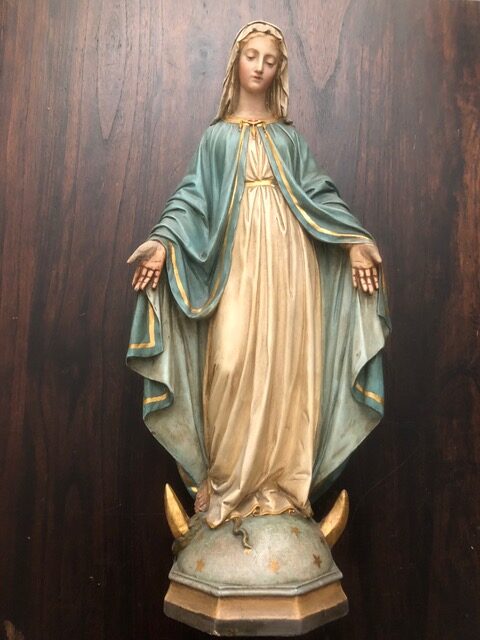
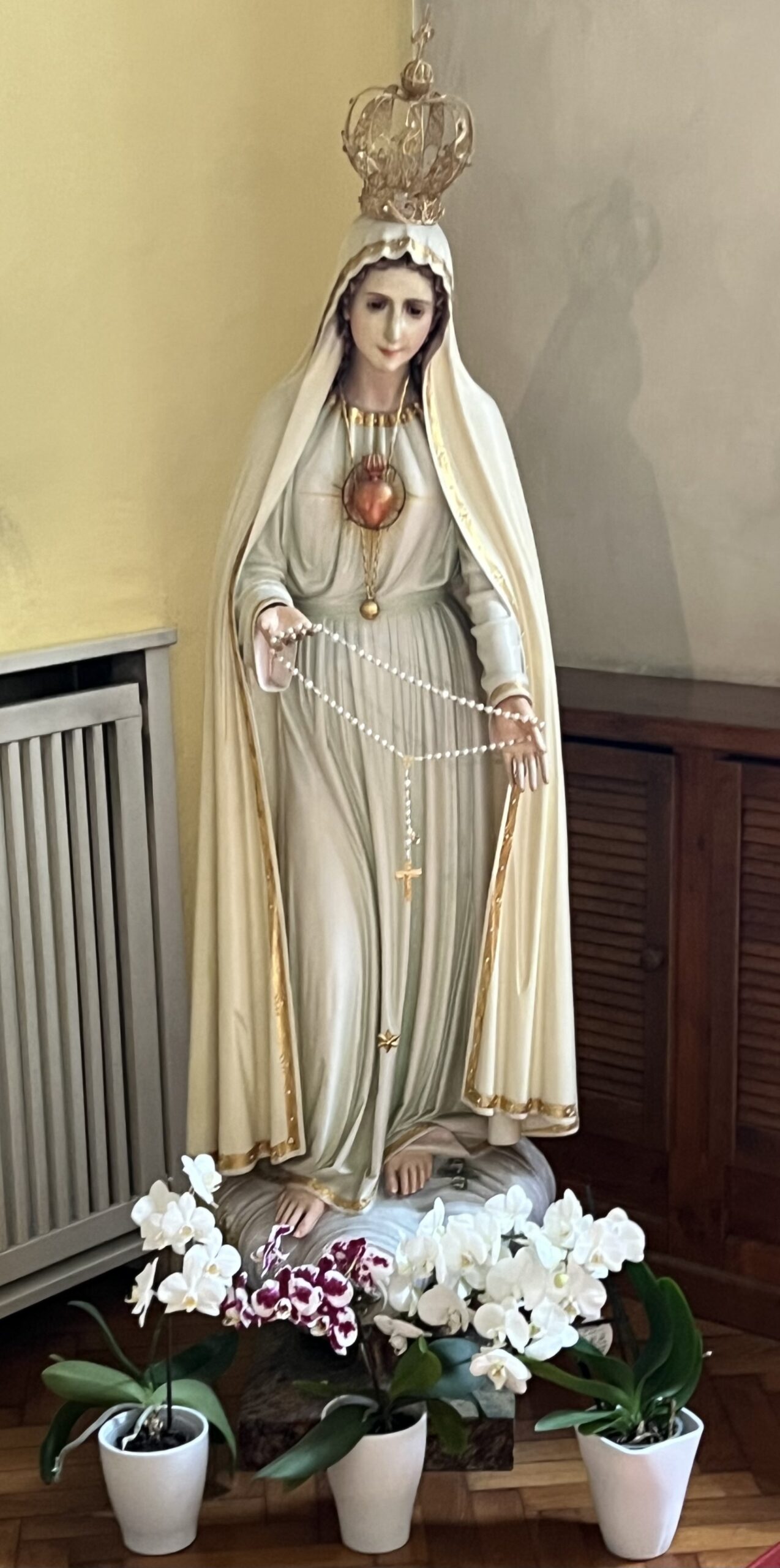
The pilgrimage church not only displays the image of grace, but also images such as Our Lady of Fatima, surrounded by flowers.
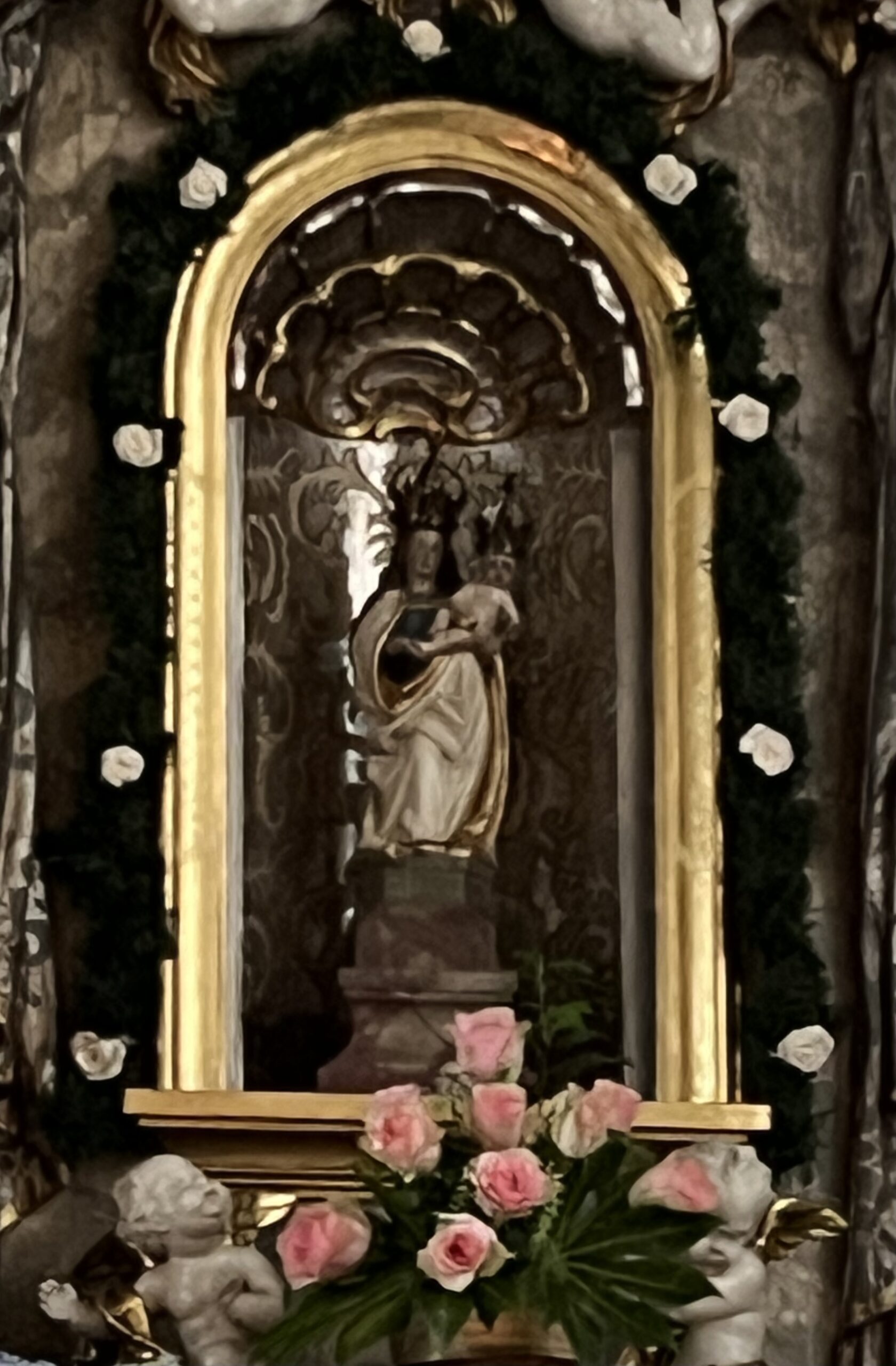
The devotional image is 40 cm high and is made of limestone, likely dating to around 1430.
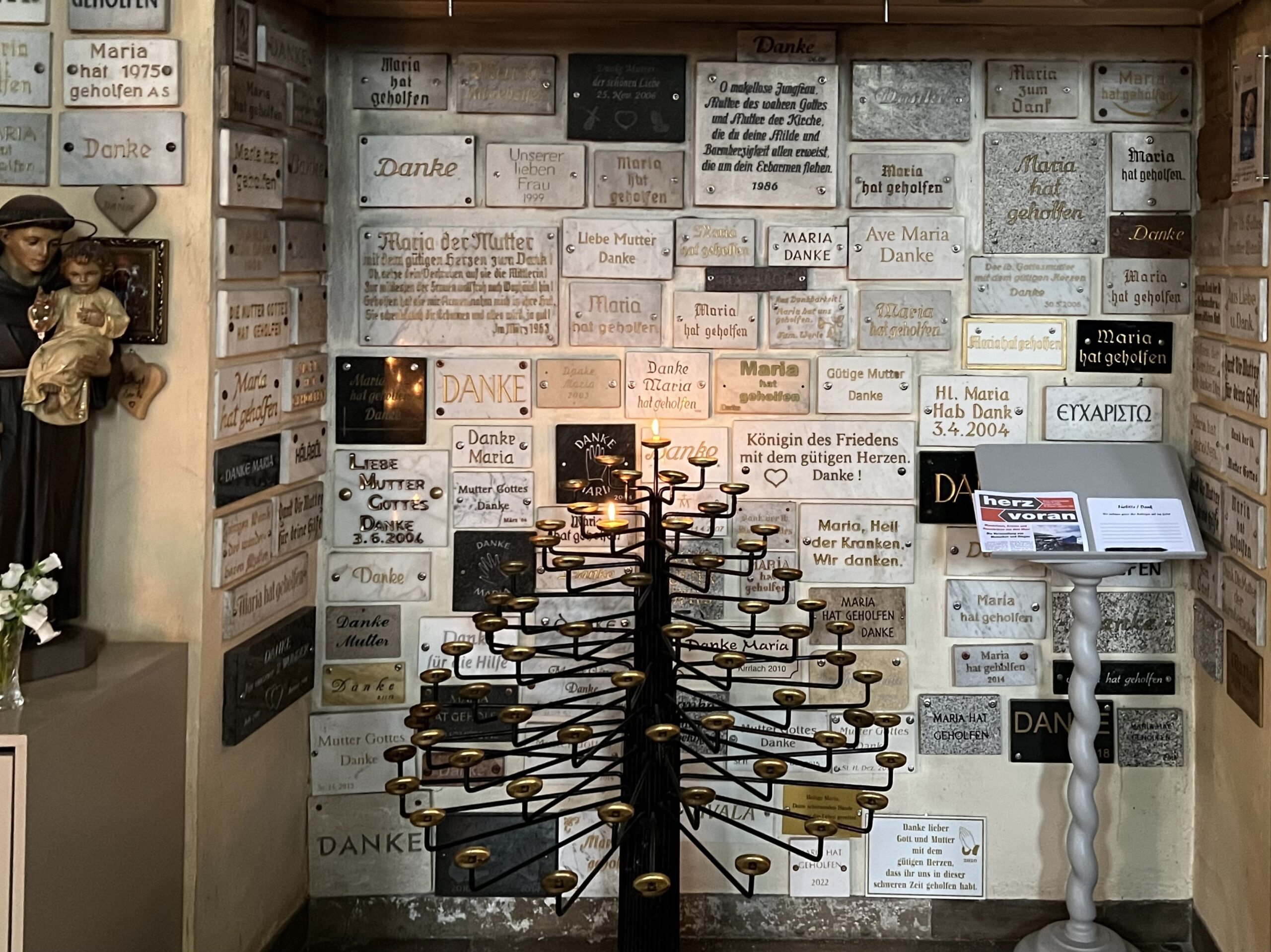
Many ex-votos express thanks to Mary. These have been brought together, in part, in a niche.
Next to the church is a large representation of what happened on the Mount of Olives. Large statues make an impression on visitors.
The pilgrimage church is open daily.
ACCESSIBILITY
The pilgrimage site in Waghäusel is located in the state of Baden-Württemberg, in the southwest of Germany.
The Pilgrimage Church is called “Mutter mit dem gütigen Herzen” and in Dutch this is “Moeder met het goede Hart”.
The address of the Maria Church is:
Bishop of Rammung Street 2, 68753 Waghäusel.
Current information can be found at www.kloster-waghaeusel.de.
Experience
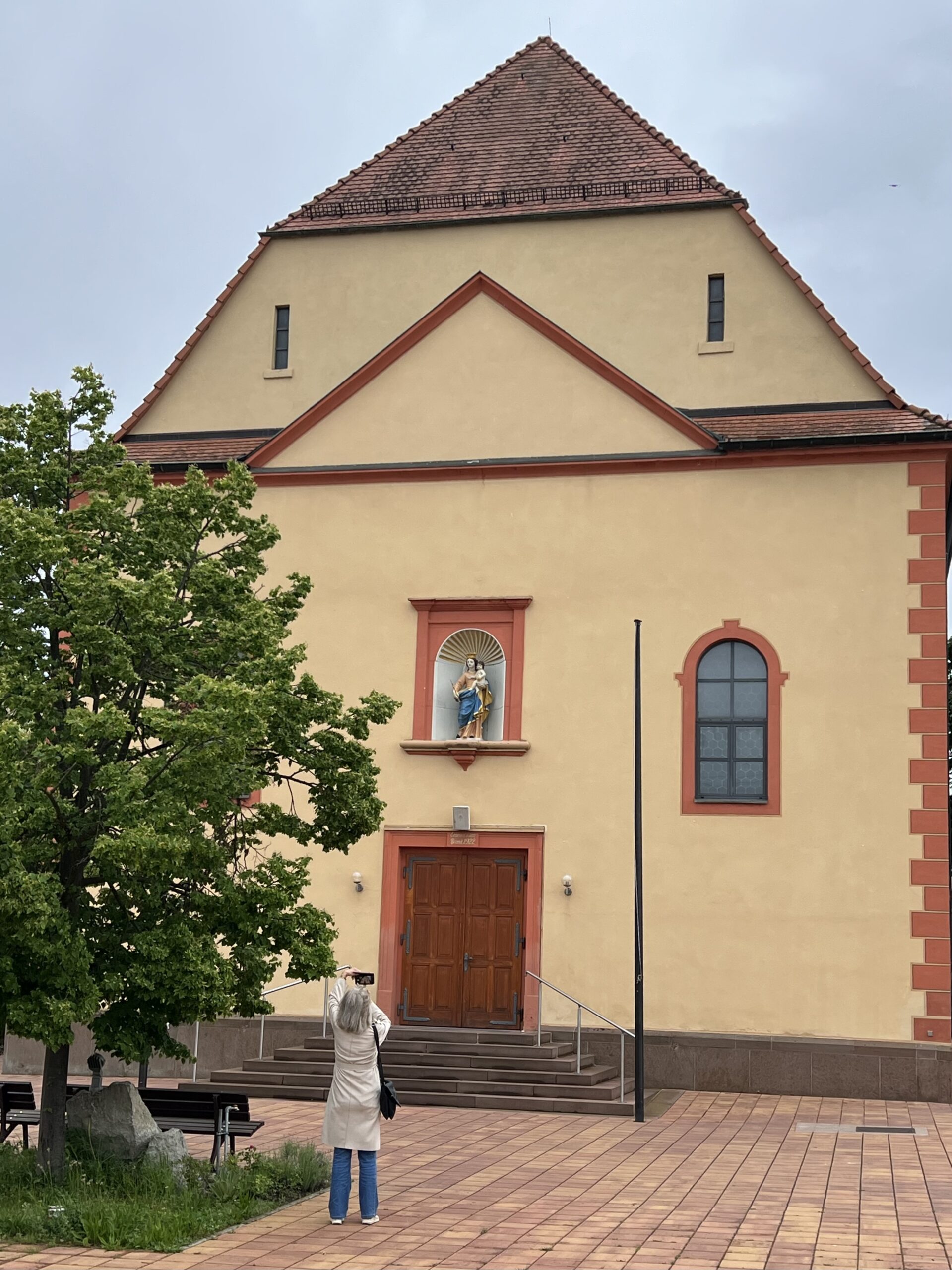
Above the church entrance, I see a small statue in a niche. Mary and her Child welcome the visitors.
In the church, I admire the statue of grace. It's also time to pray here. After that, I take a walk around the church and see beautiful stained-glass windows, statues, and paintings.
Later, I notice the memorial stone of Franz Christoph von Hutten. His heart is kept here, and the urn with the heart survived the devastating fire in 1920. The power of the heart, I think.
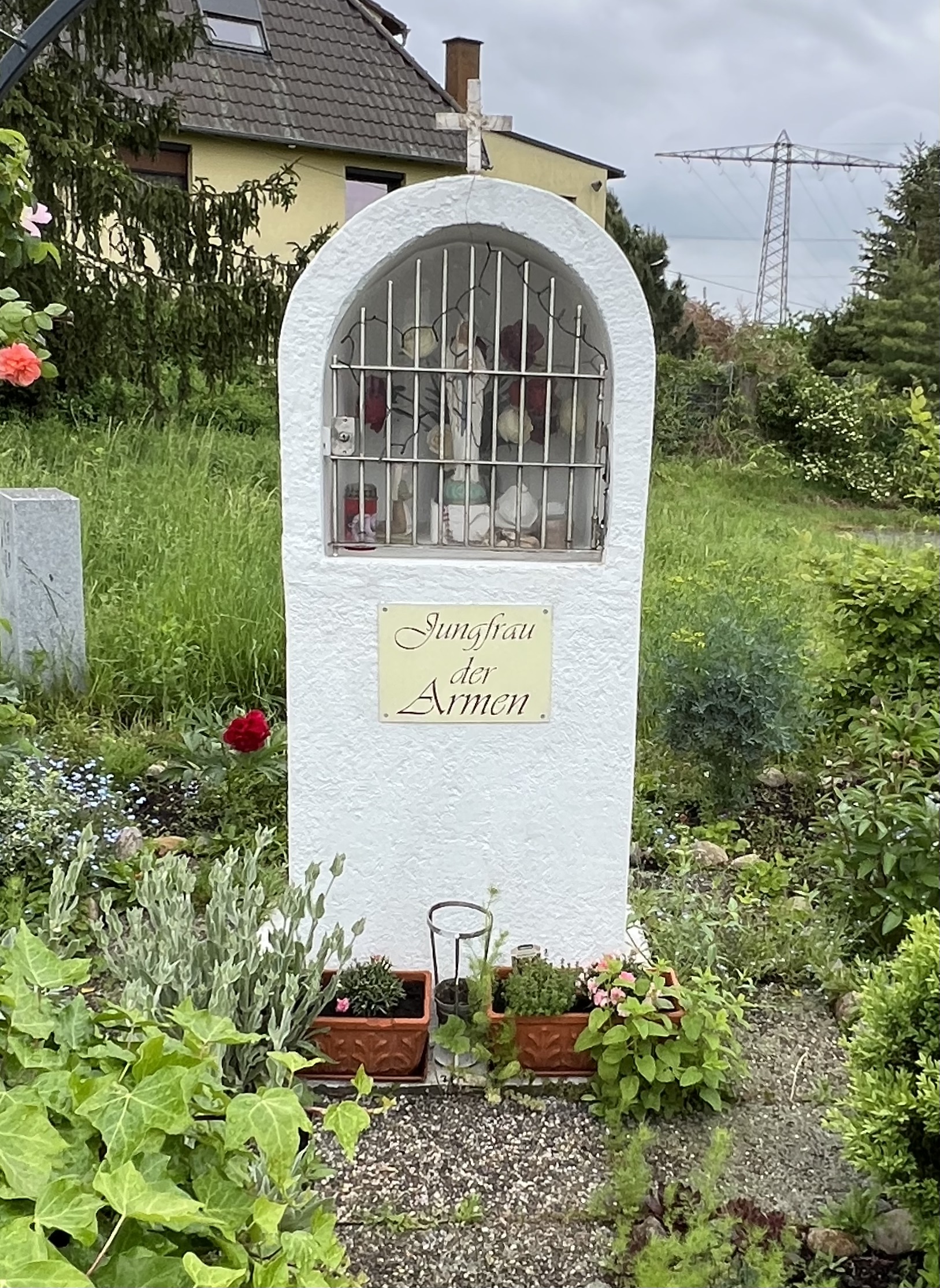
After visiting the church, I come to the scene on the Mount of Olives. What large statues these are! A little further on I see a small chapel with the Virgin of the Poor and I imagine myself for a moment in Walloon Banneux.
Next, it's a walk through the vast domain, and I arrive at the Hermitage. What an impressive structure this is. The time for contemplation and for hunting is in the past. A different destiny has ensured that the building has been preserved.
When I am home again, I will search for the text of the Marian hymn that Martin von Cochem made in 1712. The first part of the hymn reads:
“It blossoms, well-known to the angels, in God's paradise, the most beautiful rose from the Holy Land, so sweet in colour and scent. She surpasses the sun's brilliance, her radiance permeates the clouds entirely in a wondrous manner.

Environment
From Speyer to Waghäusel is 18 km in a southerly direction. From Bruchsal, it's 24 km to the north to arrive in Waghäusel. From Karlsruhe to Waghäusel is 35 km to the north. To get from Trier to Waghäusel, it is 208 km to the southeast.
Posted: 6 June 2024
~~~

 Nederlands
  English (UK)
  Deutsch
  Français