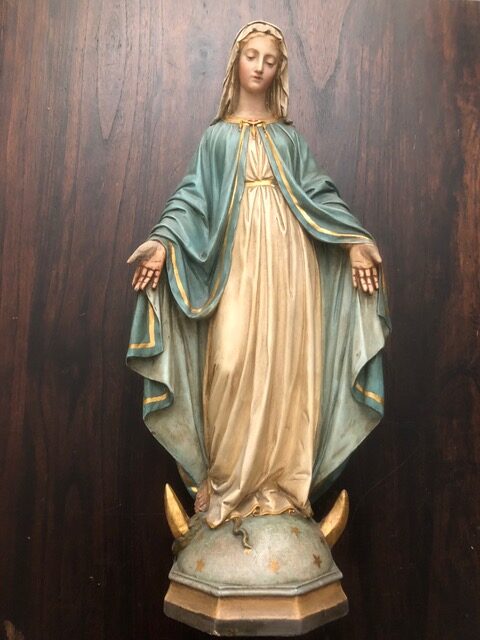
History
The pilgrimage site originated in the 13th century. A legend lies at its foundation: In 1218, a blind man prays to a statuette of Mary. He is brought to this image in the morning by his granddaughter and picked up by her later in the day. One day, as it is late in the afternoon, the granddaughter does not come and a thunderstorm begins. The blind man decides to go home himself. He picks up his stick and sets off on a difficult path for him. After a few steps, he falls and loses consciousness. When the man awakes a short while later, he sees some trees and a large lime tree surrounded by radiant light. Then he also sees Mary. Through Her, the man regains the sight in his eyes. This event becomes known in the region, and many come to the tree to be with the statuette. The image is considered miraculous and is venerated. More and more believers come to pray to the image of Mary.
In 1263, a small, wooden chapel is built. The intention is for pilgrims to visit the linden tree with the figurine in all kinds of weather. To offer them protection from rain, snow, and wind, a small chapel is erected, in which the figurine is given a central place. Originally, it is a filial church of Wünschelburg, and in 1400, a chaplain is assigned to it. During the Hussite Wars (1419-1434), the little building is destroyed. Later, near this site, the large church (the current basilica) is built.
The place name is first mentioned in a Latin charter from 1417 and the village is called “Alberti villa”, which in German is “Albertsdorf”. Later, the name changed to Albendorf.
The wealthy landowner Ludwig von Pannwitz (+1554) had the war-damaged chapel replaced with a larger, stone building. This was due to the many pilgrims visiting the ruined chapel. The new building was consecrated in 1512. During the Reformation, the pilgrimages were suspended between 1563 and 1660.
During the Thirty Years' War (1618-1648), there was much fighting between Catholic and Protestant states in Central Europe. During this period, the church was destroyed.
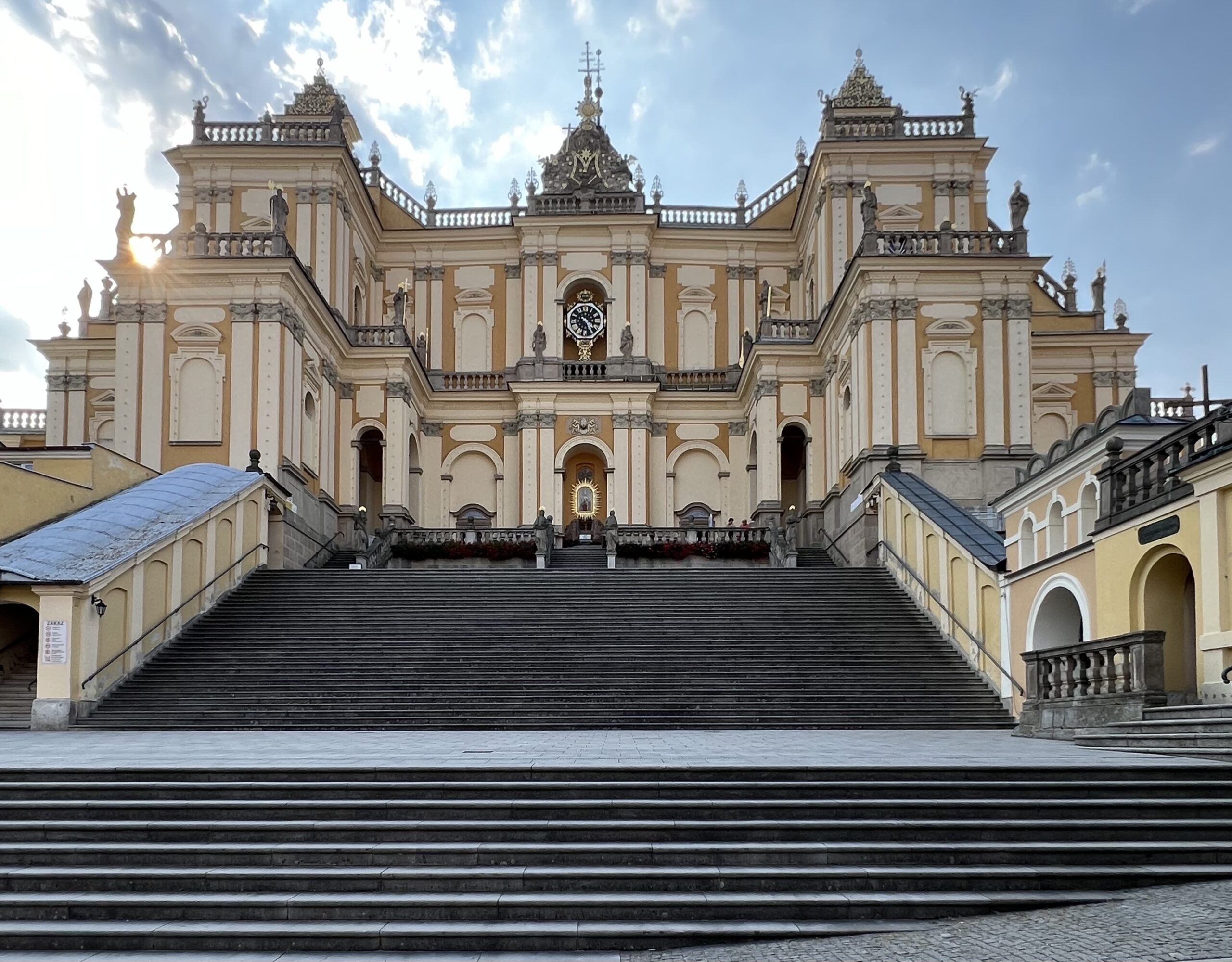
The current Baroque basilica stands on a hill and was built between 1695 and 1710. Construction was initiated by Daniel Paschasius von Osterberg (1634-1711) to promote pilgrimages. This wealthy man had the Silesian Jerusalem built between 1683 and 1709. This is a copy of the buildings in Jerusalem, complete with Golgotha and chapels. He did this because many believers were unable to travel to the Holy Land. Since the creation of these buildings, Albendorf has also been known as the Silesian Jerusalem. In his will from 1709, he bequeathed part of his fortune to the construction of the church. He also composed the Marian hymn “Freu Dich, Du Albendorfische Jungfrau” (Rejoice, Thou Albendorfian Virgin).
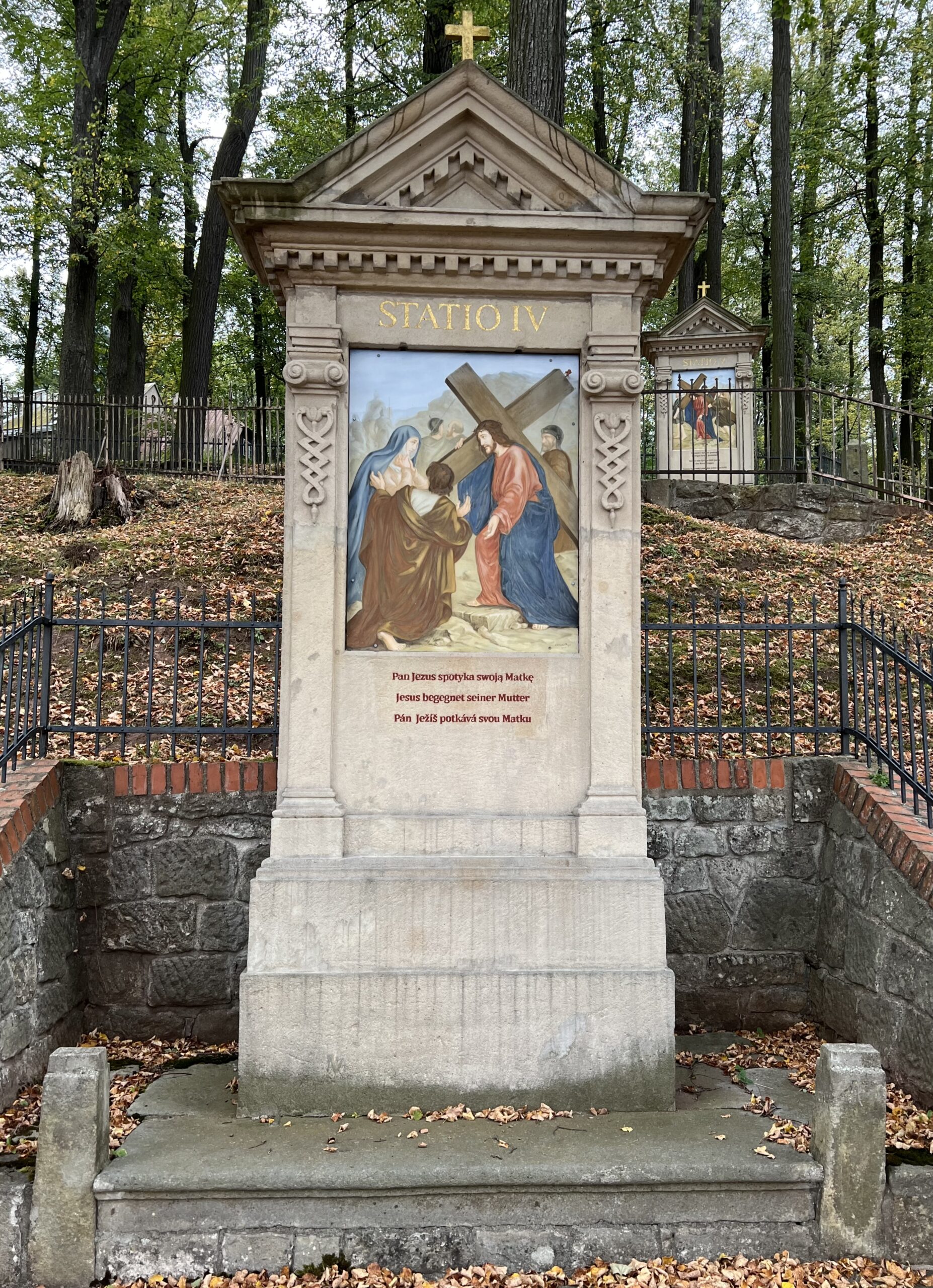
Over the years, the calvary with its many chapels and statues has been rebuilt and modernised on several occasions. This occurred at the end of the 18th century and in the following centuries. The Way of the Cross was laid out in 1732.
The devotional image in the church dates from around 1380 and Daniel Paschasius von Osterberg also took care of it in 1695.
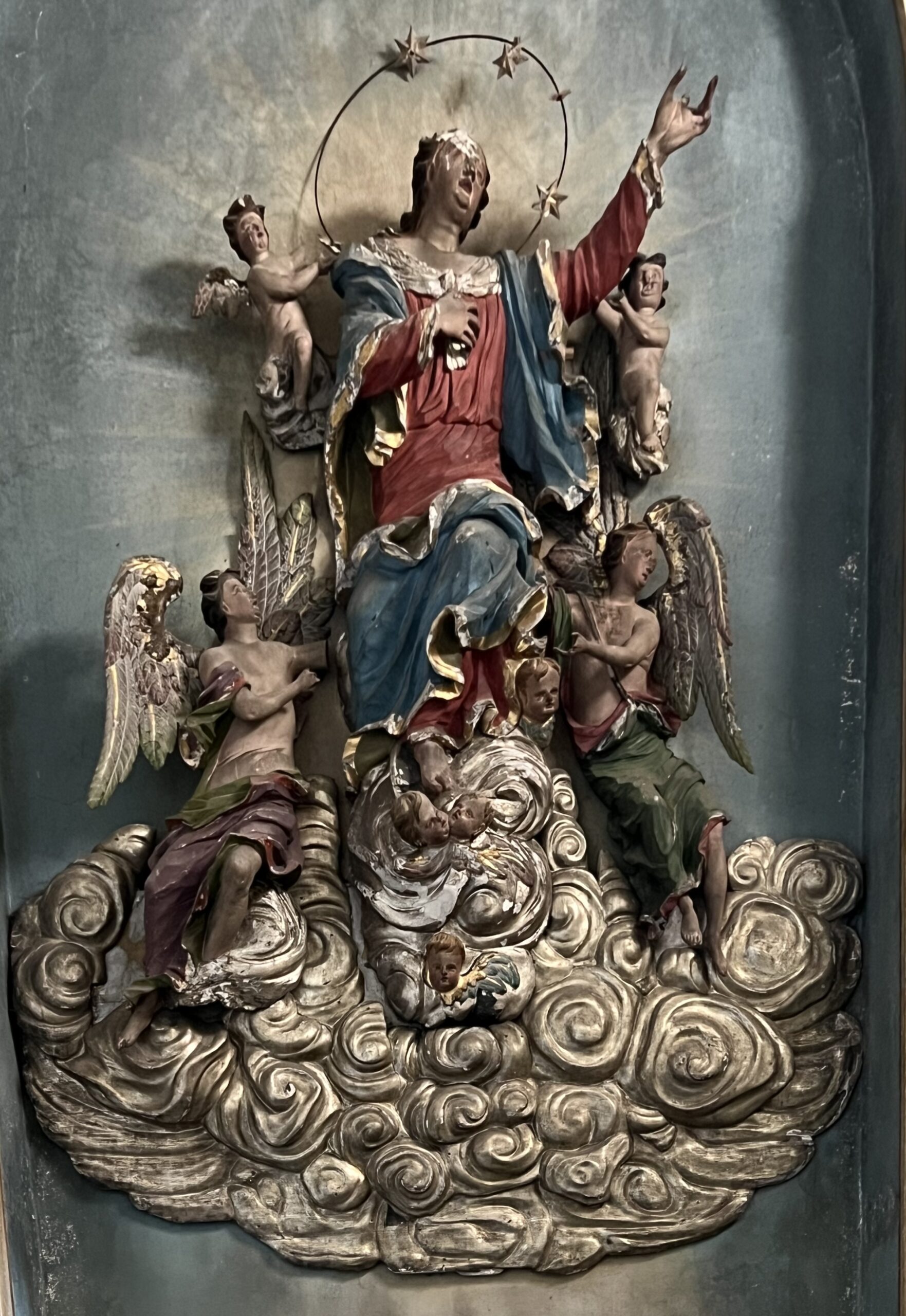
The church is being built under the leadership of Johann Franz Anton Bonaventura von Götzen (1693–1738), Count of Glatz. He inherits the possessions from the deceased Von Osterberg. This count is a landowner and donates money for the construction of the church. On 12 July 1710, a new church is consecrated, but as early as 1715 the building has to be closed due to discovered construction defects, such as cracks in the walls and ceiling. The design for the improved church is by architect Kilian Ignaz Dientzenhofer (1689–1751). The church is dedicated to the Visitation of Mary. Sculptor Karl Sebastian Flacker (1679–1746) creates two Baroque altars in 1723 for Anthony of Padua and John of Nepomuk. In 1720, he completes the high altar with Anne and Joachim; Mary's parents. He makes the Magnificat pulpit with a figure of Mary in 1724.
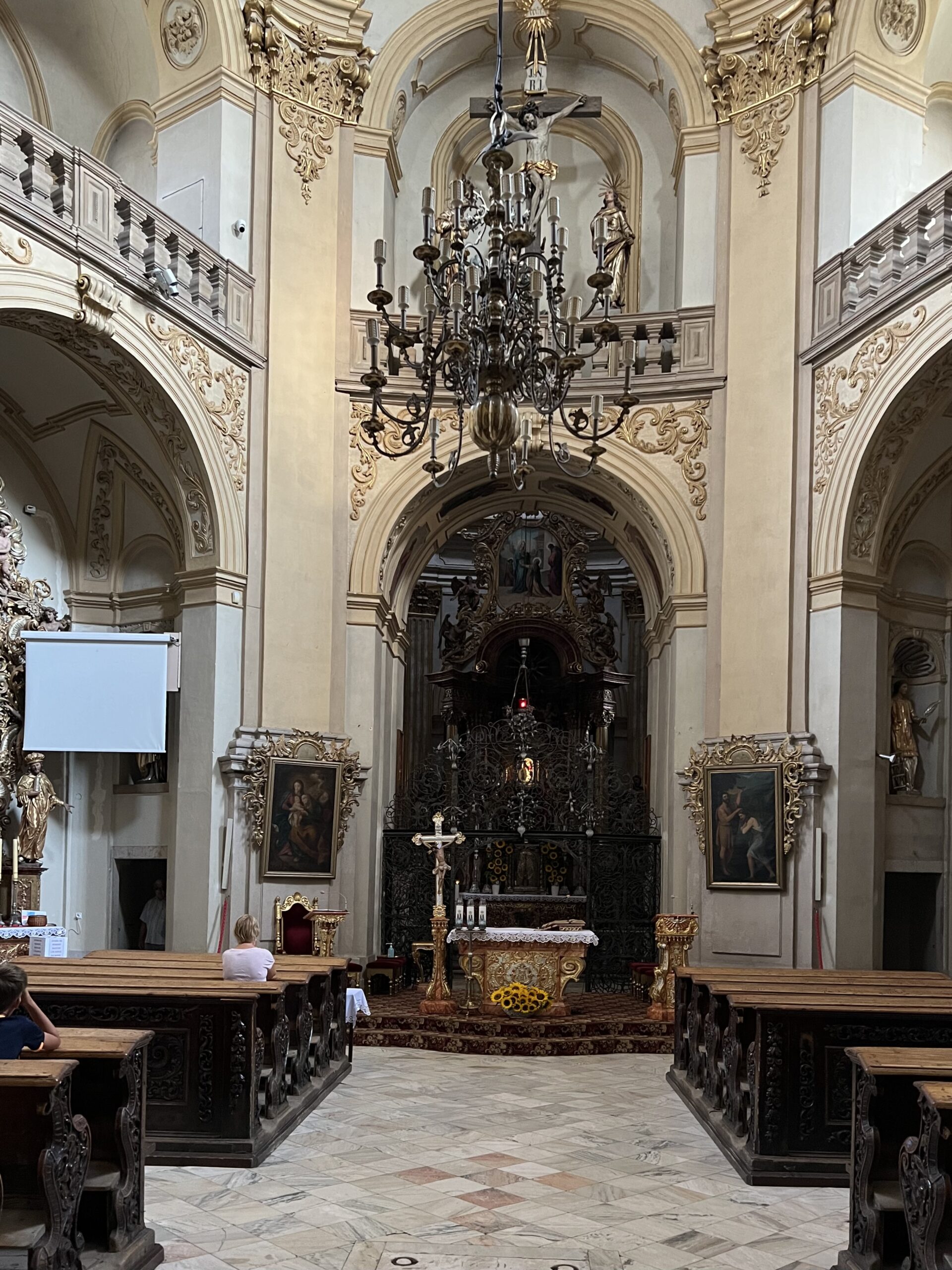
At the beginning of the 20th century, the church was enlarged. The courtyards were covered and transformed into chapels. No fewer than approximately 1400 lights were installed on the church's facade, illuminating the church in the evening.
On 22 February 1936, the church was elevated to the rank of a basilica. This was by decree of Pius XI, Pope from 1922 to 1939, born Ambrogio Damiano Achille Ratti (1857-1939).
The crowning of the effigies of Mary and Child takes place on 17 August 1980 by Stefan Wyszyński (1901-1981). He is Bishop of Lublin (1946-1948), Archbishop of Warsaw and Gniezno (1948-1981), and Cardinal (1953-1981). During the ceremony, the bishop reads a festive sermon by John Paul II, Pope from 1978-2005 and born in Poland as Karol Józef Wojtyła (1920-2005). Since the coronation, the effigy has been called “Queen of the Families”.
In 1990, the Jesuits left the pilgrimage site, and the organisation of the shrine was taken over by a parish priest. This situation lasted until 2007. Since June 2007, Franciscans (Minorites) have been responsible for the Marian shrine.
On 15 August 2009, there was the solemn appointment of the “Queen of Families” as patroness of the County of Glatz.
Pilgrimage site
On one side of the valley stands the basilica. Access to the church is via a staircase with stone steps, and in the middle of the ascent, 33 steps represent the years of Jesus's life. Of the upper steps, 15 refer to the young years of Mary's life up to the announcement of her pregnancy. The basilica has a 54-metre wide and 53-metre high façade in the Renaissance style. The statues on the façade depict apostles. In the imposing façade is a life-sized, wooden statue of Our Lady of Albendorf from the 18th century.
The basilica has a four-sided ground plan and consists of three sections. The parts are the sanctuary, oval interior space, and ambulatory.
In the basilica stand many Baroque-style statues.
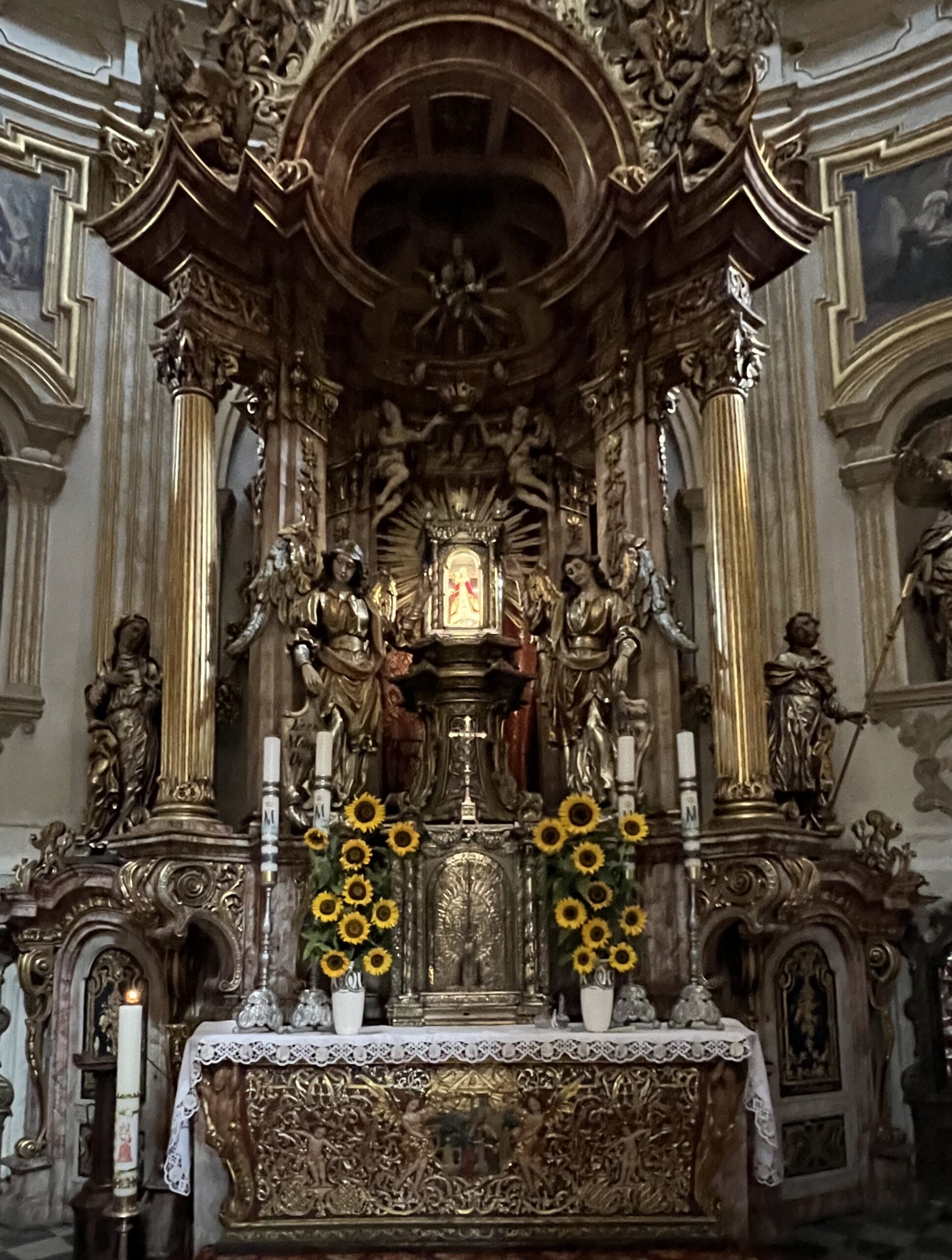
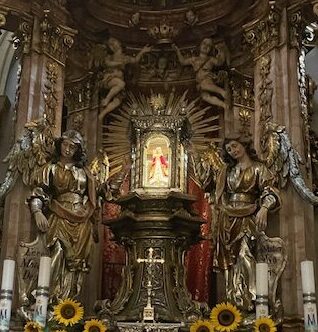
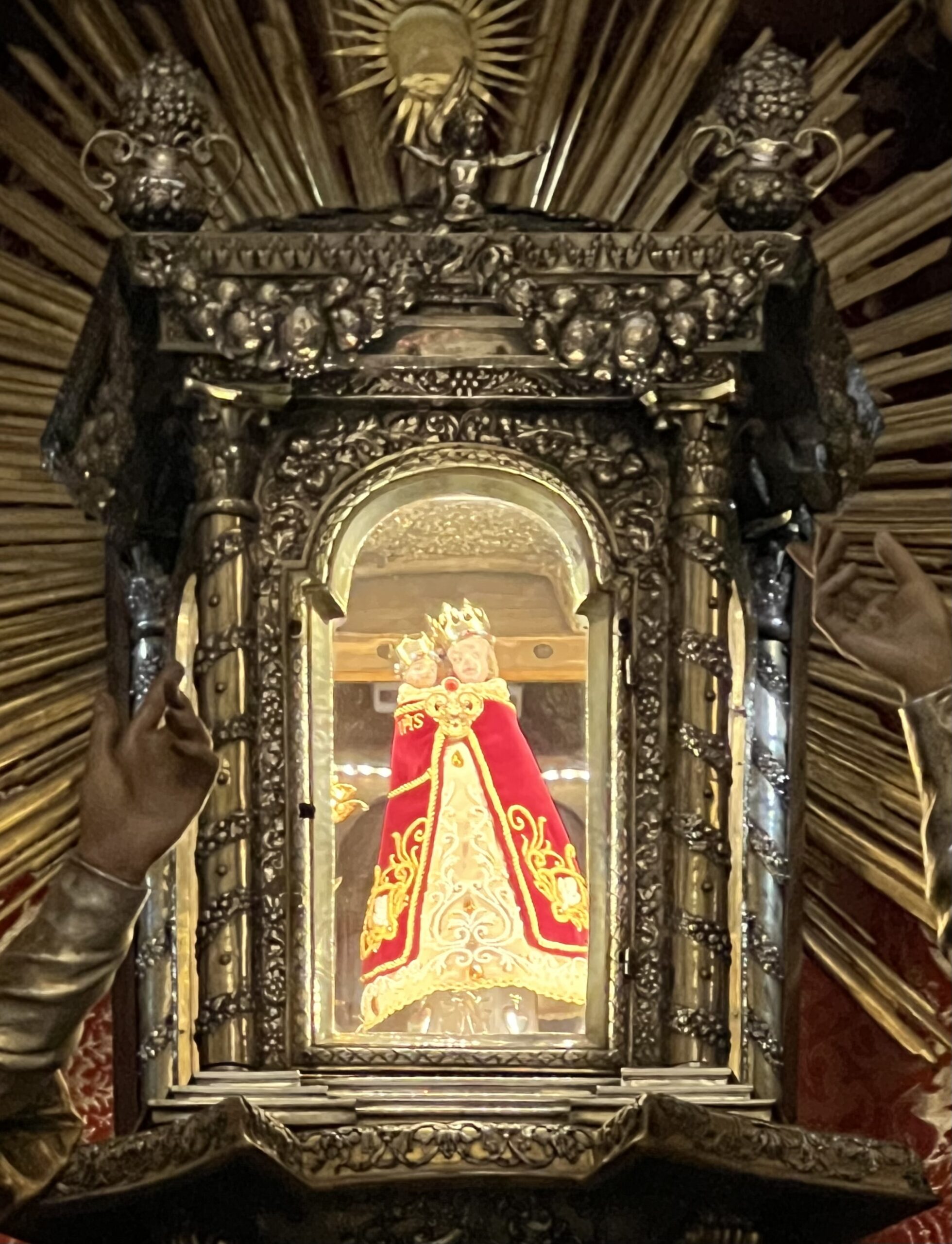
The high altar is impressive with the shrine. This shows Mary with the child Jesus in her arms above the silver tabernacle. The effigy with pedestal are made of lime wood. The statue is 28 cm high and is carved in the Gothic style. Her Child has a bird in its right hand and its left hand reaches for the fruit in its Mother's left hand. Both Mary and Jesus are crowned. The effigy of Mary and Jesus is robed. The colour of the clothing depends on the liturgical calendar, and as such, Mary has a wardrobe.
In the basilica there are many paintings, including colourful ceiling works depicting the Visitation of Mary. The medallions were painted by Anton Born (1897-1974).
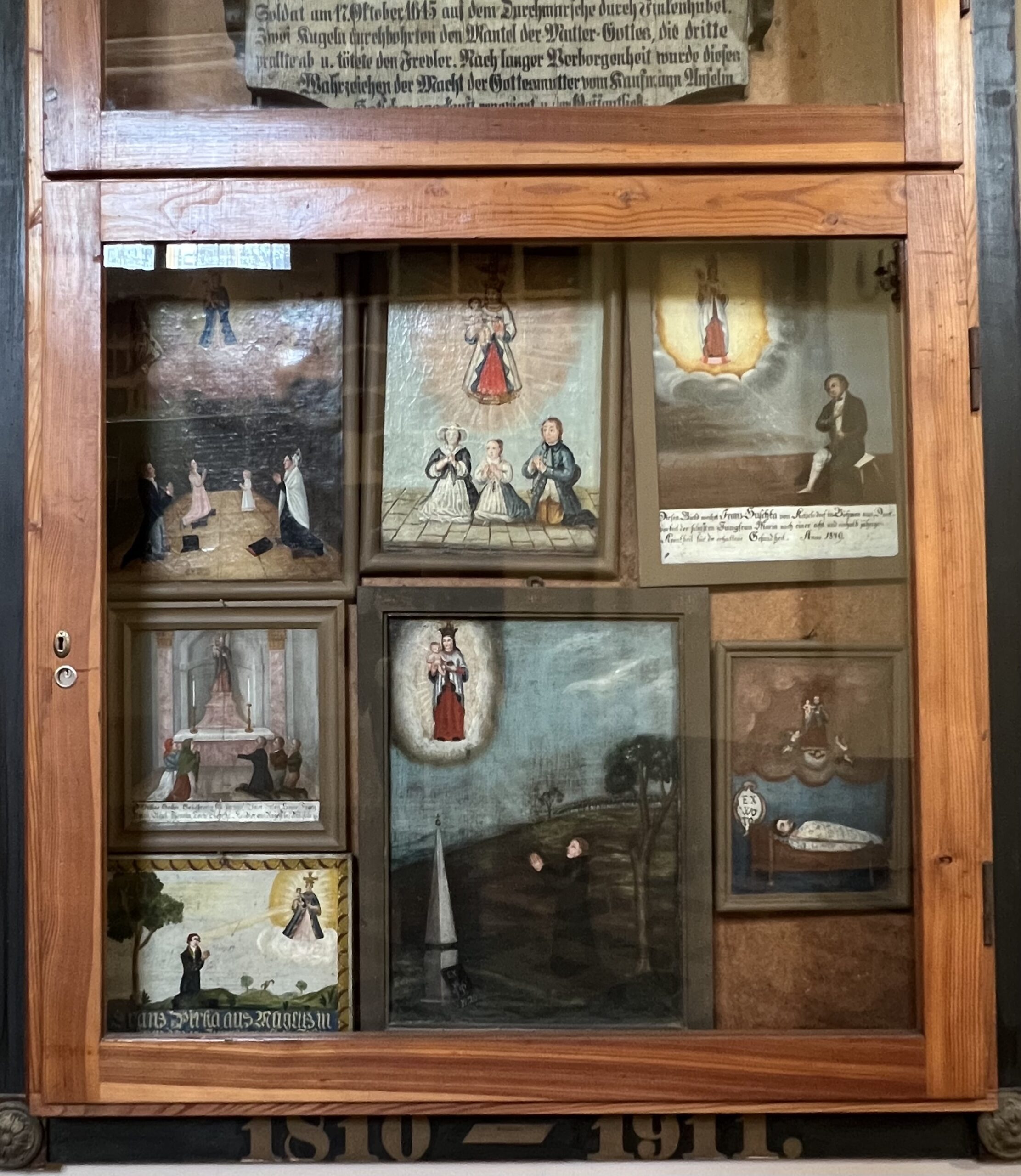
In the basilica, many expressions of gratitude to Mary can be seen. The number of ex-votos in the ambulatory is impressive.
The basilica is open daily and there are services every day. There are also overnight accommodation options at the pilgrimage site.
On the other side of the valley lies Silesian Jerusalem with its Calvarieberg and dozens of chapels with many statues. Many stations have been faithfully recreated. For a complete tour of this Jerusalem, pilgrims can expect to spend about four hours.
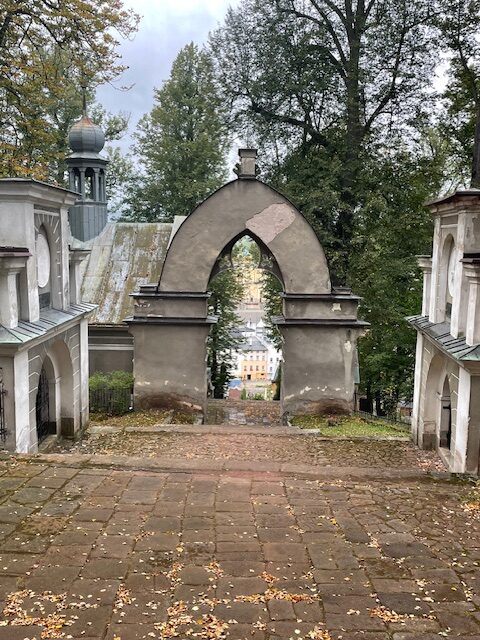
ACCESSIBILITY
The shrine is located in the southwest of Poland.
The church of the pilgrimage site belongs to the Franciscan monastery.
Sanctuary of Our Lady
Address: PL. Najświętszej Marii Panny 11, 57-420 Wambierzyce.
More information can be found at www.wambierzyce.pl
Experience
One of the highlights of my tour of pilgrimage sites in Poland is visiting the basilica and Jerusalem in Wambierzyce/Albendorf.
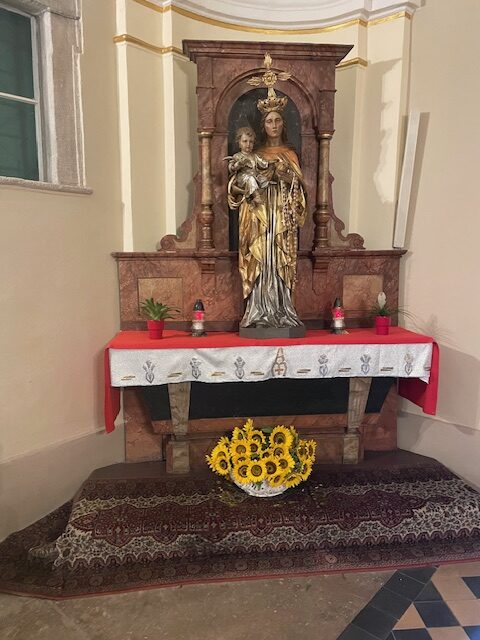
The ascent to the basilica is just like ascending to a heavenly gate, with Mary welcoming me. Inside the basilica, it is pure beauty. What gifted artists have been at work here!
At the devotional image, I pause for a little longer and thank Mary for my journey here. It's not just about thanking her, but also being with her in loving thought. Then, I continue my tour of the basilica and am impressed by the many statues and innumerable ex-votos.
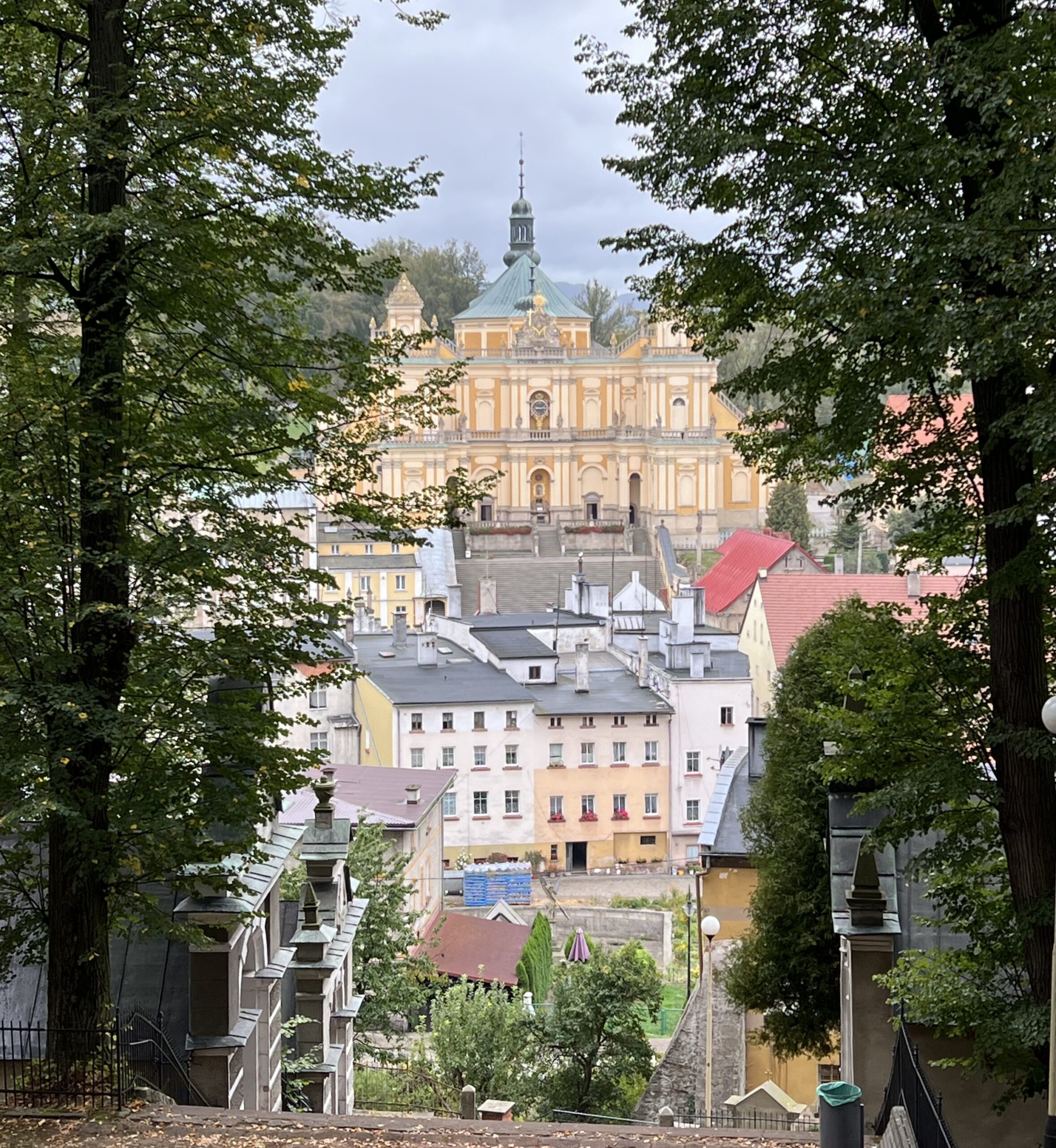
After the basilica, I'm going to the Jerusalem of this place. I've heard it's a faithful copy of what can be seen in the Holy Land. My feet will ascend many steps to the Calvary mountain with its numerous chapels and plentiful statues, to admire and reflect on the artworks. All the important stages of Jesus' life are depicted here. What a task to realise this! When I've climbed higher up the mountain, I'll enjoy a panoramic view of the surroundings with the basilica. I'll continue upwards and am repeatedly amazed by the artists' beauty. This is also an ideal place for prayer.
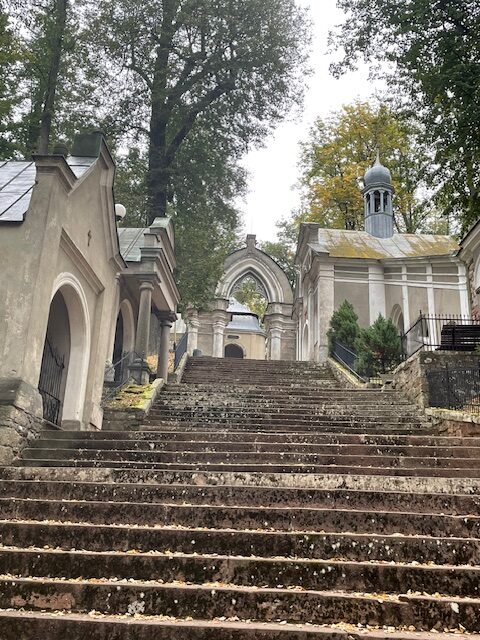
After my long visit to this Jerusalem, I am returning to the basilica. Once again, I will go to the shrine of grace and speak with Mary about my plans to make this pilgrimage site a special contribution in the Mary room. This way, others can also enjoy this special Marian sanctuary.
Upon leaving the basilica, I took a booklet with information about this shrine, and at the back there is a prayer to Mary. It begins: “Most Holy Our Lady, Queen of families, we greet you heartily and implore you for indispensable graces.”
Environment
Walking and cycling routes can be created around Wambierzyce/Albendorf.
In the northern part of the town of Wambierszyce/Albendorf, an impressive nativity scene can be admired, featuring around 800 figures, many of which are animated. Longinus Wittig (1824-1895) began construction in 1850 and worked on it for 28 years. After his death, his son Hermann Wittig (1857-1939) continued his father's life's work. The address of the “Weihnachtskrippe von Longinus Wittig” is Objazdowa 6, Wambierszyce/Albendorf.
From the Czech capital Prague, it is 188 km to the east to get to Wambierzyce/Albendorf.
From Wroclaw in Poland, it's 110 km south to arrive in Wambierzyce/Albendorf.
Departing from the major pilgrimage site of Częstochowa, it is a 306 km drive west to reach Wambierzyce/Aldendorf.
Posted: 22 October 2024
~~~

 Nederlands
  English (UK)
  Deutsch
  Français