~~~
History
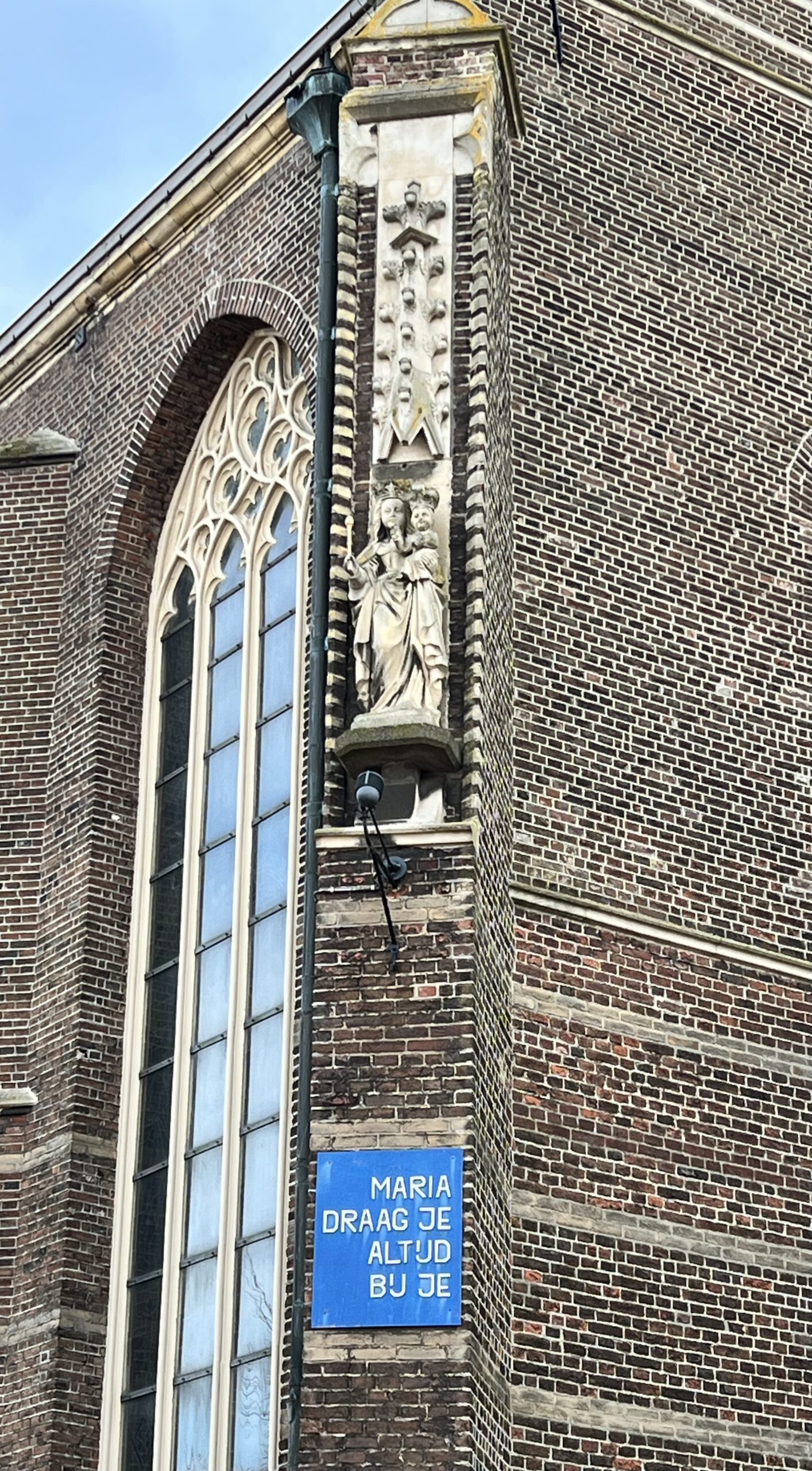
In 1404, the first brotherhood, named “Bruderscap ende Susterscap van Onser Sueter Vrouwe” (Brotherhood and Sisterhood of Our Dear Lady), was founded by Willem VI van Horne (1357-1417), Lord of Horne, Altena and Kortessen. From 1405 onwards, he was also Lord of Weert. The statue of Mary was first known as “Onze Lieve Vrouwe van Altijddurende Bijstand” (Our Lady of Perpetual Help).
Later, the name of the fraternity became: “the Venerable Fraternity of Our Miraculous Lady in Weert”. The fraternity experienced an intermittent existence with dissolutions and re-establishments.
The first figurine of Mary dates from the early 15th century. Specifically, this happened before the Iconoclastic Fury of 1566, and it was greatly venerated in the 15th and 16th centuries, with miraculous events occurring. Our Lady of Weert is a figurine that has been responsible for unexplained events and answered prayers.
During the Iconoclasm, the miracle statue disappeared and was replaced at the end of the 16th century. Miracles also happen with this statue. In 1684, a new brotherhood was established, which is also responsible for the processions in which the miracle statue is carried.
In the centre of Weert stands the church, which is dedicated to Saint Martin (c. 316-397), also known as Saint Martin of Tours. The miraculous image is located in Saint Martin's Church. The building was realised in four phases. The oldest part dates from 1456 and includes the choir and side chapels. In 1500, the next phase began and involved the construction of about two-thirds of the nave. This was followed by the construction of the western bays. The tower's construction took place in stages. The lower part was completed in 1528. The upper part dates from the period 1885-1889. The architect was Johannes Kayser (1842-1917).
The oldest Gothic vaulted paintings date from 1520.
In the 18th century, the veneration of the miraculous statuette flourished as a result of miraculous healings. The statuette was placed in a wooden cabinet from 1770, and Mary can then be seen behind glass on the south side of the church. The statuette comes from a wood-carving workshop in the Flemish city of Mechelen and was originally polychromed. The neoclassical main altar dates from 1790,
In 1842, a fraternity is established for the third time.
The Maria altar was installed in 1912.
In 1940, a severe storm raged, causing the spire of the tower to collapse. The restoration followed some years later. Architect Theo Verlaan (1912-1997) designed the upper part of the tower. This upper section was realised between 1958 and 1960. The new upper section brings the tower’s height to 72 metres.
Pilgrimage site
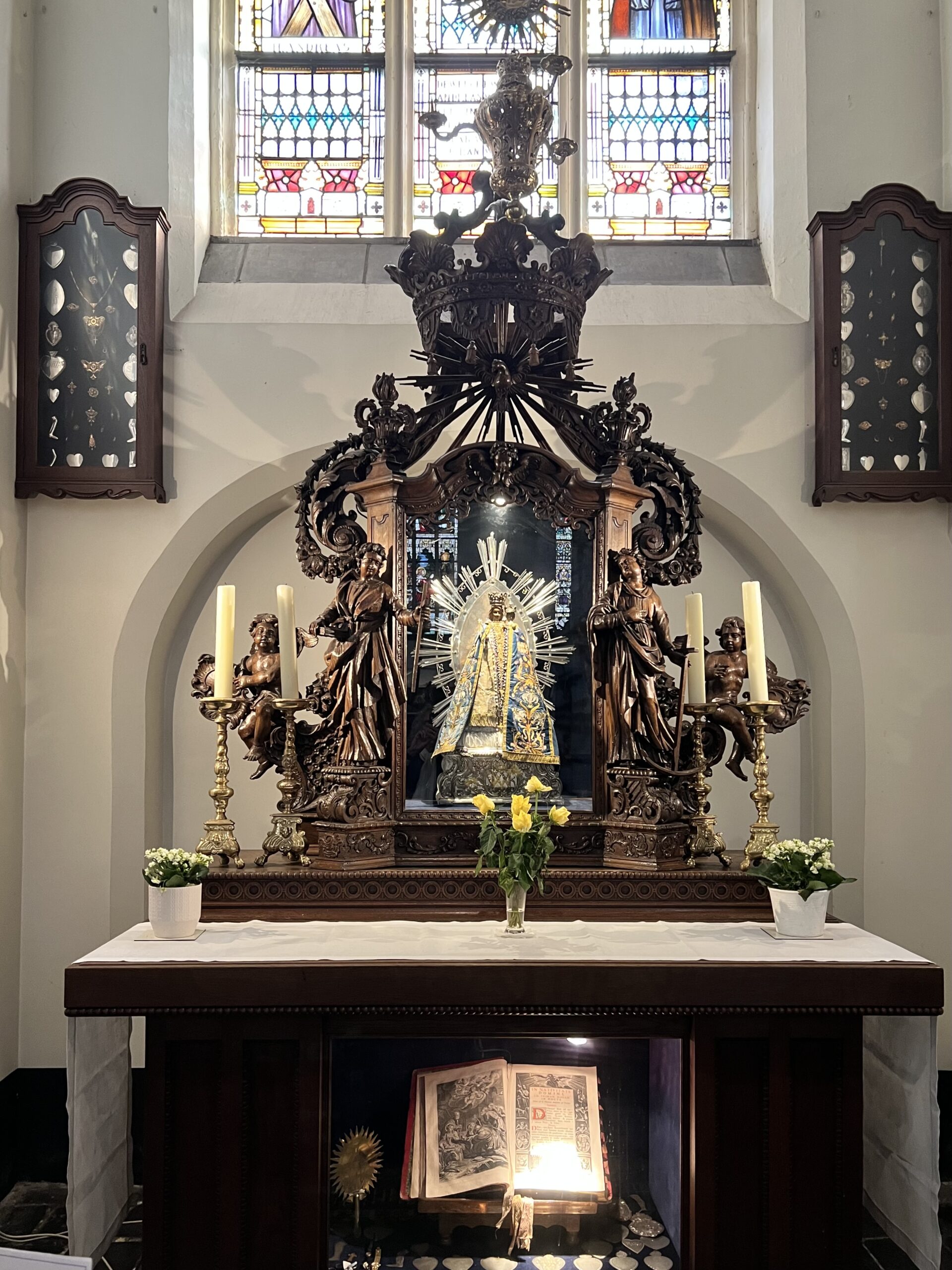
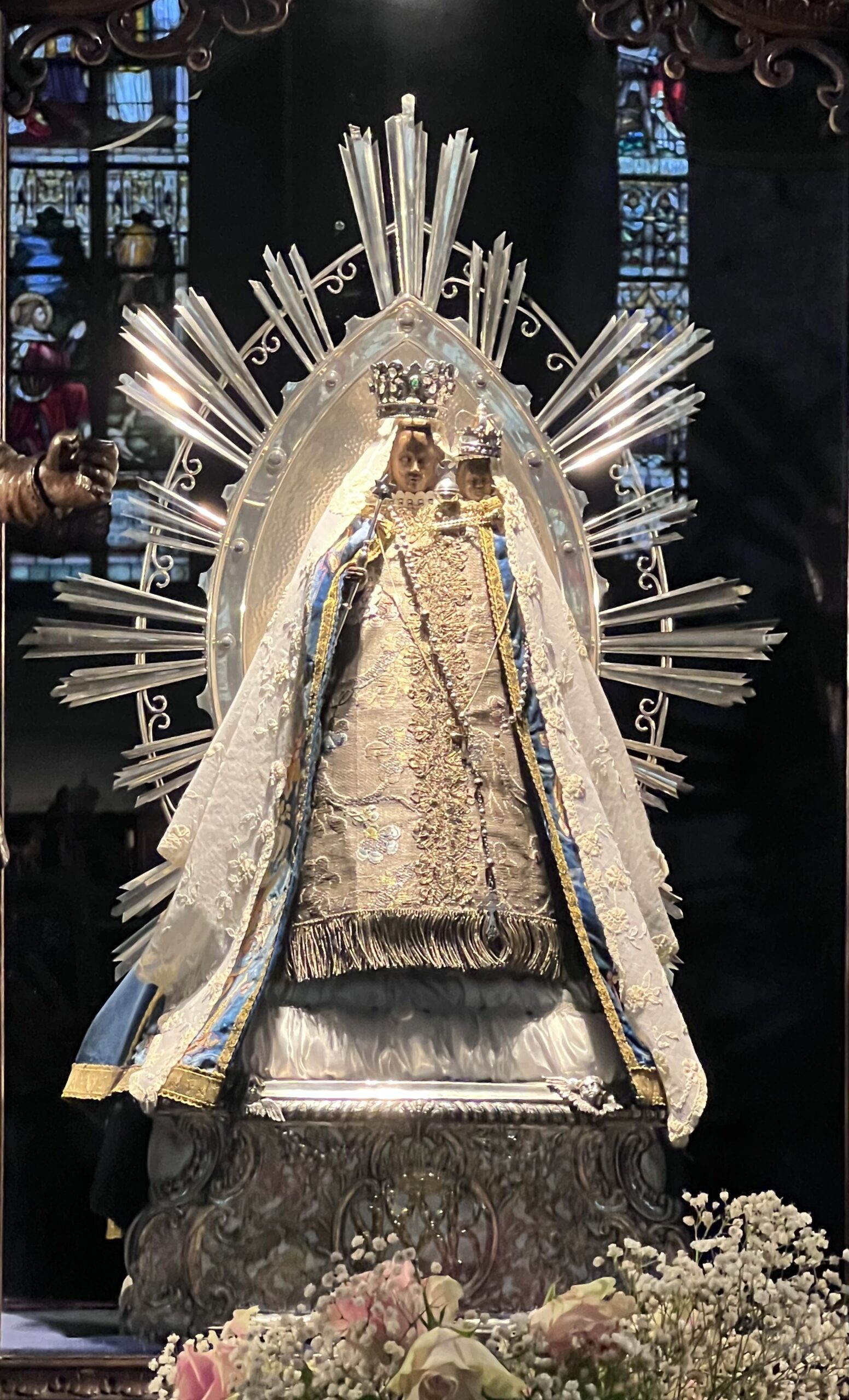
About halfway up the church, on the right-hand side, stands a particularly small effigy, namely a statuette of Our Lady of Weert. Unfortunately, the original statuette was stolen, and there is now a copy in the altar dedicated to Mary. Above the altar with the devotional image, two wooden cabinets with ex-votos are placed against the high church wall. The miraculous statuette is made of lime wood and is nearly 40 centimetres high.
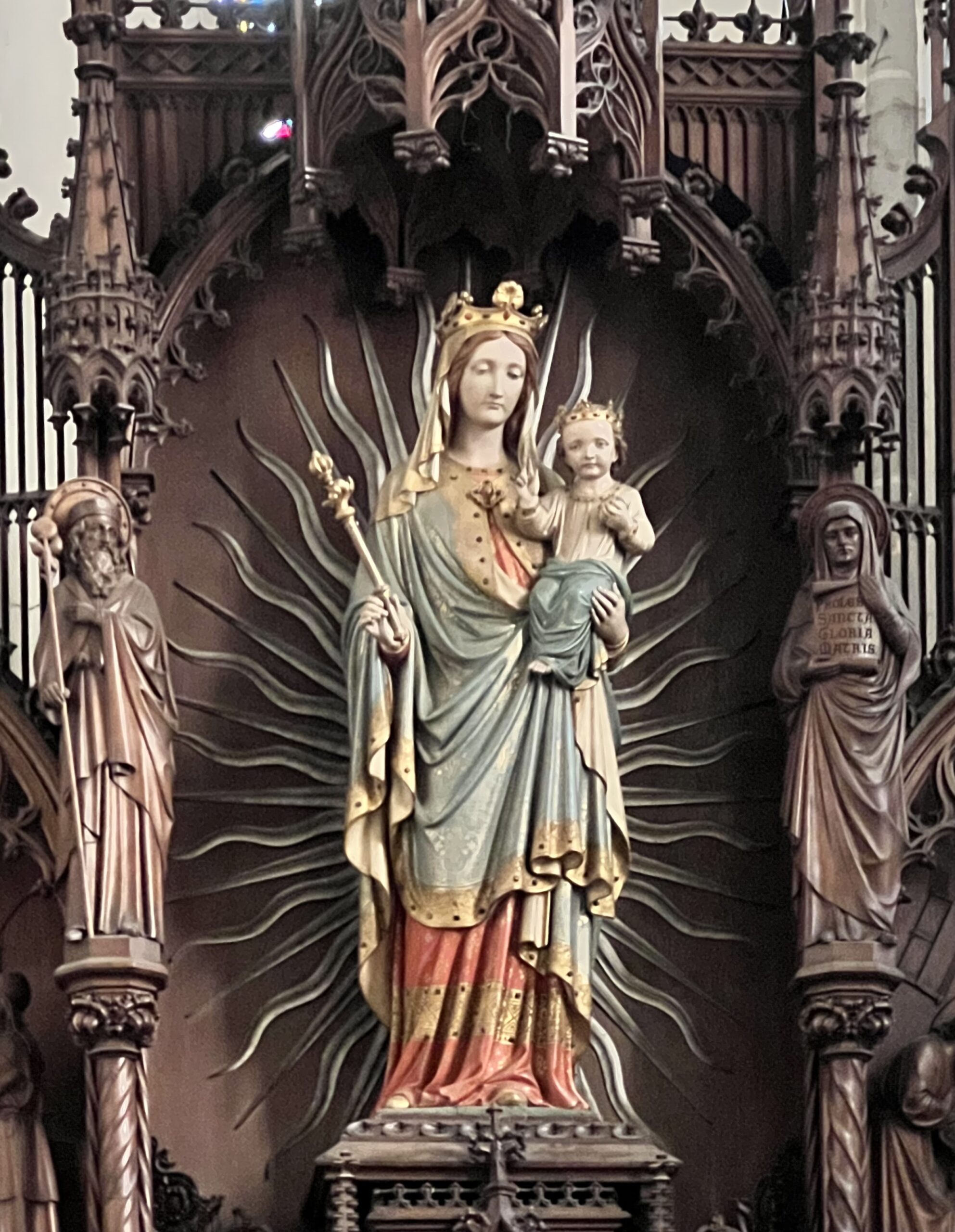
A large, colourful statue of Mary stands to the right of the high altar. Mary holds a sceptre in her right hand and cradles her Child on her left arm. Both are crowned. The altar is characterised by its Neo-Gothic style and is adorned with extensive wood carving.
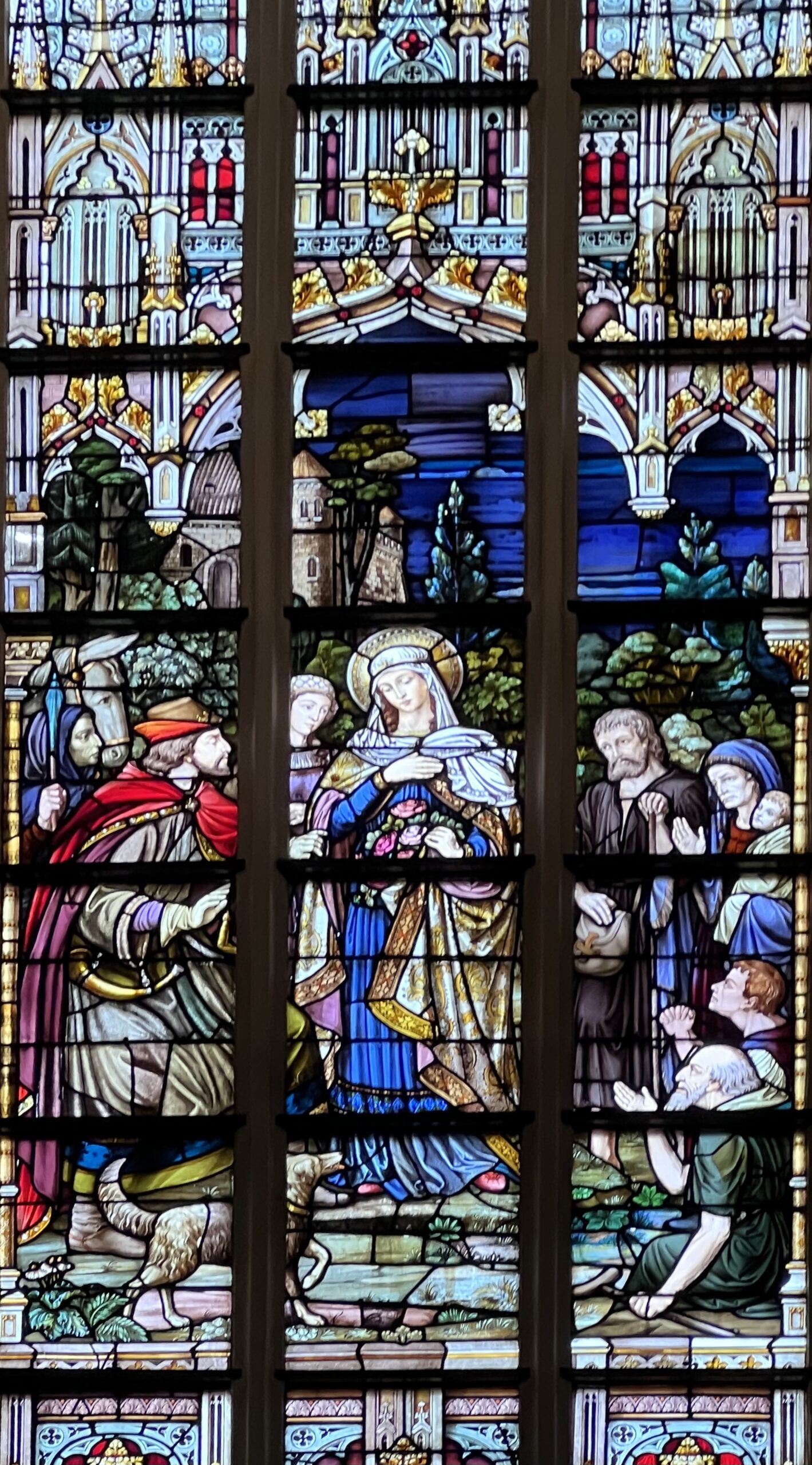
The church contains several large stained-glass windows, donated by nobles and members of the affluent bourgeoisie, including a tall stained-glass window depicting scenes from the life of Mary. To the right of this is another large stained-glass window showing the Coronation of Our Lady. It is situated above the mortuary chapel.
On the left-hand side or north wall of the church is a large stained-glass window depicting the Adoration of Mary at Lourdes.
The Gothic paintings on the vaults are sure to catch visitors' eyes.
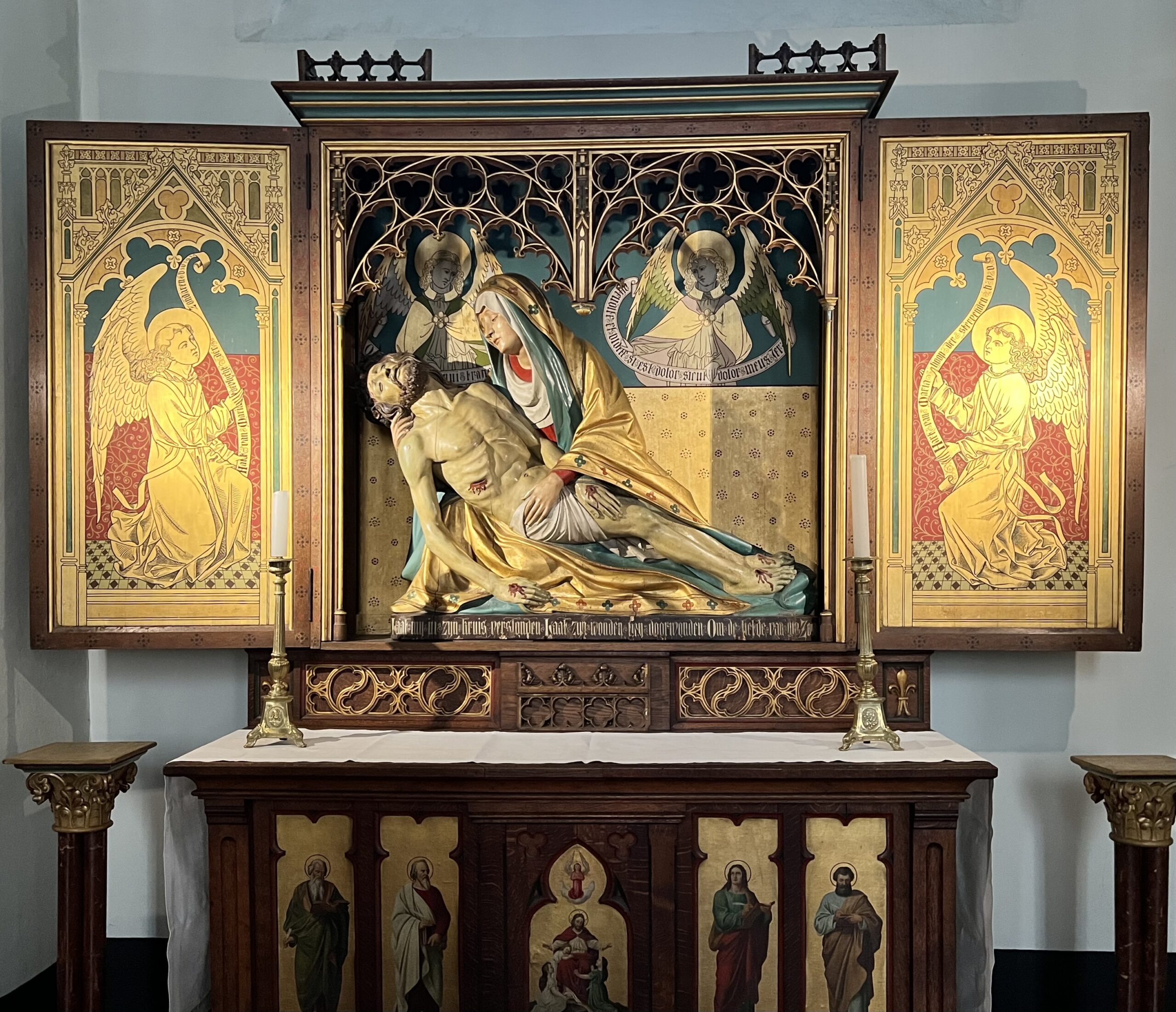
Near the entrance/exit on the north side of the church stands a large depiction of the Pietà.
ACCESSIBILITY
St. Martin's Church, with the statue of Our Lady of Weert, is located in the town centre.
Address: Markt 8, 6001 EK Weert.
More information can be found at www.broederschapweert.nl.
Experience
The Sint-Martinuskerk is one of the top 100 Dutch heritage sites. It is a magnificent building; a jewel for the city. In the Late Gothic hall church, by the statue of Our Lady of Weert, I strike up a conversation with a church warden. He tells me that the miraculous statuette I am looking at is not the original. He says the statuette is a copy, because the first one was stolen. I hear that the theft was allegedly committed by the writer and poet Gerard Reve / Gerard Kornelis van het Reve (1923–2006), who lived in this town from 1972 to 1975. He is an ardent devotee of the miraculous statuette. Gerard Reve is said to have taken it home and subsequently to his residence in France. It was stolen from his French home. As a result, the authentic statue of Mary has vanished.
I find the stained-glass windows magnificent, and that's certainly true for the depiction of Maria at Lourdes, on the north side of the church, near the main altar.
As I leave the church, I pause at the depiction of the Pietà, and the feeling of sorrow in my heart overwhelms me once again.
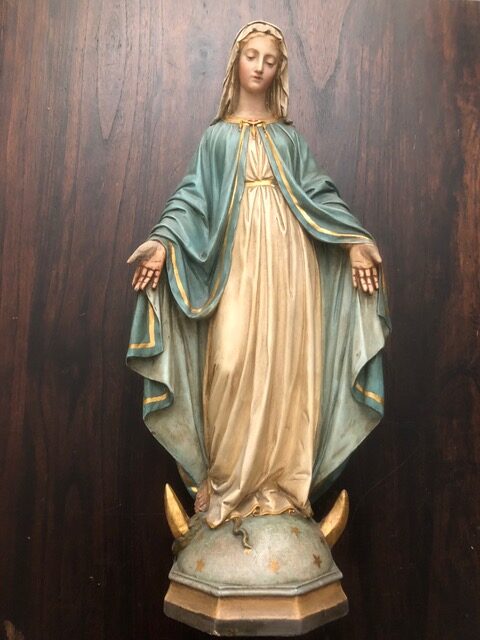
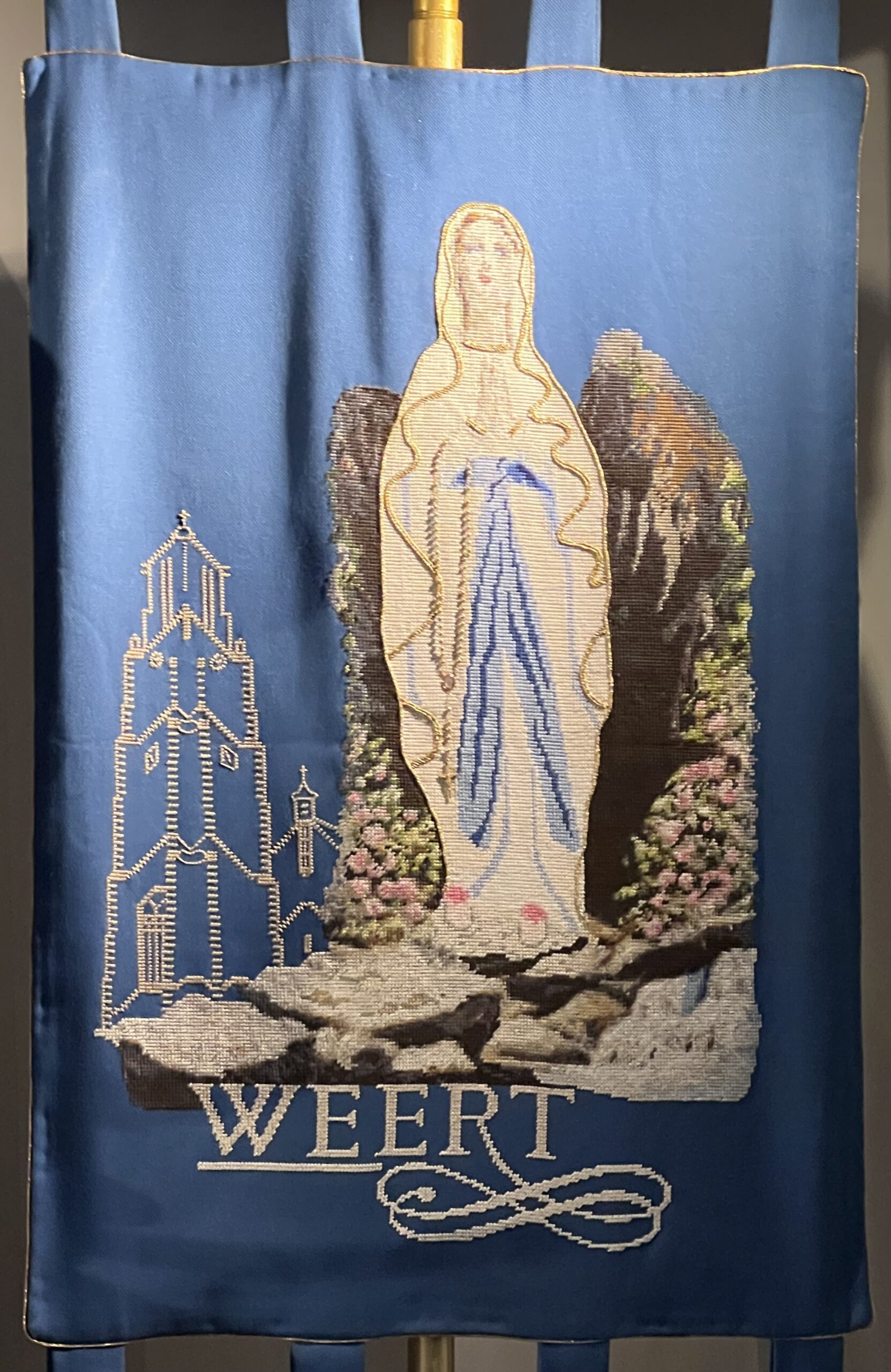
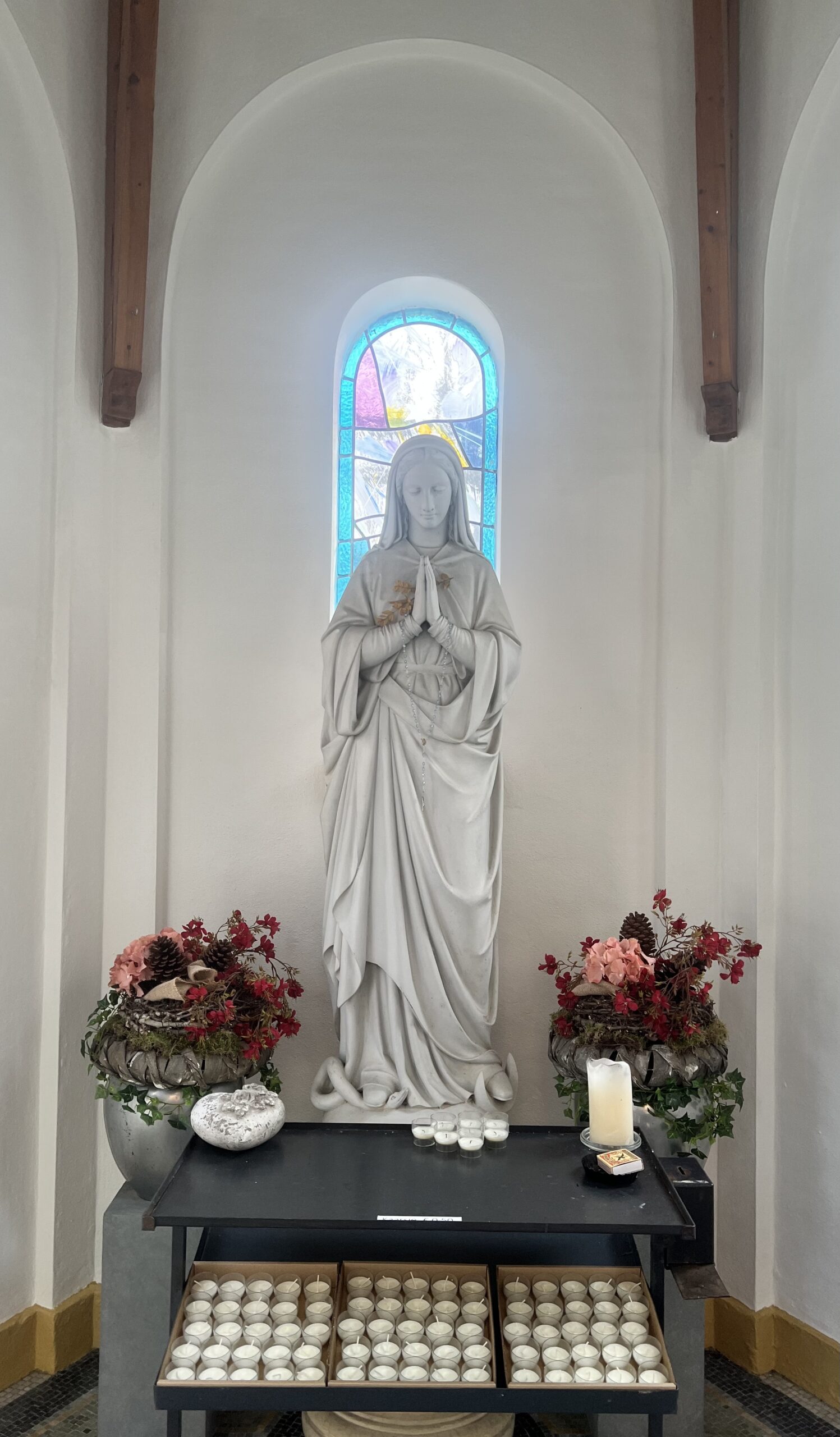
After visiting the church and Museum W, I'm going to the Marian Chapel at the Ursulinenhof. The white statue of Mary stands on a round console with her left foot on the crescent moon and her right foot on the snake. Mary is depicted in a praying posture, wearing a long robe with her eyes closed. What a beautiful encounter with Our Lady this is.
Environment
Opposite the church with the devotional image of Our Lady of Weert lies Museum W with a great many religious images. In Weert, the Moeselchapel with its Lourdes grotto can also be visited. The Moeselchapel is located at Irenelaan 93 on the corner with René van Chalonstraat.
In the former convent garden of the Ursulines, on Ursulinenhof, in Weert stands a hexagonal chapel with a tent roof. This Mary chapel was built around 1880. The chapel is built of stone in the Neo-Romanesque style and the interior is white plastered. The chapel was restored in 1995 and moved several metres. On Saturdays, the chapel is open on the initiative of the brotherhood.
Travelling from the pilgrimage site of Roermond to Weert is 26 km to the west.
Departing from Eindhoven to arrive in Weert means travelling 27 km to the southeast.
Travelling from the pilgrimage site in Handel to Weert is a journey of 49 km to the south.
In Maaseik, a Lourdes grotto can be visited, which stands next to the Saint Catherine's Church. In this church is a reproduction of the Adoration of the Mystic Lamb. Going from Maaseik to Weert is travelling 39 km to the north.
The Flemish-Limburgian pilgrimage site Heppeneert is 40 km from Weert. To get to Weert, you need to head north.
~~~

 Nederlands
  English (UK)
  Deutsch
  Français