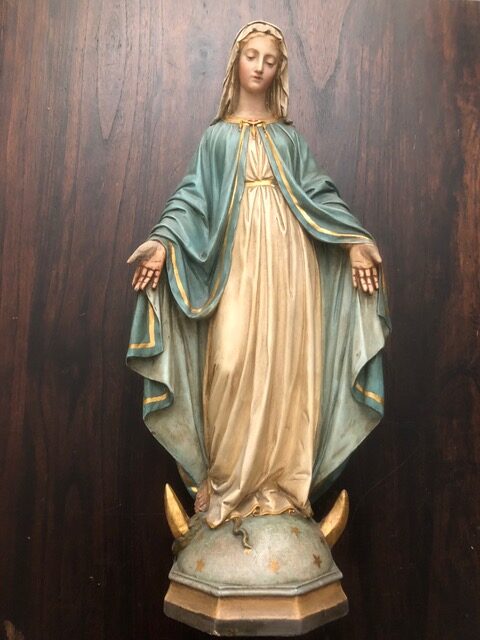
In the village of Welberg, in the municipality of Steenbergen, there is a Mary chapel at Hoogstraat number 19, close to a football pitch. The chapel dates back to 1933.
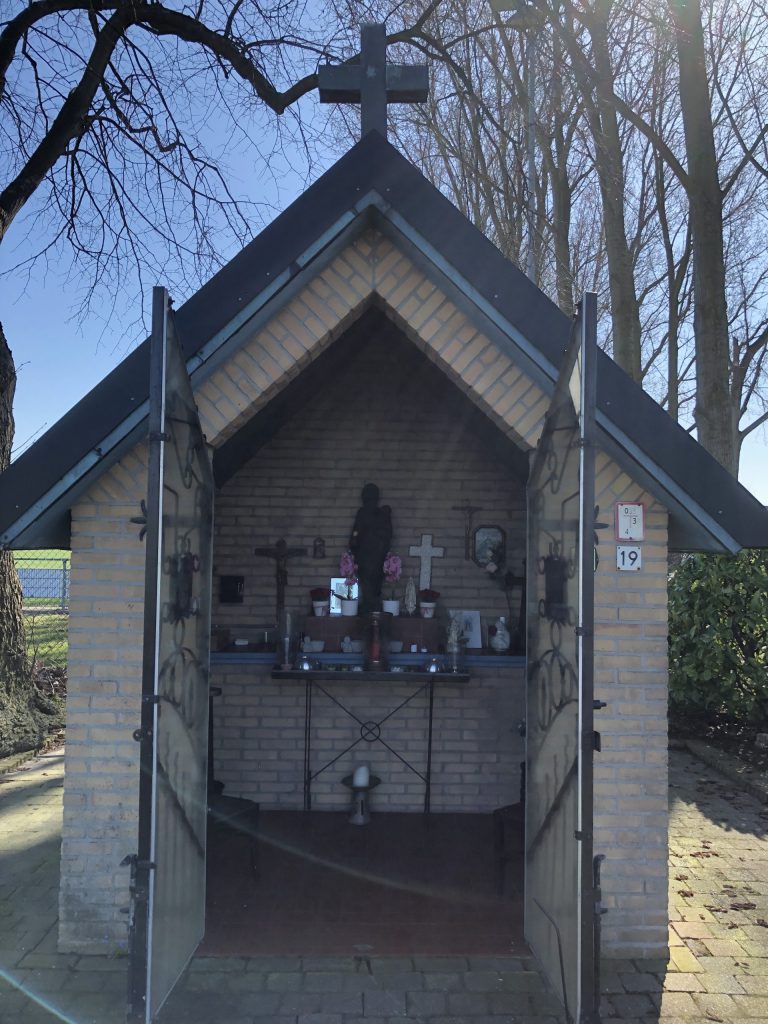
Next to the chapel is a sign explaining the messages of Mary to Janske Gorissen. One of the apparitions happened at the chapel.
Janske Gorissen (1906-1960) claims to have two celestial messengers, namely the angel Gabriel and an unknown “Solemnis”. These messengers convey messages from Mary to her. This happens in 1931. Subsequently, Janske experiences bloody tears in 1932 and stigmata in 1934. This leads to her gaining considerable renown. Pastor Ermen of Welberg and Bishop Lemmens of Roermond support her. In 1939, Janske repeatedly takes the vow of eternal chastity as the “Little Bride of Jesus”. Due to Janske Gorissen's experiences, a great devotion to “Our Lady of Welberg” arises. After the Second World War, she lives in the presbytery for several years.
At the initiative of the Breda bishop Hopmans, Janske is admitted to the guesthouse of the Franciscan monastery Matar Dei in Breda. There, Janske states she lives solely on water, tea, and communion wafers. She also claims to still receive messages from Mary, via the angel Gabriel. She also continues to have stigmata. After her stay in the guesthouse, she returns to live in the presbytery. The diocese orders her to leave the presbytery.
Bishop Lemmens of Roermond is informed by Cardinal De Jong that he must exercise restraint concerning Janske Gorissen and cease his visits to her. Subsequently, at the request of the nuncio, the Vatican's representative in the Netherlands, an investigative commission is established. The investigation takes place in 1951. The outcome is that there is no evidence of phenomena of a supernatural origin. It is concluded that it is a combination of exaggerated devotion, false mysticism, and the feeding of this by credulity. This brings an end to the Marian veneration at Welberg.
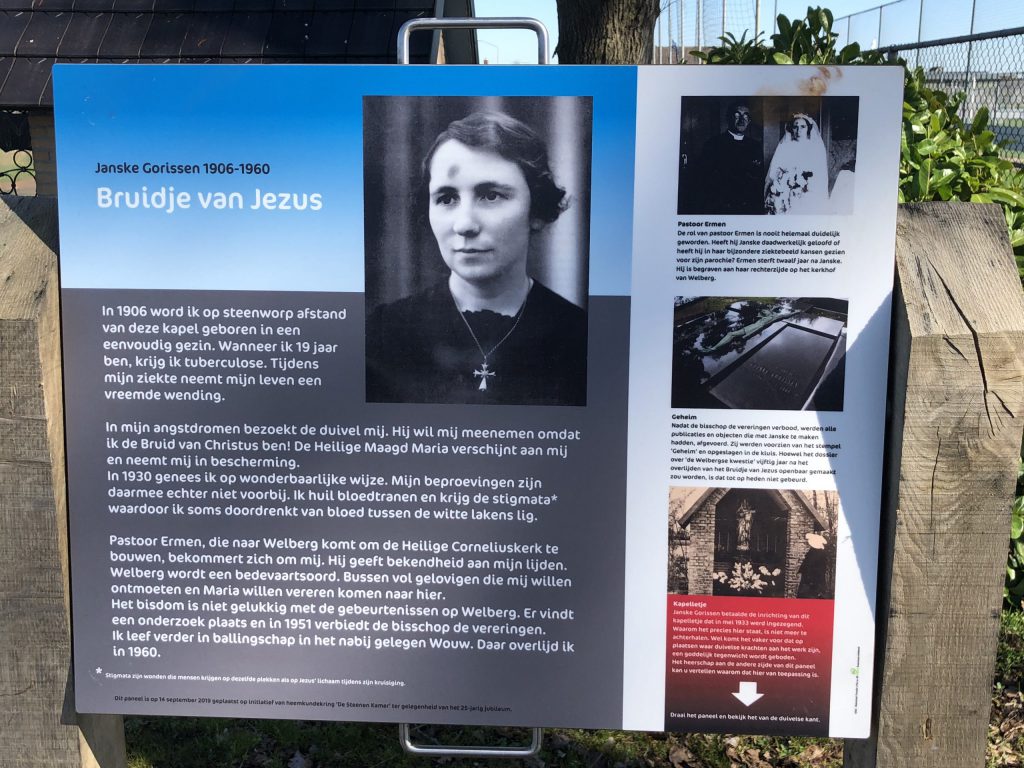
In 1951, Janske Gorissen left Welberg and went to the Mater Dei convent in Breda. In early 1953, she moved to the village of Wouw, into a house belonging to Pastor Ermen. She became bedridden and died in 1960. In Welberg, she is buried next to Pastor Ermen and near Chaplain De Kock, who was murdered in the Second World War, three days before the liberation.
