History

Werl is an ancient Hanseatic city and has had town privileges since 1218. Pilgrimages in Werl have been taking place since the year 1661.
Before the Marian pilgrimages begin, a statue is already venerated, namely the Holy Cross of Werl. This has been happening since the 13th century. The veneration comes to an abrupt end with the destruction of the cross in 1583, when supporters of the Reformation remove and destroy many Catholic expressions during the iconoclasm. The cross is rediscovered in 1938 and reinstalled in the church in 1953.
In 1669, the church and monastery were consecrated.
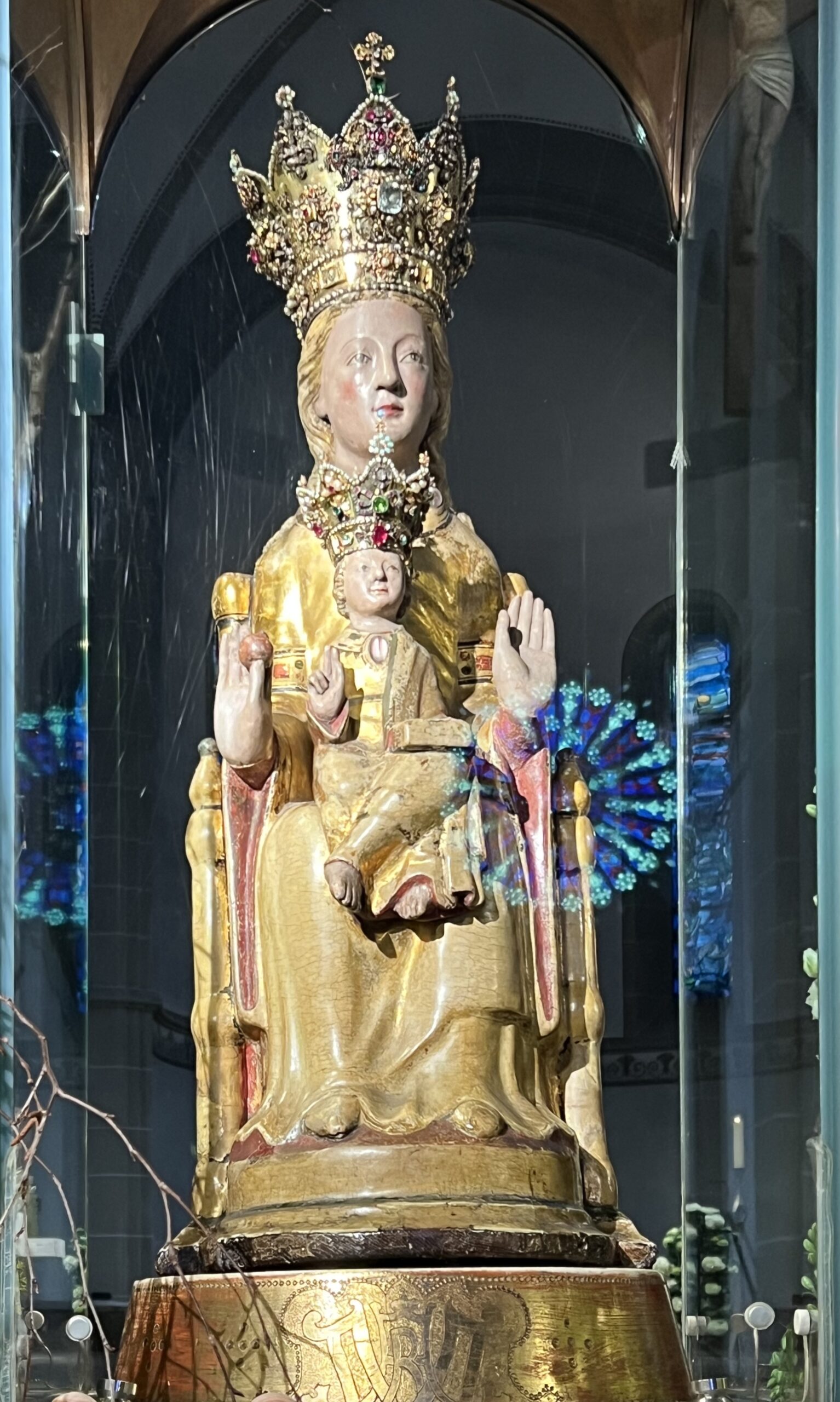
The miraculous image was created around 1180 in Rhineland or Westphalia and the maker is unknown. It was first located in the church St Maria zur Wiese (St. Mary by the Meadow) in nearby Soest. From approximately 1313 the depiction was there and disappeared with the introduction of the Reformation in 1531. Much later the image reappeared and on 2 November 1661, the image made a solemn journey to Werl. Maximilian Heinrich von Bayern (1621-1688), Prince-Bishop and Elector Archbishop of Cologne from 1650-1688, and Hermann (Hermanus) Brandis (1612-1676), Mayor of Werl, particularly championed the arrival of the miraculous image. A painting of this can be seen in the basilica.
Over the years 1661-1863, the Miracle Book records numerous answered prayers and miracles that occurred at or through the image of grace.

In Werl, a Vesper image is also venerated; it is a Pietà from around 1700. This depiction is named “Muttergottes in der Not” (Mother of God in distress).
Due to the increase in the number of pilgrims, a new church was built between 1786 and 1789 and extended in 1861. This is the current, old pilgrimage church. A few years later, the church was once again too small and plans were made to build a second, larger place of worship.
Capuchins were active in the pilgrimage site between 1645 and 1836. Since 1849, Franciscans have been guiding and organising pilgrimages in Werl.
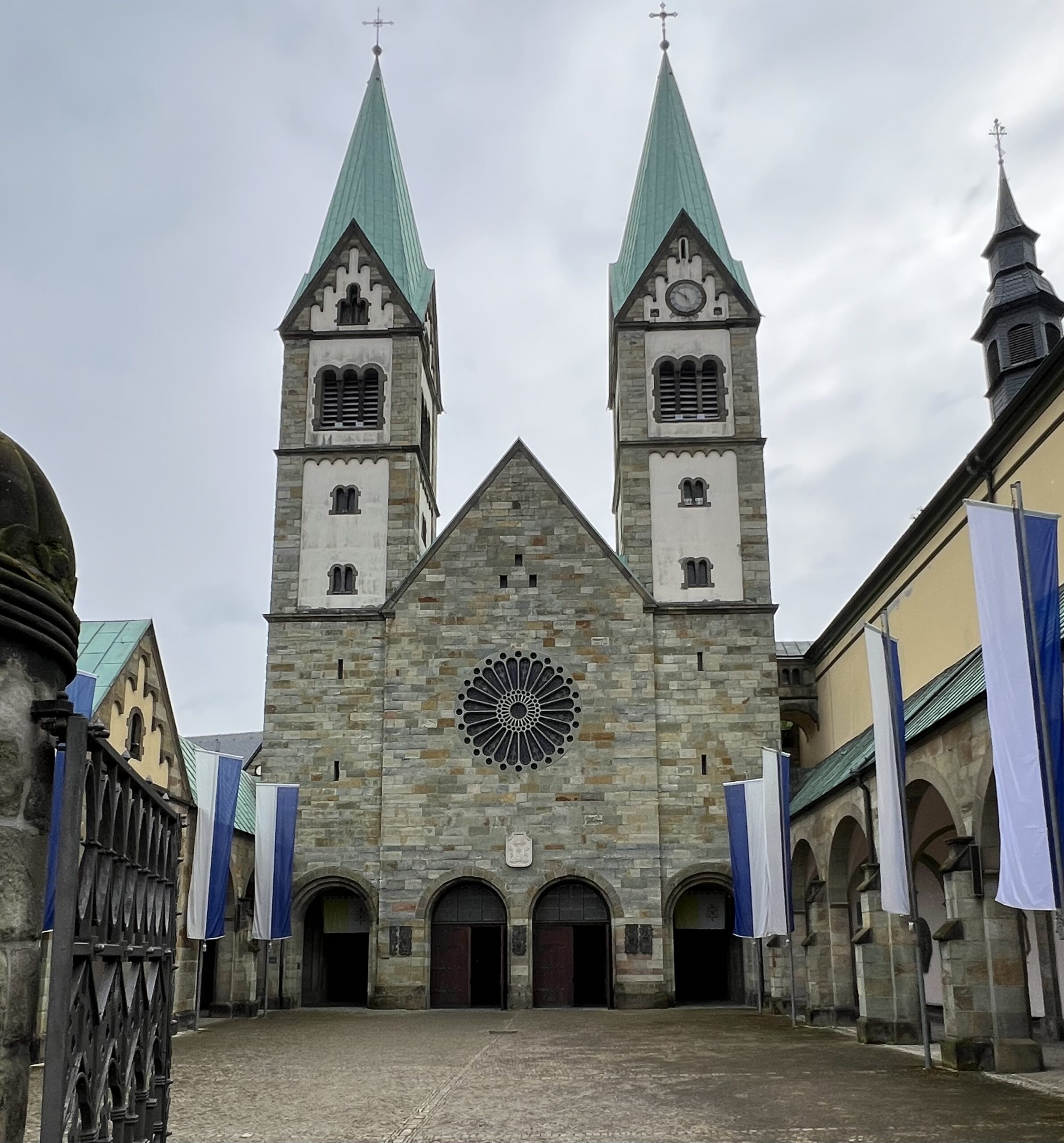
The current pilgrimage church was built between 1903 and 1905. The architect was Wilhelm Sunder-Plassmann (1866–1950). The first stone was laid on 4 April 1904, and the consecration took place on 1 July 1905. The dimensions of the basilica are: length 64.5 metres, width 25 metres, and height 48 metres.
August Wäscher (1881-1960) made the depictions of the Stations of the Cross, which were realised in 1909.
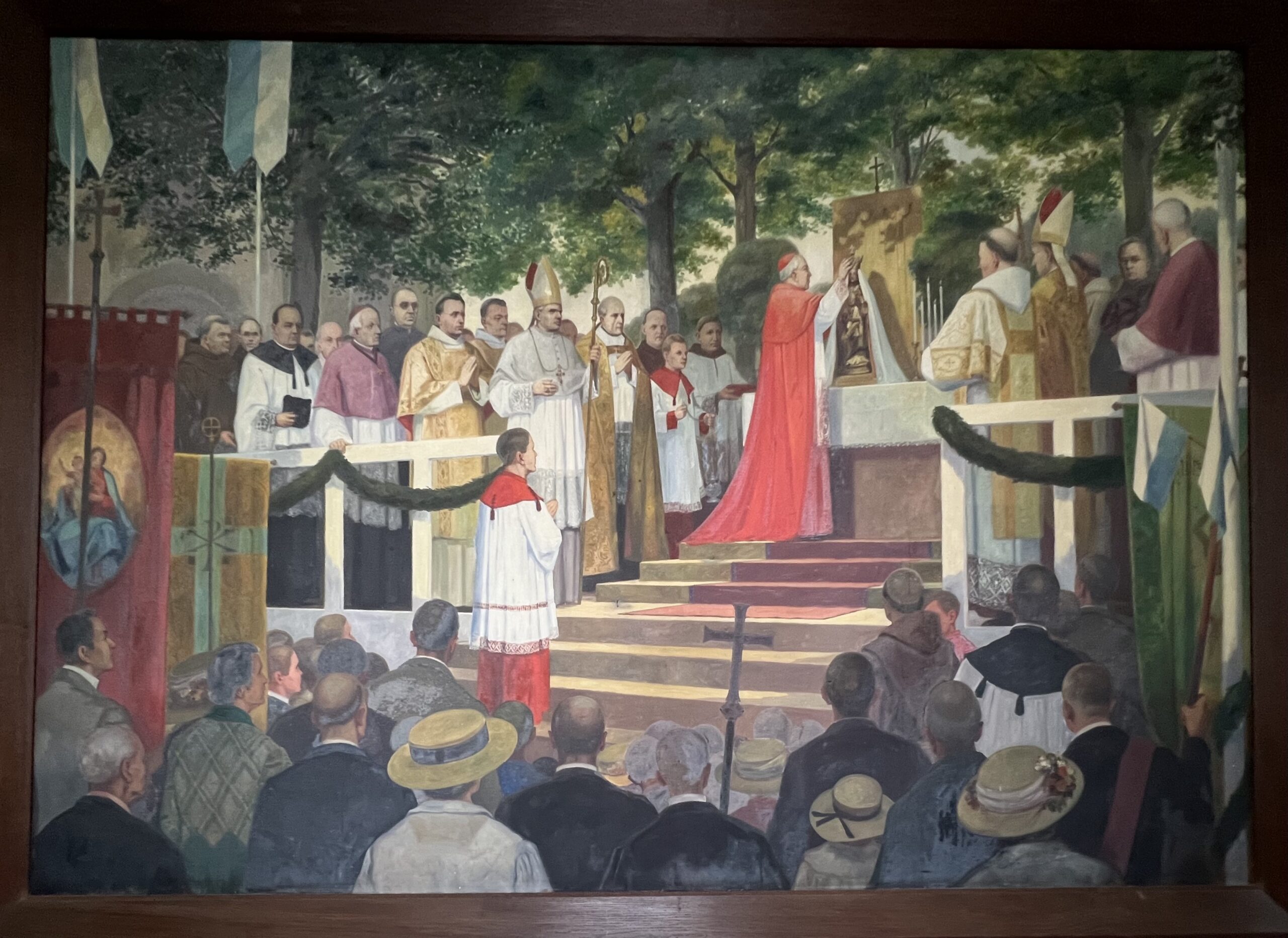
On 13 August 1911, the coronation of the miraculous image took place. This was performed by Antonius Hubert Fischer (1840-1912), Cardinal and Archbishop of Cologne (1902-1912). A painting hangs in the basilica commemorating this joyous event.
On 16 October 1953, the church was elevated to basilica by Pope Pius XII, Pope during the period 1939-1958, born Eugenio Maria Giuseppe Giovanni Pacelli (1876-1958).
In 1961, renovation of the basilica.
Pilgrimage site
Werl has been a pilgrimage town for centuries. The major Marian shrine boasts a pilgrimage basilica named “Mariä Heimsuchung” (Visitation of Mary). Next to the basilica, on the forecourt, stands the old pilgrimage church to the right. At the front of the square is a monument commemorating the Capuchins who were active here from 1645 until 1836.
The basilica stands on a large square and has two towers.
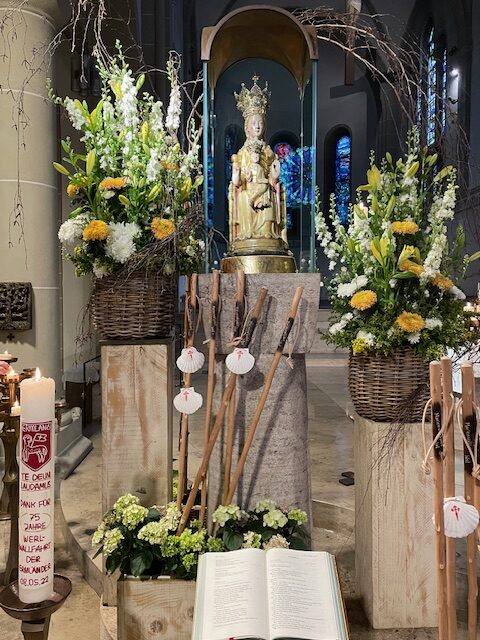
The devotional image is of Mary as the “Comforter of the Afflicted”. The depiction shows Mary seated on a throne with her Child on her lap. This image is known as the “Seat of Wisdom” (Latin: Sedes Sapientiae). Mary holds an apple in her right hand, which refers to Eve in the Garden of Eden.
In the left aisle of the church are paintings by Georg Anton Waller (1861-1934) of the 7 joys of Mary and the Coronation of Our Lady.
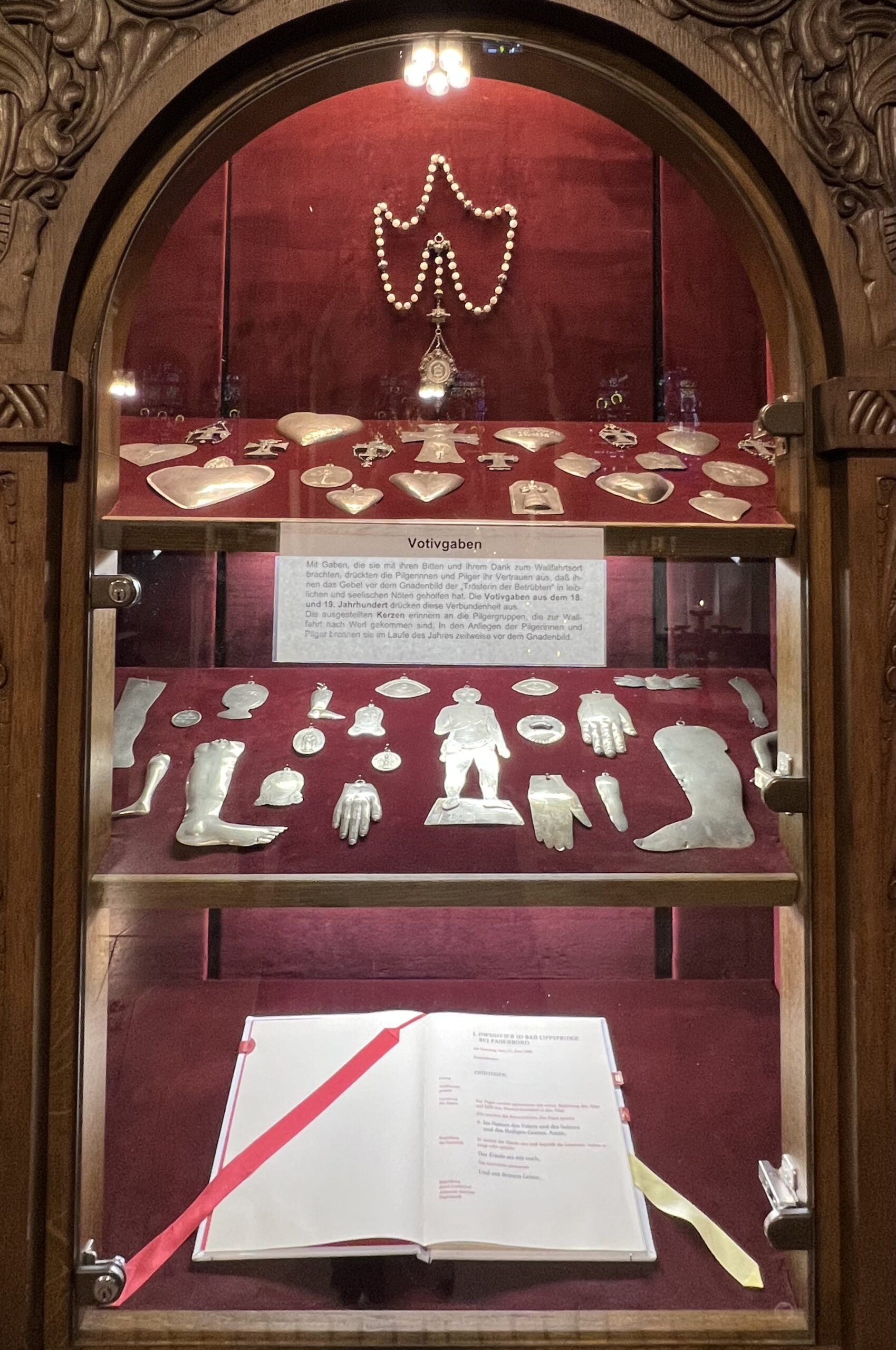
In the place of grace, there are many expressions of gratitude to Mary, and quite a few ex-votos adorn the walls and display cases.
Near the basilica, there is a monastic garden and overnight accommodation is available for pilgrims in the monastery.
A shop selling devotional items stands next to the shrine, on the street side.
Many pilgrimages are organised to Werl. Special pilgrimages are available for cyclists (“Velo Maria”) and motorcyclists (Moto-Maria), who can have their vehicles blessed. There is also a pilgrimage for “classic cars” with their occupants, during which the older cars can also be blessed.
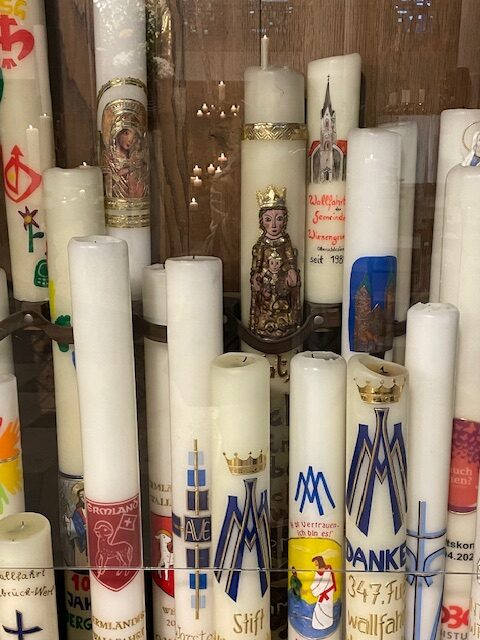
More than 100,000 pilgrims visit the Marian shrine in Werl every year. Many visitors come in May, at the beginning of July to pay homage to Mary Visitation, and on 15 August when the Assumption of Mary is celebrated. The many pilgrims bring candles in honour of Our Lady.
The basilica is open daily.
ACCESSIBILITY
Werl is located in the west of Germany and belongs to the state of North Rhine-Westphalia. The pilgrimage site is located right in the centre of Werl. The address is: Walburgisstrasse 37, 59457 Wallfahrtsstadt Werl. The pilgrimage office is located at Walburgisstrasse 41.
Current information can be found on www.wallfahrt-werl.de.
Experience
I've heard that “Werl” is the third Marian pilgrimage site in Germany, after “Altötting” and “Kevelaer”. Over 100,000 pilgrims come here annually. This Marian city therefore has more than regional fame, and pilgrims come not only from Germany but also from, for example, Belgium, the Netherlands, Austria, Poland, and Switzerland. The pilgrimage site is also a place for pilgrims on their way to Spain's Santiago de Compostela. I am going to visit this shrine and am very eager to meet Our Lady there.
When I arrive in the centre of Werl, I see a work of art in the market square. Brothers carry the shrine in procession. What craftsmanship, it flashes through my mind.
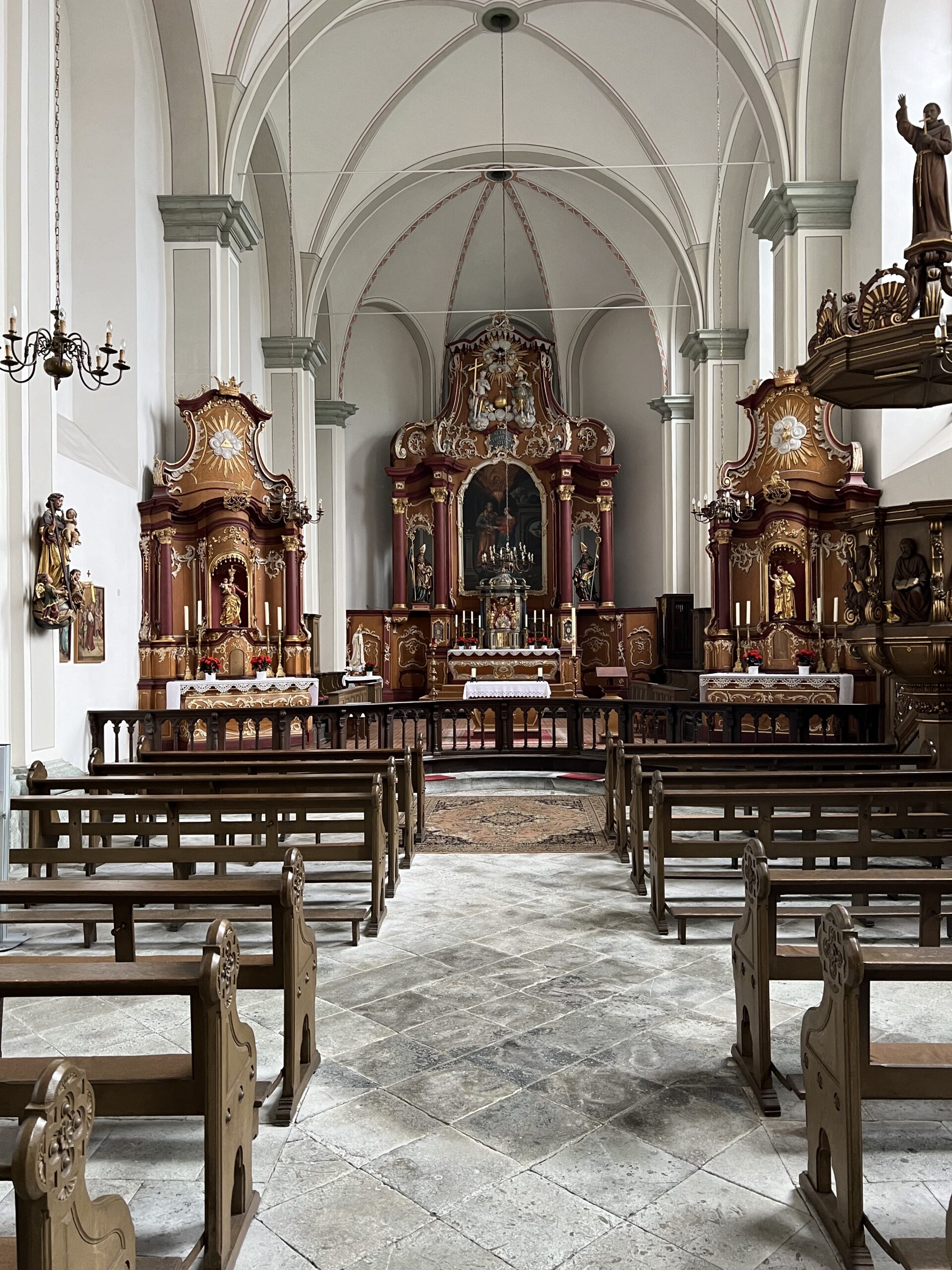
Afterwards, I will visit the old pilgrimage church. There, I will be impressed by the beauty that is displayed.
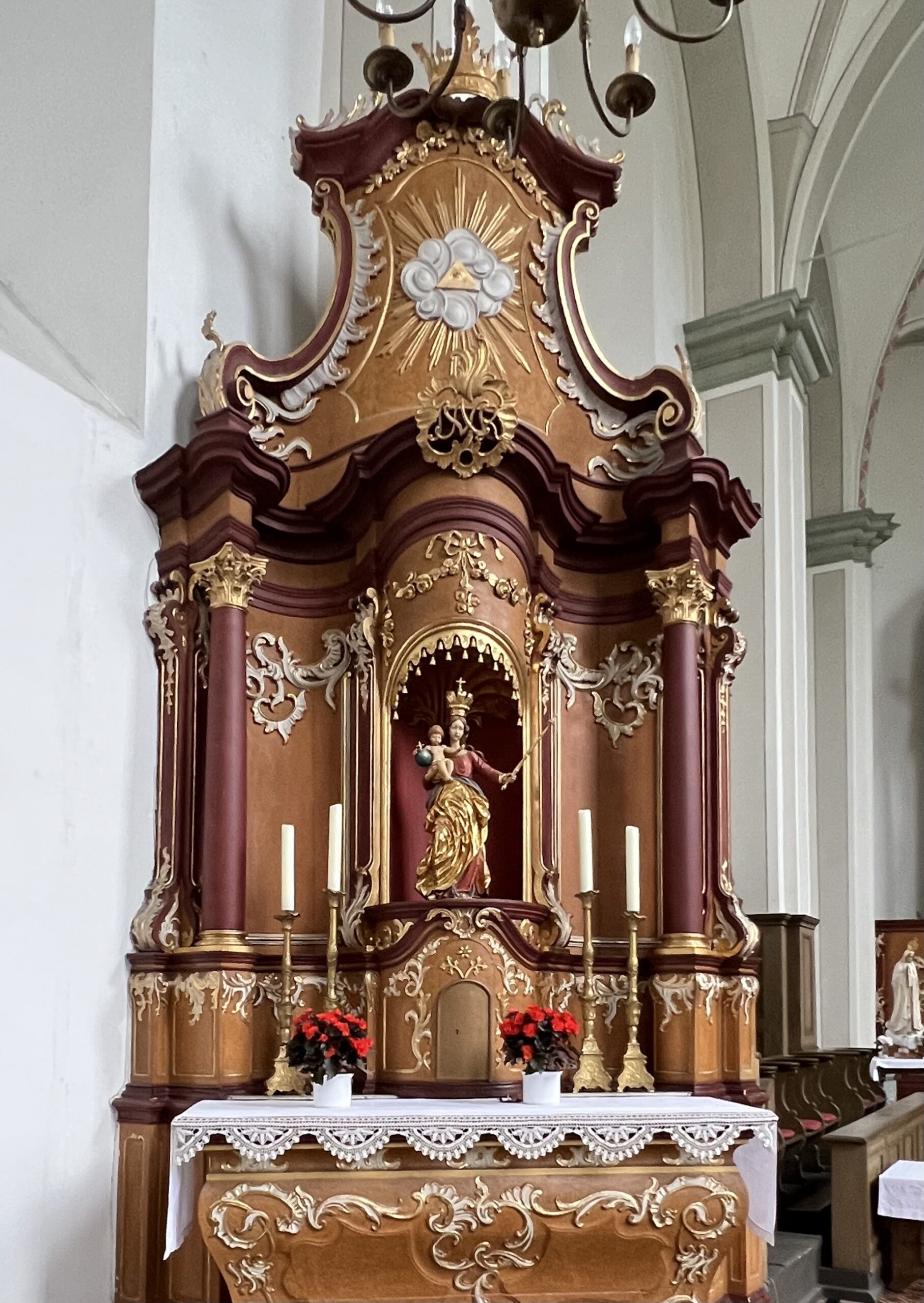
In the church, to the left, stands the Mary altar with a depiction. The Mother of God holds her little Son in her arms and in her left hand, she holds a sceptre.
There is also a statue of Our Lady of Fátima in this church.
Next, I will go to the new pilgrimage church, which has been granted the title of basilica. I stand for a long time before the statue of grace. What a history this image has made! I thank Mary for visiting this pilgrimage site.
When I compare the two churches, I find the old building exudes more warmth, and warmth feeds my faith in Mary.
Environment
In addition to the sanctuary, historic Werl offers more in terms of religion, such as the “Kapelle Mariä Heimsuchung” from 1680 on Schützenstrasse and the “Kapelle Muttergottes in der Not” from 1900 on the corner of Liebfrauenstrasse and Unnaer Strasse. Furthermore, there are many opportunities for walking and cycling in and around Werl.
Travelling from the Marian pilgrimage site of Verne to Werl means covering 57 km to the west.
Leaving the cathedral city of Paderborn to drive to Werl is travelling 70 km westwards.
From the large city of Dortmund, Werl can be reached in 39 km in an easterly direction.
Leaving the old city of Münster to go to Werl is a movement of 67 km to the south.
Posted: 19 June 2024
~~~
