Wigratzbad
History
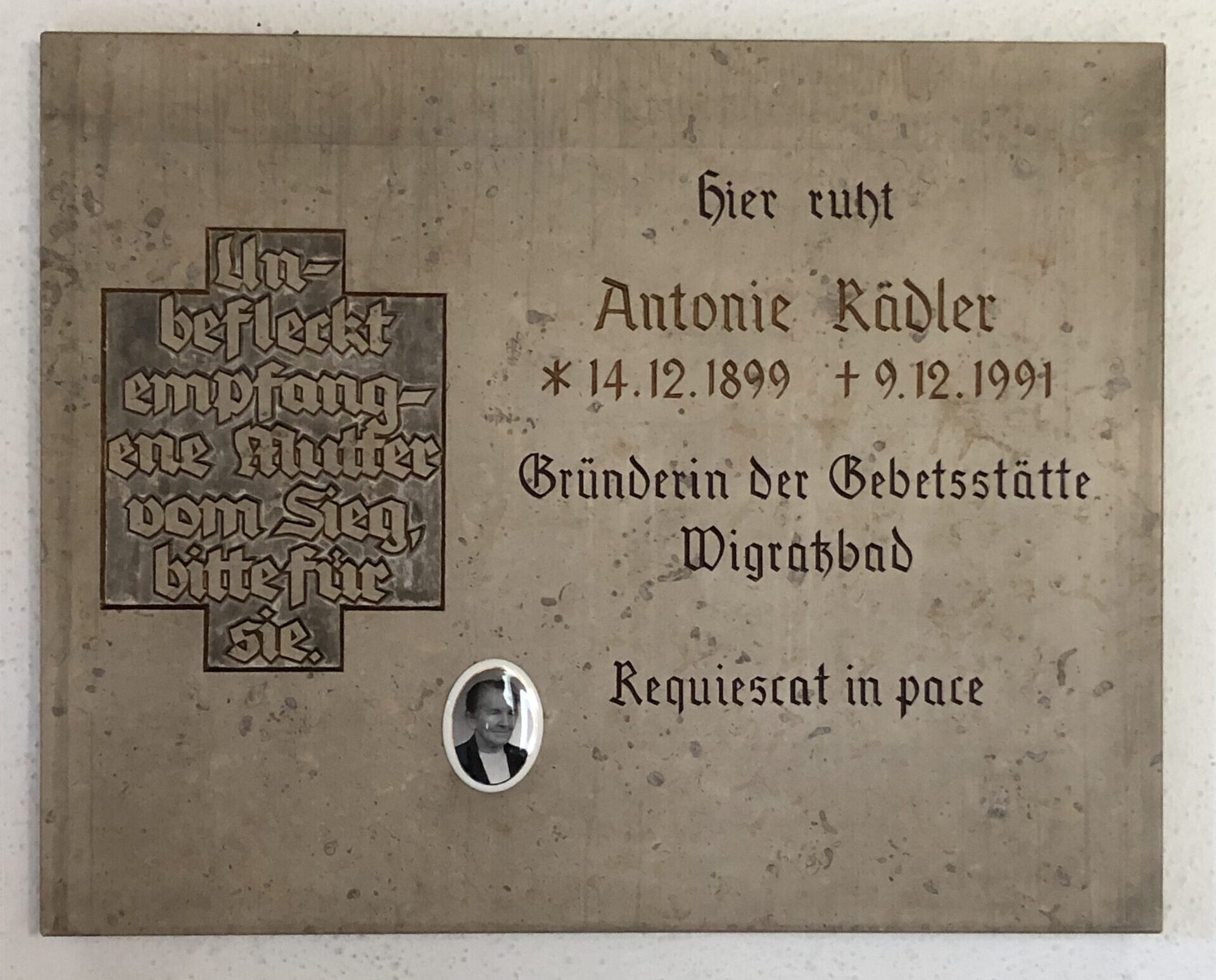
In Bavarian Wigratzbad, Mary appears to Antonie Rädler (1899-1991). Her parents work hard on their farm, livestock trading business, and butcher shop. The family is very religious and practising Catholics. Antonie has an intense prayer life, is active in the lay apostolate, and has mystical experiences.

In 1923, Antonie lies gravely ill in bed; she has been struck by the Spanish flu pandemic, which claimed millions of lives. She has been hovering between life and death for 5 years, suffering from severe headaches and inflammation of her brain, kidneys, and eyes. Specialists have given up on her, saying Antonie only has a few days to live. Afterwards, she becomes very short of breath and says she will soon meet Maria. The following night, Maria appears and places her hands on the gravely ill woman's head. Maria says: “Take refuge in Me alone. Come and serve Me.” A miraculous power then flows through Antonie's body, healing her. The next morning, Antonie gets up, completely healthy. As thanks for their daughter's miraculous recovery, her parents place a Lourdes grotto in the garden. The grotto was consecrated on 11 October 1936, and Antonie stays there daily to pray to Maria.
In 1936, Antonie Rädler went on a pilgrimage to Lourdes, in the south of France.
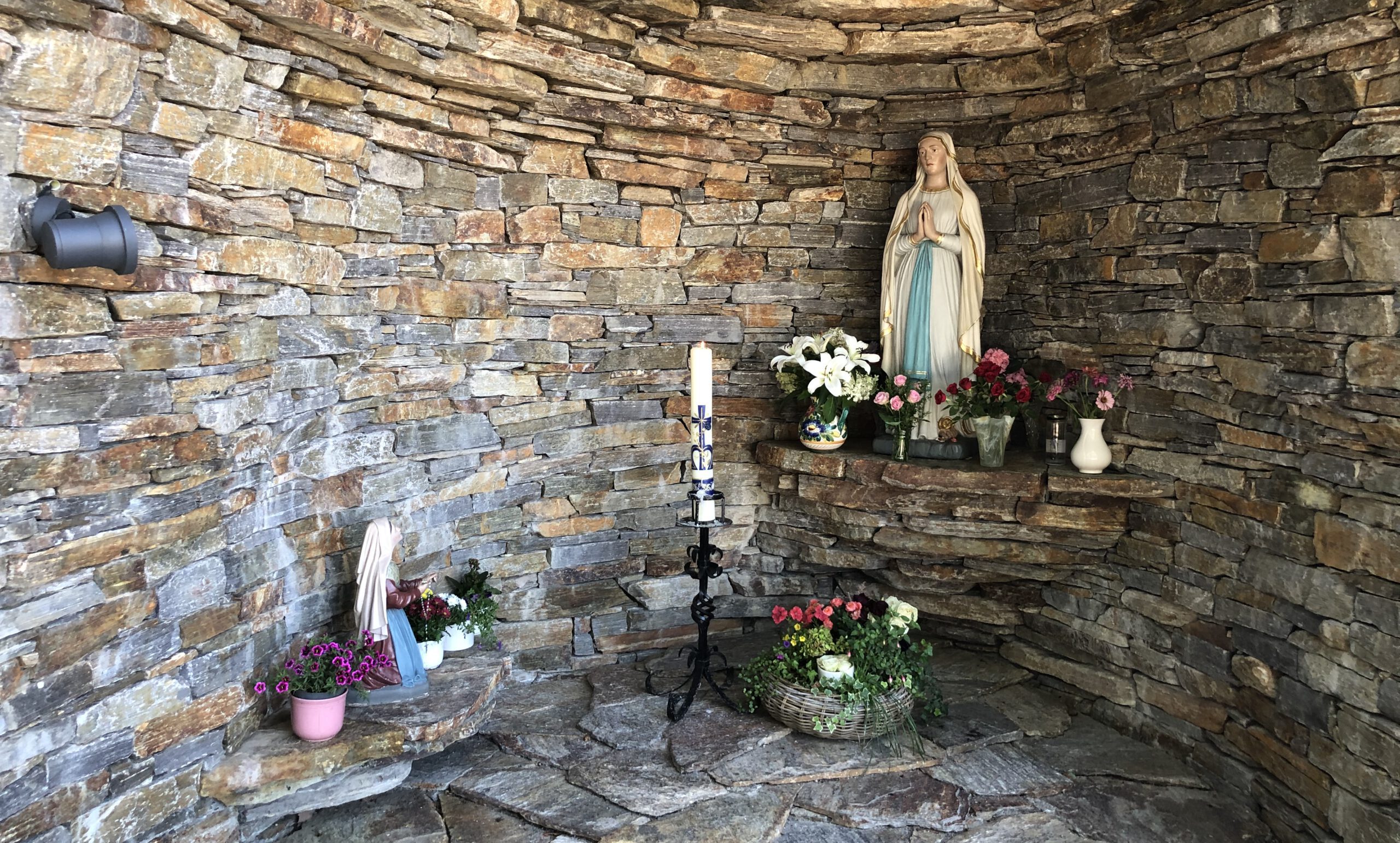
In November 1936, Antonie announced that the statue in the Lourdes grotto was smiling at her and that she was receiving the mission to build a chapel. She also heard that the Immaculate Heart of Our Lady would triumph. Antonie also heard it said: “Mother of Victory, Immaculate Conception, pray for us”.
On 15 December 1936, angels appeared to Antonie Rädler. She heard an increasing humming noise and looked up at the statue of grace in the Lourdes Grotto, but saw nothing out of the ordinary. Suddenly, she heard angels singing several times: “Immaculate Mother of Victory, pray for us”. Antonie looked at the statue of Mary again and saw Our Lady smiling. She told the remarkable event to Pastor Norbert Feiel (+1938) from Eglofs, as she had great confidence in him. He said that if what she told him was true, there would be answered prayers. In the following week, there were answered prayers through Mary. Parents prayed for the return of their son. The young man returned after being arrested by the Gestapo, the police of the National Socialists. A man with liver cancer had been given up by doctors, but recovered. The third answered prayer concerned a mother who was dying and recovered by drinking water from the Lourdes Grotto. Another miracle happened in Wigratzbad, namely, a man with stomach cancer recovered after praying for him for a night. With these four healing incidents, Antonie went back to Pastor Norbert Feiel. This clergyman now believed her words about the apparition of Mary.

Between 1927 and 1936, Antonie Rädler worked in her parents“ butcher shop in Lindau. During those years, the power of the National Socialists grew, and various rules were imposed on the German population. Antonie Rädler refused to say ”Heil Hitler“ instead of the customary greeting ”Grüss Gott’. She also refused to replace the statue of Mary in the butcher shop with a picture of Adolf Hitler (1889-1945), the leader of the National Socialists. Subsequently, the Gestapo made things difficult for her. There were three attempts to arrest her at night. However, Antonie went into hiding in time.
Mary appears not only to Antonie Rädler, but also to Cäcilia Geyer (+1939), a young widow from nearby Wangen. On 22 February 1938, the Blessed Mother tells Cäcilia: “Build a chapel for me here. I will crush the head of the infernal serpent with my feet. People will come here in great numbers. I will let streams of grace flow over them.” Cäcilia is told exactly the same as Antonie.
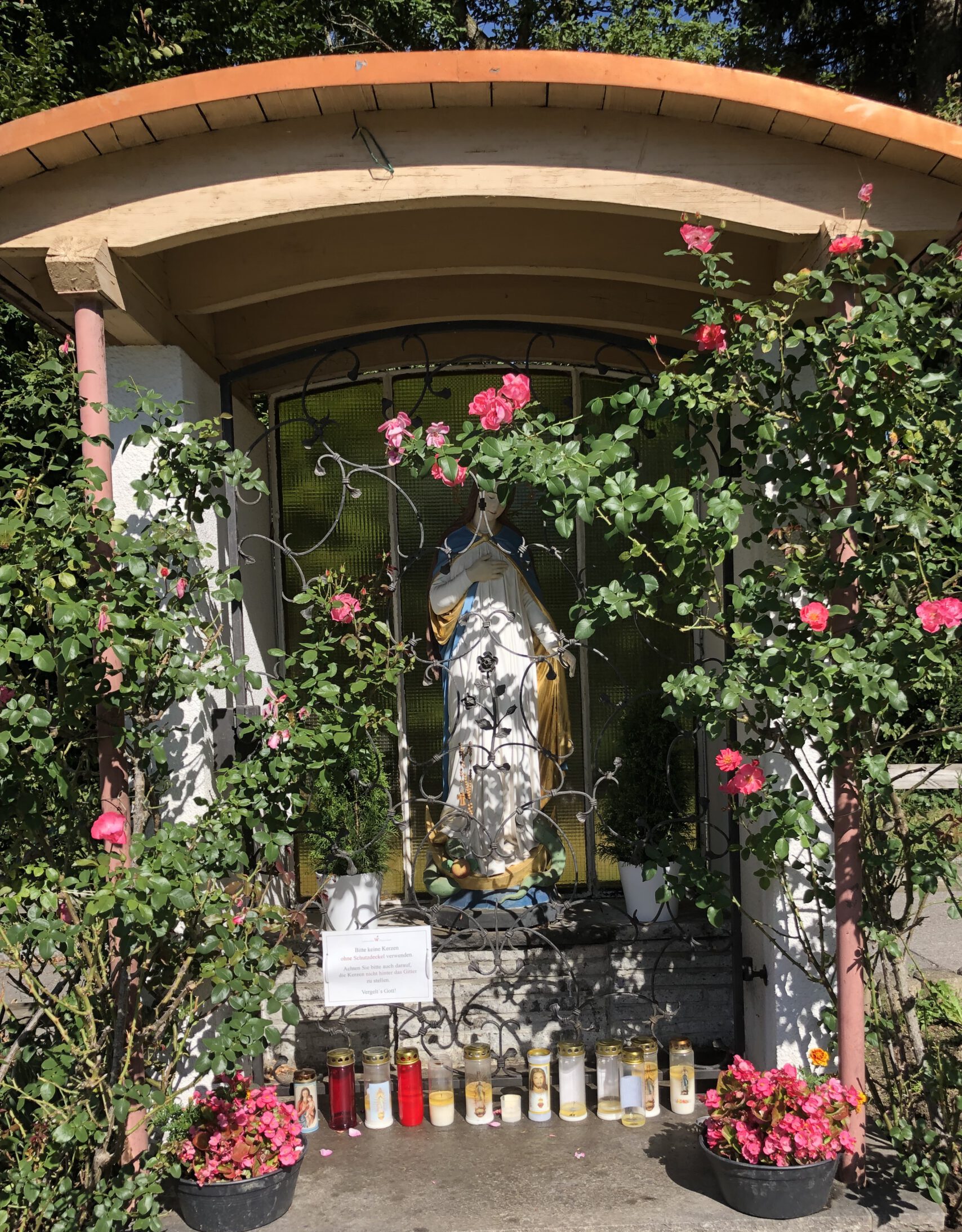
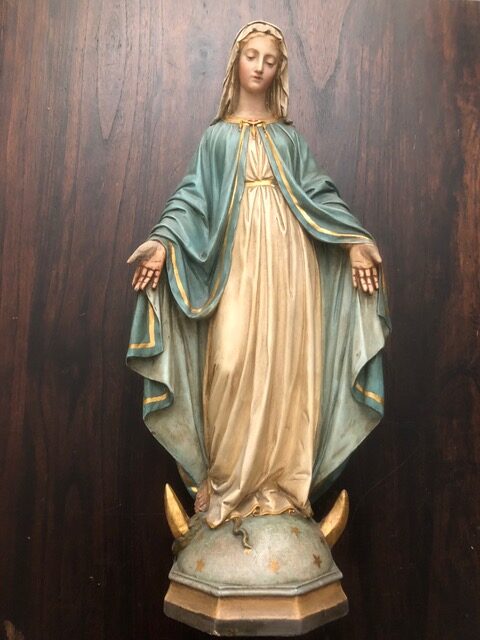
In 1938, Franz Albertani (1889-1982) from Bregenz, on the instructions of Antonie Rädler, created the statue of the “Lady of Victory”. The effigy is a reminder of three important truths, namely the Immaculate Conception, the victory over the serpent, and the Mother of Victory. In that same year, Antonie visited the pilgrimage site “Maria Waldrast” in Matrei am Brenner, Austria.
The construction of a chapel is permitted by the Nazis, and work begins on 2 July 1938. The Maria Chapel is consecrated on 25 March 1940. This event was scheduled for 8 December 1938, but it did not go ahead because Antonie spends time in prison from 21 November to 18 December 1938. However, she is falsely accused of opposing the authorities. Cäcilia Geyer also does not experience the consecration, as she dies in 1939.
In 1963, Josef Stimpfle (1916-1996), Bishop of Augsburg (1963-1992), gave permission to celebrate Holy Mass in the Chapel of Grace “Our Lady of Victory”.
The sanctuary church was built between 1973 and 1974, designed by architect Gottfried Böhm (1920-2021) from Cologne. The building is dedicated to the Sacred Heart of Jesus and the Immaculate Heart of Mary.
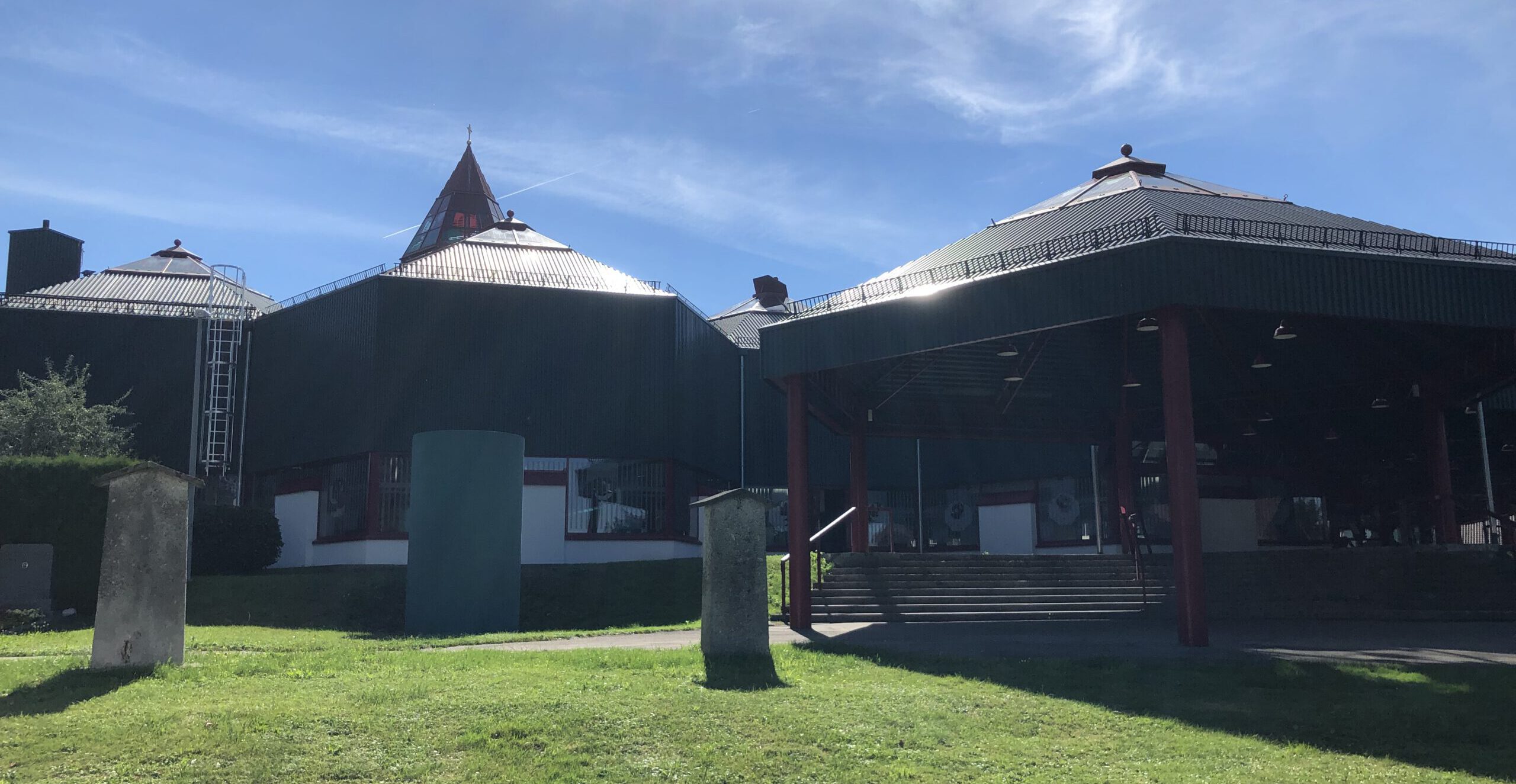
On 30 May 1976, Bishop Josef Stimpfle consecrated the church and Wigratzbad was recognised as a place of prayer for the Diocese of Augsburg.
The pilgrimage house Sint-Joseph was built between 1983 and 1987, and renovation work on the Chapel of Grace took place in 2018.
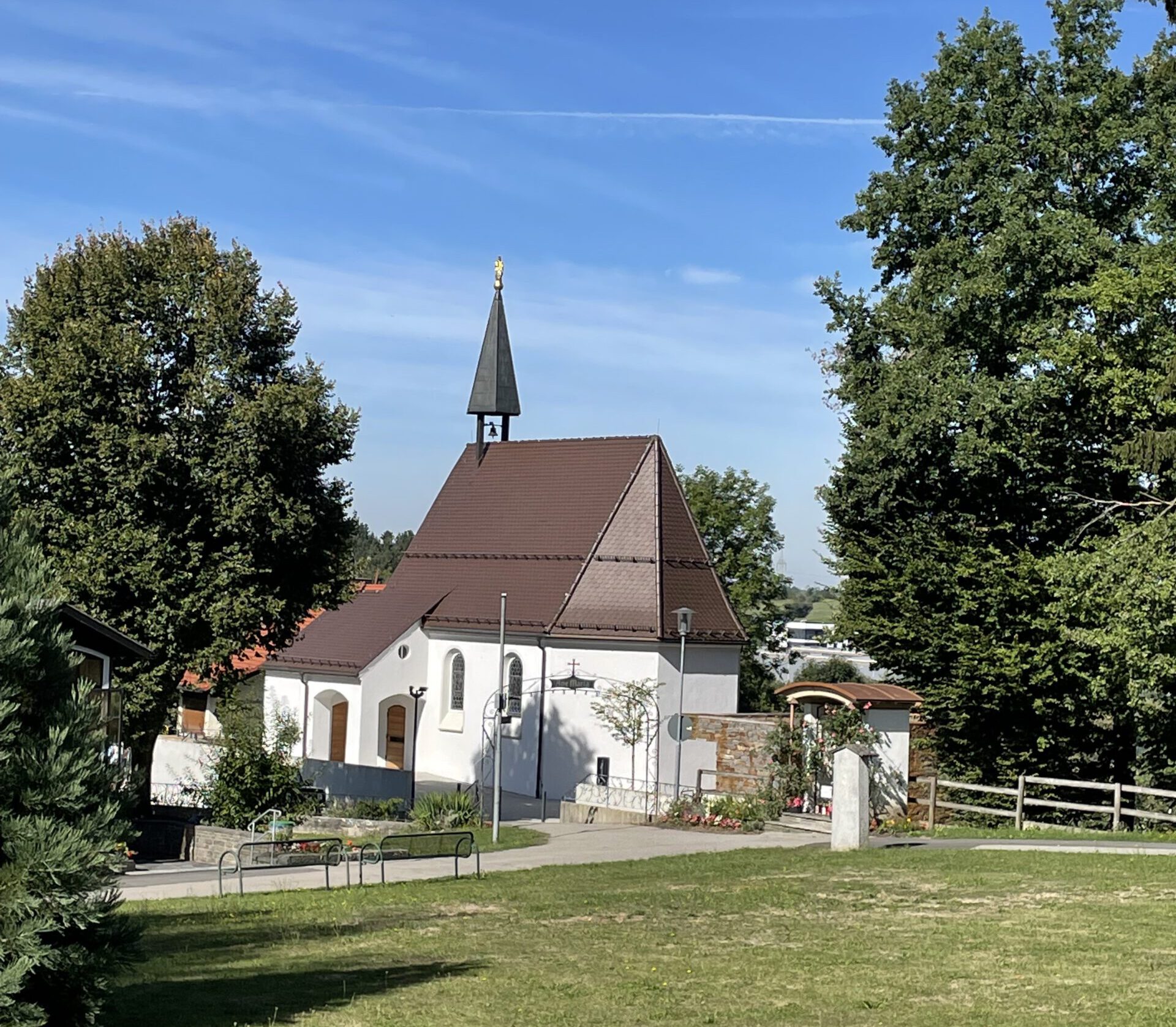
Pilgrimage site
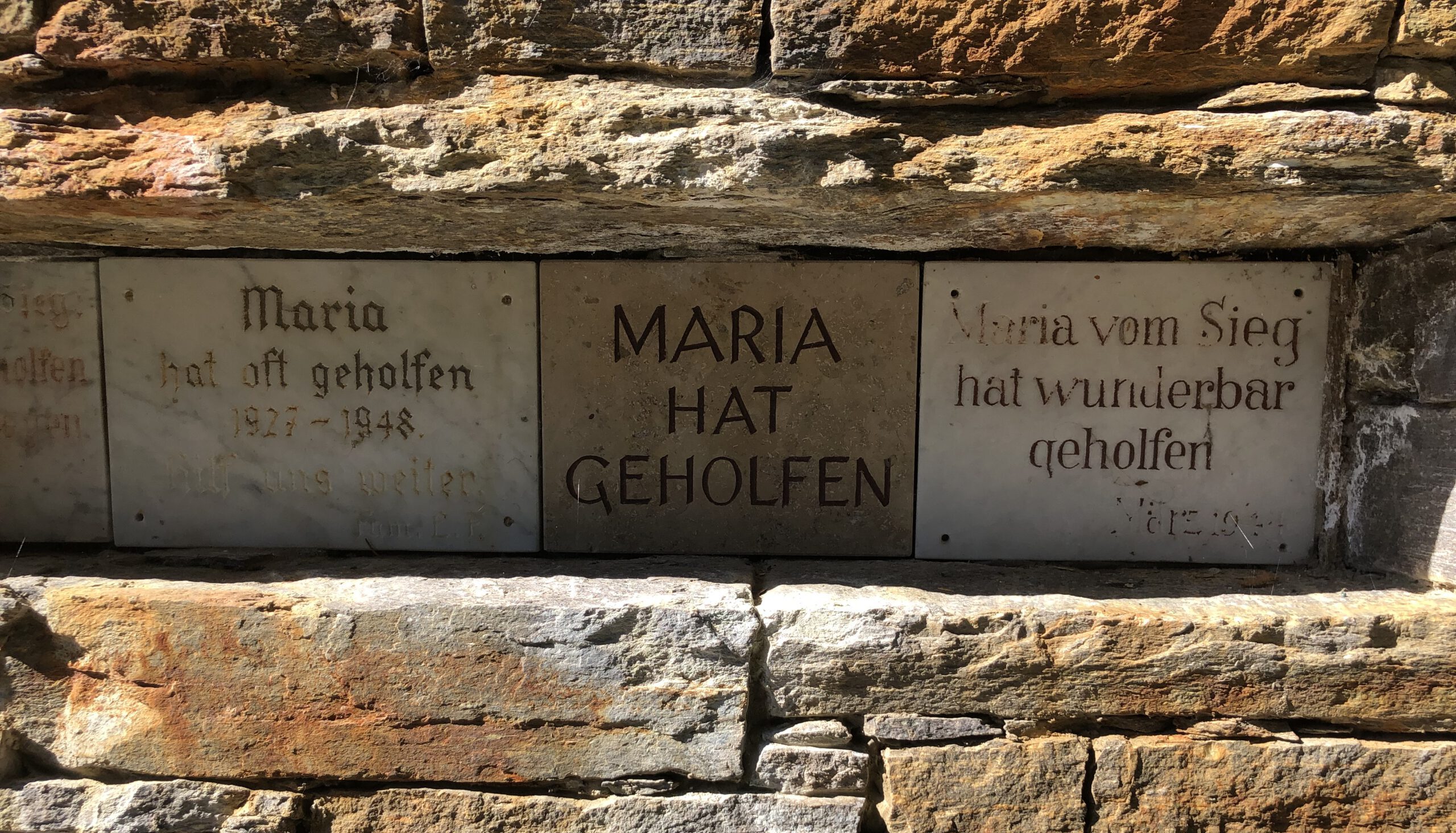
The pilgrimage site at Wigratzbad is called “Maria of Victory” (“Maria vom Sieg”) and pilgrims come to pray in the Chapel of Grace. Nearby, there are also votive offerings to Mary.
In the church, there is also a statue of Our Lady of Fatima.
In the church hall, a stone fountain has been installed where visitors can draw water.
Since 1966, a Way of the Cross has been laid out in the sanctuary grounds. The stations were created by sculptor Franz Albertani.
There is a connection between Fatima and Wigratzbad, as in both places the Immaculate Heart of Mary is triumphant.
It is possible to stay overnight at the Shrine of Wigratzbad. The shrine is accessible to visitors every day of the year. Around half a million people visit the Shrine of Wigratzbad annually.
ACCESSIBILITY
Wigratzbad is located in southern Germany near Lindau in Bavaria. The place of prayer is situated slightly north of Opfenbach and Bregenz, not far from the Austrian border.
The address is: Kirchstrasse 18, 88145 Wigratzbad.
Current information can be found at www.gebetsstaette.de.
Experience
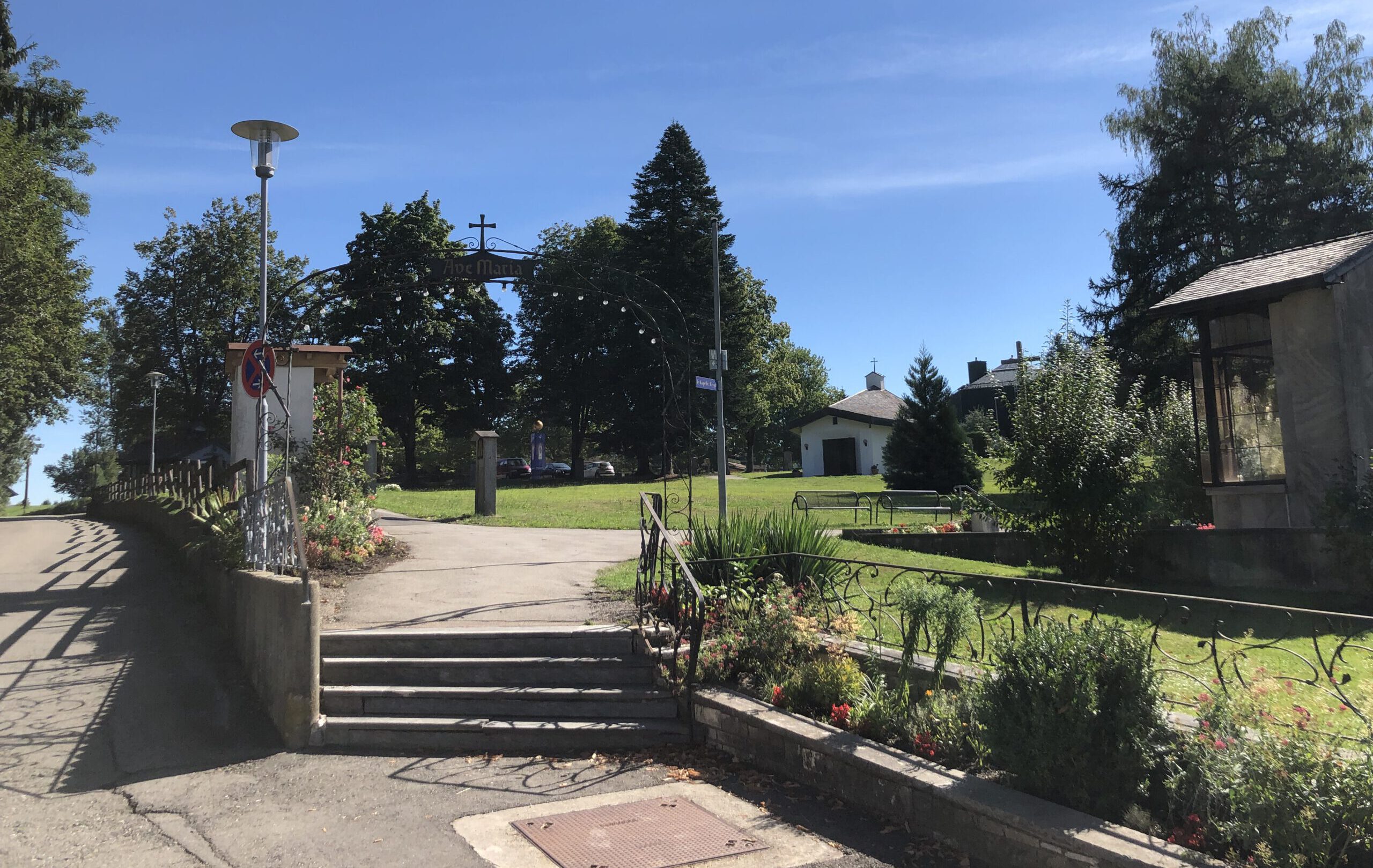
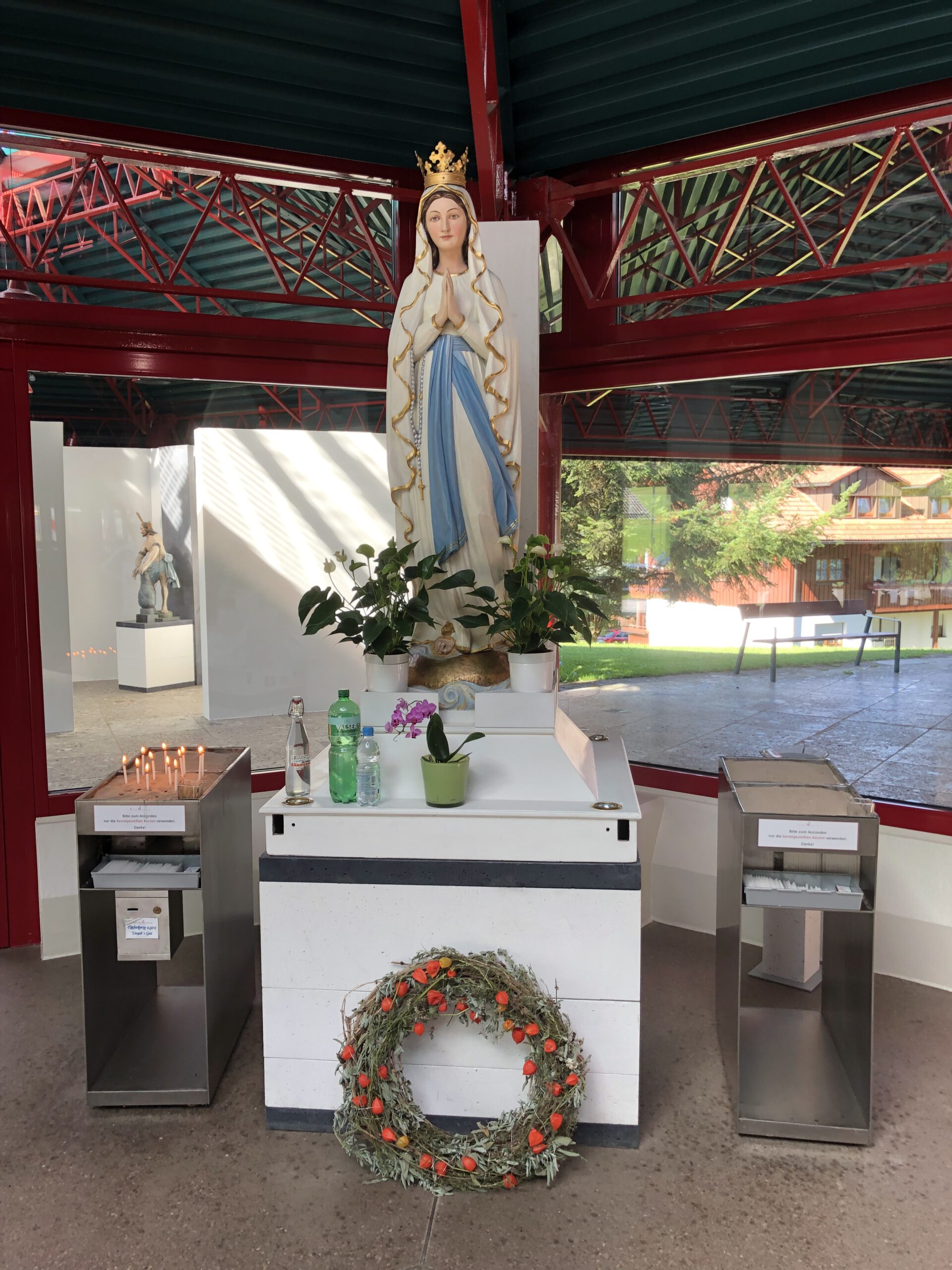
In Wigratzbad I will visit the special places where Antonie Rädler had moving encounters with Mary. First, a large statue of Padre Pio will welcome me. After that, it's on to the Chapel of Grace and then visiting the Lourdes Grotto. The Lourdes Grotto is a memorable place for the apparitions of Our Lady on South German soil. Here, Antonie had mystical experiences with the singing of angels and words from the Mother of God.

The visit to the Chapel of Grace affected me deeply. It makes me realise the beauty of existence with Mary in mind. A memorial stone to Antonie Rädler reminds me of the nineteen-twenties and thirties of the last century.
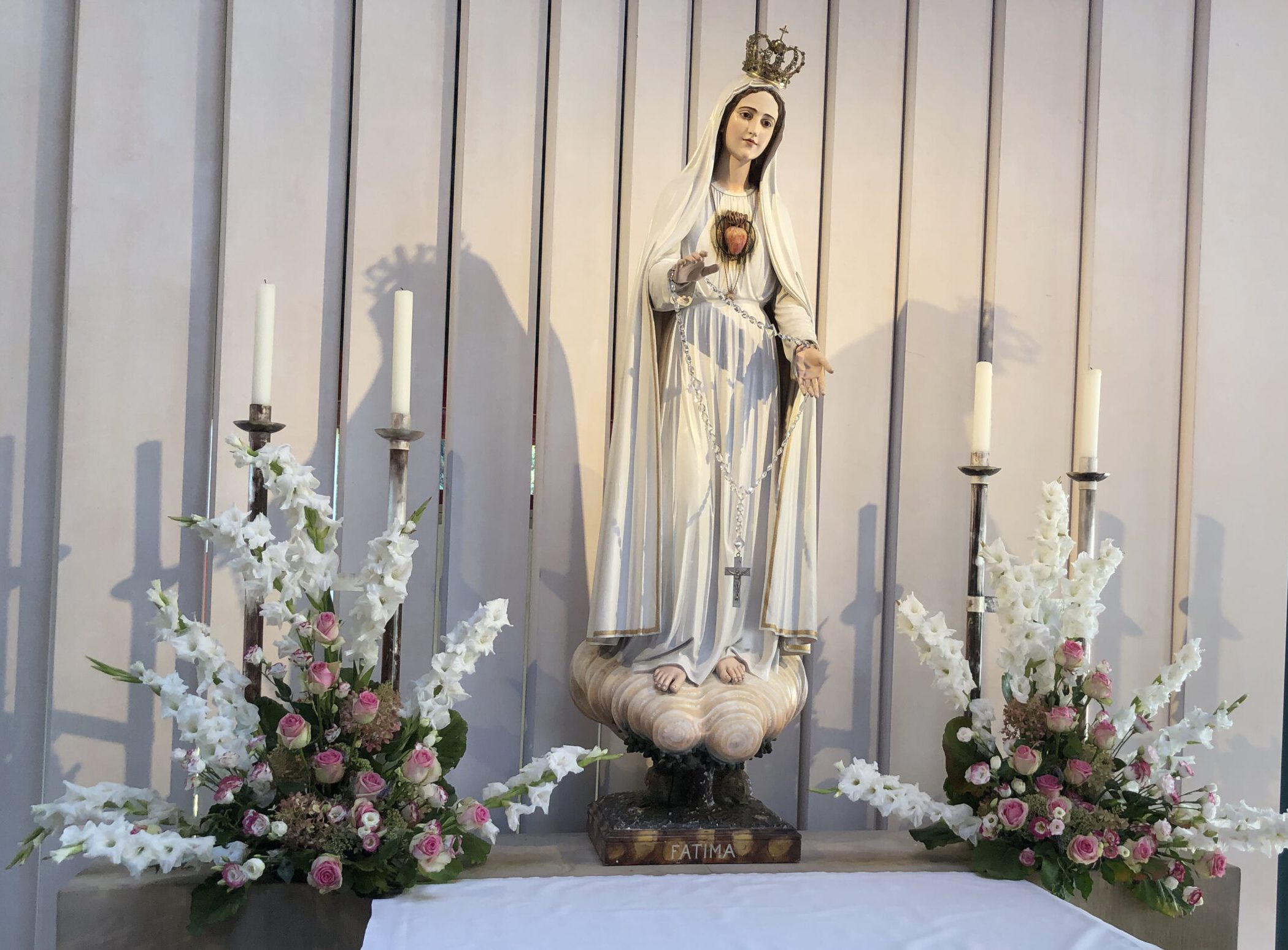
In church, I stand for a long time before the statue of Mary and pray for a long time. The image of Our Lady of Fatima also impresses me. The place of this statue in Wigratzbad underlines the connection with Fatima, as in both places Mary says that her Immaculate Heart will triumph. This happens in a completely different context, because during the apparition in Fatima the world is at war. It is then 1917. Here, the apparition is on the eve of the Second World War.
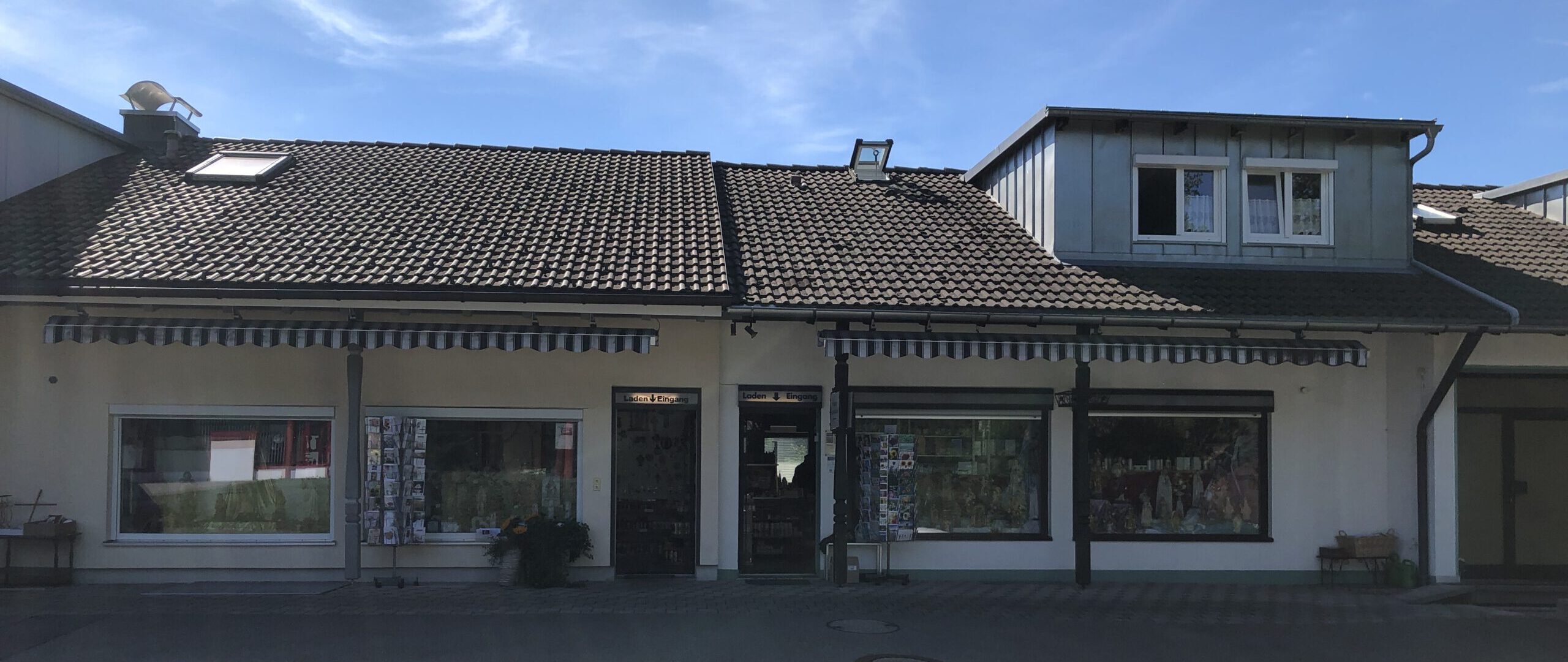
Next, I take a walk on the sanctuary grounds and come across two shops selling devotional items. I purchase a booklet about this apparition site and continue on to the pilgrims' house. Then I walk past the stations of the cross and finally, it's back to the chapel of grace.
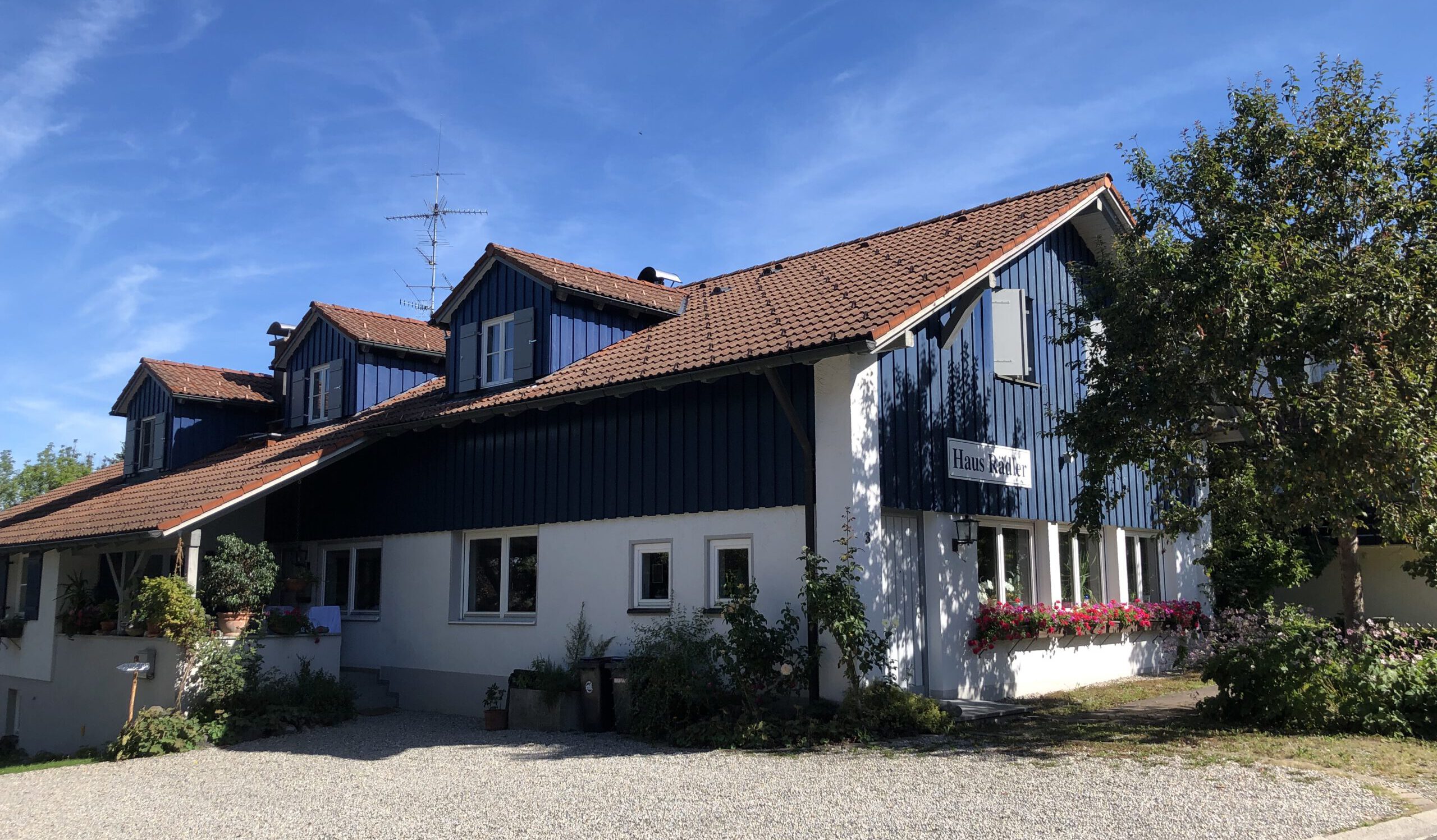
On leaving the sanctuary, I paused at “Haus Rädler,” where Antonie lived. It is a special experience to be able to come here.
Environment
The historic city of Feldkirch in Austria is located 60 km south of Wigratzbad.
Posted: 15 October 2022
Last modified: 21 February 2024
~~~

 Nederlands
  English (UK)
  Deutsch
  Français