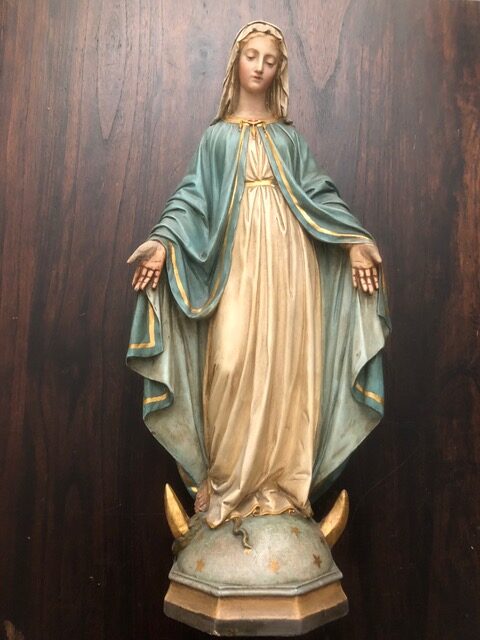
Visiting the places of Marian apparitions, miracles have been attributed to the Mother of God.
The most talked about are miracles that happen through the use of the water from the grotto in Lourdes. Miracles are far more common when people are strengthened by Mary to bear a burden, such as illness, pain, humiliation, and abuse.
In 1734, criteria were established with the aim of correctly recognising miracles as healings. This was done by the Italian cardinal Prospero Lorenzo Lambertini (1675-1758), who later became Pope Benedict XIV. Years later, the conditions for the recognition of miracles, beatification, and canonisation were established.
In the French pilgrimage site of Lourdes, procedures have been established for discussing whether or not an event qualifies as a miracle. The “Bureau des Constatations Médicales” investigates healings that are inexplicable according to the current state of medical science. This means that this bureau does not deal with miracles, but with inexplicable healings. This organisation also stipulates that a person's recovery must be sudden, immediate, complete, and permanent. Approximately 1,500 healings are reported to this inquiry bureau in Lourdes each year. The vast majority of these are not relevant, as the sick who have been to Lourdes have been cured through medical treatments. During the annual meeting of the International Medical Committee, comprised of members from medical faculties of universities from many countries, a two-thirds majority is required to declare an inexplicable healing. It is the church that decides if a miracle has occurred. The bishop of Lourdes-Tarbes forwards the investigation file to the bishop of the diocese where the healed person resides. Ultimately, this diocese determines whether a miracle has taken place. Since 1858, around 8,000 healings have been documented in Lourdes, yet fewer than 1 percent have been recognised as miracles by the Catholic Church.
~~~

 Nederlands
  English (UK)
  Deutsch
  Français